
A self-custody Visa debit card that still leaves too many questions unanswered
 Available in US

The Tonhub card markets itself on a simple idea: keep your crypto in your own wallet, and pay with it at any shop that takes Visa. There is no custody handover, no exchange account to fund first, and the smart contracts behind the card have been reviewed by a respected security firm. On paper, that is exactly the kind of product many people who cannot get an ordinary bank card are looking for. In practice, the public information about the Tonhub card is thin enough that a careful reader has to do a lot of guessing.
This review is based on what the Tonhub public pages say, what one third-party report says, and the single user review that has been published. Where the card’s own pages do not say something, I say so plainly rather than fill in the blanks. Conditions are current as of October 28, 2026.
Verdict
The Tonhub card earns 5.3 out of 10 in this assessment. That is not a flattering score, and it is worth explaining why before we get into the details.
What the card does well is real. It is built on a non-custodial model, so the funds used to back payments stay in your own wallet until the moment of purchase rather than being handed to a third party. The smart contracts have been audited by Trail of Bits, a well-known security firm. The spending limits are set on-chain, which is unusual for a payment card. The product is built around assets that EU crypto users already hold, particularly TON and USDC. For someone in the EU who lives in their own wallet, that combination is genuinely useful.
What drags the score down is everything the card does not say. The card’s own pages do not publish a fee schedule, do not name the company that operates the service, do not name the bank or e-money institution that actually issues the Visa card, and do not say what the card currency is. There is exactly one Trustpilot review, and it describes a chargeback process that took a long time and still had not returned the money. A single review is not a pattern, but a single review on a card that has been live for over a year is also not reassuring.
| Criterion | Mark | Why it scored that way |
|---|---|---|
| Who can get it | 5 / 10 | Age 18+ and EU residence required; “25+” countries cited as usage stat, not eligibility |
| Cost | 7 / 10 | Fee schedule not published on the card’s own pages; an unofficial 1.5% per-transaction fee is reported |
| Top-up options | 5 / 10 | TON and USDC are shown; SEPA and SWIFT bank transfers offered; specific networks not listed in full |
| Reliability and complaints | 4 / 10 | Operator and issuer unnamed; smart contracts audited by Trail of Bits; one Trustpilot review, score 3.2 |
| Everyday use | 5 / 10 | Only a virtual Visa Debit is mentioned, issued after verification; Apple Pay and Google Pay reportedly supported |
| Total | 5.3 / 10 |
This card suits EU residents who already hold TON or USDC in a self-custody wallet and who want to spend those balances at a Visa terminal without depositing funds with a custodian. It does not suit anyone who needs a physical card, who lives outside the EU, who is not comfortable with on-chain mechanics, or who wants a fee schedule and a named issuer before they sign up.
Will they give you the card
The eligibility rules the card states are narrow, and the eligibility rules the card implies are narrower still.
The public page says the card is for people who are at least 18 years old and who live in the European Union. That is the entire list. What it does not say is just as important: it does not list the member states, it does not say whether EEA countries other than EU countries are included, and it does not say what happens to citizens of an EU country who live somewhere else. The page also notes that the card is used in “25+ countries” as a usage statistic, not as an eligibility list. So you could be a resident of a country outside the EU and still see the card in use around you, but you would not be able to sign up for it.
The card is not offered to minors. There is no mention of a student or family product, and there is no premium tier. From the page, the only product on offer is a single virtual Visa Debit.
What the card does not say:
- Whether EEA countries that are not EU member states (Iceland, Liechtenstein, Norway) are included in “EU residence”
- Whether citizenship matters separately from residence
- Whether the card is open to people with residency permits rather than full citizenship
- Whether people living in EU overseas territories are eligible
If you are unsure whether you qualify, the page gives you no way to check before you go through identity verification.
How to get it
The sign-up process is built around the Tonhub app. The page describes it in three steps: add your wallet, tap the Tonhub Card banner, and verify your identity. After verification, a virtual card is issued.
The verification step is described only as “Verify Your identity”. The page does not say which documents are accepted, whether proof of address is required, how long the review takes, or what would cause an application to be rejected. Nationality is a standard part of EU customer due diligence, and most card programmes also ask for proof of address and a selfie, but the Tonhub page does not confirm any of that.
After verification, a virtual Visa Debit is issued. The card is described as virtual only. No physical card is mentioned anywhere on the page. There is no mention of a card delivery time, a delivery country, a delivery cost, or a shipping address requirement, because there is no physical card to ship.
The card currency is not stated. That matters more than it sounds: if the card settles in euros, an EU resident pays nothing extra to spend euros. If it settles in a different currency, every payment will pass through a conversion step with an undisclosed cost. Without a fee schedule and without a card currency, the true cost of everyday use cannot be calculated from the public information.
What the page does not say:
- Which documents are needed for identity verification
- How long verification takes
- What causes an application to be rejected
- What the card currency is
- Whether a physical card is offered at any tier
Fees: what it really costs
This is the section where the Tonhub card is hardest to evaluate, because the card’s own pages do not publish a fee schedule. A “Fees & Conditions” section exists on the page, but in the version reviewed it contains no fee amounts.

The only specific figure available comes from outside the card’s own site. A Forklog report from November 2024 and a company profile on dealroom both state a 1.5% per-transaction fee. I am flagging that as unofficial: it has not been confirmed by Tonhub on its public pages, and I could not verify it against an updated figure in 2026.
The other fee types that the page does not list:
- An issuance fee for the virtual card
- A monthly or annual maintenance fee
- A foreign-exchange fee
- An ATM withdrawal fee
- A fiat top-up fee for SEPA or SWIFT bank transfers
- Daily and monthly spending limits (the page mentions “Set custom spending limits directly on-chain”, which is the user’s choice, but does not list any fixed caps)
There is no tier system, so there are no tier-based fees either. The page shows TON and USDC as the supported assets, and the card currency is not stated, so whether there is a conversion fee between, say, USDC held on the wallet and euros debited at the till is not something the page clarifies.
| Fee or limit | Amount |
|---|---|
| Issuance | Not stated |
| Monthly fee | Not stated |
| Conversion fee | Not stated |
| Foreign-exchange fee | Not stated |
| ATM fee | Not stated |
| Daily spending cap | User-set on-chain; fixed cap not stated |
| Monthly spending cap | User-set on-chain; fixed cap not stated |
| Transaction fee (unofficial) | 1.5% (Forklog, Nov 2024; dealroom profile) |
To make this concrete, three everyday payments and what fees would apply:
Coffee at a local café, 4 euros paid from a USDC balance. The page does not state the card currency, so the path from USDC to euros is not documented. If the unofficial 1.5% fee applies, the effective cost is slightly higher than the original price. If the card also charges a conversion fee, it would be on top of that. Without a fee schedule, the actual number cannot be confirmed.
A supermarket shop, again from a USDC balance. The same uncertainty applies. If the conversion happens at the network rate and the only charge is the 1.5% transaction fee, the effective cost is slightly higher than the original price.
A 1,000-euro travel booking paid from a TON balance. Here, two conversions may be involved: TON to a stablecoin or to euros, and then euros to whatever the card settles in. The 1.5% transaction fee is the only number that has been reported, and it sits on top of any conversion that the system performs.
In all three cases, the cost is small relative to a card that charges 2-3% per transaction, but the absence of a published fee schedule is itself a cost: you cannot plan your spending when you do not know what the card will charge.
How to top up
The Tonhub card does not use a pre-loaded balance in the way many crypto cards do. The page describes a flow in which the card spends directly from a linked crypto balance in the user’s own wallet, and Tonhub pre-funds the payment to the merchant and then debits the user’s balance after the network and the merchant confirm. If the balance is not sufficient, the payment is declined.
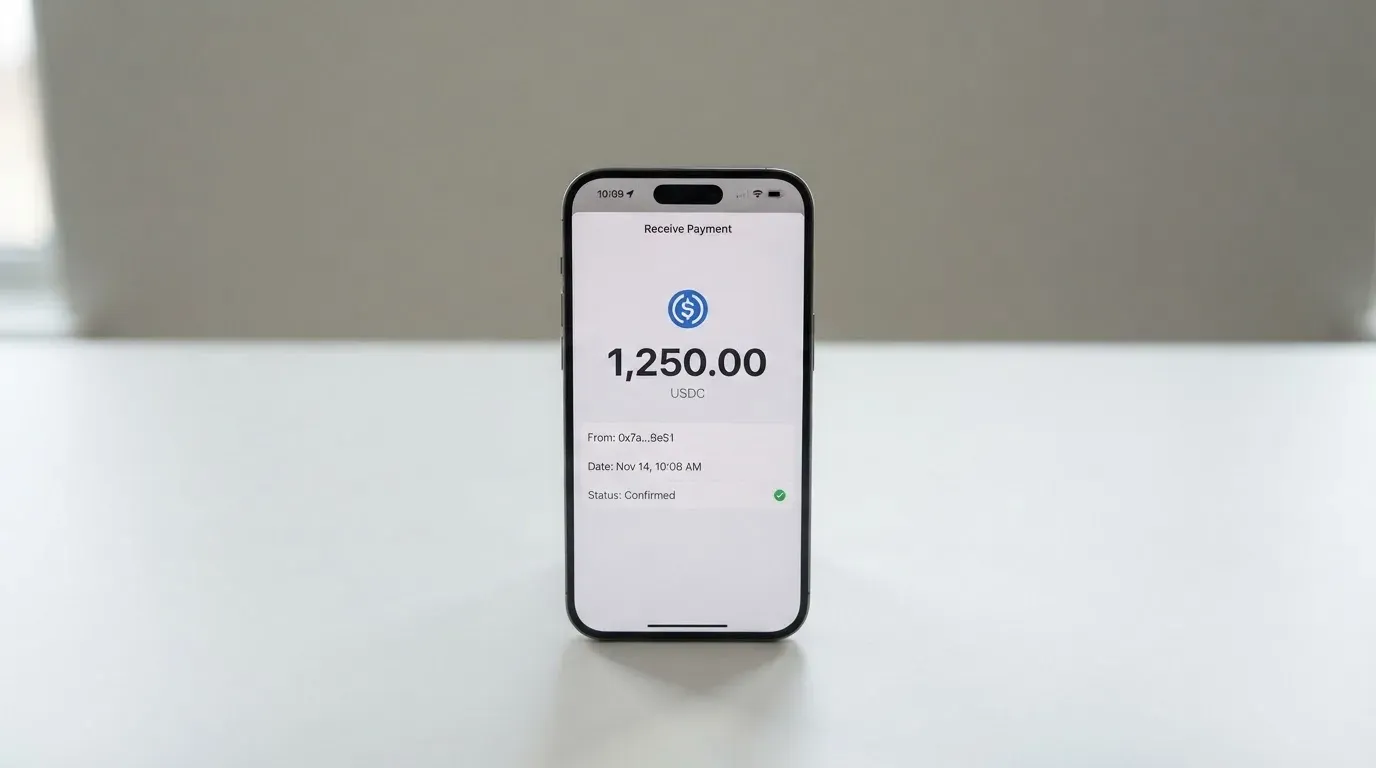
In practice, “top up” means making sure the wallet connected to the card holds enough of the supported assets. The page shows TON and USDC; a user review mentioned paying with USDT, though USDT is not listed on the page itself. The user is responsible for getting the right token to the right address on the right network, and the page does not list the supported networks for each token.
On top of crypto balances, the page also mentions SEPA and SWIFT bank transfers as a way to bring fiat in. Fiat top-up fees and minimum amounts are not stated.
A separate feature is called “Emergency Withdrawal”, which lets a designated heir retrieve card-linked funds on-chain. That is a different mechanism from a standard ATM or bank withdrawal: it is a way to recover funds in a defined emergency, not a way to walk up to a cash machine and get notes. The page does not say whether the card itself can be used at an ATM at all.
| Top-up method | Status |
|---|---|
| TON from a connected self-custody wallet | Shown on the page |
| USDC from a connected self-custody wallet | Shown on the page |
| USDT (mentioned in a user review) | Not on the page itself |
| SEPA bank transfer | Mentioned |
| SWIFT bank transfer | Mentioned |
| Fiat top-up fee | Not stated |
| Minimum top-up | Not stated |
| ATM cash withdrawal | Not stated |
What to check first:
- Which network your USDC is on. USDC is available on many networks, and transfers on the wrong network are not recoverable.
- Whether the card currency and the merchant’s currency are the same, to avoid an additional conversion step.
- Whether your bank treats SEPA or SWIFT transfers to a card programme as a standard transfer or as a card top-up with its own fee.
Paying with it every day
The card is a Visa Debit, and it behaves at the till like a Visa Debit. The unusual part is what happens behind it: the funds are debited from a self-custody wallet rather than from an account at a card-issuing bank. The page describes the mechanism as a pre-funding step, with the merchant paid first and the user’s balance debited afterwards. If the transaction fails or is declined, the funds are not touched.
The card is managed through the Tonhub app. Setup is described as: add a wallet, tap the Tonhub Card banner, and complete verification. The page does not list the platforms the app is on or quote store ratings.
Mobile wallets are mentioned only obliquely. The page itself does not confirm Apple Pay or Google Pay support. A Forklog report from November 2024 says both are supported, but that is unofficial, and the card’s own pages do not confirm it. Merchant category restrictions, for example gambling (MCC 7995), are not stated. The page does not list blocked merchant categories, so a user cannot know in advance which shops will decline the card.
Rewards, cashback, or any kind of incentive are not mentioned on the page. There is no cashback tier, no signup bonus, no staking requirement, and no loyalty programme. The card is positioned as a way to spend crypto, not as a way to earn anything for spending it.
Disputes and refunds are described in a single sentence: “Refunds are issued only for legitimate, verified transactions.” The page does not give a time frame for filing a dispute, a time frame for resolution, or a process for escalation. Chargeback time frames for EU cards are usually set by the card network, but the issuer’s own policy is what determines the user’s experience, and that policy is not stated.
A few practical things worth knowing:
- Declined authorisations can leave a temporary hold on the balance for several days, even though no funds are ultimately taken. This is normal card-network behaviour, but with a self-custody balance, a hold can affect the amount available for the next payment.
- Address Verification Service, which many US and UK merchants use, is generally unavailable for foreign-issued cards, so some online checkouts can be harder to complete.
- 3-D Secure (Visa Secure for Visa cards) can add an identity step at checkout, especially on larger or first-time transactions.
What can go wrong
The product carries two layers of risk: the usual risks of any payment card, and the specific risks that come from a self-custody setup and a thin public profile.
Counterparty and operational risk. The card’s own pages do not name the operator entity and do not name the issuer. A Visa Debit has to come from a licensed issuer, but Tonhub’s public pages do not say which bank or e-money institution issues the card. Without a named issuer, the user cannot easily check the licence, the regulator, or the country’s deposit or e-money safeguarding scheme. In the EU, an e-money institution is required to safeguard customer funds, but that protection applies to e-money balances held by the issuer, not to crypto held in the user’s own wallet. The card page does not state whether the pre-funding step involves any safeguarded float.
Compliance and account-freeze risk. EU rules require the issuer to carry out customer due diligence, monitor transactions, and report suspicious activity. If the institution cannot complete due diligence, it has to end the relationship. The page describes an “anti-fraud/AML” monitor that blocks suspicious activity automatically. That is normal, but it also means the card can be frozen without notice. The Trustpilot review from February 2026 describes an extra video-call identity check after a previous verification had already been completed. This is consistent with what EU issuers do, but it is a friction that the card’s marketing does not mention.
Self-custody risk. The card spends from the user’s own wallet. If the seed phrase or private key is lost, the funds are not recoverable by anyone. If a clipboard-hijacker swaps a copied address, the user can send funds to the wrong place. The page does not mention Ledger hardware wallet support in the card section, but the broader Tonhub project does support Ledger. Hardware wallet support is the simplest way to reduce key-theft risk.
On-chain and stablecoin risk. USDC is a stablecoin issued by Circle, and the page shows USDC as a supported asset. Stablecoins can depeg: the TerraUSD collapse in May 2022 and the USDC depeg during the March 2023 US banking crisis are the two largest historical examples. The page does not say how the card handles a depeg during a pending transaction, or whether the card holds any non-stablecoin collateral.
Network risk. The page shows TON and USDC but does not list the supported networks for each. USDC is issued on many networks, and Circle stopped supporting USDC on Tron in February 2024. If a user sends USDC on a network the card does not support, the deposit is not recoverable through the network itself and would require manual support.
The Trustpilot profile. As of 20 October 2026, Tonhub’s Trustpilot score is 3.2 out of 5, based on a single 1-star review from February 2026. The review describes a chargeback process that took a long time to file, a dispute that was won in the user’s favour in January 2026, and the money still not having been returned by mid-February. The reviewer also describes slow, copy-paste-style support replies. A single review is not a pattern, and a 3.2 average is not statistically meaningful on one data point, but the absence of any positive or neutral reviews is itself a signal: a card that has been live since November 2024 has very little public user feedback.
Brand and company risk. The brand “Tonhub” is shown on the page, with references also to “Holders”. The smart contracts are audited by Trail of Bits. The operator and issuer entities are not named on the card’s public pages. Trail of Bits auditing the code is a positive signal for the on-chain part, but it does not cover the operator, the issuer, or the off-chain process.
What to take instead
The Tonhub card is one of several ways to spend crypto at a Visa or Mastercard terminal. If the specific gaps in the Tonhub offering matter to you, three other cards are worth comparing. None of them is a perfect substitute, and the choice depends on where you live, what you already hold, and how much you want to be in control of the keys.
TokenPocket card. Score 5.8 out of 10. A Visa or Mastercard debit card that runs on the Arbitrum network and uses balances in EUR24 and USD24. Eligibility is country-based: a list of European countries for the Visa, a separate list of Asia-Pacific countries for the Mastercard, with the Americas “planned for Q2 2025”. A 1% fee applies on crypto deposits, with the note that this is later refunded through rewards or reduced transaction fees. There is no physical card, and no cashback is stated. The card suits users already in the TokenPocket wallet who want a virtual card to spend from an Arbitrum-based balance.
MetaMask card. Score 7.1 out of 10. A Mastercard issued by Monovate, with the card programme run by Crypto Life. Sign-up is open in 45 listed countries and territories, with the rest on a waitlist. A virtual card is free; a Metal version is $199 a year. The card spends directly from a connected wallet on Linea, Base, Monad, or Solana, with a list of named tokens including mUSD, wETH, EURe, GBPe, USDC, and USDT. Cashback is paid in mUSD: 1% on the Virtual card, and 3% on the Metal card up to the first $10,000 spent, then 1%. No foreign transaction fee is added; the Mastercard rate is used. The card suits users who want a well-supported, well-documented product with a published fee structure.
KAST. Score 6.1 out of 10. A Visa programme with Standard, Premium, and Private tiers. Up to 10 cards per user, including a physical card and special designs. Stablecoin top-ups in USDT, USDC, PYUSD, and RLUSD are converted to USD at 0% spread. Card spend in USD is 0% transaction fee; non-USD foreign-exchange fees range from 0.5% to 1.75% depending on residence and card programme. Cashback is paid in USD: 1.5% on Standard up to $2,000 a month, 2% on Premium up to $10,000 a month, and 3% on Private up to $40,000 a month, with extra KAST Points on the upper tiers. Eligibility is residence-based, and the country list is shown only at KYC. The annual membership is $0, $1,000, or $10,000 a year depending on tier. KAST suits users who want a clear published fee schedule, a USD balance, and a tiered rewards structure.
The differences that matter:
- Country coverage. Tonhub is EU only. MetaMask is open in 45 listed countries. KAST shows a country list at KYC.
- Custody. Tonhub is self-custody. TokenPocket and MetaMask spend from a connected wallet. KAST holds a stablecoin-denominated balance.
- Physical card. Only KAST offers a physical card in the alternatives list.
- Published fees. MetaMask and KAST publish a fee schedule. TokenPocket lists a 1% deposit fee. Tonhub does not.
- Cashback. MetaMask and KAST pay cashback. TokenPocket and Tonhub do not.
Who I would recommend it to
I would recommend the Tonhub card to a narrow reader: someone who lives in the EU, who already holds TON or USDC in a self-custody wallet, who is comfortable managing their own keys, and who is happy to discover the real cost of a transaction in practice rather than from a fee schedule. The on-chain spending limits and the Trail of Bits audit are useful, and the non-custodial design is a genuine advantage for a user who would not want to deposit funds with a third party.
I would not recommend it to a reader who needs a physical card, who lives outside the EU, who needs a published fee schedule to plan spending, or who wants a named issuer and a clear regulator before signing up. The single Trustpilot review, while not a pattern, is the only public signal of how the dispute process works in practice, and it is not encouraging.
If the card later publishes a fee schedule, names the issuer, and adds a couple of public user reviews, the score would move up. As of the date of this review, the blank spaces in the public information are too large to recommend the Tonhub card more broadly.
Frequently asked questions
What is the Tonhub card?
The Tonhub card is a virtual Visa Debit that spends directly from a self-custody crypto wallet. The card’s own pages describe a flow in which Tonhub pre-funds the merchant payment and then debits the user’s crypto balance after the network and the merchant confirm.
How does the Tonhub card work?
You connect a self-custody wallet, complete identity verification, and receive a virtual Visa Debit. At the till, the card pays the merchant from a pre-funded step, and your wallet balance is debited afterwards. If the balance is insufficient, the payment is declined.
Is Tonhub a bank?
The card’s own pages do not say. The Visa Debit has to come from a licensed issuer, but the issuer is not named on the public page. Without a named issuer, Tonhub cannot be called a bank, and there is no claim on the page that it is one.
Who owns Tonhub?
The brand “Tonhub” is shown on the page, with references also to “Holders”. The operating entity behind the brand is not named. The smart contracts have been audited by Trail of Bits.
Is the Tonhub card available in my country?
Eligibility requires age 18+ and EU residence. The page also says the card is used in “25+” countries, but that is a usage statistic, not an eligibility list. If you do not live in the EU, the public information does not support signing up.
How do I apply for the Tonhub card?
The page describes three steps: add your wallet in the Tonhub app, tap the Tonhub Card banner, and complete identity verification. A virtual card is issued after verification. The documents required for verification, the processing time, and the reasons for rejection are not stated.
Does the Tonhub card require identity verification?
Yes. The page calls the step “Verify Your identity” and says the virtual card is issued after verification. The documents needed, the time the review takes, and what would cause an application to be rejected are not stated.
How do I add the Tonhub card to Apple Wallet or Google Pay?
The card’s own pages do not say. A third-party report from November 2024 states that Apple Pay and Google Pay are supported, but that has not been confirmed on the card’s public pages.
How do I top up the Tonhub card?
The card spends from a linked crypto balance, so “top up” usually means making sure the connected wallet holds enough of the supported assets, which the page shows as TON and USDC. The page also mentions SEPA and SWIFT bank transfers. Supported networks and minimum top-up amounts are not listed.
Is the Tonhub card safe?
The non-custodial design and the Trail of Bits audit are positive signals. The downsides are that the operator and issuer are not named, the fee schedule is not published, and there is only one public user review, which describes a slow dispute process. Safety also depends on how the user manages their own keys.
Choosing a wallet card – cryptocardadvisor
Content created by the «cryptocardadvisor» team