
A closer look at the SpectroCoin card, what it actually costs, and why it is no longer accepting new customers
 Available in US
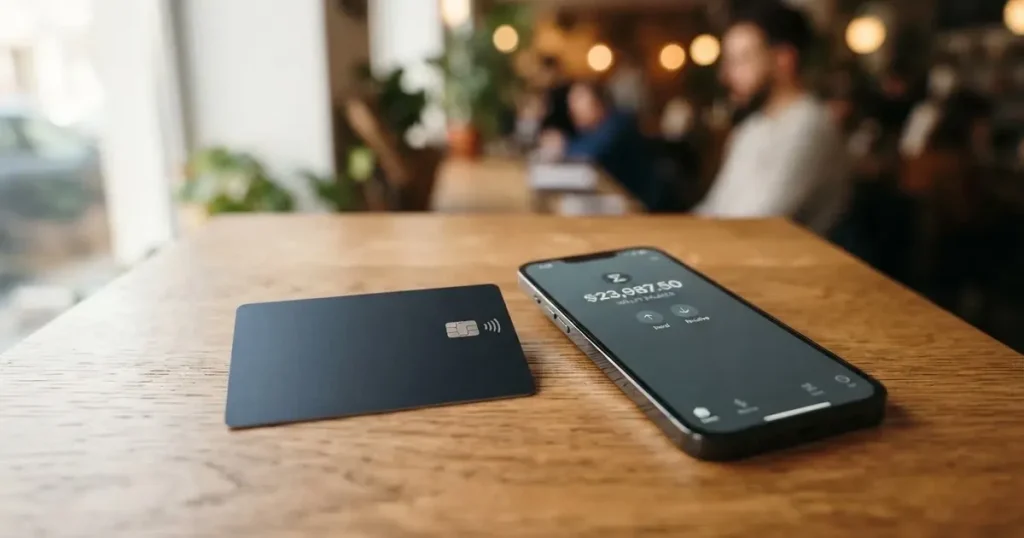
The SpectroCoin card was a Visa debit card that let you spend a euro balance topped up from a crypto wallet, and on paper it looked like a useful bridge between virtual currency and everyday payments. In practice, the programme has stopped accepting new customers, and the company behind the crypto side is no longer authorised to offer crypto-asset services in the EU/EEA. That is the headline, and the rest of this review explains what the card actually was, what it cost, and what is left for anyone who is still weighing it.
The conditions described here are current as of October 28, 2026.
Verdict: who this card is for, and who it is not
I came out of this review scoring the SpectroCoin card 3.4 out of 10, and the headline reason is simple: the programme is closed to new applicants. The card is only useful to people who already hold one and are managing a remaining balance. If you are a new customer looking for a way to spend crypto at a regular shop, the SpectroCoin card is not a realistic option in 2026.

For existing cardholders, the situation is narrower still. The crypto-asset side of the business, Spectro Finance OÜ, has stopped providing crypto services in the EU/EEA, and a banner on the help centre tells users to withdraw their assets. The card itself is issued by a separate electronic money institution, UAB Pervesk, which still holds its Bank of Lithuania licence, so the payment piece of the picture is not necessarily shut down. But the path from “I have crypto” to “I can pay at a shop” has a wall in the middle of it now, and that is what drops the score from middling to low.
The cost side is not bad, the everyday use is reasonable, and the issuer has a real European e-money licence, but those positives do not cancel out a closed programme and a third-party user reputation of 2.3 out of 5 on Trustpilot. The card would be a niche product for an existing customer base. For anyone else, the answer is to look at alternatives, and I have included a comparison of three later in the review.
Score breakdown
| Criterion | Mark | Why I gave it that mark |
|---|---|---|
| Who can get it | 0/10 | New applications closed since 30 June 2026; crypto-asset services in the EU/EEA stopped. |
| Cost | 6/10 | Physical card €5, virtual €1, €1/month; card-side fees modest; unofficial user reports of 4–5% on the crypto-to-card leg. |
| Top-up options | 5/10 | Card loads in EUR from the SpectroCoin wallet, but the page does not list which coins or networks. |
| Reliability and complaints | 1/10 | Issuer licence in place; crypto side not MiCA-authorised; Trustpilot 2.3/5 across 1,996 reviews. |
| Everyday use | 6/10 | EUR Visa Debit with physical and virtual variants and ATM access; mobile wallets not named. |
| Total | 3.4/10 | The card works for what it is, but it is no longer being sold and the wider programme is in retreat. |
Who can actually get a SpectroCoin card
The card is a Visa Debit, denominated in euros, and it comes as both a physical card and a virtual card. The fee tables on the card page refer to “EEA” and “outside EEA” without listing specific countries, and the page adds the line “Not intended for US residents”, which is a hint rather than a full country policy. There is no published list of accepted or excluded countries beyond that, and the customer-verification process is described in general terms as a requirement to verify and activate the card before use, without listing the documents you would need to upload.
In practice, the “who” question is now a short answer for new applicants: nobody. The programme is closed to new clients. The footer notice on the company’s help centre is dated 30 June 2026, and it states that onboarding, deposits and exchanges have stopped. Spectro Finance OÜ, the entity behind the crypto side, is described on the same page as “not authorised as a crypto-asset service provider under Regulation (EU) 2023/1114 (MiCA)”. A help-centre banner repeats the message that the company can no longer provide crypto-asset services in the EU/EEA, with a linked article slug dated 10 September 2026. If you are already a cardholder, you can still try to use what you have. If you are not, there is no path through the front door.
There is one practical wrinkle worth flagging. The card itself is issued by UAB Pervesk, an electronic money institution authorised by the Bank of Lithuania, while the crypto business sits in a separate company. That separation is real, and it is part of why the card can technically keep operating for existing customers even though the crypto side has stopped. It is also part of why customer funds on the card are held in a segregated account, but those funds are not covered by the Lithuanian deposit insurance scheme, which is a normal limitation of an e-money licence but a meaningful one for the size of balance you keep there.
How to get the card
The signup process itself, when it was open, was not the kind of thing the card page explains step by step. The page says the card must be verified and activated before use, and it does not list the documents involved. Based on standard practice for Visa debit cards issued by EU e-money institutions, you would normally expect an identity document, a proof of address, and a selfie or liveness check, but the company has not published that information on the card page. The level of verification required for different account tiers is not stated either, so it is not possible to map a “starter” tier against a “verified” tier with different limits.
Once you were in, the card page describes a flow where you load euros from your SpectroCoin wallet and then spend the euro balance, rather than the card directly pulling from crypto at the point of sale. That is a “pre-loaded balance” model, and the practical consequence is that you do not overdraw and you do not get a credit line. There is no cash-advance option, and the free personal IBAN account that the page mentions is a separate banking-style account bundled with the card, which is useful for receiving salaries or paying bills in euros.
On delivery, the production time for the physical card is up to two business days, and the page offers three shipping options: standard mail is free and takes up to ten business days, registered mail costs €3 and also takes up to ten business days, and expedited shipping costs €60 and takes up to three business days. The list of countries the card is shipped to is not published, and you would only find out at checkout. A replacement card costs €15, and a renewal costs €6, which is the only place you see the renewal figure.
What the SpectroCoin card really costs
The card-side cost picture is reasonable, and that is worth saying up front because it is easy to read the broader situation into the fees. The card is cheap to issue and cheap to keep, and the everyday euro fees are modest. The unofficial user feedback, which I will come back to in a moment, points to higher costs on the leg from crypto to card top-up, and that is where the picture is less flattering.
Costs and limits
| Fee or limit | Amount |
|---|---|
| Physical card issuance | €5 (one-time) |
| Virtual card issuance | €1 (one-time) |
| Monthly service charge | €1 |
| Replacement card | €15 |
| Card renewal | €6 |
| Loading or unloading via SpectroCoin Wallet | Free |
| Currency exchange fee (non-EUR wallet-side conversion) | Free |
| POS in EEA, paid in euros | Free |
| POS in EEA, paid in non-EUR | 0.5% |
| POS outside EEA, paid in non-EUR | 1% |
| ATM withdrawal, EEA, in euros | €1 (1% fee in Lithuania) |
| ATM withdrawal, EEA, non-EUR | 1% (min €1) |
| ATM withdrawal, international | 2% (min €2) |
| ATM balance inquiry | €0.50 |
| Local or foreign payment receipt | €10 |
| Chargeback or dispute fee | €25 |
| Minimum load | €1 |
| Maximum load | €25,000 |
| Daily POS / online spend limit | €25,000 |
| Daily ATM withdrawal limit | €2,500 |
| Cards per person | 2 physical, 10 virtual |
There is a single tier, with the only “choice” being physical versus virtual, and the card is a euro card. If you spend in a non-euro currency, the 0.5% EEA or 1% non-EEA fee applies on top of whatever rate Visa settles at. The Visa rate itself is not a SpectroCoin fee, and the issuer does not add a separate FX margin on top of the percentage fee listed. The only piece of the cost picture the card page does not cover is the spread between your crypto and the euro you load onto the card, because that is handled inside the SpectroCoin wallet, and the card page is silent on what that spread looks like.
To make this concrete, here are three everyday payments and the fees that would actually apply.
- A €40 supermarket purchase in Berlin, paid at the terminal in euros. No POS fee. No FX fee. Total card-side cost on the transaction: zero. The only cost is whatever spread you paid when you converted crypto into euros to load the card in the first place.
- A €25 meal in Prague, paid at the terminal in Czech koruna. The card-side fee is 0.5% (POS in EEA, non-EUR), so €0.125 on the spot. The remaining cost is the FX margin baked into the Visa exchange rate, which you do not see as a separate line item.
- A €100 cash withdrawal in London, taken from a UK ATM in pounds. The fee is the higher of 1% and €1, which on €100 is the 1% = €1, plus a €0.50 balance inquiry if the ATM makes you accept that charge. So the card-side cost is somewhere between €1 and €1.50, and the only other cost is the FX margin on the pounds.
The unofficial picture is less tidy. A reader pointed out in a Trustpilot review that the round-trip from selling crypto to funding the card came out at 4–5% on their transactions, with the bulk of the cost being the wallet-side conversion spread rather than anything the card charges. That is a useful reminder that the fee table above is the issuer’s fee table, not the cost you actually pay, and that the missing piece is the wallet’s own conversion margin.
The chargeback fee of €25 is worth noting in its own right. If you dispute a transaction and the issuer sides with the merchant, you are charged for the attempt, so the dispute process is not free to use, and there is no published time window for raising a dispute. Apple Pay and Google Pay support is not mentioned on the card page, so it is not safe to assume the card can be tokenised into a mobile wallet, and that is a real gap for everyday use.
How to top up the SpectroCoin card
The card is a euro card, and it is loaded with euros that come from inside the SpectroCoin ecosystem. The flow is: you hold virtual currency in the SpectroCoin wallet, you exchange some of it into euros inside the wallet, and the euro balance is what the card spends. Loading and unloading the card from the wallet is free on the card side, and the minimum load is €1, with a maximum load of €25,000.
The card page does not list the specific coins, tokens or networks that the wallet supports, which is a significant gap if you are deciding whether your holding is actually usable here. Most SpectroCoin wallet users will know that the platform has historically supported a long list of major coins and tokens, but that is wallet information, not card information, and the card page does not spell it out. The page also does not state who pays the network fee for an on-chain deposit, so you do not know in advance whether the cost of a transfer lands with you, the wallet, or some combination.
There is a separate “local or foreign payment receipt” fee of €10, which is not the same as a top-up fee and is more about receiving a euro payment into the bundled IBAN account, but it is worth knowing about if you are planning to use the IBAN as a way to fund the card. And the wallet-to-card move is free, but the IBAN-to-card move, where it is treated as a “foreign payment receipt” depending on the originator, may not be.
If you want to take value off the card, you can unload it back into the SpectroCoin wallet for free. A banner on the help centre tells users to “please withdraw your assets”, without giving a deadline or a specific procedure, and the page does not name a closing date for the card programme or a forced sweep of balances. That is a process to follow up on directly with the company, because the answer is not on the card page.
Paying with the card day to day
In a normal use case, this is a euro debit card, and you would expect to do what a euro debit card does: tap to pay at a shop, enter a card number online, withdraw cash from an ATM. The card is Visa, which is the largest card network by acceptance in the EU/EEA, and the card is issued by a regulated e-money institution, which means the payment rails are standard.
What the page does not say is at least as informative as what it does say. Apple Pay and Google Pay support is not mentioned, which is unusual for a card of this kind in 2026 and is a practical limitation if you are used to paying with a phone. There is no list of blocked merchant categories, no published list of countries where the card cannot be used, and no mention of contactless limits. The dispute process exists, with a €25 fee if your dispute is not upheld, but the time window for raising a dispute is not given, which means you have to assume the worst and act fast.
There is no cashback or rewards programme described on the card page. The 1% fee on non-euro international point-of-sale spending and the 0.5% EEA non-euro fee are the only “margins” you see, and they are not framed as rewards, they are framed as fees. The daily limits are generous on paper: €25,000 a day at point of sale or online, and €2,500 a day at the ATM, but those limits sit on top of the load limit, so a single €25,000 load matches a single day’s spend limit and you would need to load again to spend again.
One thing the card page does not discuss is the merchant side. Some shops decline prepaid or foreign-issued cards because the BIN lookup (the first six or eight digits of the card number that identify the issuing bank) reveals the card type and the issuer country, and a euro card issued in Lithuania can look “foreign” to a merchant in another EEA country. If a transaction declines, it is worth trying the chip-and-PIN path, or asking the merchant whether they accept prepaid cards. This is not unique to SpectroCoin; it is a feature of how the card networks work.
What can go wrong
The risks here are not the usual “watch out for FX fees” list. They are about the wider state of the programme and the customer experience, and they are serious.
The first risk is the one I have already mentioned: the company behind the crypto side is not authorised under MiCA, and it has stopped providing crypto-asset services in the EU/EEA. The footer notice on the help centre is dated 30 June 2026, and the help-centre banner that asks users to withdraw their assets links to an article slug dated 10 September 2026. That does not mean the card stops working, because the card is issued by a separate entity, but it does mean the path from “I hold crypto” to “I can top up the card” is no longer officially supported, and you would be working with the wallet side as an existing customer in a closing programme.
The second risk is the customer experience. The Trustpilot profile for SpectroCoin, read on 21 October 2026, sits at 2.3 out of 5 with the label “Poor” across 1,996 reviews, and only 33 of those were posted in the last 12 months. The headline aggregate looks split: 76% five-star reviews and 16% one-star reviews, which is a familiar pattern for a company with a small number of very loyal users and a much larger number of unhappy ones. The themes from user reports are uncomfortable. There are reports of crypto payments held and not refunded between April and September 2026, account blocks and KYC rejections between September 2025 and June 2026, slow or automated support between February and May 2026, IBAN and SEPA withdrawal problems in January 2026, and the 4–5% crypto-to-card fees and card failures I mentioned earlier, dated to February 2026. A small sample, a loud signal.
The third risk is structural. The card is a custodial product, which means the company holds your funds until you spend them, and the company is regulated as an e-money institution, not as a bank. Funds on the card are held in a segregated account, but that segregation is for the protection of creditors in an insolvency, not for the day-to-day safety of your balance, and the funds are not covered by the Lithuanian deposit insurance scheme. If you have a meaningful balance on the card, the appropriate question is not “will it work” but “what happens if the issuer has a problem, and how do I get my money out in time”. The free personal IBAN account and the unload-to-wallet option are useful, but they are not the same as having the money in a bank deposit.
The fourth risk is the regulatory backdrop. The MiCA transitional period for crypto-asset service providers runs until 1 July 2026, and entities that were operating under national law before MiCA could continue until that date or until they were granted or refused a MiCA authorisation. Spectro Finance OÜ has not received a MiCA authorisation, and the help-centre notice makes clear that its crypto-asset services in the EU/EEA have stopped. A card that depends on a regulated crypto side is only as strong as that side’s regulatory standing, and that standing has changed in the last year.
The fifth risk is operational: 2FA, instant card freeze, and the support channels. The card page lists a Live Chat for lost or stolen cards, an email channel for existing clients, and a help centre at help.spectrocoin.com, but it does not state the languages supported or the hours of operation, and it does not mention app-based 2FA or a card-freeze feature on the card page. If you lose the card, the Live Chat is the only named urgent channel, and the response time is not published.
The sixth risk is the simplest one. The programme is not being sold, and the company is asking users to withdraw. If you are reading this and you are not yet a customer, the risk is that the programme will not be there for you at all, and the most likely outcome is that you would be working with a closed product from day one.
What to take instead
I compared the SpectroCoin card against three alternatives that are still actively onboarding new customers. Each is different in shape, and none of them is a direct replacement, but the comparison should give you a feel for the trade-offs in the category. The three alternatives are the International Visa Card, the UNi Card, and Whop Cards, and the figures below come from those products’ own published pages.
International Visa Card
The International Visa Card is a US-issued Platinum Visa that pays in US dollars, with a virtual card available now and a physical card listed as “coming soon”. Onboarding is closed to residents or legal registrants of a long list of countries, including Belarus, mainland China, North Korea, Cuba, India, Iraq, Iran, Israel, Myanmar, Nepal, Nicaragua, Russia, Syria, Turkey, Ukraine, Venezuela and Vietnam, and the rule is based on residence or registration rather than citizenship. Purchases are also blocked in North Korea, Cuba, Iran, Russia, Syria, Ukraine and Venezuela. Cards on the FATF grey list are reviewed case by case.
The cost picture is different from SpectroCoin’s. The virtual card issuance is $5 one-time, and there is no maintenance fee on the basic Classic plan. Higher plans are Pro at $9.00 per month and Max at $19.00 per month. Card use in US dollars is free on all plans, and foreign currency transactions carry “Visa exchange rate + 2% FX fee”, which is a single-line description of an FX margin that may or may not be cheaper than the SpectroCoin EEA non-euro 0.5% plus Visa rate, depending on which currencies you actually use. Funding is free at 1:1 for USDC and USDT into a USD account, and the platform also accepts USD, EUR, SEPA, SWIFT and FedNow deposits. The networks for the USDC and USDT deposits are not stated. There is no cashback programme.
UNi Card
The UNi Card is a multicurrency Mastercard that spends from the balance in a UNi.Global account, and the cost story is unusually clean. The card has “no annual fee” and “no foreign transaction fee”, with assets converted at “live OTC (Over-the-Counter) rates” and “no hidden exchange fees”. The issuance fee is not stated, the funding sources are not stated, and the residency rules are not stated. The reward angle is the “Spend-to-Earn” programme, which the page says runs up to 3% with the UNi Card, although the conditions and the payout currency are not detailed.
The clean-fee story is the strong suit here. If the only thing you care about is “no annual fee, no FX fee, multicurrency”, this is the card that most directly makes that claim, and the reward layer is a positive that SpectroCoin does not offer. The downsides are the gaps: the page does not say who can have the card, what the issuance fee is, or how the card is funded, so you would need to confirm those before signing up.
Whop Cards
Whop Cards is a Visa product that spends from a Whop balance, with the balance usable as soon as a payment arrives and settled funds needed for standard withdrawals. The card is accepted anywhere Visa is taken online and in stores, and the page describes it as both a virtual and physical product, although the card currency and the type-by-type split are not stated. The cost page is short: “No extra fees”, with no issuance or monthly amounts listed, and no published FX or conversion fee.
The reward angle is the strongest of the three, with 5% cashback at a list of “select merchants”, currently Uber, and more planned. The cashback currency and conditions are not stated. The geographic restrictions are detailed: the consumer programme is open in 31 US states and the business programme in 41, and the consumer country exclusion list is similar in shape to the International Visa Card’s, including Belarus, mainland China, Cuba, Hong Kong, India, Iran, Iraq, Israel, Myanmar, Nepal, Nicaragua, North Korea, Russia, Syria, Turkey, Ukraine, Venezuela and Vietnam. The basis for these restrictions, citizenship or residence, is not stated.
How the four compare
| SpectroCoin | International Visa Card | UNi Card | Whop Cards | |
|---|---|---|---|---|
| Score | 3.4/10 | 6.7/10 | 6.1/10 | 5.2/10 |
| Status | Closed to new clients | Open | Open | Open |
| Network | Visa | Visa | Mastercard | Visa |
| Currency | EUR | USD | Multicurrency | Not stated |
| Issuance fee | €5 physical, €1 virtual | $5 virtual | Not stated | “No extra fees” |
| Monthly fee | €1 | $0 (Classic), $9 (Pro), $19 (Max) | None stated | “No extra fees” |
| FX fee | 0.5% EEA non-EUR, 1% international non-EUR | “Visa rate + 2%” | None stated | Not stated |
| Cashback | None stated | None stated | Up to 3% | 5% at select merchants |
| Mobile wallet | Not stated | Not stated | Not stated | Not stated |
The honest summary is that none of these four products is a clean answer on its own, and SpectroCoin’s appeal as a cheap euro card with a small monthly fee is offset by the closed status. If you want a euro-denominated Visa with a low monthly cost and you are not yet a customer, the closest alternative in spirit would be the UNi Card if its multicurrency story works for you, or a different euro-issued Visa from a different provider. The International Visa Card is the cleanest US-dollar-funded option but is geographically restricted. Whop Cards is the best-funded option if you are in a US state where it is available and you are happy to start with cashback rather than FX savings.
Who I would recommend the SpectroCoin card to
If you are an existing SpectroCoin cardholder with a euro balance on the card, the only sensible action is to follow the company’s own advice and start moving the balance off the card. The unload-to-wallet option is free, and the IBAN account can receive euros from the card if you need to. The reason to move is not the card itself, which still works as a Visa, but the wider state of the programme: the crypto side is no longer offering services, the help-centre banner is asking users to withdraw, and the customer-experience reviews from 2026 are not flattering. Holding a balance on a card whose programme is in retreat is the kind of position that gets worse the longer you leave it.
If you are not yet a customer, I would not recommend the SpectroCoin card. The product is closed to new applicants, and the underlying crypto business is not MiCA-authorised and has stopped providing crypto-asset services in the EU/EEA. Even if the application flow were still open, the customer-experience profile on Trustpilot is poor, and the 4–5% crypto-to-card cost that some users have reported is high. None of this is a “do not consider any crypto card” statement. The category has working products, and the comparison table above is a starting point. The SpectroCoin card, in its current state, is not one of them.
There is one narrow group I would think about it for: a long-time customer who is winding down a position, who already has euros on the card, and who values a small monthly fee and a free euro spending line for the next few months while they finish their withdrawal. For that person, the card is functional, and the only question is how quickly they want to empty it.
Frequently asked questions
What is the SpectroCoin card?
The SpectroCoin card is a Visa Debit card denominated in euros, available as a physical or virtual card, that spends a euro balance topped up from a SpectroCoin crypto wallet. The card is issued by UAB Pervesk, an electronic money institution licensed by the Bank of Lithuania, and the wider crypto business sits with Spectro Finance OÜ, which is not MiCA-authorised and has stopped providing crypto-asset services in the EU/EEA.
How does the SpectroCoin card work?
You hold virtual currency in the SpectroCoin wallet, exchange some of it into euros inside the wallet, and the euro balance is what the card spends. The card is a “pre-loaded balance” product, which means it cannot overdraw, there is no credit line, and the funds sit with the issuer until you use them. Loading and unloading between the wallet and the card is free on the card side.
Is SpectroCoin a bank?
No. SpectroCoin is not a bank, and the card is not a bank-issued product. The card is issued by UAB Pervesk, an electronic money institution authorised by the Bank of Lithuania under electronic money institution licence No. 17. Funds held on the card are in a segregated account, but they are not covered by the Lithuanian Deposit Insurance System, which is a meaningful difference from a bank deposit.
Who owns SpectroCoin?
The card programme is owned through a group of companies. The issuer is UAB Pervesk in Lithuania, and the wider group includes Spectro Finance OÜ in Estonia, which is not authorised as a crypto-asset service provider under MiCA, Spectro Finance Limited in the British Virgin Islands, and Spectro Finance Systems Inc. in Panama. The card is a product of the issuer, and the wallet is a product of the crypto entity.
Is the SpectroCoin card available in my country?
For new applicants, the card is not available in any country. The programme closed to new clients on 30 June 2026, and the help-centre footer notice makes that clear. For existing customers, the card page refers to “EEA” and “outside EEA” in its fee tables without listing specific countries, and adds that the card is “not intended for US residents”, but a full country list is not published.
How do I top up the SpectroCoin card?
You top up the card by exchanging virtual currency into euros inside the SpectroCoin wallet and then moving the euro balance to the card. The minimum top-up is €1, the maximum top-up is €25,000, and the load itself is free. The card page does not list the specific coins, tokens or networks supported by the wallet, and the party that pays the network fee on an on-chain deposit is not stated.
How much does the SpectroCoin card cost to use?
The physical card costs €5 to issue, the virtual card costs €1, and the monthly service charge is €1. Card-side spending in euros in the EEA is free, non-EUR spending in the EEA is 0.5%, and non-EUR spending outside the EEA is 1%. ATM withdrawals in euros in the EEA are €1, EEA non-EUR withdrawals are 1% with a €1 minimum, and international ATM withdrawals are 2% with a €2 minimum. Unofficial user reports point to an additional 4–5% cost on the crypto-to-card leg.
Is the SpectroCoin card safe?
The card side is regulated as an e-money product, and customer funds are held in a segregated account. The wider picture is less reassuring: the crypto entity is not MiCA-authorised, the Trustpilot profile for SpectroCoin sits at 2.3/5 across 1,996 reviews, and recent user reports describe held payments, account blocks, slow support and high effective fees. The card is a custodial product, which means you are trusting the issuer with your balance until you spend it.
Can I add the SpectroCoin card to Apple Pay or Google Pay?
The card page does not say. Apple Pay and Google Pay support is not mentioned anywhere on the card page, and you should not assume either wallet works with the card until you confirm it with the company directly. This is unusual for a card of this kind in 2026, and it is one of the practical limitations of the product.
How do I withdraw money from SpectroCoin?
You can unload the card back into the SpectroCoin wallet for free, and you can receive euros into the bundled personal IBAN account. The help-centre banner asks users to withdraw their assets, but it does not give a deadline or a specific procedure, and the card page does not name a closing date for the programme. If you have a balance you want to move, the appropriate first step is to contact the company through the Live Chat or the existing-clients email channel.
Choosing an app or neobank card – cryptocardadvisor
Content created by the «cryptocardadvisor» team