
A crypto card with real gaps in the small print
 Available in US
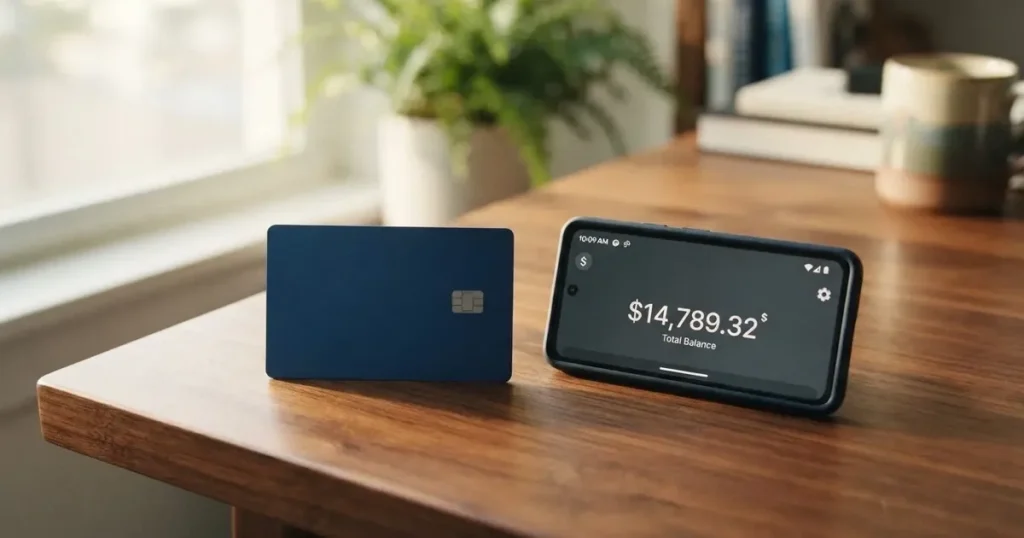
The Plumex card sits in an awkward middle ground. It promises a crypto app that also behaves like an ordinary payment card — you load or hold a balance, you tap, you pay — and on that promise it delivers a workable product for the audience it names: Europeans and Ukrainians who want a crypto app with a card in the pocket. What it does not yet do is publish the details you would need to run your life on it. The card type, the network, the currency, the fees beyond a single swap percentage, the daily limits, the delivery time — all of that is either absent from the public pages or marked “Coming soon.” On a scorecard that weighs transparency as heavily as function, that is what pulls the card down to a middling mark.
For you, the practical question is not “is this a scam” — I found no complaints and no reported incidents, and the operating companies are named. The question is whether you can afford to open the app, read the fee schedule inside it, and accept that the headline numbers you can see from outside are not the numbers you will live with. If your priority is a card you can trust to behave predictably at a checkout abroad, the alternatives below score higher. If your priority is a crypto-first app that happens to pay for the coffee, Plumex is a reasonable candidate — with eyes open.
Conditions described here are current as of October 28, 2026.
The score: 5.9 out of 10
Here is the full breakdown, criterion by criterion, with the mark it earned and, in a few words, why.
| Criterion | Mark | Short reason |
|---|---|---|
| Who can get it | 5 / 10 | Built for Europe and Ukraine; supported countries appear only inside the app and depend on where you live and are located. |
| Cost | 7 / 10 | Swap fee is 0.5% on the free Basic plan and free on Premium; other fees are listed without amounts and the currency markup is not disclosed. |
| Top-up options | 5 / 10 | Spends directly from a crypto balance, but coins and networks are not named; fee-free crypto top-up is a team claim, not a schedule. |
| Reliability and complaints | 6 / 10 | Platform is Plum Labs s.r.o. in the Czech Republic, custodian is Plum Global Inc. in Panama; no licence numbers, no issuer named, no complaints found, no Trustpilot reviews yet. |
| Everyday use | 6 / 10 | Apple Pay and Google Pay are supported; the card type, plastic format and ATM access are not disclosed. |
| Total | 5.9 / 10 | A usable crypto app with a card, held back by how much it does not tell you. |
The single highest mark is Cost, and it is high for a narrow reason: the one fee the site does put a number on — a 0.5% swap on the free plan — is not predatory. The single lowest cluster is top-up and eligibility, and both are low not because anything looks wrong but because the information is not there. Who can get the card depends on a list you can only see after you install the app, and depends on your residence and your physical location. That is a real barrier to deciding, and it is the main reason this card suits a narrower reader than its marketing suggests.
Will they give you the card?
The card is described as “built for everyday money needs in Europe and Ukraine,” and that phrase is doing most of the work. Availability “may vary by country and local requirements.” The supported countries are shown in the app rather than on the website, and whether you qualify depends on two things at once: your residence and where you are actually located. That second part matters more than it first appears — the route serving Ukraine is explicitly “not available to persons residing in or accessing the services from the European Union.” So the same person can qualify for one route and be excluded from another based on where they live versus where they are.
There is no published list of eligible countries for me to check you against, and the site’s own position is that the app holds the current list. My read: if you are in Europe outside the EU, or in Ukraine, you are in the intended audience. If you are in the EU, in the UK, in the US, or anywhere else, the app itself is the only authority, and you should open it and look before you commit time to an application. It is not something you can settle from a review page.
What the provider will ask you for, when you try, is set out in the next section. What is worth saying here is that approval is not guaranteed and the reasons for refusal are specific.
How to get it
The signup pitch is speed: “5-min KYC.” In practice that means the identity check itself is fast, not that you will have a usable card five minutes later. To open the account, providers may ask for a government ID, evidence of your address, a selfie with a liveness check, or a video check. You must be 18 or older. There is no fixed review period published, so treat “5-min KYC” as a description of the check, not a promise about the card.
There are no account tiers at signup. Instead the account runs on risk-based limits — what you can hold and do may scale with how the provider assesses you. That is normal, but it means your limits at the start may not be your limits later.
The card’s hard facts are the ones you would want first, and they are the ones the site does not give. The card type, the card network and the currency are not stated on the site. On an earlier check, the card was found to draw directly from a crypto balance. Delivery time for a physical card is not stated either. So when I say “how to get it,” the honest answer is: you can begin the identity check in minutes, but I cannot tell you from the public pages whether a physical card is in your future at all, let alone when it would arrive, because that information is not published.
Why an application might be refused
The provider lists its grounds for rejection, and they are worth reading before you apply rather than after you are turned down:
- Residence or location that is ineligible, including use of a VPN or proxy to appear elsewhere
- A match against sanctions lists
- Unexplained or structured activity on the account
- Inconsistent documents — where your ID and your address proof disagree
- Third-party payments — money arriving from someone else’s name or account
- Missing Travel Rule information on certain transfers
- High-risk blockchain exposure on the assets involved
None of these is unusual for a regulated financial service. The VPN and proxy line is worth dwelling on for one sentence: it means appearing to be somewhere you are not is treated as a problem in its own right, and it is one of the more common reasons a legitimate applicant is declined. There is no workaround to look for here, and I would not offer one — the point of that rule is that the provider must know where you actually are.
Fees and what a payment really costs
Let me put the limit on the good news first: the card’s public pages do not state a single all-in cost. There is no published price for issuance, no monthly fee on the free plan, no ATM fee, no daily or monthly spending limit, and no statement of the currency the card holds or pays in. The currency markup on exchange is not disclosed. What follows is everything the site does put a number or a label to, and it is not a complete cost picture.
| Fee or limit | What the card’s pages say |
|---|---|
| Issuance fee | Not stated |
| Monthly fee | Basic plan free; Premium $14.99/month, marked “Coming soon” |
| Conversion (swap) fee | 0.5% on the Basic plan; free on the Premium plan |
| Other fees | Listed by category in the Fees and Limits Schedule, with no amounts |
| FX / currency markup | Not stated |
| ATM withdrawal fee | Not stated |
| Cash in / out | Up to $499 per month free on the Premium plan |
| Daily spending limit | Not stated |
| Monthly spending limit | Not stated |
| Card currency | Not stated |
The two-tier structure is straightforward. Basic is free and carries the 0.5% swap. Premium is $14.99 a month, is not yet live — “Coming soon” — and on its published list of benefits it would give you free swaps, exclusive card designs, best prices on lounge access, Fast Track and eSIM, one free cash-in or cash-out per month up to $499, and priority support. Read that list as a statement of intent rather than something you can buy today.
Now let me walk three ordinary payments through this table, because the swap line is the one that actually touches your money.
Paying for a coffee in your own currency, on the free plan. If the card spends directly from a crypto balance, the purchase is converted at the moment of payment. On Basic, that conversion carries the 0.5% swap. On top of that, if your crypto is not already in the currency the merchant charges, and the card holds or settles in a different one, a currency conversion is involved — and the card does not state its markup on that, or even which currency it uses. On a small purchase the swap is the part you can see; the unknown is the part that scales with how much you spend.
Paying abroad, on the free plan. This is the case to be most careful about, because two unknowns stack. The 0.5% swap applies on Basic, and the card’s currency conversion — rate and any markup — is not disclosed. If you paid in a currency your balance is not held in, you are paying a swap you can see plus a conversion you cannot. Nobody can tell you the combined figure from outside, because the card has not published it.
Paying on Premium, once it exists. The swap goes to zero, which is the single clearest advantage of the paid plan and the reason it costs $14.99 rather than nothing. But the currency markup question is untouched by the tier — the site does not attach it to Basic or Premium — and Premium is not purchasable yet, so this is a calculation about a plan you cannot currently buy. Free cash in and out up to $499 per month is also Premium-only and also not live.
The honest summary of the cost picture: the swap fee is fair, the tiering is sensible, and everything that would let you predict a large or foreign-currency purchase is missing. If you spend abroad or in bulk, get the in-app fee schedule and read it before you rely on this card — not because I expect a problem, but because the number simply is not published.
How to top it up
The card’s funding model, as far as it is described, is that you spend directly from your crypto balance and the conversion happens at the moment of payment — there is no separate step of pre-loading a card balance from your side. On an earlier check that is exactly how it behaved.
The details you would need to do that are, again, largely absent. Which coins and which networks you can deposit is not disclosed. The official fees page lists deposit categories but no amounts. Whether you can top up with fiat is not stated. What is stated about crypto deposits being fee-free comes from a LinkedIn post by the team — a company claim, not a published schedule, and the fee page itself does not put a figure behind it. Network fees are a separate matter: the gas or bandwidth cost of a blockchain transfer is charged by that network, not by the card, so a deposit can carry a cost the card does not control and does not display.
Withdrawals work differently from deposits and are clearer. You can withdraw crypto from within the app, and the withdrawal carries a service fee plus the network fee — the amounts for neither are published. You can close the account once your pending transactions have completed, and assets are returned to you on closure. That is the part of the lifecycle that is described with some clarity, and it is worth knowing before you ever deposit: your money is not locked in forever.
One practical warning that belongs here rather than later. Blockchain transfers are essentially irreversible. If you send on a network the provider does not support, or to an address belonging to a different network, the funds can be lost, or recovered only through a manual support request with no guarantee. Since Plumex does not publish its supported networks, the risk of picking the wrong one is higher here than on a card that lists them. Check the supported networks inside the app before you send anything.
Paying with it every day
The everyday pitch is one line: “Apple Pay and Google Pay. Crypto behind the tap.” So the wallets are there, which means most of what you would actually do with a card — a contactless payment on a phone — does not require you to handle a physical card at all. Whether there is a physical card, and what network it runs on, the site does not say.
The mechanics of that tap are the same as any other mobile wallet. Apple Pay replaces your card number with a device-specific number kept in the phone’s secure hardware, never on Apple’s servers, and each payment carries a one-time code. What happens on Plumex’s side is that the issuer can restrict the wallet number — for example block it for online or phone use — so a card working in the wallet is not a guarantee it works everywhere the physical card would.
Beyond the wallets, what is missing is the practical detail that decides whether a card is a daily driver or an occasional backup. The merchant categories that are blocked are not stated. Whether you can use it in gambling venues — most issuers block that category by policy rather than law — is not stated. The rewards and perks are “Coming soon,” so the “Spend-to-Earn” idea is not a reason to choose this card at present. And in a shop that does a card-type lookup, a prepaid or foreign-issued card can read as unusual and draw extra scrutiny or be declined; the card’s own issuer country and BIN are not published, so you cannot predict that in advance.
If something goes wrong with a payment
Refunds are not automatic, which is the first thing to understand: a purchase does not simply reverse itself because it went wrong. Refunds go back to the original source. For an ordinary refund the provider targets a decision within 10 Business Days; for a complex case it targets 30 calendar days. Crucially, your right to dispute goes through your bank or the card scheme as well, and that right is not limited by whatever the app says. Keep that in your back pocket. A refund from the app is the slow path; a chargeback raised through your bank is the other one, and it exists independently of the provider’s good intentions.
One more small thing that bites people: a payment that is declined can still leave a hold on your balance, sometimes for several days. Budgets and available amounts can look lower than they should for a week after a single failed authorisation.
What can go wrong
Let me separate three different things that get blurred together when people ask whether a card like this is “safe”: the company, the money, and the moment you spend.
The company. This part is the most transparent on the card, and that is worth saying plainly. The platform is Plum Labs s.r.o., Company ID 243 80 792, registered in Prague in the Czech Republic. Custody of assets is with Plum Global Inc. in Panama. Exchange and fiat side sits with Innovate Payments Inc., in British Columbia, Canada. Identity-verification routing is handled by LMLP consulting s.r.o. in the Czech Republic. Four named companies across three countries is more than many comparable services publish. What is not published: any licence numbers, and the name of the card issuer. So you can see who is behind the service and cannot verify their permissions from the site.
The money. The arrangement is custodial — Plum Global Inc. holds the credentials, not you. That means your trust is in that company, full stop, and it carries both counterparty risk and the ordinary hack risk that comes with a custodial platform. This is not a Plumex-specific failing; it is the industry pattern, and it has a history. Mt. Gox reported roughly US$350 million stolen between 2011 and 2014; Coincheck roughly US$400 million in 2018; Ronin Network US$625 million in 2022. None of those is Plumex. The point of listing them is that “custodial” has a known downside, not that Plumex belongs in that sentence. On the positive side, whether the balance is safeguarded the way an e-money institution must safeguard client funds is something the site’s silence prevents me from confirming.
The complaints. I found no official incidents and no user complaints, and Trustpilot currently shows no reviews for the card — a TrustScore of 0, read on 21 October 2026. Read that carefully for what it is: not a clean track record, but a track record that has not started. There is no base of users yet complaining about refunds or frozen accounts, which cuts both ways. It means you are not inheriting someone else’s mess, and it means you are also not inheriting their evidence that things work.
Regulatory context, briefly. In the EU, customer due diligence under anti-money-laundering law covers your name, address, date of birth, nationality and documents, plus a sanctions check and a politically-exposed-person assessment; if it cannot be completed, the institution is required to stand back from the transaction and, where necessary, close the relationship — which is why accounts get frozen pending paperwork rather than by choice. On the crypto side, the EU’s MiCA rules applied to stablecoins from 30 June 2024 and to crypto-asset service providers from 30 December 2024, with a transitional period running until 1 July 2026 for providers already operating under national law; ESMA keeps a public register you can use to check whether a provider appears on it. A card, note, is regulated separately as a payment service — so a crypto card of this kind often rests on two licences, and here you are told neither. In the US, FinCEN treats administrators and exchangers of convertible virtual currency as money transmitters, while ordinary users spending their own money are not in that category.
What to take instead
If the gaps above are deal-breakers for you, the alternatives are not dramatically different products — they are crypto cards where a few more of the numbers are published. Here is how the three I compared score.
| Alternative | Score | Card | Cost | Notable published detail |
|---|---|---|---|---|
| Plumex | 5.9 / 10 | Type and network not stated | Basic free; Premium $14.99/month | 0.5% swap on Basic |
| International Visa Card | 6.7 / 10 | U.S.-issued Platinum Visa, virtual, pays in USD | $5 one-time issuance; no maintenance fee | Card use in USD free; foreign currency adds a 2% FX fee to the Visa exchange rate |
| UNi Card | 6.1 / 10 | Multicurrency, on the Mastercard network | No annual fee | No foreign transaction fee; conversion at live OTC rates |
| Whop Cards | 5.2 / 10 | Visa, online and in stores | Page says “No extra fees”; no amounts listed | 5% cashback at select merchants |
International Visa Card, the strongest of the alternatives at 6.7, is also the most restrictive by a wide margin, and you need to read the country list before you get excited. It is not available to residents or legal registrants of Belarus, mainland China, North Korea, Cuba, India, Iraq, Iran, Israel, Myanmar, Nepal, Nicaragua, Russia, Syria, Turkey, Ukraine, Venezuela or Vietnam, and countries on the FATF grey list are reviewed case by case with compliance approval. Purchases are blocked in North Korea, Cuba, Iran, Russia, Syria, Ukraine and Venezuela. The rule attaches to residence or registration, not citizenship. In exchange, it publishes the numbers: $5 one-time issuance, no maintenance fee, card use in USD free on every plan, and for foreign currency a stated “Visa exchange rate + 2% FX fee.” Plans are Classic free, Pro $9.00/month and Max $19.00/month. It is a virtual U.S.-issued Platinum Visa paying in USD, with the physical card marked “Coming soon” — so it is not an answer if you want plastic. Deposits are free, USDC or USDT into the USD account, or USD, EUR, SEPA, SWIFT and FedNow, though the networks are not named.
UNi Card at 6.1 is the one whose cost story is the cleanest of the three: no annual fee, no foreign transaction fee, assets converted at live OTC rates, and it says outright there are no hidden exchange fees. It is a multicurrency card on the Mastercard network spending from a UNi.Global balance, with rewards up to 3% under “Spend-to-Earn.” Against that, the pages do not state who can get one, what it costs to issue, or how you fund it.
Whop Cards at 5.2 is the weakest of the three and the narrowest: 31 U.S. states for consumers — Alabama, Alaska, Arkansas, California, Colorado, Connecticut, Florida, Hawaii, Illinois, Indiana, Iowa, Kansas, Kentucky, Maine, Massachusetts, Michigan, Minnesota, Montana, Nebraska, New Hampshire, New Jersey, New York, North Carolina, Oklahoma, Pennsylvania, South Carolina, Texas, Utah, Virginia, West Virginia, Wyoming — and 41 for businesses. It works where Visa works, spends from a Whop balance, and offers 5% cashback at select merchants, currently Uber. But it publishes no fee amounts and no coin or network information, so it has the same transparency problem as Plumex in a different shape.
One caution about all of these: the networks under the brand are the part that carries risk. Neither Visa nor Mastercard issues crypto cards to consumers directly; they license issuers, and they can suspend a programme. Visa terminated its global agreements with FTX on 13 November 2022, and the FTX U.S. debit card was wound down. WaveCrest, a Visa issuer that supplied crypto card brands, was suspended by Visa in Europe in 2018, closing every WaveCrest-issued Visa programme. Closures generally follow a pattern — notice, then loading and spending stop, then you are asked to withdraw what remains. So when you pick any of these, you are picking an issuer’s licence as much as a brand’s app.
Who I would recommend it to
I would point Plumex at one reader: someone in Europe outside the EU, or in Ukraine, who already lives in crypto, wants the app as the primary interface, and treats the card as a convenience rather than the main account. If that is you, the card does the job it advertises — tap to pay from a crypto balance, Apple Pay and Google Pay present, a free tier with a 0.5% swap, and a paid tier coming that removes even that.
I would point it away from three readers. If you spend heavily in foreign currency, you are paying a conversion cost the site will not quote you. If you are anywhere outside the intended geography, you cannot even determine your eligibility from outside the app, and the Ukraine route explicitly excludes EU residents. And if you are the kind of person who needs a number before you commit — a named issuer, a licence, a card currency, a daily limit, an ATM fee — this card will frustrate you, because those numbers are not published and one whole tier does not exist yet.
My own test before recommending anything in this category is simple: install it, read the in-app fee schedule and limits with the plan you intend to use, confirm your country appears, and check which networks it accepts for deposits — then decide. On the evidence available from outside, Plumex is a credible, young, reasonably priced crypto app with a card attached. It is not yet a card you can model on paper. Those are different things, and the difference is most of the score.
Frequently asked questions
What is the Plumex card?
The Plumex card is a payment card offered by a crypto app. You hold crypto, and the card spends from that balance, converting at the moment of payment rather than drawing on a bank account. The company describes it as built for everyday money needs in Europe and Ukraine, and positions itself as a crypto app first with Apple Pay and Google Pay support on top.
How does the Plumex card work?
You open an account, pass a quick identity check, hold crypto in the app, and then pay by tapping your phone or using the card, with the crypto converted at the point of payment. On the free Basic plan that conversion carries a 0.5% swap fee. On the paid Premium plan swaps are free, but Premium is currently marked “Coming soon” and is not yet available to buy.
Is Plumex a bank?
Not on the evidence its own pages publish. The platform is Plum Labs s.r.o., a Czech company, with custody at Plum Global Inc. in Panama and the exchange and fiat side at Innovate Payments Inc. in Canada. No licence numbers are published and the card issuer is not named, so you cannot verify from the site what kind of regulated institution stands behind the card.
Who owns Plumex?
Four companies are named: Plum Labs s.r.o. (Company ID 243 80 792, Prague) runs the platform; Plum Global Inc. in Panama holds custody; Innovate Payments Inc. in British Columbia, Canada, handles exchange and fiat; LMLP consulting s.r.o. in the Czech Republic routes identity verification. The site does not state a parent company, and no licence numbers appear anywhere on it.
Is the Plumex card available in my country?
That depends on where you live and where you are physically located, and the authoritative list is inside the app rather than on the website. The card is built for Europe and Ukraine, and availability “may vary by country and local requirements.” One specific rule: the Ukraine service route is not available to persons residing in or accessing the services from the European Union.
Does the Plumex card require KYC?
Yes. The signup is advertised as “5-min KYC,” which refers to the identity check itself. Providers may request a government ID, proof of address, a selfie with liveness detection, or a video check, and you must be 18 or older. Approval is not guaranteed — listed grounds for refusal include ineligible residence, VPN or proxy use, sanctions matches, and inconsistent documents.
How much does the Plumex card cost?
The free Basic plan charges a 0.5% swap fee; the Premium plan at $14.99 a month offers free swaps but is not yet live. Beyond that, the card’s pages do not state an issuance fee, an ATM fee, a currency markup, or daily and monthly limits — other fees are listed by category in the Fees and Limits Schedule with no amounts, which is why I recommend reading it in-app.
How do I top up the Plumex card?
There is no separate pre-loading step as far as the site describes — the card spends directly from your crypto balance, converted at payment. The coins and networks accepted for deposit are not disclosed, and whether fee-free crypto deposits apply comes from a team statement rather than a published schedule. Always confirm the supported network in the app before sending, since a wrong-network transfer is irreversible.
Is the Plumex card safe?
There is no track record yet, which is the fairest summary. I found no official incidents and no user complaints, but Trustpilot showed no reviews at all on 21 October 2026, so there is no body of evidence yet either way. The balance is custodial, held by Plum Global Inc., so your trust is in that company; the usual safeguards like 2FA and instant card freeze are not described on the site.
How do I withdraw money or close my account?
Crypto withdrawals are available in-app and carry a service fee plus the network fee, with neither amount published. You can close the account once pending transactions have completed, and your assets are returned to you on closure. A separate, unrelated service is MoneyGram cash pickup, offered in 200+ countries across 100,000+ locations.
Choosing an app or neobank card – cryptocardadvisor
Content created by the «cryptocardadvisor» team