
The Cash Card With a Self-Custody Vault Behind It — and a Support Problem
 Available in US
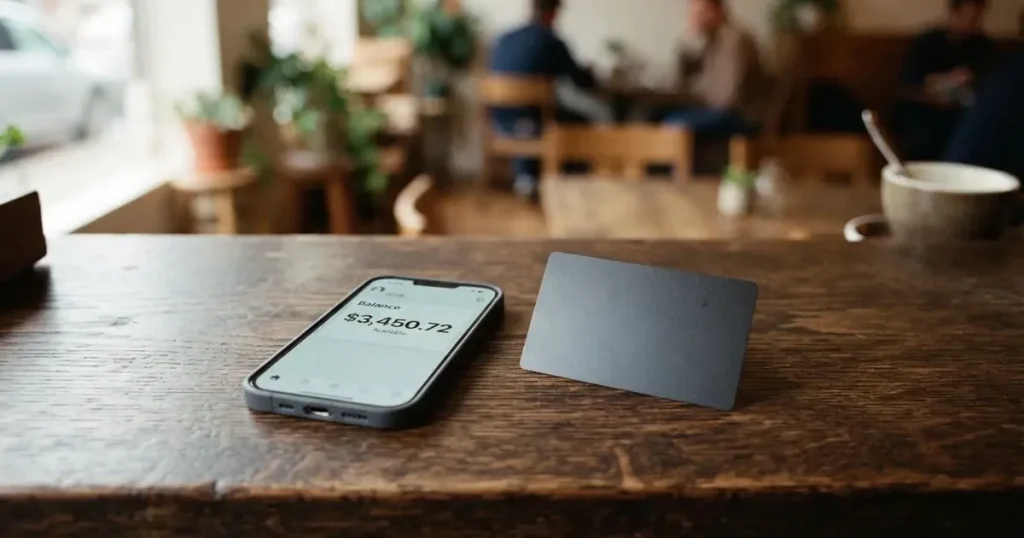
The ether.fi card is a Visa payment card that spends directly from crypto you hold in a self-custody Safe vault. You deposit tokens, the card converts and spends them like any other Visa, and you earn cashback in the ether.fi token — ETHFI — locked for seven days before you can claim it. That combination is genuinely rare: most crypto cards sit with a custodial platform, holding your funds for you. ether.fi puts your crypto behind a Safe that requires your signatures to move, and builds the spending card on top.
I scored it 6.7 out of 10. That number is not a rounding of a marketing impression; it is the arithmetic of a card that does ordinary things very well (everyday use: 9/10) stacked on top of unresolved questions that are hard to ignore (reliability and complaints: 4/10). The product works. The trust layer around it is thin in places — the issuing bank is not officially named on the card’s own pages, and a November 2025 suspension left a mark.
Who this suits: residents of the listed countries who already hold tokens in a Safe, want to spend them as cash without giving up custody, and care about cashback in ETHFI. Who it does not suit: anyone who needs a card this month, lives outside the listed jurisdictions, or cannot tolerate weeks of KYC limbo and holds that are needed for a flight next month.
The conditions described here are current as of October 28, 2026.
Verdict: 6.7/10 — strong daily card, weak assurance
The single most useful thing I can tell you is where the score comes from. The card is excellent at the mechanics of spending and unremarkable-to-patchy at the things around it: who issues it, how fast support responds, and what happens when a payment is flagged.
| Criterion | Score | Why |
|---|---|---|
| Who can get it | 7/10 | Issued in listed jurisdictions: Austria, Australia, Brazil, Canada, Germany, Hong Kong, Japan, Singapore, Switzerland, the UAE, the UK and others, plus 31 US states |
| Cost | 7/10 | Core tier: one free virtual card, plastic free but delivery is paid (amount not disclosed); FX 0.5%; unofficial: 1% FX outside USD and EUR, ATM 2% |
| Top-up options | 7/10 | Any supported token deposits into the Safe; deposits from several networks; the list of coins and networks is not disclosed |
| Reliability and complaints | 4/10 | Issuer not officially named (unofficial: Rain or Third National, sources disagree); Trustpilot 3.3 from 47 reviews; in November 2025 cards were suspended after fraudulent transactions; complaints about freezes |
| Everyday use | 9/10 | Virtual and plastic Visa, Apple Wallet and Google Pay, ATM up to $5,000 per withdrawal |
The reliability mark is what drags the total. A card that spends cleanly but gets its programme suspended without warning, or freezes accounts without a clear reason, asks more of you than a card that costs a bit more. I want to be precise about what I know and what I am repeating from others, because the sources here disagree in a way that matters.
Will They Give You the Card?
Eligibility is residence- and jurisdiction-based, and the list is long. The card states it issues in Andorra, Argentina, Australia, Austria, Brazil, Canada, Cyprus, the Czech Republic, France, Germany, Hong Kong, Hungary, Italy, Japan, Mexico, Poland, Portugal, Singapore, Spain, Switzerland, the UAE and the UK, plus 31 US states. Belgium and Ireland are eligible without physical delivery. The card’s own wording: if your jurisdiction is not listed, you will not be able to apply. That is a firm line, not a soft one.
Two gaps you should notice. Citizenship rules are not stated — the card talks about where you are, not what passport you hold, and the difference matters because sanctions screening and issuer policy often key off citizenship and country of birth separately from your address. And the minimum age is not stated on these pages either. What is stated: ATM withdrawals are blocked in North Korea, Iran and Myanmar.
So the first question is not “do I like crypto cards,” it is “is my country on that list.” If it is not, nothing else in this review applies to you.
How to Get It
The path runs through your Safe. You deposit tokens to your vault, complete identity verification, then order a virtual or physical card in the app. Verification means KYC: a phone OTP, an ID document (passport, national ID or driver’s licence), a selfie liveness check, and your address. A card issuer questionnaire sometimes comes along for the ride, and proof of address is only requested in some cases — when it is, it must be no older than three months, and phone bills or screenshots of bills are not accepted. Most reviews describe verification completing within 48 hours.
There is one KYC flow, not several tiers of it. That is simpler than some rivals, but it also means there is no lower-scrutiny path if the full one goes wrong. Delays, when they happen, come from the ordinary causes: an expired or cropped ID, a screenshot instead of a photo, information that does not match across documents, or an address the system cannot match. The card does not publish an official list of rejection reasons.
One requirement catches people out and it is the same everywhere: a $10 crypto deposit must land before KYC can complete, in all regions. If your verification fails, that deposit can be withdrawn.
On delivery: countries, timeframes and prices are not stated in the physical-card article. PO boxes are not allowed, the address must be in Latin characters only, and shipping details cannot be changed after you press order — so check the address twice. On Core, a shipping fee applies and the amount is not stated; on Luxe+ shipping is included.
The card itself is a Visa, available virtual or physical. The card currency is not stated, though USD and EUR purchases are both referenced throughout.
Fees: What It Really Costs
The headline is friendly and the detail is where you find the cost. Here is everything the card’s own pages state, in one place.
| Fee or limit | Value |
|---|---|
| Issuance (Core, first virtual card) | Normally one free virtual card; $10 in regional-pricing countries (Argentina, Angola, Bangladesh, Bolivia, Colombia, Ecuador, Indonesia, Malaysia, Mexico, Nigeria, Peru, Philippines, South Africa, Thailand) |
| Monthly or annual fee | Not stated |
| Physical card fee | Card free on Core, but a shipping fee applies (amount not stated) |
| FX fee by tier | Core 0.5%, Luxe 0.25%, Pinnacle and VIP none |
| FX on EUR purchases | 0% per a separate article |
| Crypto conversion fee | Not stated |
| ATM withdrawal ceiling | Up to $5,000 per withdrawal; 5 withdrawals and $25,000 per rolling 24 hours (Core, Luxe, Pinnacle, VIP); another help article says $1,000 per ATM withdrawal (MCC 6011), 5 per 24 hours |
| ATM fee | Not stated in the help article; unofficial: 2% with a $250/day cap |
| Daily and monthly limits | User-set caps in the Cash tab; weekly per-card limits by merchant category (see below) |
| Tier limits overall | Not stated |
Two of the biggest cost lines are the ones the card does not quantify. The crypto conversion fee is not stated anywhere, and it is the line that decides whether a $20 coffee is cheap. Ask support what it is before you commit to spending heavily.
The FX picture splits cleanly: 0.5% on Core for USD spend, 0% on EUR purchases per a dedicated article, and a tier-dependent fee for other currencies. Third-party sources (unofficial, not confirmed by the card) put non-USD/EUR FX at 1%.
The per-week merchant-category caps are the detail most people miss until a payment declines. $500 a week on crypto purchases, gambling, FX and prepaid loading; $1,000 on money transfers, stock brokers and dating; $3,000 on pharmacies, licensed online casinos (MCC 7800-7802) and funding crypto accounts; $30,000 per transaction for advertising. Overall tier limits are not stated.
Three ordinary payments, and what actually applies:
- A coffee in an EUR country: EUR purchases carry a 0% FX rate per the card’s article, so the cost is essentially the conversion rate plus whatever the undisclosed crypto conversion fee is.
- A coffee in a USD country: 0.5% FX on Core, plus the conversion fee you have not been told.
- A cash withdrawal: up to $5,000 per withdrawal within the 5-per-24h, $25,000 rolling cap — with an ATM fee that the help article leaves blank and third parties put at 2% (unofficial).
The cashback ladder is where the tiers separate, and it is worth knowing before you pick a tier:
| Tier | Annual cost | Cashback | Cards included | Protection ceiling |
|---|---|---|---|---|
| Core | Not stated | 3% on first $2,000/month, then 1% to $3,000, then 0.5% | 1 free virtual, plastic free (shipping fee) | up to $10K |
| Luxe | $199/year or earned by monthly points | 3% on first $10,000; 10% category cashback up to $10/mo | 2 free virtual, free metal card with shipping | up to $50K |
| Pinnacle | $999/year or points | 3% on first $50,000 | 10 virtual, free ATM up to 10/month, express shipping | up to $100K |
| VIP | Not stated | 4% on first $50,000 | Unlimited virtual, free Gold metal card | up to $500K |
Card spend is USD and EUR; EUR purchases follow a lower cashback ladder. The balance is held as tokens in the Safe — whether a multi-currency card balance exists is not stated.
How to Top It Up
You do not “top up” in the prepaid sense. You deposit any supported token to your Safe, and in Credit mode that deposit acts as collateral; in Direct Pay mode the card spends the balance directly. The list of coins and networks is not stated on the card pages — the specifics live in help articles titled “Supported assets and networks for your Vault with Cash” and “USDC and USDT deposit networks and addresses,” which I did not read line by line. Go there before sending anything.
The deposit mechanics matter more here than with an ordinary card. Deposits come from multiple chains, and deposit or network fee amounts are not stated. On-chain network fees are charged by the blockchain, not by the card provider, so sending on a costly network can eat into a small top-up. Fiat top-up via bank transfer has its own article with a country list; the fees there I did not read.
The irreversibility is the thing to internalise. Blockchain transfers cannot be undone. Send on a network the provider does not support, or to an address belonging to a different network, and the funds can be lost or need manual support recovery with no guarantee. So: confirm network and address from inside the app before you confirm the transfer, every time.
Withdrawing works the same way in reverse. You request a withdrawal with the token, amount and recipient address; it executes once the required Safe owners sign. Cross-chain withdrawals have their own article. Fees are not stated. Deleting your account needs a $0 balance, no active borrows and no pending card transactions, then a 14-day waiting period — what happens to any balance in that window is not stated, which is why the balance must be emptied first.
Paying With It Every Day
This is the card’s best section and where the 9/10 comes from. It is a Visa, virtual and plastic, and it goes into Apple Wallet and Google Pay by adding the card details. The iOS app is published as “ether.fi: Crypto Card & Spend” and needs iOS 16.0 or later; on the US storefront it read 4.9 across 141 ratings when I checked on 2026-10-20. The Google Play listing I did not find or read, so treat Android ratings as unknown rather than good.
Cashback is paid in ETHFI and is locked for seven days before you can claim it — a detail worth planning around, since a locked reward is not quite money in hand. ATM withdrawals, cash advances, P2P payments and gambling merchant categories are excluded from cashback. No payout cap is stated. Certain merchant categories are cashback-excluded or limited (6011, 6012, 6211, 6513, 6532, 7995); gambling is capped at $500 a week rather than fully blocked. EUR purchases use lower ladders, and the Business tier pays 1%.
When something goes wrong, the routes are documented:
- Unauthorized transactions: delete the card and contact support; the case goes to Visa’s fraud process.
- Merchant issues (non-delivery, duplicates, subscriptions): via the Visa dispute process, and you should contact the merchant first.
- Where to file: in-app chat with support.
- Timing: disputes may take up to 90 days. No dispute fee is mentioned. Refunds come from the merchant, on a separate timeline.
Ninety days is the number to remember. It is not a card you want to be arguing with a month before a large purchase.
What Can Go Wrong
This is where the 4/10 lives, and I want to separate what the card says from what users and news outlets say.
The issuer is not officially named. The card’s help articles mention Visa and a Cash Protection Program exists, but the legal entity and issuing bank are not stated on the public pages. Third-party sources disagree — a bleap.finance blog points to Rain, a slash.com blog to Third National under a Visa licence — and both are unofficial and not confirmed by the card. The ether.fi site has occasionally returned a 429 error, which is its own small signal.
The complaints are documented and specific. Trustpilot sits around 3.3/5 from 47 reviews (on the same reading date it showed 3.5 for those same 47 reviews), with recurring themes: KYC and address verification stuck in limbo for weeks to months; denial after approval citing “suspected fraud” with no specific reason; compliance freezes with slow automated support; and lost deposited funds during card activation. A news report (PANews, November 2025) described cards being suspended after fraudulent transactions, with the CEO promising refunds. A secondary aggregator (cryptocards.so) mentions compliance freezes and slow support. As of a 2026 search on 2026-10-20, no licence loss or issuer change was confirmed — but blogs still disagree on the issuer.
ATM withdrawals are blocked in North Korea, Iran and Myanmar.
The security design is the strong suit, and it is a real one. The Safe is self-custody style — withdrawals need Safe owner signatures. Sign-in is passkey-based, with email OTP and PIN. You can freeze the card instantly in the app and set your own daily and monthly spending caps, though changes take effect after a security delay.
The Cash Protection Program is worth reading carefully, because it is not insurance. It reimburses unauthorized movement of smart-contract assets, with caps by tier: Core $10,000, Luxe $50,000 and Pinnacle/Business $200,000, VIP $500,000. Programme capacity is $5 million. There is a $100 claim fee, refunded if the claim is approved. It excludes compromised keys, credentials or devices — so if someone gets your seed phrase or your device, this is not your backstop. Anyone holding you to a standard of safety should read the exclusions, not the headline number.
Support is live chat and web, plus email at [email protected]. Pinnacle gets a dedicated account-manager team; VIP gets executive support.
What to Take Instead
If the ether.fi card’s 4/10 reliability mark is the dealbreaker, these are the alternatives I looked at, with the same eye.
| Card | Score | Card type | Key costs | Funding | Cashback |
|---|---|---|---|---|---|
| ether.fi | 6.7/10 | Visa, virtual + physical | Core: free virtual, plastic free (paid shipping), FX 0.5%; unofficial 1% non-USD/EUR FX | Any supported token to Safe | 3% up to $2,000/mo Core (ETHFI) |
| Sponge | 4.9/10 | Virtual; described as a Rain-issued Visa credit card | Not stated | USDC collateral from Sponge wallet (card fund) |
Not stated |
| Nexo | 6.3/10 | Virtual + physical; Mastercard mark on page, network not explicit; issued by DiPocket UAB | No monthly/annual/inactivity fee; FX 0.2% weekday EEA/UK/CH (2% rest of world), 0.7% weekend | Nexo account, 100+ digital assets, Debit Mode uses stablecoins and FiatX | Credit Mode only, needs >$5,000 held; NEXO or BTC, by tier from 0.5%/0.1% |
| Xplace | 7.7/10 | Visa, virtual (instant) + physical (Silver live) | Basic free, Silver $99/y, Gold $249/y, Platinum $999/y; 0% FX on Platinum; no borrowing origination fee | cbBTC, wETH, SOL, JitoSOL, USDC, USDT, xStocks on Solana | Credit mode: Basic 0.5% → Platinum 2%, paid in USDC |
How I read that table:
- Sponge (4.9/10) is the weakest of the four on what is published: no country list on the card pages, no costs stated, no cashback stated. It is a credit card issued by Rain, a Visa Principal Member, accepted wherever Visa is accepted. USDC collateral moves from the Sponge wallet with
card fund; an SDK mentions base or solana as optional chains. If you are comparing, you are comparing against thin documentation. - Nexo (6.3/10) is the most conventional. Eligibility is residents and citizens of “selected European countries, including the EEA and the United Kingdom” — citizenship and residence both. No monthly, annual or inactivity fee. FX is 0.2% on weekdays for EEA/UK/CH and 2% elsewhere, 0.7% and 2.5% at weekends. The catch is cashback: it only applies in Credit Mode and needs more than $5,000 in digital assets held, paid in NEXO or Bitcoin, with rates by tier (Platinum 2%/0.5% down to Base 0.5%/0.1%). The physical card needs a balance above $5,000 and Gold tier, though shipping is free. One news-reported blemish, not official: Cointelegraph covered a 2025-era Bulgarian police raid on Nexo’s Sofia office over alleged Russia-sanctions/AML violations, with no official Nexo statement about Russians found.
- Xplace (7.7/10) scores highest here. Visa, virtual immediately and physical (Silver live; Gold and Platinum coming soon, delivery 7-14 business days). Cash mode spends stablecoin balance; Credit mode borrows against holdings with no origination fee. It accepts cbBTC, wETH, SOL, JitoSOL, USDC, USDT and xStocks on Solana. Annual fees run free (Basic), $99 (Silver), $249 (Gold), $999 (Platinum), with 0% FX on Platinum and no hidden spread on stablecoin spending. Credit-mode cashback runs 0.5% (Basic) to 2% (Platinum), paid in USDC. Caveats: no country list is stated, “services are not available in all jurisdictions,” Cash-mode cashback is not stated, and Gold/Platinum physical cards are still coming.
If your priority is cashback specifically and you want the strongest number, Xplace at 7.7/10 is the one I would look at first — but note its own documentation is also incomplete on availability.
Who I Would Recommend It To
I would recommend the ether.fi card to a specific person: someone already holding tokens, comfortable with a Safe and a seed phrase, living in one of the listed countries, who wants to spend crypto without surrendering custody, and who can absorb a frozen account or a slow dispute for a few weeks. The 9/10 everyday use is real — Apple Wallet, Google Pay, a clean Visa, cashback in ETHFI — and self-custody is the right default when you can handle it.
I would not recommend it to someone whose income depends on this card being available without interruption, to anyone living outside the listed jurisdictions, or to anyone who needs the ETHFI cashback as spendable money this month — the seven-day lock is a small friction that surprises people. If the issuer question bothers you — and it should bother anyone who cares who holds their money — Nexo or Xplace publish more of their structure.
Two things to check before you commit, in this order: what the crypto conversion fee actually is (it is not stated, and it is the biggest unknown in your cost), and whether your country is on the eligibility list (if it is not, none of this matters). Third: keep a small balance outside the Safe for the month, because a compliance freeze with slow support is the single most-documented failure mode here.
Frequently asked questions
What is ether.fi card?
The ether.fi card is a Visa payment card, available virtual or physical, that spends crypto you hold in a self-custody Safe vault. You deposit tokens to the Safe and the card converts and spends them like an ordinary Visa. Cashback is paid in the ETHFI token, locked for seven days before it can be claimed. The card is issued only in listed jurisdictions and requires KYC plus a $10 crypto deposit before verification completes.
How does the ether.fi card work?
You deposit any supported token to your Safe vault. In Direct Pay mode the card spends that balance; in Credit mode the deposit acts as collateral. When you pay, the crypto is converted and the Visa spends it. Withdrawing crypto back out requires the Safe owner signatures, which is the self-custody part. Your crypto never sits with a custodial platform — unless a transaction gets flagged and the account is frozen.
Is ether.fi a bank?
No. ether.fi is not a bank. It manages the crypto side and the card programme, but the card’s public pages do not officially name the issuing bank or the legal entity. Third-party sources disagree — some point to Rain, some to Third National — and neither is confirmed by the card. Visa and Mastercard license the issuers; they do not issue crypto cards to consumers themselves.
Who owns ether.fi?
ether.fi is the crypto brand behind the card, the Safe vault and the ETHFI token. The card’s public pages do not state the legal entity or the issuer, so if ownership of the entity matters to you, that is a question for support rather than something the public documentation answers. What is clear is that the crypto you deposit stays in your own Safe, not with a custodian.
Is the ether.fi card available in my country?
Availability is by jurisdiction, not citizenship. The card lists Andorra, Argentina, Australia, Austria, Brazil, Canada, Cyprus, the Czech Republic, France, Germany, Hong Kong, Hungary, Italy, Japan, Mexico, Poland, Portugal, Singapore, Spain, Switzerland, the UAE and the UK, plus 31 US states; Belgium and Ireland qualify without physical delivery. If your jurisdiction is not listed, you cannot apply. Citizenship rules are not stated.
Does the ether.fi card require KYC?
Yes. Activation includes identity verification: a phone OTP, an ID document (passport, national ID or driver’s licence), a selfie liveness check and your address, sometimes with a card issuer questionnaire. Proof of address is only requested in some cases and must be under three months old; phone bills or screenshots are not accepted. A $10 crypto deposit must land first, in all regions, and can be withdrawn if verification fails.
How do I activate and use the ether.fi virtual card?
Deposit tokens to your Safe, complete KYC, then order the virtual card in the app. Add the card details to Apple Wallet or Google Pay to pay by phone. The virtual card is the one included free on Core (or $10 in regional-pricing countries). Card currency is not stated; USD and EUR purchases are both referenced, and EUR purchases carry a 0% FX rate per the card’s article.
How do I top up the ether.fi card?
You deposit any supported token to your Safe — in Direct Pay mode that balance is what the card spends. Deposits come from multiple chains, but the coin and network list is not stated on the card pages; check the help articles on supported assets and on USDC/USDT deposit networks first. Deposit and network fees are not stated, and blockchain transfers are irreversible, so confirm the network and address in-app before sending.
Is the ether.fi card free, and is it worth it?
The first virtual card is free on Core normally, though $10 in regional-pricing countries; the physical card is free but delivery costs extra (amount not stated), and no monthly or annual fee is stated. Cashback is 3% on the first $2,000 a month on Core. Whether it is worth it depends on the undisclosed crypto conversion fee and whether you value self-custody; ask about the conversion fee before committing.
Is the ether.fi card safe, and what if something goes wrong?
The vault is self-custody style — withdrawals need Safe owner signatures — with passkey sign-in, instant card freeze and user-set spending limits. The Cash Protection Program reimburses unauthorized smart-contract asset movement up to tier caps ($10,000 Core to $500,000 VIP, programme capacity $5 million, $100 claim fee refunded if approved), but it is not insurance and excludes compromised keys or devices. Documented complaints include KYC limbo, freezes and lost deposits; in November 2025 cards were suspended after fraudulent transactions.
Choosing a credit or cashback card – cryptocardadvisor
Content created by the «cryptocardadvisor» team