
A non-custodial wallet with a Mastercard on the side
 Available in US
THORWallet is a non-custodial DeFi wallet that pairs your crypto balance with a Mastercard and a Swiss IBAN, so you can spend from the same place you already hold tokens. The card is live, the company behind it is a Swiss AG, and the banking rails are run by a third party called Fiat24. In this review I walk through who the card suits, what it really costs in everyday use, and where the edges are sharp enough to cut you. The conditions described here are current as of October 28, 2026.
My overall mark is 7.5 out of 10. That is a decent score for a card that sits between a self-custody wallet and a Swiss bank account, but it is not a clean ten, and I explain why as we go.
Verdict
I rate THORWallet 7.5 out of 10. The breakdown tells the story better than the headline number.
| Criterion | Mark | Why |
|---|---|---|
| Who can get it | 9/10 | Card is offered in 170+ countries including the US; availability depends on residence and verification status |
| Cost | 7/10 | Basic $5 once, Premium $99 with an invite code (listed at $124), 0% top-up fee, 1.5% FX markup, $1 ATM at home, $5 abroad |
| Top-up options | 6/10 | USDC tops up without a THORWallet fee; the older help page mentions USDC on Arbitrum, other crypto swapped in the app, and bank transfer |
| Reliability and complaints | 6/10 | Card and IBAN come from Fiat24, run by EMM Ventures AG in Zug; the issuing bank is not named and licences are not stated; I could not find any THORWallet-specific complaints; App Store sits at 3.9 from 120 ratings |
| Everyday use | 9/10 | Premium ships a virtual and a physical Mastercard; the virtual card works in Apple Pay and Google Pay; ATM cap $2,500 per withdrawal; Basic is virtual only |
| Total | 7.5/10 | Best fit for DeFi wallet users who want a Mastercard and an IBAN in the same app |
The high-level shape is clear. THORWallet is built for people who already live in a non-custodial wallet and would like a card and a bank account without giving up their keys. If that is you, the value is real. If you mainly want a prepaid card, there are simpler and cheaper options.
Who can get the card
THORWallet says its card is available in 170-plus countries, with the United States explicitly included. The fine print is shorter than you might hope: availability “depends on the user’s country of residence, verification status” and other eligibility rules the app checks at sign-up. Russia is not on the country list I read, and citizenship rules are not spelled out, so the practical filter is where you live and what documents you can produce.
The IBAN side is narrower. An older FAQ states the Swiss IBAN works in around 50 countries, so the card is more widely available than the bank account underneath. Standard monthly bank limits are $100,000 for the EU, UK and similar jurisdictions, but the cap drops to $1,000 for places such as Turkey, Georgia, Armenia, India and Argentina. If you live in a high-cap country this is not a problem; if you live in a low-cap one, the IBAN is more of a payment account than a working bank account.
Eligibility is decided at KYC, not at the card step. That matters because the same KYC controls both the card and the IBAN, and the rules that apply to a bank account are stricter than the rules for a prepaid card.
How to sign up
The flow is the same one you would expect from a modern crypto card:
- Install the THORWallet app on iOS or Android.
- Create a non-custodial wallet and write down your seed phrase. The DeFi side of the app does not require identity verification.
- Verify your identity for the banking and card product. THORWallet says this is done by the Fiat24 team and that THORWallet itself does not store KYC data.
- Order the card. The Basic plan is described as ready in five minutes, and the Premium physical card ships once you have paid.
The Mastercard itself is a virtual card on the Basic tier; the Premium tier adds a physical card. The card currency is USD, and the Swiss IBAN account underneath it supports CHF, EUR, USD and RMB. The virtual card can be added to Apple Pay and Google Pay.
Identity documents and proof of address are not listed on either of the public FAQ pages I read. Unofficial sources (cryptocards.so and BTC-Echo, October 2026) describe email, phone and an ID document, with proof of address and a selfie not required and a “Lv 3 ID-Verifizierung” level. I treat that as unofficial and not confirmed by the card itself, so check the in-app checklist when you start.
Basic users start with a $10,000 monthly card limit and may need to fill in an extra questionnaire to push that higher (the cap is up to $100,000). The provider can also ask about source of funds, source of wealth and tax residence. Processing time and the official reasons for rejection are not published. For delivery countries, time, cost and replacement cost of the physical card, the public pages are silent.
Fees and what they really mean
The headline price is reasonable, but the card’s costs are easier to read in a table than in prose.
| Fee or limit | Basic | Premium |
|---|---|---|
| Card issuance | $5 one-off (free with invite code) | $99 with invite code (listed $124) |
| Monthly fee | None stated | None stated |
| Top-up fee | 0% | 0% |
| Foreign-exchange markup | 1.5% | 1.5% |
| ATM fee (domestic) | $1 | $1 |
| ATM fee (international) | $5 | $5 |
| ATM per transaction | $2,500 | $2,500 |
| ATM per day | $10,000 | $10,000 |
| ATM per month | $20,000 | $60,000 |
| POS per transaction | $20,000 | $100,000 |
| POS per day | $50,000 | $500,000 |
| POS per month | Starts at $10,000, up to $100,000 | Up to $1,000,000 |
| Cashback | 0% | Up to 0.5% in USDC |
| Support | Standard 24/7 in-app chat | Priority 24/7 in-app chat |
The fine print on the card’s own pages warns that fees and limits are indicative and vary by jurisdiction and verification, so treat these numbers as the baseline, not a guarantee.
What does that look like in real life? A few everyday examples help.
- Coffee abroad, paid in local currency. You tap a virtual Mastercard in Apple Pay. The card settles in USD, so the network converts EUR or GBP to USD and the issuer applies the 1.5% FX markup on top. A €4 coffee therefore costs you about €4.06.
- ATM withdrawal of $200 in your home country. You pay the $1 domestic ATM fee, and the network itself may also apply a small acquirer fee depending on the operator. The 1.5% FX markup does not apply because the card is already in USD and the ATM pays out USD.
- Online subscription billed in EUR. The merchant’s bank converts EUR to USD, then THORWallet’s issuer applies the 1.5% markup. A €9.99 plan is roughly $10.80 instead of the $10.74 you would get with the headline FX rate.
The older Fiat24 plan table (Standard / Gold / Platinum) priced crypto top-ups at 1% / 0.5% / 0.25% and FX at the same 1% / 0.5% / 0.25% tiers, with plan entry priced in ETH (1.5 ETH for Gold, 15 ETH for Platinum). Those tiers are legacy. Today’s Basic and Premium plans use 0% top-up and 1.5% FX, and the in-app plan list describes Basic as “Free” with a $5 once-off on the same page, which is the small inconsistency that always shows up when pricing is being refreshed.
There is no free ATM allowance, no subscription fee and no inactivity fee on the public pages, which keeps the simple cases simple. The 1.5% FX markup is on the high side of what crypto cards charge today; budget cards tend to sit between 0% and 1%, so this is the cost you pay for the IBAN underneath.
Top up
Top-up is where the card diverges from a plain prepaid product. You are not just loading a balance; you are moving crypto onto a specific network and into a specific account.
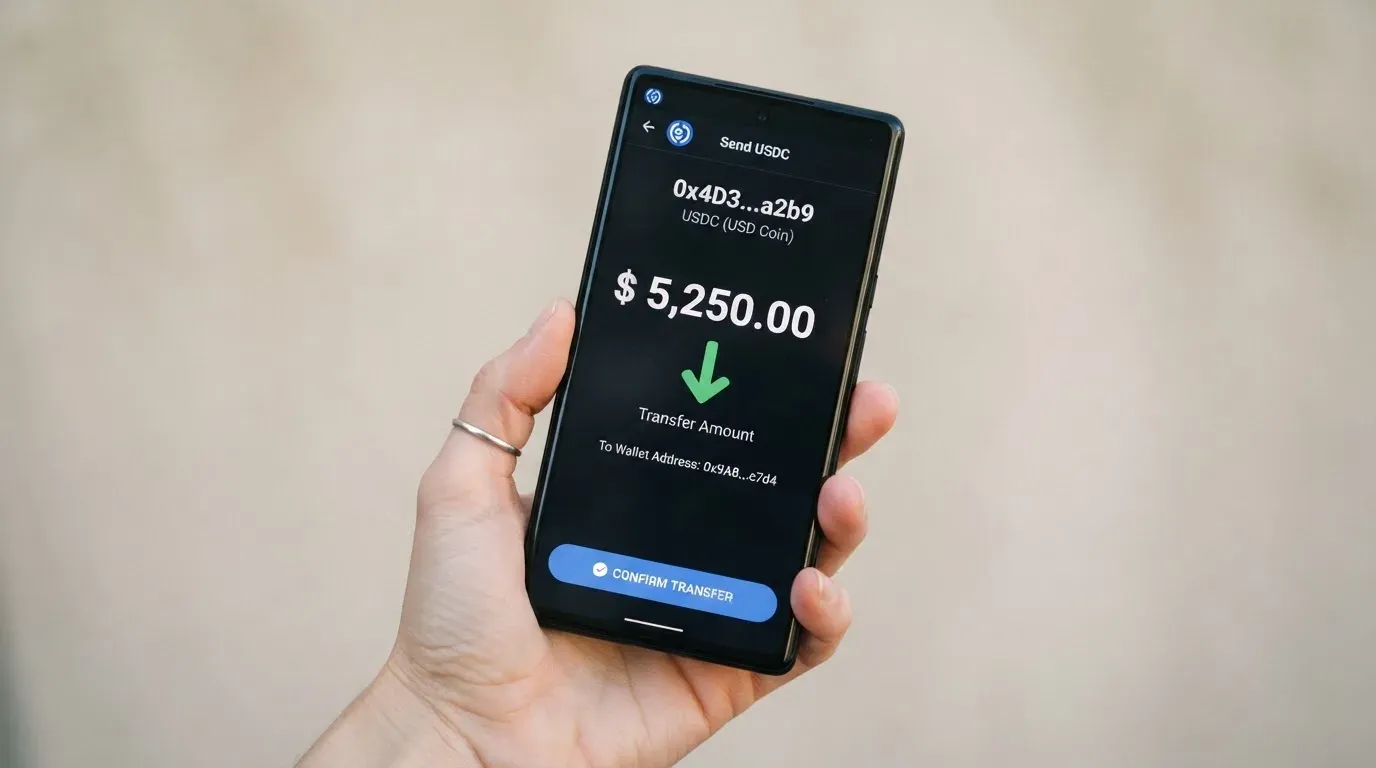
The current pages say USDC top-ups have a 0% THORWallet fee on both plans. The older help page is more specific: USDC is meant to arrive on Arbitrum; other crypto is swapped into USDC inside the app; bank transfers are also listed as a way to fund the IBAN. The minimum top-up is not stated, and the FAQ does not say who pays the on-chain network fee for the deposit. In practice, you pay the gas yourself on the source chain, and THORWallet does not surcharge on top of that.
A few practical points that bite if you skip them:
- The card spends from a USD balance. If you hold BTC or ETH, the app has to convert them to USDC, then the card debits the USDC account. Conversion slippage is a cost the page does not show.
- USDC on the wrong network is a common way to lose money on cards like this. The current page says USDC; the older page says USDC on Arbitrum. Sending USDC over TRC-20 will not arrive, and blockchain transfers are irreversible.
- The Swiss IBAN account is only available inside the mobile app, not the web app, which limits scripted or desktop workflows.
- The FAQ does not cover what happens to the card balance if you close the account, and there is no published withdrawal flow for the card balance itself.
If you are topping up from a CEX, send USDC on a network the app supports and on a network the exchange can send from. Test with a small amount first; the time you save by skipping the test is small compared with the cost of a wrong-network transfer.
Paying with it every day
The card behaves like a Mastercard on the terminal. Online checkout, contactless tap, mobile wallet and ATM are the four jobs it is meant to do, and it does them as expected.
Apple Pay and Google Pay work with the virtual card on both tiers. The Premium physical card is included; Basic users only get a virtual number. Apple Pay tokens the card number into the device’s Secure Element and replaces it with a Device Account Number, so the merchant never sees the real PAN. THORWallet or its issuer can restrict the token to contactless, online or both.
Block-list rules (which merchant categories the card declines) are not stated on the public pages. Gambling, adult content, crypto exchanges and similar MCCs are sometimes restricted by issuer policy, sometimes not, so check the in-app help if a category matters to you.
Cashback on Basic is 0%. Premium pays up to 0.5% in USDC, capped at $5,000 of monthly spend in the first year and $2,000 per month afterwards. Stakers of the $TITN token keep a higher cap. The Swiss IBAN itself does not pay interest or rewards.
The app is the place to settle most disputes. The App Store rating sits at 3.9 out of 5 from 120 ratings (read on 20 October 2026), with an English-only listing and iOS 17.0+ as the minimum. The Google Play rating was not read. The card issuer is not named on the public pages, and THORWallet’s terms say THORWallet itself is not the card issuer; the contract is with the provider. That means a chargeback goes through the issuer, and you should expect the dispute process to follow that issuer’s rules rather than THORWallet’s. The FAQ does not describe a specific dispute or refund process, so read the terms before you rely on it for a big purchase.
ATM use is well documented. The $2,500 per-withdrawal cap and the $10,000 daily cap are easy to remember; the monthly $20,000 (Basic) or $60,000 (Premium) cap is the constraint that matters on holiday.
What can go wrong
Two layers of risk sit on top of the card: the wallet, and the bank.
- The DeFi side is non-custodial. You hold the keys, you hold the responsibility. Lose the seed phrase, lose the wallet. A clipboard-hijacker that swaps a copied address can reroute a top-up, and on-chain transfers cannot be reversed. Premium cashback paid in USDC, and any USDC held in the wallet, sits inside that same non-custodial setup.
- The banking side is custodial. The card and the IBAN run through Fiat24, a Swiss company, and THORWallet is EMM Ventures AG, also in Zug. The issuing bank is not named on the pages I read, and licences are not stated. Unofficial coverage (BTC-Echo, October 2026) describes THORCash, the fiat on-ramp, as regulated in Switzerland, but the article’s “reguliert durch BaFin” heading appears to be a heading error rather than a statement of fact, and cryptocards.so does not name the issuing bank either. Treat the Swiss framing as the official position and the BaFin reference as unconfirmed.
- THORWallet is not a bank, an e-money institution or a payment institution. The card contract is with the provider, not with THORWallet. If the issuer changes its programme, you are downstream of that decision.
- KYC and AML are real. The provider can ask for source of funds, source of wealth and tax residence. If those answers do not satisfy the team, the account is the part that gets locked, not just the card. Refusal reasons are not published, so you find out at the point of failure.
- Card freeze, 2FA, spending controls and insurance or safeguarding on the IBAN are not stated. The standard crypto-card kit (tokenised wallets, 3-D Secure, instant freeze) is plausible, but the pages do not promise it.
- Support is 24/7 in-app chat, with “Standard” on Basic and “Priority” on Premium. Unofficial sources describe support in German, a ticket channel via Discord and a Telegram community. That is useful to know, but it is not an official support description.
- Programme risk is real in this category. FTX’s debit card was wound down in November 2022 after Visa terminated the global agreements; WaveCrest was suspended by Visa in Europe in 2018. THORWallet is not FTX, and the Swiss setup is a different model, but the lesson is that a card you rely on for daily spend can disappear on short notice.
- I could not find THORWallet-specific complaints on Trustpilot or Reddit; the search returned complaints for other brands. The community rating on BTC-Echo (4.9 from 121 reviews, October 2026) is unofficial, and one user report from February 2025 says the interface is more complex and less intuitive than other wallets. That matches what I saw in the screenshots.
What to take instead
THORWallet is one of three cards I look at for this kind of brief. Each one trades off differently, and the table below shows where THORWallet stands.
| THORWallet | TokenPocket | MetaMask Card | KAST | |
|---|---|---|---|---|
| Score | 7.5/10 | 5.8/10 | 7.1/10 | 6.1/10 |
| Card network | Mastercard | Visa (EU) / Mastercard (rest) | Mastercard | Visa (Platinum / Infinite) |
| Available where | 170+ countries incl. US | EU list for Visa, AU/CA/HK/JP/etc. for MC | 45 listed countries; waitlist elsewhere; US/UK paused | Country list shown at KYC |
| Card cost | Basic $5 once, Premium $99 with invite | NFT creation partly covered; “no additional fees” | Virtual free, Metal $199/year | Standard $0, Premium $1,000/yr, Private $10,000/yr |
| Top-up | USDC 0% (Arbitrum per older page) | 1% on crypto deposit (refunded via rewards) | Spends from connected wallet on Linea, Base, Monad, Solana | Stablecoins 0% across multiple networks |
| Cashback | Premium up to 0.5% in USDC | None stated | Virtual 1%, Metal up to 3% in mUSD | Standard 1.5%, Premium 2%, Private 3% in USD |
| Physical card | Premium only | Not stated | Metal option | Standard / Premium / Private designs |
A short tour of the alternatives:
- TokenPocket runs an Arbitrum-based wallet with a co-branded card. Issuance is unusual: an NFT creation fee is partly covered by TokenPocket, the user pays the rest, and “apart from these, TP Card does not charge any additional fees”. A 1% deposit fee is charged up front and refunded later through rewards or reduced transaction fees, which is a soft 0% rather than a hard one. Geographic coverage is narrower than THORWallet’s, and the card is virtual only.
- MetaMask Card is the most natural competitor. Virtual card is free with no annual fee, Metal is $199/year, and the card spends directly from the connected wallet on Linea, Base, Monad or Solana. Cashback is 1% on Virtual and up to 3% on Metal in mUSD into the Money Account, with the 3% rate capped at the first $10,000 of spend. Sign-ups cover 45 listed countries, with other regions on a waitlist and US/UK sign-ups temporarily closed. The issuer is Monovate and the programme manager is Crypto Life.
- KAST is a stablecoin card with the strongest cashback in the group (up to 3% in USD on the Private tier) and the most expensive annual fee ($10,000/year for Private, $1,000/year for Premium). Membership is the pricing model rather than per-card fees. Country eligibility is shown at KYC, the restricted list is referenced but not published, and citizenship can override residence. Stablecoin top-ups settle 1:1 with 0% spread, and non-USD FX is 0.5%–1.75% depending on country, transaction country and programme.
If the priority is the most widely available card with a Swiss account underneath, THORWallet is the answer. If the priority is the strongest cashback and a clean stablecoin flow, KAST wins. If the priority is spending directly from a self-custody wallet on a few major networks, MetaMask Card is the better fit.
Who I would recommend it to
THORWallet is the right card in a specific shape of life, and the wrong card in a few others.
It is a good fit if you:
- Already use a non-custodial DeFi wallet and want a card and an IBAN in the same app.
- Live in a country where the $100,000 monthly IBAN cap is realistic (the EU, the UK, the US, much of East Asia) rather than the $1,000 cap that applies in some jurisdictions.
- Want to add a Mastercard to Apple Pay or Google Pay without going through a centralised exchange.
- Hold or earn USDC and would rather not pay an FX markup on top of every top-up.
- Plan to spend $5,000 or more a month and want the Premium 0.5% cashback, or you stake $TITN and want the higher cap.
It is a poor fit if you:
- Want a free card with no entry fee (Basic is $5 unless you have an invite code, Premium is $99).
- Live in a low-cap country where the $1,000 monthly limit is the binding constraint.
- Need a card from a named, well-known issuing bank with published licences; THORWallet does not name the issuer and does not list the licences.
- Want a flat 0% FX markup; THORWallet’s 1.5% is on the higher end of the category.
- Plan to load balances in fiat and treat the card as a pure prepaid product; the card is really a way to spend from a USDC balance, with fiat as a secondary option through the IBAN.
If your situation is closer to the second list, look at MetaMask Card for a cheaper free virtual card with cashback, or at KAST if your monthly spend is high enough to justify the membership fee.
Frequently asked questions
What is the THORWallet card?
The THORWallet card is a Mastercard debit card tied to a Swiss IBAN account. THORWallet itself is a non-custodial DeFi wallet, and the card and the IBAN are run by a third-party provider called Fiat24. The Basic tier is virtual only; the Premium tier adds a physical card and a small USDC cashback.
How does the THORWallet card work?
You install the app, verify your identity for the banking product, and order a card. You top up with USDC (the older help page says on Arbitrum) or fund the IBAN by bank transfer, then the card debits a USD balance every time you pay. The 1.5% FX markup is added on top of the network’s exchange rate when the card settles in a non-USD currency.
Is THORWallet a bank?
No. THORWallet says it is not a bank, an e-money institution or a payment institution. The card contract is with the provider, and the IBAN is provided by a third party. Funds held with an e-money institution are segregated but are not the same as bank deposits and are not covered by deposit guarantee schemes.
Who owns THORWallet?
The footer of the THORWallet site names EMM Ventures AG, registered in Zug, Switzerland. The card and the IBAN are issued through Fiat24, also a Swiss company, and the underlying issuing bank is not named on the public pages.
Is the THORWallet card available in my country?
The card is offered in 170-plus countries, with the United States explicitly included. The Swiss IBAN is available in around 50 countries. Russia is not on the country list, and the practical filter is your country of residence and your verification status. The app’s sign-up step is the place to confirm your specific country.
How do I get the THORWallet card?
Install the THORWallet app, finish the identity verification for the banking product (handled by the Fiat24 team), and order the card. Basic is described as ready in five minutes, and Premium ships a physical card once you have paid the one-off fee. The DeFi side of the app does not require identity verification.
Does the THORWallet card require KYC?
Yes, for the card and the IBAN. THORWallet says the data is verified by the Fiat24 team and that THORWallet does not store it. Unofficial sources describe email, phone and an ID document, with no proof of address or selfie required, but the public FAQ does not list documents. The provider can also ask about source of funds, source of wealth and tax residence.
How do I top up the THORWallet card?
Send USDC to the address the app gives you; the older help page says USDC on Arbitrum. Other crypto can be swapped into USDC inside the app. The IBAN can also be funded by bank transfer. THORWallet does not charge a top-up fee; you pay the on-chain network fee yourself, and the minimum top-up is not published.
How do I add the THORWallet card to Apple Wallet or Google Pay?
The virtual card can be added to Apple Pay and Google Pay on both tiers. In the app, open the card, choose “Add to wallet”, and follow the tokenisation steps. The Premium tier adds a physical card; the Basic tier stays virtual.
Is the THORWallet card safe?
The card uses standard Mastercard rails, the virtual card can be tokenised into Apple Pay or Google Pay, and 3-D Secure applies to online checkout like any other Mastercard. Card freeze, 2FA, spending controls and insurance or safeguarding on the IBAN are not stated. The DeFi side is non-custodial, which means you hold the keys and you hold the responsibility for them.
Choosing a wallet card – cryptocardadvisor
Content created by the «cryptocardadvisor» team