
A virtual Visa that spends your USDT, with narrow top-ups and an unnamed issuer
 Available in US
The Bitunix card is a virtual Visa card that turns USDT sitting on the Bitunix exchange into ordinary spending money. You load it from your own Spot, Futures or Earn balance inside the exchange, the stablecoin converts to dollars one-for-one, and the card pays like any other debit card online or in a store. No monthly fee, no issuance fee, no crypto conversion fee — and a narrow set of everything else.
That narrowness is the whole story. There is no physical card yet. There is no ATM. The only cryptocurrency supported is USDT. You cannot top it up from an outside bank account or by sending tokens to an address. And behind it sits a company whose card issuer is not named on the public pages. If you already hold funds on Bitunix and want to spend some of them without converting them by hand, this card does that job. If you are choosing a card for the first time, or you need cash, or you want to know what happens to your money if the company stops trading, the gaps here are wider than the feature list.
On the score I keep for these reviews, the Bitunix card comes out at 5.3 out of 10.
The conditions described below are current as of October 28, 2026.
Verdict: 5.3 out of 10, and the score breaks down honestly
The card suits one person clearly: someone with a funded Bitunix account who spends USDT online regularly and wants it to behave like a normal Visa without a monthly charge. For that person the economics are genuinely good — zero fees on issuance and maintenance, zero crypto conversion, and a 1.5% currency markup that many crypto cards beat. For everyone else the picture is thinner than the marketing suggests, and the low marks below are the reasons.
| Criterion | Mark | Why |
|---|---|---|
| Who can get it | 7 / 10 | A closed list of 80 countries and regions (not exhaustive), including the US, Canada, France, Turkey, Singapore, Hong Kong, China, India, UAE, Brazil — the rest are not named |
| Cost | 6 / 10 | Issuance, month and year all 0; crypto conversion 0, FX 1.5% on top of the Visa rate, cross-border fee 0.5%, a flat 1 USD per month after 12 months |
| Top-up options | 3 / 10 | USDT only, from Spot, Futures or Earn to the card account; direct blockchain deposits are not supported |
| Reliability and complaints | 4 / 10 | Company is Blue Rock Management Pte. Ltd.; the issuer and licences are not named. The exchange’s Trustpilot score is 3.7/5 across 819 reviews, with account freezes and regulatory attention mentioned |
| Everyday use | 5 / 10 | Virtual Visa only, physical planned; Apple Pay, Google Pay and other wallets present; no ATM in the first version |
| Total | 5.3 / 10 | A narrow, cheap-to-hold card attached to an exchange, not a general payment account |
Two things a buyer should notice in that table before anything else. The top-up score of 3 is the weakest line and it is structural: this is not a card you can load from your own wallet or your bank, only from inside the exchange. And the reliability score of 4 reflects something the card’s own pages do not answer — who actually issues it.
Will they give you the card
Yes, if your country is on the list — and the list is a closed one, not an open one.
The help centre has a page called “Restricted Jurisdictions” which says the list may include, and is not exhaustive, 80 countries and regions. Among those named are the United States, Canada, France, Turkey, Ukraine, Singapore, Hong Kong, China, India, the UAE, Cyprus, Serbia, Armenia, Kyrgyzstan, Tajikistan, Brazil and Israel. The Russian Federation and Belarus appear on that list too, which means residents of those two countries are inside the restricted set rather than outside it.
The rule is by residence, not citizenship. That is the single most useful thing to know here, because the two are often confused. What the exchange asks for and what the card product keys on is where you live. If you are a citizen of one country living in another, the residence decides. That list was updated on 2026-10-08, so it is reasonably fresh, but “may include” and “not exhaustive” are the words the page itself uses — a country missing from the list is not a guarantee, and a country on it is a no.
Identity verification and a confirmed residential address are required before you can apply, and I will come back to what that means in practice in the next section. The practical takeaway: check the restricted-jurisdictions page against your own country of residence first, because everything else is wasted effort if you are not on it.
How to get it
The path the card’s own help centre describes is short: sign up, complete verification, apply, and the virtual card is ready once approved.
What that outline leaves out matters. The document list is not stated, and neither is the minimum age. The exchange has KYC levels of its own, described in a help centre article called “Bitunix KYC Level Benefits”, but the card does not say which level you need or whether the card introduces its own tier of checks. Processing time for the card application is not stated. Nor are the reasons a card application might be refused, which is the thing you would most want written down if you were refused.
What is clear is the order of operations: residential address verified first, card applied for second, card issued third. A virtual card is what you get at the end, and it is a Visa. The physical version is described as “planned for a future phase” — the application is not available yet, so there is nothing to wait for in the sense of a queue you can join. Once it does open, expected delivery is 7-20 business days, and physical card fees depend on where it is delivered to, which is not yet itemised.
One detail worth holding onto: your USDT converts to USD at 1:1 on the card, so what you are spending is denominated in dollars, not in stablecoins. If you are used to thinking of a balance in USDT, the card balance and the card account are two different-looking numbers even though they move together.
Fees: what it really costs
The headline numbers are genuinely good. The parts that are unsaid are where you need to look.
| Fee or limit | What the card says |
|---|---|
| Issuance | 0 |
| Monthly fee | 0 |
| Annual fee | 0 |
| Crypto conversion fee | 0 |
| FX markup | 1.5% over the Visa rate |
| Cross-border fee | 0.5% on USD spending |
| WeChat Pay and Alipay | 3% fee over 200 CNY |
| Small service fee | 0.3 USD per transaction for settlements under 10 USD; first 3 per month waived |
| Inactivity | USD 1 per month after 12 months |
| ATM | Not supported in the initial version — online and in-store purchases only |
| Per transaction | USD 10,000 |
| Per day | USD 10,000 |
| Per month | USD 50,000 |
Three everyday payments, and which of those lines touches each:
A $60 subscription in your home currency. If the merchant bills you in dollars, you pay the 1.5% FX markup over the Visa rate and nothing else — the crypto conversion is free because there is no conversion, you already hold dollars. If the merchant bills in a currency that is not dollars, the 1.5% applies on top of whatever the Visa rate is that minute. No cross-border fee either way, because that one is defined as applying to USD spending.
A $9.50 coffee while travelling. This one crosses the 10 USD threshold for the small service fee, but only just — 0.3 USD for a 9.50 settlement, and the first three of those per month are waived, so your first three small payments this month cost nothing extra. It also lands on USD spending, so the 0.5% cross-border fee applies: 0.05 USD. The FX markup applies if the café is not in dollars. Your real cost on a $9.50 coffee abroad is somewhere near 0.40 USD, which is the number to weigh against the convenience.
A 250 CNY payment through WeChat Pay or Alipay. Here the fee structure changes shape: 3% on amounts over 200 CNY, so 7.50 CNY, and it sits on top of the normal conversion. This is the one line in the table that is large enough to notice on its own.
The physical card, when it arrives, brings its own ATM pricing — but you cannot use any of it yet. When it does arrive: 2% per transaction on amounts above $100 a month, with the first $100 each month waived, plus ATM limits of $1,500 daily and $15,000 monthly. Since the card is virtual-only for now, that whole column is future-tense, which is worth remembering when you compare this card against one you can actually withdraw cash from today.
One card type is listed, “Green Card”, with the same limits for everyone. There is no paid tier to buy your way out of anything.
Top up: only from inside the exchange
This is the section where the card is most constrained, and the constraint is not a fee but a wall.
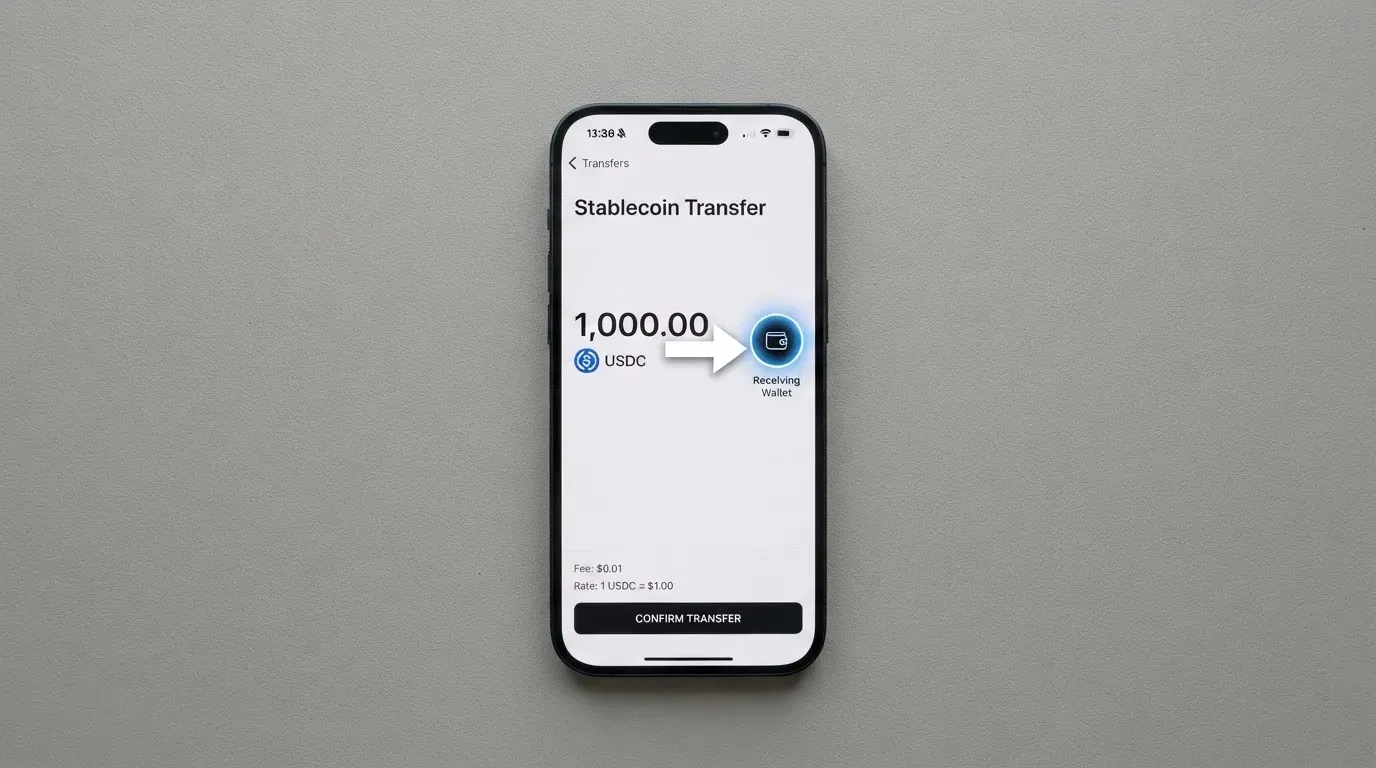
You fund the card by transferring USDT from your Spot, Futures or Earn account into the Card Account. Payments then draw from that Card Account balance. That is the entire list of sources. External bank transfers are not supported, and direct blockchain deposits to the card account are not supported — which means there are no card networks to choose from here, because you are never sending anything on-chain to the card.
Why that matters practically: if you hold USDT in a self-custody wallet, or on a different exchange, or want to move money in from a bank account, you cannot put it on this card. You would have to move it onto Bitunix first, then across to the Card Account. The minimum top-up is not stated, and no network fee line is given for the internal transfer.
On the way back out, the documentation is thinner still. The only movements described are cashback and referral rewards: “You can transfer your cashback from your Bitunix Card Account to your Spot Account and then withdraw it.” Withdrawing the general card balance itself is not described at all. You can close the card at any time in Card Management at no fee, and the terms say a positive balance is returned under applicable law and internal procedures, that identity verification may be needed, and that the money may be held for a reasonable period to cover chargebacks. That is a promise to return funds, written in the language of procedure rather than timetable.
So: loading in is one narrow door, and getting the general balance back out is not a documented path at all.
Paying with it every day
In the stores and websites it works, and the wallet support is broad for a card launched this recently. The list runs to Apple Pay, Google Pay, WeChat Pay, Alipay, PayPal, LINE Pay, GrabPay and Samsung Pay, all subject to platform terms and regional restrictions. There is no separate card app — the card lives inside the Bitunix app, which is where you would freeze it, raise a limit or watch a transaction.
Cashback is the reward, and it tracks your exchange VIP level: VIP 1 gets 1%, VIP 2-3 get 2%, VIP 4-5 get 4%, VIP 6-7 get 6%, and VIP 8 gets 8%. The percentages are the documented rates; the page leaves the headline “up to” figure blank. Crucially, the cashback offsets your FX and cross-border fees, so at 1% it does not cancel the 1.5% markup, and at 8% it more than does. What tier you are on the exchange therefore decides whether this card is cheaper than the alternatives.
Cashback is paid in USDT to the Card Account after settlement, and it excludes refunds, chargebacks, cash-like transactions and certain merchant category codes — the blocked list is not given, which means you cannot check whether a specific merchant counts before you spend. Balance yield is mentioned as “up to” a figure that is blank on the page. A referral reward runs until October 31.
If you want to place the promotional numbers: a company press release distributed through Chainwire on 16 July 2026 described up to 8% cashback on eligible spending capped at 1,000 USDT monthly, and yield up to 11.6% annually depending on the asset and conditions. That is unofficial — it comes from the company’s own announcement as reported by third parties, not from the card’s terms, and I would treat the cap and the yield as marketing figures until you see them in your own account.
Disputes work the way card disputes always do, with two numbers to know. Filing a dispute is free; 50 USD is charged only if it becomes a formal Visa chargeback — the FAQ says per case, the fees article says per transaction, and that inconsistency is itself worth knowing. Investigation runs “several weeks and, in some cases, up to 90 days”. Unauthorised transactions must be reported within 14 days of the transaction or posting date. Merchant refunds usually take 5-14 business days, and you are expected to contact the merchant first. Chargeback rights are not guaranteed, and cash-like transactions may be ineligible outright.
What can go wrong
The biggest thing that can go wrong here is not a fee or a declined payment. It is that the card’s public pages never name the issuer.
The card agreement names the company as Blue Rock Management Pte. Ltd., and calls the issuing institution simply “the Issuer” without naming it. Licences are not stated. The site itself is listed only as Bitunix.com, 2022-2026. This matters more than it sounds for a crypto card, because the party that actually issues the card and holds the programme is the party Visa holds to its rules and the party you would deal with in a dispute. The brand you are reviewing and the entity issuing your card are not the same thing, and here you only get one of the two names.
The terms do answer the custody question directly, and the answer is worth reading twice: “No entity assumes custody of fiat funds on behalf of users”. Card funds are not bank deposits and are not deposit-insured. The protections offered are practical rather than institutional — freeze and unfreeze in Card Management and the app, adjustable limits, an email alert for transactions of USD 200 or more, recommended two-factor authentication, and up to 15 third-party wallets linked per card. Good hygiene, none of it a guarantee.
On the exchange side, the complaints are not about the card. The Trustpilot profile for the Bitunix exchange — not the card — shows 3.7 with the stars displaying 3.5, across 819 reviews, 546 of them in the last 12 months as read on 2026-10-20. Themes in the reports include account freezes triggering extra verification (October 2026, including about $440 frozen for three months), liquidation disputes (October 2026) and withdrawal delays (October 2026). That same profile states the company “has received regulatory attention”. A separate, unofficial user report put the exchange’s rating lower still, in the 2.5 to 3.1 range depending on where you look, with the same themes of poor customer service and a slow mobile interface.
Read that carefully: no card-specific complaints surfaced in the searches I ran, and the themes that do exist are all about trading and withdrawals on the exchange. But the card draws its money from that exchange. An account freeze or a slow withdrawal upstream is an inconvenience for a trader and a problem for someone whose only income is arriving through that account.
Two more structural risks. The physical card does not exist yet, so the parts of the fee table that matter most in daily life — ATM access, cash withdrawal — are promises, and programme rollouts slip. And the card agreement’s own dates are inconsistent: it shows “Last updated on 2026-07-22” while the text refers to March 11, 2026. Small thing, but on a document you would rely on for recourse, it does not inspire confidence.
What to take instead
If the Bitunix card’s weaknesses — one top-up route, no cash, an unnamed issuer — are the deal-breakers for you, these are the alternatives I scored, with the same questions asked of each.
| Card | Score | Who can get it | Card and cost | Top-up |
|---|---|---|---|---|
| Young Card | 5.7 / 10 | Not stated | Not stated officially | Not stated for the card itself; cashback paid in YNG tokens by Club tier — Essential 0.1%, Gold 1.8%, Platinum 3.6% (Bronze and Silver not stated) |
| MSX | 6.4 / 10 | Not stated on an official page I could read | Not stated officially | Not stated |
| Bybit Card | 6.0 / 10 | Card regions: Argentina, AIFC (Kazakhstan), Georgia, Kazakhstan, Australia, Mexico, Brazil, Peru, Asia Pacific. Not for European Economic Area customers — participation strictly prohibited | Virtual and physical (a virtual card must be obtained first; physical not available in Peru); virtual issuance free in all regions “until further notice”; no annual fees. Physical: Australia 29.99 USD, Argentina 5 USD/USDT, Georgia 29.99 USDT, Kazakhstan 29.99 USDT, Asia Pacific 5 USDT, Brazil and Mexico none; VIP holders of some physical cards pay no issuance or replacement fee | No balance of its own — draws on the Funding Account and Flexible Easy Earn balance, fiat first, then crypto sold at the One-Click Sell rate plus a conversion fee |
Bybit is the one with the most detail on the public page, so here is what a comparison actually shows. Its card costs more to load than Bitunix’s: crypto conversion is 0.9% over the One-Click Sell rate in Australia, Asia Pacific, Georgia, Kazakhstan, Brazil and Mexico, and 0.5% in Argentina. Its FX fee is 2% on top of the network rate in Australia, Asia Pacific, Georgia and Mexico; Kazakhstan applies a 2% “International Fee” on purchases outside the country even in USD; Argentina is 7%, Brazil 1.5%, Peru 1%. So on pure cost, Bitunix is cheaper — 0% conversion and 1.5% FX against Bybit’s 0.9% and 2%.
What Bybit offers instead is breadth: real regional card issuance with card currencies set per country (USD, ARS, MXN, BRL, PEN), physical cards, a reward ladder from Base at 2% up to Infinite at 10% with monthly caps from 5 USD to 600 USD, and — since 2026-10-05 — points or cashback only on crypto-funded transactions, with fiat-funded spending earning nothing. That last rule is the one to sit with. It is the same structural dependence Bitunix has, expressed in the rewards rather than in the loading: one exchange, one balance, crypto in.
Young Card and MSX score close to Bitunix but I cannot tell you much about them. Eligibility, card type, fees and funding are not stated on official pages I could read, which is itself the finding. If either appeals to you, the first thing to establish is whether they will actually issue to your country — not whether the marketing page loads.
Who I would recommend it to
I would recommend the Bitunix card to someone already holding USDT on Bitunix who spends it online and would rather not convert it by hand before each purchase. For that person the card is cheap, unobtrusive and does what it says. Zero monthly fee, zero conversion, a markup a little under the category norm, cashback that can outrun the markup entirely if your exchange tier is high, and wallets that cover Apple Pay, Google Pay and most of Asia’s mobile payment habits.
I would not recommend it as your only card. The 3 out of 10 on top-ups is the reason. Money reaches this card from exactly one place, and money leaves it through documented mechanisms that cover cashback and referrals but not your balance. There is no cash. There is no physical card to lose, which is a small mercy, but also no physical card to use where a shop wants to tap. And when you want to know who is responsible for your money, the page names the marketing company and calls the issuer “the Issuer”.
The two questions I would put to anyone about to apply: can I get the balance back out if I need to, and who is the Issuer? The first has no documented answer and the second has no published one. Neither is disqualifying on its own — plenty of working products are built this way — but you should hold them consciously rather than discover them later.
Frequently asked questions
What is the Bitunix card?
It is a virtual Visa card that spends money from your Bitunix exchange account. You move USDT from your Spot, Futures or Earn balance into a Card Account, it converts to dollars at 1:1, and the card pays like an ordinary Visa online or in store. No cash, no physical card yet — at launch it is virtual only, and the physical version is described as planned for a future phase.
How does the Bitunix card work in practice?
You sign up, complete identity verification including your residential address, apply, and the virtual card appears on approval. After that you transfer USDT to the Card Account and spend from that balance. There is no separate card app: everything — the card, the freeze control, the limit settings — sits inside the Bitunix app.
Is Bitunix a bank?
No, and the card’s own terms are direct about the consequence. The agreement says no entity assumes custody of fiat funds on behalf of users, and card funds are not bank deposits and are not deposit-insured. The company named in the card terms is Blue Rock Management Pte. Ltd.; the card issuer is called “the Issuer” and is not named, and no licences are stated on the card’s public pages.
Who can get the Bitunix card?
Residents of 80 listed countries and regions, a closed list the page says is not exhaustive and “may include” more. Named among them: the US, Canada, France, Turkey, Ukraine, Singapore, Hong Kong, China, India, UAE, Cyprus, Serbia, Armenia, Kyrgyzstan, Tajikistan, Brazil and Israel, plus the Russian Federation and Belarus. The rule keys on residence rather than citizenship, and the list was updated on 2026-10-08.
Is the Bitunix card free?
Mostly. Issuance, monthly and annual fees are all shown as 0, and the crypto conversion fee is 0. Charges that do appear: a 1.5% markup over the Visa rate for currency conversion, 0.5% on USD spending as a cross-border fee, 0.3 USD per settlement under 10 USD with the first three per month waived, and 1 USD per month of inactivity after 12 months. Card replacement and cancellation are 0.
What cryptocurrencies can I use with the card?
USDT, and only USDT — “currently, USDT is the only supported cryptocurrency”. It converts to USD at 1:1, so your card balance is denominated in dollars. Balances earn cashback in USDT, and a company press release from 16 July 2026, unofficial and not part of the card terms, put that at up to 8% monthly capped at 1,000 USDT with yield up to 11.6% annually depending on the asset.
Can I use the Bitunix card in Apple Pay?
Apple Pay is listed as supported, alongside Google Pay, WeChat Pay, Alipay, PayPal, LINE Pay, GrabPay and Samsung Pay, all subject to platform terms and regional restrictions. There is no separate card app to add — you add the card from within the Bitunix app. WeChat Pay and Alipay carry their own 3% fee on amounts over 200 CNY, which is worth remembering before routing a payment that way.
Can I withdraw money from the Bitunix card?
The documentation only describes moving cashback and referral rewards: you can transfer cashback from the Card Account to your Spot Account and then withdraw it. Withdrawing the general card balance is not described. You can close the card free at any time in Card Management, and the terms say a positive balance is returned under applicable law and internal procedures, possibly after identity verification and possibly held for a reasonable period to cover chargebacks.
Is the Bitunix card safe?
Treat the funds as unprotected by any deposit scheme: card money is not a bank deposit and is not deposit-insured. What you do get is freeze and unfreeze controls in the app, adjustable limits, an email alert at 200 USD and above, recommended two-factor authentication and up to 15 third-party wallets per card. Separately, the exchange’s Trustpilot profile shows 3.7 across 819 reviews with account freezes and withdrawal delays among the themes.
Is the Bitunix card worth it?
For an existing Bitunix holder who spends USDT online, yes — no monthly fee, no conversion fee, and cashback at 1% to 8% by VIP tier that can offset the 1.5% FX markup and 0.5% cross-border fee. For anyone else it is hard to recommend as a main card: you can only fund it from inside the exchange, there is no ATM, no physical card yet, and the limits are 10,000 USD per transaction and per day, 50,000 USD per month, adjustable in Card Management.
Choosing an exchange card – cryptocardadvisor
Content created by the «cryptocardadvisor» team