
The Visa card that spends straight from a crypto wallet — and the numbers it does not publish
 Available in US
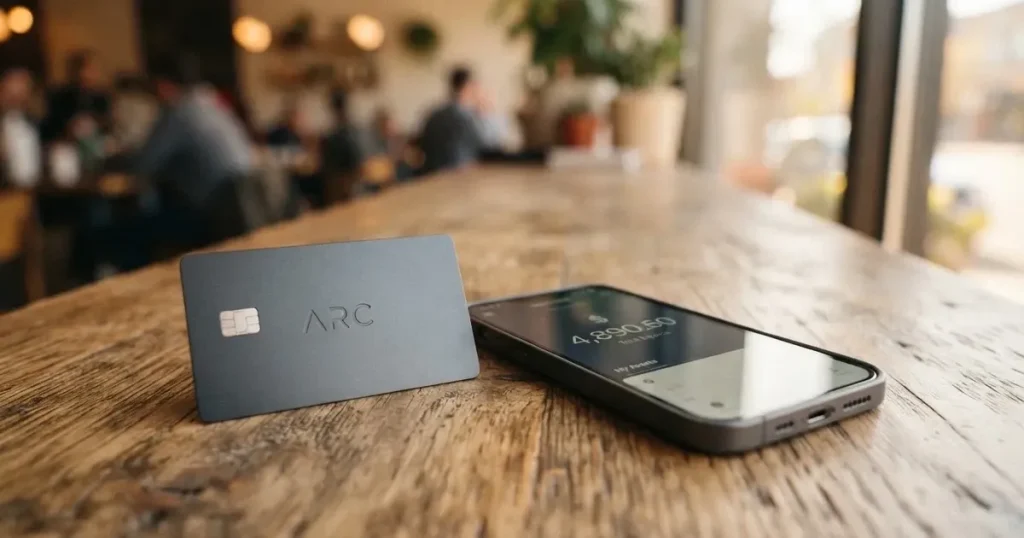
The SpotPay Calypso card is best described by what it is rather than by what it promises. It is a Visa payment card — virtual and physical, working in Apple Pay and Google Wallet — that spends down a balance held in the SpotPay wallet app. The people behind it, SpotPay, Inc., describe themselves as “a financial services platform, not a bank,” and they are registered with the US Financial Crimes Enforcement Network as a money services business. No card issuer is named on the pages I read. The product works as a card looks like it should work; what makes it awkward is the paperwork around it. Issuance cost, monthly fee, conversion fee, foreign-exchange fee, ATM charges, spending limits, card currency, delivery time and even which coins and networks the wallet accepts are all simply not stated on the public pages. That is the central fact of this review, and everything below is shaped by it.
The conditions described here are current as of October 28, 2026.
Verdict: 6.5 out of 10
My score for the SpotPay Calypso card is 6.5 out of 10. That is not a hostile number and it is not a recommendation either. It reflects a card that gets the mechanics of everyday spending right — both card forms, one shared ATM PIN, mobile wallets, a guided setup that takes minutes — and a company whose public disclosure is too thin for a product whose entire purpose is moving money across borders.
Who it suits: an app user who already holds crypto, wants a Visa with both virtual and physical cards, and is comfortable reading the wallet’s own screens to learn the limits rather than reading them on a schedule. Who it does not suit: anyone who needs a fee table before signing up, anyone who must know in advance exactly which country will let them hold the card, anyone who needs a named card issuer to answer for disputes, and anyone banking a large balance who wants deposit-guarantee protection — those funds are not bank deposits and this is not a bank.
| Criterion | Mark | Why |
|---|---|---|
| Who can get it | 7 / 10 | The site says spend “worldwide” with no country list or exclusions published; earlier data suggests 40+ countries with separate US and international programmes, sanctioned countries excluded |
| Cost | 5 / 10 | Issuance and fees are not disclosed; the site only promises “clear fees” on transfers |
| Top-up options | 5 / 10 | The card spends from the SpotPay wallet balance, but the coins and networks are not named |
| Reliability and complaints | 7 / 10 | SpotPay, Inc., a FinCEN-registered MSB, “not a bank”, issuer unnamed; no complaints found, App Store 4.2 from 41 ratings |
| Everyday use | 9 / 10 | Virtual and physical Visa, one shared PIN for ATMs, Apple Pay and Google Wallet |
Read that table as two strong scores and three middling ones, not as one verdict. Everyday use and eligibility are genuinely good. Cost and top-up options are where the silence hurts you, and reliability sits in between because the absence of complaints on a young product tells you less than it looks like it does.
Will they give you the card
Short answer: the site’s claim is that you can spend “worldwide,” and no country list or exclusions are published on the pages I read. That is the whole of what the card itself tells you.
Earlier data — which I did not verify myself — describes the picture as 40+ countries, with separate US and international programmes and sanctioned countries closed. Treat that as a starting point for your own research, not as a promise. The distinction matters more than it first appears. Two crypto cards with identical-looking marketing can differ enormously in who they accept, and the only reliable way to know whether *you* qualify is to read the current terms or ask the company directly. If your country is politically exposed, or you hold citizenship of one while living elsewhere, you may pass one test and fail another. KYC rules generally screen nationality and country of birth separately from residence, precisely because sanctions screening and issuer risk policy are often applied to citizenship rather than to your address.
Other basics the pages leave open:
- No country list, no exclusions, no stated regional programme structure beyond “worldwide”.
- Whether eligibility turns on residence, registration or citizenship is not stated.
- Whether the wallet accepts customers from your country at all is not stated, separately from the card.
None of this is a red flag on its own — plenty of small fintechs simply have not written the page. It does mean you should not treat “worldwide” as an answer to “is this available in my country.”
How to get it
The signup is described as a guided setup that takes minutes. You get a virtual and a physical card, both Visa, usable anywhere Visa is accepted, and the app store listing notes that both cards share one ATM PIN and that names can appear on the card. That is a genuinely well-judged feature set for a first card.
What is not stated, and what you will want to know before you start:
- Which documents are required, whether proof of address is needed, whether an age check is done — not stated.
- What KYC tier you will land on, and what limits attach to it — not stated.
- Delivery time or shipping for the physical card — not stated.
- The card currency — not stated.
Because the card currency is unstated, you cannot yet answer the question most new cardholders ask, which is what happens when you spend in a currency other than your own. The wallet profile does say it supports local and international transfers and multi-currency, but that is a statement about transfers, not about how the Visa itself settles a purchase.
The identity question deserves a direct answer: no, I cannot tell you what documents you will be asked for. In this category, a regulated provider is normally obliged to verify identity — in the EU, customer due diligence covers name, address, date of birth, nationality, identity documentation, a sanctions check, the purpose of the relationship and whether you are a politically exposed person. In the US, the customer identification programme requires name, date of birth, address and an identification number, with electronic systems also validating proof-of-address documents. SpotPay is a FinCEN-registered money services business, so US-style requirements are the likely shape of what you meet. What I am not going to do is speculate about what you can slip past. The correct question is only ever which documents they ask for, and the answer is only ever theirs.
Fees and limits: what you are not told
This is the section where the SpotPay Calypso card needs the most caution, because the honest summary is that the fee schedule is not public. The site says transfers have “clear fees.” Everything below that sentence is a blank.
| Fee or limit | What the card publishes |
|---|---|
| Issuance fee | not stated |
| Monthly or maintenance fee | not stated |
| Conversion rate for crypto to balance | not stated |
| Foreign-exchange fee | not stated |
| ATM fee and ATM allowance | not stated (ATM use is implied — both cards share one PIN) |
| Daily spending limit | not stated |
| Monthly spending limit | not stated |
| Card tiers or plans | not stated |
| Card currency | not stated |
That is a long column of not stated. Let me be precise about why it matters. A card with no published FX fee can still cost you one through the network’s own exchange rate, and a card with no published limit can still impose one. You are not being told there are no fees; you are being told nothing at all.
Three everyday payments, and what you would need to know:
- A coffee in your own currency. In the good case, the balance covers it and the only cost is the rate at which crypto became balance. The bad case is a foreign-exchange charge you never agreed to. Which of these happens is not stated.
- A subscription priced in dollars, from Europe. Your bank or the merchant may see a card billed in a country that differs from your address. Some merchants decline prepaid or foreign-issued card numbers on exactly that basis, and address verification is mainly offered in the US, Canada and the UK and is generally unavailable for foreign-issued cards. Whether that affects you depends on the card currency — not stated.
- Withdrawing cash at an ATM. Both cards share one ATM PIN, so ATM use is clearly intended. The fee, and the monthly allowance of free withdrawals, are not stated.
One last thing that is cheap for the provider and invisible in a fee table: on-chain network fees for a deposit are charged by the blockchain, not by the card company. Whatever you pay to move crypto into the wallet is outside anything SpotPay controls or publishes.
How to Top up the card
The card spends from the SpotPay wallet balance. You add funds to the wallet, and payments can be received into it. That is the stated model, and it is the standard one: you convert or load first, the card spends only what is loaded, and the balance cannot be overdrawn.
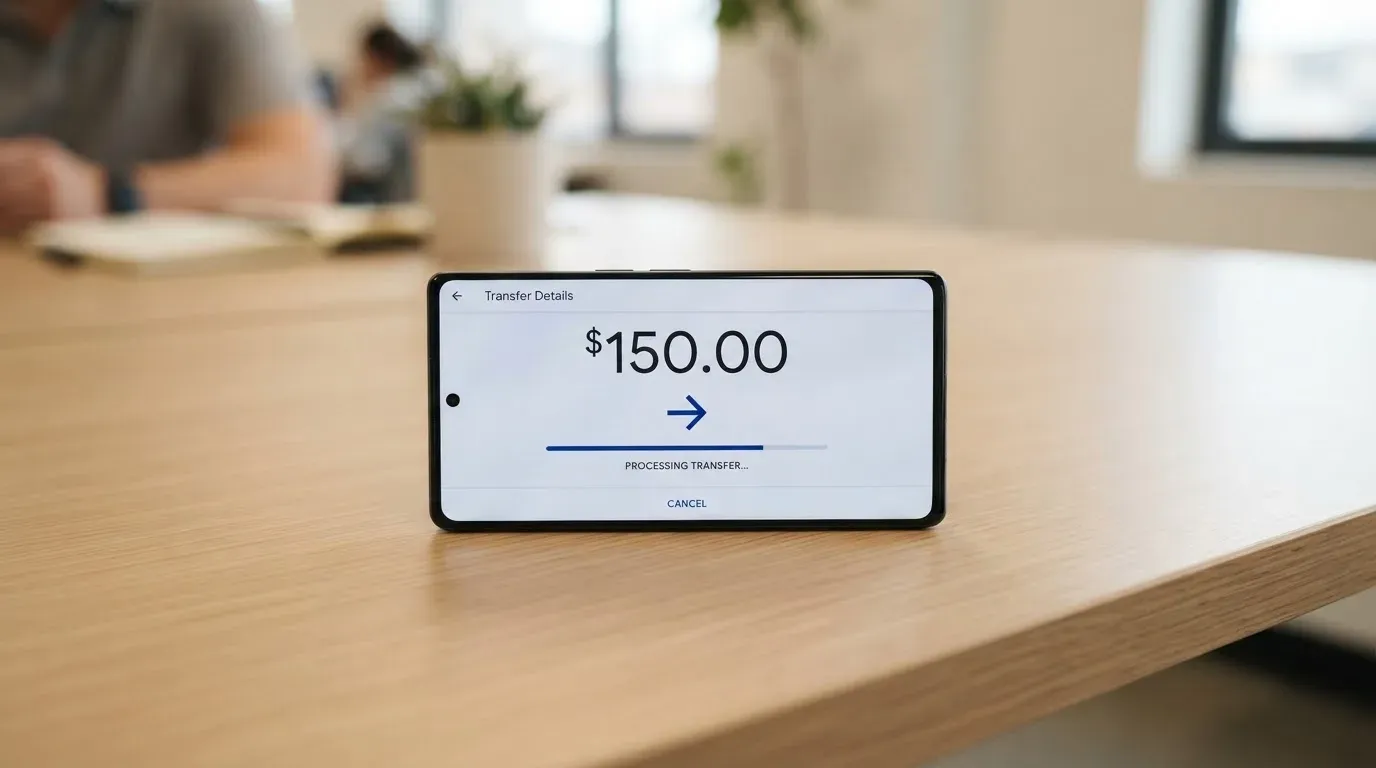
What is not stated:
- Which coins are accepted, and on which networks.
- The top-up routes, and their fees.
- How to withdraw money from the wallet back out.
The coin and network gap is the one that bites hardest, because getting it wrong is expensive rather than merely inconvenient. Blockchain transfers are irreversible: a deposit sent on a network the provider does not support, or to an address belonging to a different network, can be lost, or need manual recovery from support with no guarantee. There are more ways to get this wrong than people expect. A wallet holding USDT but no ETH on Ethereum cannot send, because gas is paid only in ETH. Tron prices its transactions with bandwidth and energy and often burns TRX. USDC is not natively available on Tron at all — Circle stopped supporting it there in February 2024 — so “USDC over TRC20” is a trap, not a shortcut. And if you are sending the two major dollar stablecoins, USDC is natively supported on 38 networks while USDT has been issued on Ethereum, Tron, Solana, Polygon, Avalanche and others; between them the BIS put about 90% of stablecoin market capitalisation in these two coins as of July 2025.
One reassurance, and one caveat. Stablecoins are not censorship-proof — Tether says it disables tokens in wallets on the OFAC sanctions list and has frozen funds tied to illicit activity. But they are also not wild: Circle says USDC is redeemable 1:1 for USD and backed by cash and cash equivalents, mostly in a government money market fund, with monthly reserve attestations. Stablecoins can and do depeg — TerraUSD collapsed in May 2022, and USDC briefly lost its peg in March 2023 — so “stable” describes the aim, not a guarantee.
Starting data suggests the collateral comes from a self-custodied wallet, but I did not confirm that on the pages I read, and the company does not say whether custody is theirs or yours. That single unanswerable question changes the risk profile more than any fee would.
Paying with it every day
This is where the card earns its best marks. Apple Pay and Google Wallet are both supported, anywhere Visa is accepted. Both a virtual and a physical card exist. They share one ATM PIN. You can pay by phone or by card, online or in store, with the same balance behind both.
- Apps: iPhone via the App Store, Android via Google Play.
- App Store listing, “SpotPay: Global Wallet”: 4.2 out of 5 from 41 ratings, age 4+, developer SpotPay, Inc., version 1.4.12. The Google Play rating was not read.
- Blocked merchant categories: not stated.
That rating deserves a word of caution rather than celebration. 41 ratings is a very small sample, and a 4.2 average from 41 people tells you more about early adopters than about reliability under load. The Google Play figure, which I did not read, would be worth checking alongside it if Android is your platform.
What you will not find stated is the part that decides whether a card feels safe in daily life: rewards, cashback, or what happens when a payment goes wrong. There is no stated rewards programme, no stated cashback, and no published dispute process. That last omission matters. If a charge you did not make comes through, the mechanisms that resolve it are the ones the issuer operates, and no issuer is named here. In the US, debit reversal rights come from Regulation E and credit card rights from Regulation Z; prepaid-card coverage varies and should not be assumed to apply. A chargeback is a refund ordered by the issuer, with reason codes such as fraud, duplicate billing or goods not received.
Two more everyday frictions worth knowing in advance. A declined authorisation can leave a hold on your funds for several days, typically up to seven — so it can leave your balance lower than your actual money while the payment is still unresolved. And on online payments, 3-D Secure adds an identity check: the issuer assesses risk and either approves it silently or challenges you with a one-time code or biometric. Visa’s version is called Visa Secure. Under 3-D Secure, liability for a fraudulent online payment can shift away from the merchant — which is either the protection or the problem, depending on how the shift is implemented.
What can go wrong
Nothing is published as an official incident. I found no user reports and no news coverage in two searches on 2026-10-21, and the handful of App Store reviews that exist read positively. No Trustpilot or Reddit pages were found. That is genuinely reassuring and also weak evidence: absence of complaints on a young, small product mostly tells you the product is young and small.
The real risks here are structural, and they are visible in the category rather than in SpotPay’s record.
The issuer is not named. A card programme involves three parties: the network (Visa) routes messages and sets the rules, a licensed issuer holds the programme, and the crypto brand is often just the manager or the shop window. Neither Visa nor Mastercard issues crypto cards to consumers directly; they license issuers and can suspend a programme. When the issuer is anonymous, the person you would complain to is anonymous too.
Programmes do close. WaveCrest, a Visa issuer that supplied crypto card brands, was suspended by Visa in Europe in 2018, closing all WaveCrest-issued Visa programmes. In November 2022 Visa said it had terminated its global agreements with FTX, and the FTX US debit card was wound down. The typical closure sequence is a notice period, then spending and loading stop, then users are asked to withdraw remaining balances. One 2026 closure I found in a single secondary source, unconfirmed, stopped new loads on 8 July 2026 and spending on 8 August 2026. The pattern is the point: your balance can become inaccessible on someone else’s timetable.
Your money is not a bank deposit. The company says so itself — “not a bank.” Electronic money providers must safeguard customer funds by segregating them or insuring them, but such funds are not bank deposits and may not sit under a deposit guarantee scheme. Regulation is still filling in around this: MiCA, the EU’s crypto-asset regulation, took legal effect in June 2023, its stablecoin rules applied from 30 June 2024 and its remaining provisions from 30 December 2024, with a transitional period letting existing providers continue only until 1 July 2026 or until a MiCA authorisation is granted or refused. Separately, a card is a payment service regulated under e-money and payments law — which is why a crypto card often sits on two licences, and why one of them being young can matter.
Custody, if it is theirs, is a real exposure. With a custodial wallet the provider holds the credentials and you must trust them completely. A seed phrase is typically 12 to 24 words in unencrypted form, and anyone who obtains it can restore the wallet and spend the funds. Transfers are irreversible and a stolen key has no recovery path. The record is not theoretical: Mt. Gox, about US$350 million reported stolen across 2011 to 2014; Coincheck, about US$400 million in 2018; Ronin Network, US$625 million in 2022. With a self-custody-linked card the funds stay in your own wallet until the moment of payment, but then key loss, phishing and clipboard-hijacking malware that silently swaps a pasted address are entirely your problem.
What the company does promise, it promises thinly. The site cites industry-standard fund protection, secure authentication that locks the account to its owner, and real-time monitoring for unauthorised activity. Support details are not stated on the pages I read, and there is no stated news or announcement feed. If a transfer goes to the wrong network, the answer to “who helps me” is currently undocumented.
One thing worth knowing on identity: if due diligence cannot be completed, EU rules require the institution to decline the transaction or, where necessary, end the relationship. Frozen or closed accounts pending documents are the rule working, not a punishment.
What to take instead
I want to be careful here. The three below are alternatives I looked at on their own terms, not endorsements, and each has its own silence. Their scores on the same scale: International Visa Card 6.7, UNi Card 6.1, Whop Cards 5.2.
International Visa Card — 6.7. The most transparent of the three, and the one with the hardest exclusion list. Not available to residents or legal registrants of Belarus, mainland China, North Korea, Cuba, India, Iraq, Iran, Israel, Myanmar, Nepal, Nicaragua, Russia, Syria, Turkey, Ukraine, Venezuela or Vietnam, with FATF grey-list countries reviewed case by case; purchases are blocked in North Korea, Cuba, Iran, Russia, Syria, Ukraine and Venezuela. The rule is by residence or registration, and citizenship is not mentioned. It is a US-issued Platinum Visa, virtual only — the physical card is listed as coming soon — paying in USD. Issuance is US$5 one-time with no maintenance fee, and plans run from Classic free to Pro at US$9.00/month and Max at US$19.00/month. Card use in USD is free on every plan; foreign currency carries “Visa exchange rate + 2% FX fee”; deposits of any kind are free. You fund it with USDC or USDT into the USD account, and also with USD, EUR, SEPA, SWIFT and FedNow. No cashback is stated. Its network choice is not stated.
| SpotPay Calypso | International Visa | UNi Card | Whop Cards | |
|---|---|---|---|---|
| Score | 6.5 | 6.7 | 6.1 | 5.2 |
| Issuance fee | not stated | US$5 one-time | not stated | not stated |
| Monthly fee | not stated | none (plans US$0–US$19) | no annual fee | not stated |
| FX fee | not stated | 2% plus Visa rate | none stated, live OTC rate | not stated |
| Card form | virtual + physical | virtual only (physical coming soon) | not stated | not stated |
| Currency | not stated | USD | multi-currency | not stated |
UNi Card — 6.1. A multicurrency card on the Mastercard network, spending from the UNi.Global account balance. It states no annual fee, no annual fee or foreign transaction fee, conversion at live over-the-counter rates, and “no hidden exchange fees.” It offers spend-to-earn rewards up to 3%. Eligibility, funding routes and card form are all not stated.
Whop Cards — 5.2. A Visa working anywhere Visa is accepted, spending from a Whop balance; a pending balance becomes usable as soon as a payment arrives, while standard withdrawals use settled funds. It offers 5% cashback at select merchants, currently Uber, with more planned, though the payout currency and conditions are not stated. The page says “no extra fees” without listing amounts, and conversion and FX fees are not stated. Its footprint is precise and American: 31 US states for consumers and 41 for businesses, with unsupported consumer countries including Belarus, mainland China, Cuba, Hong Kong, India, Iran, Iraq, Israel, Myanmar, Nepal, Nicaragua, North Korea, Russia, Syria, Turkey, Ukraine, Venezuela and Vietnam, and unsupported corporate countries including Russia and Belarus. Whether the test is citizenship or residence is not stated.
Two observations from putting these side by side. First, every one of these products is opaque somewhere; what distinguishes them is *where*. SpotPay is opaque on cost, Whop on fees and card type, UNi on eligibility and funding, and the International Visa card is opaque on its network but unusually clear on price. Second, if you are outside the United States, US-state geography tells you nothing useful — which leaves eligibility the one question where silence is most expensive to you.
Who I would recommend it to
I would recommend the SpotPay Calypso card to someone who already lives inside a crypto wallet. If you have funds there, you have probably already accepted the custody question, and this card makes those funds usable at a shop counter and on your phone without a second bank relationship. The feature set is right — both card forms, one shared PIN, Apple Pay and Google Wallet — and the setup being guided and fast matters more than it sounds when your banking options are narrow.
I would not recommend it as your first card, or as a card to hold a large balance in. Not because of anything I found going wrong, but because of what I could not find: no fee schedule, no limits, no named issuer, no stated card currency, no stated dispute process, no documented support route. A card you cannot price is a card you are guessing with.
Before you commit anything, my list would be: confirm your country is actually eligible; get the fee and limit figures in writing rather than inferred; find out who the issuer is; establish how you get money back out; and check whether custody is theirs or yours. If the answers to the last two are unsatisfying, the card’s advantages will not carry the risk.
Frequently asked questions
What is the SpotPay Calypso card?
It is a Visa payment card offered alongside the SpotPay wallet app, available in both virtual and physical form, that spends down your SpotPay wallet balance rather than a bank account. Both cards share a single ATM PIN, and the card works anywhere Visa is accepted, including through Apple Pay and Google Wallet. The company behind it, SpotPay, Inc., describes itself as a financial services platform rather than a bank.
How does the SpotPay Calypso card work?
You add funds to the SpotPay wallet, then the card spends from that balance. Payments can also be received into the wallet. This is the pre-loaded balance model common to crypto cards: you convert or top up first, the card draws only on what is loaded, and the balance cannot be overdrawn. Which coins and networks you can use to load it are not stated on the public pages.
Is SpotPay Calypso a bank?
No. SpotPay, Inc. describes itself as “a financial services platform, not a bank.” It is registered with the US Financial Crimes Enforcement Network as a money services business. The card issuer is not named. That means your balance is not a bank deposit and should not be assumed to carry deposit-guarantee protection, even though safeguarded funds may be segregated or insured by the provider.
Who owns SpotPay Calypso?
The developer of the app, and the company behind the card, is SpotPay, Inc. Unofficial information — from an undated third-party company profile, not confirmed by the card itself — describes it as San Francisco based, founded in 2025, a Y Combinator W26 company, with founder and CEO Zsika Phillip-Baptiste. Treat all of that as background, not as verified fact.
Does SpotPay Calypso require KYC, and what documents?
The card’s own pages do not say. What is known is that as a registered money services business, SpotPay falls under US anti-money-laundering rules, where the customer identification programme requires name, date of birth, address and an identification number, and electronic systems also validate proof-of-address documents. Expect identity verification; ask the company for the specific list rather than assuming.
Is SpotPay Calypso available in my country?
The site says you can spend “worldwide” and publishes no country list or exclusions. Earlier, unverified data describes 40+ countries with separate US and international programmes and sanctioned countries excluded. Because the rule may apply to residence, registration or citizenship, and these differ for many people, only the company’s current terms will give you a real answer. Availability of the wallet itself is separately unconfirmed.
What does it cost to use the SpotPay Calypso card?
The public pages state no issuance fee, no monthly fee, no conversion fee and no foreign-exchange fee. They say only that transfers have “clear fees.” Spending limits, ATM charges and card currency are also not stated. On-chain network fees for funding are charged by the blockchain rather than the card company, so they appear in no fee table. Ask for a written fee schedule before you commit funds.
How do I top up the SpotPay Calypso card?
By adding funds to your SpotPay wallet balance, which the card then spends from; the wallet can also receive payments. The supported coins and networks are not stated, and neither are the top-up fees or withdrawal routes. Get this confirmed before sending anything, because blockchain transfers are irreversible and a deposit on an unsupported network or to an address of another network can be lost.
Is SpotPay Calypso safe?
There is no published incident and I found no complaints, but that is weak evidence for a young product with 41 App Store ratings. The structural risks are clearer: no issuer is named, crypto card programmes have been closed by their network before, this is not a bank, and the pages do not say whether your crypto is held custodially. Funds are irreversible if stolen or mis-sent.
Is the SpotPay Calypso card worth it?
Worth it if you already hold crypto and want it spendable from a phone and a physical Visa with one shared PIN. Not worth committing to if you need published fees, published limits, a named issuer or deposit-guarantee protection. Also worth weighing a token like USDC, which Circle says is backed by cash and equivalents and redeemable 1:1, and remembering that stablecoins have depegged before.
Choosing an app or neobank card – cryptocardadvisor
Content created by the «cryptocardadvisor» team