
A prepaid card bolted to a crypto exchange balance
 Available in US
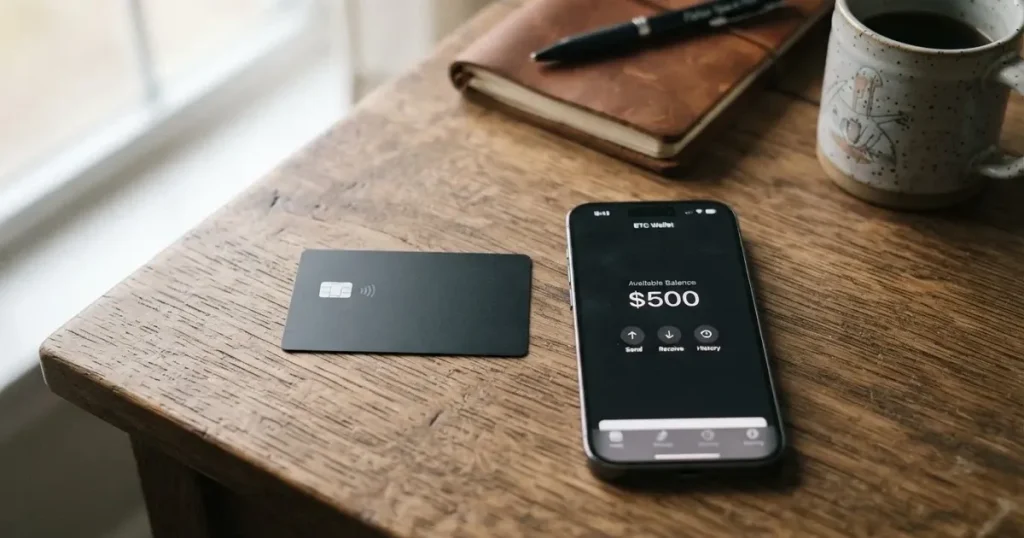
The LBank card is not really a bank card in the ordinary sense. It is a prepaid payment card that draws on the balance you already hold on the LBank cryptocurrency exchange — you spend from your Spot balance, and the card converts what it needs as it goes. That single design choice explains almost everything about this card, good and bad: it is cheap to hold, quick to get hold of, works at any merchant that takes Visa, and it also means your money sits with an exchange rather than with a bank.
My score for it is 6.8 out of 10. That is not a mediocre card so much as a very ordinary one attached to an exchange that carries its own baggage. The card itself does the basic job competently. The question you should be asking is not “is this a good card” but “how much of my money do I want to leave sitting on an exchange that has a thin published trail on this product.”
Conditions on this page are current as of October 28, 2026.
The score at a glance
| Criterion | Mark | Why |
|---|---|---|
| Who can get it | 7 / 10 | Available to users outside prohibited countries; an earlier check listed the US, mainland China, Canada, Hong Kong, Macao, Cuba, Iran, North Korea, Syria, Sudan among the restricted ones |
| Cost | 8 / 10 | Virtual issuance, annual fee and top-up are free; the physical card has a “low” issuance fee; a 0.8% transaction fee applies to both |
| Top-up options | 6 / 10 | USDT and other supported cryptos are debited automatically from the LBank Spot balance; networks are not applicable because it is an internal transfer |
| Reliability and complaints | 3 / 10 | The issuer and the card’s licences are not named; the exchange has 325 Trustpilot reviews with 82% at one star — frozen withdrawals, disputed liquidations (the card is not mentioned in those reviews) |
| Everyday use | 10 / 10 | Virtual 8 Card Instant and physical 8 Card GO, Apple Pay and Google Pay, ATM on the physical card |
| Total | 6.8 / 10 | A competent prepaid card whose real weakness is the exchange around it |
Who this suits: someone who already holds funds on LBank, spends most of that balance anyway, and wants a card in a wallet app within minutes rather than a bank application with a branch. Who it does not suit: anyone whose main worry is protection of funds, anyone who needs a card in a specific country with certainty, and anyone who wants a card whose issuer they can name and check.
Will they give you the card
The published answer is: yes, if you are outside the prohibited countries. LBank’s own wording is that the card is “Available to users outside prohibited countries”. The full list lives in LBank’s User Service Agreement, which I have not read. An earlier check of LBank’s country rules listed the US, mainland China, Canada, Hong Kong SAR, Macao SAR, Cuba, Iran, North Korea, Syria and Sudan among the excluded ones.
That sentence is doing a lot of work and I want to be honest about how much. “Not prohibited” is not the same as “approved”. Exchanges usually apply their own risk appetite on top of the legal minimum, so a country being absent from the prohibition list tells you nothing about whether your individual application will pass. The eligibility rules that actually decide your case — tier, verification level, residence versus citizenship — are not stated on the public card pages. I could not find them, and you should assume you will only learn your own position after submitting documents.
If your country sits anywhere near that list, assume the answer is no until LBank tells you otherwise in writing. If you are somewhere else, the realistic obstacles are ordinary ones: name mismatches, address problems, and the exchange’s own risk checks.
How to get it
The route is short and it runs through the app rather than a website. You log in to the LBank App, open LBank Card, enter your identity information, and complete security verification. Additional documents may be requested. If the materials are complete, issuance is quoted as taking as little as 1 minute.
That last claim is worth reading carefully. “As little as” is a floor, not a typical case, and it applies only after your documents are complete. If LBank asks for a second document, the clock stops while a human looks at it. Set your expectations on a day, not a minute, and do not plan a purchase around same-day issuance.
There are two card products, and they are different animals:
- 8 Card Instant — virtual. No plastic to wait for, usable for online and wallet payments as soon as it appears.
- 8 Card GO — physical. Adds ATM use. You order it through an “Apply for physical card” flow.
Both are accepted by Visa-accepting merchants. The currency the card is denominated in is not stated, and that is not a small gap — it feeds directly into what a foreign purchase costs you, which we come to below. The physical card’s delivery countries, delivery time and delivery cost are also not stated on the public pages. If you need the plastic abroad, that is an email-to-support question before you apply, not after.
On what you will be asked to prove: the page describes identity information and security verification. Proof of address and proof of age requirements are not stated. Verification tiers are not stated either. Prepaid cards in this category are normally adult-only, and identity checks in the EU and the US both require name, date of birth, address and an identification number, so expect to hand over more than an email address — but expect the precise list to be whatever the app asks for on the day.
Fees: what it really costs
Here is the honest summary: the card is cheap to hold and charges you at the point of sale. Every card in this category does something similar; what varies is the percentage and whether the extras are silent.

| Fee or limit | What the card says |
|---|---|
| Virtual card issuance | Waived |
| Virtual card annual fee | Waived |
| Physical card issuance | Described as “low”; amount not stated |
| Physical card annual fee | 0 |
| Top-up fee | 0 on both cards |
| Transaction fee | 0.8% on both cards |
| Authorization fee | Charged when you bind a card, whether or not binding succeeds; amount not stated |
| Cross-currency handling | Cross-currency amounts follow Visa’s clearing result; FX rate not stated |
| ATM | 8 Card GO covers ATM use; fee and allowance not stated |
| Spending limits | Depend on card tier and account status; figures not stated |
Four things in that table deserve a second look.
The 0.8% is the real price of the card. On a 200 purchase you keep 1.60. It is charged on both cards and there is no monthly cap announced on it. It is not unusual for the category — Bybit’s crypto conversion fee is 0.9% in most regions, with 0.5% in Argentina — but it is the number to budget against.
The binding authorization fee is the one that surprises people. You pay it when you link the card, and you pay it whether the link succeeds or not. The amount is not published. If you are setting the card up and something fails, you may have been charged for the attempt. Support can tell you the figure; the page will not.
Cross-currency purchases have a second layer. If you buy something priced in a currency other than the card’s, the amount you are finally charged is adjusted to Visa’s clearing result, which means it can differ from the amount you authorised. The exchange rate itself is not stated, so I cannot tell you what spread you are paying on a foreign purchase — only that there is one and that it is applied after authorisation, not before.
Limits are not published. “Depend on card tier and account status” is the whole answer on the public page. This matters more than it sounds: if you are planning a large purchase, the ceiling that stops you may be one you cannot read in advance.
Two or three ordinary payments, so the arithmetic is concrete. Using the stated 0.8% fee and assuming no cross-currency conversion:
- Coffee, 3 USD. The fee is about 0.02 USD. At the top cashback tier the 10% coffee rate matters far more than the fee — but the 10% rate carries a cap of 10 USDT, so it flattens quickly.
- Weekly shop, 60 USD. The fee is about 0.48 USD. Across four weeks that is roughly 1.92 USD of fees before you count anything else.
- Larger purchases. The fee scales with the amount, and this is where cross-currency is likely to add a second, unstated component on top. Larger purchases are also more likely to hit whatever limit you cannot see.
Cashback can offset some of this if your VIP level is high, but treat it as a partial rebate on the fee, not as a reason to spend more. I will come back to the cashback caps, because they are low enough that the rate on paper overstates the benefit for most people.
Top up: how the balance gets there
This is the part that is genuinely simpler than most cards in the category, and it is also where the design makes itself felt. Funding is not a transfer from your bank or from another wallet. USDT and other supported cryptocurrencies are deducted automatically from the LBank Spot account balance as you spend, and the card’s top-up fee is 0 on both cards. The card does not read a blockchain network, so network selection is not applicable here.
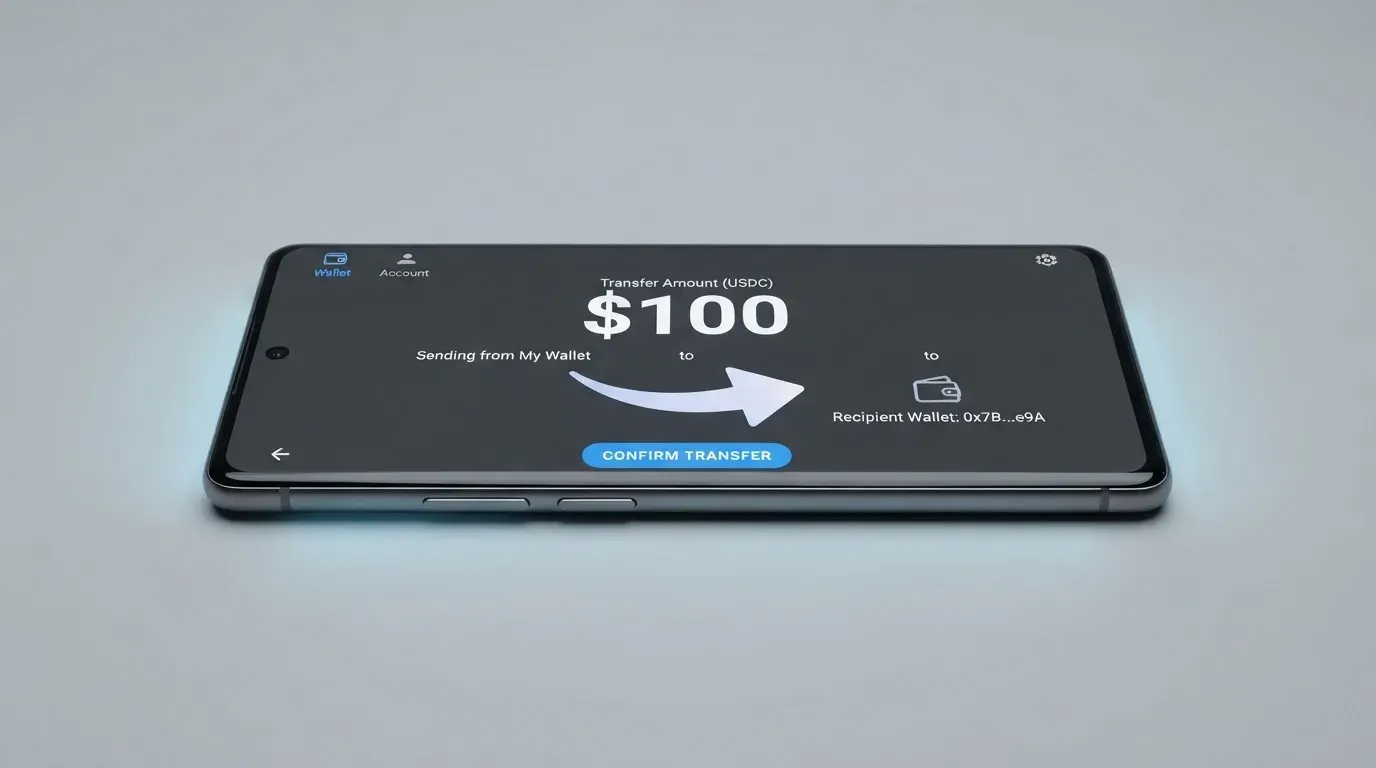
In practice: keep a balance on the exchange’s Spot account, and the card spends it. No gas, no wrong-network anxiety, no waiting for a chain confirmation before a purchase goes through.
The trade-off is that your money must already be on the exchange. A minimum top-up is not stated, and neither is a fiat top-up route — I found no published way to add money to the card directly in fiat. So this is not a card you can pay into from a bank account in the ordinary way; it is a way to spend what you have already entrusted to the exchange.
One reassurance is on record, and it is a real one: freezing or cancelling a card does not touch your deposits or withdrawals from the account balance. Cancelling is permanent, though — so cancel for the right reason, or do not cancel at all.
That is the whole model. If it suits you, it is close to frictionless. If you were hoping for a card that holds its own money apart from an exchange, this is not that card.
Paying with it every day
Everyday use is where this card scores highest, and I want to explain why before the details. The mark is 10 out of 10 because there is nothing here to complain about functionally: both a virtual and a physical card, both mobile wallets, ATM on the physical card, merchant acceptance wherever Visa is accepted. That is a complete kit for ordinary spending.
- Apple Pay and Google Pay are supported, so the card can live in your phone’s wallet rather than being typed into checkout forms.
- Online payments work at Visa-accepting merchants. Some payments are declined for “merchant restrictions” — the list of blocked categories is not stated, so I cannot tell you which merchants are affected.
- ATM withdrawals are covered on the 8 Card GO. The fee and the allowance are not stated.
- Refunds on merchant returns “generally return to the original payment method”. For a suspicious transaction, the card’s own advice is to freeze the card and contact support; the time frames are not stated.
Cashback is tiered by your LBank VIP level, and the monthly caps are the whole story:
| Level | Requirement | Cashback | Monthly cap |
|---|---|---|---|
| VIP0–VIP2 | — | 0.8% | 10 USDT |
| VIP3–VIP4 | at least 1,500 USDT spent the previous month | 1% | 30 USDT |
| VIP5–VIP6 | at least 5,000 USDT | 1.2% | 100 USDT |
| SVIP | at least 20,000 USDT | 2% | 250 USDT |
| Coffee purchases | — | 10% | 10 USDT |
If you qualify for both a tier rate and the coffee rate, the higher one applies. What the cashback is paid in is not stated, which is a real question if you care about whether your rebate arrives as something you can use or as something you have to convert.
Read those caps next to the 0.8% fee and the economics become clearer. At 0.8% cashback you need to spend 1,250 USDT in a month before you hit the 10 USDT cap at the lowest tiers. The higher rates need 5,000 or 12,500 USDT of monthly spending to reach the caps at 1.2% and 2%. For ordinary card use, the realistic cashback is the base 0.8%, which is exactly the fee. The card refunds its transaction fee at the bottom tier and gives you a small margin above it.
Two mechanics worth knowing generally. Apple Pay does not put your card number on Apple’s servers — it replaces it with a device-specific number in the phone’s secure hardware, and each payment carries a one-time code, so adding the card to Apple Pay is not the same risk as handing over the number. And a declined authorisation can leave a hold on your funds for days, typically up to seven, even though no money moved.
What can go wrong
Nothing card-specific went wrong in the reports I looked at, which is worth saying plainly: I found no complaints about the card itself. The problem is one level up.
The issuer is not named. The card page says “LBank issues the card”. LBank itself is LBK Exchange / LBK Blockchain Co., Limited per an earlier check. But the issuing bank or e-money institution behind the card, and the licences under which the card programme runs, are not stated. That is not a technicality. A card is a payment product, regulated under payment-services and e-money law, separately from the crypto side of the business — so a crypto card typically rests on two licences, and I cannot tell you which ones here. If you want to know what protections attach to the money in your card account, that is the question to ask, and the answer has to come from LBank, not from me.
The exchange’s complaint record is poor. On Trustpilot, lbank.com has 325 reviews, 79 of them in the last 12 months, and 82% at one star. The overall rating is shown as unavailable “due to a breach of guidelines”. Themes in those reviews: frozen withdrawals (June to October 2026), disputed futures liquidations (August to September 2026), fiat deposits not credited (July 2026). None of them mentions the card. That is the point: the card is young enough to have no track record, and it sits inside an account that has one.
Your money is custodial. The funds are held in the LBank app — an exchange account. You can freeze and unfreeze the card any time in Card Management, losing the physical card does not put the funds at risk, and idle USDT earns yield. Those are genuine conveniences, and they are also the definition of custodial custody: the provider holds the credentials and you trust them with the balance. Custodial platforms have a history — Mt. Gox, Coincheck, Ronin Network among them — and stablecoins that sit on an exchange balance are not censorship-proof either, since a provider can freeze funds tied to flagged activity.
Reverse-charge and recovery asymmetry. Crypto transfers are typically irreversible, and a stolen key has no recovery path. That does not apply the same way to the card itself, where an issuer can order a chargeback — but do not assume the coverage a credit card enjoys. Prepaid-card protection varies by jurisdiction and should not be taken for granted. And if a payment goes wrong, the card’s stated remedy is to freeze and contact support, with no published time frame.
Blocked categories and declines. Some merchants simply will not take the card: prepaid and foreign-issued cards get extra scrutiny because the BIN lookup reveals both the card type and the issuer’s country, and address verification services — which compare the street number and postal code you type against issuer records — are generally unavailable for foreign-issued cards. That is the mechanism behind a lot of “it was declined in a shop” moments, and it is not something the card can fix.
Support is stated as 24/7, with [email protected] as the contact; that address shows up in the exchange’s own replies on Trustpilot.
What I could not check. Whether the card has been suspended, paused or re-launched since I last looked: not stated, and worth a look at the announcements before you apply.
What to take instead
If the shape of this card suits you but the exchange behind it does not, the comparison below is with cards from other exchanges, not with ordinary bank cards. Two of these publish far more than LBank does, which is itself informative. Note also that scores are not directly comparable across cards — they reflect different evidence behind them.
| Alternative | Score | What is published | What stands out |
|---|---|---|---|
| Bybit Card | 6.0 / 10 | Regions, networks, currencies, fees, reward tiers all listed in detail | The most transparent of the three; a genuinely regional product with region-specific rules |
| MSX | 6.4 / 10 | Almost nothing official could be read — eligibility, card type, cost, fees, funding, rewards all not stated | Thin public information; I would not apply on this basis |
| Young Card | 5.7 / 10 | Cashback paid in YNG tokens, rate by Club tier: Essential 0.1%, Gold 1.8%, Platinum 3.6% | Cashback in the platform’s own token, not in a stablecoin |
| LBank | 6.8 / 10 | Card products, core fees, cashback tiers; issuer and licences not named | Good everyday kit, opaque backing |
Bybit Card is the useful comparison, because it publishes what LBank does not. Its help centre names the supported regions — Argentina, AIFC (Kazakhstan), Georgia, Kazakhstan, Australia, Mexico, Brazil, Peru, Asia Pacific — and the application asks for your country of residence, registering your interest if it is unsupported. Its cards page is emphatic that the product is not meant for European Economic Area customers and that participation from them is strictly prohibited. On cost: virtual issuance is free in all regions “until further notice”, there are no annual fees, and physical issuance runs from none in Brazil and Mexico up to 29.99 USD in Australia. On fees: a 0.9% crypto conversion fee over the One-Click Sell rate in most regions, 0.5% in Argentina, and an FX fee of 2% on top of the network rate in Australia, Asia Pacific, Georgia and Mexico, 7% in Argentina, 1.5% in Brazil, 1% in Peru. On rewards, from 2026-10-05 only crypto-funded transactions earn points or cashback, with tiers running from Base at 2.00% to Infinite at 10%. All of that is on the page. It is a regional card with regional variants — Mastercard prepaid in Argentina, Visa prepaid in Brazil and Peru, credit cards elsewhere, and card validity of three to six years depending on region. If your country is on that list and you want to know what you are signing up for before you sign up, Bybit is easier to read than LBank.
MSX and Young Card are here because they scored close by, not because they are well documented. For MSX I could not find official statements on eligibility, card type, cost, fees, funding or rewards. For Young Card the one clear fact is that cashback is paid in YNG tokens at a rate set by Club tier — 0.1% at Essential, 1.8% at Gold, 3.6% at Platinum — which means the rebate arrives in a token whose value you will have to track separately. Neither of these is something I would act on this page alone.
Who I would recommend it to
I would recommend the LBank card to you if all three of these are true. You already hold money on LBank and would spend that balance anyway. You want a card in your phone’s wallet quickly, more than you want a named bank issuer and a full licence list. And you are in a country the exchange serves, with a clean name and address that match your documents.
I would not recommend it if any of these are true. You are trying to reduce the amount of your money held by a single exchange. You need a specific country covered and cannot tolerate “probably, unless you are on a list I could not read”. Or you are planning a large purchase and the unstated spending limits are the deal-breaker.
The honest framing is this. As a card, it does its job: free to hold, cheap to open, complete for daily spending, with cashback that at the bottom tier simply cancels the transaction fee. As a place to hold money, it is an exchange balance, and the exchange’s complaint history is poor and its card-specific record does not yet exist. Those are two different questions, and you should answer them separately — not let the first answer stand in for the second.
Frequently asked questions
What is the LBank card?
The LBank card is a prepaid Visa payment card that spends money you already hold on the LBank cryptocurrency exchange. It comes in two forms: 8 Card Instant, which is virtual, and 8 Card GO, which is physical and adds ATM use. It is not a bank account and not a credit card — it is a way of converting and spending your exchange balance at the till.
How does the LBank card work?
You top up from your LBank Spot account balance, in USDT or another supported cryptocurrency, and the card debits that balance as you spend. The top-up fee is 0 and the transaction fee is 0.8% on both cards. Because the funding is an internal exchange transfer rather than a blockchain deposit, you do not choose a network and pay no gas.
Is LBank a bank?
No. LBank is a cryptocurrency exchange — LBK Exchange, or LBK Blockchain Co., Limited per an earlier check. The card page says “LBank issues the card”, but the issuing bank or e-money institution behind it and the licences for the card are not stated on the public pages. So LBank is not a bank, and I could not confirm which licensed institution stands behind the card.
Who can get the LBank card?
LBank says the card is available to users outside prohibited countries, and the full list sits in its User Service Agreement. An earlier check listed the US, mainland China, Canada, Hong Kong SAR, Macao SAR, Cuba, Iran, North Korea, Syria and Sudan. Eligibility depends on your tier and account status, but those rules are not published — the only reliable test is submitting your documents and seeing.
How do I get the LBank card?
Log in to the LBank App, open LBank Card, enter your identity information and complete security verification. Additional documents may be requested. If everything is in order, issuance is quoted as taking as little as 1 minute — but treat that as a floor, not a promise, since a document request stops the clock.
Does the LBank card require KYC?
Yes. Identity verification is part of the sign-up flow, and the app may ask for additional documents. The exact list — proof of address, proof of age, required verification tier — is not stated on the public card pages. In practice expect the standard set: name, date of birth, address and an identification document.
Is the LBank card free?
The virtual card is free to issue with no annual fee, and top-up costs nothing. The physical 8 Card GO has an annual fee of 0 and an issuance fee described only as “low”, with no amount published. The cost you will actually meet is the 0.8% transaction fee on every purchase, plus a possible binding authorization fee of unstated size.
Can I add the LBank card to Apple Pay?
Yes — Apple Pay and Google Pay are both supported. Adding the card to Apple Wallet stores a device-specific number in the phone’s secure hardware rather than on Apple’s servers, and each payment uses a one-time code. A separate note: some merchants refuse prepaid or foreign-issued cards, and blocked categories are not listed publicly.
Is the LBank card safe?
Safety here has two halves. The card can be frozen and unfrozen instantly in Card Management, and losing the physical card does not endanger the funds. But the funds are held custodially in the exchange account, not by you, and the exchange’s own reviews describe frozen withdrawals, disputed liquidations and uncredited deposits. I would size your balance accordingly.
Is the LBank card worth it?
Worth it if you already keep funds on LBank and want to spend them at ordinary shops without moving money first. Not worth it if you are opening an exchange account purely to get the card, or if you want a named issuer and published limits — those are not on the public pages. Weigh the free issuance against a 0.8% fee whose only real offset is cashback that starts at exactly 0.8%.
Choosing an exchange card – cryptocardadvisor
Content created by the «cryptocardadvisor» team