
Pintopay promises a card in two minutes from a Telegram chat. Here is what the paperwork does not tell you.
 Available in US
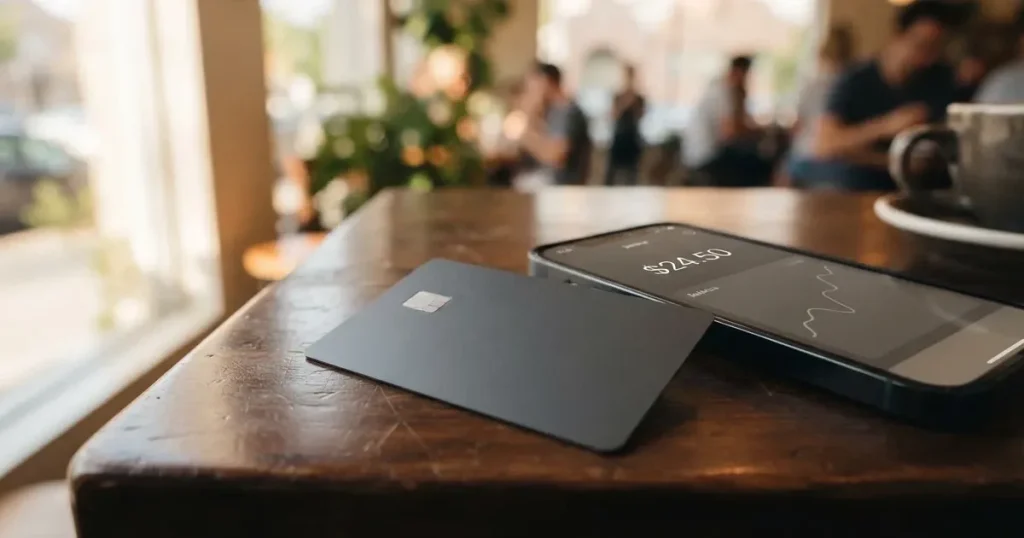
The Pintopay card is one of those crypto payment cards that has grown up inside Telegram rather than inside a bank app. You talk to a bot, you load crypto into it, and you get something that behaves like an ordinary debit card in a shop — virtual or physical, Visa-powered, usable at ATMs and with Apple Pay. On paper that is exactly what a lot of people want: a card that spends a USDT balance without asking a bank to be involved.
I read the card’s own pages and terms, then went looking for the things a marketing page never puts in the headline — who is actually behind it, what happens when something goes wrong, and what people say when something has gone wrong for them. The score I land on is 6.1 out of 10. That is not a scathing mark and it is not a recommendation either. It is a card that does the basic job for the person it was built for, and that leaves a lot of important numbers unpublished.
If you are weighing this card against other crypto cards, the honest summary is this: Pintopay is unusually convenient to start with, unusually quiet about its fees and limits, and unusually well documented in the sense that its users write publicly about what went wrong. That last part is not a compliment to the card. It is information you should have before you move money.
The conditions described here are current as of October 28, 2026.
Verdict: 6.1 out of 10
Who this suits. Someone who already lives in Telegram, already holds USDT or similar, and wants a spendable card today without a bank application, a credit check, or a conversation with a support agent. If your entire financial life is a phone screen and a wallet address, this card removes friction that a traditional bank card puts in your way. It is a tool for spending a crypto balance, and it does that job competently.
Who it does not suit. Anyone who needs to know the FX rate before they pay, who plans to lean on the card’s spending limits, who wants a named bank issuer and a clear regulatory home, or who cannot tolerate their balance being frozen while support sends generic replies. Every one of those complaints in the last sentence is not a hypothetical — I found them in the card’s own terms and in public reviews, and I will show you exactly where.
The breakdown below is where the 6.1 comes from. Notice where the good marks are and where they are not.
| Criterion | Mark | Why |
|---|---|---|
| Who can get it | 9 / 10 | Payments in 180+ countries with no exclusion list; services not available to persons in Hong Kong and to Hong Kong citizens |
| Cost | 4 / 10 | Card costs $35 and top-up is 2.5%; unofficial sources list issuance at $10 and $35 and $0.25 per transaction; official FX is described only as “competitive rates” with no figure |
| Top-up options | 7 / 10 | USDT and other crypto; unofficial sources list BTC, ETH, USDT, BNB, TRX and top-ups taking up to 12 hours; one review mentions USDT TRC-20 |
| Reliability and complaints | 3 / 10 | Issuer not named, operator UANT Limited (Hong Kong); Trustpilot 2.0 out of 5 across 42 reviews reporting blocked balances and a $1,100 refund still waiting |
| Everyday use | 8 / 10 | Virtual and physical Visa, Apple Pay, ATMs; unofficial sources say Google Pay works too |
| Total | 6.1 / 10 | A card that is easy to start and awkward to rely on |
The pattern in that table is the whole story. The card is good at the parts you touch on day one — access, speed, the shape of the thing — and thin on the parts that matter on day four hundred: the numbers, the issuer, the fallback.
Will they give you the card?
They will, more or less, to almost anyone. The card’s own page says “Global Payments in 180+ Countries” and there is no exclusion list — which sounds like an unusually open stance, and for someone who has been turned down by a conventional bank it probably is.
But read the fine print on one thing: the services are not available to persons located in, resident in, or citizens of Hong Kong. That is not a vague risk warning. It is a stated carve-out, and it appears in the terms alongside Hong Kong governing law and HKIAC arbitration. So the answer to “can I get a Pintopay card in my country” is generally yes, with Hong Kong as the named exception.
What the card does not say is whether eligibility runs on citizenship or on residence. Those are different tests, and they bite in different situations. If you hold one passport and live in another country, nothing published tells you which one they check. The card’s public pages simply do not state it. I would not assume either way.
There is also a distinction worth holding on to, because it is the single most misunderstood thing about cards like this. The card being accepted in 180+ countries does not mean the issuing entity is in 180+ countries, or that the card is available to residents of all of them. Acceptance and eligibility are two different lists, and merchants can read one of them.
How to get it
The short version: you start in Telegram. The card’s page literally says “Get Card with Telegram,” and there is a Telegram bot and a mini-app, alongside a mobile application. I found no App Store or Google Play link or rating on the site, so I cannot tell you how the app is rated or whether it is the same product as the bot. That gap matters more than it sounds, because the app is where a freeze or a limit change would live.
On security paperwork, the card lists “KYC” and “ISO AML/KYC” among its credentials. Beyond that, the public pages say nothing useful: which documents are required, whether proof of address is needed, what age applies, what the step-by-step flow looks like — none of it is stated. The only procedural hint is the claim that you “receive your card in just 2 minutes,” which I read as a description of the virtual card appearing, not a postal delivery promise. Physical card delivery countries, delivery time, delivery cost and replacement terms are all not stated.
Two things you should know before you start. First, the terms allow the operator to request further information and documents at any time, and to suspend an account where KYC or AML checks fail — so onboarding is not the end of verification, it may be the beginning. Second, KYC levels, how long each takes, and the reasons a check can be refused are not stated anywhere I could find. You are signing up without knowing what the gate looks like on the way in or on the way through.
One warning about what you will read elsewhere. Third-party listings describe Pintopay as “No KYC” — email, phone, ID, address, selfie all “not required” (per cryptocards.so, 2026). That directly contradicts the official pages, which list KYC as a credential and whose terms require verification. Treat the unofficial version as wrong. If a site tells you a regulated-looking card needs no checks at all, that is a reason for caution, not comfort.
The same applies to the network. Officially these are “Visa-powered debit cards,” virtual and physical. Unofficial listings say Visa for the PintoPay Card and Mastercard for the Virtual Card. Those two statements do not agree, and I cannot resolve it from the card’s own pages. Which network you actually get matters — it decides which 3-D Secure brand you meet, which merchant category blocks apply, and how your dispute is handled.
Fees and what a payment actually costs
Here is the honest position: the card publishes one number confidently, one percentage clearly, and describes everything else with adjectives. I am going to show you what is stated and what is not, because the gap is the finding.
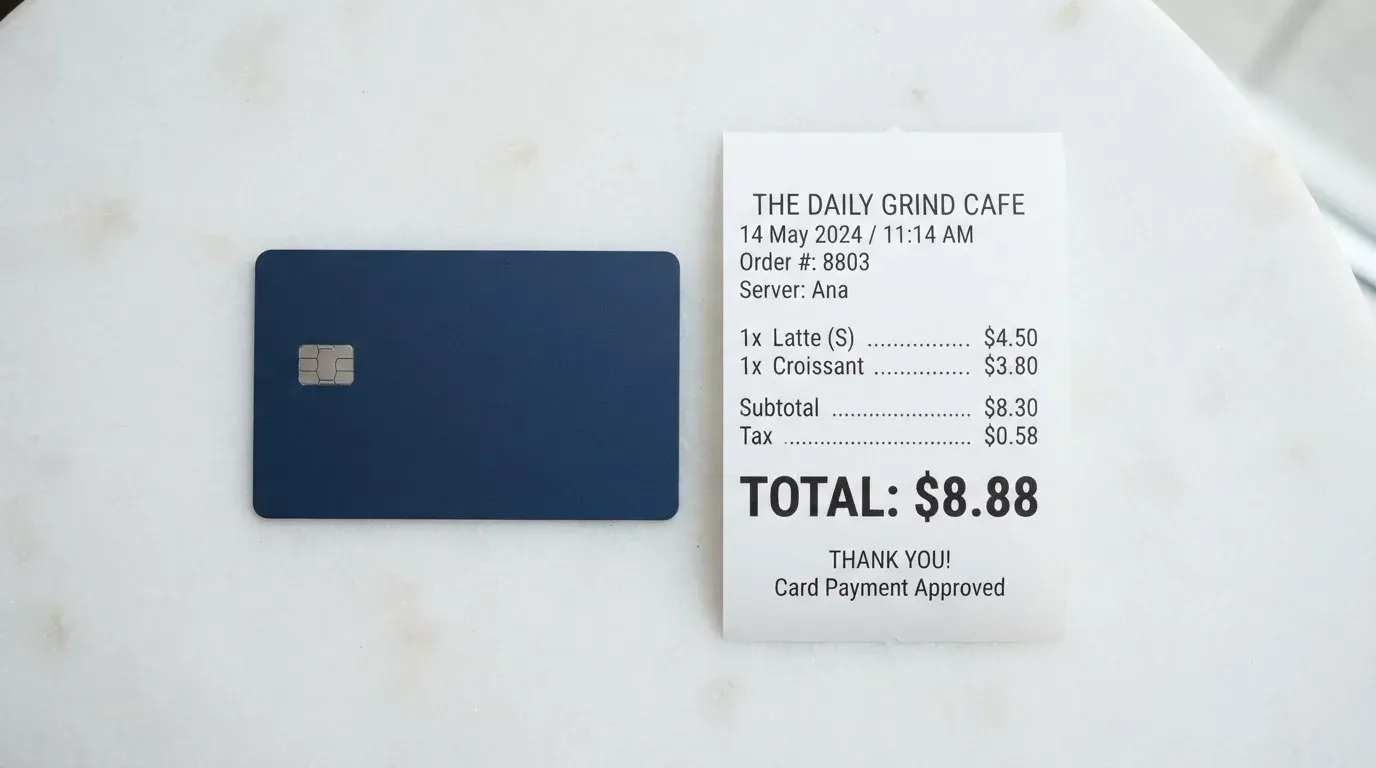
The stated figures are these: the card costs $35, and the top-up fee is 2.5%. For foreign exchange and conversion, the card’s language is “competitive rates” — no number, no spread, no comparison. Whether a monthly or annual fee exists is not stated. ATM use is described as supported (“Apple Pay, ATMs, online, and offline”), but the fee and the allowance are not stated. Daily and monthly spending limits are not stated. A “Premium card” with VIP access is mentioned without a tier structure or any stated difference from the standard card, and its price is given as the same $35.
That is the official picture. Now the unofficial one, which I am giving you as third-party claims rather than confirmed terms: issuance at $10 for one card and $35 for the other, monthly fee free, ATM fees free on both cards with an unlimited withdrawal limit, daily spend of $25,000 on the physical card and $1,500 on the virtual card with unlimited monthly spend, and FX free on one card and 1% on the other with a $0.25 per-transaction fee listed under the cons. Another source, CryptoCardHub, gives up to $300,000/month and withdrawal fees after $1,000/month. These figures contradict each other and contradict the official $35. Not one of them is confirmed by the card.
| Fee or limit | What the card states | What third parties claim (unconfirmed) |
|---|---|---|
| Issuance | $35 | $10 (one card) and $35 (the other) |
| Monthly or annual fee | Not stated | Free |
| Top-up fee | 2.5% | 2.5% |
| FX / conversion | “Competitive rates”, no figures | Free on one card, 1% on the other |
| Per-transaction fee | Not stated | $0.25 |
| Decline fee | Not stated | Free |
| ATM fee and allowance | ATM use supported; fee not stated | Free on both cards, unlimited withdrawal |
| Daily limit | Not stated | $25,000 physical, $1,500 virtual |
| Monthly limit | Not stated | Unlimited; or up to $300,000/month |
| Withdrawal fee after threshold | Not stated | Fees after $1,000/month |
Three everyday payments, and what applies
Coffee, $4, in your own country. This is the easy case. If the balance is already in your card’s currency, no FX happens, so the 2.5% top-up fee — paid once when you load, not per purchase — is your main cost. Nothing published suggests a per-transaction charge on the official pages, though a $0.25 figure circulates unofficially. Expect the payment to clear.
A subscription, $15, in a currency that is not your card’s. Here the unpublished number bites. The card says “competitive rates.” You cannot compute your cost without a spread, and a spread that a provider calls competitive can still be one to several percent of the transaction on an amount this small. You would not notice it on a $400 flight. On a $15 monthly service, it is the price of a coffee a month.
Withdrawing cash at an ATM abroad. The card confirms ATMs work. It does not say what they cost or how much you may take out. Unofficial sources say the fee is free and the limit unlimited; a third source says fees kick in after $1,000 a month. Plan on the pessimistic reading, because nobody has confirmed the optimistic one.
Two more mechanics worth knowing, both from the terms rather than the marketing: crypto is “instantly converted to fiat,” and fees may be debited from your Wallet balance, your Vault balance, or your Virtual Account balance, with fee schedules published in the interfaces rather than on the page. And any on-chain network fee for the deposit you send is charged by the blockchain, not by the card — so the real cost of topping up is the 2.5% plus whatever the network takes.
How to Top up the card
You spend USDT and other crypto. The card’s page says that plainly, and a testimonial on the site mentions USDT on TRC-20.
Here is where I want to slow you down, because topping up is where the mistakes that cannot be undone actually happen.
The official coin and network list is not stated. “USDT and other crypto” is a promise without a table attached. What that means practically: if you send USDT over a network the card does not support, to an address belonging to another network, the transfer is irreversible. The blockchain cannot freeze or return it. Recovery becomes a support request with no guarantee attached, and support here is a Telegram bot and a contacts form.
Unofficial sources fill the gap: BTC, ETH, USDT, BNB and TRX across networks, with top-ups possibly taking up to 12 hours. Take the coin list as a reasonable guess and the network list as unconfirmed. The distinction between sending USDT on Tron and on Ethereum is not a technicality — it is the difference between a token you have and a token you have donated to a stranger.
The top-up fee is 2.5% from a crypto wallet. The minimum top-up is not stated, and whether you can top up with ordinary fiat money is not stated either — both are things you will find out by trying, not by reading.
One detail about networks that trips people up generally: USDC is not natively available on Tron, because Circle stopped supporting USDC on Tron in February 2024. If you plan to hold USDC, check the network before you send. And on Ethereum the gas fee can only be paid in ETH, so a wallet holding USDT with no ETH cannot send at all.
What happens to your money when you leave
This is the part that almost no card page explains, and it is in the terms. On termination you are entitled to the return of your remaining Wallet balance, the release of your Vault balance, or withdrawal from your Virtual Account balance — subject to the terms. But Pintopay may delay, refuse or reduce that return to cover amounts owed to it, and fees already charged are non-refundable. The withdrawal fee itself is not stated.
Read that twice. It is not a statement that they will take your money. It is a statement that when the relationship ends, the speed and the amount of what you get back are at their discretion, and no published schedule tells you how big that discretion is.
Paying with it every day
Everyday use is where this card scores well, and you can feel why.
You get a virtual card and a physical card, both Visa-powered debits, and Apple Pay works. That covers most of what a daily card does: the phone for contactless, the plastic for the places that want plastic. Google Pay is not mentioned on the official pages — unofficial listings mark both Apple Pay and Google Pay as supported on both cards, but the card itself does not claim it. If Google Pay is your habit, treat it as unconfirmed.
Cashback is a welcome offer, not a programme. The card promises “$10 cashback instantly on your first purchase” and referral cashback on card activations and top-ups, lifetime. There is no regular cashback rate stated — the card does not describe an ongoing percentage you earn. Unofficial sources are blunter: no regular cashback at all, a $10 welcome bonus on the Virtual Card only, and referral bonuses of $10 and $10.5. Do not put this card in your budget on the assumption of a running rebate.
The app is a Telegram bot and mini-app, plus a mobile app. The preferred support channel is the in-service support system, and you also have a contacts form (Telegram or X) and email at [email protected]. Hours are not stated. There is no published App Store or Google Play rating. I mention the bot first because that is where you will end up, and because a Telegram-only support channel is itself a fact about how much recourse you have when money is stuck.
If a payment goes wrong. Disputes go through the interface or support, inside deadlines set by the payment system or the issuer. The review period runs up to 90 calendar days. The outcome of a chargeback is decided solely by the issuer or the card scheme, and no refund is guaranteed. Read that last clause as a fact about crypto cards generally: you are not dealing with a bank that has a statutory duty to you, you are dealing with a card scheme deciding.
Two practical payment facts that will save you a declined transaction. Address verification compares the numeric parts of your billing address with the issuer’s records, and is generally unavailable for foreign-issued cards — which is exactly what this is, so expect occasional declines on online payments where AVS would otherwise help. And a declined authorisation can leave a hold on your funds for several days, typically up to seven, during which the money is neither spendable nor back.
Some merchants also decline prepaid or foreign-issued cards because the BIN lookup reveals the card type and issuer country. The card does not publish a list of blocked merchant categories, so I cannot tell you whether gambling or other categories are closed to you.
What can go wrong
This is the section I would not skip, and it is the one that took me the longest to write honestly.
Nobody will tell you who issues the card. The card’s public pages name no issuer and no licence. The footer says “© 2026 Pintopay Inc.” The terms date from 16 October 2026 and say the operation is run by a PTP group including UANT Limited, a Hong Kong company, company number 77341227, and that the cards are issued by unnamed third-party licensed issuers. Hong Kong law governs, and disputes go to HKIAC arbitration.
That structure is legal and common — plenty of card programmes are run by a brand on top of someone else’s licence. But it means the entity you would complain to about a lost payment is not named anywhere you can read. When the complaints below say “the company,” you cannot find out which company that is.
Your balance can be frozen, and the rules for it are in the terms. The card markets “Bank-grade security,” 3D Secure and “ISO AML/KYC.” The terms add two provisions that are worth knowing before you load a large balance: the card may be blocked after 45 days without a successful payment, and a deposit of USD 2,000 or more followed by quick disposal of funds within 48 hours triggers an additional review that can delay or suspend withdrawals. That second one catches people out — send $2,000 and immediately spend it, and you have voluntarily walked into a review. Whether you can freeze the card yourself in the app is not stated, which for a card you might freeze is an odd omission.
Verification never really ends. The terms allow ongoing requests for information and documents, and suspension for failed KYC or AML. So the identity checks you pass on day one can be reopened on day ninety, and the answer you give then can affect money you already hold.
Public complaints are the heaviest single mark against this card. Officially, I found nothing: a search for Pintopay complaints on Trustpilot and Reddit returned no Pintopay-specific results from official channels. Unofficially, on Trustpilot, pintopay.me sits at 2.0 out of 5 from 42 reviews, 26 of them in the last twelve months as I read them. What those reviewers report: frozen or blocked balances, dated from August 2025 and running through January, February, March, April, June and July 2026, with sums from $388 to $1.1k; a refund of $1,100 still pending from July–August 2026; generic support replies between February and July 2026; and unexplained fees in July 2025 and January 2026. The company’s replies attribute problems to migrations and partners.
I want to be careful here in both directions. I am a reviewer, not a participant, and I cannot verify any individual review. What I can say is that a 2.0 across 42 reviews, with a repeated theme of balances blocked and refunds outstanding, is a signal about what to ask before you load — not proof about what will happen to you.
So here is what I would ask, if I were loading this card. Where is my money held, and under whose licence? Who is the issuer? What happens to my balance if the operator is wound up or the programme is migrated — the replies mention migrations, so this is not hypothetical? What is the actual FX rate? And what is the withdrawal route if I want out?
Some background explains why these questions are the right ones. Card programmes do get shut down: WaveCrest, a Visa issuer that supplied several crypto card brands, was suspended by Visa in Europe in 2018, closing all its Visa programmes. Visa terminated its global agreements with FTX on 13 November 2022 and the FTX US debit card was wound down by its issuer. Programme closures typically give notice, then stop spending and loading, then ask you to withdraw what is left — you find out at the worst possible moment that your balance is now a withdrawal request.
And there is the custody question underneath all of it. On these cards the provider holds the credentials, so trusting the card means trusting the operator completely. Custodial platforms have a real record: Mt. Gox (about US$350 million reported stolen, 2011–2014), Coincheck (about US$400 million, 2018), Ronin Network (US$625 million, 2022). Regulatory safeguards exist but are not the same as a bank deposit. Under EU rules an electronic money institution must safeguard customer funds by segregating them or insuring them, and such funds are not the same as bank deposits and may not be covered by deposit guarantee schemes.
One more thing that is easy to forget: Tether says it disables tokens in wallets on the OFAC sanctions list and has frozen funds tied to illicit activity. Stablecoins are not censorship-proof, and neither is a balance held in one.
What to take instead
I looked at three other crypto cards with the same rough shape, and none of them is dramatically better — that is worth saying plainly before the comparison.
Cardex — 5.6 out of 10. Claims “one crypto card, 200+ countries” with no country list or exclusions, though its App Store listing is Naira-focused. Runs on the networks VERVE, VISA, Mastercard and UnionPay, with virtual and physical cards; card currency Naira per the listing. Funded by USDT, USDC and BTC wallets, networks not stated. Its conversion is the interesting part: real-time crypto-to-fiat at the moment of payment, with what it calls an “AI-Powered Conversion Rate” that scans global exchange rates and picks the best one when you spend. No fee percentage is stated, and card cost is not stated either.
CardFlow — 4.9 out of 10. Aimed squarely at Nigeria — “Nigeria’s smartest fintech card platform” — and at Nigerians and global users, with no country list or exclusions stated. A virtual USD Mastercard created in minutes. Creating a virtual card is “completely free” per its own FAQ; monthly fee not stated. Funded by Bitcoin, USDT, ETH or a Naira bank transfer, networks not stated. Fees and rewards not stated.
HyperCard — 4.7 out of 10. Official pages state no country list; its App Store says the card works in “more than 176 countries” — which is acceptance, not eligibility, and the distinction matters if you read it the other way. A prepaid card, network not stated on the App Store page, balance in USD or EUR. Deposit crypto such as USDT, BTC or ETH in the app, converted to USD or EUR on the card. Cost, fees and rewards are not stated on the pages I could read.
Here is the comparison in one place:
| Pintopay | Cardex | CardFlow | HyperCard | |
|---|---|---|---|---|
| Score | 6.1 / 10 | 5.6 / 10 | 4.9 / 10 | 4.7 / 10 |
| Positioning | Telegram-first, global | Global, Naira-leaning App Store listing | Nigeria-focused fintech | Prepaid, USD/EUR balance |
| Card form | Virtual + physical, Visa (unofficial: one Mastercard) | Virtual + physical, VERVE/VISA/Mastercard/UnionPay | Virtual USD Mastercard | Prepaid, network not stated |
| Cost | $35 | Not stated | Virtual card free | Not stated |
| Fees | Top-up 2.5%; FX “competitive”, no figure | No percentage stated | Not stated | Not stated |
| Funding | USDT and other crypto | USDT, USDC, BTC | BTC, USDT, ETH, Naira transfer | USDT, BTC, ETH |
| Known weak spot | No named issuer, 2.0 Trustpilot | Unclear fees, unclear eligibility | Nigeria-centric, thin disclosure | Least disclosure of the four |
Read that table with the earlier point in mind: three of these four cards do not publish their fees either. That is the category, not a Pintopay failing. The honest comparison is that Pintopay publishes *more* — a price, a top-up percentage, a premium tier — while the others publish almost nothing, and then makes the numbers harder to pin down in the places where you actually spend money.
Where Pintopay genuinely leads is access and speed: 180+ countries, a Telegram-native start, virtual and physical, Apple Pay, ATMs. Where it trails is exactly the row that matters if you are planning around it — the issuer is unnamed and the reviews are bad.
If what you want is the opposite trade, a self-custody-linked card keeps your funds in your own wallet until the moment of payment. You accept sole responsibility for key loss, phishing, and clipboard-hijacking malware that swaps copied addresses — and in exchange nobody can freeze a balance, because the balance was never theirs.
Who I would recommend it to
I would recommend this card to someone specific: you hold USDT, you are already in Telegram all day, you spend in the currency your balance is already denominated in, and you keep a modest amount on it at a time. Under those conditions Pintopay is convenient, cheap enough at 2.5% to load, and does what it says on day one.
I would not recommend it to you if any of these are true. You need the FX cost in advance and the card gives you the phrase “competitive rates.” You plan to hold five figures on it, because a $2,000-then-spend pattern invites review and I would rather you not meet that. You are somewhere the issuer’s risk policy might read your citizenship rather than your address — the card does not say which it uses. You cannot accept a frozen balance with no published freeze control and a 2.0 review score. Or you simply want to know which bank is on the other end of the number, in which case this card cannot tell you and that is disqualifying on its own.
The test I would apply: if your balance would be money you could afford to have sit in someone else’s account for six months while support sends you generic replies, this card is fine. If it is money you need to be certain about, the missing fee table and the unnamed issuer are not gaps you can price around — they are gaps you have to accept.
Frequently asked questions
What is the Pintopay card?
The Pintopay card is a crypto payment card you get through Telegram, offered as both a virtual and a physical Visa-powered debit. You load crypto into it — USDT and other coins — and the balance converts to fiat so you can spend it in shops, online, at ATMs and with Apple Pay. It is positioned as a global card for people without easy access to ordinary banking.
How does the Pintopay card work?
You start in the Telegram bot or mini-app, get a virtual card almost immediately, and top it up by sending crypto from your own wallet at a stated 2.5% fee. Crypto is described as being instantly converted to fiat, and the card then spends that balance like an ordinary prepaid or debit card. A physical card is also offered; delivery details are not stated on the public pages.
Is Pintopay a bank?
No — and this is the most important thing to understand. The card is run by a PTP group including UANT Limited, a Hong Kong company, number 77341227, and the cards themselves are issued by unnamed third-party licensed issuers. The issuer and licences are not named on the public pages. Pintopay Inc. appears in the footer, but it is not a bank you hold a deposit at.
Does Pintopay card require KYC?
The card’s own pages list KYC and ISO AML/KYC as security credentials, and its terms allow ongoing requests for documents and suspension for failed checks. Some third-party listings call it “no KYC”, but that contradicts the official pages — treat it as wrong. Which documents, what age, and proof of address are not stated anywhere public.
How much does the Pintopay card cost?
The card states a price of $35 and a top-up fee of 2.5%. Whether a monthly or annual fee exists is not stated. For FX and conversion the card says only “competitive rates” with no figure, and the ATM fee and daily or monthly limits are not published. Unofficial sites list $10 and $35 issuance, free monthly fee, and a $0.25 transaction fee — none confirmed by the card.
What are the Pintopay card limits?
The card publishes no daily or monthly spending limits. Third-party sources give conflicting figures: $25,000 daily on the physical card and $1,500 on the virtual, monthly unlimited; or up to $300,000 per month with withdrawal fees after $1,000. Neither is confirmed. One official limit exists in the terms — a deposit of USD 2,000 or more followed by quick disposal of funds within 48 hours triggers an additional review.
How do I top up the Pintopay card?
You send crypto from your own wallet, and the stated fee is 2.5%. Officially the page says “USDT and other crypto” without listing coins or networks; a testimonial mentions USDT TRC-20, and third-party sources list BTC, ETH, USDT, BNB and TRX with top-ups taking up to 12 hours. The minimum top-up is not stated, and fiat top-up is not stated either. Sending on the wrong network can lose the funds outright.
Can I use a Pintopay virtual card with Apple Pay?
Apple Pay is supported officially, alongside ATM, online and offline payments. Google Pay is not mentioned on the card’s own pages, though third-party listings mark both wallets as supported on both cards — treat Google Pay as unconfirmed. The physical card is Visa-powered; one unofficial source says the virtual card runs on Mastercard instead, which the card does not confirm.
Is Pintopay card safe?
It is not obviously unsafe, and it is not verifiably safe. The card advertises bank-grade security, 3D Secure and ISO AML/KYC, but names no issuer and no licence. On Trustpilot, pintopay.me scored 2.0 out of 5 from 42 reviews, with repeated reports of frozen balances from $388 to $1.1k, a $1,100 refund still pending, and unexplained fees.
How do I withdraw money or close my Pintopay account?
The terms say that on termination you are entitled to the return of your remaining Wallet balance, release of your Vault balance, or withdrawal from your Virtual Account balance. But Pintopay may delay, refuse or reduce that return to cover amounts owed, and fees already charged are non-refundable. The withdrawal fee is not stated, and whether you can freeze the card yourself in the app is also not stated — ask support before you need either.
Choosing a virtual card – cryptocardadvisor
Content created by the «cryptocardadvisor» team