
The CL card, read closely: fees, limits, and the complaints behind the score
 Available in US
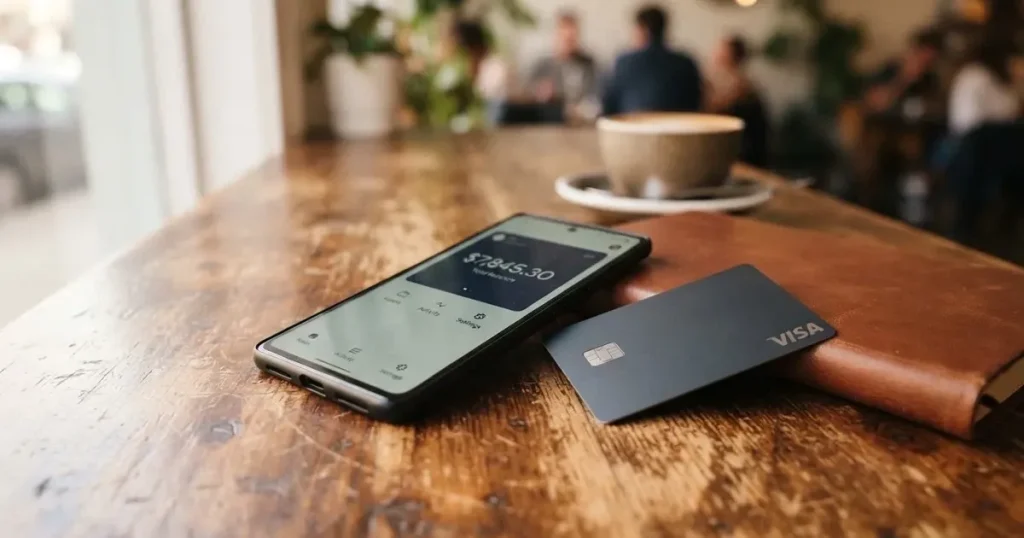
If you have a hardware wallet and you want to pay for ordinary things with crypto without moving your coins to somebody else’s account first, the CL card is one of the few products built exactly around that. That is its real appeal, and it is not a small one. The virtual card is free, the monthly maintenance fee is zero, and paying in a foreign currency is listed at zero percent on the fee document. If that sounds too good, there is a reason: this is not a bank card with a crypto top-up attached, it is a card whose balance is loaded from your own wallet, and almost every question you might have about it follows from that one design choice.
I gave it 6.9 out of 10. That is a mid-to-good score for a product with a genuinely narrow but well-executed idea. It scores highest on everyday use — a free virtual card, Apple Pay and Google Pay, and cash withdrawals at ATMs worldwide are a complete day-to-day setup. It scores lowest on reliability and complaints, where the public record is short on reassurance and long on unhappy accounts. Read the rest of this page as I read those numbers: a card worth considering if Ledger hardware is already on your desk, and a card I would not make your only payment method without reading the complaints section first.
The conditions described here are current as of October 28, 2026.
Verdict: 6.9 out of 10
Before the details, here is the whole scorecard in one place, because you should be able to disagree with me on the arithmetic rather than hunt through the page for it.
| Criterion | Mark | Why |
|---|---|---|
| Who can get it | 7 / 10 | Available in the EEA, the UK, the US, Canada, Switzerland, Colombia, Mexico and Brazil; excluded countries are not stated, and there is no citizenship-versus-residence rule published |
| Cost | 7 / 10 | Virtual card free, maintenance 0 EUR, foreign-currency payment 0%, replacement card 5 EUR, ATM outside the UK 3 EUR plus 1.5%; unofficial figures list conversion at 1.75% and FX at 1.75% |
| Top-up options | 7 / 10 | BTC, ETH, SOL, stablecoins and more, from a signing device via Ledger; networks not named |
| Reliability and complaints | 5 / 10 | Baanx programme, Ledger SAS brand, issuers UAB Monavate, Monavate Ltd and Cross River Bank; Trustpilot 3.0/5 across 263 reviews with 35% one-star, and account restrictions without warning |
| Everyday use | 9 / 10 | Free virtual card, Apple Pay and Google Pay, ATM withdrawals worldwide; unofficial sources report a physical card on request |
Total: 6.9 / 10.
The two ends of that table tell you most of the story. Nine out of ten for everyday use because, once the balance is loaded, the card behaves like any other debit card: you add it to your phone’s wallet and you stop thinking about crypto. Five out of ten for reliability because the complaints are not about fees being higher than advertised, they are about accounts being disabled without warning and money being held for weeks. That is a different kind of problem, and it is the kind that only shows up when you need the money.
Who it suits, plainly: you own a Ledger device, you already hold BTC, ETH, SOL or stablecoins, you are in one of the listed regions, and you want the crypto to leave your own wallet at the moment of purchase rather than sitting on a platform. You also want to be comfortable with the fact that you are dealing with an e-money balance, not a bank deposit, and that account freezes are the most common complaint in public view.
Who it does not suit: anyone whose relationship with money is about predictability rather than self-custody. If a frozen balance for three weeks would be a crisis rather than an inconvenience, this card will keep you awake — not because the card is badly built, but because the failure mode is real and reported. It also does not suit you if you want a physical card in the post; the official page lists only a free virtual card, and third-party sites report a physical Visa-branded card as available on request, which is a different and weaker promise. And if you want to know exactly which documents you will have to hand over before you start, the honest answer is that the card’s own page does not say.
Will they give you the card?
The card states it is currently available in the EEA, the UK, the US, Canada, Switzerland, Colombia, Mexico and Brazil. That is the list. Two things it does not do: it does not publish the excluded countries, and it does not say whether the test is citizenship or residence. That omission matters more than it looks, and I want to explain why rather than just flag it.
Country rules for these cards are applied on citizenship as often as on address. Sanctions screening and an issuer’s own risk policy routinely look at citizenship and country of birth, not just where you live. So a resident of an eligible country holding a passport from somewhere else can be refused, and vice versa. With CL you will find out only by trying. The US account-opening disclosures and the cardholder terms PDF are the documents that would settle it, and I did not read them, so treat this as an open question rather than a reassurance.
Elsewhere in this family of cards the pattern differs, which is useful context. TokenPocket splits its coverage by card network: Visa debit for a list of European countries and territories including Germany, France, Spain and Switzerland, and Mastercard debit for Australia, Canada, Hong Kong, Japan, Taiwan, New Zealand, Singapore, South Korea and the UK, with the Americas described as planned. KAST shows its country list at the KYC step and says plainly that if your country is not listed, the service is not available there — and adds that living in a supported country while holding an ID from a restricted region can still make you ineligible. MetaMask opens sign-up in 45 listed countries, requires proof of residency, and says that regions which are ineligible limit sign-ups rather than spending.
CL’s approach is the loosest of the four on paper. If you are in one of the eight listed regions, the reasonable expectation is that you can apply. Whether your citizenship paper matches your address is the open part.
How to get it
The card page lists a free virtual card. That is what the official material promises, and I would plan around the virtual card rather than hoping for something in the envelope. For the US the card is described as a Visa debit card; for other regions the network is not specified — Visa or Mastercard is simply not stated. Your crypto is converted to fiat at the time of purchase, which is the moment your balance is spent, not the moment you load it.
The fee document covers the card lifecycle in a way the card page does not:
| Event | Fee |
|---|---|
| Issuing a debit card | EUR 0.00 |
| Replacement debit card | EUR 5.00 |
| Card cancellation | EUR 3.50 (if cancelled within the first 14 days after a card was ordered) |
Delivery countries and delivery time are not stated, so if you are waiting on physical plastic, you are waiting without a published timetable. That is one of the reasons I would treat the virtual card as the product and anything else as a bonus.
On identity checks, the card’s public pages do not say what level of verification is required. Unofficial sources point to Veriff handling KYC — a company-side Trustpilot reply and a one-star reviewer both name them — while documents beyond an identity document are not stated. What that unofficial reporting does contain is the part that matters most: reviewers in October 2026 describe being asked for utility bills and tax returns *after* an account was restricted. That ordering is the thing to hold on to. Verification that arrives as a consequence of a freeze is not the same thing as verification at signup.
If you want a comparison point for how explicit a card can be about this, MetaMask publishes its requirements openly: proof of residency, a named country list, a stated position that ineligible regions limit sign-ups rather than spending, and a note that US and UK sign-ups are temporarily closed. CL publishes none of that detail on the card page. I am not saying the process is worse; I am saying you will learn more from your first attempt than from the documentation.
Fees: what it really costs
Here is the uncomfortable part of any crypto card review, and CL is no exception: the card page itself does not publish the fee breakdown. It points you to a fee information document hosted at withcl.com/legal, and there is a separate US version. So the numbers below come from that document and from unofficial sources, and I have labelled which is which. The document cited for several of these lines is dated 03/11/2023, which is old enough that you should treat it as a starting point rather than a live contract.

| Item | Value | Source |
|---|---|---|
| Virtual card | Free | Card page |
| Monthly maintenance | EUR 0.00 | Fee information document |
| Debit card payment in a foreign currency | EUR 0.00 plus 0% of the transaction value | Fee information document |
| Debit card payment in pounds | EUR 0.00 (document mixes pound and euro wording) | Fee information document |
| Replacement debit card | EUR 5.00 | Fee information document |
| Cash withdrawal in pounds in the UK | EUR 2.50 per withdrawal | Fee information document |
| Cash withdrawal in foreign currency outside the UK | EUR 3.00 plus 1.5% of the transaction value | Fee information document |
| ATM balance enquiry | EUR 0.35 | Fee information document |
| Crypto-to-fiat conversion (manual) | 1.75% | Unofficial (spendnode.io, 3 Aug 2026) |
| Crypto-funded card spend | 2% | Unofficial (spendnode.io, 3 Aug 2026) |
| FX on non-base-currency transactions | 1.75% | Unofficial; another aggregator lists a 1.5% surcharge |
| ATM, domestic UK | EUR 2.50 flat | Unofficial |
| ATM, foreign | EUR 3.00 plus 1.5% | Unofficial; the same site’s overview lists a flat 1.5% |
The tension in that table is real and I am not going to smooth it over. The official fee document says foreign-currency payments cost 0%. The unofficial figures say FX is 1.75% and manual crypto-to-fiat conversion is 1.75%. Those cannot both describe the same transaction today, and the obvious explanation is that the document is from 2023 and the conversion layer was added later. What that means for you is concrete: do not plan your foreign-currency costs from the 0% line. Ask for the current fee schedule in writing before you rely on it, and assume a conversion charge exists even if you cannot see where it is written down.
Now three everyday payments, with the fee logic spelled out, because “what does it cost” means different things in different shops.
A coffee in your home country. This is the cheapest case and the one the card is genuinely good at. No foreign-currency fee applies because the transaction is not in a foreign currency, monthly maintenance is zero, and the virtual card costs nothing to hold. The only cost you should expect to see is the crypto-funded spend charge, listed unofficial at 2%, if the balance is converted at the point of purchase. If you have already converted into a stable balance and spend that, this line should not appear — but the card’s pages do not explain when the conversion happens relative to the spend, so treat 2% as a thing to check on your first statement rather than a settled fact.
A subscription in dollars while your balance is in euros. Two candidate costs. Officially, the foreign-currency payment line is 0%. Unofficial, FX at 1.75% applies to non-base-currency transactions. Whichever is true, this is the payment where the difference between the two published figures would show up, and it is the payment to test yourself with before you have a large balance riding on it.
Cash from an ATM abroad. This one is unambiguous, and it is the expensive case. Outside the UK the fee is EUR 3.00 plus 1.5% of the transaction value, on top of whatever your own bank charges for the ATM itself. That is a percentage on top of a fixed charge, so a large withdrawal costs meaningfully more than a small one — the currency component scales while the EUR 3.00 does not. If you take cash abroad regularly, this is where the card’s cost advantage disappears. Budget the ATM as an exception, not a routine, and use it for genuine emergencies.
Two limits are also not stated on the official pages: how much you can spend and how much you can take out. See the top-up section for the unofficial figures, because they matter when you are planning a large transfer.
Top up: where the money comes from
The card is funded from a Ledger signer via the Ledger Wallet app, with BTC, ETH, SOL, stablecoins and more. That single sentence contains most of the product. Your coins stay in your own wallet; the card spends the value at the moment of purchase. This is the structural difference from every custodial card in this category, and it is the reason to consider CL at all.
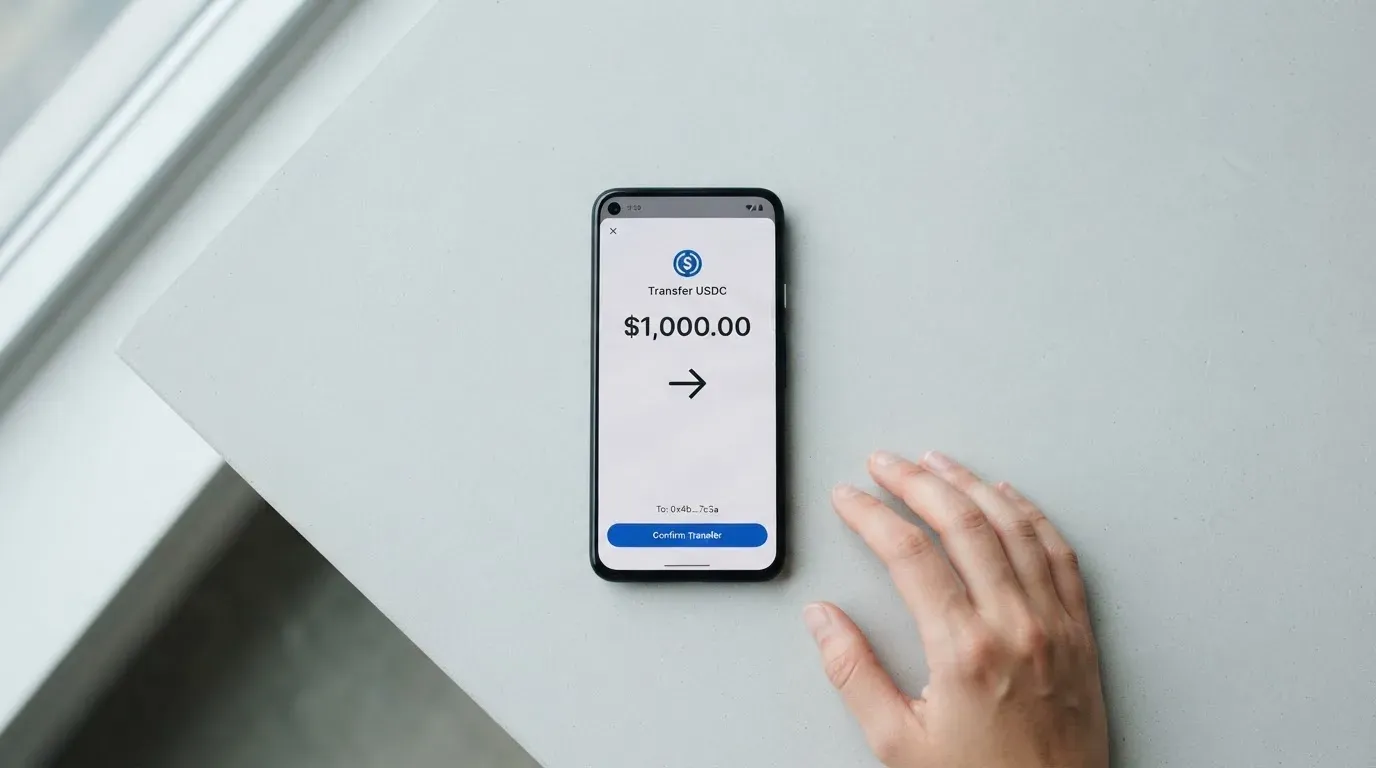
What is not stated is the network list. “Stablecoins and more” does not tell you which chains are supported, and that is not a detail you can safely discover by sending funds. Blockchain transfers are irreversible, so a deposit sent on a network the card provider does not support, or to an address belonging to a different network, can be lost outright or need manual recovery with no guarantee attached. Before your first transfer of any size, get the supported-network list from support in writing. Treat any assumption you make here as a bet.
The fee document’s position on receiving money is unhelpful in a memorable way: the “Receiving money” lines read “Not applicable”. A crypto top-up or loading fee is not stated, and a minimum top-up is not stated. On-chain network fees — gas on Ethereum, resources on Tron — are charged by the blockchain rather than by the card provider, so they are real costs you pay but not costs CL sets.
For context on why the network question is not pedantic: USDT exists on Ethereum, Tron, Solana, Polygon and Avalanche among others, and Circle stopped supporting USDC on Tron in February 2024, so “USDC over TRC20” is not a native option. If you hold a stablecoin on one chain and the card expects another, you will need to bridge or swap first, and that is an extra step with its own cost and its own failure mode. Ethereum’s ERC-20 standard also means gas is paid only in ETH — a wallet holding USDT and no ETH cannot send at all.
Two more practical notes on getting money out and limits. The card offers withdrawals of local currencies at ATMs worldwide, and bank or crypto withdrawal of balance is not stated, as is any payout on closure. That is a gap: if you decide to leave, the card page does not tell you how. The unofficial figures give a shape — monthly spending $15,000 and ATM daily $500 from one aggregator, and from another site default daily POS spend of EUR 15,000, daily ATM of EUR 2,000, an initial cap of EUR/$1,000 until extra proof of funds is approved, and manual review for single top-ups or withdrawals of EUR 10,000 or more. Those sources disagree with each other. Plan for the lower numbers, and note the early cap especially: an initial limit around EUR/$1,000 until proof of funds is approved means a large first transfer will not clear on the first try.
Paying with it every day
This is where the card earns its highest mark, and the reason is unglamorous: it simply covers what you need.
- Apple Pay and Google Pay are both supported. Add the virtual card to your phone’s wallet once and you are not handling card numbers at a terminal again. Apple Pay replaces the card number with a device-specific number held in the phone’s secure hardware, with a one-time security code on each payment, so the card number itself is not the thing sitting in a shop’s system.
- Cash withdrawals at ATMs worldwide are supported, with the fees in the table above.
- The card is managed in the Ledger Wallet app. Your spending, your limits and your freezes all live in the same app as your hardware wallet. Nothing is stated on the card page about which platforms the app runs on, or its store ratings.
- 1% cashback in BTC or USDC in the US, and 1% cashback in BTC or USDT in other countries, calculated monthly on total card transactions. That is a real, if modest, return — roughly a coffee’s worth per hundred spent monthly, and paid in the asset you already hold.
Three things the card’s public pages do not tell you, and all three can cost you a declined payment:
Blocked merchant categories are not stated. Merchant category codes are the four-digit numbers that classify a business by what it sells — gambling sits under 7995 — and issuers block categories by policy, not by law, with a different list at each one. You cannot find out from the card page whether your card declines at a betting site.
Whether 3-D Secure is enforced is not stated. This is the identity check on online payments where the issuer either approves frictionlessly or challenges you with a one-time code or a biometric. It matters because a hotel or an airline booking can be refused at checkout when the card cannot complete it.
How disputes work is not stated on the pages I read, because the cardholder terms PDF was not among them. If a merchant takes the money and delivers nothing, whether you can charge it back — and how — depends on rules that are specific to prepaid arrangements and should not be assumed to match a credit card’s. In the US, debit reversal rights come from Regulation E and credit card rights from Regulation Z, and prepaid coverage varies. A chargeback is a refund ordered by your issuer against a stated reason such as fraud, duplicate billing or goods not received; that is the mechanism, and it is worth knowing it exists before you need it.
There is one more everyday cost nobody advertises. Address verification — the check that compares the numbers in the billing address you typed against your issuer’s records — is mainly available in the US, Canada and the UK, and is generally unavailable for foreign-issued cards. Some merchants decline prepaid or foreign-issued cards outright because the issuer lookup reveals the card type and the issuing country. If you travel, a declined payment at a shop is more likely to be about the card’s origin than about your balance.
What can go wrong
This is the section I would put first for anyone deciding, and the reason my reliability mark is 5.
Account restrictions without warning are the dominant complaint. On Trustpilot, CL Card sits at 3.0 out of 5 across 263 reviews, with 35% one-star, read on 20 October 2026. The recurring pattern: an account is disabled or restricted with no advance warning, and only then does verification arrive — utility bills, tax returns. One case remained unresolved for two months. In May 2026 funds were held for weeks. The company replied to 31% of negative reviews, which is a figure worth knowing when you are deciding whether an unanswered email will ever be answered.
Withdrawals get delayed. Across April to June 2026 reports run from 15 hours to a week. In October 2026 one user had about 1,990 USDT unavailable after “maintenance”, later received. Separately, a July 2026 report describes a loss of 15,300 XRP from a memo or tag error — which is not a card failure at all, but a reminder that a wrong destination on a blockchain has no customer service department.
The card and the app fail, and replacements are hard to get. UK customers reported being unable to get replacement cards in September and October 2026. Support itself is described as slow and templated across May to October 2026. Other themes in the reviews: declined transactions, and frozen or unreturned funds, including a reviewer who could not withdraw XRP after a month of emails. A Baanx page sits at 2.5 out of 5 from six reviews, including a Ledger device purchase declined twice. Reddit commenters in r/ledgerwallet say Baanx can block the card balance, though those comments are undated.
Who is actually behind this, and who is responsible for what. The card is provided by Baanx; the brand owner is Ledger SAS of Paris, France; EU cards are operated by UAB Monavate, UK cards by Monavate Ltd; and the US Visa debit card is issued with Cross River Bank, Member FDIC. That chain matters practically. Visa and Mastercard do not issue crypto cards to consumers themselves — they license issuers and can suspend a programme — so the entity you call when a card declines is the issuer or programme manager, not the network. On the same logic, the crypto brand may be only a front-end: the card network routes the messages and sets the rules, the issuer holds the programme under licence, and the brand markets it. An electronic money institution in the EU can issue e-money and payment cards but cannot lend, and it may serve the whole EEA from one member state’s licence. Customer funds held by such an institution must be safeguarded — segregated or insured — but those are not bank deposits and do not carry deposit guarantee scheme coverage.
Security features are not documented as features. Self-custody is not stated as a property of the card; the page says only that crypto is “protected by the industry’s leading hardware and software” when used with a Ledger signer. Card freeze and two-factor authentication are not stated. That is a thin set of published safeguards, and while the hardware signing is genuinely a strong control, it protects the coins, not your access to the card that spends them.
Support exists and is public. A Ledger Help Center article on CL Card FAQs and general Ledger support are both available. Languages and hours are not stated, which for a card with users across the EEA, the UK, North America and Latin America is a real gap.
One claim I could not verify, and I would rather say so than repeat it. A third-party aggregator, cryptocards.so, in a single Chinese-language source, claims that Baanx and Monavate entered insolvency proceedings in April to May 2026. I found no corroboration, and a separate August 2026 source shows no insolvency or enforcement news. There were also unverified aggregator and reviewer claims of Baanx administration or insolvency. I am not treating this as established, and I would not treat it as refuted either. If it matters to you, check the register and the official statements rather than a review aggregator. The broader category context is that crypto programmes do close: Visa terminated its global agreements with FTX on 13 November 2022 and the FTX US debit card was wound down, and Visa suspended WaveCrest in Europe in 2018, closing all WaveCrest-issued Visa programmes. Closures typically mean a notice period, then loading and spending stop, then you are asked to withdraw.
Finally, the thing nobody advertises and everybody discovers: a declined authorisation can leave a hold on your funds for several days, typically up to seven. Combined with the reported withdrawal delays, the practical lesson is to keep a buffer you do not touch.
What to take instead
All three alternatives below scored within about a point of CL in my ratings, and all three solve a slightly different problem. I would not call any of them a straight upgrade.
MetaMask — 7.1 / 10. Closest to CL’s score, slightly higher, and more explicit about almost everything. Mastercard, virtual card issued instantly, metal pre-orderable in the app afterwards, one card per user. Issuer Monavate, card provider Crypto Life — note that the Monavate relationship is shared with CL’s European structure, so the issuer familiarity transfers. Virtual card free with no annual or maintenance fee; metal is $199/year. Fees are described as a “minimal fee for each transaction” with the amount not stated on the pages I read, no additional MetaMask fees, no foreign transaction fee, and the Mastercard rate used. Spends directly from the connected wallet on Linea, Base, Monad and Solana, with tokens named including mUSD, wETH, EURe, GBPe, USDC and USDT; Solana-only wallets cannot withdraw credit. Cashback is paid in mUSD: 1% on Virtual, and 3% on Metal limited by footnote to the first $10,000 spent, then 1% — read that footnote. The catch: proof of residency, 45 listed countries, and US and UK sign-ups temporarily closed.
KAST — 6.1 / 10. The most transparent on residency rules and the most expensive on tiers. Virtual and physical cards, up to ten per user, Visa Platinum Standard, Visa Infinite metal, Visa Infinite gold plated, plus Pengu, Solana and Bitcoin designs, with the balance in USD and stablecoin deposits converted 1:1 at 0% spread. Annual membership: Standard 0 USD, Premium 1,000 USD/year, Private 10,000 USD/year, billed annually upfront with no monthly option. Extra virtual card 2 USD; Standard physical card 0 USD fee plus 40 USD delivery, Premium and Private physical cards included; inactivity fee 1 USD/month after twelve months. Fees are unusually clear: stablecoin top-up 0%, USD spend 0%, transaction fee 0%, Apple and Google Pay 0%, non-USD FX 0.5% to 1.75% depending on residence country, transaction country and programme, non-USD transactions under 25 USD cost 0.10 USD, a declined transaction for insufficient balance 0.50 USD. Funds USDT, USDC, PYUSD, RLUSD on Ethereum, Solana, Polygon, Arbitrum and TRON — though the Terms say acceptable tokens are “currently USDT and USDC”, which conflicts with the app listing PYUSD and RLUSD. Cashback in USD: Standard 1.5% on the first 2,000 USD/month, Premium 2% on the first 10,000 USD/month, Private 3% on the first 40,000 USD/month. Its KYC posture is the strictest here: only your own ID counts, a VPN does not bypass, and living in a supported country with an ID from a restricted region can still fail.
TokenPocket — 5.8 / 10. The weakest of the four on documentation and the lowest score. Mastercard and Visa debit cards running on Arbitrum, Fiat24 cards virtual with no physical card mentioned, balances in EUR24 and USD24. The cost structure is unusual: an NFT creation fee partly covered by TokenPocket where you pay “a small portion”, an amount not stated, and beyond that “TP Card does not charge any additional fees”. But a 1% fee is charged on depositing cryptocurrency, refunded later through rewards or reduced transaction fees; FX fee not stated, and extra fees can arise from inter-institution settlement. No cashback stated.
Where that leaves the comparison, in plain terms. CL is the one that keeps your coins in your own hardware wallet and charges nothing for holding the card. MetaMask is the one that documents its eligibility, its issuer and its token list most clearly, at the price of a closed door in the US and UK. KAST is the one whose fees you can actually calculate in advance, if you can afford the tier or stay on Standard. TokenPocket I would not put against any of them without more detail.
Who I would recommend it to
I would recommend the CL card to someone specific, and if that is you, the recommendation holds.
You already own a Ledger device and treat it as the right tool for the job. You hold BTC, ETH, SOL or stablecoins in a self-custody wallet and would rather not hand credentials to a platform just to buy lunch. You live in the EEA, the UK, the US, Canada, Switzerland, Colombia, Mexico or Brazil, and you have no reason to think your citizenship will cause a problem. You want a free virtual card that goes into Apple Pay or Google Pay and works. You are comfortable treating what you load as spending money rather than savings, and you would keep a buffer back so that a two-week withdrawal delay is annoying rather than damaging. You have checked which networks the card supports before your first transfer.
I would not recommend it as your only card, as the card holding your emergency cash, or as the first crypto card you try. If the complaints section made you pause, that reaction is proportionate — 35% one-star reviews about accounts disabled without warning is not a rounding error, and I have not found an explanation of why it happens often enough to be dismissible. KAST’s published fee structure may also suit you better if your spending is multi-currency and predictability beats self-custody. And if you are in the US or UK and want MetaMask’s clearer documentation, that door is currently closed.
One last thing I would check before any of this, whatever card you pick. In the US the IRS treats digital assets as property, so exchanging them for goods, services, dollars or other digital assets generally produces a taxable gain or loss, measured in local fiat currency at the fair market value on the date of the transaction. Each card payment funded from crypto may therefore be a separate disposal. I am not giving you tax advice and I am not qualified to — this is a flag to take to someone who is, and it applies whichever card in this page you choose.
Frequently asked questions
What is CL card?
CL is a crypto payment card built by Ledger, the maker of hardware wallets. You load it from your own wallet rather than from a platform account, and it spends the value like an ordinary debit card. The card is provided by Baanx, the brand belongs to Ledger SAS of Paris, EU cards are operated by UAB Monavate, UK cards by Monavate Ltd, and the US Visa debit card is issued with Cross River Bank, Member FDIC. I scored it 6.9 out of 10.
How does the CL card work?
The design is closer to a pre-loaded balance than a bank card. Crypto is converted and loaded as a fiat balance, and the card spends only that, so it cannot overdraw. At the moment of purchase your crypto is converted to fiat. Because a card payment involves the network routing the message, the issuer holding the programme, and the crypto brand often only being the front-end, the entity responsible when something goes wrong is usually the issuer or programme manager rather than Visa or Mastercard.
Is CL a bank?
No, and this is the distinction that protects you least when something goes wrong. CL is a payment card, regulated separately from the crypto side, and often depends on two licences: one under e-money or payment-services law, and one under markets-in-crypto-assets rules. The issuer here is an electronic money institution, which must safeguard customer funds by segregating or insuring them, but those funds are not bank deposits and may not be covered by a deposit guarantee scheme.
Can I get the CL card in my country?
The card states it is currently available in the EEA, the UK, the US, Canada, Switzerland, Colombia, Mexico and Brazil. Two gaps are worth knowing: the excluded countries are not named, and it is not stated whether eligibility turns on citizenship or residence. Sanctions screening is often applied to citizenship and country of birth, so a matching address may not be the whole test.
How do I top up the CL card?
You fund it from a Ledger signer through the Ledger Wallet app using BTC, ETH, SOL, stablecoins and more. The fee document’s “Receiving money” lines read “Not applicable”, and no top-up or minimum fee is stated, though blockchain network fees apply. The networks themselves are not named, and transfers are irreversible — get the supported list in writing before sending anything of size.
Is the CL card free?
The virtual card is free and monthly maintenance is EUR 0.00. Paying in a foreign currency is listed as EUR 0.00 plus 0% of the transaction value. But third-party sources list crypto-to-fiat conversion at 1.75% and crypto-funded card spend at 2%, and another aggregator lists a 1.5% FX surcharge. Do not plan your costs from the 0% line without confirming the current schedule.
Is the CL card safe?
For your crypto, the hardware signer is a real and strong control — the funds stay in your wallet until the moment of payment. For your access to the card, the published safeguards are thin: card freeze and two-factor authentication are not stated as features. And the Trustpilot record is 3.0 out of 5 across 263 reviews with 35% one-star, dominated by accounts restricted without warning followed by document requests. Safe enough to try small; not something to make load-bearing.
Can I add the CL card to Apple Wallet?
Yes — Apple Pay and Google Pay are both supported, and this is the card’s strongest suit, which is why everyday use scored 9 out of 10. Apple Pay stores a device-specific number in the phone’s secure hardware rather than on Apple’s servers, and uses a one-time security code on each payment, so your card number is not what sits in the shop’s system.
Is CL card worth it?
For you, specifically, if you own Ledger hardware, want to spend from self-custody, live in one of the eight listed regions and can absorb a two-week withdrawal delay without damage: yes, because the card is free, monthly maintenance is zero, and the self-custody design is genuinely uncommon. If you need predictable multi-currency costs, an emergency card you can always reach, or clear published eligibility rules, a card like KAST or MetaMask may serve you better.
How do I withdraw money from CL?
Cash withdrawals in local currencies at ATMs worldwide are supported, and the official fee document gives EUR 2.50 per withdrawal for pounds in the UK, and EUR 3.00 plus 1.5% of the transaction value for foreign currency outside the UK, with a EUR 0.35 balance enquiry. Withdrawal of a bank or crypto balance is not stated, nor is any payout on closure, so ask before you close an account rather than discovering it afterwards.
Choosing a wallet card – cryptocardadvisor
Content created by the «cryptocardadvisor» team