
Fiwind in Plain Sight: What This Argentine Crypto Card Does and Doesn't Do
 Available in US
Fiwind is a crypto payment card from an Argentine fintech. You load a balance — pesos, dollars or crypto — and spend it like an ordinary card. What it does not do is anything resembling an ordinary bank: there is no full country list, no named issuer, and no physical card in the plan. My score for it is 5.8 out of 10, which sits in the middle of the range and hides some real strengths and one real weakness.
The conditions described here are current as of October 28, 2026.
The short version for a reader in a hurry: if you are in Argentina or Brazil and want to pay from a crypto balance without touching a bank account, the idea fits and the top-up support is the best I saw in this category. If you are anywhere else, hold on — the card’s own pages never say who can get one, and “works worldwide” is not the same thing as “open to you”.
The score, and who this card suits
I scored Fiwind 5.8 out of 10. That number is not a rounding of something grander; it is an honest blend of a very strong top-up story, a very weak everyday-use story, and a regulatory picture that leaves questions rather than answers.
| Criterion | Mark | Why |
|---|---|---|
| Who can get it | 3 / 10 | Argentine fintech with a focus on Argentina and Brazil (Pix); country list not disclosed, card works at merchants worldwide |
| Cost | 7 / 10 | Free issuance and maintenance, card payments with no fees; 1.5% for processing payments abroad; USDT or USDC transfers 0.50% + 0.50 USD (ACH) |
| Top-up options | 9 / 10 | Pay in pesos, dollars or crypto; networks: Bitcoin (incl. Lightning), Ethereum ERC20, XRP Ledger, BNB BEP20, Arbitrum, Optimism, Cardano, Solana, Polygon, Stellar, TON, Polkadot, World Chain, Tron |
| Reliability and complaints | 6 / 10 | PSAV No. 75 in the CNV registry, site notes this is not a licence; issuer not named; Trustpilot one review at 1 star, App Store Argentina 4.9 from 9.6K ratings |
| Everyday use | 5 / 10 | Virtual Mastercard only, Apple Pay and Google Pay with NFC; ATM not described |
| Total | 5.8 / 10 | A strong account, a thin card |
The audience the card is really built for is Argentines and Brazilians paying from crypto balances. That is not a criticism so much as a reading of where the rails are. The account speaks pesos, offers Pix for Brazil, and settles merchants in Argentine pesos (or Brazilian reais under Pix) — all signs of a home market first. The card itself, being a Mastercard, will be accepted at merchants worldwide. Those are two different claims, and the gap between them is exactly what the “Who can get it” mark of 3 is about.
Who will they give you the card
The company behind Fiwind is Argentine, and it supports Pix for Brazil. The card works at merchants worldwide. What the public pages do not say is the list of countries whose residents can open an account. That list is not stated. No documents are described as required for approval either.
So if your question is “can I get this from where I sit”, the honest answer is: the card’s own material tells Argentines and Brazilians yes, and tells everyone else nothing. That silence is the single most important thing to check before you spend an afternoon on an application.
There is a second strand here that matters to anyone worried about legitimacy. Fiwind is registered as a PSAV (virtual asset service provider) No. 75 in Argentina’s CNV registry, dated 6 September 2024 — and the company’s own site is careful to add that this registration “no implica licencia ni supervisión”, that is, it does not imply a licence or supervision. The card issuer is not named. None of this is damning; it is simply the shape of a regulated-adjacent fintech, and it is worth knowing before you trust it with money.
How to get it
Applying is described in one line: the card is usable right after you “completás los datos requeridos”, complete the required details. There are two verifications in the app, and they are modest ones — your current address and your phone number — plus a chosen payment currency. Document requirements are not stated here.
Once those two checks are done, the card is ready to use immediately. It is 100% virtual; there is no physical card to wait for and none is planned in what the pages describe. In the app’s card menu you can pause the card, set a maximum daily spend, and change the payment currency later.
Account verification sets your tier. Verifying the account gives level Gold. Proof of address upgrades to Platinum. Income documents open Black — though the page notes Black is not guaranteed to exceed Platinum. Limits are expressed in dollars; the annual limit renews on 1 January with a monthly cap inside it, and the amounts themselves are not shown on the page. The card request itself needs the address and phone verification. Processing time and reasons for rejection are not stated.
| Tier | What unlocks it | What it is for |
|---|---|---|
| Gold | Account verification | The starting operating limits |
| Platinum | Proof of address | Higher limits on request |
| Black | Income documents | Not guaranteed to exceed Platinum |
One page gives a flat statement that the card “no tiene límites para efectuar pagos”, and then qualifies it in the same breath: paying with crypto or dollars “consume los límites operativos mensuales” of the account. In practice, the card’s spending is governed by the account’s monthly operating limits, and you can set your own tighter daily cap in the app.
Fees and what a payment really costs
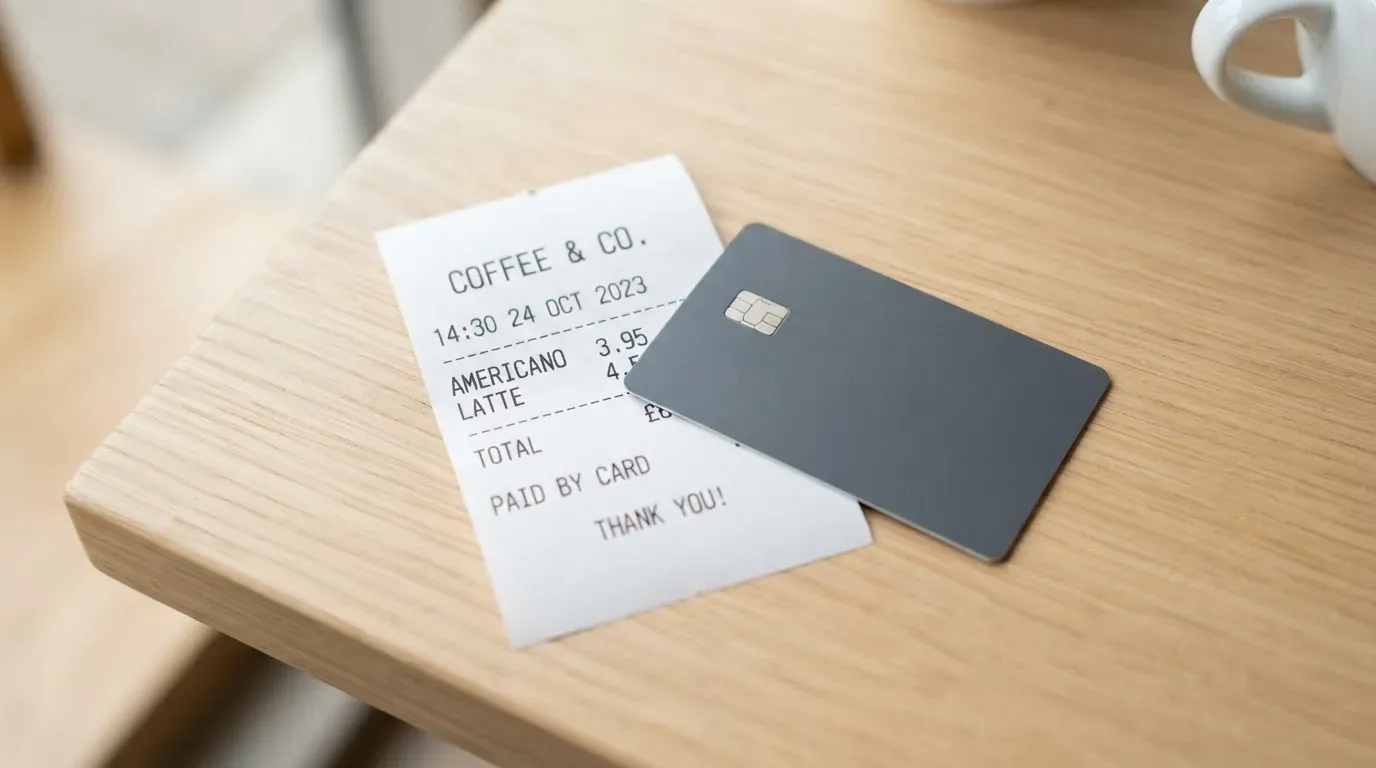
Fiwind’s headline numbers are genuinely good. Issuance and maintenance are free — “sin costo de emisión ni mantenimiento”. Card payments carry no commission, and buying or selling crypto inside the app is “sin comisiones”. Where the money comes in, not out, is where a fee appears.
| Fee or limit | What the card says |
|---|---|
| Issuance | Free — “sin costo de emisión” |
| Monthly fee | Free — “sin mantenimiento” |
| Card payments | No commission — “tus pagos con la tarjeta fiwind no tienen comisiones” |
| Buying/selling crypto in the app | No commission |
| International purchase processing | 1.5% surcharge — “1.5% fee for processing international payments” |
| USD transfers via USDT or USDC | 0.50% + 0.50 USD (ACH); 0.50% + 20 USD (wire) |
| ATM / cash withdrawal | Not stated |
| Daily and monthly limits | Figures not stated; crypto payment limits “determined by the sale limit” |
Now let us follow three ordinary payments through that table, because a fee table means nothing until you put a purchase through it.
A coffee in Buenos Aires. You tap a terminal or pay in a shop in pesos. There is no commission on the card payment and the merchant is paid in Argentine pesos. Nothing in the table bites. This is the happy path, and it is the path the card was designed around.
A hotel booking abroad. The purchase is international, so the 1.5% processing charge applies. There is also currency conversion, and that is where the fine print earns its keep: fiwind applies its own buy rate for the peso-to-dollar step, and Mastercard applies its own rate for the dollar-to-merchant-currency step. A single payment can run through as many as three currencies. So the total cost of that hotel is the hotel price, plus two exchange-rate spreads you do not set, plus 1.5%. The 1.5% is the part the card publishes; the spreads are the part it does not.
A dollar wire to top up. Here the transfer fee appears: 0.50% plus 0.50 USD by ACH, or 0.50% plus 20 USD by wire. Note the direction — this is a fee on moving value in, which the card treats as a different act from paying with the card.
The on-chain network fee is not on this table because it is not Fiwind’s to charge: gas or bandwidth for a crypto deposit is paid to the blockchain itself.
How to Top up the card
This is where Fiwind is at its best, and it is why the top-up line in my table is a 9. You can pay in pesos, dollars or crypto, and the supported networks on the site are a long list: Bitcoin (including Lightning), Ethereum ERC20, XRP Ledger, BNB BEP20, Arbitrum, Optimism, Cardano, Solana, Polygon, Stellar, TON, Polkadot, World Chain and Tron. The card then pays out from whichever of the three balances you choose.
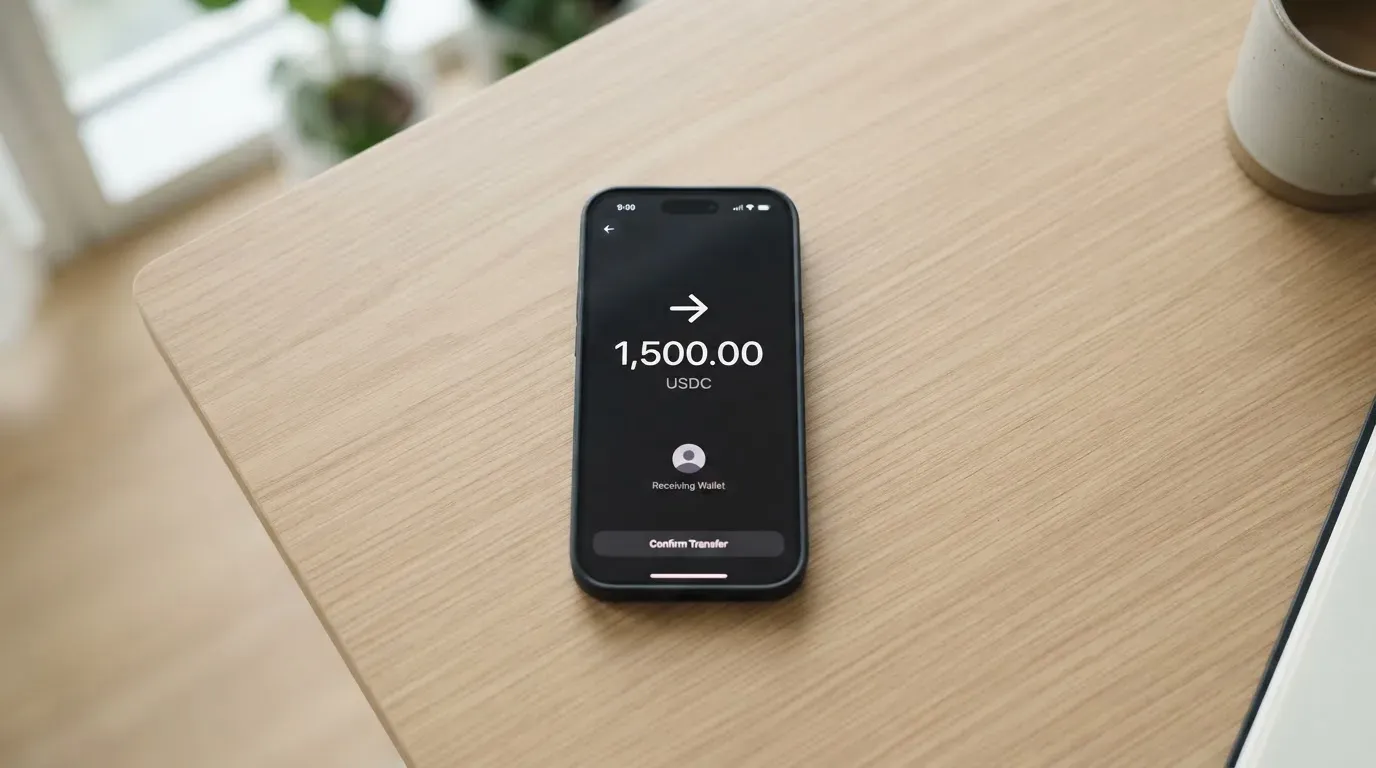
The everyday mechanics are simple. Argentine peso and US dollar deposits and withdrawals are available 24 hours a day, “sin costo” and instantly. Buying or selling crypto inside the app is “sin comisiones”.
Two things the pages do not say, and both are the kind of thing that costs real money if you assume wrongly. The minimum top-up is not stated. And who pays the network fee on a crypto deposit is not stated either. When you send USDT on a network you chose, the gas is a separate bill; this page does not promise Fiwind covers it.
Withdrawals follow the same 24-hour, free, instant line for pesos and dollars. Crypto withdrawals and sends, and what happens to a balance if you close the account, are not covered on the fee page; the help centre has 20 articles in its “Depósitos y retiros” collection, but I did not read them.
A last piece of general sense, not specific to Fiwind: a transfer sent on a network the provider does not support, or to an address belonging to a different network, can be lost, because blockchain transfers are irreversible. Check the network before you send, not after.
Paying with it every day
Everyday use is the card’s weakest suit and the reason the score here is a 5. The card is 100% virtual. Its network is Mastercard, confirmed on the official side, and it is described as “completamente virtual”. There is no plastic in the plan.
What you get instead is mobile. The card can be linked to Apple Pay and Google Pay, and it supports NFC contactless — so the everyday tap at a shop works through your phone. That is a real convenience, and for someone who already pays by phone it may be enough. But if you are the kind of person who wants a card in the wallet for a till that refuses a phone, or one for a payment where the terminal is old, Fiwind does not offer it. ATM and cash withdrawal are not stated — no cash-out is described anywhere in what I read.
Rewards and promotions do exist, and they are the one genuinely warm item in the everyday column. The help centre runs undated promotions: 30% saving on international purchases with the card, 50% off Cabify, 100% cashback on colectivos, 40% cashback at Hard Rock Café Boca Jrs., and 10% cashback in the App YPF. Whether any of these are live today, I cannot tell you — the listings carry no dates.
The app is iOS and Android. In Argentina’s App Store it sits at 4.9 out of 5 from 9.6K ratings, sold by FINANCEWIND S.A., version 1.107.0 as read on 20 October 2026. The Google Play rating was not read; the listing is com.fiwind.app.
What you will not find described: blocked merchant categories. The card does not say what it refuses — gambling, adult, and so on — so you cannot know in advance whether a category is closed to you.
What can go wrong
Several things, none of them dramatic on its own, and all of them worth weighing together.
The issuer is not named. The card’s own pages do not say which institution issues it. In this category that matters more than it sounds: a card payment travels through the network, the issuer and the brand, and the brand is often only the front. If something goes wrong with a payment, you need an entity to complain to.
Complaints are thin but not clean. Trustpilot shows one review — one star, dated 4 May 2026, in Spanish, saying the application was rejected on a claim that data had been altered and that there was no real support. One review is not a pattern, but it is also the entire public complaint record. No Reddit or card-specific complaints surfaced. Support itself is a Spanish-language Help Centre (help.fiwind.io/es, 12 collections) plus social and community channels (X, Instagram, TikTok, LinkedIn, Discord, Telegram, Facebook, YouTube). No support hours and no direct contact channel were found.
Disputes are not addressed. The card’s help centre has no dispute or chargeback article; the articles I found were on taxes and fees. If a charge goes wrong, the card does not tell you the route.
Custody is the trade you are making. Fiwind is a custodial platform — your balance sits with the provider, so you are trusting them with it. The app does offer the everyday safeguards: 2FA and linked-device articles exist in a “Seguridad” collection (four articles, which I did not read), plus instant pause, a daily maximum and tokenised mobile wallets through Apple Pay and Google Pay. But insurance and fund safeguarding are not stated, and with a custodial provider the counterparty and hack risk is real — the field has a history of it.
Currency risk is layered on. Because a payment can pass through up to three currencies with two separate rates, the effective cost of an overseas purchase is more than the 1.5% suggests.
Frozen funds after a decline. A declined authorisation can leave a hold on your balance that stays for several days.
Nothing bad in the news, for what that’s worth. Financewind S.A. is a PSAV registered with the CNV (No. 75, 6 September 2024), and Fiwind Capital S.A. is an ALYCI (CNV No. 2231). Help-centre card promotions were published in 2026. I found no licence loss and no fines. That is mild reassurance, not a clean bill.
The good news is that this is a registered, active company with a decent app rating, not a fly-by-night. The bad news is that everything protective about the arrangement — safeguarding, disputes, a named issuer — is either not stated or not there.
What to take instead
If Fiwind’s thin everyday card is the sticking point, or its undisclosed country list is, there are three other cards I looked at. Here is how they compare, and where each is stronger or weaker than Fiwind.
International Visa Card — 6.7 / 10. A US-issued Platinum Visa, virtual, paying in USD; the physical card is listed as “coming soon”. It is the one of the three with a clearly stated eligibility list, which is the opposite of Fiwind’s silence. It is not open to residents or legal registrants of Belarus, mainland China, North Korea, Cuba, India, Iraq, Iran, Israel, Myanmar, Nepal, Nicaragua, Russia, Syria, Turkey, Ukraine, Venezuela or Vietnam, and FATF grey-list countries are reviewed case by case. Purchases are blocked in North Korea, Cuba, Iran, Russia, Syria, Ukraine and Venezuela; the rule follows residence or registration, not citizenship. Cost: virtual card issuance $5 one-time, no maintenance fee; plans Classic free, Pro $9.00/month, Max $19.00/month. Card use in USD is free on all plans; foreign currency is “Visa exchange rate + 2% FX fee”; deposits of any kind are free. You fund it with USDC or USDT into the USD account, free at 1:1, or via USD, EUR, SEPA, SWIFT and FedNow. No cashback stated. Compared with Fiwind it has a named issuer and a real country list, but a 2% FX fee is heavier than Fiwind’s 1.5%, and it charges for its monthly plans.
UNi Card — 6.1 / 10. A multicurrency card on the Mastercard network, spending from the UNi.Global account balance; physical or virtual is not stated, and who can get it is not stated either. “No annual fee”, no foreign transaction fee, assets converted at “live OTC rates” with “no hidden exchange fees”. Rewards are spend-to-earn up to 3%. This is the closest competitor to Fiwind on paper — same network, similarly clean fee story — but it is vaguer on both eligibility and funding, and the 3% back is the only concrete number attached to it.
Whop Cards — 5.2 / 10. A Visa that works anywhere Visa is accepted, online and in stores; virtual or physical and card currency are not stated, and you spend from a Whop balance, with pending balance usable as soon as a payment arrives and standard withdrawals using settled funds. Backed by stablecoin collateral from a linked wallet; coins and networks not stated. Consumer coverage is 31 US states, business coverage 41 states, and unsupported consumer countries are listed as Belarus, China (Mainland), Cuba, Hong Kong, India, Iran, Iraq, Israel, Myanmar, Nepal, Nicaragua, North Korea, Russia, Syria, Turkey, Ukraine, Venezuela and Vietnam — the basis, citizenship or residence, is not stated. The page says “no extra fees” with no amounts, and 5% cashback at select merchants, currently Uber, with payout currency and conditions not stated. It scores lowest of the three and is the least useful outside its stated footprint.
| Fiwind | International Visa Card | UNi Card | Whop Cards | |
|---|---|---|---|---|
| Score | 5.8 / 10 | 6.7 / 10 | 6.1 / 10 | 5.2 / 10 |
| Network | Mastercard, virtual | Visa Platinum, virtual (physical coming soon) | Mastercard, physical/virtual not stated | Visa, type not stated |
| Who can get it | Argentina and Brazil focus; list not stated | Named exclusion list; residence/registration based | Not stated | 31 US states for consumers; list given |
| Foreign spend | 1.5% abroad | Visa rate + 2% FX fee | No foreign transaction fee | Not stated |
| Funding | Pesos, dollars, supported networks | USDC/USDT 1:1, plus USD/EUR/SEPA/SWIFT/FedNow | Not stated | Whop balance from stablecoin collateral |
| Rewards | Help-centre promos | No cashback stated | Up to 3% | 5% at select merchants |
| Cash / ATM | Not stated | Physical card coming soon | Not stated | Not stated |
The pattern across all four is the same, and it is worth naming: none of these cards is strongest at being a bank card. They are strongest at being a way to move value from a crypto balance into a shop. If you need cash, a physical card or a named support team, Fiwind is not the answer and neither is any of the three.
Who I would recommend it to
I would recommend Fiwind to someone who is in Argentina or Brazil, holds crypto or stablecoins, and wants to spend that balance at an ordinary shop without a bank account in the loop. For that person the card does something plain and useful: it is free to hold, free to pay with, and it accepts an unusually wide range of networks to fund the account.
I would not recommend it as a first card, and I would not recommend it to anyone whose spending depends on cash or on a physical card. I would also not recommend it to anyone who is uneasy that the issuer is unnamed, that fund safeguarding is not stated, and that the whole help centre is in Spanish. The absence of a published country list is not a small gap when you are trying to decide whether you are eligible at all.
My honest summary is that Fiwind is a good account with a thin card wrapped around it. The numbers on the account are the best in this comparison; the card is the part that will frustrate you. Judge it accordingly — buy it for the top-ups, not for the plastic.
Frequently asked questions
What is Fiwind card?
Fiwind is a virtual Mastercard from an Argentine fintech that lets you spend a balance of Argentine pesos, US dollars or crypto. You top the account up in any of those, then pay at merchants. The card is 100% virtual and works through Apple Pay and Google Pay with NFC. Merchants are always paid in Argentine pesos, or Brazilian reais under Pix. It is an account-to-shop tool, not a bank card.
How does the Fiwind card work?
You load a balance — by paying in pesos, dollars or crypto — and the card spends from it. It behaves like a prepaid card: the balance is what you have, and it cannot be overdrawn. International purchases are processed in US dollars, and a single payment can involve up to three currencies, converted at fiwind’s own rate for the peso-to-dollar step and Mastercard’s rate for the dollar-to-merchant-currency step.
Is Fiwind a bank?
No. Fiwind is an Argentine fintech registered as a PSAV, virtual asset service provider, No. 75 in the CNV registry as of 6 September 2024 — and the site’s own wording is that this registration “no implica licencia ni supervisión”, it does not imply a licence or supervision. The card issuer is not named. Financewind S.A. is the PSAV and Fiwind Capital S.A. is an ALYCI, CNV No. 2231.
Who owns Fiwind?
The company behind the card is Fiwind, an Argentine fintech. Its legal entity is not named on the pages I read; the App Store listing for the app names the seller as FINANCEWIND S.A. Its App Store presence in Argentina sits at 4.9 out of 5 from 9.6K ratings. The corporate registrations I could confirm are the CNV entries described above.
Is Fiwind card available in my country?
The card’s public pages do not state a country list, so there is no honest way to answer this for you from what the card publishes. The company is Argentine with Pix support for Brazil, and the card works at merchants worldwide — but “works worldwide” describes where the card is accepted, not who can open an account. Check with the company directly before you apply.
Can I use the Fiwind card in my country?
Probably, if you have the card. It is a Mastercard, and the pages say it works at merchants worldwide. What varies by country is not acceptance but the rails: the account speaks pesos and dollars, offers Pix for Brazil, and settles merchants in Argentine pesos (reais under Pix). So the card travels; the funding does not necessarily follow you.
Does the Fiwind card require KYC?
Partly, and the account has tiers. The card request needs two verifications in the app — your current address and your phone number — plus a chosen payment currency, and the card is usable right after you complete the required details. Account verification gives level Gold; proof of address gives Platinum; income documents give Black. Document requirements are not stated on that page, and processing time and rejection reasons are not stated either.
Is the Fiwind card free?
Issuance and maintenance are free — “sin costo de emisión ni mantenimiento” — and card payments carry no commission, as does buying and selling crypto in the app. Fees appear elsewhere: 1.5% for processing payments abroad, and USD transfers via USDT or USDC at 0.50% + 0.50 USD by ACH or + 20 USD by wire. ATM and cash use are not stated at all.
How do I top up the Fiwind card?
You pay in pesos, dollars or crypto. Peso and dollar deposits are 24 hours a day, “sin costo” and instant. Crypto arrives across a wide set of networks: Bitcoin (including Lightning), Ethereum ERC20, XRP Ledger, BNB BEP20, Arbitrum, Optimism, Cardano, Solana, Polygon, Stellar, TON, Polkadot, World Chain and Tron. Two details are not stated — the minimum top-up, and who pays the network fee on a crypto deposit. Check the network before sending; transfers are irreversible.
Is the Fiwind card safe?
There are real safeguards in the app: you can pause the card, set a maximum daily spend, change the payment currency, and link to Apple Pay or Google Pay. There are 2FA and linked-device articles in the help centre’s security section. But it is a custodial platform — your balance sits with the provider — and the card does not state whether funds are safeguarded or insured, does not name its issuer, and has no dispute or chargeback article. I found no licence loss or fines against the registered entities.
Choosing an app or neobank card – cryptocardadvisor
Content created by the «cryptocardadvisor» team