
A self-custody card whose public paperwork leaves too many blanks
 Available in US

Jam positions itself as a payment card inside a non-custodial crypto wallet. The premise is appealing if you already keep your own keys: spend directly from a USD balance funded by stablecoins, without handing custody to an exchange. After spending time with the site’s terms, the App Store listing, and the small but telling set of user reports, my honest read is that the product is early, the public documentation is thin, and the pricing story is told mostly by reviewers rather than by Jam itself. This review walks through who Jam is for, what it actually costs, how the daily experience looks, and where the gaps are. I will not recommend the card to anyone who is not already comfortable with self-custody, and even then I would wait for clearer disclosure on the issuer and the fee schedule before loading a serious balance.
Conditions are current as of October 28, 2026.
Conditions in this review are current as of October 2026.
Verdict
Jam scores 4.4 out of 10. The number reflects a product that has the right philosophical starting point (non-custodial, your keys) but has not yet published the basics a person needs to make an informed decision: an explicit list of supported countries, a fee page, the card network and issuer, the top-up coin and network list, the dispute process, and the support hours. The strongest signal in the card’s favour is its self-custody model and its help centre in seven languages; the weakest signals are the unstated fees, the missing physical card, and a Trustpilot base small enough that the rating should be read as preliminary.
| Criterion | Score | Why it scored that way |
|---|---|---|
| Who can get it | 5/10 | The site does not publish a country list, only that the on/off ramp is available in 200+ countries; the terms exclude Russia, Belarus, Iran, North Korea, Syria, Cuba, Ukraine and US persons |
| Cost | 3/10 | No official fee page; unofficial user reports cite a roughly 4.2% stablecoin top-up fee plus gas and a 0.2% Apple Pay fee |
| Top-up options | 4/10 | Officially only USDT is named, with the note “No TRX required” for TRC-20; unofficial sources narrow this to USDT and BSC-USD only |
| Reliability and complaints | 6/10 | Non-custodial by design; company is JAM Platform LLC in Delaware; no issuer or licence named; Trustpilot sits at 4.1/5 from a small number of reviews |
| Everyday use | 4/10 | Card type and network unstated, no physical card yet, Apple Pay and Google Pay supported, ATM details undisclosed |
| Total | 4.4/10 | A self-custody card built for wallet users, but too many facts are still missing from the public record |
The audience this card quietly targets is people who already run a self-custody wallet and want a card sitting on top of that wallet rather than a custodial account with a card bolted on. If that is you, the philosophy aligns with what you already trust. If you are new to crypto and just want a card to spend, this is not the product to start with, because Jam does not hold your hand and does not yet tell you, on its own pages, what a payment will cost you.
Who can get the card
The short answer: probably you, if you live somewhere the on/off ramp is available and you are not in a country or category the terms specifically exclude. The longer answer is that the public site does not actually publish a list of supported countries, only that “Ramp functionality” is available “in over 200 countries” for moving between crypto and fiat through the app. The card itself is a separate product with its own geographic rules, and those rules are not enumerated.
What the terms do say, in plain language, is that card and financial services are “categorically forbidden in specific jurisdictions,” and they name “including but not limited to Russia, Belarus,” and also Iran, North Korea, Syria, Cuba and Ukraine. Sanctioned persons are barred outright. The terms go further and state that the service is “strictly not intended for use by United States Persons” and that access from a US IP address is prohibited. The card may also restrict access by IP or jurisdiction even if your country is not on any explicit list. Whether the rule is based on citizenship, residency, or both, the terms do not specify. So if you have dual nationality, or you live in a third country but hold a passport from a restricted one, the safest assumption is to ask support before signing up.
The onboarding itself is described on the site as “30 seconds”: email and phone number, and the KYC is handed off to independent third-party compliance partners whose names are not published. Age is not stated, and whether a proof of address is required is not stated either. A user on Trustpilot in May 2026 described their first card as a “No KYC” experience, which contradicts the official flow; this is a user report, not confirmation from Jam, so I would not rely on it if the absence of documents would be the reason you apply.
There is one practical reading of all this. If you are an adult in a country that is neither on the exclusion list nor under broader sanctions, you are likely to be able to complete sign-up, but you should treat the absence of a published country list as a real risk: Jam could, in practice, decline to issue a card in your jurisdiction even if the ramp worked, and the terms reserve the right to do exactly that.
How to get it
The flow is the standard crypto-app flow: download the iOS or Android app, sign up with email and phone, complete the KYC through the third-party compliance partner that appears in the interface, and wait for approval. The App Store listing is for “Crypto Wallet & Web3 – Jam App”, requires iOS 17.6 or later, and at the time of checking showed no rating because the number of ratings was too small to display. The Android package name is io.jamcard.app, and its rating was not retrievable on the same day. A small app-store footprint is not, on its own, a problem; it does mean there is little public signal about stability and bugs from the app stores themselves.
What you get at the end of the process, according to the site, is a card. The site is unusually candid about the fact that there is currently only one card type, with “20+ card types” planned for the future. The site does not say whether the card is Visa or Mastercard, virtual or physical, and it does not name the issuer. The starting balance is in USD. A reviewer on Trustpilot wrote in May 2026 that there is “no physical card yet,” and a physical-card absence matches the official silence on the topic. If a physical card is a deal-breaker for you, this is one to watch rather than one to apply for today.
There is no application fee mentioned anywhere, but there is a referral mechanic: you earn $5 for each friend who signs up. The amount is small enough that I would not treat it as a feature, but I would also be cautious about chasing referral codes; the official stance on multi-account and self-referral is not stated, and most programmes treat self-referral as a violation.
Activation, once approved, is the usual in-app flow for a virtual card: the card details appear in the app and you can add them to Apple Pay or Google Pay, both of which are explicitly supported. There is no shipping address to confirm because there is, for now, no physical card to ship. Delivery time is therefore not stated and not applicable to the current product.
Fees: what it really costs
This is the weakest part of Jam’s public disclosure. The site has no fees page linked from the main navigation, and the terms do not enumerate a fee schedule. The few numbers in circulation come from user reports, and I will treat them as unofficial.

The unofficial numbers, as reported by a Trustpilot reviewer in May 2026, are that stablecoin top-ups cost about 4.2% plus the underlying network gas, and that Apple Pay transactions carry an additional 0.2% fee. Both numbers should be read as the experience of one user at one moment, not as a published schedule, and Jam has not, to my knowledge, confirmed or denied them. A 4.2% top-up fee plus gas is heavy by industry standards; for context, comparable self-custody cards have published stablecoin top-up fees in the 0% to 1% range, and the major networks’ FX margins are well under 2%. A 0.2% Apple Pay fee on top of that is small in absolute terms but compounds the cost of every tap-to-pay purchase.
Conversion and FX fees are not stated. ATM fees are not stated. The “Spend Up to $250,000 Daily Worldwide” page headline suggests an aggressive daily limit, but per-tier or per-country limits are not given, so the practical ceiling for you depends on what your KYC tier turns out to be. There is also no fee tier system; the “JAM VIP Club” mentioned in marketing is a private Telegram community with special rewards and a personal manager, not a published pricing tier.
Let me walk through three everyday payments to make the missing fee schedule concrete.
- Coffee at a local café, paid by Apple Pay, from a balance you loaded with USDT on TRC-20. Unofficial cost: roughly 4.2% on the top-up (say $0.21 on a $5 coffee), plus the network gas you paid to move USDT into the app, plus an unofficial 0.2% on the Apple Pay transaction ($0.01). That is somewhere between $0.22 and a few dollars depending on how gas was priced at the time of the top-up.
- A $50 grocery shop paid in a currency other than USD, with the card network handling FX. Unofficial cost: the 4.2% on the top-up that funded that spend, the 0.2% Apple Pay fee if you used a phone, and an FX margin that is not stated. The card is a USD-balance product, so any non-USD transaction will trigger a conversion; what that conversion costs is one of the blanks the site has not filled in.
- A $200 online subscription, paid with the virtual card details typed into a checkout. Unofficial cost: the same top-up fee amortised into the balance, no Apple Pay fee (no wallet was used), and any 3-D Secure friction at checkout (the card supports 3-D Secure in principle, but how often you are challenged is not documented).
The honest summary is that you cannot, from the official paperwork, tell what a Jam payment will cost you. The only way to find out for certain is to load a small amount, make a small purchase, and watch what lands in your balance. That is the opposite of how a fee schedule should work, and it is the single biggest reason the cost criterion sits at 3/10.
| Fee or limit | What Jam says |
|---|---|
| Card issuance | Not stated |
| Monthly or annual fee | Not stated |
| Top-up (stablecoin) | Not stated officially; user reports cite about 4.2% plus gas |
| Conversion / FX | Not stated |
| Apple Pay / Google Pay | Not stated officially; user reports cite about 0.2% on Apple Pay |
| ATM | Not stated |
| Daily spend limit | “Up to $250,000 daily worldwide” (headline); per-tier limits not given |
| Monthly spend limit | Not stated |
| Cashback | None mentioned; only a $5 referral reward |
| Tier programme | “JAM VIP Club” is a private Telegram community, not a published fee tier |
How to top up the Jam card
The official story on top-ups is short. The site says the starting data is USDT stablecoins, and that for TRC-20 (Tron network) top-ups “No TRX required,” which is shorthand for a GasFree mechanism in which the app or a relayer covers the network fee so you do not need to hold Tron to send USDT. Beyond that, the site does not publish a list of supported coins and networks.
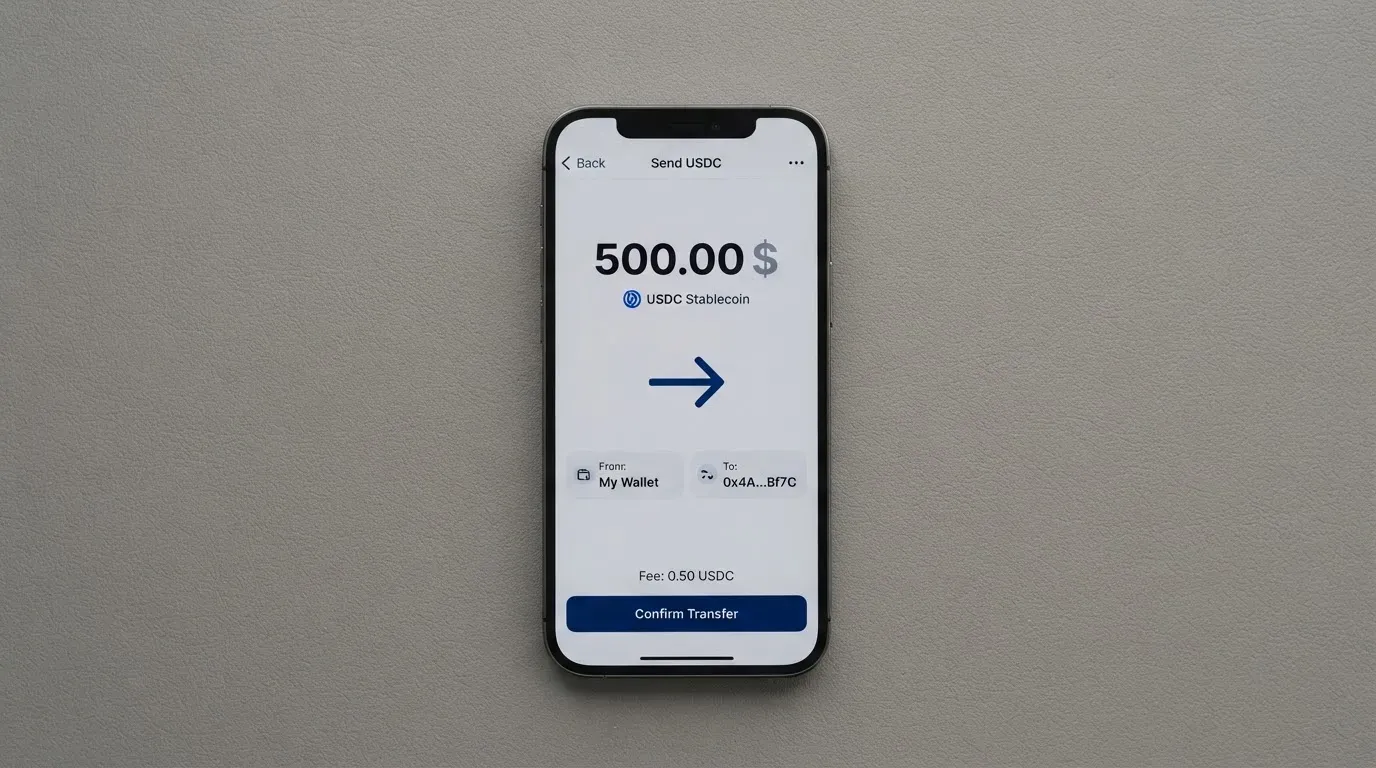
The unofficial story, again from a Trustpilot reviewer in May 2026, is that only USDT and BSC-USD are accepted, and that the app does not accept other stablecoins or networks that are common in the wider crypto-card market. If that is accurate, your practical options are limited to USDT on Tron (with TRX not required) and a BSC-USD variant on BNB Smart Chain. Both are reasonable choices from a network-fee perspective, but neither is the multi-chain experience the official marketing implies.
A few practical implications worth thinking through before you fund the card:
- Network selection is the most common way to lose money in stablecoin top-ups. The address you send to in the app belongs to one network; if you send USDT on a different network to that address, the funds can be lost or stranded in manual support. The site does not publish a guide to recovering mis-sent deposits, and blockchain transactions are by their nature irreversible.
- “No TRX required” is helpful if you do not already hold TRX, but it is not the same as “no fees.” The cost of the gas is being paid somewhere; if not by you, then by Jam or a relayer, and that cost is presumably built into the top-up fee. The 4.2% unofficial number is large enough to absorb network gas many times over.
- The card is a USD-balance product, so any non-USDT top-up would presumably be converted to USDT or USD inside the app. Because the conversion path is not described, I would not top up with anything other than USDT on the network the app tells you to use, and only in the amount you are willing to lose if the worst happens.
- Withdrawals back out of the card are not addressed in the terms. A reviewer reported being unable to withdraw funds once loaded, and while one Trustpilot review is not a pattern, it is a serious enough comment that I would test the withdrawal path with a tiny amount before committing.
The verdict on funding is that the experience is narrower and more expensive than the marketing implies, and the documentation does not give you enough to plan a multi-network strategy.
Paying with Jam day to day
In day-to-day use, what you actually have today is a virtual card sitting in your phone’s wallet. Apple Pay and Google Pay are explicitly supported, and the card can be used for online checkout wherever the network (whatever it turns out to be) is accepted. The site does not publish a list of blocked merchant categories, so gambling, adult content, and other categories that some issuers restrict are not addressed.
Cashback is not part of the product. The only reward the site mentions is the $5-per-friend referral, paid in what is not specified. There is no spend-based rebate, no points programme, no tier-based perks beyond the private “JAM VIP Club” Telegram group, which is a community rather than a published benefits tier. If you are choosing a card partly on the basis of everyday rewards, Jam currently does not compete on that axis.
Apple Pay and Google Pay work in the way most people now expect: the card number is replaced by a device-specific token stored in the Secure Element, and each payment is authorised with a one-time dynamic code. This is good for fraud exposure if your phone is stolen, because the issuer can freeze the token without affecting the underlying card. The catch, as ever with tokenised numbers, is that the issuer can also restrict where the token is allowed to work: a Jam token could, in principle, be locked to in-store contactless only, or to in-app purchases only. The current product does not document any such restrictions, but the technical capability is there.
Disputes are the area where the gap between Jam and a regulated bank is most obvious. The terms say that blockchain transactions cannot be reversed, and that disputes with third-party providers fall under those providers’ terms. That is consistent with a non-custodial product, but it means that if a merchant charges you for something you did not receive, your route to a refund is the merchant’s own policy, not a chargeback right. The card-network chargeback process that protects users of regulated debit cards is, in effect, not available to you in the same way. A reader who is used to the protections of a bank-issued debit card should treat the Jam experience as closer to cash: once it is spent, getting it back depends on the counterparty.
The app itself is the main interface, and it is also where you would freeze the card, change limits (if any are exposed), and view transactions. The app supports Russian in addition to the languages listed on the help centre, which is a small but useful detail for readers in several of the countries the terms touch on.
What can go wrong
A few risk categories are worth walking through, because they are the kind of thing you only learn about after a problem has already happened.
Regulatory and disclosure gaps. The company is JAM Platform LLC, registered at 8 The Green, Suite A, Dover, DE 19901. That is a Delaware LLC, not a bank, not a payments institution, and not a named crypto-asset service provider. The card itself is “issued by unnamed third-party providers shown in the interface,” and the licences, if any, are not published. A separate unofficial source, GetApp, describes the operator as UAB Jam, registered in Lithuania; if that is accurate, the entity behind the brand is different from the Delaware entity the terms name. I could not confirm this from Jam’s own materials. The point is that a person signing up does not have a clean answer to the question “who is regulated where, and by whom?” That makes it harder to know what recourse is available if a problem arises.
Programme risk. Self-custody does not protect you from the card programme being shut down. Card programmes are run by issuers under network licences, and the network can terminate a programme or the issuer can fail, leaving users with a limited window to spend or withdraw balances. The historical reference points are FTX (Visa terminated its global agreements in November 2022 and the US debit card was wound down by the issuer) and WaveCrest (a Visa issuer that supplied crypto card brands, suspended in Europe in 2018, closing all its Visa programmes overnight). Jam is much smaller than either, and a programme closure would be a more existential event for the company than for an established issuer.
Counterparty risk on the issuer side is not addressed in the terms. The card is a prepaid-style product, so the underlying balance is presumably held by the issuer, not by Jam. The terms do not say whether that balance is segregated, safeguarded, or covered by any deposit-guarantee or e-money safeguard scheme. In the EU, an electronic money institution must segregate customer funds; we do not know whether Jam’s issuer is such an institution, because the issuer is not named.
Self-custody risk. The non-custodial model means Jam never holds your keys or seed phrase. That is the whole point, and it is also the source of every other risk on this side of the ledger. If you lose your seed phrase, there is no one to call. If you paste the wrong address and a clipboard-hijacker swaps it, the funds are gone and the blockchain will not reverse them. A self-custody-linked card spends directly from your wallet, so a stolen phone with an unlocked wallet app is a much bigger problem than a stolen physical card. The App Store listing mentions a live AML address check, which is a small but real protection against sanctioned addresses, but it does not protect against your own mistakes.
User reports. Trustpilot shows Jam at 4.1 from 5 reviews, all five-star, read 2026-10-21. That is a small base, and one of those reviews is also the source of the cost and no-physical-card comments I have been quoting. The single critical remark on Trustpilot, also from May 2026, is essentially the same message: costs are higher than expected, and once funds are loaded they are hard to get back. Reddit threads were not found in my search. I would not treat a 4.1 from five reviews as evidence of a satisfied user base; I would treat it as “we do not know yet, and the few people who have used it have mixed views.”
Support. The help centre is at help.jamcard.io and is available in Arabic, English, Portuguese, Russian, Spanish, Turkish and Ukrainian. The Telegram channel is t.me/jamcards, and there is also an Instagram, X, TikTok and LinkedIn presence. Hours of operation are not stated. A non-custody product with a thin support footprint and no published SLA is a poor match for someone who needs their card to work first time, every time.
What to take instead
The honest comparison is between Jam and a small set of self-custody or quasi-self-custody cards that have published enough about themselves to plan around. The three below are not endorsements; they are alternatives with different trade-offs that may suit you better depending on what you are optimising for.
TokenPocket (TP Card) scores 5.8 out of 10. It runs on Arbitrum and is a Mastercard or Visa debit card (the brand depends on region) that draws on balances denominated in EUR24 and USD24. The list of supported countries is concrete: Visa debit is available in a list of European countries and territories (Germany, France, Spain, Switzerland, and others), and Mastercard debit is available in Australia, Canada, Hong Kong, Japan, Taiwan, New Zealand, Singapore, South Korea, the UK, and others, with the Americas described as planned for Q2 2025. The card is virtual (no physical card mentioned). On cost, the published fee is a 1% charge for depositing crypto into the TP Card, with the caveat that the 1% is intended to be refunded later through rewards or reduced transaction fees, and FX fees are not stated. Funding comes from the TokenPocket wallet itself, on the Arbitrum network. There is no cashback programme described. The interesting trade-off versus Jam is that the country list is published and the fee is published, even if both are imperfect.
MetaMask Card scores 7.1 out of 10. Sign-up is open in 45 listed countries and territories (Andorra, Argentina, Brazil, Canada, Mexico, Germany, France, Spain, Uruguay, and others); other regions join a waitlist. Proof of residency is required, and “ineligible regions limit sign-ups, not spending,” which is a meaningfully different design from Jam’s, where geography is enforced at the card level. US and UK sign-ups are temporarily closed per the FAQ. The card is Mastercard, issued by Monovate, with Crypto Life as the card provider; the first card is virtual and instant, and a Metal card can be pre-ordered in the app after the virtual is approved, one card per user. Cost is straightforward: Virtual is free with no annual or maintenance fee; Metal is $199 a year. The published fees are described as “minimal” for each transaction, with a fee table linked; there is no foreign transaction fee, and the Mastercard rate is used. Funding is direct from the connected wallet on Linea, Base, Monad and Solana, with mUSD, wETH, EURe, GBPe, USDC and USDT among the named tokens (the page says nine). Rewards are real: Virtual 1% cashback in mUSD into the Money Account, Metal headline 3% with a footnote that 3% applies to the first $10,000 spent then drops to 1%, plus a $FLY bonus via the Blackbird dining app. The trade-off versus Jam is that MetaMask Card is closer to a regulated product (named issuer, named provider, published fees) and pays cashback, but it is a custodial-style product from the user’s perspective, because MetaMask holds the issuing relationship.
KAST scores 6.1 out of 10. KYC is residence-based and the country list is shown at the KYC step rather than published up front; the Terms also mention a “Restricted Locations” list. Citizenship interacts with residence: dual citizens with an ID from a supported country may pass, but people living in a supported country with an ID from a restricted one may still be ineligible, and the only ID accepted is the account holder’s own. VPN does not bypass the check. The card side is concrete: virtual and physical, up to 10 cards per user, with three tiers (Visa Platinum Standard, Visa Infinite metal Premium, Visa Infinite gold-plated Private) plus special designs (Pengu, Solana, Bitcoin). The balance is in USD, and stablecoin deposits convert 1:1 with no spread. Annual membership is tiered: Standard 0 USD, Premium 1,000 USD, Private 10,000 USD (billed annually upfront). Card fees: extra virtual card 2 USD, Standard physical card 0 USD card fee plus 40 USD delivery, inactivity fee 1 USD a month after 12 months. Stablecoin top-up is 0%, card spend in USD is 0%, transaction fee is 0%, Apple/Google Pay is 0%; the only published friction is the non-USD FX fee of 0.5% to 1.75% depending on residence country, transaction country and programme, a 0.10 USD fee on non-USD transactions under 25 USD, and 0.50 USD on a declined transaction for insufficient balance. Funding is stablecoins (USDT, USDC, PYUSD, RLUSD) on Ethereum, Solana, Polygon, Arbitrum and Tron, with the app listing the current networks. Cashback is real and tiered: Standard 1.5% on the first 2,000 USD a month, Premium 2% on the first 10,000 USD a month, Private 3% on the first 40,000 USD a month, plus KAST Points of +1% (Premium) and +2% (Private) of eligible spend. The trade-off versus Jam is that KAST is more expensive to enter (the membership fee at higher tiers) and more transparent about it; if you spend enough to clear the 1.5% cashback threshold, the maths works in your favour quickly.
The summary comparison is that Jam is the only one of the four that does not publish a country list, does not publish a fee schedule, does not name an issuer, and does not pay cashback. TokenPocket is closer to Jam philosophically (self-custody wallet, on-chain balance) but smaller and with published numbers. MetaMask Card is the most mainstream in feel, with a named issuer and a real rewards programme, but it is also the one most likely to require you to use MetaMask’s own wallet rather than your own keys. KAST is the most expensive to enter and the most generous on cashback, which makes it the right answer for high spenders and the wrong answer for light or occasional users.
Who I would recommend it to
I would recommend Jam, with caveats, to a narrow reader. Specifically, you should be a person who already runs a non-custodial wallet, is comfortable with seed phrases and address verification, has a working knowledge of stablecoin networks, and is happy to load only what you are willing to lose while the product is this thin on disclosure. You should not be in any of the explicitly excluded countries, and you should be a non-US person (or at least not access the service from a US IP). You should test the top-up, the Apple Pay tokenisation, and the withdrawal path with small amounts before committing a meaningful balance. If a physical card or a cashback programme is a deal-breaker for you, this is not the card to start with.
I would not recommend Jam to a first-time crypto user, to anyone who treats a payment card as a substitute for a bank account, to anyone who needs a published fee schedule before they will sign up, or to anyone who needs a clear dispute path. The product is too early and the public paperwork is too incomplete. A 4.4 out of 10 is not a verdict I would argue with; it is a verdict I would gently raise if the company publishes a fee page, names an issuer, and adds a physical card.
Frequently asked questions
What is the Jam card?
Jam is a payment card attached to a non-custodial crypto wallet app. You keep your own keys and fund the card by sending USDT into the app, and the card spends from a USD balance. The site describes the service as “strictly non-custodial,” meaning Jam itself does not hold your funds or your seed phrase.
How does the Jam card work?
You sign up with email and phone, complete KYC through an unnamed third-party compliance partner, and once approved you receive a virtual card whose details you can add to Apple Pay or Google Pay or type into online checkouts. Payments draw on a USD balance that you pre-load with stablecoins. The card network, issuer, and physical-card availability are not stated on the public site.
Is Jam a bank?
No. The operating company is JAM Platform LLC, a Delaware LLC at 8 The Green, Suite A, Dover, DE 19901. It is not a bank, and the card issuer is a separate unnamed third party shown in the interface. Licences and regulators are not published on the site, so a reader cannot tell from public materials who regulates the issuing side of the product.
Who owns Jam?
The site names JAM Platform LLC in Delaware. An unrelated listing on GetApp describes the operator as UAB Jam, registered in Lithuania. I could not confirm the Lithuania entity from Jam’s own materials; the discrepancy is worth raising with support if the corporate identity matters to you.
Is the Jam card available in my country?
The site does not publish a country list for the card; it only says the on/off ramp works in 200+ countries. The terms explicitly exclude Russia, Belarus, Iran, North Korea, Syria, Cuba and Ukraine, and say the service is “strictly not intended for use by United States Persons” with US IP access prohibited. For any other country, the practical answer is to sign up and see, but treat a “no” at the KYC stage as a possibility.
How do I get a Jam card?
Download the iOS or Android app, create an account with email and phone, complete the third-party KYC, and once approved use the in-app card details with Apple Pay, Google Pay, or online checkout. There is no application fee mentioned, and there is no physical card to ship at the time of writing.
Does the Jam card require KYC?
Yes, the official flow is KYC via independent third-party compliance partners, even though the partners are not named. A Trustpilot reviewer in May 2026 described their experience as “No KYC,” but that is a user report and not confirmation from Jam; I would not rely on the absence of documents.
How do I top up the Jam card?
Officially, with USDT stablecoins; the site says “No TRX required” for TRC-20 top-ups, meaning a GasFree mechanism covers the Tron network fee. Unofficial user reports narrow the supported coins to USDT and BSC-USD, and the network gas you pay is on top of an unofficial 4.2% top-up fee. Withdrawals are not documented.
How do I add the Jam card to Apple Wallet or Google Pay?
In the iOS or Android app, open the card view and choose “Add to Apple Wallet” or “Add to Google Pay.” The card details are replaced by a device-specific token in the Secure Element, which is the standard mobile-wallet flow. The unofficial 0.2% Apple Pay fee reported by one user would, if accurate, apply to payments made through the wallet.
Is the Jam card safe?
It is as safe as the self-custody model allows: your funds stay in your own wallet until the moment of payment, the AML address check in the app flags sanctioned counterparties, and the tokenised wallet numbers are good against card-present fraud. The risks are the ones that come with self-custody (lost seed phrase, clipboard-hijack, irreversible transactions), the ones that come with a thin regulatory disclosure (unnamed issuer, no licences published), and the ones that come with a young product (no published fees, no dispute process, no physical card). I would not call it unsafe; I would call it unvetted.
Choosing a wallet card – cryptocardadvisor
Content created by the «cryptocardadvisor» team