
Roqqu scores 4.5 out of 10 on my checklist — useful crypto spending, thin on published fees and access rules
 Available in US
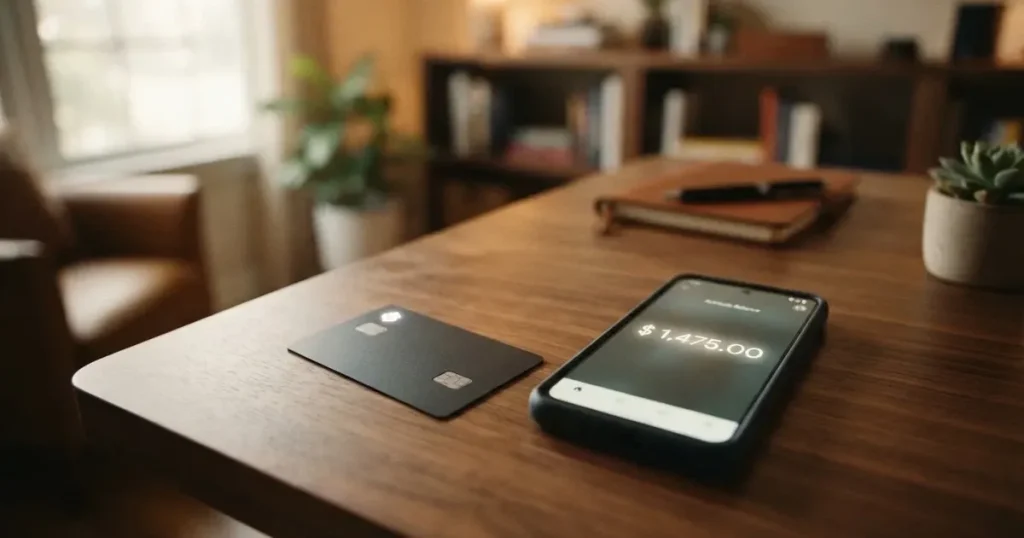
The Roqqu card is one of those products where the marketing is clear and the paperwork is not. On its public pages Roqqu presents itself as a platform for spending crypto directly, online and in stores, with a virtual card you can style yourself. What those pages do not give you is the part you actually need in order to decide: which countries are served, what the fees are, which coins and networks are supported, what daily limits apply, or who is legally behind the card. The general terms fill in some of that — eligibility depends on where you live, limits depend on a verification level and tier — but they do not name the tiers or the numbers. I scored it 4.5 out of 10 overall, and the reasons are mostly about missing information rather than bad behaviour.
The conditions described here are current as of October 28, 2026.
Before we go section by section, the short version of who this suits. Roqqu is built for exchange users who already hold stablecoins and want to spend them online. If that is you, the product logic is sound in principle: convert at the moment of purchase, pay from a balance you control, and the card itself never touches a bank account. If you are someone who wants a reliable everyday card, a physical card for a shop that hands you a terminal, or a published fee schedule you can plan a month from, this is not the card for you — at least not on the evidence its own pages provide.
Score card
| Criterion | Mark | Why |
|---|---|---|
| Who can get it | 5 / 10 | Countries are named only as “supported markets”; access depends on where you live and countries Roqqu operates in, and that list is not published |
| Cost | 5 / 10 | Card fees are not disclosed; the page’s /fees section contains none |
| Top-up options | 5 / 10 | “Spend your crypto directly” and direct conversions are described, but the coins and networks are not named; an earlier version mentioned stablecoins in the Roqqu wallet |
| Reliability and complaints | 4 / 10 | Roqqu Nigeria Limited appears in the terms, while the issuer and licences are not named; complaints about locked accounts and held assets appear on Trustpilot, rated 3.6 out of 5 across 104 reviews |
| Everyday use | 3 / 10 | A virtual card with customisable design; Apple Pay, Google Pay, a physical card and ATM access are not disclosed, though an earlier version was a prepaid Visa |
| Total | 4.5 / 10 | A working idea held back by missing disclosure |
Two things stand out from that table. The first is that not one of the weak marks is about a fee that is high — it is about fees and limits that are absent. The second is the everyday-use mark of 3: a virtual card without a published answer on Apple Pay, Google Pay, plastic or ATMs is a narrow instrument, and narrowing your instrument is exactly what someone with an ordinary bank card already has.
Will they give you the card?
Short answer: probably not without a conversation first, because the card does not publish a country list. Roqqu’s public pages say only “supported markets”. Its general terms add the useful detail: access depends on where you live and on the countries Roqqu operates in, and eligibility is reassessed on an ongoing basis rather than decided once. That last clause matters more than it looks. It means approval is not a promise you keep — Roqqu can reassess you later.
For someone reading this outside Nigeria, the practical question is whether your country of residence appears in that unpublished list. If it does not, the application will not get you a card; if it does, you will know soon enough. The terms also mean your eligibility is not only about where you live but about Roqqu’s own operating footprint, which is a moving thing.
Age is the one bright spot: the terms set 18 or the legal age in your country. That much is stated.
The company behind it is also worth naming here rather than later. The general terms name Roqqu Nigeria Limited. The site footer names Roqqu Technologies. The relationship between the two is not explained anywhere I could read, and the issuing institution and its licences are not named on the page. For a card, the issuer is not a detail — it is the entity your money sits with and the one you complain to.
How to get it
You register by giving Roqqu your legal name, a government ID and your date of birth, at 18 or the legal age. That much comes from the general terms, section 5 and section 3. The card’s own FAQ has a KYC answer, but that answer is not displayed on the page, so the specifics of the check are not something I can tell you.
The form of the card is described as “Virtual Flexibility” with customisable designs. Whether it sits on a card network, whether a physical version exists — the page does not say. An earlier check of the card described it as a prepaid Visa, which is a useful clue about its nature but not a current published fact.
What the terms do add is important and easy to miss. Your transaction limits depend on your verification level and your tier. Higher limits may require enhanced due diligence. So even after you are in, the size of your spending is a function of a tier system that the terms reference but do not describe — no tier names, no thresholds, no timings. If you need to move a large amount in a month, that ceiling is real and you cannot see it from outside.
Delivery of a physical card, if one exists at all, is not stated.
Fees: what a Roqqu payment really costs
Here is the honest version: the card’s costs are not published. The page links to a /fees section and that section lists no card fees. The general terms say transaction limits depend on your verification level and tier but give no figures. ATM fees, card issuance, monthly fees, conversion charges, foreign-exchange charges, and which currency the card holds in — none of it is stated. There are no tiers with values, and no named card currency.
| Item | What Roqqu’s public pages say |
|---|---|
| Card issuance | Not stated |
| Monthly or account fee | Not stated |
| Crypto-to-fiat conversion | Not stated |
| Foreign-exchange fee | Not stated |
| ATM withdrawal | Not stated |
| Daily transaction limit | Not stated |
| Monthly transaction limit | Not stated |
| Card currency | Not stated |
What does exist is a general terms statement that digital asset transactions cannot be reversed once broadcast (section 8.iii). That is about irreversibility, not price, but it is the one cost-adjacent rule that is written down.
Now let me walk through three everyday payments, because the missing fee table is easier to feel than to read. A coffee bought with a card, a subscription paid online, and a trip abroad. For all three, the same questions apply and the same answers are missing.
- A coffee in a local shop. Does the card charge anything to convert the crypto in your balance into the local currency at the till? Not stated. Is there a per-transaction minimum or a monthly cap beyond your tier limit? Not stated. Does the shop accept a virtual card in person? The page says spend “in-store”, but how a purely virtual card is presented at a physical terminal is not explained.
- A subscription online. Does recurring spending work, and does the merchant’s category or country trigger a block? The page says nothing about merchant categories or blocked codes. Note that many issuers block gambling categories (MCC 7995) by their own policy rather than by law, and that the blocked list varies by issuer — so a decline here would not be evidence of anything except that Roqqu’s policy is not public.
- Anything bought in a currency other than the card’s. The foreign-exchange fee and the card’s own currency are both unstated. Because a merchant can look up the card’s BIN and see which institution and country issued it, a card issued in one country can also look “foreign” to a shop in another, and some merchants decline prepaid or foreign BINs for exactly that reason. You would be spending without knowing either the fee or the acceptance profile.
My advice is blunt: treat the Roqqu card as one you cannot yet budget from. Before you rely on it, ask support directly for the numbers — the conversion rate and spread, any monthly or issuance fee, the ATM and foreign-exchange charges, the daily and monthly ceilings for your tier, and which currency the card holds. If those come back in writing, you can weigh the card. If they don’t, you are choosing it on the idea alone.
How to Top up the card
Roqqu’s own words: spend your crypto directly online or in-store, through what it calls “Direct Conversions”. That is the model — you do not pre-load a fiat balance, you convert and pay in one step. An earlier version of the product was described as stablecoins held in a Roqqu wallet and converted in real time at each purchase.
What is not listed is the part that decides whether this is usable: which coins and networks are supported. The page does not name them. That omission is heavier than it sounds, because sending the wrong token or using an unsupported network is a common way to lose funds. A stablecoin sent on a network the provider does not support, or to an address belonging to another network, can be lost or need manual support recovery with no guarantee of success.
Two more gaps here. How you fund the wallet in the first place — a bank transfer, a card, an exchange transfer — is not stated. And how you get money back out of a Roqqu card or account is not stated; the terms only note that digital asset transactions cannot be reversed once broadcast.
If you are the kind of person who already keeps stablecoins on a chain you understand and has checked that Roqqu accepts that chain, this section will be unremarkable. If you are not, the missing coin-and-network list is the first thing to get in writing.
Paying with it every day
Roqqu’s clearest strength is the day-to-day shape of a virtual card: it is issued inside the app, you can choose its design, and it is meant for online spending and in-store purchases. The App Store and Google Store badges are on the page. There is also a figure reading “4.25 Stores” that the page does not explain — I could not tie it to a store rating or a review count, so treat it as unconfirmed rather than a rating you can rely on.
Where it falls short is everything around that. Whether the card can be added to Apple Pay or Google Pay is not stated — and that is not a niche question, because a virtual card you cannot push into a phone wallet is a card you have to paste into every online form. Whether a physical card exists is not stated. Whether there is an ATM is not stated. Whether the card can be locked instantly, and whether spending limits can be set in-app, is not stated either, though those are the standard safeguards the category relies on.
There are no rewards disclosed. No cashback rate, no tier benefits, no referral terms.
On disputes, the position is unusually clear and, for a cardholder, arguably unflattering: Roqqu states it is a platform, not a counterparty, and that user disputes are resolved directly, with chargebacks appearing only in a fraud context (section 8.xii). A formal process is described at /complaint-handling-process-ng. What this means practically is that the familiar card-network dispute machinery — a chargeback ordered by an issuer, reason codes for fraud or goods not received — is not the route Roqqu describes for ordinary complaints. Your leverage is the platform’s own process.
Two further everyday-use facts from the wider category are worth carrying. A declined authorisation can leave a hold on your funds for several days, sometimes as long as seven. And address verification is mainly offered in the US, Canada and the UK and is generally unavailable for foreign-issued cards, which can cause declines at checkout for reasons that have nothing to do with your balance.
What can go wrong
The headline finding is a quiet one: I found no dated, official card-specific incidents on Roqqu’s public record, and no card-specific complaints in the user reports I read. That is better than many cards in this category can say.
But the user reports that do exist, on Trustpilot, are worth taking seriously because they describe the platform rather than one card. The recurring themes are missing deposits and withdrawals (October 2023 and October 2025), slow support (November 2023 and February 2026), locked accounts and held assets (November 2023 and June 2024), and identity-verification problems (December 2023 and January 2025). Trustpilot shows the business at 3.6 out of 5 across 104 reviews, of which two fall in the last twelve months, read on 21 October 2026 — though the same page also displays “4.0 Trust Pilot / 300”, a discrepancy the page does not explain. I did not find any dated card-related press events.
Three risks stand out for you specifically.
Counterparty risk. The terms name Roqqu Nigeria Limited; the footer names Roqqu Technologies; the issuing institution and licences are not named. If a card programme ever closes, the pattern is usually a notice period, then spending and loading stop, then users are asked to withdraw remaining balances. You would rather learn about that from a schedule than from a shutdown email.
Custody. Roqqu’s page lists cold storage, two-factor authentication, email and SMS transaction notifications, an “ISO 27001 certified” claim and an NDPR audit dated 2024 — real safeguards, all of them. But the custody model for the card’s funds is not stated. If your crypto sits with the platform rather than in a wallet you hold, you are trusting a custodian, and custodians fail: Mt. Gox (about US$350 million, 2011–2014), Coincheck (about US$400 million, 2018) and the Ronin Network (US$625 million, 2022) are the reference points. Transfers are typically irreversible, and a stolen key has no recovery path.
Identity and account freezes. The KYC/BVN complaints above are the pattern to watch. Under anti-money-laundering law, a business that cannot complete due diligence is required to refrain from the transaction or relationship and, where necessary, end it. That is why accounts get frozen pending documents. It is lawful, and it still leaves your balance stuck while it happens. Support is stated as 24/7, with legal notices to [email protected] — but slow support is itself one of the reported themes.
What to take instead
If the gap you care about is published fees and access rules, the alternatives below at least let you compare. If your problem is that an ordinary bank card is hard to get, that is a different conversation, and a card is not the only answer to it. Here is how the same questions look elsewhere, with the caveat that where a cell says not stated, the source page simply does not say.
| Card | Score | Who | Card | Cost | Funding | Rewards |
|---|---|---|---|---|---|---|
| Young Card | 5.7 / 10 | Not stated | Not stated officially | Not stated officially | Not stated for the card | Cashback in YNG by tier: Essential 0.1%, Gold 1.8%, Platinum 3.6% |
| MSX | 6.4 / 10 | Not stated on an official page | Not stated officially | Not stated | Not stated | Not stated |
| Bybit Card | 6.0 / 10 | Argentina, AIFC (Kazakhstan), Georgia, Kazakhstan, Australia, Mexico, Brazil, Peru, Asia Pacific; not for EEA customers | Virtual and physical; networks per region (Mastercard or Visa, prepaid or credit) | Virtual issuance free in all regions; physical varies, e.g. Australia 29.99 USD, Georgia 29.99 USDT; no annual fees | Draws on Funding Account; crypto sold at the One-Click Sell rate plus a conversion fee | Cashback from 2026-10-05 for crypto-funded payments only; tiers from Base 2% to Infinite 10% |
Bybit Card is the one of the three with genuinely published numbers, and they are worth reading as a benchmark for what disclosure looks like. It converts crypto at a stated 0.9% over the One-Click Sell rate in most regions (0.5% in Argentina), charges an FX fee of 2% on top of the network rate in some markets, lists physical card issuance prices per country, and publishes a reward ladder from 2% to 10% with monthly caps — though only crypto-funded transactions earn from 5 October 2026, and fiat-funded spending does not. It also states its exclusions plainly: the product is not meant for European Economic Area customers, and participation is strictly prohibited. A card that tells you where it will not work is more useful than one that will not say.
MSX, at 6.4, I could not evaluate on cost, access or funding because those pages are not stated. Young Card, at 5.7, is the only one of the three with a rewards structure disclosed — cashback in YNG tokens, ranging from 0.1% to 3.6% by Club tier, with Bronze and Silver not stated.
My honest comparison: if you want a crypto card whose costs and limits you can read before you commit, Bybit Card is the one to study first, subject to its region list and its EEA exclusion. Young Card is worth a look if the YNG cashback matters to you. MSX I would not decide on from what is published.
Who I would recommend it to
I would recommend Roqqu to someone who already uses it as an exchange, already holds stablecoins, and wants to spend them online without moving money to a bank first — and who is prepared to accept that the fee schedule, the country list, the coin list and the wallet support are all things they must ask for rather than read. In that narrow band the product is coherent: convert at the point of sale, pay from a crypto balance, style your virtual card.
I would not recommend it as your primary or only card. A virtual card with no published answer on Apple Pay, Google Pay, plastic, ATMs or spending limits, from a platform whose user reports mention locked accounts and held assets, is not something to route your salary or your rent through. And I would not recommend it to anyone planning a purchase in a foreign currency, because the FX fee and the card’s own currency are both unstated and a merchant can decline a foreign-issued BIN regardless.
Before you apply, put four questions in writing and read the answers. What is the conversion fee and spread? What is my daily and monthly limit at my tier, and what are the tier names? Which coins and networks can I fund with? Who is the issuing institution and what licence does it hold? If the answers come back clearly, Roqqu may suit you. If they do not, one of the alternatives above will at least give you numbers.
Frequently asked questions
What is Roqqu card?
The Roqqu card is a virtual payment card tied to a crypto platform. Roqqu describes it as “Virtual Flexibility” with customisable card designs, and says you can spend your crypto directly online or in-store through “Direct Conversions”. An earlier version of the product was described as a prepaid Visa. The current page does not state the card network or whether a physical version exists, so the exact form of the card is less clear than the idea behind it.
How does the Roqqu card work?
You hold crypto, and when you pay, it is converted and the card spends the resulting balance. Roqqu’s language is “spend your crypto directly online or in-store” with “Direct Conversions”; an earlier description had stablecoins held in a Roqqu wallet and converted in real time at each purchase. Unlike a prepaid card model where you load a balance first, this converts at the moment of payment. The coins and networks supported are not named on the page.
Is Roqqu a bank?
The public pages do not present Roqqu as a bank. The general terms name Roqqu Nigeria Limited and the site footer names Roqqu Technologies, but the relationship between the two is not explained. The issuing institution behind the card and its licences are not named. In the wider category, Visa and Mastercard do not issue crypto cards themselves — they license issuers — so the entity holding your money is normally the issuer, and here that issuer is not disclosed.
Who owns Roqqu?
Ownership is not stated on the pages I could read. What the site gives you are two company names — Roqqu Nigeria Limited in the general terms and Roqqu Technologies in the footer — with no explanation of how they relate. If ownership or the issuing licence matters to you, that is a question to put to support before you commit funds, and the answer you want is a named entity and a licence number.
Can I get the Roqqu card in my country?
You cannot tell from the public pages, because Roqqu names only “supported markets” and does not publish the list. The general terms say access depends on where you live and on the countries Roqqu operates in, and that eligibility is reassessed on an ongoing basis. If you apply and your country is outside the operating footprint, you will simply not get one. My advice is to ask support for the list before you upload identity documents.
Does the Roqqu card require KYC?
Yes, the general terms make verification part of registration: you provide your legal name, a government ID and your date of birth, and must be 18 or the legal age in your country. The card’s own FAQ has a KYC answer, but it is not displayed on the page, so the specifics are not something I can report. The terms also say limits depend on your verification level and that higher limits may need enhanced due diligence — so the check is not a one-off gate but something that follows you.
How much does the Roqqu card cost?
The public pages do not say. The page links to a /fees section and that section lists no card fees. Issuance, any monthly fee, the crypto conversion charge, the foreign-exchange fee, ATM fees and the card’s own currency are all unstated, and the terms mention tiers affecting limits without listing them. This is the single biggest gap in the product’s disclosure, and it is the first thing you should ask support in writing.
What are the limits on a Roqqu card?
The general terms say transaction limits depend on your verification level and your tier, and that higher limits may require enhanced due diligence — but no figures, no tier names and no timings are published. So the answer is: there are limits, they are personal to your tier, and you cannot learn them in advance. If you intend to make large purchases, get the daily and monthly ceilings for your exact tier in writing before you rely on the card.
Is Roqqu card safe?
Define safe two ways. The platform’s own security claims are real: cold storage, two-factor authentication, email and SMS transaction notifications, an “ISO 27001 certified” claim and an NDPR audit dated 2024. But the custody model for card funds is not stated, and crypto transfers are typically irreversible with no recovery path. Separately, Roqqu describes itself as a platform, not a counterparty, with disputes resolved directly rather than through the card network’s chargeback machinery.
How do I add the Roqqu card to Apple Wallet?
The pages do not say. Whether the card works with Apple Pay or Google Pay is not stated anywhere I could read, and that matters more than it sounds: a virtual card you cannot push into a phone wallet is one you have to paste into every checkout form. If phone-wallet support is a requirement rather than a nicety, ask support directly, and consider an alternative that documents it.
How do I withdraw money from Roqqu?
The pages do not say how to withdraw money from Roqqu. There is no stated withdrawal method, fee or timing for the card or the wallet, and the terms only note that digital asset transactions cannot be reversed once broadcast. Treat the withdrawal path as unconfirmed until support gives you the method, the fee and the expected time — especially if you might need to move funds out quickly.
Choosing an exchange card – cryptocardadvisor
Content created by the «cryptocardadvisor» team