
MiniPay Card Review: A Clean, Fee-Free Way to Spend Stablecoins — If You Never Need Plastic
 Available in US
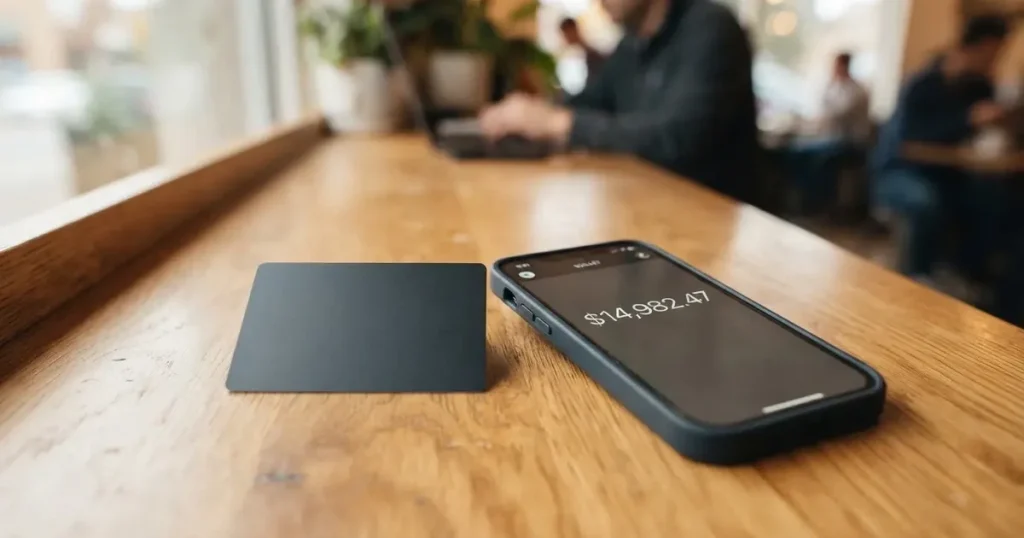
The MiniPay card is a digital Visa card that spends straight from your own self-custodial crypto wallet. There is no issuance fee, no monthly fee, and no card fee. What you give up is the plastic: there is no physical card, only Apple Pay and Google Pay. Whether that trade makes sense depends almost entirely on where you are and how you already bank. Here is what I found going through the card’s terms, its app and the fine print behind the headline numbers.
*Conditions and figures are current as of October 28, 2026.*
Verdict: 7.4 out of 10
I scored MiniPay 7.4 / 10. It is one of the cleaner crypto cards in the category, and the reason is not hype — it is the absence of the usual layers of charges. But it is a digital-only product in selected markets, and that single fact removes it from consideration for a lot of people.
Here is how the score breaks down, criterion by criterion:
| Criterion | Mark | Why |
|---|---|---|
| Who can get it | 7 / 10 | “Selected markets” in the EEA, Africa, Latin America and South-East Asia; the sign-up form lists around 80 countries plus an “Other” option |
| Cost | 9 / 10 | No issuance fee and no monthly fee, $0 deposit fees, no card fee; Visa exchange rates may apply to non-USD purchases |
| Top-up options | 7 / 10 | Spends directly from a self-custodial wallet; starting data lists USDT, USDC and cUSD on Celo, not itemised on the page |
| Reliability and complaints | 8 / 10 | Issuers named — Monavate Ltd (FCA, FRN 901097) and UAB Monavate (Lithuania) — under a Visa Europe licence; programme manager Gnosis Pay sits at 2.1 from 24 reviews on Trustpilot |
| Everyday use | 5 / 10 | Digital Visa only, Apple Pay and Google Pay supported, no physical card, no ATM coverage |
| Total | 7.4 / 10 |
Who this suits: people who already hold stablecoins, who keep them in a self-custody wallet, and who want to spend them without paying to open, hold or use the card. If you pay in dollars most of the time and only occasionally touch crypto, you will get little from this.
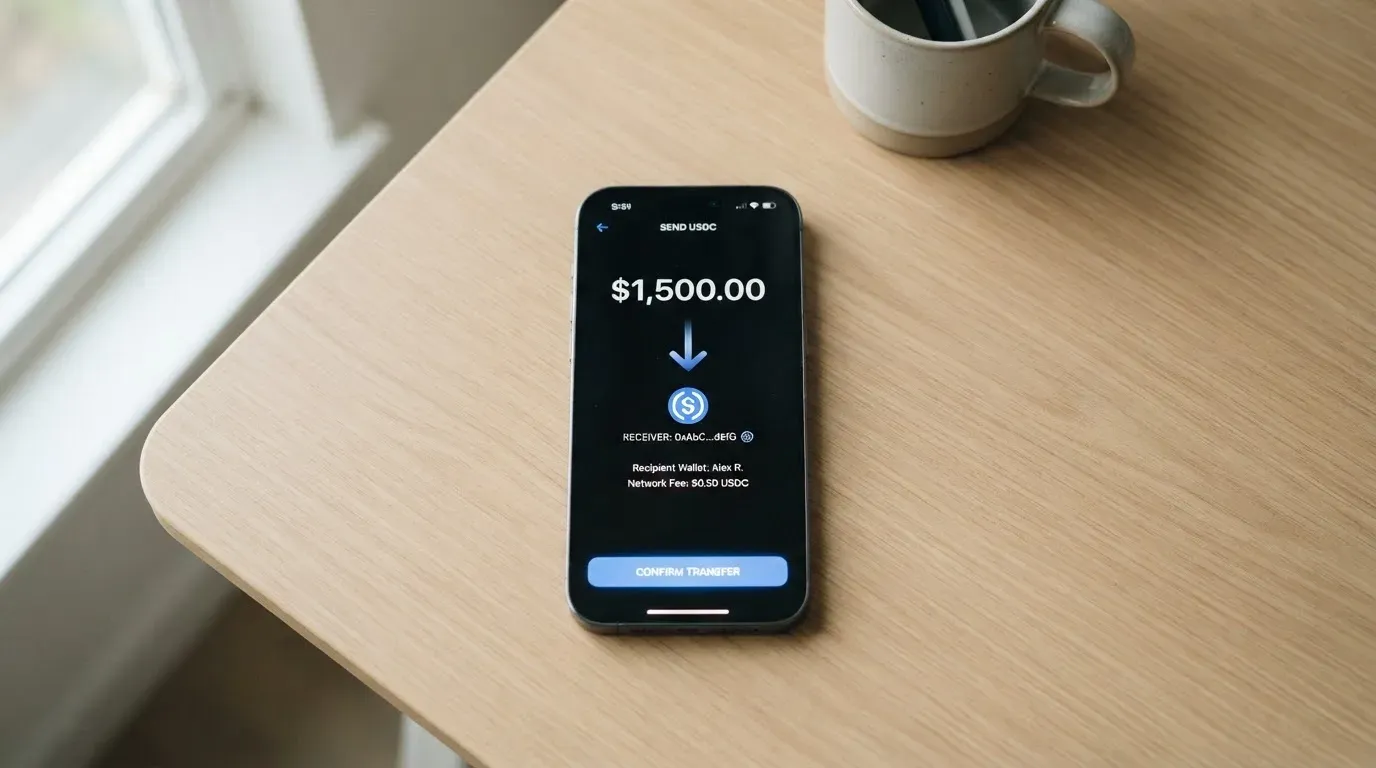
Who this does not suit: anyone who needs a physical card in the post, anyone who withdraws cash at an ATM, anyone outside the supported markets, and anyone who wants to spend from an exchange balance held in custody rather than from their own wallet. There is also no interest, no credit line and no lending — this is a spending tool, not a bank account.
Will they give you the card?
MiniPay describes its availability as “selected markets” in the EEA, Africa, Latin America and South-East Asia. No country list is published. The sign-up form lists around 80 countries plus an “Other” option, and the app’s own wording is the practical test: “If your country is supported, onboarding appears in the card tab.” So the honest answer to “can I get MiniPay in my country?” is — check the app, because the marketing copy will not tell you.
What the card does not publish is the basis on which it decides. Whether it looks at your citizenship, your residence, or both is not stated. That matters more than it sounds. The general rule in this industry is that nationality is screened separately from residence, because sanctions lists and issuer risk policy are usually applied to citizenship and country of birth as well as to your address. If you hold a passport from one country and live in another, you cannot tell from the public pages which of the two decides your application.
There is no country list to argue with, no published appeal process, and no stated turnaround. What I can tell you is that the app is the whole gate: you either find the card tab and onboarding begins, or you do not.
How to get it
First, identity verification. MiniPay’s own words: “Identity verification depends on your country and the card program’s requirements. The app walks you through it.” Which documents you need, whether proof of address is required, what age threshold applies — none of that is stated. Do not assume your country’s rules are the rules you will get.
Second, the card itself. It is digital only, with no physical card to be delivered. It is a Visa card, and settlement happens in USD. Because it is digital-only, there is no shipping step and nothing to wait for in the post.
There are no stated tiers, no verification levels to climb, and no published difference between one kind of customer and another. The whole onboarding is: install the app, see whether your country is in it, complete whatever verification the app asks for, and the card appears in your wallet. That is genuinely all there is to it — which is either refreshingly simple or frustratingly vague, depending on what you hoped to read.
Fees: what it really costs
This is the strongest part of the card. There is no issuance fee, no monthly fee, and no card fee. Deposit fees from other wallets are $0. What remains is the currency question, and it deserves more than one sentence.
| Fee or limit | What MiniPay says |
|---|---|
| Issuance fee | None |
| Monthly fee | None |
| Deposit fees from external wallets | $0 |
| Card fee | None |
| Non-USD purchase conversion | Visa exchange rates may apply; MiniPay describes it only as a “low nominal FX fee” in the Gnosis Pay blog, with no amount given |
| ATM withdrawal | The MiniPay FAQ does not cover ATM at all; the Gnosis Pay blog mentions “an ATM withdrawal fee” without an amount. MiniPay states the card is digital-only, so this is largely theoretical |
| Spending limits | “Spending limits may apply. You can view them in the app” — no amounts are published |
| Currency | Settlement in USD; non-USD purchases subject to Visa exchange rates |
| Tiers | A single tier; none described |
Now, three everyday payments, and which of those lines actually bites.
A coffee in your own country, paid with Apple Pay. No issuance fee, no monthly fee, no card fee, no conversion if the price is in your local currency. This is the card at its best — you tap and the stablecoins you already hold are gone. The only cost is whatever the network charged for the on-chain transfer that funded the wallet, which the blockchain sets, not MiniPay.
A subscription priced in dollars while you live in a euro country. Here the Visa exchange rate line applies. MiniPay does not publish a percentage of its own, so you are taking the network’s rate on trust, plus whatever “low nominal FX fee” means in practice. If you cannot find the figure in the app before you rely on it, treat that as a reason to hold off.
Anything at all involving cash. There is no physical card and no stated ATM support, so this is the category where MiniPay simply is not an option. If your week includes a cash withdrawal, keep a second card.
One more thing about the card’s stated limit of “spending limits may apply”: that phrase is doing a lot of work. The limits exist and are visible only inside the app. Before you rely on the card for anything large, open the app and read them, because nobody outside the company knows what they are.
How to top it up
The model here is the interesting part, and it is worth understanding before you sign up. MiniPay spends directly from your self-custodial wallet balance. Your crypto does not sit with a platform waiting for you to spend it; it stays in a wallet you control, and it moves at the moment you pay. The card is a key to that wallet, not a pot of money held for you.
You top up from the MiniPay balance or from any wallet, and funds are spendable on arrival. Deposit fees from external wallets are $0. On starting data, the coins and networks are USDT, USDC and cUSD on Celo — but the page does not itemise them, so treat that as a starting point rather than a guarantee. Who pays the network fee, and what the minimum top-up is, is not stated. That matters: on-chain transfers cost the blockchain, not MiniPay, and a network fee paid in the wrong token is a fee you do not get back.
Getting money back out is a different process from spending it. Debit card purchases draw only on your available balance, so the card cannot overdraw. Turning a wallet balance into local currency means going through third-party ramp partners, and the fees for that are not stated. Neither is what happens to any remaining balance if you close the account.
The one piece of general knowledge that belongs here: blockchain transfers are irreversible. A deposit sent on a network the provider does not support, or to an address belonging to a different network, can be lost or need manual support recovery with no guarantee. Before your first transfer, confirm the network in the app against the network your exchange or wallet uses.
Paying with it every day
Everyday use is where this card scored lowest — 5 out of 10 — and the reason is structural, not a flaw in the software. It is a digital Visa card. There is no physical card. Apple Pay and Google Pay are both supported, and MiniPay says adding the card takes under a minute. If your phone is your wallet, that is fine. If you need a card that survives a dead phone, a lost phone or a shop that wants to see plastic, it does not exist here.
Rewards are the other headline. Up to 5% on qualifying purchases, paid in digital gold (Tether Gold) and stablecoins. The mechanics have edges worth knowing: the reward is paid monthly, it can take 30 to 60 days to arrive, and pending, refunded, excluded-category or over-cap transactions may not qualify. Terms and conditions apply. That is a real cashback rate on paper, but the exclusions are broad enough that I would check what actually lands before planning around it.
The app is the MiniPay wallet app, from Opera. I did not read store ratings — the store pages did not load for me, so treat any rating you see elsewhere as unverified by me.
When something goes wrong, the route is the app: freeze the card, review the activity, contact support. Refunds usually go back to the original card, with timing that depends on the merchant and the issuer. Support is offered through the app, with an email channel for a lost phone; the languages and hours are not stated.
Blocked merchant categories are not stated, though the cashback terms refer to “excluded-category” transactions without naming them. If you plan to spend in a specific sector, that gap is worth raising before you rely on it.
What can go wrong
Start with the structure, because it is the real risk rather than any particular incident. A card payment passes through several parties. Visa or Mastercard routes the messages and sets the rules. The issuer — the bank or e-money institution licensed to issue — holds the card programme. The crypto brand is often just a programme manager and front end. MiniPay sits in that last role: the wallet provider is Blueboard Limited, part of Opera; the programme manager is Gnosis Pay, which says plainly that it is not a bank or a regulated payment provider; the issuers are Monavate Ltd, an England and Wales e-money institution regulated by the FCA with FRN 901097, and UAB Monavate, authorised by the Bank of Lithuania under LB002139; and the card is issued under licence from Visa Europe Limited.
The named issuers are a genuine positive, and I want to be clear about it. So is the honest disclaimer. What it also means is that your money’s legal path does not run through the brand you downloaded.
On the self-custody side: your balance stays in your wallet until the moment you pay. That is the strongest privacy and control claim the card makes, and it is real. It also means sole responsibility. A seed phrase — typically 12 to 24 words — is an unencrypted form of the private key, and anyone who obtains it can restore the wallet and spend everything. Transfers are irreversible, and a stolen key has no built-in recovery: the network cannot freeze or return funds. No safety here is guaranteed by anyone.
The counterweight is that freezes are instant. You can freeze and unfreeze the card in the app, and for a lost phone there is a documented procedure: email the address in the FAQ with the subject “Lost Phone – Freeze Card”. Two-factor authentication is not stated, so do not assume it is on — check and turn it on yourself if it exists.
Now the record. I found no official incident involving MiniPay. I also found no MiniPay-specific review page. What does exist is the programme manager: on Trustpilot, the Swedish page for Gnosis Pay shows 2.1 from 24 reviews. The complaints mention support, KYC handled by a third party, and a slow fraud dispute that one user reported as unresolved. That last one is a user report, not an adjudicated finding, and the dates are not shown. Read it as a signal about where friction tends to appear: at identity checks and at disputes.
Set that against the category. Custodial platforms have a real history of failure — Mt. Gox (about US$350 million reported stolen, 2011–2014), Coincheck (about US$400 million, 2018), Ronin Network (US$625 million, 2022) — while crypto card programmes have been shut down too: Visa terminated its global agreements with FTX on 13 November 2022, and WaveCrest, a Visa issuer that supplied crypto card brands, was suspended by Visa in Europe in 2018, closing all its Visa programmes. Programme closures typically mean a notice period, then spending and loading stop, then you are asked to withdraw what is left. I did not find any MiniPay-specific closure, and I am not predicting one — but I have seen too many people learn this lesson late to leave the possibility unmentioned.
One more category fact about how these cards behave abroad, because it explains a support ticket you may not have expected. Merchants can look up the BIN to see which institution and country issued a card, and may apply extra scrutiny if the issuer country differs from your billing address. That is why a card issued in one country can look foreign to a shop in another. Some merchants decline prepaid or foreign BINs for exactly this reason, and Address Verification Service, which compares the numeric parts of your billing address with issuer records, is mainly offered in the US, Canada and the UK and is generally unavailable for foreign-issued cards — which can cause declines. A declined authorisation may also leave a hold on funds that can remain for several days, typically up to 7.
The launch itself is recent: Gnosis Pay announced the MiniPay Visa card in a blog post dated June 23, 2026 (page metadata September 7, 2026). There is not yet a long public track record, which is another way of saying the 2.1 rating is from a small sample.
What to take instead
If MiniPay is not right for you — no supported country, you need plastic, or you hold your crypto with an exchange rather than in your own wallet — there are three comparable cards. Here is where they stand against each other and against MiniPay.
| Card | Score | Card type | Cost headline | Notable difference |
|---|---|---|---|---|
| MiniPay | 7.4 / 10 | Digital-only Visa, USD settlement | No issuance fee, no monthly fee, no card fee | Spends from your own self-custody wallet |
| MetaMask | 7.1 / 10 | Mastercard; virtual first, metal optional | Virtual free, no annual or maintenance fee; metal $199/year | Cashback in mUSD; virtual 1%, metal headline 3% limited to the first $10,000 spent then 1% |
| KAST | 6.1 / 10 | Visa, virtual and physical, up to 10 per user | Annual membership: Standard $0, Premium 1,000 USD/year, Private 10,000 USD/year | Non-USD FX fee 0.5%–1.75% depending on residence country, transaction country and card programme |
| TokenPocket | 5.8 / 10 | Visa/Mastercard debit, runs on Arbitrum | “Apart from these, TP Card does not charge any additional fees” | 1% fee on depositing cryptocurrency into the card, later refunded via rewards and reduced transaction fees |
MetaMask is the closest thing to a genuine alternative, and the comparison is instructive. It signs up in 45 listed countries/territories (Andorra, Argentina, Brazil, Canada, Mexico, Germany, France, Spain, Uruguay among them) with other regions on a waitlist, requires proof of residency, and US/UK sign-ups are temporarily closed per its FAQ. It offers a physical option — virtual card issued instantly, metal pre-orderable in the app, one card per user — and its issuer is also Monavate. The catch: while ineligible regions limit sign-ups, not spending, and its cost story is honest — a minimal per-transaction fee with the amount on a linked table, no additional MetaMask fees, no foreign transaction fee, Mastercard rate used. Tokens are named as mUSD, wETH, EURe, GBPe, USDC and USDT (the page says nine) across Linea, Base, Monad and Solana, and Solana-only wallets cannot withdraw credit.
KAST buys you a lot of card for the money, if you are willing to pay. Residence-based eligibility is shown at KYC, and its treatment of citizenship is unusually explicit — living in a supported country is not enough if your ID is from a restricted region, dual citizens with a supported-country ID may pass, only your own ID is accepted, and a VPN does not bypass any of it. In exchange you get up to 10 cards (Visa Platinum Standard, Visa Infinite metal Premium, Visa Infinite gold-plated Private, plus Pengu, Solana and Bitcoin designs), USD cashback of 1.5% / 2% / 3% on the first 2,000 / 10,000 / 40,000 USD per month by tier, and KAST Points of none / +1% / +2% of eligible spend. The costs are where it bites: 1,000 USD/year for Premium, 10,000 USD/year for Private, a 40 USD delivery fee on the Standard physical card, 1 USD/month inactivity fee after 12 months, a 0.50 USD declined-transaction fee, a 0.10 USD flat fee on non-USD transactions under 25 USD, and a 1 USD charge for an extra virtual card. Top-ups and USD card spends are 0%, and stablecoin deposits convert 1:1 with a 0% spread. One inconsistency to note: the terms say acceptable tokens are “currently USDT and USDC” while the marketing names USDT, USDC, PYUSD and RLUSD.
TokenPocket sits at the bottom of this group at 5.8. It is a Mastercard/Visa debit running on Arbitrum, with Fiat24 cards virtual, balances in EUR24 and USD24, Visa debit for a list of European countries/territories (Germany, France, Spain, Switzerland among them) and Mastercard for Australia, Canada, Hong Kong, Japan, Taiwan, New Zealand, Singapore, South Korea, the UK and others, with the Americas “planned for Q2 2025”. The 1% deposit fee is refunded later through rewards and reduced transaction fees, and an NFT creation fee is partly covered by TokenPocket with the user paying “a small portion”. Coins and networks are not listed in its FAQ.
The pattern across all four is worth naming: with MetaMask and KAST the fees move from entry cost to transaction or FX cost, while MiniPay’s costs are concentrated almost entirely in currency conversion. That is precisely the trade you are making when you pick it.
Who I would recommend it to
I would recommend MiniPay to someone who has already decided to hold stablecoins, keeps them in a self-custody wallet, and spends mostly in their own country from their phone. For that person the card is close to ideal: no fee to open, no fee to hold, no fee to tap, and the balance never leaves their control.
I would not recommend it as your only card. No physical card, no ATM, no published limits, and no long public history. Keep something else for cash and for the days your phone is not to hand.
I would also hold off if you are outside the EEA, Africa, Latin America or South-East Asia and cannot confirm support in the app, or if you need to know exactly what your onboarding will demand before you start — that detail is not published, and you will only find out by trying.
And a last thing, because it costs nothing to know: if the funds come from crypto, spending them may be a taxable disposal. The IRS treats digital assets as property, so exchanging them for goods, services, dollars or other digital assets generally produces a taxable gain or loss. For personal holdings the result is a capital gain or loss, short-term if held a year or less, measured in local fiat currency at fair market value on the date of the transaction — which means each card payment funded from crypto may be a separate disposal. That is a general point about how these are treated, not advice about your situation; your own rules depend on where you live and on the token, and a professional is the right person for your circumstances.
Frequently asked questions
What is MiniPay card?
MiniPay is a digital Visa card that spends directly from your own self-custodial crypto wallet. It is issued by Monavate Ltd (an FCA-regulated e-money institution, FRN 901097) and UAB Monavate (Lithuania, LB002139) under licence from Visa Europe. The wallet provider is Blueboard Limited, part of Opera, and the programme manager is Gnosis Pay. There is no physical card — only Apple Pay and Google Pay.
How does MiniPay card work?
Your crypto stays in your wallet until the moment you pay, and the card spends directly from that balance. It works like a prepaid card rather than a debit card linked to a bank account, so it can only draw on what is available and cannot overdraw. Settlement happens in USD. Apple Pay and Google Pay are both supported, and adding the card takes under a minute.
Is MiniPay a bank?
No. Gnosis Pay, the programme manager, states that it is not a bank or a regulated payment provider. The actual issuer is an e-money institution: Monavate Ltd in England and Wales, FCA-regulated under FRN 901097, and UAB Monavate, authorised by the Bank of Lithuania under LB002139. E-money funds are safeguarded but are not the same as bank deposits and may not be covered by deposit guarantee schemes.
Who owns MiniPay?
Ownership is split across several companies rather than sitting with one brand. Blueboard Limited, part of Opera, provides the wallet. Gnosis Pay manages the card programme. The issuers are Monavate Ltd and UAB Monavate. The card runs under a Visa Europe licence. The launch was announced by Gnosis Pay in a blog post dated June 23, 2026.
Can I use MiniPay card in my country?
Possibly, but you must check. MiniPay describes availability as “selected markets” in the EEA, Africa, Latin America and South-East Asia, and publishes no country list. The sign-up form lists around 80 countries plus an “Other” option. The app is the real test: if your country is supported, onboarding appears in the card tab. Whether eligibility depends on citizenship or residence is not stated.
How do I get a MiniPay card?
Install the MiniPay wallet app from Opera and look for the card tab. If your country is supported, onboarding appears there and the app walks you through identity verification, which depends on your country and the card programme’s requirements. There is no physical card to wait for — the card is digital and appears in your wallet once approved.
Does MiniPay card require KYC?
Yes. Identity verification depends on your country and the card programme’s requirements, and the app walks you through it. The specific documents, whether proof of address is needed, the age threshold and the verification levels are not stated. In the EU this typically covers name, address, date of birth, nationality, identity documents, a sanctions check and politically exposed person screening.
How do I top up MiniPay card?
You top up from the MiniPay balance or from any wallet, and funds are spendable on arrival. Deposit fees from external wallets are $0. Starting data lists USDT, USDC and cUSD on the Celo network, though the page does not itemise this. Who pays the network fee and the minimum top-up are not stated — and remember that blockchain transfers are irreversible if sent on the wrong network.
Is MiniPay card free?
There is no issuance fee and no monthly fee, and MiniPay charges no card fee. Deposit fees from other wallets are $0. The catch is currency: “MiniPay charges no card fee, but Visa exchange rates may apply to non-USD purchases”, and the Gnosis Pay blog refers only to a “low nominal FX fee” without giving an amount. ATM fees are not covered by MiniPay’s FAQ.
Is MiniPay card safe and worth it?
Handle it with normal care, not extra confidence. The balance stays in your own wallet until you pay, which is the strong part — but with self-custody, a lost seed phrase means lost funds with no recovery, and transfers cannot be reversed. You can freeze the card instantly in the app, two-factor authentication is not stated, and support complaints on Gnosis Pay’s Trustpilot page centre on support, third-party KYC and a slow fraud dispute.
Choosing a wallet card – cryptocardadvisor
Content created by the «cryptocardadvisor» team