
A digital Mastercard that spends straight from a USDC smart-contract balance — free to open, but thin on the everyday details
 Available in US

The Immersve card is a digital Mastercard that draws on a balance you hold as USDC in a smart contract, not on a bank account. On paper that is an unusually clean offer: no charge for the application, no charge for the card, and money you already hold in stablecoins becomes everyday spending money without a bank in the middle. That clean part is real. The thin part is everything around it — the public pages do not tell you the monthly fee, the limits, the ATM terms, or even whether a physical card exists. I scored it 7.1 out of 10, and I want to be precise about which half of that number is strong and which half is not.
Conditions described here are current as of October 28, 2026.
Verdict: 7.1 out of 10, and the split inside that number matters
The score is not a shrug. Immersve does two things unusually well — it is cheap to open, and it is built for a specific, sensible user — and one thing badly: it tells you almost nothing about the part of the card you actually live with.
| Criterion | Mark | Why, in short |
|---|---|---|
| Who can get it | 7 / 10 | Onboarding is supported in 38 countries across the EU, Switzerland, the UK, Australia, New Zealand and Latin America; the US is only “Q1 2026” — a plan, not a confirmed launch |
| Cost | 8 / 10 | “No charges for application or issuance”, and the service is “at no cost to either integrated dApps or to cardholders”; blockchain fees on funding and a currency conversion fee “may apply” are the caveats |
| Top-up options | 8 / 10 | USDC into a smart contract on Algorand, Arbitrum, Base, Ethereum and Polygon PoS, converted to fiat at authorisation — but no other coin is named |
| Reliability and complaints | 7 / 10 | AFSL 545925 in Australia, NZ FSP1003031, contract audits by Hashlock, Red4Sec and Coinspect, and no complaints found; against that, no issuer is named on the site |
| Everyday use | 5 / 10 | A digital Mastercard that works with Apple Pay and Google Pay — but the app, plastic card and ATM story are all unaddressed |
Who this suits. If you already keep your own keys, you hold USDC rather than something exotic, you are in Europe or Australasia, and you want to spend that balance without first converting it into euros or dollars in your own bank, this card is built for you. It is a genuinely good fit for that person.
Who it does not suit. If you need a physical card in your wallet, cash from an ATM, a printed statement, a credit line, or a support team that answers in your language on your schedule — the public pages do not promise any of those. If you are in the United States, you are reading about a plan, not a product.
Will they give you the card?
Onboarding is supported in 38 countries, and that list is long enough to be useful rather than token: Argentina, Australia, Austria, Belgium, Brazil, Bulgaria, Chile, Colombia, Croatia, Cyprus, Czech Republic, Denmark, Estonia, Finland, France, Germany, Greece, Guatemala, Hungary, Ireland, Italy, Latvia, Lithuania, Luxembourg, Malta, Mexico, Netherlands, New Zealand, Peru, Poland, Portugal, Romania, Slovakia, Slovenia, Spain, Sweden, Switzerland and the UK.
The coverage is interesting geographically: the EU bloc is nearly complete, Switzerland and the UK are in, and so are Australia, New Zealand and a Latin American group (Argentina, Brazil, Chile, Colombia, Guatemala, Mexico, Peru). That is the shape of a company that started in Australasia and is working through Europe.
One line on the page needs care. The site says the United States is coming “with United States in Q1 2026, the MENA region to follow shortly after”. I read that as a plan, not a launch, and I would not apply for anything on the strength of it. The company’s own regulatory page lists regulation “in progress” in Europe, Hong Kong, Singapore, the UAE, the UK and the USA — which is consistent with a company expanding into those places rather than already operating in all of them.
So the honest answer to “can I get it in my country” is: probably, if you are in the list above; ask your partner app rather than the Immersve site if you are somewhere adjacent, because the answer lives where you already hold your crypto.
How to get it
There is no standalone Immersve sign-up flow to describe, and that is the single most important practical fact about applying. Immersve cards are surfaced through partner apps and dApps — the wallet you already use is the front door. The Pera Card, for example, is delivered inside the Pera wallet.
That design has a clear logic: the card is a spending front end for a wallet you hold yourself, and Immersve supplies the issuing and compliance machinery behind it. It also means the sequence is: get the partner app, find the card inside it, create the card.
Verification. “Verify your identity” is part of card creation — the card is not issued anonymously, and anyone reading this hoping to skip KYC should stop reading here. What the card’s public pages do not state is which documents are needed, whether proof of address is required, or what age threshold applies. Those details live in the partner app’s flow, not on the Immersve pages. The named identity partners are FrankieOne, Sumsub and Chainalysis.
What you actually receive. An Immersve Mastercard — a multi-use digital card you can use online or in stores once it is in Apple Pay or Google Pay. Whether a physical or metal card is offered to cardholders is not stated, and neither is the currency the card is denominated in.
One detail worth planning around. Nothing on the public pages says how the card reaches you, because there is no delivery step for a digital card — you add it to your phone. But if you were counting on plastic in the post, that expectation needs resetting now.
Fees and costs: the cheap part
Start with the good news, because it is genuinely good. There are no charges for the application or for issuance, and the pricing page puts it more broadly: the service is provided “at no cost to either integrated dApps or to cardholders”. No monthly fee, no annual fee. For a card aimed at people who would otherwise pay to hold euros or dollars idle in a bank account, that is a real advantage, not marketing.

| Fee or limit | What the card states |
|---|---|
| Application | No charge |
| Issuance | No charge |
| Monthly or annual fee | Not stated; the service is described as free to cardholders |
| Conversion | “A foreign currency conversion fee may apply to foreign currency transactions”; the rate is not stated |
| Funding | Blockchain transaction fees apply when funding via the smart contract |
| ATM | Not stated |
| Daily and monthly limits | Not stated |
| Tiers | Not stated |
| Card currency | Not stated |
What an ordinary day actually costs you
Three everyday payments, so this stops being abstract.
A coffee in your own country. Say you are in Germany, the card is denominated in euros, and your USDC converts at the moment of payment. The blockchain fee is already sunk — you paid it when you funded the smart contract. The currency conversion fee does not bite, because the payment is not a foreign currency transaction. This is the cheapest case, and it is the case the card is designed around.
A subscription priced in dollars, paid from a euro balance. Here the foreign currency conversion fee applies, and the card does not state the rate. This is where a card with an unstated FX markup quietly costs you money on every payment, so it is worth asking the partner app for the number before you subscribe to anything recurring.
A holiday purchase in a third currency. The same conversion fee applies, and now you have stacked a network fee you paid at funding time on top of an FX cost you cannot see in advance. Card network rules add another layer: some merchants apply extra scrutiny when the issuer country differs from your billing address, and some decline prepaid or foreign-issued cards outright because the BIN lookup shows what they are. Nothing about that is Immersve-specific, but it is what “use it abroad” runs into.
The missing numbers are the ones that decide whether the card is cheap for you. FX markup, ATM terms and daily limits are exactly what a user checks before committing, and all three are absent from the public pages.
Top up options: one coin, several networks
This is the part of the card that is specific and well designed. You deposit USDC into a smart contract on one of five networks: Algorand, Arbitrum, Base, Ethereum or Polygon PoS. The USDC is converted to fiat at the moment the transaction is authorised.
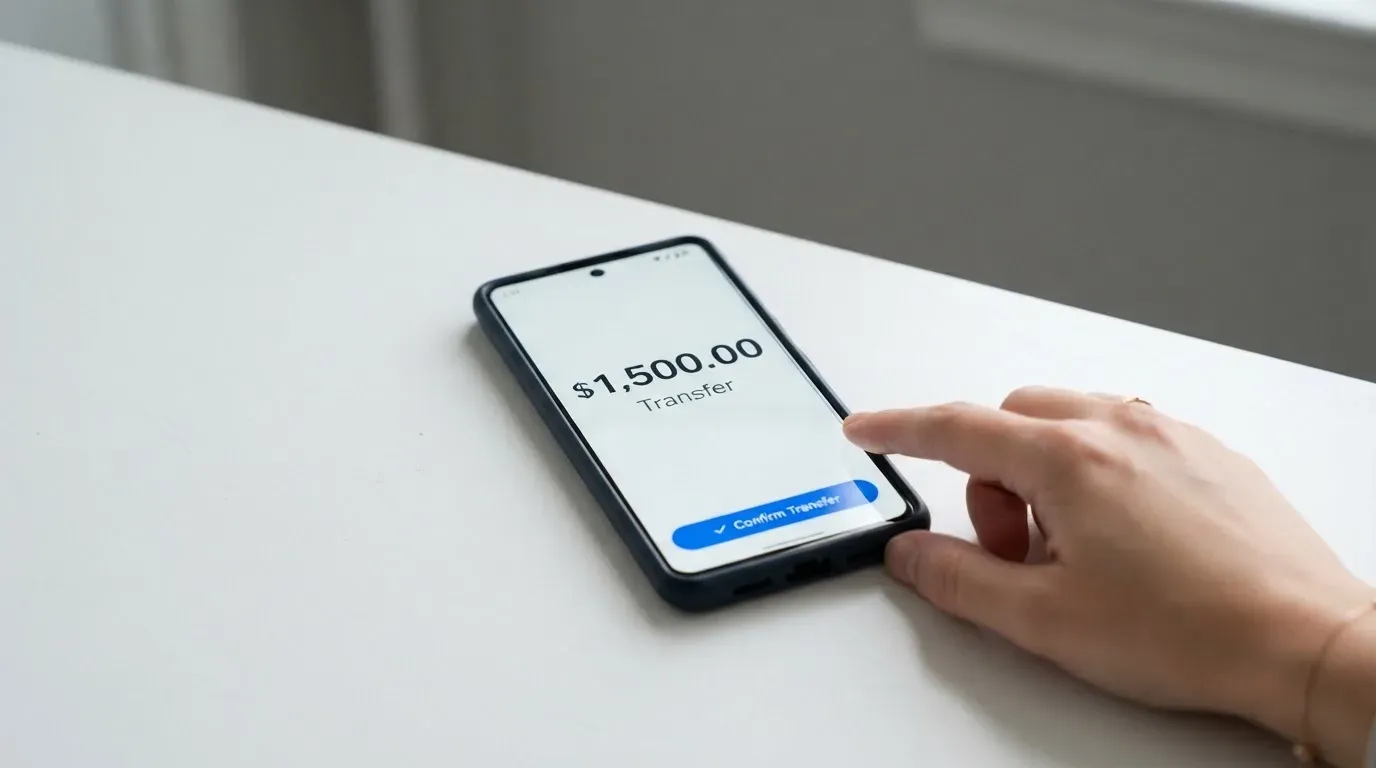
That last detail is the mechanism worth understanding. Nothing is exchanged in advance. The smart contract holds the USDC; when a card payment is authorised, the conversion happens right then, at that moment’s rate. So you are exposed to the USDC price between the deposit and the purchase — a stablecoin is meant to track a dollar, but “despite the name, stablecoins are not necessarily stable”, and USDC briefly lost its peg in March 2023 during the US banking crisis. Circle says USDC is redeemable 1:1 for USD and fully backed by cash and cash equivalents, mostly in an SEC-registered government money market fund, with monthly reserve attestations; Tether describes USDT the same way in principle. That is reassuring background, not a guarantee for any single day.
Two practical warnings before your first transfer:
- Check the network and the address. Blockchain transfers are irreversible. A deposit sent on a network the card provider does not support, or to an address belonging to a different network, can be lost or need manual recovery with no guarantee. Only the five networks above are named for this card.
- Pay for gas. Funding costs a blockchain transaction fee charged by the network, not by the card provider. Also remember that on Ethereum, gas is paid in ETH — a wallet holding USDC with no ETH cannot send at all. On Tron, fees are paid through bandwidth and energy and often burn TRX, though Circle stopped supporting USDC on Tron in February 2024, so that is not a route in here anyway.
The minimum top-up, whether you can add fiat directly, and whether you can withdraw back out to a wallet are all not stated.
Paying with it every day
Here is where the score dips, and the reason is not that the card is bad — it is that the description stops.
What works. Add the card to Apple Pay or Google Pay, and use it online or in stores, repeatedly. Apple Pay replaces the card number with a device-specific number stored in the Secure Element, never on Apple’s servers, and each payment carries a one-time dynamic security code — so using it in a phone wallet is the better-supported path, not a consolation prize.
What is not addressed:
| Everyday question | What the card states |
|---|---|
| Own app to check balance or freeze the card | Not stated; cards appear through partner apps and dApps |
| Physical card | Not stated for cardholders |
| Cash withdrawal at an ATM | Not stated |
| Blocked merchant categories | Not stated |
| Cashback or rewards | Not stated |
| Card currency | Not stated |
| Chargeback time frames | Not stated |
Two of those blanks bite hardest. No app means no self-service freeze. The standard safeguards on a card — instant freeze, spending limits, 3-D Secure confirmation — assume somewhere to press the button. If your card lives inside someone else’s wallet app, freezing it is that partner’s problem, and you should find out how they handle it before you need it.
Blocked categories are worth asking about for a different reason. Merchant category codes classify businesses, and gambling (MCC 7995) is the one many issuers block by policy rather than by law, with the list differing per issuer. Nothing here suggests Immersve blocks anything. It simply does not say.
If something goes wrong, the complaints route depends on where you live: /complaints/au for Australia, /complaints/eea for the EEA, /complaints/gb for the UK, and /complaints/nz for New Zealand, Latin America and others. That is a sensible structure — it tells you complaints are handled locally — but the time frames for a chargeback are not stated, and that is the number you would want.
Also worth knowing about how card payments behave generally: a declined authorisation can leave a hold on your funds that lingers for several days, and address verification, which many merchants use in the US, Canada and the UK, is generally unavailable for foreign-issued cards, which causes declines.
What can go wrong
The card itself. Funds sit in a smart contract. The card states the risk is “the same risk as a normal credit or debit card”, and that is honest about what the card layer adds: PCI compliance via VGS, and smart-contract audits by Hashlock, Red4Sec and Coinspect. Two things follow from that sentence. First, the smart contract is a separate attack surface from the card, and the audits are the mitigation offered. Second, safeguarding is not mentioned — and under EU e-money rules, e-money institutions must safeguard customer funds by segregating them or insuring them, with the explicit caveat that such funds are not the same as bank deposits and may not sit under a deposit guarantee scheme. You are not holding a deposit.
The counterparty. Control of crypto belongs to whoever holds the private key; with a self-custody wallet, yours. But the card programme adds parties you do not control: the network routes the payment, the issuer holds the programme, and Immersve is the brand in front. Immersve is “a registered Financial Service Provider and reporting entity in New Zealand”, holds AFSL 545925 in Australia and NZ FSP1003031, and operates from Australia, New Zealand, the UAE, the UK and the US. The issuing bank is not named on the site — that is the single most useful fact for a due-diligence-minded reader, and it is missing. For the Pera Card specifically, the Pera support page (updated October 2025) says it is issued by Monavate UAB.
The record. I found no official incident, and I searched for complaints and found no Immersve results at all — there is no Trustpilot page. Absence of complaints from a card that is new and partner-distributed is weak evidence, not strong: it can mean clean, or it can mean small. History in this category is worth weighing. Visa terminated its global agreements with FTX on 13 November 2022 and the FTX US debit card was wound down; WaveCrest, a Visa issuer that supplied crypto card brands, was suspended by Visa in Europe in 2018, closing every WaveCrest-issued Visa programme. And the Pera support page, as of October 2025, still describes the Pera Card as being in a Beta Phase in selected countries. Programme closure is a real category risk: typically a notice period, then loading and spending stop, then you are asked to withdraw.
The regulatory picture. MiCA took legal effect in June 2023; its token and stablecoin rules applied from 30 June 2024 and the crypto-asset service provider rules from 30 December 2024. The transitional period lets providers operating under national law continue only until 1 July 2026 or until they are authorised or refused. A crypto card often depends on two licences — one under payments law for the card, one under crypto law for the assets — and Immersve’s own page says European and several other regimes are still in progress.
The unconfirmable costs. An unstated FX rate and an unstated ATM policy mean your real cost per purchase is not knowable from the public information. That is not fraud; it is a reason to ask.
What to take instead
None of these is a like-for-like substitute — they are the other things a reader in this position might be weighing.
| Card | Score | Card type | Where | Cost shape | Top-up |
|---|---|---|---|---|---|
| Immersve | 7.1 / 10 | Digital Mastercard | 38 countries; US planned Q1 2026 | No application or issuance charge; blockchain fee on funding; FX fee may apply | USDC on Algorand, Arbitrum, Base, Ethereum, Polygon PoS |
| TokenPocket | 5.8 / 10 | Visa or Mastercard debit, virtual | European countries; Mastercard for Australia, Canada, Hong Kong, Japan, Taiwan, NZ, Singapore, South Korea, UK; Americas planned | NFT creation fee partly covered, user pays “a small portion”; otherwise no additional fees; 1% fee on crypto deposit | Crypto deposits from the TokenPocket wallet |
| MetaMask | 7.1 / 10 | Mastercard, virtual first, metal optional | 45 listed countries; other regions on a waitlist; US/UK sign-ups temporarily closed per FAQ | Virtual free; Metal $199/year; “minimal fee for each transaction”; no FX fee, Mastercard rate | Spends directly from the connected wallet on Linea, Base, Monad, Solana |
| KAST | 6.1 / 10 | Virtual and physical, Visa | Residence-based list shown at KYC, not published | Membership Standard 0, Premium 1,000 USD/year, Private 10,000 USD/year; Standard physical card 0 USD plus 40 USD delivery | Stablecoins USDT, USDC, PYUSD, RLUSD |
Reading that table honestly. MetaMask matches Immersve’s 7.1 but is much more forthcoming — it publishes a price for its metal card, names its networks and tokens, states there is no foreign transaction fee, and even publishes cashback tiers (Virtual 1%, Metal headline 3% with the footnote limiting 3% to the first $10,000 spent, then 1%). Its issuer and card provider are named too: Monovate and Crypto Life. Against that, its eligibility is narrower in practice and its US/UK sign-ups are shut.
KAST is the one to look at if you want the full card product — ten cards per user, Visa Infinite metal and gold variants, real cashback tiers from 1.5% to 3% — but its membership structure runs from free to 10,000 USD a year, and its country list is shown only at KYC rather than published. That is a worse fit for someone who cannot get an ordinary card, because you cannot check eligibility before trying.
TokenPocket scores lowest and is the one I would think about longest before recommending: a 1% fee on crypto deposits, funds said to be refunded later via rewards, and virtual-only cards.
Who I would recommend it to
To the person who already keeps their own keys, holds USDC, lives in one of those 38 countries, and wants to spend stablecoin balance as ordinary money without a bank conversion step in between. You will pay nothing to open it, nothing to hold it, and you will get Apple Pay and Google Pay. That combination is genuinely hard to find.
I would not recommend it as your only card. There is no physical card stated, no ATM terms, no own app with freeze and limits, no published FX rate, and no named issuer on the site. The support page is a “Get in touch” contact form with no languages or hours given.
And before you commit, ask the partner app the four questions the public pages will not answer: what is the FX conversion rate, is there a physical card, what are the daily and monthly limits, and what happens to my balance if the card programme is wound down. Any product in this category that cannot answer those four is not ready to be your only card.
Frequently asked questions
What is the Immersve card?
The Immersve card is a digital Mastercard that spends a balance you hold as USDC in a smart contract, rather than a bank account. You deposit USDC on a supported blockchain network, and it is converted to fiat at the moment each transaction is authorised. It is used through Apple Pay or Google Pay, and it is issued through partner wallet apps rather than a standalone Immersve sign-up.
Is Immersve a bank?
No — the site does not describe Immersve as a bank, and it does not name an issuing bank. Immersve Pty Ltd holds AFSL 545925 in Australia and is a registered financial service provider and reporting entity in New Zealand under NZ FSP1003031, with regulation described as in progress in Europe, Hong Kong, Singapore, the UAE, the UK and the USA. An actual bank somewhere is issuing the card; it just is not identified publicly.
How much does the Immersve card cost?
The card states there are “no charges for application or issuance”, and that the service is provided “at no cost to either integrated dApps or to cardholders”. What does cost money: the blockchain transaction fee when you fund via the smart contract, and a foreign currency conversion fee that “may apply” to foreign currency transactions at an unstated rate. No monthly or annual fee is stated.
What do I need to get the Immersve card?
You need an account with one of the partner apps or dApps that surface Immersve cards, and you need to verify your identity — “Verify your identity” is part of card creation. The card’s own pages do not state which documents, proof of address or age are required. Onboarding is supported in 38 countries, with the United States described as Q1 2026 and MENA to follow.
Does Immersve require KYC?
Yes. Identity verification is built into card creation, so there is no anonymous route to this card. The named identity partners are FrankieOne, Sumsub and Chainalysis. In practice the specific documents asked for will come from the partner app you apply through, since the public Immersve pages do not list them.
How do I top up the Immersve card?
You deposit USDC into the card’s smart contract on one of five networks: Algorand, Arbitrum, Base, Ethereum or Polygon PoS. No other coin is named for this card. The blockchain fee for that transfer is yours to pay, and you need a small amount of the network’s own token — ETH on Ethereum, for instance — or the transfer cannot go out at all.
Can I use the Immersve card in Apple Pay?
Yes, that is the intended route. The card is a multi-use digital Mastercard usable online or in store once added to Apple Pay or Google Pay. Apple Pay stores a device-specific number in the device’s Secure Element rather than on Apple’s servers, and generates a one-time security code per payment. No physical card is mentioned for cardholders.
Is the Immersve card safe?
The card layer carries familiar protections: PCI compliance via VGS, and smart-contract audits by Hashlock, Red4Sec and Coinspect. The card describes the risk as “the same risk as a normal credit or debit card”. But safeguarding is not mentioned, your USDC sits in a smart contract until you spend it, and blockchain transfers cannot be reversed — so a deposit to the wrong network is gone.
How do I withdraw money from Immersve?
The public pages do not say. Whether you can convert the balance back to crypto or withdraw it to a bank is not stated, and neither is a minimum top-up or a fiat top-up route. This is worth asking before you commit funds, because your exit options are the thing most likely to matter in a programme closure.
Is the Immersve card worth it?
For a self-custody user spending USDC in Europe or Australasia, the economics are good: nothing to open, nothing to hold. What you give up is disclosure — no published FX rate, no limits, no ATM terms, no physical card, no own app, and no named issuer. Treat it as a convenient second card funded with money you have already decided to hold, not as a replacement for the card you rely on.
Choosing a wallet card – cryptocardadvisor
Content created by the «cryptocardadvisor» team