
ZERO ID card review: a no-KYC crypto card, priced for crypto users and risky for everyone else
 Available in US
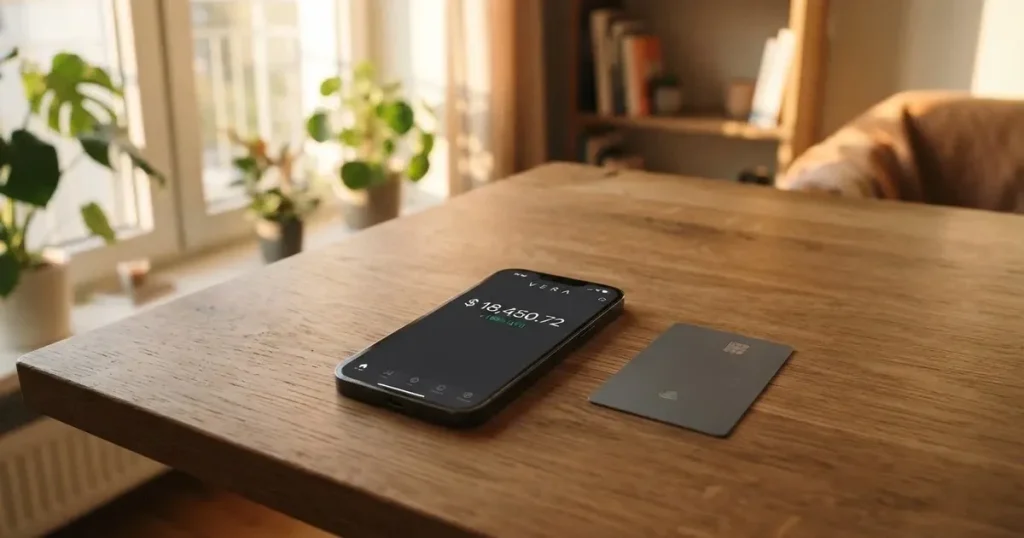
ZERO ID is one of the few payment cards on the market that lets you sign up, pay the card fee and load the balance without ever showing an ID document. That single fact shapes everything about it: the price, the audience it targets, the way it handles support, and the level of risk a cardholder carries. The product is sold by a company that calls itself ZERO ID, Inc., which is a subsidiary of Global Fintech Holdings, and it says it is “not a bank.” The card is offered in four tiers, all priced in USDT, and the only way to top it up is with crypto. In this review I go through what the company actually publishes, where the gaps are, what users have reported, and who the card is genuinely for.
The conditions described here are current as of October 28, 2026.
Verdict
I score the ZERO ID card 5.0 out of 10. The card does what it says in one narrow sense: it gives a person anywhere in the world a payment card number backed by a crypto balance, with no identity check at the point of purchase. That is genuinely hard to find, and it is the reason the score for “who can get it” is high. The reason the overall score is not higher is everything around that core promise: the issuer and the licences are not named, fees and FX rates are not published, the support operation runs through personal Gmail addresses and Telegram, and the public complaint record is short but unhappy. A card that asks you to load $1,000 into a Black tier and then refuses to put a value on what the issuer will charge you on top of that is a card where the buyer carries most of the risk.

| Criterion | Mark | Why |
|---|---|---|
| Who can get it | 9 / 10 | “Works anywhere in the world”; terms list no prohibited countries. |
| Cost | 2 / 10 | Prices in USDT (Virtual $25, Core $199, Prime $249, Black $599); terms mention monthly maintenance; minimum top-up for Virtual is $100; the actual transaction and FX fees are not published. |
| Top-up options | 7 / 10 | Crypto only — USDT, USDC, Bitcoin, Ethereum; networks not specified; no fiat top-up. |
| Reliability and complaints | 2 / 10 | Issuer not named, no licences; Trustpilot 3.1/5 across 7 reviews, with reports of uncredited deposits, bans at withdrawal, and Telegram-only contact; the terms say access can be suspended “with or without cause.” |
| Everyday use | 5 / 10 | Virtual and metal plastic cards (Core, Prime, Black), 7–12 business days for delivery; Apple Pay and Google Pay supported, the ATM situation is not stated. |
The card is built for a specific kind of user: someone who already holds crypto, who cannot or will not go through KYC with a regulated card issuer, and who is comfortable treating the card fee and balance as risk capital. If that is you, ZERO ID is one of a small set of options. If you can use a regulated card, the cost, complaint record and absence of published fees make it a poor trade.
Will they give you the card?
The headline answer is yes, almost regardless of where you are. The company’s site says the card “works anywhere in the world” and the terms do not list any prohibited country. There is no residence check and no nationality check, because there is no check at all: ZERO ID explicitly says it requires “no KYC” to buy or top up the card, and there are no KYC tiers to climb later. The published steps are to register, pick a plan, pay in USDT, and activate the card from a web dashboard.
A few practical points flow from that. First, age is not stated, so the company is not committing to a published minimum. Second, the absence of a country list cuts both ways: a permissive sign-up policy also means the card is not designed to fit around the local rules of any specific country, so the holder is the one who has to decide whether using it in their own jurisdiction is appropriate. Third, because the issuer is described only as “licensed financial partners” with no names attached, the card programme does not sit inside any single national regulator’s oversight.
If you need a card that works without sending in a passport photo, an address proof and a selfie, ZERO ID is built for that. If you need a card that is supervised by a named regulator, you will not find that here.
How to get it
The order is straightforward. You register on the site, choose a tier (Virtual, Core, Prime or Black), pay the price in USDT, and the card is activated through a web dashboard. There is no native mobile app described — the dashboard is the activation surface, and it is also where the card is managed once you have it. Delivery for the physical card is “7–12 business days” depending on region, and the cost of shipping and replacement is not stated, except that Black tier includes an express replacement of lost or damaged cards.
The card itself comes in two forms. The Virtual tier is online-only. The Core, Prime and Black tiers are physical, and the company describes them as “metal” cards. The card network is not named in the materials I read — the site only says “major card networks,” and the card’s billing currency is not stated either. That is unusual: a card user usually wants to know whether they will be billed in USD, EUR, the card’s native currency, or a stablecoin balance, because that choice affects the FX path on every transaction. ZERO ID’s published documents leave that question open.
What it really costs
This is the part of the review where I want to slow down, because the published prices and the lived experience of a cardholder are not the same thing, and the gap between them is where the cost story lives. The card is sold in USDT, the price list is the headline number, and the issuer’s own terms remind the reader that the transaction fee and the FX rate depend on the tier and on issuer policy, without giving either.
| Fee or limit | Virtual | Core | Prime | Black |
|---|---|---|---|---|
| Card price (USDT) | $25 | $199 | $249 | $599 |
| Monthly maintenance | Terms mention monthly maintenance; amount not stated | Terms mention monthly maintenance; amount not stated | Terms mention monthly maintenance; amount not stated | Terms mention monthly maintenance; amount not stated |
| Conversion fee | Not published | Not published | Not published | Not published |
| FX rate / margin | Not published | Not published | Not published | Not published |
| ATM fees | Not stated | Not stated | Not stated | Not stated |
| Minimum top-up | $100 | $100 | $300 | $1,000 |
| Daily / transaction limits | “No daily or transaction limits” in marketing; FAQ says “depending on the plan selected”; terms say limits depend on tier with no amounts | Same as Virtual | Same as Virtual | Same as Virtual |
What that means in practice. If you pick the Virtual tier at $25, you are committing to a $100 minimum top-up on top of the card price, and you have no published number for what you will pay to convert USDT into a balance the merchant will accept. If you pick the Black tier at $599, you are committing to a $1,000 minimum top-up, and again no published number for the conversion, the FX margin, the ATM charge or the monthly maintenance that the terms say exists.
Three everyday payments to think about. An online subscription in a foreign currency. The card has to convert USDT (or another supported crypto) into whatever currency the merchant charges. Without a published FX margin, you do not know the spread. A cash withdrawal at an ATM. ATM fees are not stated, so any surcharge the ATM operator adds is on top of whatever the card issuer will charge. A contactless coffee at a foreign terminal. This is a tap-to-pay in a currency the card was not designed around, and the route from crypto to local currency is going to involve at least one conversion the cardholder cannot price in advance. In all three cases, the practical answer to “what will it cost?” is that the holder finds out at the point of transaction, and the issuer reserves the right to change the rate or the rule.
This is also the place to mention the design tier differences, because they shape what you are paying for. Virtual is the entry product. Core adds the metal physical card. Prime adds a custom design, priority dashboard setup and “priority 24×7” support. Black adds a fully custom design, a “VIP concierge” and express replacement of lost or damaged cards. Prime promises “limited cashback & reward benefits,” and Black promises “up to 5% cashback & exclusive reward privileges.” Virtual and Core explicitly have no cashback. None of this changes the published fee problem above; it only changes what the higher price is supposed to buy you.
How to top it up
Top-up is the cleanest part of the product story, and the most restrictive. The card accepts crypto only: USDT, USDC, Bitcoin or Ethereum. The networks those tokens are sent on are not specified, which is a real source of risk — a USDT transfer to the wrong network is a transfer that does not arrive, or arrives late, and a cardholder who guessed wrong has no published recovery path. Funds are added “instantly after confirmation,” where confirmation means blockchain confirmation in the network the user picked.
You, the cardholder, pay the on-chain network fee for the transfer yourself — this is normal for the category, and is not a ZERO ID charge. There is no fiat top-up option: no bank transfer, no card-to-card, no in-app purchase. If you do not already hold USDT, USDC, BTC or ETH, the card is not designed to receive your money.
The minimum top-up scales with the tier. Virtual and Core need at least $100. Prime needs at least $300. Black needs at least $1,000. A withdrawal function is not addressed in the materials I read — the funding flow is one-way, from your wallet into the card balance.
If you have crypto in your own wallet, you know which network it lives on, and you accept that there is no support line that can help you if you send USDT to an address expecting a different token, this part of the product is fine. If you do not have crypto, or you are not confident choosing between, say, USDT on Ethereum and USDT on Tron, the funding step is a real tripwire.
Paying with it every day
Once the card is loaded, the published experience is ordinary in shape and thin in detail. Core, Prime and Black are described as cards you can “tap, swipe, insert, or even cardless access” — meaning contactless, chip, magnetic stripe, or card-not-present for online payments. The Virtual card is for online use only. Apple Pay and Google Pay are supported, and the card is described as contactless and as a metal card on the higher tiers, so for everyday in-person spending the experience is the same as any other payment card at the terminal.
The bits that are not in the materials are the bits you would normally check before relying on a card. Whether the card can be added to a particular mobile wallet is not stated. Whether recurring subscriptions, hotels or car-rental holds go through cleanly is not stated. Whether the card is accepted at unattended terminals (transit gates, parking meters, fuel pumps) is not stated. The dispute process is not stated either: the site links to a separate refund policy page that I did not read in this review, and the terms do not describe what a cardholder does when a charge is wrong. For a card where the user cannot show an ID to recover an account, the absence of a written dispute path is a meaningful gap, not a small one.
The rewards layer is also thinner than the marketing suggests. Virtual and Core have no cashback. Prime has “limited cashback & reward benefits” without a number. Black promises “up to 5% cashback & exclusive reward privileges,” again without a number you can budget against. The cashback ceiling (“up to 5%”) is a maximum, not a rate, and the conditions for reaching it are not described.
What can go wrong
This is the section I would read first if I were deciding whether to put real money on the card, and I would treat the published record as a starting point rather than a complete picture.
The company is not a bank and does not name the issuer. ZERO ID, Inc. is the card provider and explicitly states it is “not a bank.” The card programme is run through “licensed financial partners,” and the names of those partners are not given. That means there is no single regulator you can point to, no licence number to check, and no named institution whose reputation is on the line if the programme has problems. In a category where Visa and Mastercard have wound down programmes before — including the FTX debit card in 2022 and the WaveCrest-issued programmes in 2018 — the identity of the issuer matters because it is the entity that holds the BIN, processes authorisations and ultimately decides what happens to your balance.
The terms reserve very wide rights. The published terms say ZEROID may suspend or terminate access “with or without cause.” For a product priced up to $599 plus a $1,000 minimum load, that is a one-sided commitment. The published security story is also thin: the company says the platform is “secured by industry leaders,” without naming the providers, and nothing in the materials I read describes 2FA, instant card freeze, transaction limits the user can set, or how customer funds are safeguarded.
The support operation is small and personal. The published contact points are two Gmail addresses ([email protected] and [email protected]) and Telegram. Languages supported are not stated. Prime promises priority 24×7 support and Black promises a VIP concierge 24×7, but the surface area is the same set of inboxes. When a cardholder’s only contact channel is a personal-looking Gmail address, the level of due diligence that has happened on the other side is invisible.
The public complaint record is short and unhappy. A profile under the name “app.zeroid.cc” on Trustpilot — read 2026-10-21, marked possibly related to a different site, with a note that some negative reviews may refer to zeroid.cards — carries a TrustScore of 3.1 out of 5 across 7 reviews, and 57% of those reviews are one star. The profile is unclaimed. The themes in the negative reviews are consistent: a 400 USDT deposit that was not credited with no reply, an account banned after a request to withdraw 500 USD, repeated requests for more money, and contact that could only be reached through anonymous Telegram. The single positive review describes a working no-KYC card with good support. There are no official incidents called out in the materials, and the small size of the sample means the record is more like a signal than a verdict — but the signal is pointed, and it points the same way as the absence of a named issuer, the absence of published fees, and the very wide termination right in the terms.
The funding path has its own risks. Crypto transfers are irreversible. If the wallet you send from has USDT on a network the card does not support, or you copy an address one character wrong, the funds are gone, and the card provider has no obligation to recover them. Tether itself has stated that it disables tokens in wallets on the OFAC sanctions list and has frozen funds tied to illicit activity, so even the “irreversible” promise is qualified by the issuer’s discretion. Stablecoins themselves are not risk-free: USDC temporarily lost its peg in March 2023 during the US banking crisis, and TerraUSD collapsed in May 2022. ZERO ID does not describe how the card balance behaves during a depeg event, and the cardholder carries the timing risk.
There is no dispute process described. A chargeback is a refund ordered by the card issuer, and it is the main consumer protection behind a card payment. The site links to a separate refund policy page; the published terms and the materials I read do not describe a dispute path. For a card that costs up to $599, and where the user is anonymous to the issuer, the absence of a clear dispute mechanism is a real exposure, not a paperwork problem.
What to take instead
ZERO ID is not the only no-KYC or low-friction crypto card on the market, and the right comparison depends on what you are optimising for. The three alternatives below all live in roughly the same space — a payment card funded from crypto, with light or no identity checks — and each one makes a different trade.
| ZERO ID | Cardex | CardFlow | HyperCard | |
|---|---|---|---|---|
| Score (this site) | 5.0 / 10 | 5.6 / 10 | 4.9 / 10 | 4.7 / 10 |
| Countries | “Works anywhere in the world” | “200+ countries” | Nigeria and “global users” | Acceptance in “more than 176 countries” |
| Card form | Virtual + metal physical (Core, Prime, Black) | Debit on Verve, Visa, Mastercard, UnionPay; virtual and physical | Virtual USD Mastercard | Prepaid, balance in USD or EUR |
| Funding | USDT, USDC, BTC, ETH (networks not stated) | USDT, USDC, BTC (networks not stated) | BTC, USDT, ETH or Naira bank transfer | Crypto such as USDT, BTC, ETH in the app |
| Headline cost | $25–$599 in USDT; ongoing fees not published | Not stated; “AI-Powered Conversion Rate” | “Creating a virtual card is completely free” | App Store listing names no fees |
| KYC | None | Not stated | Not stated | Not stated |
Cardex is a closer fit if you want a card that maps onto a real card network across many regions. The official site says the card works in “200+ countries” and runs as a debit card on Verve, Visa, Mastercard and UnionPay. The app store listing frames it in Naira. The site describes a real-time conversion at the moment of payment and an “AI-Powered Conversion Rate” that picks across global exchanges; the fee percentage is not stated, but the mechanism is described in more detail than ZERO ID provides.
CardFlow is the lighter option for a single-currency use case. The site says it is “Nigeria’s smartest fintech card platform” and that the virtual USD Mastercard can be created in 3 minutes, and the FAQ says creating a virtual card is “completely free.” It accepts crypto (BTC, USDT, ETH) and Naira bank transfers, and the monthly fee is not stated.
HyperCard is the prepaid route. The App Store page says the card is accepted in “more than 176 countries,” the balance is held in USD or EUR, and the listing names no fees. The network is not stated on the listing I could read. Deposits are made in crypto through the app.
If you need the no-KYC angle specifically and ZERO ID’s offering matches what you want, the comparison tells you the cost is in line with the category rather than an outlier. If you can accept some level of identity check, you will find a wider market of regulated cards with published fees, named issuers and clearer dispute paths.
Who I would recommend it to
Putting it all together, the ZERO ID card suits a narrow profile: a person who already holds USDT, USDC, BTC or ETH in a wallet they control, who has decided that a regulated card issuer is not an option for them, and who is treating the card fee and the top-up minimum as money they can afford to lose. If that is you, the product is roughly what it claims to be, the cost is the published USDT price plus whatever the card charges at the point of transaction, and the experience is the usual one of paying with a payment card.
If that is not you — if you do not already hold crypto, if you cannot afford to write off the top-up, if a named regulator or a written dispute process matters to you, or if you need a card that publishes what it will charge you before you spend — the same product becomes a poor trade. The cost of the card is not the $25 or the $599; the cost of the card is everything the company does not publish, on top of the price that it does.
My honest read is that ZERO ID is closer to a private channel between a crypto holder and a payment network than it is to a consumer financial product, and the score reflects that. The score for “who can get it” is high because the answer is genuinely yes, almost anywhere. The score for cost, reliability and the everyday layer is low because the company has chosen to keep the user in the dark about the things that matter most.
Frequently asked questions
What is the ZERO ID card?
The ZERO ID card is a payment card (virtual or physical metal) sold by ZERO ID, Inc., and backed by a balance funded from USDT, USDC, Bitcoin or Ethereum. The company describes itself as “not a bank” and the card is run through unnamed “licensed financial partners.” It is sold in four tiers, all priced in USDT.
How does the ZERO ID card work?
You register on the site, choose a tier, pay the card price in USDT, top up the balance with crypto, and activate the card from a web dashboard. The physical card is delivered in 7–12 business days depending on region. At payment time the balance is used to settle the merchant, and the conversion path from crypto to the merchant’s currency is run by the card issuer.
Is ZERO ID a bank?
No. The company says explicitly that it is “not a bank.” It is a subsidiary of Global Fintech Holdings and the card programme sits with “licensed financial partners” whose names are not given in the public materials.
Who owns ZERO ID?
ZERO ID is owned by Global Fintech Holdings, which is described on the company’s site as the parent. The site does not list individual owners, executives or a board. The issuer of the card itself is not named.
Is the ZERO ID card available in my country?
The site says the card “works anywhere in the world” and the terms do not list any prohibited country. There is no published country list and no published list of supported countries for delivery, so the practical question is whether the card is delivered to your address; the FAQ gives a 7–12 business day window “depending on region” without a per-country list.
Does the ZERO ID card require KYC?
No. The company says “zero identity verification — no paperwork, no KYC, no documents,” and the terms say no KYC is required by ZEROID for purchase or top-up. There are no KYC tiers.
How do I top up the ZERO ID card?
You send USDT, USDC, Bitcoin or Ethereum from your own wallet to the address the dashboard gives you. Networks are not specified, the user pays the on-chain network fee, and the minimum top-up depends on tier — $100 for Virtual and Core, $300 for Prime, $1,000 for Black. There is no fiat top-up.
Can I withdraw cash from a ZERO ID card?
The published materials do not describe a withdrawal function. ATM fees are not stated, and the cardholder would face any surcharge the ATM operator adds on top of whatever the card issuer charges.
Is the ZERO ID card safe?
Safety here is layered. The card uses the usual payment rails and supports Apple Pay and Google Pay, but the issuer is not named, no licences are listed, the security description is “secured by industry leaders” with no further detail, the support operation runs through Gmail addresses and Telegram, the terms let the company suspend or terminate access “with or without cause,” and the public complaint record on Trustpilot is short but largely negative. Cardholders also carry the usual crypto-path risks: stablecoins can depeg, transfers to the wrong network are not recoverable, and the dispute process is not described.
How do I delete my ZERO ID account?
The published materials do not describe an account-deletion process. There is no standalone app described in the materials, and the support contacts are the two Gmail addresses ([email protected] and [email protected]) and Telegram. If the balance is held on the card, the path to getting the money out is the same path used to spend it.
Choosing a virtual card – cryptocardadvisor
Content created by the «cryptocardadvisor» team