
A $1 virtual dollar card built for Nigeria, thin on published detail
 Available in US

Dantown is a virtual dollar card aimed at Nigeria, sold on the promise of one US dollar to create. On paper that sounds like the cheapest way to hold spendable US dollars when your own bank will not give you a card. I went through the card’s own pages, what the app stores list, and what third-party sites say, and my verdict sits at 4.2 out of 10. It is not a bad card. It is a thinly documented one, and that thinness is the whole problem: too much that matters to you is not stated, so you cannot price it before you use it.
Who it suits: someone in Nigeria who needs a small dollar balance for online payments, who is comfortable verifying an identity with a small fintech, and who can live with a virtual card and no physical one. Who it does not suit: anyone outside Nigeria, anyone who needs a card in the hand, anyone who needs to see a full fee schedule before committing, and anyone whose main worry is proof that their money is being looked after by a licensed institution — because the issuer and its licences are not stated on the pages I read.
The conditions described here are current as of October 28, 2026.
The score, criterion by criterion
| Criterion | Mark | Why |
|---|---|---|
| Who can get it | 2 / 10 | Sold as a virtual dollar card in Nigeria; other countries and any exclusions are not named |
| Cost | 8 / 10 | Card creation $1.00, funding $0; unofficially a further $1 upkeep; conversion amounts not named |
| Top-up options | 3 / 10 | Officially Naira via Pay-bridge; coins and networks not named; unofficially bank transfer and crypto |
| Reliability and complaints | 4 / 10 | Issuer and licences not found; Trustpilot TrustScore 0 with no reviews and a “high-risk investments” notice; no official incidents |
| Everyday use | 3 / 10 | Virtual USD only; Apple Pay and Google Pay not mentioned; no ATM |
| Total | 4.2 / 10 |
The two marks that pull the average up are cost and the sheer simplicity of a virtual card. The marks that pull it down are eligibility, top-up, and everyday use. I have not changed a single number from the score I settled on; the marks above are the reasoning behind it.
Will they give you the card?
Short answer: if you are in Nigeria, probably; if you are anywhere else, I could not find you in the card’s own material.
The product is marketed for Nigeria, and marketed at Nigeria specifically, not at a wider region that happens to include it. The page title reads “Get a Secure & Cheap Virtual Dollar Card in Nigeria for $1” and the FAQ asks “How can I create a virtual dollar card in Nigeria?”. That framing does two things. It tells a Nigerian reader that this card was built with them in mind. It also tells everyone else, quietly, that nobody has gone to the trouble of listing where else it goes.
That is the gap. The card’s public pages do not state a country list, and they do not state which countries are excluded. So I cannot tell you whether a Kenyan, Ghanaian, British or Brazilian applicant is welcome, turned down, or simply never considered. If you are not Nigerian, the honest answer is that the card’s own site does not answer you, and you would be relying on guesswork or on support.
Two things follow, and I want to be precise about them. First, “marketed for Nigeria” is not the same as “restricted to Nigeria”. A card can work for residents of other countries without advertising it, and nothing I read rules that out. Second, it does mean that if you are outside Nigeria you are, at minimum, undocumented as far as this card is concerned, which is a poor footing from which to start.
Age is another silence. The card is aimed at adults, as prepaid and debit cards generally are, and Dantown’s signup says to “verify your account” — but the accepted age range is not stated on the pages I read. Nor is the accepted address list.
How to get it
The card’s own signup is three steps, and it is one of the shorter applications in this category:
- Download the Dantown Mobile app.
- Sign up and verify your account.
- Create and personalise your card.
That is the whole official description. It is genuinely appealing — no branch, no paperwork, no courier — but it leaves the two questions a first-time applicant should care about most unanswered.
What identity documents they want is not stated. The card says “verify your account” and stops. It does not say whether a passport is enough, whether a national ID is accepted, whether a selfie and a liveness check are involved, whether you need a utility bill as proof of address, or how long approval takes. You should not read that as “no KYC”. Verification is clearly required; what it consists of is simply not published. If having your documents rejected twice on a bad photo, or waiting a week, would be a real problem for you, that is a risk here.
Which level of verification unlocks which limits is also not stated. Cards like this usually have tiers — a basic level with small daily caps, a higher level after documents with larger caps. Dantown publishes no figures per level, which I will come back to in the costs section, because it matters.
What you get once you are in is a virtual card only. There is no physical version described and therefore nothing is delivered to you. Your card details — name, number, expiry, CVC — are shown in the app for online payments. The page images are labelled “visacard”, but the text never names the network, and I would not rely on the label. Unofficially, a third-party comparison describes it as a Mastercard virtual dollar card; that is not confirmed by the card itself. The card currency is US dollars.
If you need a card that touches a terminal, a card you can hand over, or a card that survives your phone dying, this is the wrong product.
What it really costs: Fees, limits and the arithmetic nobody publishes
Cost is Dantown’s best argument, and it is a real one. The creation fee is $1.00 and the funding fee is $0. Those two numbers are stated plainly on the card’s own page, and they are unusually low for anything of this kind.
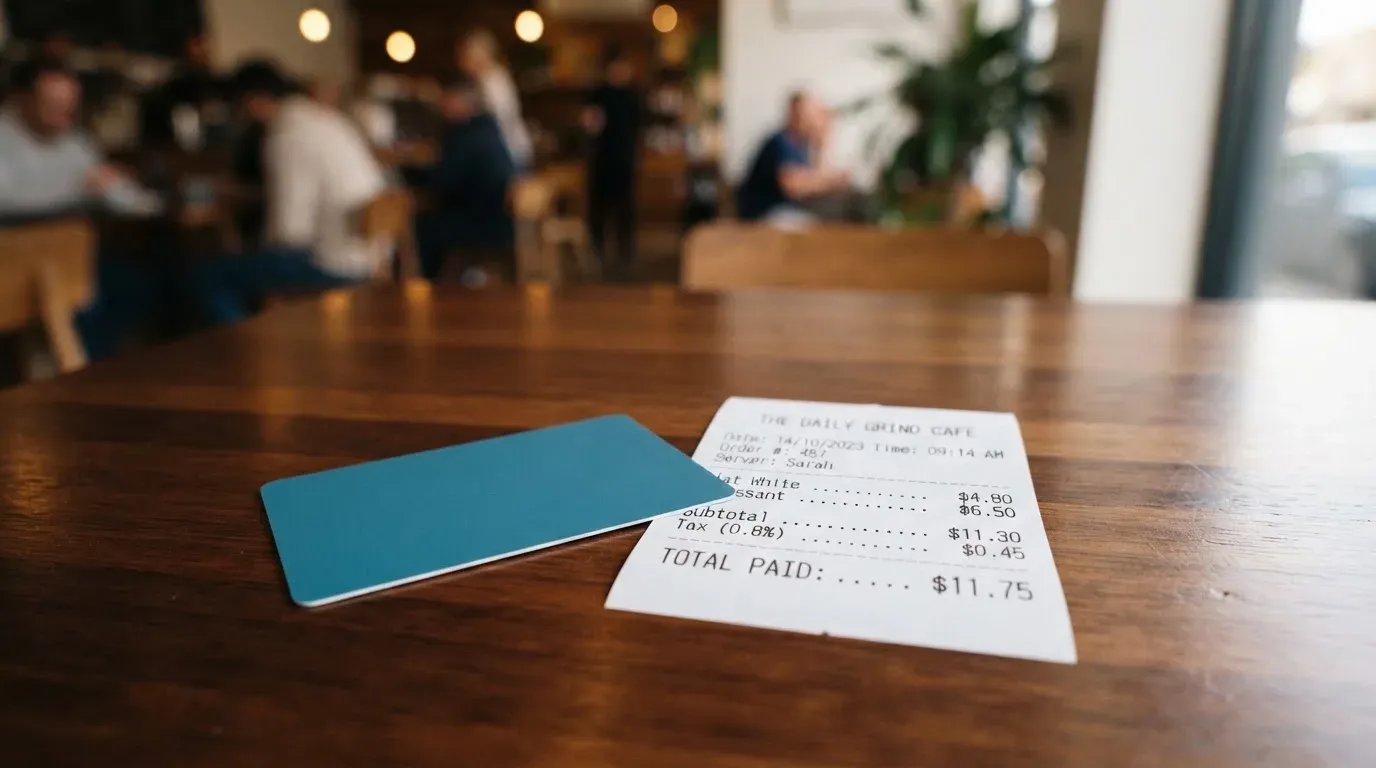
Around them sit three more figures I have to attribute carefully. Unofficially — carried by a Dantown announcement reported by TechCabal on 9 December 2024, and also listed by Adomonline in 2026 — there is a $1 maintenance fee on top of the $1 creation fee. The official page does not mention an annual or monthly fee. So the honest reading is that Dantown’s own pages tell you $1 to start and nothing about upkeep, while third parties say there is another $1. Ask support which is true before you assume $1 is the whole price.
Conversion is where the real number lives, and the number is missing. The card states that “specific transaction fees and conversion fees” apply to international transactions, and gives no amounts. Neither the Naira-to-dollar rate nor any FX fee is stated. That is a genuine problem, not a quibble. A $1 card that quietly converts at a wide spread is a cheap card that is not cheap to use.
| Fee or limit | What is stated |
|---|---|
| Card creation | $1.00 |
| Funding | $0 |
| Monthly or annual upkeep | Not stated officially; unofficially $1 maintenance |
| International transaction fee | Applies, amount not given |
| Conversion fee | Applies, amount not given |
| Naira-to-dollar rate and FX fee | Not stated |
| ATM | Not applicable — virtual card, no ATM |
| Daily transaction limit | Marketing claims “No transaction limit”; no figures published |
| Monthly limit | Marketing claims spending “should have no limit”; no figures published |
| Replacement cost | Not stated |
Let me show you what that table means for three ordinary payments, because a fee you cannot see is a fee you will feel later.
Paying $20 of subscriptions in dollars, from a dollar balance. No conversion happens — you are spending dollars you already hold. The creation fee and the $0 funding fee are all you can name. But the card says transaction fees apply to international transactions, and it does not say which transactions count as international, so I cannot promise you $20 is $20. If the subscriptions are billed by a merchant outside Nigeria, expect a fee of unknown size to be somewhere in this.
Buying something priced in dollars while your money is in naira. Here a conversion definitely happens, at a rate and a fee the card does not publish. This is the payment where the missing numbers actually cost you. You are converting naira into dollars and then paying a US merchant, and both legs are priced by a company that has not told you either price.
Swapping dollars back into naira, or taking money out. Naira withdrawal from the wallet via Pay-bridge is described in the app listing. Withdrawing the card balance itself, the fee for it, and what happens to any balance left when you close the account are not stated. If your plan involves getting the money back out, that plan is currently built on unstated terms.
On limits, the marketing language is absolute: “No transaction limit” and “Your spending should have no limit”. No figures per verification level are published. Third-party sources disagree — one guide says there are no official spending limits, while a TechCabal piece says Dantown has some funding limits, without giving a figure. I would plan as though a limit exists and ask what it is. The gap between “no limit” in the advertising and “some limits” in reporting is exactly the kind of gap worth asking about.
One structural note. This is a single card product with no tiers — but the app lets you “easily create and manage multiple virtual dollar cards”. So the flexibility is in holding several separate dollar cards, not in choosing a level of service. And although the card is dollars, international transactions are allowed with conversion fees; multi-currency balances are not described, though the wallet does support naira deposits.
How to Top up the card
Officially, there is one route and one number: naira, through Pay-bridge, at $0.
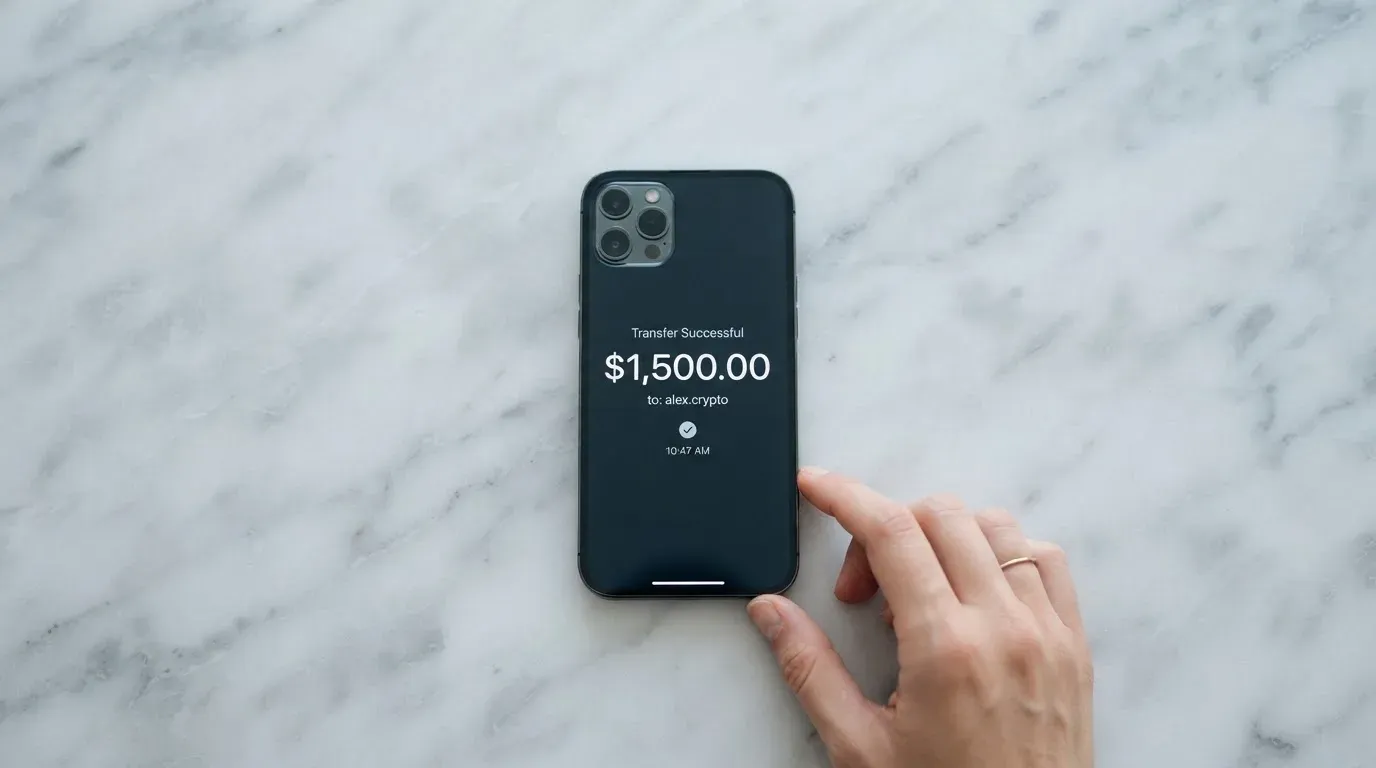
The Google Play description of the app says it offers “Naira deposit via Pay-bridge”, “Naira withdrawal via Pay-bridge” and a “Secure wallet”. That is the entire official funding story I could find. Unofficially — a third-party comparison in 2026 — you can also fund by local bank transfer and by crypto. Neither the coin nor the network is named on the official pages I read.
So the honest picture is this: if you are paid in naira, the card’s own pages tell you how to get money into it and the funding fee is zero. If you were hoping to top up from a USDT balance sitting in your own wallet, that is not on the card’s site, and the details that make crypto funding safe — which coin, which network, minimum amount, who pays the network fee — are all unstated. Minimum top-up is not stated either.
The company’s own announcement says the funding fee is $0 and that deposit and decline fees are $0 as well. That is generous and worth having. On the network side, I will not guess: whether you pay the blockchain fee on a crypto deposit is not stated, and it is usually you who pays it.
Paying with it every day
Day to day, Dantown is a small tool: a dollar card for online payments, in an app, with naira in and naira out. It is not a card you live on.
- Wallets (Apple Pay, Google Pay): not stated. The card’s pages do not say whether the virtual card can be added to a phone wallet. You would have to ask.
- ATM and cash: none. A virtual card has no chip and no PIN for a machine, so cash is simply out of reach.
- Rewards: not stated.
- Disputes and chargebacks: what happens when a charge goes wrong is not stated on the official pages. That is not a small omission — it is the difference between a shop that will refund you and a shop that will not.
- Where it works: online, in the app, wherever the network behind it is accepted. Because the network is not named in the text, and because a foreign-issued card can look foreign to a merchant, occasional declines are something to expect from this category rather than from Dantown specifically.
On the app itself. For Android, Google Play lists the Dantown app, developer Dantown, at 50K+ downloads, updated 20 August 2026. I did not read the star rating off the page. For iOS, the company’s announcement says the app is “available on your Appstore or Playstore”; I did not read the App Store listing. Unofficially, AppBrain in 2026 puts the average rating at 4.10 from about 1.1 thousand ratings and downloads at about 80 thousand, while Adomonline lists 4.7 from 1.12K reviews. Those numbers disagree with each other and with the Play listing, which is normal — they are collected at different times and by different means — and none of them is the card’s own claim.
Where you are daily spending dollars, the honest summary is: this is a card for subscriptions, app store payments, and websites that will not take your local card. It is not a replacement for everyday banking.
What can go wrong
Let me take the worst case first, because it is the one nobody has documented well.
You cannot verify who is behind the card. The issuing partner, the bank, and the licences are not stated on the official pages I read. Unofficially, Trustpilot lists Dantown as a cryptocurrency buying, selling and spending service based in Port Harcourt, Nigeria — that is a description of what the company does and where it sits, not a statement of who issues the card or under what licence. For a product that holds your money and issues a payment card, that is the single most important gap on this page. I am not saying anything is wrong. I am saying you have to take it on trust.
Your card can be blocked, and blocked repeatedly. The card’s own security description says that “when a virtual card is blocked, all functionalities are disabled” and that this can happen repeatedly. Read that carefully: the block is not just a payment block, it takes the card with it. What you can do about it is not stated.
Nobody is watching the complaint record. Trustpilot shows a TrustScore of 0 with no reviews yet, and the page carries a notice that the company “may be associated with high-risk investments”. No official incident notices from Dantown were found, and searches for user complaints on Reddit and Nairaland returned nothing relevant — which means there are no recurring themes to warn you about, because there is not yet a public body of experience. That cuts both ways: no red flags, and no reassurance.
The category has form. Nairametrics reported in 2024 that forex scarcity has led some virtual dollar card providers in Nigeria to suspend service — not Dantown specifically, but the same market. Providers of this kind can and have stopped. Visa and Mastercard do not issue these cards themselves; they license issuers and can suspend a programme. Visa terminated its global agreements with FTX on 13 November 2022 and the FTX US debit card was wound down by its issuer. WaveCrest, a Visa issuer that supplied crypto card brands, was suspended by Visa in Europe in 2018, closing all WaveCrest-issued Visa programmes. The pattern when programmes close: a notice period, then spending and loading stop, then users are asked to withdraw remaining balances. One 2026 closure, reported by a single secondary source and unconfirmed, ended new loads on 8 July 2026 and spending on 8 August 2026.
Custody questions are open. Whether your balance is held by Dantown or stays in your own wallet is not stated, and neither is two-factor authentication. This matters more than it sounds. With a custodial wallet, the provider holds the credentials and you must trust them completely; with a self-custody card, the funds are yours until the moment of payment, but you carry the risk of key loss and of phishing. Custodial platforms have a record of failure: Mt. Gox, about US$350 million reported stolen between 2011 and 2014; Coincheck, about US$400 million in 2018; Ronin Network, US$625 million in 2022. Blockchain transfers are also irreversible — a deposit sent on the wrong network, or to an address of another network, can be lost.
What you do have. The card describes notifications by e-mail, transaction logs and push messages, and Google Play lists a “Secure wallet” with data encrypted in transit. Support is advertised as “24/7 Customer Service”, reachable at [email protected]. And a declined payment can leave a hold on your funds for several days, typically up to seven, which is worth knowing before you assume a failed purchase means your money is free.
What to take instead
I looked at three alternatives in the same space. None of them is a slam dunk either, and the comparison is instructive precisely because each trades one set of unknowns for another.
Cardex — 5.6 / 10. The strongest of the three, and the broadest on paper: “One crypto card, 200+ countries”. No country list or exclusions are stated, and the App Store listing is naira-focused, so you pay in naira. It is a debit crypto card on the networks VERVE, VISA, Mastercard and UnionPay, virtual and physical, with the card currency listed as naira. Its distinctive feature is conversion at the moment of payment: the site says an “AI-Powered Conversion Rate” scans global exchange rates and picks the best one when you spend. No fee percentage is stated, and the card’s cost is not stated either. Funding is by USDT, USDC and BTC wallets, networks not named.
CardFlow — 4.9 / 10. Aimed at Nigeria, described as “Nigeria’s smartest fintech card platform” and for “Nigerians and global users”, with no country list or exclusions. A virtual USD Mastercard, created in 3 minutes. The site’s FAQ says “Create Free Card” — creating a virtual card is completely free — with no monthly fee stated. Fees for spending are not stated. Funding is Bitcoin, USDT, ETH, or a naira bank transfer, networks not named. A free creation fee and a physical option, against Dantown’s $1, is the trade.
HyperCard — 4.7 / 10. Official pages state no country list; the App Store says the card works in “more than 176 countries”, which is acceptance, not eligibility — a distinction worth holding onto, since it is the kind of line that gets read as an invitation. A prepaid “HyperCard” whose network is not stated on the App Store page, with the balance in USD or EUR. Cost not stated, and the App Store page lists no fees. Funding is by depositing crypto such as USDT, BTC or ETH in the app, converted to USD or EUR on the card, networks not named.
| Dantown | Cardex | CardFlow | HyperCard | |
|---|---|---|---|---|
| Score | 4.2 / 10 | 5.6 / 10 | 4.9 / 10 | 4.7 / 10 |
| Stated audience | Nigeria | 200+ countries, naira-focused | Nigeria and global users | No country list; “176 countries” is acceptance |
| Card | Virtual USD, network unnamed in text | Debit, VERVE/VISA/Mastercard/UnionPay, virtual and physical | Virtual USD Mastercard | Prepaid, network unnamed, USD or EUR |
| Creation cost | $1.00 | Not stated | Free | Not stated |
| Conversion or fees | Applies, amounts not given | Best rate at payment, % not stated | Not stated | Not stated |
| Top-up | Naira via Pay-bridge; unofficially bank transfer, crypto | USDT, USDC, BTC | BTC, USDT, ETH, naira transfer | USDT, BTC, ETH in app |
| Coins and networks named | No | No | No | No |
The pattern across all four is the one worth taking away: none of them publishes its coin networks, and three of the four leave their spending fees unstated. You are choosing between firms that have not finished explaining themselves. On that basis I would put Cardex first, for the physical option and the stated conversion logic, CardFlow second for the free creation, and Dantown third — not because it is worse to use, but because on price it is competitive while on disclosure it is thinner than the others.
One thing every card in this category shares, which no comparison table above will tell you: none of them tells you which entity issues the card and under which licence. That is the question to ask all of them.
Who I would recommend it to
I would recommend Dantown to a Nigerian user who wants a cheap virtual dollar card for online payments, and who is comfortable with a small fintech holding their balance and who has read this page’s gaps rather than the marketing. For that person the calculus works: $1 to create, $0 to fund, a dollar card in the app, naira in and out, no branch and no courier.
I would not recommend it to you if any of these are true. You are outside Nigeria, because the card does not say whether it will have you. You need a physical card or ATM cash. You need Apple Pay or Google Pay and cannot confirm support. You plan to run large sums through it, because the limits are advertised as unlimited and unverified in the other direction. You want to know the exact conversion rate and fee before your first payment, because they are not published. You want to know who issues the card and under what licence, because that is not stated either. Or you simply do not want to be the first person to find out what happens when it goes wrong — because, with a TrustScore of 0 and no reviews, that is close to where everyone starts.
My own test, if I were applying: I would ask support three questions before funding anything — what is the conversion fee and rate, what is the real daily limit after verification, and who is the issuing partner. If the answers are specific, the card is worth its dollar. If they are vague, I would take my dollar elsewhere, because the alternatives are not more expensive and several are cheaper to open.
Frequently asked questions
What is the Dantown card?
Dantown is a virtual dollar card offered by a fintech based in Port Harcourt, Nigeria, according to its Trustpilot listing. It is virtual only, so there is no physical version and no delivery — you read your card details in the app and use them online. The card currency is US dollars. The card’s own pages do not name the issuing bank or its licence, so it is better understood as a spending front-end than as a bank account.
How does the Dantown card work?
You install the app, sign up and verify your account, then create and personalise a dollar card. You put naira into the wallet through Pay-bridge, and the card spends from that dollar balance. When you pay, the card behaves like a stored-balance card rather than a debit card tied to a bank account. International payments can attract transaction and conversion fees, and the card does not publish what those are.
How much does the Dantown card cost?
The card’s own page states a card creation fee of $1.00 and a funding fee of $0. Unofficially, reported by TechCabal from a Dantown announcement on 9 December 2024 and by Adomonline in 2026, there is also a $1 maintenance fee, though the official page does not mention one. Transaction and conversion fees apply to international payments and no amounts are given. So $1 is the price to open, not the price to know.
How do I top up the Dantown card?
Officially, with naira, through Pay-bridge, at a funding fee of $0; the app listing also describes naira withdrawal via Pay-bridge. The company’s announcement says deposit and decline fees are $0 as well. Unofficially, third parties describe funding by local bank transfer and by crypto. If you plan to send crypto, the card does not name the coin or the network, so confirm both before transferring anything irreversible.
Does the Dantown card require KYC?
The card says to “sign up and verify your account” but does not state which documents it accepts, whether proof of address or an age check is needed, or what verification level unlocks which limits. “Not stated” is not the same as “no KYC” — verification is clearly required. Go in expecting to upload identity documents and possibly wait for approval, and ask support what is actually needed before you start.
Can I use the Dantown card outside Nigeria?
Probably, in the sense that a card issued in one country usually works at online merchants elsewhere, but with two caveats. The card’s pages do not name which countries it will issue to, so if you are not Nigerian you do not know whether you can get one. And it does not say whether Apple Pay or Google Pay are supported, and there is no ATM — so outside Nigeria it is an online card, not a travel card.
Is Dantown a bank, and who owns it?
Dantown is not described as a bank on the pages I read, and the issuing partner, bank and licences are not stated. What is documented is thinner: Trustpilot lists Dantown as a cryptocurrency buying, selling and spending service based in Port Harcourt, Nigeria. Dantown announced its $1 virtual dollar card on 9 December 2024. If who stands behind the card matters to you, this is a question to ask before you fund it.
Is the Dantown card safe to use?
There is no evidence of harm: no official incident notices were found, and searches for complaints on Reddit and Nairaland returned nothing relevant. But Trustpilot shows a TrustScore of 0 with no reviews and a notice that the company “may be associated with high-risk investments”, so there is no public track record either way. The card says a blocked card disables all functionality, and whether funds are custodial or self-custodied is not stated. Ask, then decide.
What are the limits on a Dantown card?
Dantown’s marketing claims “No transaction limit” and that your spending “should have no limit”, but no figures per verification level are published. Third-party sources disagree: one guide says there are no official spending limits, while a TechCabal piece says Dantown has some funding limits without giving a figure. Plan for a limit to exist and ask what it is before you rely on moving money in bulk.
Is Dantown worth it compared with Cardex or CardFlow?
Dantown scores 4.2 out of 10 against Cardex at 5.6 and CardFlow at 4.9. CardFlow creates a virtual card free where Dantown charges $1, and Cardex offers a physical card as well as virtual and converts at the moment of payment at what it calls the best available rate. Dantown’s edge is simplicity and a clearly stated $1 opening price. All three leave coin networks and spending fees unstated, so compare on the answers support gives you, not on the marketing.
Choosing a virtual card – cryptocardadvisor
Content created by the «cryptocardadvisor» team