
ZAR card reviewed: a USDC-on-Solana Visa, scored 7.3 out of 10
 Available in US
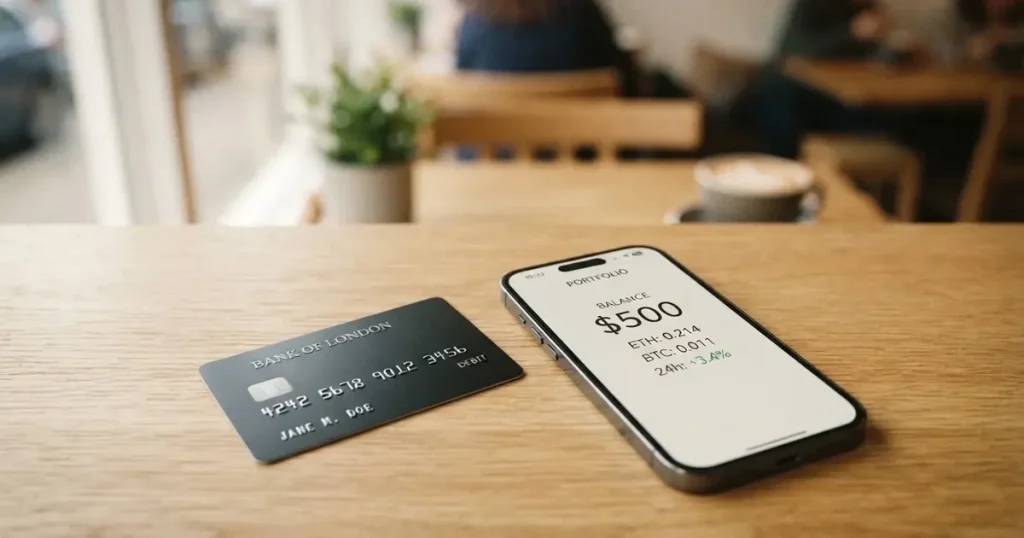
I spent time going through ZAR’s public pages, App Store listing and Terms, and what I want to do in this review is walk you through the same picture I built for myself: what kind of card this is, who it is realistically for, what it really costs, and where the rough edges are. The reader I have in mind is anyone who has trouble getting an ordinary bank card and is looking at crypto-funded alternatives, so the country and identity rules below are written for someone in that situation rather than for a single jurisdiction.
The conditions on this page are current as of October 28, 2026.
Verdict: 7.3 out of 10
ZAR is a small, focused product: a virtual Visa denominated in US dollars, paired with a self-custody wallet, and funded today almost entirely through USDC on the Solana network. For someone who already holds USDC and wants a clean, dollar-denominated card they can top up from their own wallet, it does the basics well — the virtual card is free, there are no foreign transaction fees stated, and the wallet keeps you in control of the funds. Where it loses marks is on everyday practicality: the physical card is not yet available, Google Pay support is not described, and the funding path is narrow. If you do not live in USDC, the card is awkward to use as a primary spending tool.
| Criterion | Mark | Why it scored that way |
|---|---|---|
| Who can get it | 8 / 10 | Available in over 100 countries, age 18+, with eight specific countries excluded and the usual sanctions screen. |
| Cost | 9 / 10 | Opening the account and virtual cards are free, no foreign fees stated. Monthly fee is not published and the physical card fee is country-dependent. |
| Top-up options | 5 / 10 | USDC on Solana is the primary path today, with other stablecoins accepted but converted to USDC. Bank transfer is listed but secondary. |
| Reliability and complaints | 7 / 10 | Singapore-registered company, dollars through Circle, banking with an FDIC-member US bank. No public complaint trail found; App Store rating is 3.9 from 44 ratings. |
| Everyday use | 6 / 10 | Virtual Visa in USD, Apple Pay works, ATM withdrawal is described. No physical card yet and Google Pay support is not mentioned. |
| Total | 7.3 / 10 | A neat self-custody dollar card, but limited until the physical card ships and the funding paths broaden. |
If you are weighing this against the rest of the crypto-card field, my honest summary is that ZAR is for people who specifically want a USDC-on-Solana pipeline to a Visa. If your money is mostly in a different stablecoin, in a different network, or in volatile crypto, you may find it harder to live with day to day, and the alternatives section at the end of the page goes through where else to look.
Who they will give the card to
ZAR is positioned for a wide audience. The company’s own site says the service is available in “100+ countries”, and the iOS App Store listing goes further with “110+ countries”, though neither number comes with a list. The Terms are also explicit that ZAR may refuse service in certain locations, and they single out Russia, Belarus, Iran, Iraq, China, Japan, Vietnam and Venezuela as excluded — and describe that list as non-exhaustive, which in practice means the company can add to it.
The age floor is 18, and the Terms also bar anyone under sanctions. The basis on which a country applies — your citizenship, your residence, or the country where your documents were issued — is not stated on the public pages, so if you live in one country and hold a passport from another, the safest move is to ask support before you sign up.
For the KYC step, ZAR works with Plaid for identity verification. You will be asked for a passport or a driver’s licence, and you will be screened as a politically exposed person. Proof of address is not mentioned. If the documents cannot be verified, your account can be suspended, and the Terms reserve the right to do that for fraud, legal reasons, or breach of the agreement. The company describes only one KYC/AML tier; higher limits and any tiered system are not stated, and processing times are not given either.
What this means for you in practice: if you are an adult outside the eight named excluded countries, with a passport or driver’s licence and no sanctions exposure, the door is open. If any of those conditions are in doubt, support is the right place to start before you upload documents.
How to get it
The on-ramp is the mobile app, available on iOS and Android. Once you install it, you create an account, complete KYC through Plaid, and the card lives inside the app. ZAR offers both virtual and physical Visa cards, denominated in US dollars. As of the date above, the virtual card is the one that is actually available — the physical card is described as “coming soon” on the company’s pages, with no delivery date published.
If you already have USDC in a self-custody wallet, the order of operations is straightforward: install the app, finish verification, generate the virtual card, and fund it by sending USDC on Solana to the deposit address the app shows you. If you would rather start with a bank transfer, that route is also listed on the site, but the headline experience of the product is the crypto path.
Activation specifics — first load, first transaction, anything to do with a 3-D Secure setup — are not described in detail on the public pages, so do not be surprised if the only guidance comes from the app itself.
What it really costs
The headline of ZAR’s pricing is that opening an account and getting a virtual card is free, and the marketing language around spending is “no foreign fees”. That is the right starting point, and on a virtual card it is genuinely the only thing you need to care about for most purchases. The details that are not stated are worth being aware of, because the gap between “no foreign fees” and a real cost is where most card users get caught out.
The fee structure, as far as the public pages describe it, looks like this:
| Item | What is stated |
|---|---|
| Account opening | Free |
| Virtual card issuance | Free |
| Physical card issuance | Fee depends on country (not published) |
| Monthly maintenance fee | Not stated |
| Foreign transaction fee | “No foreign fees” |
| Conversion fee (crypto to fiat) | Not stated; fees shown before confirmation |
| ATM withdrawal | App Store says you can “withdraw dollars as local currency from ATMs worldwide”; fee and allowance not stated |
| Daily and monthly spending limits | Set on registration, depending on currency, payment method and KYC/AML; specific amounts not stated |
| Card currency | US dollars (App Store: “Spend and save in USD”) |
Two things follow from this. First, the absence of a published monthly fee does not mean the fee is zero — it is simply not stated, and the Terms allow ZAR to change fees with one week’s notice. Second, the absence of a stated conversion fee does not mean the conversion is free, because the spread between what you send in USDC and what the card balance records in dollars is one place the cost can hide.
To make this concrete, here is how three everyday payments would look at the level of detail the public pages support:
A coffee in a country that uses the dollar. The card is denominated in dollars, the merchant settles in dollars, and ZAR’s “no foreign fees” wording is not even in play. The only thing you would want to know is the conversion rate when your USDC is turned into the card balance, and that rate is shown to you in the app before you confirm the transfer.
A coffee in euros. The merchant receives euros, Visa applies its exchange rate, and ZAR’s stated position is that no foreign transaction fee is added on top. Whether you end up paying more than the mid-market rate depends on the spread inside the card balance, which is not published.
An ATM withdrawal abroad. The App Store description says you can “withdraw dollars as local currency from ATMs worldwide”, but the fee and any monthly allowance are not stated. The realistic expectation is that the ATM operator will charge its own fee, and that ZAR’s own fee for the withdrawal, if any, is not published in a form you can read before you travel. If you plan to rely on ATM withdrawals, ask support to confirm the policy in writing before you leave.
Top up
The funding model is the part of ZAR that has the most personality, and the part that most clearly tells you who the card is for. The Terms state that, at present, only USDC on the Solana network is accepted. Other stablecoins, with USDT named as an example, may be accepted but are converted into USDC before they hit the balance. A bank transfer and a cash option at a merchant are also listed on the site, but the headline product is the USDC-on-Solana path.
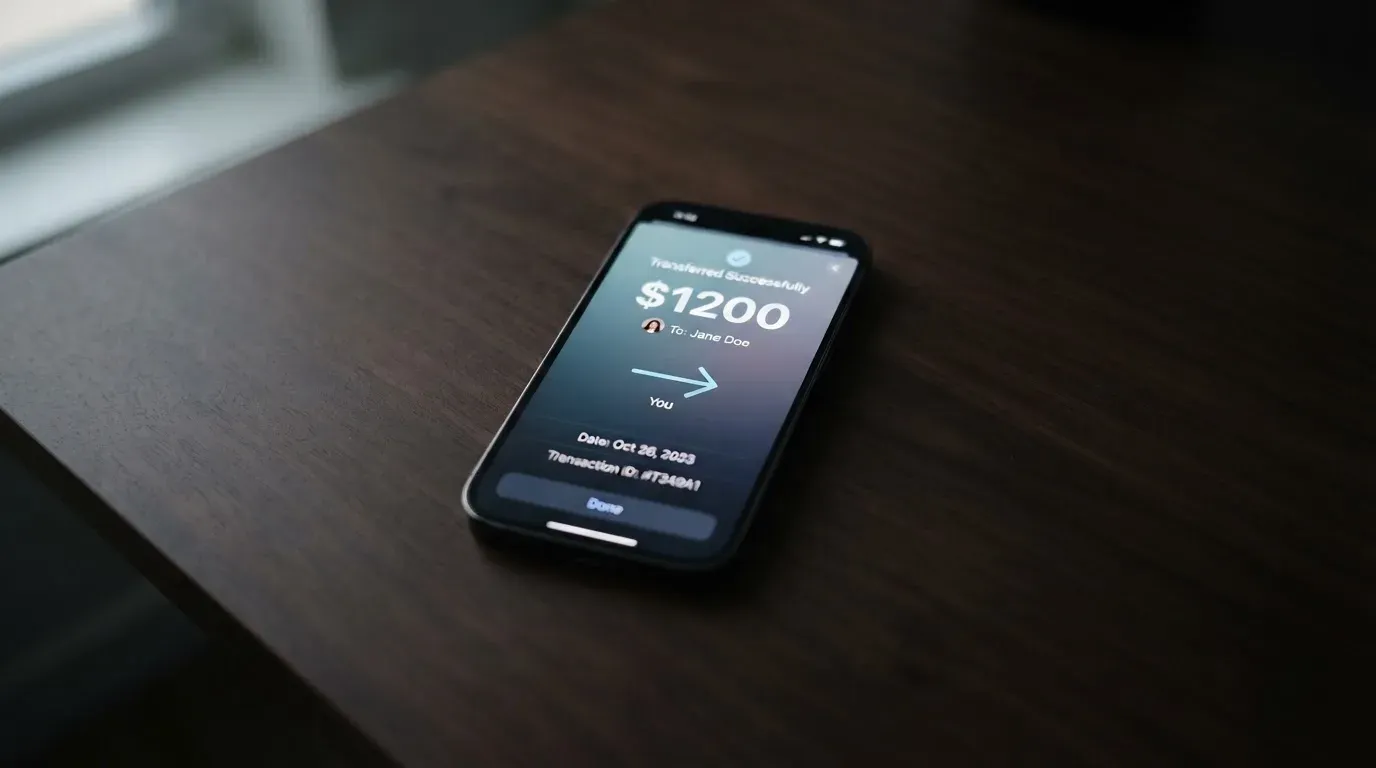
The reason this matters is that Solana is a network with very low fees and fast settlement, so the cost of moving a few hundred dollars in USDC from your own wallet to the card is small. The risk to be aware of is the wrong-network risk: if you send USDC on any chain other than Solana, the Terms warn that funds may be lost. That is not a marketing warning, it is a property of how blockchain transfers work — once a transaction is sent on the wrong network, recovery is manual at best and impossible at worst. The same caution applies to other stablecoins: if you send USDT, expect it to be converted into USDC, and expect the conversion to be on ZAR’s side, not yours.
On bank transfers, the fee depends on the method and is shown to you before you confirm. The minimum amount for a stablecoin top-up and the network fee you will pay on Solana are not stated in the public pages, so the practical way to find out is to start with a small test transfer.
If you ever want to walk away from the card, the Terms say the account can be closed at any time, but all funds have to be withdrawn first. Fees for that withdrawal are not stated.
Paying with it every day
In its current form, the card is virtual and dollar-denominated. Apple Pay tap-to-pay is supported and shown in the App Store listing, and the company describes Tap to Pay on its own pages. Google Pay support is not mentioned. ATM withdrawals are described, and the App Store rating, which I read on 2026-10-21, is 3.9 out of 5 from 44 ratings in the UK store. Google Play ratings were not read for this review.
There is no rewards or cashback programme described in the public materials, so do not expect any return on spending. Categories that are blocked (for example gambling, which several issuers restrict) are not listed.
The dispute process deserves a moment of attention because it is unusual. For disputes that come from the smart contract, the oracle, the API, the app’s backend, or account access, the Terms route you to an automated in-app resolution and you waive litigation and arbitration for those. Anything else goes to the Singapore courts. The card-specific chargeback process, in the sense of “I did not receive the goods I paid for”, is not stated. For a virtual card that you top up yourself, that gap is not necessarily a deal-breaker, but it is something to factor in if you intend to use the card for larger online purchases.
A practical note on the way the card looks to merchants: because it is a US-dollar Visa, the BIN — the first few digits of the card number — points to an issuer country that may not be the country you are in. Some merchants decline foreign-issued or prepaid-looking cards as a matter of policy, and AVS, the address check that many US, Canadian and UK shops use, may not be available to a foreign-issued card. If you hit a strange decline online, that is one of the things to ask the merchant about before assuming the card is broken.
What can go wrong
ZAR is a young product from a small company, and the risks that follow from that are worth being explicit about. None of them are unusual for the category, but they are also not abstract.
The company behind the card is Golden Age Dev Lab Pte Ltd, a Singapore entity. The Terms are governed by Singapore law and disputes fall to Singapore courts. The company describes itself as a fintech, not a bank, and explicitly says it is not a money services business. The US dollars that sit behind USDC are issued by Circle, and the banking partner is SSB, an FDIC-member bank in the United States — that means cash balances held at SSB in custodial accounts are insured by the FDIC up to $250,000 per depositor, but only against the failure of SSB itself, not against the failure of ZAR. The card issuer is not named in the public materials.
The wallet side is self-custodial: ZAR’s Terms say the company does not custody or control your funds. That is genuinely different from a custodial card where the provider holds your balance, and it means the usual self-custody risks apply — lost seed phrase, phishing, clipboard malware that swaps an address you copied. The App Store listing uses the phrase “Bank-Grade Security”, which is marketing language rather than a description of any specific certification.
On the regulatory side, ZAR does not publish a money-services-business licence number, and the Terms are explicit that the company does not present itself as a money services business. For someone in the EU this means there is no MiCA-authorised crypto-asset service provider to point to on ESMA’s interim register under ZAR’s name; the US FinCEN guidance treats crypto exchanges and administrators as money transmitters, but ZAR’s framing is that it does not fall into that category. None of this is a reason to avoid the product on its own, but it is a reason to read the Terms before you commit a large balance.
The customer-support addresses published on the site are [email protected] and [email protected]. There is no phone line, and no Trustpilot page for ZAR was found in my search. I did not find any official incident reports, and I did not find any ZAR-specific complaints in the usual places. The iOS App Store rating of 3.9 from 44 ratings in the UK is a small sample, but at least it gives you a sense of the user experience so far.
A small but real risk worth flagging: because the card is virtual today, every tap-to-pay payment you make relies on Apple Pay, and if Apple Pay support changes or is restricted in your country, the card has no fallback. The physical card is described as “coming soon”, but no date is given.
What to take instead
I went through three alternatives that cover the nearby territory. None of them is a like-for-like match, because the ZAR combination of self-custody wallet plus USDC-on-Solana plus Visa is a fairly specific niche, but each alternative solves a problem that ZAR leaves open.
| Card | Score | Card type | Funding | Headline cost | Notable limitation |
|---|---|---|---|---|---|
| ZAR | 7.3 / 10 | Virtual Visa, USD | USDC on Solana; other stablecoins converted to USDC; bank transfer | Free virtual card; physical card fee by country; “no foreign fees” | Only USDC on Solana; no physical card yet |
| International Visa Card | 6.7 / 10 | US-issued Platinum Visa, USD (virtual; physical “coming soon”) | USDC and USDT into USD account free at 1:1; also USD, EUR, SEPA, SWIFT, FedNow | Virtual card $5 one-time; Classic free, Pro $9.00/month, Max $19.00/month; non-USD: Visa rate + 2% FX | A long list of unsupported residences including Russia, Belarus, China, India, Iran, Israel, Turkey, Ukraine, Vietnam, Venezuela; long list of blocked purchase countries |
| UNi Card | 6.1 / 10 | Multicurrency Mastercard, UNi.Global account | Funding method not stated | “No annual fee or foreign transaction fee”; assets converted at “live OTC rates” | Cashback up to 3% on UNi Card; availability of the card not stated |
| Whop Cards | 5.2 / 10 | Visa; type and currency not stated | Whop balance backed by stablecoin collateral; networks not stated | “No extra fees” published; specific amounts not listed | 5% cashback at select merchants (currently Uber, more planned); consumer support only in 31 US states; long unsupported-country list |
The International Visa Card is the closest in spirit — a US-issued Visa in dollars, with USDC and USDT funding — but it is gated behind a much longer residency block list, and the FX fee on non-USD spending is 2% on top of the Visa rate, so it is a more expensive card to actually use outside the United States. UNi Card is interesting if multicurrency support matters to you, but the public materials do not say which countries it serves, which is a meaningful gap. Whop Cards is currently a US-only product for consumers, with a US-state-by-state support list and an unsupported-country list that overlaps heavily with ZAR’s. Its selling point is the 5% cashback at select merchants, but the headline feature is only at Uber today, and the FX and conversion policy are not stated.
If you specifically want the USDC-on-Solana pipeline, ZAR is the cleanest of the three. If you want multicurrency Mastercard coverage, UNi is the direction to look. If you want a US-issued Visa that is happy to take USDC and USDT, the International Visa Card is the more conventional option at the cost of a 2% FX fee on non-dollar spending and a long list of countries where you cannot have it.
Who I would recommend it to
The narrow case where ZAR makes sense is the one the product seems designed for: you already hold USDC, you are comfortable with Solana, and you want a dollar-denominated Visa that does not add a foreign transaction fee. In that case, the experience is lean, the card is free, and the wallet keeps you in control of the funds.
The cases where I would push back are: if your money is mostly in USDT on Tron, because the conversion step is on ZAR’s side and you should test the rates with a small amount first; if you need a physical card right now, because the plastic is not shipping yet; if you rely on Google Pay, because that support is not described; and if you are in one of the named excluded countries, because the Terms allow the company to refuse service at its discretion.
For a casual USDC holder who wants a free virtual Visa and is happy to live inside Apple Pay for the moment, ZAR is a reasonable pick. For everyone else, the alternatives above are worth a look before you commit.
Frequently asked questions
What is the ZAR card?
The ZAR card is a virtual Visa denominated in US dollars, issued alongside a self-custody crypto wallet from Golden Age Dev Lab Pte Ltd, a Singapore-registered fintech. The company describes it as a way to spend a USDC balance through a normal Visa card.
How does the ZAR card work?
You install the ZAR app, complete KYC through Plaid, generate a virtual Visa, and top the card up by sending USDC on the Solana network to the address the app shows you. The card then spends that balance through Visa, in US dollars.
Is ZAR a bank?
No. ZAR’s own pages describe it as a fintech company, not a bank, and the Terms say ZAR is not a money services business. The US-dollar balances that sit with banking partner SSB are held in custodial accounts at an FDIC-member bank, which is where the $250,000-per-depositor FDIC insurance comes from — and only against the failure of that bank, not against the failure of ZAR.
Who owns ZAR?
The Terms name Golden Age Dev Lab Pte Ltd as the contracting entity. It is a Singapore private company; the founders and ownership structure are not published on the public pages.
Is the ZAR card available in my country?
ZAR’s site says “100+ countries” and the App Store says “110+ countries”, without a list. The Terms name Russia, Belarus, Iran, Iraq, China, Japan, Vietnam and Venezuela as excluded and reserve the right to refuse service elsewhere. The basis — citizenship, residence or document-issuing country — is not stated.
How do I apply for the ZAR card?
Install the ZAR app on iOS or Android, create an account, complete KYC through Plaid with a passport or driver’s licence, and generate the virtual card from inside the app. The physical card is described as “coming soon”.
Does the ZAR card require KYC?
Yes. ZAR uses Plaid to verify identity, accepts passports and driver’s licences, runs PEP screening, and requires the user to be at least 18 and not under sanctions. Proof of address is not mentioned in the public materials.
How do I top up the ZAR card?
The supported path is to send USDC on the Solana network to the deposit address the app shows you. The Terms say other stablecoins such as USDT may be accepted but are converted to USDC, and that sending on the wrong chain may lose funds. Bank transfer and cash at a merchant are also listed on the site, with fees shown before confirmation.
Is the ZAR card safe?
The wallet is self-custodial, which means you hold the keys and the usual self-custody risks apply: lost seed phrase, phishing, clipboard malware. Cash balances at banking partner SSB are FDIC-insured up to $250,000 per depositor against the failure of that bank. The card issuer is not named, and ZAR is not a bank or a money services business under its own framing.
Is the ZAR card worth it?
If you already hold USDC on Solana and want a free, dollar-denominated virtual Visa without a foreign transaction fee, yes. If you need a physical card today, rely on Google Pay, or hold most of your money in a different stablecoin or a different network, the calculus is harder and the alternatives above are worth comparing before you sign up.
Choosing an app or neobank card – cryptocardadvisor
Content created by the «cryptocardadvisor» team