
A virtual dollar card for stablecoin spending in Nigeria, but only if you live in Nigeria
 Available in US
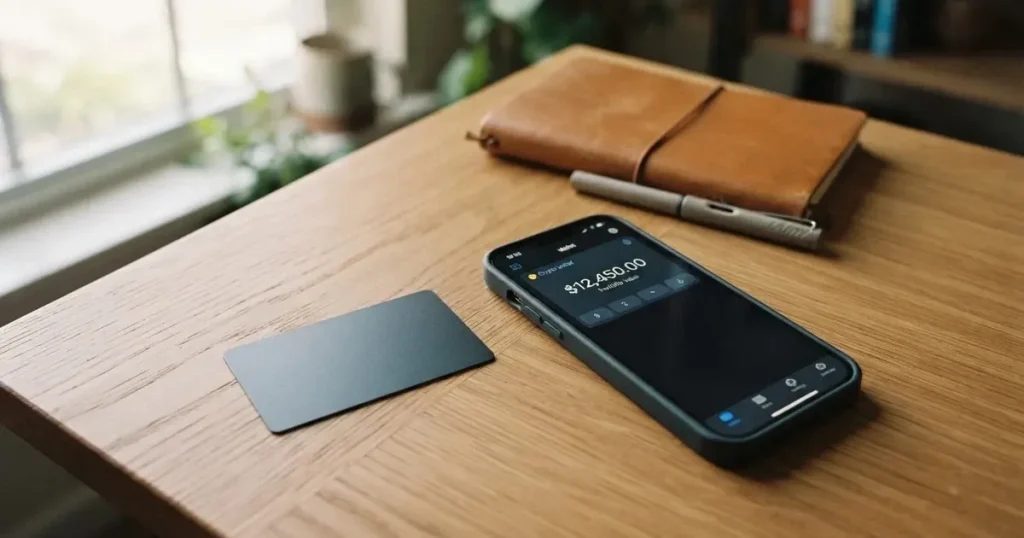
The Obiex card is a virtual USD card that pulls from a stablecoin balance in your Obiex wallet. It exists to solve one problem: paying for everyday things in dollars when the Nigerian naira makes that hard. If that is your situation, the card does what it says on the tin. If you live anywhere else, the product is not for you. The Obiex card is restricted to residents of Nigeria aged 18 and over who complete a BVN check and KYC Level 2 verification. That single fact shapes everything that follows.
Conditions are current as of October 28, 2026.
This review is written for someone who already knows roughly what a crypto card is and wants to know whether the Obiex card specifically is worth the trouble. I have gone through the official card page, Obiex’s blog, the available third-party coverage, and the general background on how crypto cards work. The conditions described here are current as of 2026-10-20.
Verdict
The Obiex card scores 4.5 out of 10. That is not a damning score, but it is below the middle of the range, and the reasons matter more than the number.
The card’s strongest point is its cost. A flat $2 issuance fee with no monthly charge, no funding fee, no conversion fee and no transaction fee is genuinely competitive for the region. The weakest point is reliability. The card feature was suspended in Q3 2022 after processing more than $2.7 million, and although the CTO at the time said it would return in Q1 2023, I could not find independent confirmation that the relaunch actually happened in the form users are seeing today. Combined with the fact that I could not identify the card’s issuer or the licences it operates under, that leaves a question mark over how safe the programme is if something goes wrong.
This card suits Nigerian residents who already hold stablecoins on the Obiex platform and need a simple way to spend them in dollars online. It does not suit anyone outside Nigeria, anyone who needs a physical card, anyone who relies on Apple Pay or Google Pay, and anyone who values the protection that comes from a clearly identified, well-regulated issuer.
Score breakdown
| Criterion | Mark | Why |
|---|---|---|
| Who can get it | 2 / 10 | Only Nigeria, residents 18+, BVN and KYC Level 2 |
| Cost | 8 / 10 | $2 issuance, zero funding, conversion and transaction fees; failed-payment fee $1; FX not disclosed |
| Top-up options | 6 / 10 | Stablecoins from the Obiex wallet (USDT, USDC, BUSD); minimum $5 top-up; networks not disclosed |
| Reliability and complaints | 3 / 10 | Card suspended in Q3 2022 after $2.7M+ processed; Q1 2023 relaunch not independently confirmed; issuer not found |
| Everyday use | 3 / 10 | Virtual-only, USD, $1,000 daily limit; Apple Pay, Google Pay, ATM all undisclosed |
| Total | 4.5 / 10 |
The score breakdown follows the same structure used across reviews on this site, so you can compare cards head-to-head. Each row is the same scale and the same short reason; the total is the simple average of the six.
Who they will give the card to
The answer to “can I get the Obiex card?” is short: only if you live in Nigeria.
According to the official card page, the card is available to Nigerian residents aged 18 and over who have a Bank Verification Number (BVN) and have completed KYC Level 2. The BVN is a unique number that Nigerian banks issue to every customer, and KYC Level 2 means you have provided proof of address and a valid government-issued ID, not just basic sign-up details.
The card page does not say anything about citizens of any other country, residents of any other country, or non-resident Nigerians. There is no path I could find for a Nigerian living abroad, a foreigner living in Nigeria, or anyone applying from a different market. If you are reading this from outside Nigeria, this is a closed door. You can stop here.
I also looked for any statement about Russian or Belarusian citizens or residents and found nothing in the card’s public materials. That silence does not mean the card is open to those readers; it means the card’s pages do not address the question. In a regulated payments market, silence usually means “not supported”, but the only certain answer comes from Obiex itself when you try to sign up.
The single-tier structure (one product, not Bronze/Silver/Gold) means there is no upgrade path or higher limit to chase. Either you are in, or you are not.
How to get it
The sign-up flow is straightforward in principle, though some details I would normally confirm are missing from the public materials.
To get the card, you need to:
- Create or sign in to an Obiex account. Obiex is a Nigerian crypto exchange run by Obiex Africa Ltd, so the same platform you would use to buy and sell crypto is where the card lives.
- Complete KYC Level 2. This means BVN (your bank ID) plus standard identity verification, including a government-issued ID and proof of address. The exact documents were not visible to me because the relevant page was blocked in my session, but Level 2 in Nigerian practice typically means a NIN slip, a passport or driver’s licence, and a utility bill or bank statement.
- Open the card section and request a virtual card. The card is digital only; there is no physical card to wait for, so once it is issued and you have topped it up, the funds are available right away.
What is not stated publicly is what network the card runs on (Visa or Mastercard is not disclosed in the materials I could read), the exact identity of the card issuer (a bank, an e-money institution or a programme manager), and the licences that issuer holds. The card is a “virtual dollar card” denominated in USD, and that is the level of detail the page provides. For a payments product, that thinness is itself a signal. Most well-run programmes list the issuer prominently because regulators usually require it.
What it really costs — Fees
The cost section is where the Obiex card genuinely shines, with one important asterisk.
The official card page lists these fees and limits:
- Issuance fee: $2 one-time, lifetime access.
- Monthly fee: none.
- Funding fee: none.
- Conversion fee: none.
- Transaction fee: none.
- Failed payment (insufficient funds): $1 per failed attempt, per Obiex’s blog.
- FX (foreign exchange) fee: not stated.
- ATM withdrawal fee: not stated.
- Daily spending limit: $1,000, per the blog.
- Monthly spending limit: not stated.
Two things to flag. First, an older Obiex blog post says the card creation fee is zero, which conflicts with the $2 fee on the current official card page. The current page is the one to trust, because it is the more recent and more specific document. Second, the FX fee is the wildcard. Because the card is denominated in USD, any payment in naira, euros or pounds will go through a foreign-exchange conversion. If there is a non-zero markup on that, it is the most expensive fee you would pay in practice, and it is not visible on the public page. Before you put real money on the card, check the in-app disclosure at the moment of payment or contact support and ask.
Costs at a glance
| Fee or limit | Value |
|---|---|
| Issuance | $2 (one-time, lifetime) |
| Monthly | $0 |
| Funding | $0 |
| Conversion | $0 |
| Transaction | $0 |
| Failed payment (insufficient funds) | $1 |
| FX | Not stated |
| ATM | Not stated |
| Daily spending limit | $1,000 |
| Monthly spending limit | Not stated |
The other asterisk is the $1 failed-payment fee. If you let the balance run low and a subscription tries to charge, or a one-off purchase fires when the dollar is in the middle of a conversion, you will pay $1 for the privilege. Pre-loaded cards cannot overdraw, so the only way a payment “fails for insufficient funds” is if your balance genuinely has nothing or has not been topped up yet. Set a low-balance alert if the app offers one, or keep a buffer.
Three everyday payments, what each would cost
- A $5 streaming subscription paid in USD. Conversion: $0. Transaction: $0. FX: $0 because the merchant is billing in dollars. Total: $0 on top of the $5.
- A $30 in-app purchase billed in naira. The card pays $30 in USD, the network converts to naira at the wholesale rate, and Obiex may add a markup it has not published. If the markup is zero, total is $0; if it is 1%, total is $0.30. The honest answer is that I do not know what the markup will be.
- A failed $12 payment because the balance was $8. Conversion: $0. Transaction: $0. Failed-payment fee: $1. Total: $1 charged for a payment that did not happen, on top of the $4 you will need to add to retry.
The pattern is clear: when the card is used the way it is designed, it is cheap. When it is pushed to a use case the issuer has not priced, the cost is unknown.
How to top it up — Top up
The card is funded from your Obiex wallet, and only from your Obiex wallet, with stablecoins.
The official card page lists USDT, USDC and BUSD as the supported stablecoins. An older blog post says only stablecoins such as USDT are supported at the moment, which is consistent with the current page. The minimum top-up is $5 per the blog. There is no funding fee on Obiex’s side, but you will still pay whatever the source blockchain charges to send the stablecoin in the first place; that is the network’s gas or bandwidth fee, not Obiex’s.
What is not stated is which networks the funding accepts. USDT exists on Ethereum (ERC-20), Tron (TRC-20), Solana, Polygon, Avalanche and others. USDC used to exist on Tron but Circle stopped supporting that combination in February 2024, so “USDC over TRC20” is no longer a native option anywhere. Obiex’s card page does not say whether it expects Ethereum, Tron, Solana, BNB Chain or something else. This is the single biggest practical risk in the funding flow: if you send USDT on the wrong network, the transfer is irreversible and the funds can be lost or stranded in a manual recovery process that the card page does not document.
Before you top up for the first time, confirm in the Obiex app which network and token combination the deposit address is set up for, and send a small test transaction first. The $5 minimum is low enough that a $5 test is not a meaningful loss if it goes wrong, and it is much smaller than the loss if you send $500 to the wrong network.
The blog’s withdrawal guide describes a process for moving money back out of the card to your Obiex wallet, with a stated zero withdrawal fee. The exact process was not visible to me in the materials I could read, so the practical step is to test a small withdrawal in the app before you rely on it for any large amount.
Paying with it every day
In daily use, the Obiex card is a narrower tool than most crypto cards on the market.
The card is virtual only. There is no physical plastic, no embossed name, nothing to tap on a terminal. That works for online shopping, in-app purchases, and any checkout where you type or paste card details. It does not work for in-store contactless payment, because there is no card to tap. It also does not work at an ATM, because the card page does not mention ATM access at all.
The card is denominated in USD. Anything you buy in a non-dollar currency goes through a foreign-exchange conversion. The daily limit is $1,000, which is a ceiling on the card itself rather than on your wallet; the wallet can hold more, but the card can only spend $1,000 a day through it.
What the card page does not say is just as important as what it does say. It does not say whether the card can be added to Apple Pay or Google Pay. It does not say whether there is a rewards or cashback programme. It does not say anything about a mobile-app experience, customer-support channels, or how disputes are handled when a merchant charges you for something you did not receive. For a reader who treats a payment card as a daily tool, those are real gaps, not nice-to-haves.
If your use case is “I have stablecoins on Obiex and I want to spend them online in dollars up to $1,000 a day,” the card is fit for purpose. If your use case is “I need a card I can tap in a shop, freeze from an app, and link to my phone wallet,” the Obiex card is not it, and you should look at one of the alternatives in the next section.
What can go wrong
There are three categories of risk worth thinking through before you put any meaningful amount on the card.
Issuer and regulatory risk
I could not find the name of the card’s issuer, the regulator it operates under, or the licence it holds. The card is a product of Obiex Africa Ltd, a Nigerian crypto exchange, but that is not the same thing as saying Obiex is the issuer. Most crypto cards are issued by a bank or an e-money institution (in the EU, an EMI is a regulated entity that can issue e-money and payment cards, but cannot lend, and must safeguard customer funds in segregated accounts) that holds the actual Visa or Mastercard programme; the crypto brand is the front-end. Without that issuer’s name, you cannot check whether the programme is supervised, by whom, and what would happen to cardholders if the issuer got into trouble. In the EU, e-money institutions must keep customer funds segregated, but that protection is not the same as deposit insurance and may not apply here in the same form.
Historical reliability
In Q3 2022, the Obiex card feature was suspended after processing more than $2.7 million in transactions. The CTO at the time said the card would return in Q1 2023. I could not find independent confirmation that the relaunch happened as described, or that the same product (same fees, same limits, same support) is what users see today. No user reviews on Trustpilot or similar sites were found, which is a thin evidence base for a payments product.
The general history of crypto cards includes some cautionary cases: in 2018, Visa suspended WaveCrest as a card issuer in Europe, which closed all WaveCrest-issued Visa programmes overnight; in November 2022, Visa said it had terminated its global agreements with FTX and the FTX US debit card was wound down by its issuer. Neither of those is about Obiex, but both show that a card can be a working product on Monday and a stranded balance on Tuesday if the issuer’s relationship with the network or its regulator breaks down.
Custodial and stablecoin risk
The card draws on your Obiex wallet balance, and Obiex holds the private keys to that wallet. That is a custodial arrangement: the funds are with the platform, not with you. If Obiex is hacked, becomes insolvent, or freezes withdrawals, your card balance is at risk along with the rest of your wallet. Stablecoins themselves can lose their peg (USDC briefly lost its peg during the US banking crisis in March 2023), and Tether has frozen tokens tied to sanctioned addresses, so the “stable” in stablecoin is a working assumption, not a guarantee.
There is no point pretending the card is risk-free. The honest framing is: the card’s cost is low, its use case is narrow, and the safety of the balance depends on the safety of the platform and the peg of the stablecoin you loaded.
What to take instead
If the Obiex card does not match your situation, three alternatives come up most often. None of them are direct replacements, and the right choice depends on which gap you are trying to close.
Young Card
- Score: 5.7 / 10
- What it offers: Cashback paid in YNG tokens, with the rate set by Club tier: Essential 0.1%, Gold 1.8%, Platinum 3.6%. Bronze and Silver are not stated.
- What is missing: The official materials I could read do not say who can get the card, what form the card takes, what it costs, or how it is funded.
Young Card’s appeal is its cashback structure. If you are a regular spender who values a return on every payment, and the tiers line up with your volume, the headline rates look generous. The downsides are the gaps in the published information: without confirmed eligibility, fees and funding details, you are deciding on a rewards pitch rather than a complete product spec. Treat the 5.7 score as a sign that the value proposition is real but under-documented.
MSX
- Score: 6.4 / 10
- What it offers: The official materials I could read do not say who can get the card, what form the card takes, what it costs, or how it is funded.
- What is missing: Almost everything. The score is a placeholder; the public information is too thin to recommend it on substance.
MSX is the lowest-information option of the three. The 6.4 reflects what the platform does at the exchange level rather than what the card specifically delivers, and I would not commit funds to a card without confirming eligibility, fees and funding in the official app first.
Bybit Card
- Score: 6.0 / 10
- Where it works: Argentina, AIFC (Kazakhstan), Georgia, Kazakhstan, Australia, Mexico, Brazil, Peru, and the broader Asia Pacific region. The application asks for country of residence, and if the country is not supported, Bybit “will register your interest”. The cards page says “This product is not meant for European Economic Area customers. All European Economic Area customer participation is strictly prohibited.”
- Citizenship rules: Bybit’s fiat-service restricted list (covering deposits, withdrawals and One-Click Buy, not the card programme itself) includes Belarus, the Russian Federation, Serbia, China and the United States, with the note “Russian users can only make RUB transaction in Fiat”. I did not find a card-specific statement on Russian or Belarusian citizens, and no citizenship-versus-residence rule was published. The card currency “depends on the country of your Advanced Identity Verification.”
- Card forms: Virtual and physical. A virtual card must be obtained first. Physical cards are not available in Peru and were rolled out in phases. Networks: Mastercard prepaid in Argentina, “Mastercard credit card” in AIFC, Georgia, Kazakhstan, Australia and Mexico, Visa prepaid in Brazil and Peru, and Visa credit in Asia Pacific. Validity ranges from 3 years (AIFC, Georgia, Kazakhstan, Asia Pacific, Australia) to 6 years (Argentina).
- Costs: Virtual card issuance is free “until further notice” in every region. Physical issuance is $29.99 in Australia, $5 in Argentina, 29.99 USDT in Georgia, 29.99 USDT in Kazakhstan (AIFC), 5 USDT in Asia Pacific, and free in Brazil and Mexico; VIPs holding certain physical cards pay no issuance or replacement fee. The cards page says “Auto interest, no annual fees”.
- Fees: A 0.9% crypto conversion fee applies on top of the One-Click Sell rate in most regions, 0.5% in Argentina, and is not supported in Peru. FX fees are 2% on top of the network rate in Australia, Asia Pacific, Georgia and Mexico, 2% “International Fee” on purchases outside Kazakhstan in USD in AIFC, 7% in Argentina, 1.5% in Brazil, 1% in Peru. An FX padding of 0% in Australia and Mexico, 5% in Argentina and 1% in Brazil is refunded. Argentina-only taxes include 21% VAT on foreign digital services, 30% tax on foreign transactions, and a 1%–13.2% provincial gross-income tax.
- Funding: The card has no balance of its own. It draws on the Funding Account and the Flexible Easy Earn balance, fiat first; if fiat is short, crypto is sold at the One-Click Sell rate plus a 0.9% (or 0.5%) conversion fee. Supported cryptos are BTC, ETH, XRP, USDT, USDC and GRAM, in a default priority of USDT, USDC, GRAM, BTC, ETH, XRP that you can reorder in the Card Dashboard. The Funding Account is topped up via Buy Crypto or by depositing crypto from other wallets.
- Rewards: From 5 October 2026 at 10:00 UTC, only crypto-funded transactions earn points or cashback. The non-VIP tiers (cashback rate, monthly cap, monthly spend to unlock) are Base 2% / $5 / $0, Beta 2% / $50 / $500, Alpha 4% / $150 / $3,500, Apex 6% / $250 / $9,500, Omega 8% / $400 / $12,500 and Infinite 10% / $600 / $25,000. Points are pending for 4 calendar days, cashback in USDT equals points × 0.002, and Auto Cashback must be on. A Pay Later instalment bonus adds 1%. The welcome offer is 10% cashback up to 110 USDT in the first 30 days, “100% cashback on must-have subscriptions” for VIPs and Alpha tier and above, and a referral bonus of 20 USDT or 10 USDT.
Bybit Card is the most fully documented alternative and the most likely substitute if your main reason for considering the Obiex card is the stablecoin-to-spend flow. The 0.9% conversion fee is higher than Obiex’s zero, the 2% FX markup is real, and the rewards structure rewards higher spend. The case for it over Obiex is geography (it is not restricted to Nigeria) and documentation (the issuer, fees and networks are all on the public page). The case against is the higher fees and the strict EEA exclusion.
Picking between them
| If you are… | Then consider… |
|---|---|
| A Nigerian resident who already uses Obiex and wants to spend stablecoins online in dollars | Obiex, because the fees are the lowest of the four and the wallet is already there |
| A non-Nigerian spender who wants a well-documented virtual and physical card with rewards | Bybit Card, if you are in one of its listed regions and outside the EEA |
| A higher-volume spender who can clear Platinum and wants a token-based cashback | Young Card, after confirming eligibility, fees and funding directly in the app |
| Anyone outside these situations | MSX is too under-documented to recommend without a closer look at the live app |
The right card is the one that fits your country, your spend pattern, and your tolerance for the gaps in the published information. None of these four is a universal answer.
Who I would recommend it to
I would recommend the Obiex card to a narrow but real audience: a Nigerian resident, 18 or older, with a BVN and a completed KYC Level 2, who already holds USDT, USDC or BUSD on the Obiex platform and wants to spend those stablecoins online in dollars, up to $1,000 a day, without paying funding, conversion or transaction fees. For that person, the $2 one-time issuance is a cheap price for a working tool, and the daily limit is a real but liveable ceiling.
I would not recommend it to:
- Anyone outside Nigeria, because the card is not available.
- Anyone who needs a physical card, contactless tap-to-pay, or ATM access, because the card is virtual-only and ATM terms are not published.
- Anyone who depends on Apple Pay, Google Pay or a mobile wallet, because tokenisation support is not confirmed.
- Anyone who needs a clearly identified, well-regulated issuer with named licences, because the issuer and the licences are not disclosed in the public materials.
- Anyone whose total card spend would exceed $1,000 a day, because that is the published ceiling.
- Anyone who is uneasy about a custodial balance, a 2022 suspension that has not been independently confirmed as fully relaunched, and a stablecoin denomination that is only as safe as the peg of the token loaded.
If you fall into that second list, the Bybit Card is the better-documented alternative in regions where it operates, and the Young Card and MSX are options only after you have confirmed the gaps in the official materials directly. The Obiex card is a useful, low-cost tool for a specific reader in a specific country. Read it that way, and it is a fair deal.
Frequently asked questions
What is the Obiex card?
The Obiex card is a virtual USD card issued through the Obiex platform, a Nigerian crypto exchange run by Obiex Africa Ltd. It draws on a stablecoin balance held in your Obiex wallet and lets you spend that balance in dollars online, up to a $1,000 daily limit.
How does the Obiex card work?
You complete KYC Level 2, request the virtual card, top it up with USDT, USDC or BUSD from your Obiex wallet, and the card pays in USD at online checkouts. There is no physical card, no contactless tap-to-pay, and no ATM access mentioned in the published materials.
Is Obiex a bank?
No. Obiex is a Nigerian crypto exchange, not a bank. The card is a payment product, and the card’s issuer is not named in the public materials, so it is not presented as a bank-issued product.
Who owns Obiex?
Obiex is operated by Obiex Africa Ltd, a Nigerian company. The card page identifies Obiex Africa Ltd as the company behind the platform; the card’s issuing bank or e-money institution, if there is one, is not publicly disclosed.
Is the Obiex card available in my country?
Only if your country is Nigeria, and only if you are a resident aged 18 or over with a BVN and KYC Level 2. The card’s public pages do not address residents of any other country, and there is no mention of non-resident Nigerians being eligible.
How do I get the Obiex card?
Create or sign in to an Obiex account, complete KYC Level 2 with your BVN and identity documents, open the card section, request the virtual card, pay the $2 issuance fee, and top it up. The virtual card is available right away after funding.
Does the Obiex card require KYC?
Yes. You need KYC Level 2, which in Nigerian practice means a Bank Verification Number (BVN) and standard identity verification including a government-issued ID and proof of address. The card page does not publish the full document list, so confirm in the app when you apply.
How do I top up the Obiex card?
You fund it from your Obiex wallet with stablecoins (USDT, USDC or BUSD per the card page; an older blog post says only stablecoins such as USDT are supported at the moment). The minimum top-up is $5, and the funding fee on Obiex’s side is zero, although you will still pay the source blockchain’s network fee. The card page does not state which network each token is sent on, so confirm the network in the app and send a small test first.
Is the Obiex card free?
Almost. There is a $2 one-time issuance fee, then no monthly fee, no funding fee, no conversion fee and no transaction fee. There is a $1 fee if a payment fails for insufficient funds, and the FX fee (for non-USD payments) is not published. The card is not strictly free, but the recurring cost is zero as long as you keep the balance topped up and avoid failed payments.
Is the Obiex card safe?
It is as safe as the platform behind it. The card is custodial (Obiex holds the keys to the wallet that funds it), the issuer and licences are not named in the public materials, and the card feature was suspended in Q3 2022 after processing more than $2.7 million, with a Q1 2023 relaunch announced. Treat the card as a working tool for small, online USD spending rather than a long-term store of value.
Choosing an exchange card – cryptocardadvisor
Content created by the «cryptocardadvisor» team