
Bitrefill card: a crypto-funded Visa for everyday euro spending
 Available in US
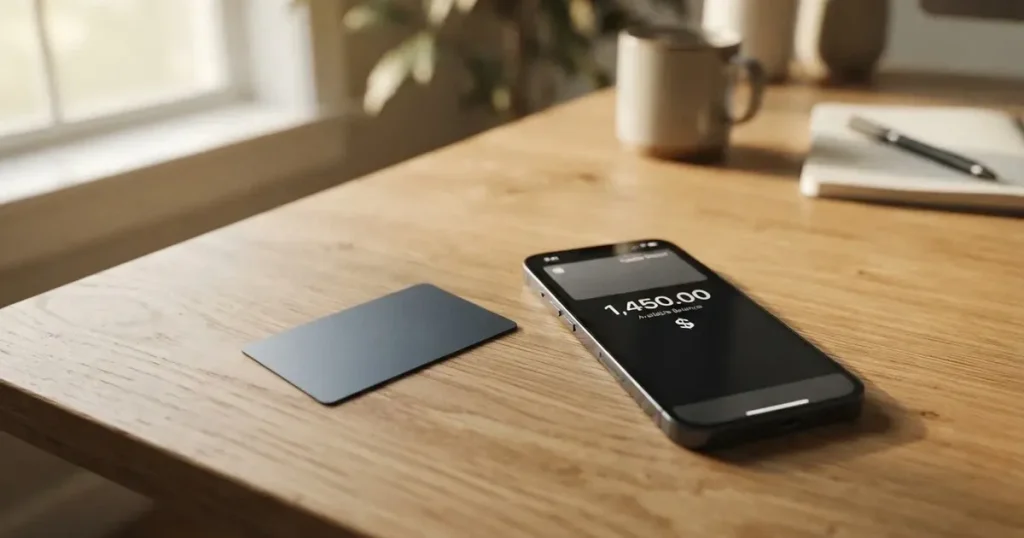
The Bitrefill card is a Visa that turns your crypto balance into euros at the point of purchase. It is aimed at people who already hold Bitcoin, Lightning balances, USDC, or similar assets and want to spend them in the real world without first cashing out to a bank. The card sits inside the broader Bitrefill app, which is best known for selling gift cards and mobile top-ups paid in crypto, and it inherits some of that audience: users who are comfortable with on-chain transfers, who value Lightning speed, and who live in the European Union.
Conditions on this page are current as of October 28, 2026.
Verdict
Bitrefill earns 6.8 out of 10. That score reflects a card that does a narrow job well, in a narrow market. It is free to issue through the app, supports a useful range of crypto and stablecoin deposits, and runs on a Visa rails in euros, so it works at most merchants who take Visa. It is not, however, a general-purpose global card, and the eligibility list is tighter than it first looks.

| Criterion | Mark | Why it scores this way |
|---|---|---|
| Who can get it | 5 / 10 | Card issued to residents of 29 countries, including EU member states plus Norway and Iceland, 18+; US and Russian citizens excluded regardless of where they live |
| Cost | 6 / 10 | Free card through the app; 1.99% fixed deposit fee; no FX fee; unofficial sources cite a EUR 10/month inactivity fee after 12 months and a 2.49% ATM fee |
| Top-up options | 7 / 10 | Bitcoin, Lightning, Ethereum, USDC, Solana, Base, Polygon, and SEPA supported; USDT deposits ended 17 March 2025; minimum top-up EUR 15 |
| Reliability and complaints | 9 / 10 | Card issued by Wallester AS (Estonia, licensed by Finantsinspektsioon), operated by Airfill Prepaid AB; Trustpilot 4.5/5 across 2,943 reviews, most complaints about the gift-card store, not the card |
| Everyday use | 8 / 10 | Virtual and physical Visa; Google Pay supported; Apple Pay listed as “coming soon”; ATM access wherever Visa is accepted |
The audience where this card makes most sense is the EU resident who already holds crypto or stablecoins, wants to spend in euros without selling to a bank first, and is happy with a single-currency euro card. Outside that group, the card either will not be issued or will look poor value compared with multi-currency alternatives.
Who will they give you the card
Bitrefill does not publish a full public country list. The terms say access is “subject to eligibility criteria” and that “further eligibility requirements, established and verified by our partners, shall apply.” In practice, the card is issued to residents of 29 countries: Austria, Belgium, Bulgaria, Croatia, Cyprus, Czech Republic, Denmark, Estonia, Finland, France, Germany, Greece, Hungary, Ireland, Italy, Latvia, Lithuania, Luxembourg, Malta, Netherlands, Poland, Portugal, Romania, Slovakia, Slovenia, Spain, Sweden, Norway, and Iceland. Applicants must be at least 18 and pass identity verification.
Two nationality rules bite harder than the residency list. Citizens of the United States and citizens of Russia are excluded regardless of where they live. The Russian exclusion has one carve-out: a Russian citizen who also holds EU or EEA citizenship is eligible. There is also a help-centre blocklist for verification and deposits that includes the US, Japan, Russia, Ukraine, and the UAE, though that list was truncated in the page I read and may run longer.
If you are reading this from outside the 29-country list, or you are a US or Russian passport holder, the card is not for you. Bitrefill’s narrower geographic focus is the most important reason this card is not a global option, and it is the single biggest gap to check first before going further.
How to get it
The card lives inside the Bitrefill app. The app is available on iOS and Google Play. To order the card you need an account and you need to clear the card partner’s identity check, which runs before the order is accepted.
Identity verification follows a two-tier structure. By default you start on the Starter tier, which requires a photo ID and a selfie liveness check, and may also ask for proof of address. If you are activating the card from outside the EU, the help centre says proof of address is required. Once you hit the Starter deposit ceiling, you are invited to upgrade to the Plus tier, which adds proof of address and proof of source of funds, and lifts the deposit limit. You have 30 days to complete the upgrade, and if you do not, the help centre says “your card will be suspended.”
The card itself comes in two forms: a virtual Visa and a physical Visa. The virtual card is usable on receipt. The physical card must be activated once it arrives, and ordering the physical card is free; a second card can be requested from the Cards page. Delivery time is not stated on the card page. When the card expires you need to order a new one. Replacement cost and the exact list of accepted identity documents are not stated.
What this means for you: the heaviest lift is the identity check, not the card order. If you already have a passport or national ID and a recent proof of address ready, the Starter path is quick. The Plus upgrade is where source-of-funds paperwork appears, and that is the moment to have bank statements or wallet history ready if you can.
What it really costs
Bitrefill markets the card as free through the app, and the card order itself does not carry an issuance fee on the official page. The cost of using the card lives in the deposit fee, the conversion spread, the ATM fee, and an inactivity fee that third-party sources report.
| Fee or limit | Amount |
|---|---|
| Card issuance (in-app) | Free (per official page) |
| Monthly fee | Not stated on official page |
| Deposit fee (crypto) | 1.99% fixed, plus variable exchange cost at the card partner’s live rate |
| SEPA pay-in | 1.99% |
| Foreign exchange fee | 0% (Visa exchange rate applies to foreign-currency payments) |
| ATM fee (unofficial) | 2.49% for both Starter and Plus, plus ATM operator charge |
| ATM limits (unofficial) | EUR 350/day, EUR 3,000/month |
| Inactivity fee (unofficial) | EUR 10/month after 12 months without spending or cashing out |
| Replacement physical card (unofficial) | EUR 10 |
| Physical card delivery | Free where offered; delivery time not stated |
| Minimum deposit | EUR 15 (smaller deposits not added) |
The inactivity fee, the ATM fee, and the replacement card fee are listed on unofficial third-party sites and have not been confirmed in the official card terms. Where the card page itself is silent, treat the official line as authoritative and the third-party line as a useful but unconfirmed heads-up.
Three everyday payments and what they cost
A EUR 50 supermarket shop with Bitcoin deposited from your own wallet. The deposit is 1.99% of EUR 50, which is about EUR 1.00, plus the variable exchange cost at the partner’s live rate. There is no FX fee because the merchant is paid in euros. Total card-side cost is the 1.99% plus the spread baked into the conversion.
A EUR 30 online subscription billed in US dollars. Your euro balance is converted to dollars at the Visa exchange rate, and there is no FX markup on top. The only fee in play is the deposit fee you already paid when you topped up.
A EUR 100 ATM withdrawal while travelling. Unofficial sources put this at 2.49% (about EUR 2.49) plus whatever the ATM operator charges. The official card page does not state the ATM fee, so the 2.49% figure should be checked at the point of withdrawal or against the most recent pricing page before relying on it.
How to top up the card
The card page lists a “Buy with” set of options, including Bitcoin, Lightning, Ethereum, USDC, USDT, Solana, BASE, Polygon, Li.Finance, Apple Pay, Google Pay, Visa, and MasterCard, and the terms also support SEPA transfers. That list mixes payment options for the Bitrefill gift-card store with actual card funding, so it is worth treating it with care. The funding list that the card actually accepts today is narrower.
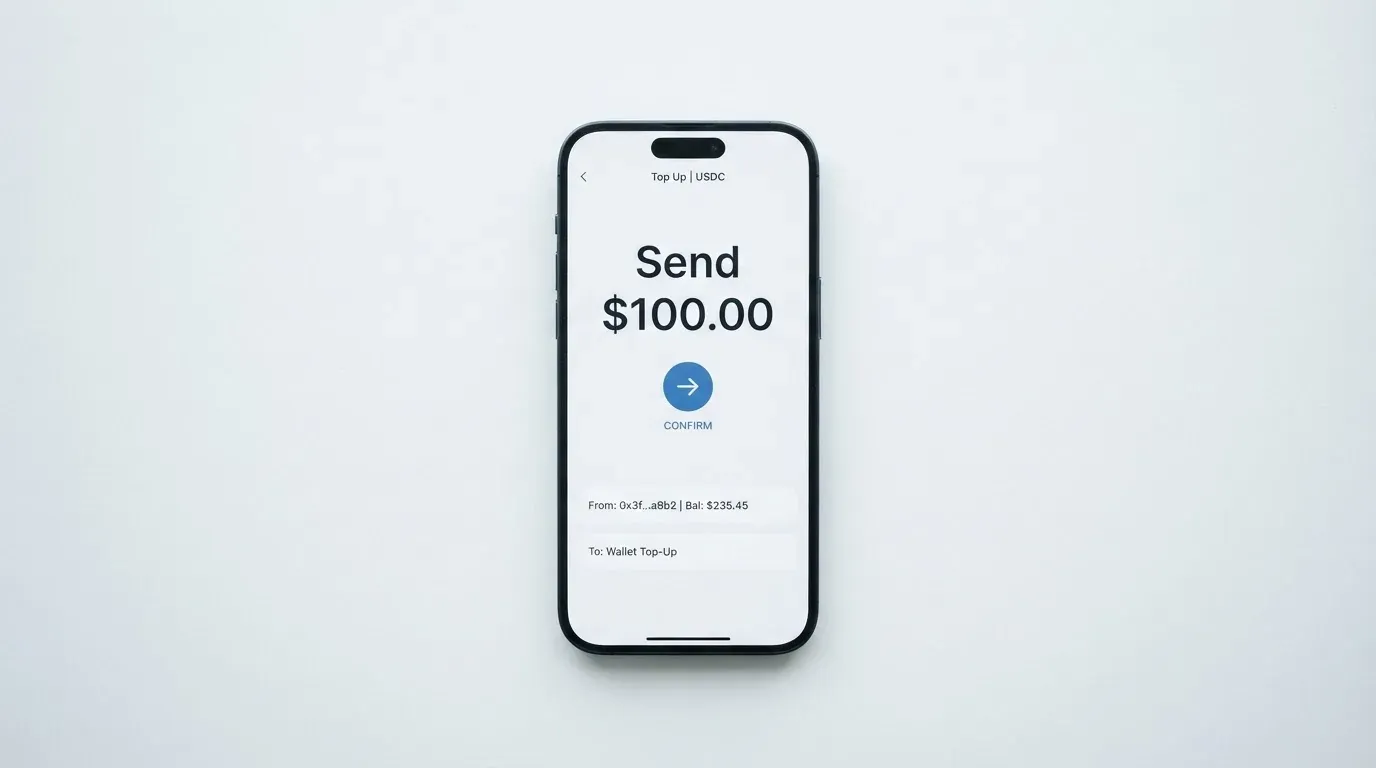
Confirmed funding routes: Bitcoin, Lightning, Ethereum, USDC, Solana, Base, Polygon, and SEPA bank transfer. USDT deposits of any network ended on 17 March 2025, so a USDT balance you still hold will not move onto the card. Apple Pay and Google Pay appear as purchase payment methods rather than as card top-up routes. Store credit earned on the Bitrefill platform cannot be moved onto the card.
The deposit carries a fixed 1.99% Bitrefill fee plus a variable exchange cost at the card partner’s live rate, and the minimum deposit is EUR 15 — anything below that does not load. SEPA pay-ins also charge 1.99%. The card is denominated in euros, so the conversion from your crypto or stablecoin happens at deposit time, not at the moment you tap to pay.
What this means for you: the cheapest, fastest route for small, frequent top-ups is usually Lightning, which settles in seconds and keeps the network fee negligible. For larger balances, USDC on a low-fee network like Base or Polygon is often the most cost-efficient path once the partner’s spread is taken into account. Bitcoin on the base layer is fine for bigger, less time-sensitive loads, where a single on-chain fee is amortised.
Paying with it every day
The card is a Visa, which means it works wherever Visa is taken, including online checkouts, in-store terminals, and ATMs that accept Visa. The virtual card is the one to load into a wallet for online use; the physical card arrives activated after you receive it.
Google Pay is supported. Apple Pay is listed in app-store descriptions as “not supported yet” and “will be available soon,” so if you are on iPhone, plan for the physical or virtual card number in the meantime and check the app before you rely on tap-to-pay at the till. Blocked merchant categories are not stated.
There is a rewards structure that is worth understanding. The card pays 2% cashback in total, split as 1% on each crypto deposit and 1% on each purchase, and the help page says there is no cap. The cashback is paid in euros. If a purchase is later refunded or charged back, the rewards earned on that purchase can be debited.
Disputes follow a familiar pattern. The help article “How to dispute a card payment?” tells you to contact the merchant first, since most refunds are resolved that way, and Bitrefill states it is not liable for merchant refusals. Specific time frames for raising a chargeback are not stated, which is something to weigh if you regularly need buyer protection on larger purchases.
What can go wrong
The biggest structural risk is the same one any custodial crypto card carries: the funds sit with the partners that issue and operate the card, not in your own wallet. The card partner and the crypto/IBAN services are Lightspark Payments Europe AS (Estonia, licensed by the Estonian FIU) and the card issuer is Wallester AS (Estonia, licensed by Finantsinspektsioon). The site is owned and operated by Airfill Prepaid AB, registered in Stockholm. That is a regulated stack, but it is still a custodial stack.
The card has reasonable account-level safeguards. You can freeze the card and hide the balance in the app with one tap, 3-D Secure runs on online payments, and lost, stolen, or unauthorised transactions are reported to [email protected]. Custodial safeguarding arrangements and any insurance on top of them are not stated.
The EU regulatory environment is shifting under the card. The EU Transfer of Funds Regulation took effect in July 2026: deposits above EUR 1,000 from wallets that are not your own, or that come from a virtual-asset service provider not licensed in the EU, are declined. Strong customer authentication rules also changed how deposits work. Help-centre text mentions a temporary suspension of applications from Hungarian residents, which is a reminder that country-level availability can move on short notice. If you fund the card from a non-EU-licensed exchange, expect the deposit to be rejected at the EUR 1,000 threshold.
On the reputation side, the Bitrefill Trustpilot page reads at 4.5/5 from 2,943 reviews, with about 89% five-star and 5% one-star. The complaint themes on Trustpilot are mostly about the gift-card side of the business: gift-card markups, Apple codes that did not work and led to account blocks, a lookalike fake site, deposits pending more than 20 days with weak support, and paused refunds. A three-star review notes that the Visa card is sometimes denied at checkout, which is a useful warning if you depend on the card at unattended terminals. Bitrefill responds to negative reviews, including one-stars, and the regulator-level complaints are not card-specific. No major incidents affecting the card programme are on the public record, and there are no Reddit threads I could find on the card itself.
A few practical risks worth flagging in your own checklist:
- Wrong-network or wrong-token deposits. Crypto transfers are irreversible. If you send USDC on a network the card does not support, or to an address of a different network, the funds can be lost or stuck in manual support recovery with no guarantee.
- Stablecoin peg risk. Stablecoins are designed to be stable, but they are not always stable. USDC temporarily lost its peg in March 2023 during the US banking stress, and TerraUSD collapsed in May 2022. The card spends euros, but the value of what you deposit depends on the token you send.
- Foreign merchant declines. The card is euro-denominated and issued in Estonia. Some merchants decline prepaid cards or cards whose issuer country differs from the billing country. AVS is rarely available for foreign-issued cards, which can mean online checkouts that ask for a US or UK address fail.
- Programme closure. Visa terminated its global agreements with FTX in November 2022, and WaveCrest was suspended by Visa in Europe in 2018, which shut down every card programme that issuer ran. Crypto card programmes can end, and the closure path is usually: notice period, then a stop on loading, then a stop on spending, then a request to withdraw the remaining balance.
- Inactivity. Unofficial sources cite EUR 10/month after 12 months of no spending or cash-out, with the card deactivated when the inactivity fees bring the balance to EUR 0. If you load the card and forget about it, the balance can drain.
What to take instead
If the Bitrefill card does not fit, the alternatives below are drawn from the same general category, with very different footprints. None of them is presented as a substitute for your own research.
Cardex is a crypto debit card that claims eligibility in 200+ countries, which is much wider than Bitrefill’s 29-country EU/EEA footprint. The card runs on Verve, Visa, Mastercard, and UnionPay, supports virtual and physical cards, and converts crypto to fiat at the moment of payment, with the site claiming an “AI-Powered Conversion Rate” that picks the best exchange rate as you spend. Cardex scores 5.6/10 in the comparison. The App Store listing is Naira-focused, and the card currency is Naira, so this option is most relevant to a Nigerian reader, or to anyone whose spending is Naira-dominant.
CardFlow is a virtual USD Mastercard aimed at “Nigerians and global users,” with no creation fee. Funding is from Bitcoin, USDT, ETH, or Naira bank transfer, and the card is denominated in US dollars. The site is light on fee detail and on country eligibility. CardFlow scores 4.9/10.
HyperCard is a prepaid card with a USD or EUR balance, accepted in “more than 176 countries” according to the App Store page, though acceptance is not the same as eligibility. Funding is from crypto deposits such as USDT, BTC, or ETH converted to USD or EUR on the card. Fee details on the public pages are sparse. HyperCard scores 4.7/10.
How to read that comparison: Bitrefill’s edge is the regulated EU issuer and the euro denomination; its weakness is the narrow country list. Cardex wins on geographic reach, CardFlow on speed and simplicity, HyperCard on currency flexibility. Each of them has less public fee information than Bitrefill, so the trade-off is between Bitrefill’s transparency inside a small market and the wider but less documented alternatives.
Who I would recommend it to
The reader who will get the most from this card is an EU resident who already holds crypto, who is comfortable sending on-chain transactions or using Lightning, who spends in euros most of the time, and who wants a Visa to use at the supermarket, on a subscription, or at an ATM. The 1.99% deposit fee is the price of converting in-app, and the no-FX-fee structure is genuinely useful if you also pay in non-euro currencies while travelling.
The reader who should not pick this card is anyone outside the 29-country eligibility list, anyone with a US or Russian passport (unless they also hold EU/EEA citizenship), anyone whose spending is dominated by a non-euro currency and who wants a multi-currency wallet on the card itself, and anyone who needs deep public fee documentation. The inactivity fee, the EUR 15 minimum, and the unofficial ATM fee also make it a poor fit for someone who only loads the card once a year.
If you sit in the target audience, the practical sequence is: install the app, complete the Starter identity check with a photo ID and a selfie, load the virtual card for online use, top up with Lightning for small amounts or USDC on a low-fee network for larger ones, set a spending habit so the inactivity clock does not run, and treat the official page as the source of truth on fees while keeping an eye on third-party trackers for changes that have not yet made it into the terms.
Frequently asked questions
What is the Bitrefill card?
The Bitrefill card is a prepaid Visa issued by Wallester AS in Estonia and operated by Airfill Prepaid AB in Sweden. It is part of the Bitrefill app and lets you spend a euro balance that you fund from crypto or stablecoins.
How does the Bitrefill card work?
You load the card with crypto such as Bitcoin, Lightning, Ethereum, USDC, Solana, Base, Polygon, or with a SEPA transfer. Bitrefill charges a 1.99% fixed fee plus a variable exchange cost at the card partner’s live rate, and the euro balance on the card is what you spend in shops, online, or at an ATM.
Is Bitrefill a bank?
No. Bitrefill is not a bank. The site is operated by Airfill Prepaid AB, the card is issued by Wallester AS, an electronic money institution licensed in Estonia, and the crypto and virtual IBAN services are run by Lightspark Payments Europe AS, licensed by the Estonian FIU.
Who owns Bitrefill?
The site is owned and operated by Airfill Prepaid AB, a company registered in Stockholm, Sweden. The card programme is run through partners in Estonia rather than by Airfill itself.
Is the Bitrefill card available in my country?
The card is issued to residents of 29 countries: EU member states plus Norway and Iceland, with Hungary temporarily suspended according to help-centre text. US and Russian citizens are excluded regardless of residence, with a carve-out for Russian citizens who also hold EU/EEA citizenship.
How do I apply for the Bitrefill card?
You install the Bitrefill app, create an account, complete the card partner’s identity check, and order a virtual or physical card from the Cards page. The virtual card is usable on receipt, and the physical card must be activated when it arrives.
Does the Bitrefill card require KYC?
Yes. The Starter tier requires a photo ID and a selfie liveness check, and may ask for proof of address. The Plus tier adds proof of address and proof of source of funds, and you have 30 days to complete the upgrade once invited.
How do I top up the Bitrefill card?
You can top up with Bitcoin, Lightning, Ethereum, USDC, Solana, Base, Polygon, or a SEPA bank transfer. The minimum deposit is EUR 15, the fixed Bitrefill fee is 1.99%, and there is a variable exchange cost at the partner’s live rate. USDT deposits of any network ended on 17 March 2025.
Is the Bitrefill card free?
The card order through the app is free, and there is no foreign exchange fee on top of the Visa rate. The 1.99% deposit fee is the main in-app cost; unofficial sources cite a EUR 10/month inactivity fee after 12 months and a 2.49% ATM fee, neither of which is confirmed in the official terms.
Is the Bitrefill card safe?
The card runs on a regulated EU stack with 3-D Secure, in-app freeze, and balance hiding. The trade-off is that funds are custodial, held with the card partner and the issuer rather than in your own wallet, so you carry the counterparty and regulatory risk that comes with any custodial crypto product.
Choosing a virtual card – cryptocardadvisor
Content created by the «cryptocardadvisor» team