
A euro prepaid card with a euro IBAN and a lot of unstated numbers
 Available in US

Gekkard is a prepaid Mastercard sold alongside a euro IBAN account, aimed at people who want to hold and spend euros without necessarily holding a full bank account. It reached my desk because readers keep asking the same three questions: who can get one, what does it really cost, and can anyone see whether the company behind it is solid? Two of them I could only answer halfway, because a great deal of the detail that matters most — fees, limits, identity checks, the licensing — is simply not written down anywhere I could read.
That is not a small complaint. A prepaid card is a wallet attached to a piece of plastic, and a wallet without published fees is a wallet that decides what to charge you later. My score for Gekkard is 4.7 out of 10, and the reasons are set out below.
If you are European, comfortable with a euro-denominated account, and you mostly want a card that spends a balance you control rather than a card tied to a credit line, Gekkard might serve you. If you are choosing between cards and comparing what you will actually pay on a purchase or a withdrawal, you cannot make that comparison from this card’s public pages — they are not there. That is the audience note in one sentence: Gekkard is for Europeans wanting a euro IBAN with a prepaid card, and much less obviously for anyone else.
The conditions described below are current as of October 28, 2026.
The score, and who this card suits
The score is built from six marks. Each one below is a number out of 10 with the reason behind it.
| Criterion | Mark | Why |
|---|---|---|
| Who can get it | 5 / 10 | Offered to residents of EEA countries and Switzerland; version 1.0.6 opened registration to clients outside the EEA and mail the plastic “to any address worldwide” |
| Cost | 5 / 10 | Fees are not disclosed — the site could not be read because of a certificate error; the app claims 3% on EURG and a 1% purchase bonus |
| Top-up options | 4 / 10 | SEPA and Gekkoin Europe (EURG), plus Bitcoin, Ethereum and Monero through partner AtlantEX OÜ; no stablecoins or networks listed, and new-client onboarding is paused |
| Reliability and complaints | 4 / 10 | Papaya Ltd is the developer; issuer and licences unreadable; the app is custodial per WalletScrutiny; App Store 3.0 of 4 ratings, and 2.6 of 15 on another storefront |
| Everyday use | 5 / 10 | Prepaid Mastercard, plastic or virtual, with limits and a freeze in the app; wallets and ATM not disclosed |
| Total | 4.7 / 10 | A workable card wrapped in an unusually incomplete public description |
A word on why the cost mark is 5 and not lower. I am not docking points for fees being high, because I cannot see them. I am docking for the absence itself: the site could not be read because of a certificate error, and the app is where the pricing claim lives. A card whose main financial terms you must take from a phone app, in the absence of a readable fee page, is not a card I can confidently recommend to a reader who wants to plan a budget.
The top-up mark is the weakest of the six. No stablecoins and no networks named, and a partner exchange that has paused new-client onboarding, together paint a picture of a product still waiting for its plumbing.
Who suits Gekkard, and who does not
- You live in the EEA or Switzerland and want a euro IBAN with a prepaid Mastercard attached. This is the case the product is built for.
- You are comfortable with a custodial app — someone else holds the keys — and are not looking for a self-custody card.
- You spend in euros much of the time and want a plastic card in the post or a virtual one you can create quickly.
- You treat interest rates and purchase bonuses as nice-to-haves, not as the reason to pick a card, because the conditions behind them are not published.
The card does not suit:
- Anyone who needs published fees, ATM costs or withdrawal rules before committing. Those are marked “not stated” throughout, and I could not fill the gaps.
- Anyone who needs a card they will use in countries where prepaid or foreign-issued cards get declined at the till. The usual category caveats apply and Gekkard does not describe itself around them.
- Anyone who wants stablecoins or a choice of networks to fund from. That is simply not on offer here, unlike several rivals below.
- Anyone for whom a custodial wallet is a dealbreaker. WalletScrutiny classifies the app as custodial, so you are trusting the provider with the credentials.
Who will they give you the card to
The card is offered to residents of EEA countries and Switzerland. Version 1.0.6 widened this: registration was added for clients outside the EEA, and the physical card can be mailed “to any address worldwide”. So the front door is wider than the origin story — you do not, on the face of it, have to live in the euro area any more — but the product itself is still euro-centred, with a European IBAN account denominated in EUR.
Who is behind that door is where the reading stops. What kind of identity verification applies is not stated. Whether there are different verification levels that unlock different limits is also not stated. This matters more than it sounds. Under EU anti-money-laundering rules, customer due diligence normally covers name, address, date of birth, nationality and identity documentation, along with a sanctions check and a politically-exposed-person determination. If that process cannot be completed, EU rules require the institution to hold off, and where necessary to close the relationship. So an unstated KYC policy is not a neutral omission; it means the shape of the checks you will face is a guess, and the consequences of failing them are real.
I also cannot tell you the card issuer or the licences behind it. The developer named on the app store is Papaya Ltd under the Gekkard brand, and the crypto services are supplied by AtlantEX OÜ — but who actually stands behind the Mastercard programme, and under whose licence, is not stated on the pages I could read. Nationality is normally recorded and screened separately from residence, because sanctions screening often follows citizenship and country of birth as well as the address. With neither residence rules nor KYC detail spelled out, treat eligibility as a question to ask, not a fact to rely on.
One thing worth separating clearly: the rule the card gives is about residence, not citizenship, and it changed between versions. The older line was EEA plus Switzerland; the current line, per version 1.0.6, adds clients outside the EEA and mail to any address worldwide.
How to get it
The card itself is a prepaid Mastercard, available as plastic or virtual according to the FAQ, paired with a European IBAN account in EUR. A physical card arrives by international mail to any address worldwide; additional cards can be ordered. The virtual route is the one to pick if you want something usable this week without waiting on the post.
What the material does not tell you is just as important as what it does. Delivery time and delivery cost are not stated. The verification steps you must clear before the card is issued are not stated. Whether the virtual card is issued instantly or on some review timeline is not stated. There is no public walkthrough of the application flow I can lean on, so I will not invent one for you.
There is a useful general frame, though. In the EU, an electronic money institution can issue e-money, payment cards and e-wallets but cannot lend, and it may serve customers across the EU/EEA from a licence granted in one member state. If Gekkard is delivered through that kind of structure, the account you are opening is an e-money account, not a bank deposit — with all the safeguarding and none of the deposit guarantee that implies. I would want to know which of the two you are being offered before I loaded it with anything.
Fees: what a Gekkard payment really costs
Here is the honest core of this review: the card’s public pages do not publish the numbers. Issuance cost is not stated. Monthly fee is not stated. Conversion fees are not stated. Foreign-exchange fees are not stated. ATM costs are not stated, although the version history mentions cash top-up locations. Withdrawal terms are not stated. Whether spending limits exist beyond what you set yourself, and what they are, is not stated. Tiers, if any, are not stated. The card currency itself is not stated, even though the IBAN account is in EUR.
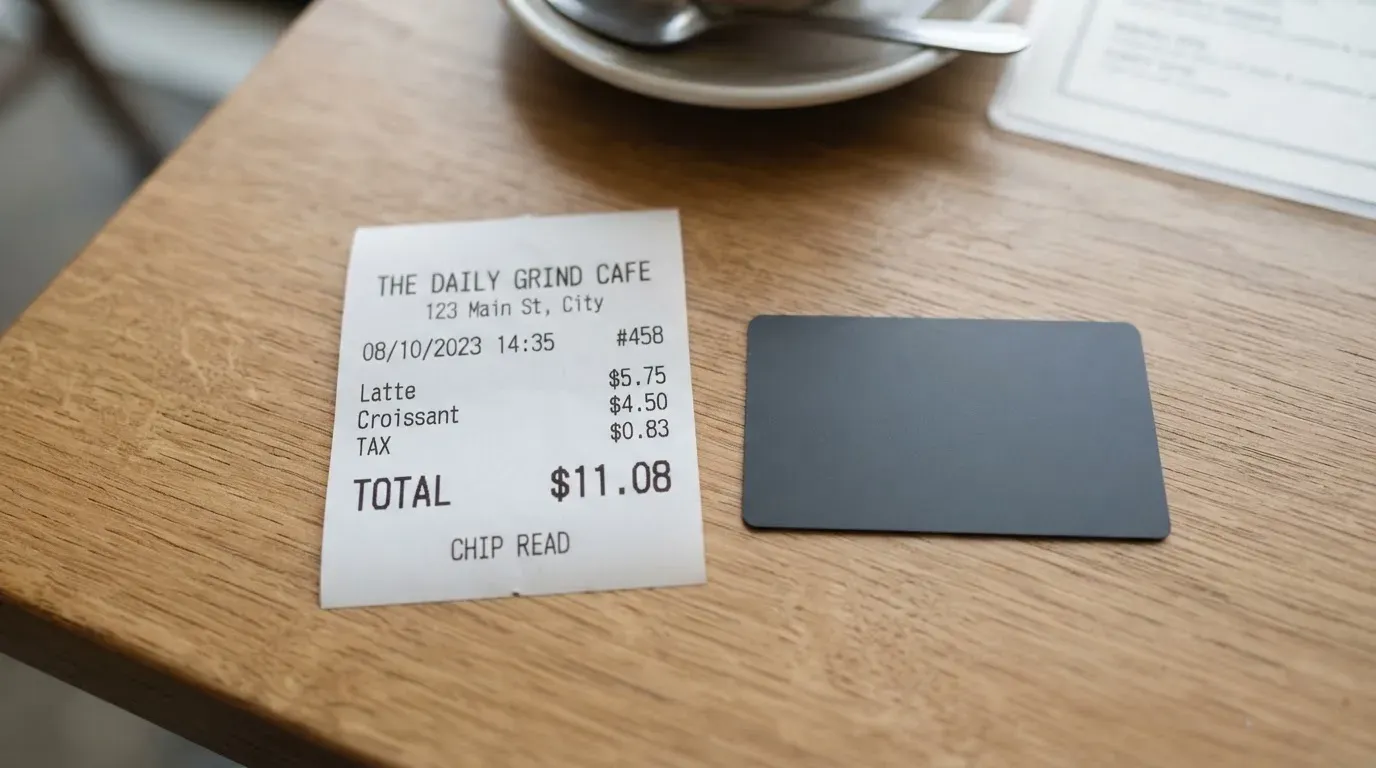
That leaves the costs table thin by necessity. Where I have a value, I copy it; where I do not, I say so rather than guess.
| Fee or limit | What the card states |
|---|---|
| Issuance fee | Not stated |
| Monthly fee | Not stated |
| Conversion fee | Not stated |
| Foreign exchange fee | Not stated |
| ATM fee | Not stated (cash top-up locations mentioned in version history) |
| Daily limit | Not stated (spending limits settable in app) |
| Monthly limit | Not stated |
| Card currency | Not stated (IBAN account is EUR) |
What this means for three everyday payments
Take a typical week and see where you land.
Buying a coffee in a euro city. If the card is denominated in euros and you hold euros, the cleanest case, you would expect no conversion at all — but I cannot confirm the card currency, so even this is an assumption. The 1% card purchase bonus the app claims would apply here in principle, though the conditions behind it were not readable. What I cannot rule out is an undisclosed per-payment fee; many prepaid products charge one and simply do not print it.
Paying a subscription priced in dollars. This is where an unstated FX fee would bite hardest, and it is precisely the line I cannot fill in. Card payments in a currency other than the card’s own typically carry a conversion margin plus an explicit FX fee on competitors’ cards — one of the alternatives below names a 2% FX fee outright. Gekkard publishes nothing, so I am not going to guess at a percentage for you. You are budgeting blind here.
Withdrawing cash from an ATM. Not stated, with cash top-up locations appearing only in the version history. Accepts cash in, says nothing about cash out. I would not plan a cash budget around this card without asking first.
The general category fact that does apply: on-chain network fees for a deposit are charged by the blockchain, not by the card provider — so a top-up that touches a network can cost something the card never sees.
The interest and bonus claims deserve their own caution. The listing advertises 3% interest on EURG holdings and, in the version history, a 1% card purchase bonus. The official site reportedly says the service is not an investment product, and I could not read the conditions attached to either claim. Three percent is a strong number for a euro balance, and it is the sort of number that should make you ask what the risk is rather than what the return is.
How to Top up the card
Funding runs through SEPA payments and cash top-up locations, and through Gekkoin Europe — the venue for buying and selling EURG, a token pegged 1:1 to the euro, with access to Bitcoin, Ethereum and Monero via the Gekkoin partner. The crypto services themselves are provided by AtlantEX OÜ, described as a licensed exchange.
So there are two quite different top-up worlds here. One is ordinary banking: SEPA, slow, cheap in the way bank transfers are cheap, and denominated in euros. The other is crypto: Gekkoin Europe for the euro-pegged token, and a handful of coins through a partner. What is missing is the part most crypto card users expect — stablecoins and the networks to send them over. Not stated. No USDC, no USDT, no chain list.
Fees and minimums on top-ups are not stated. Neither is how to withdraw, if the card supports it.
That last gap deserves weight, because the crypto branch of funding carries category risks that the euro branch does not. Blockchain transfers are irreversible, so a deposit sent on a network the provider does not support, or to an address belonging to a different network, can be lost or need manual recovery with no guarantee. Stablecoins, for their part, are not reliably stable despite the name — TerraUSD collapsed in May 2022 and USDC briefly lost its peg in March 2023 during the US banking crisis. EURG, pegged 1:1 to the euro, asks you to accept that peg as given; the material does not tell me what backs it.
A further wrinkle sits under the crypto option: AtlantEX paused onboarding of new clients from 1 July 2026. If you are not already inside that exchange’s system, the crypto funding route may not be open to you today, even though the product page still advertises it.
Paying with the card every day
In use, Gekkard is a prepaid Mastercard — plastic or virtual — with an IBAN behind it, and the day-to-day controls live in the app. The version history mentions multi-currency transfers, though the card currency is not stated. Spending limits are settable in the app, which is a genuinely useful feature: it is the one meaningful budget tool the card exposes to you.
Against that, some of the everyday stuff is unstated. Whether you can add the card to Apple Pay or Google Pay is not stated — the version history mentions biometric confirmation for online purchases, which hints at mobile support but does not confirm a wallet. ATM behaviour is not disclosed. Where the card is accepted, in the broad sense, follows the Mastercard network, but the finer category questions — gambling, for instance, where MCC 7995 is often blocked by issuer policy — are not addressed.
A note on why a card like this can get declined even when it is valid and funded. A card number begins with an issuer identification number of 6 or 8 digits that tells any merchant which institution and country issued it. When that country differs from your billing address, the merchant may apply extra scrutiny, and some merchants decline prepaid or foreign-issued cards outright once the lookup reveals the card type. That is a category reality, not a Gekkard defect, but it is what “where can I use it” tends to mean in practice.
Two further category facts bear on daily spending. Address Verification Service compares the numeric parts of your billing address with issuer records and is generally unavailable for foreign-issued cards, which can cause declines online. And a declined authorisation can leave a hold on your funds that lingers for days, typically up to seven.
On the app itself: the iPhone app “Gekkard: Prepaid Card & Wallet” showed 3.0 out of 5 from 4 ratings on the US App Store when I read it, at version 1.0.9; the Google Play listing “Gekkard: Banking Alternative” exists but its rating was not readable. Four ratings is a very thin sample, and a Google Play front with no readable score tells you almost nothing. Neither figure is evidence of a good or bad product — they are simply too small to lean on.
What can go wrong
Risk is where this card scores worst, and most of it is the risk of not knowing.
The company behind the card is not legible. The app-store developer is Papaya Ltd. The crypto partner is AtlantEX OÜ. But the card issuer and the licences were not readable on the pages I could reach. For a card that holds your money, not knowing which regulated entity stands behind it is the first thing I would want fixed.
The wallet is custodial. WalletScrutiny describes the app as custodial, meaning the provider holds the credentials and you must trust them completely. That trust is not abstract. Custodial platforms have a real record of failure: Mt. Gox, with about US$350 million reported stolen between 2011 and 2014; Coincheck, about US$400 million in 2018; and the Ronin Network bridge, US$625 million in 2022. A seed phrase is the unencrypted form of the private key, anyone who obtains it can restore the wallet and spend from it, and crypto transfers are typically irreversible with no built-in recovery. None of that says Gekkard will lose your money. It says you have taken on counterparty risk you cannot price.
The partner exchange is paused. AtlantEX halting new-client onboarding from 1 July 2026 during MiCA licensing is a live operational fact, not a rumour, and it lands directly on the top-up route.
The reviews are split and thin. No official incidents were readable and no Trustpilot page was found, which is not the same as a clean record — it is the same as a thin public footprint. A second app-store storefront listing shows 2.6 out of 5 from 15 ratings. Two small, divergent samples, neither of them enough to conclude anything.
Dispute handling is unstated. Whether and how you can contest a transaction is not stated. This matters more than it first appears. A chargeback is a refund ordered by the issuer to settle a dispute, and prepaid-card coverage varies by scheme and should not be assumed.
Support is unstated. How you reach a human, and in which languages, is not stated.
Regulatory context is moving underneath it. MiCA is the EU’s markets-in-crypto-assets regulation and took legal effect in June 2023; its stablecoin rules applied from 30 June 2024 and the remaining provisions, including crypto-asset service provider rules, from 30 December 2024. Under MiCA the transitional period lets providers operating under national law continue only until 1 July 2026 or until they are authorised or refused, whichever comes first. A card like this usually rests on two licences at once — one for the crypto side and one for the payment side — and ESMA maintains an interim register of authorised providers, white papers and non-compliant entities that you can check. Electronic money institutions must safeguard customer funds, but such funds are not the same as bank deposits and may not sit under a deposit guarantee scheme.
None of this is a prediction that Gekkard will fail. It is a description of how much of the safety question the card has answered for you, and the answer is: not much.
What is worth doing if you proceed anyway
- Set spending limits in the app, and lower them again before you travel.
- Keep the balance you need and no more on a card you are testing.
- Use the temporary freeze the app provides as a normal habit, not an emergency measure.
- Ask, in writing, for the fees table, the ATM terms, the withdrawal terms and the issuer’s name — then keep the reply.
What to take instead
Three cards came up repeatedly while I was reading Gekkard’s material, and the comparison is instructive precisely because each one publishes numbers Gekkard does not. Scores are on the same ten-point scale.
| Card | Score | Card and account | Cost and fees | Funding | Rewards |
|---|---|---|---|---|---|
| Gekkard | 4.7 / 10 | Prepaid Mastercard, plastic or virtual; euro IBAN | Not stated | SEPA, cash locations, EURG via Gekkoin Europe, BTC/ETH/Monero via partner; no stablecoins listed | 3% on EURG claimed; 1% purchase bonus claimed; conditions unread |
| International Visa Card | 6.7 / 10 | U.S.-issued Platinum Visa, virtual, pays in USD; physical “coming soon” | Virtual issuance $5 one-time, no maintenance fee; plans Classic free, Pro $9.00/month, Max $19.00/month; USD use free; foreign currency at Visa exchange rate plus 2% FX fee; deposits free | USDC or USDT into the USD account at 1:1, plus USD, EUR, SEPA, SWIFT, FedNow; networks not stated | No cashback stated |
| UNi Card | 6.1 / 10 | Multicurrency UNi Card on Mastercard, spends from the UNi.Global balance | No annual fee and no foreign transaction fee; conversion at live OTC rates; no hidden exchange fees; issuance fee not stated | Not stated | Spend-to-Earn up to 3% |
| Whop Cards | 5.2 / 10 | Visa, works anywhere Visa is accepted; physical/virtual not stated | Page says “no extra fees”; no amounts listed | Spends from a Whop balance; pending balance usable on arrival, withdrawals on settled funds; stablecoin-collateral-backed, coins and networks not stated | 5% cashback at select merchants, currently Uber |
Reading the comparison the way I would
If published fees matter most to you, the International Visa Card is the only one of the four with a full price list on the page: $5 for the virtual card, no maintenance fee on Classic, and a 2% FX fee stated in plain words on foreign-currency use. Its catch is that it pays in USD and its physical card is “coming soon”, so it is a virtual-first product.
If you want a multicurrency card with no foreign transaction fee, UNi Card states “no annual fee or foreign transaction fee”, converts at live OTC rates and claims no hidden exchange fees. Its issuance fee and its funding routes are not stated, and eligibility is not stated either — three blanks in the places you would want answers.
If you are in the United States, Whop Cards name their supported consumer states in detail: 31 of them, from Alabama through Wyoming, with 41 states for businesses, and a named unsupported list. Note what that specificity is worth. Gekkard’s page tells you EEA plus Switzerland; Whop’s tells you exactly which states and which countries are out. Whop also lists the unsupported consumer countries — Belarus, China (Mainland), Cuba, Hong Kong, India, Iran, Iraq, Israel, Myanmar, Nepal, Nicaragua, North Korea, Russia, Syria, Turkey, Ukraine, Venezuela, Vietnam — while noting the basis, citizenship or residence, is not stated.
If stablecoin funding is the point, only the International Visa Card names it: deposit USDC or USDT into the USD account, free at 1:1, though the networks are not stated. For context on that choice, Tether’s USDT and Circle’s USDC are the two dollar-pegged tokens the BIS put at about 90% of stablecoin market capitalisation in July 2025, and Circle listed USDC as natively supported on 38 networks as of 16 September 2026. Gekkard names no stablecoin at all.
| If your priority is… | The closer fit |
|---|---|
| A euro IBAN with a prepaid card | Gekkard — this is the one thing it clearly is |
| Knowing every fee in advance | International Visa Card |
| No foreign transaction fee | UNi Card |
| U.S. state-level clarity and cashback at named merchants | Whop Cards |
The honest summary of the alternatives: none of them is a clean substitute if what you need is specifically a euro IBAN, and each of them publishes more than Gekkard does. That is the trade on offer — a euro product with an incomplete price list, against dollar or multicurrency products with clearer terms.
Who I would recommend it to
I would recommend Gekkard to a reader who is resident in the EEA or Switzerland, wants a euro IBAN with a prepaid Mastercard, is comfortable with a custodial wallet, and is willing to raise the fee questions themselves before committing money. For that specific person, the shape of the product — euro account, plastic or virtual card, limits and a freeze in the app, SEPA funding — is coherent and useful.
I would not recommend it to anyone choosing on price. You cannot build a budget from these pages, because the numbers that determine what a payment costs are not published. I would not recommend it to someone who wants to fund with stablecoins or pick their own network, because that option is absent rather than expensive. And I would not recommend it to anyone who needs a regulated issuer’s name to be visible before they hand over money, because I could not find one.
The score of 4.7 out of 10 is not a verdict on whether this card works. It is a verdict on how much of it you can verify before you start. On that question, the answer is disappointingly little — which is why I would ask the questions rather than assume the answers.
Frequently asked questions
What is the Gekkard card?
Gekkard is a prepaid Mastercard offered alongside a European IBAN account in EUR, sold as a physical plastic card or a virtual one. Version 1.0.6 extended registration to clients outside the EEA and allows the plastic to be mailed to any address worldwide. The card’s currency is not stated, and neither are its fees. It is a euro product with a card attached, not a bank account in the ordinary sense.
Is Gekkard a bank?
The public material does not present Gekkard as a bank. The developer named on the app store is Papaya Ltd, and crypto services are provided by partner AtlantEX OÜ. The card issuer and its licences were not readable on the pages I could reach, so I cannot tell you which regulated entity stands behind the balance. Treat the euro account as e-money until told otherwise.
Does the Gekkard card require KYC?
What kind of identity verification applies is not stated, and neither is whether different verification levels unlock different limits. EU rules normally require customer due diligence covering name, address, date of birth, nationality, identity documents, a sanctions check and a politically-exposed-person determination. If that cannot be completed, EU rules require the institution to hold off. Ask before you rely on eligibility.
How do I top up the Gekkard card?
Through SEPA payments, cash top-up locations, or Gekkoin Europe for EURG, a token pegged 1:1 to the euro, with access to Bitcoin, Ethereum and Monero via partner Gekkoin. Crypto services come from AtlantEX OÜ. No stablecoins or networks are listed, top-up fees and minimums are not stated, and AtlantEX paused new-client onboarding from 1 July 2026.
What does it cost to use the Gekkard card?
The card does not publish the numbers. Issuance, monthly, conversion, foreign-exchange and ATM fees are all not stated, as are daily and monthly limits and the card currency. The app claims 3% interest on EURG holdings and a 1% purchase bonus, but the official site reportedly says the service is not an investment product and the conditions were not readable. Plan on asking for the fee table in writing.
Can I withdraw cash from a Gekkard card?
Withdrawal terms are not stated, and ATM fees are not stated either, although cash top-up locations appear in the version history. Cash in is mentioned; cash out is not. I would not build a cash budget around this card without a written answer. On-chain network fees also apply to crypto deposits, and those are charged by the blockchain rather than by the card.
Is the Gekkard card safe to use?
The app is custodial, per WalletScrutiny, meaning the provider holds the credentials and you trust them completely. The card itself offers sensible controls — spending limits, transaction tracking, a temporary freeze, and biometric confirmation for online purchases. But the issuer’s name and licences were not readable, support and dispute terms are not stated, and custodial platforms have a real history of large losses.
Does the Gekkard card work in my country?
Residence is the stated basis. The card is offered to residents of EEA countries and Switzerland, and version 1.0.6 added registration for clients outside the EEA with delivery to any address worldwide. It pays from a euro balance, so acceptance in a given country also depends on Mastercard acceptance and on shops declining prepaid or foreign-issued cards.
How do I add the Gekkard card to Apple Wallet?
The card’s public material does not say whether Apple Pay or Google Wallet is supported. The version history mentions biometric confirmation for online purchases, which suggests some mobile authentication exists, but that is not the same as a confirmed tokenised wallet. Ask support directly. Note that a card issuer can also restrict a tokenised number to specific channels such as phone or website.
Is the Gekkard card worth it?
Worth it for a euro IBAN with a prepaid card and in-app limits and freeze, if you are in the EEA or Switzerland and comfortable with a custodial wallet. Not worth it if you want published fees, stablecoin funding, a choice of networks, or a visible regulated issuer. On the ten-point scale I use it comes to 4.7 out of 10, mostly because too much of the product description is missing.
Choosing an app or neobank card – cryptocardadvisor
Content created by the «cryptocardadvisor» team