
A Telegram card whose fees look cheap until you read who issued it
 Available in US
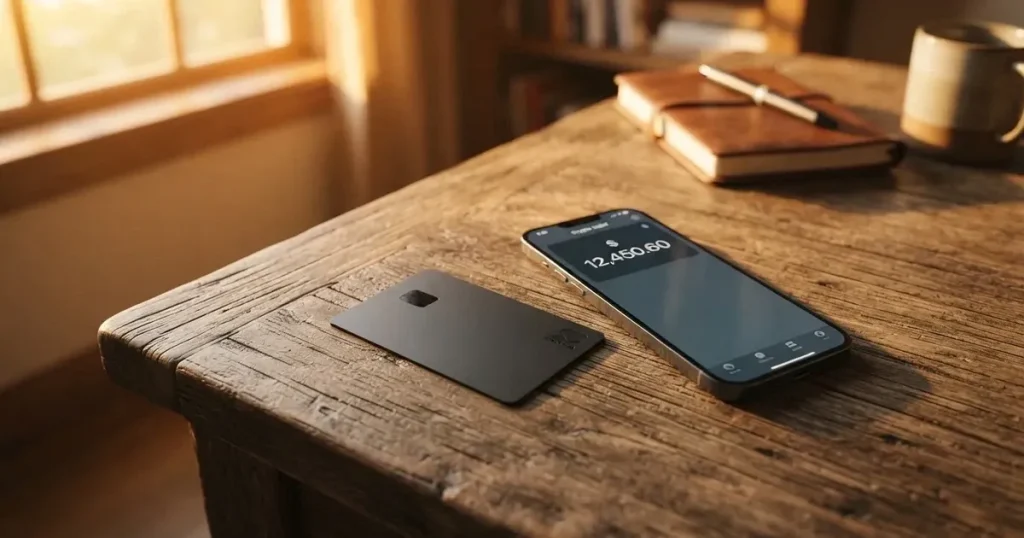
ZARUB is one of that growing crowd of crypto cards you fund with stablecoins or plain bank transfers and then spend like an ordinary payment card. The pitch is simple: top up, get a card number, pay. On paper the numbers look reasonable — a few dollars to open, a fraction of a dollar per payment, and a broad choice of networks for funding. My problem is different, and it is not the price. It is that almost none of it can be confirmed from the card’s own pages. When I went looking for who issues the card, which country it belongs to, what the identity checks are, and what it costs to keep, the official site said nothing. Everything specific I have below comes from third-party write-ups, and I have marked it as unofficial throughout.
So this page is written for the person standing where I stood: you have a crypto balance, or a Russian bank card, or you simply cannot get an ordinary bank card where you live, and you are weighing ZARUB against doing nothing. Let me take you through who gets one, what it costs, how you load it, how it behaves day to day, what can go sideways, and what the alternatives actually offer. My overall mark is 5.0 out of 10. The conditions described here are current as of October 28, 2026.
Verdict: 5.0 out of 10, held back almost entirely by missing information
The single most useful thing you can say about ZARUB is this: the product is thin on paper, not necessarily bad in practice. The fee schedule reported by third parties is cheaper than several rivals. The funding options are the widest in the comparison I made. But the official site does not publish a country list, an issuer, a BIN country, an identity policy, or a tariff table. That is not a small gap. When a card does not tell you who stands behind it, you cannot answer the only question that matters when you hand over money: who is liable if this breaks?
That matters most for the reader I have in mind here — someone funding a Telegram card in rubles or in USDT. If that is you, you are exactly the person ZARUB is built for, and also the person most exposed by the silence. You are sending real money to an unnamed issuer in an unnamed jurisdiction, and the card you receive will look foreign to merchants because of how its BIN reads. Both facts are structural, not incidental, and neither is fixed by a lower fee.
| Criterion | Mark | Why |
|---|---|---|
| Who can get it | 5 / 10 | The official site published nothing; unofficial sources give no country list and say the cards work abroad without currency restrictions |
| Cost | 2 / 10 | Unofficial figures: issuance 19 USD (virtual) and 30 USD (Apple Pay card), 0.35 USD per operation, top-up by SBP 7 % plus 1.5 %, by crypto 3 % plus network plus 1.5 % |
| Top-up options | 9 / 10 | Unofficial: USDT TRC-20 and others, TRX, BTC, TON; rubles from bank cards or SBP |
| Reliability and complaints | 4 / 10 | Issuer, company and card country not disclosed; no complaints found for ZARUB; typical Telegram-card risks: BIN declines, a fee on declined payments, tariff changes |
| Everyday use | 7 / 10 | Unofficial: virtual Visa in USD, a separate card with Apple Pay, plastic at 149 USD; sources differ on Google Pay; ATM not disclosed |
| Total | 5.0 / 10 | A cheap, well-funded card whose issuer, country and identity rules are not published |
The strongest marks are funding and everyday use. The weakest is cost, at 2 out of 10 — not because the numbers are high, but because almost none of them appear on the card’s own pages, and the top-up fees stack: a crypto deposit carries a 3 % provider fee, the network’s own fee, and then a further 1.5 % crediting fee. Whether that is cheap depends entirely on how often you load money. If you top up monthly, it is unremarkable. If you top up before every coffee, it is a tax on ordinary life.
Reliability sits at 4 out of 10 for a reason worth stating plainly: I found no complaints about ZARUB itself. That is not a clean record; it is an empty one, and an empty record on a young card with no published issuer tells you less than you would like. The general risk profile of Telegram cards is well documented, and I come back to it below.
Who it suits: you already hold USDT or rubles in a way you can move, you are comfortable with a prepaid balance rather than a bank account, and you treat the balance as spending money rather than savings. Who it does not suit: anyone whose income depends on this card being there in five years, anyone who needs a card a landlord or an employer will accept without argument, and anyone who cannot absorb a frozen balance with no clear route to a refund.
Will they give you the card
Here I have to disappoint you: I could not find a country list. The card’s public pages do not say who is eligible. What is published, per dtf.ru in February 2026, is that the article and the product are aimed at Russian users, and the travel section says the cards work abroad without currency restrictions. That is the whole of the official position I could assemble. There is no list of countries where issuance is available, no list of countries where the card is refused, and no statement about citizenship versus residence.
That distinction matters more than it sounds. Cards like this are commonly issued through an entity in one jurisdiction for customers who live in another, and that mismatch is exactly what makes a payment fail at the till. Merchants can look up the first six or eight digits of a card number and see which institution and which country issued it; if that country differs from the billing address you typed, some shops apply extra scrutiny or decline outright. So “works abroad without currency restrictions” describes the card’s own network behaviour, not whether any given shop will accept it.
My advice, framed as a question rather than a tip: before you commit any money, ask the provider directly, in writing, two things — which entity issues the card, and which country that entity is registered in. If you get a clear answer, you are in a much better position than if you get a bot reply. If you get nothing, weigh that silence as a fact, not as a technicality.
| Question | What the card’s own pages say |
|---|---|
| Which countries can apply | Not stated |
| Which citizenship is accepted | Not stated |
| Can the card be used abroad | Yes, without currency restrictions, per the travel section |
| Who the product is aimed at | Russian users, per dtf.ru, February 2026 |
How to get it
The mechanics are light, which is part of the appeal. Per Profinvestment in October 2026, there is no mandatory identity verification at the start. That is a third-party report, not a published policy of the card, and I would treat it as provisional: almost every provider that starts this way eventually introduces checks, and a card with no checks at onboarding is a card with checks waiting at the moment you try to move real money.
On the card itself, again unofficial: you get a virtual Visa denominated in USD, plus a separate card for Apple Pay. A physical plastic card is reported at 149 USD, and neither the issuer nor the BIN country is disclosed. Two things follow. First, a virtual card is the cheaper and lower-risk way in, and the one most people should start with. Second, a physical card that costs 149 USD is a large fraction of the balance most people will keep on a prepaid card, and it tells you something about the margins.
Delivery times and any identity tiers are not stated on the public pages. If physical delivery matters to you, that is an unanswered question, and it is the kind that only a support channel will settle.
- Entry point is a Telegram bot, @zarub_robot, per dtf.ru, February 2026 — there is no store app mentioned.
- Start with the virtual USD Visa; treat the physical card as an extra, not as the product.
- Expect that onboarding checks may appear later even though none are required now.
Fees: what it really costs
This is the section to read twice, because the headline numbers are low and the structure is where the cost lives. Per Profinvestment, October 2026, and all unofficial: issuance is 19 USD for the virtual card and 30 USD for the Apple Pay card. Maintenance and closure are free. Each operation costs 0.35 USD, and — read this carefully — that applies to declined operations too when the balance is sufficient. Payments in anything other than USD convert at the interbank rate plus 0.3 to 0.35 USD.
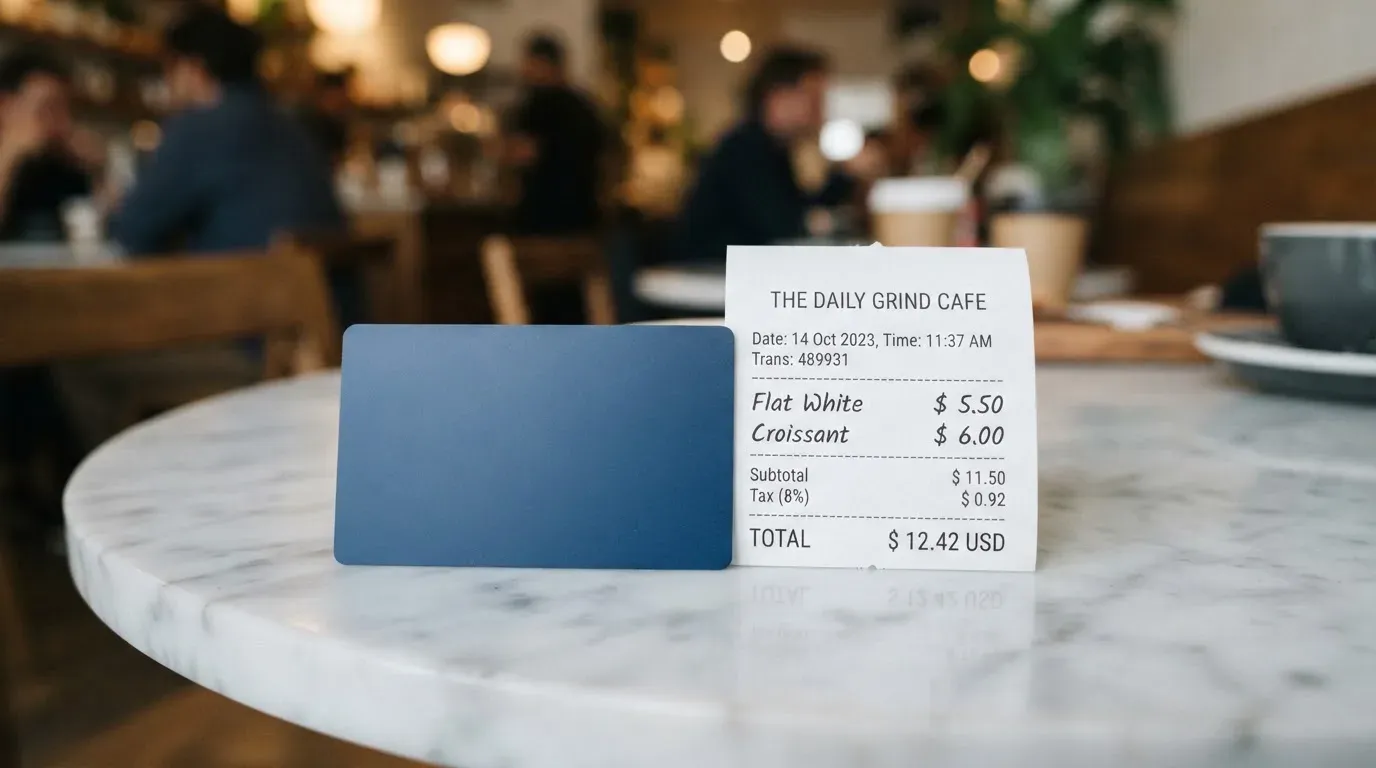
That last clause is the sting. A payment the shop declines still costs you 0.35 USD. Combined with the BIN-profile problem described above, this is not a hypothetical: on a card whose issuing country reads as foreign, declines are more common, and each one is chargeable. Ask yourself honestly whether you would rather pay a higher per-payment fee with fewer failures, or a lower one you pay again every time a shop says no.
| Item | Reported value |
|---|---|
| Issuance, virtual card | 19 USD |
| Issuance, Apple Pay card | 30 USD |
| Physical card | 149 USD |
| Monthly maintenance | Free |
| Account closure | Free |
| Per operation | 0.35 USD, including declined operations when the balance is sufficient |
| Non-USD payment | Interbank rate plus 0.3–0.35 USD |
| ATM | Not stated |
| Daily and monthly limits | Up to 50,000 USD daily and 1,000,000 USD monthly (unofficial) |
The top-up fees belong in this section too, because a card is only as cheap as the money you put in it. A top-up by SBP or card-to-card is reported at 7 % plus a 1.5 % crediting fee; by crypto it is 3 % plus network fees plus 1.5 %. The minimum first top-up is given as an unofficial 10 USD by Profinvestment and as 100 ₽ for a ruble top-up by dtf.ru. ATM access is not disclosed, which means I cannot tell you what cash withdrawal costs — and if you rely on cash, that is a question to ask before you need it.
Let me walk three ordinary payments through, so the fees stop being abstract:
- A coffee in your own city, priced in dollars, paid from a balance you already loaded: one operation, 0.35 USD. Nothing else applies.
- The same coffee in a city whose currency is not the dollar: interbank conversion plus 0.3 to 0.35 USD. If you do this daily, the small add-on is the one that accumulates.
- A purchase the shop declines at the till, then you pay by hand: 0.35 USD for the failed attempt, plus 0.35 USD for the successful one. The card charges you for the shop’s decision.
Top up
Here ZARUB is genuinely strong, and this is the section where it beats its rivals. Per dtf.ru (February 2026) and Profinvestment (October 2026), both unofficial: USDT on TRC-20 and other networks, TRX, BTC, TON, plus plain rubles from Russian bank cards or by SBP. A card that takes both crypto and domestic bank rails is unusually flexible, and it means you can hold the card as a spending tool without routing everything through an exchange.
The costs are where the flexibility gets tested. SBP or card-to-card: 7 % plus 1.5 %. Crypto: 3 % plus the network’s own fee plus 1.5 %. And the network fee is not a detail — it is charged by the blockchain, not by the card provider, so a deposit during a busy period can cost more than the card charges you.
| Top-up route | Reported provider fee | Additional |
|---|---|---|
| SBP / Card2Card | 7 % plus 1.5 % crediting | Minimum given as 100 ₽ for rubles |
| Bank card, rubles | Reported alongside SBP | Not separately stated |
| Crypto | 3 % plus 1.5 % crediting | Network fee, charged by the blockchain |
| First top-up minimum | 10 USD (Profinvestment, unofficial), 100 ₽ for rubles (dtf.ru) | Sources differ |
Two practical warnings, both about networks rather than about the card. Sending on a network the provider does not support, or to an address belonging to a different network, can lose the funds or require manual recovery with no guarantee — transfers are irreversible by design. And if you fund with USDT, be deliberate about the chain: TRC-20 is the commonly cited option here, and the cost of moving funds differs sharply between chains. Where you withdraw money from the card back out is not stated publicly, which is worth confirming before you load a large balance, since a prepaid card is not a savings account and the exit route is the part people think about last.
Paying with it every day
The daily picture is decent, if you pick the right card. Per Profinvestment, October 2026: Apple Pay works on the separate Apple Pay card. The virtual Visa is a plain online-and-in-app number. A physical card is reported at 149 USD. On Google Pay the sources disagree — dtf.ru, February 2026, says the cards link to both Apple Pay and Google Pay, while the other account mentions only Apple Pay. When sources conflict on something as basic as a wallet, assume the more restrictive answer and check in the app yourself.
There is something reassuring in the everyday mechanics. Apple Pay replaces the card number with a device-specific number held in the phone’s secure hardware, and each payment uses a one-time code — so the number you were given is not the number the shop stores. Card payments carry 3-D Secure, declared by Profinvestment, meaning online payments get an extra identity check with a code or a biometric prompt. Rewards, cashback and referral schemes are not stated, so budget as if there are none.
- Virtual Visa for online payments; the Apple Pay card for tap-to-pay; plastic reported at 149 USD if you want one.
- Apple Pay: supported on its own card. Google Pay: sources conflict.
- 3-D Secure declared. Wallet support is the real convenience here, not any loyalty scheme.
- ATM behaviour not disclosed; cash is the gap to plan around.
What can go wrong
Start with the one nobody can answer. The issuer, the company behind the card and the country of the card are not disclosed. That is not a technicality; it is the whole basis on which you would decide whether to trust it with money, and the official pages do not supply it.
Then the well-documented Telegram-card pattern. Cards of this kind are known for three recurring problems: payments declined because of the BIN or the region, a fee charged even on declined operations, and tariff changes announced without much notice. ZARUB’s own fee structure, as reported, already includes the second of these. Add a fourth that is specific to crypto funding: a stablecoin can lose its peg — TerraUSD collapsed in May 2022, and USDC briefly lost its peg in March 2023 during the US banking crisis — so a balance priced in dollars can stop being worth dollars.
And then the history of the category itself, which is the reason I would not call any of these cards safe or unsafe in the abstract. Visa terminated its global agreements with FTX on 13 November 2022 and the FTX card was wound down. WaveCrest, a Visa issuer that supplied crypto card brands, was suspended by Visa in Europe in 2018, closing all of its programmes. Programme closures follow a pattern: a notice period, then spending and loading stop, then users are asked to withdraw remaining balances. Separately, a declined payment can leave a hold on your money for several days, typically up to seven. And if a purchase goes wrong, a chargeback is a refund ordered by the issuer — coverage for prepaid cards varies by jurisdiction and should not be assumed.
Nothing in this list says ZARUB will do any of it. It says the shape of the risk is not unusual for this category, and that you should size your balance with it in mind. I found no complaints about ZARUB and no Trustpilot page — which I read as an empty file, not a clean one.
| Risk | What applies here |
|---|---|
| Who issues the card | Not disclosed |
| Declined payments | Known pattern for this kind of card; charged at 0.35 USD if the balance suffices |
| Card looks foreign to shops | BIN country undisclosed, so unknown to you and visible to them |
| Tariff changes | Noted as a common complaint about Telegram cards |
| Programme closure | Historical precedent in the category; no notice published by ZARUB |
| Frozen funds on a decline | Holds can last up to seven days |
| Stablecoin depeg | USDT and USDC have both broken peg before |
What to take instead
I compared four cards that work the same way, so the comparison is like-for-like. Azul and Telecard are the serious ones; OnCards is thin but honest about being thin.
| Card | Score | Cost to open | Ongoing fees | Where it works |
|---|---|---|---|---|
| ZARUB | 5.0 / 10 | 19 USD virtual, 30 USD Apple Pay | 0.35 USD per operation, conversion add-on | Country list not stated |
| Azul | 5.3 / 10 | 20 USD, refunded after 2,000 USD of spending | 5 USD monthly, 0.25 USD per transaction, 4 % crypto top-up | Worldwide except Russia, Belarus, North Korea, Iran, Syria, Cuba, Sudan, Venezuela, Ukraine and the Crimea, Donetsk, Luhansk, Zaporizhzhia and Kherson regions |
| Telecard | 6.1 / 10 | 5 USD standard; 49 USD plus 19 USD monthly for VIP | 1.5 % conversion, 0.5 USDT gas per transaction, FX and cross-border up to 3 % each | Over 150 countries; identity check in most major regions |
| OnCards | 4.6 / 10 | Not stated | Not stated | Not stated |
The honest reading of this table is uncomfortable for ZARUB. Telecard scores higher at 6.1, publishes its costs, and states plainly that anyone blocked or sanctioned by the US Government, including under OFAC, cannot use it. That is a real advantage: it is a stated restriction you can reason about, rather than an absence of information you have to guess at. Telecard’s catch is a 99 USD minimum deposit to activate, which the site insists is not a fee, and a card that exists only virtually.
Azul scores 5.3, marginally above ZARUB, and is the only one of the four that publishes an explicit country exclusion list, including the stated rule that restrictions apply regardless of the user’s nationality. Its monthly fee of 5 USD is a real cost, and its virtual-only design means no physical card. OnCards, at 4.6, publishes nothing — no country list, no fees — and funds only by USDT on BEP20, with bank transfers not accepted.
My takeaway, taken one card at a time. If you want the widest choice of what you can load it with, ZARUB or Telecard. If you want published prices and a written compliance rule, Telecard or Azul. If you want clarity about where the card does not work, Azul. ZARUB’s own advantage is real — rubles from a bank card, a wide crypto menu, and low per-payment costs — but it is the only card in this group whose issuer and country I could not establish from its own pages.
Who I would recommend it to
I would recommend ZARUB to someone in the situation it was actually built for: a person with USDT, or with a Russian bank card, who wants a prepaid spending balance they can top up today and who is treating it as pocket money rather than as an account. For that person the reported costs are competitive, the funding flexibility is the best I found, and the absence of onboarding checks today is a convenience, not a promise.
I would not recommend it as your primary or only card. The reason is not a fear, it is an absence: the issuer, the company and the country are not published, so I cannot tell you who is responsible for your money, and that question cannot be answered by a fee comparison. If you are choosing a card you will depend on for rent, wages or anything you would be distressed to lose, pick the provider that publishes its licence and its exclusions.
Two checks before you load money, both ordinary and neither a trick: read the fee schedule at the moment you top up rather than the one you remember, and try a small balance through a payment path you cannot afford to lose — a small shop, your own currency, no subscription. And keep the balance small enough that a frozen week is an inconvenience rather than a crisis.
Frequently asked questions
What is the ZARUB card?
ZARUB is a prepaid payment card you load with crypto or rubles and then spend like an ordinary card. Unofficial sources describe a virtual Visa in dollars plus a separate card for Apple Pay. The card’s own public pages do not disclose who issues it, which country it belongs to, or its identity rules, so treat published details as provisional.
Is ZARUB a bank?
Nothing I could find says so, and the silence is informative. The card behaves like a prepaid instrument drawing on a balance you have loaded, not like a bank account with a deposit guarantee. Whether customer funds are safeguarded in a dedicated account or insured is not stated anywhere on its public pages, so I would not treat a balance here as bank savings.
Does ZARUB require KYC?
Not at the start, according to a third-party report from Profinvestment, October 2026 — no mandatory identity verification is needed to begin. The card does not publish a KYC policy of its own. Expect that to change: providers that start without checks usually introduce them before large balances can move, and the tier levels are not stated.
How much does ZARUB cost to open?
Unofficial figures: 19 USD for the virtual card and 30 USD for the Apple Pay card, with maintenance and closure free. A physical plastic card is reported at 149 USD, which is large relative to a typical prepaid balance. The card publishes no tariff table of its own, so confirm the current numbers before you pay anything.
What does a ZARUB payment cost?
Reported at 0.35 USD per operation, and that applies to declined payments too when the balance is sufficient. A payment in a currency other than the dollar converts at the interbank rate plus 0.3 to 0.35 USD. ATM withdrawal fees are not stated, so if you rely on cash, ask before you need it.
How do I top up the ZARUB card?
Unofficial routes: USDT on TRC-20 and other networks, plus TRX, BTC and TON, or rubles from Russian bank cards and by SBP. Fees are reported at 7 % plus 1.5 % for SBP and card-to-card, and 3 % plus the network fee plus 1.5 % for crypto. Check the network before sending, as transfers are irreversible.
Can I add ZARUB to Apple Wallet?
Per Profinvestment, October 2026, Apple Pay works on the separate Apple Pay card rather than on the virtual Visa. On Google Pay the sources disagree — dtf.ru in February 2026 says both wallets are supported, another account mentions only Apple Pay. Apple Pay tokenises the card number on the device and uses a one-time code per payment, which is the safer of the two paths.
Where can I use the ZARUB card?
The travel section says the cards work abroad without currency restrictions. No country list is published for who may apply, and the BIN country is not disclosed, so a shop can see the issuing country and may decline a card whose country differs from your billing address. Address verification is largely unavailable for foreign-issued cards, which causes declines.
Is the ZARUB card safe?
Safety here is a question of disclosure, and the card discloses very little. The issuer, company and country are not published, which means I cannot tell you who is responsible if something fails. No complaints about ZARUB were found and no Trustpilot page exists, which reads as an empty record rather than a clean one. Keep the balance small.
Is ZARUB worth it?
For a secondary spending card funded with USDT or from a Russian bank card, the reported costs are among the better ones I compared, and the funding choice is the widest. As your only card, no — the missing issuer and country information leaves you unable to judge who stands behind it. Telecard publishes more and scored higher in my comparison, at 6.1 out of 10.
Choosing a virtual card – cryptocardadvisor
Content created by the «cryptocardadvisor» team