
A Visa Infinite aimed at the very wealthy, with almost no published costs
 Available in US
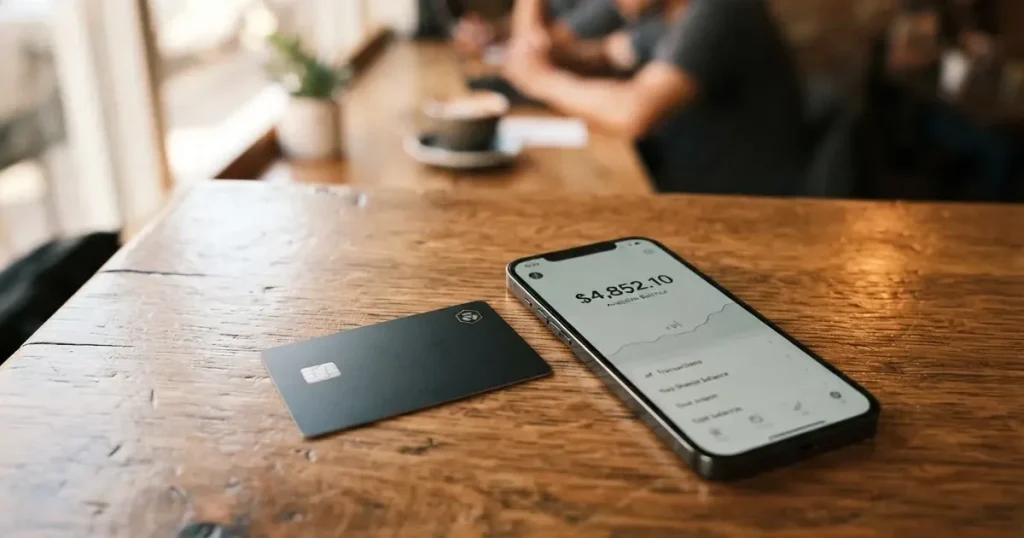
A Visa Infinite card that converts stablecoins to fiat in real time through the dtcpay Wallet app, issued by a Singapore company that describes itself as a Monetary Authority of Singapore-licensed Major Payment Institution. On paper that is an impressive combination, and the card is accepted wherever Visa is accepted. The problem is everything around it. On the questions that decide whether a payment card is any use to you — who can get one, what it costs, what the limits are, how to get your money out, what happens when something goes wrong — the card’s public pages say very little, and some of what circulates about it comes from third-party sites rather than from the card itself. I scored it 4.7 out of 10, and the reasoning behind that number is worth reading before you decide whether to spend any of your time on it.
The conditions described here are current as of October 28, 2026.
Verdict: 4.7 / 10, and who that suits
The single most useful thing I can tell you about this card is that the score is not low because the product is bad. It is low because almost none of the information a customer needs has been published. My mark in six areas:
| Criterion | Mark | Why |
|---|---|---|
| Who can get it | 4 / 10 | Countries officially not disclosed; unofficially it targets ultra-high-net-worth clients, is issued from Singapore, and the United States is excluded |
| Cost | 5 / 10 | Issuance, monthly fee and ATM withdrawals not disclosed; only “competitive exchange rates” without figures |
| Top-up options | 6 / 10 | Stablecoins converted to fiat in real time via the dtcpay Wallet app; USDT, USDC, BTC and ETH per starting data, networks not named |
| Reliability and complaints | 4 / 10 | Digital Treasures Center Pte Ltd, Singapore, MAS Major Payment Institution licence, issuing bank unnamed; Trustpilot 2.6 out of 5 from 4 reviews: blocked accounts, unreturned funds |
| Everyday use | 5 / 10 | Visa Infinite; virtual or physical, Apple Pay and Google Pay, ATM withdrawals not disclosed |
| Total | 4.7 / 10 |
Who suits this card: someone who already holds substantial crypto, converts it to fiat regularly, wants to spend through Visa rather than through an exchange interface, and can afford to discover the fees by experiment. Who it does not suit: almost everyone else. If your question is “which card is cheapest for spending my salary from in a country where opening a normal account is awkward”, this is not a card I can point you at, because the pricing is not public. If you are comparing options calmly with a spreadsheet, you cannot build one from what has been published here.
Let me be precise about the audience this card appears designed for, because it shapes everything else. Unofficially, it is reported to target ultra-high-net-worth individuals. That is not a published eligibility rule — it comes from third-party reporting — but it explains a great deal: why minimum balances may be set quietly, why support may be relationship-based, and why the marketing speaks of converting holdings rather than of everyday budgeting.
Will they give you the card?
Officially: the card’s own readable pages do not state which countries are eligible. That is the plain answer and I want to put it first, because it is the answer most people searching “is the Digital Treasures card available in my country” will not find.
What circulates unofficially is this: the card is aimed at ultra-high-net-worth individuals, and starting data says it is issued from Singapore with the United States excluded under the issuer’s terms. I could not confirm that on a readable source. Treat it as a strong hint, not as a rule. In practice, what this means for you is that your eligibility will probably be decided case by case, on your balance and your profile, rather than by a published list of countries you can check yourself against.
Two related points also remain unstated. Whether identity verification is required, and at what level, is not on the public pages — and you should assume some form of it applies, because that is normal for a regulated Singapore payment business. And the issuing bank is not named. That matters more than it sounds: in a card payment, the issuer holds the card programme and is the party that authorises, refunds and freezes. Knowing that the network is Visa tells you the rails; it does not tell you who stands behind your balance.
How to get it
Unofficially, users apply through the dtcpay app — that comes from third-party reporting of the launch, not from a published official procedure I could read. The card itself is a Visa Infinite, called the Digital Treasures Card, per press coverage of dtcpay’s launch. Whether you receive a virtual card, a physical card, or a choice of both is not stated, and the currency the card is denominated in is not stated either — both of which change what you see when you first use it.
Delivery times are not stated. Activation steps are not stated. Verification tiers, if there are more than one, are not stated. I want to be careful here: I am describing the absence of published instructions, not claiming the process is difficult. Many providers handle all of this inside the app and simply never write it down. But for someone who needs to know how long a physical card takes to arrive before they can plan around it, silence is a real cost.
The timeline on paper: on 2024-09-20 dtcpay and Visa announced a Singapore card launch. On 2025-02-24/25 dtcpay launched the Digital Treasures Card, a Visa Infinite, which press coverage said was accepted at over 150 million Visa locations — an earlier release had given 130 million across more than 200 countries. Both figures come from launch coverage rather than from a current acceptance list, so I would not treat either as a promise about where a specific shop will let you pay.
Fees: what it really costs
The cost section of this review is mostly a list of blanks, and I am not going to dress that up. Issuance fee: not stated. Monthly fee: not stated. ATM withdrawals: not stated. Daily and monthly limits: not stated. Whether there are tiers: not stated — it appears to be a single card, Visa Infinite. Card currency: not stated.

What is stated about pricing is that real-time stablecoin-to-fiat conversion runs at “competitive exchange rates”. No numbers accompany that phrase in any readable source. So the one thing you would most want to quantify — what the conversion costs you — is exactly what is not quantified.
| Fee or limit | What is published |
|---|---|
| Issuance | not stated |
| Monthly fee | not stated |
| Conversion | “competitive exchange rates” for real-time stablecoin-to-fiat conversion; no figures published |
| FX / foreign currency | not stated |
| ATM withdrawal | not stated |
| Daily limit | not stated |
| Monthly limit | not stated |
| Tiers | not stated; single card, Visa Infinite |
Let me put three everyday payments against that table, because the table alone leaves you with nothing to decide with.
A coffee. Suppose you are holding USDC and you pay in euros. The card converts your stablecoin to fiat in real time at the app’s rate, and then the network or issuer handles the euro side. Both of those legs are unpriced publicly. You cannot tell from the published material whether the conversion rate you get is close to the market rate, or whether the euro side adds a spread on top. For a nine-euro coffee, a one-percentage-point difference is trivial; if that same difference applies to a monthly card bill, it is not.
An online subscription. This is the payment most likely to trip you up, and the reason is not this card’s fault so much as the nature of card payments in general. A merchant category code — the four-digit number that classifies a business under ISO 18245 — is assigned when a business starts accepting cards. Many issuers block specific codes on particular cards by policy rather than by law, and the blocked list varies by issuer. This card does not publish which, if any, of its codes are blocked. If you try to pay for a service and it declines, that may be a category block rather than anything to do with your balance. Separately, 3-D Secure adds an identity check to online payments — Visa’s brand is Visa Secure — where the issuer either approves without friction or challenges you with a one-time code or biometric. Online subscription renewals are exactly where these two mechanisms meet.
A cash withdrawal abroad. The card is a Visa Infinite, so cash access is plausible in principle. Whether ATM withdrawals are supported, on what terms, at what cost, is not stated. If you plan to rely on this card as your way to get foreign currency, you are working entirely from unknowns — and you should add a further unknown of your own, because prepaid and foreign-issued cards are declined by some merchants simply on what the BIN lookup reveals about the issuer’s country and card type. A card number begins with a six- or eight-digit issuer identification number, and merchants can read it. A card issued in one country can look foreign to a shop in another, and some will apply extra scrutiny or refuse.
Two smaller things worth knowing, because they cost you nothing to check. Declined authorisations can leave a hold on funds that persists for several days, typically up to seven. And blockchain network fees for your own deposit are charged by the blockchain, not by the card provider — so topping up from a crypto balance can cost you two separate things, one on the chain and one at conversion.
Top up: how money gets onto the card
The funding model is the clearest thing about this card. Stablecoins are converted to fiat in real time through the dtcpay Wallet app, per launch coverage. Starting data adds USDT, USDC, BTC and ETH. Networks are not stated.
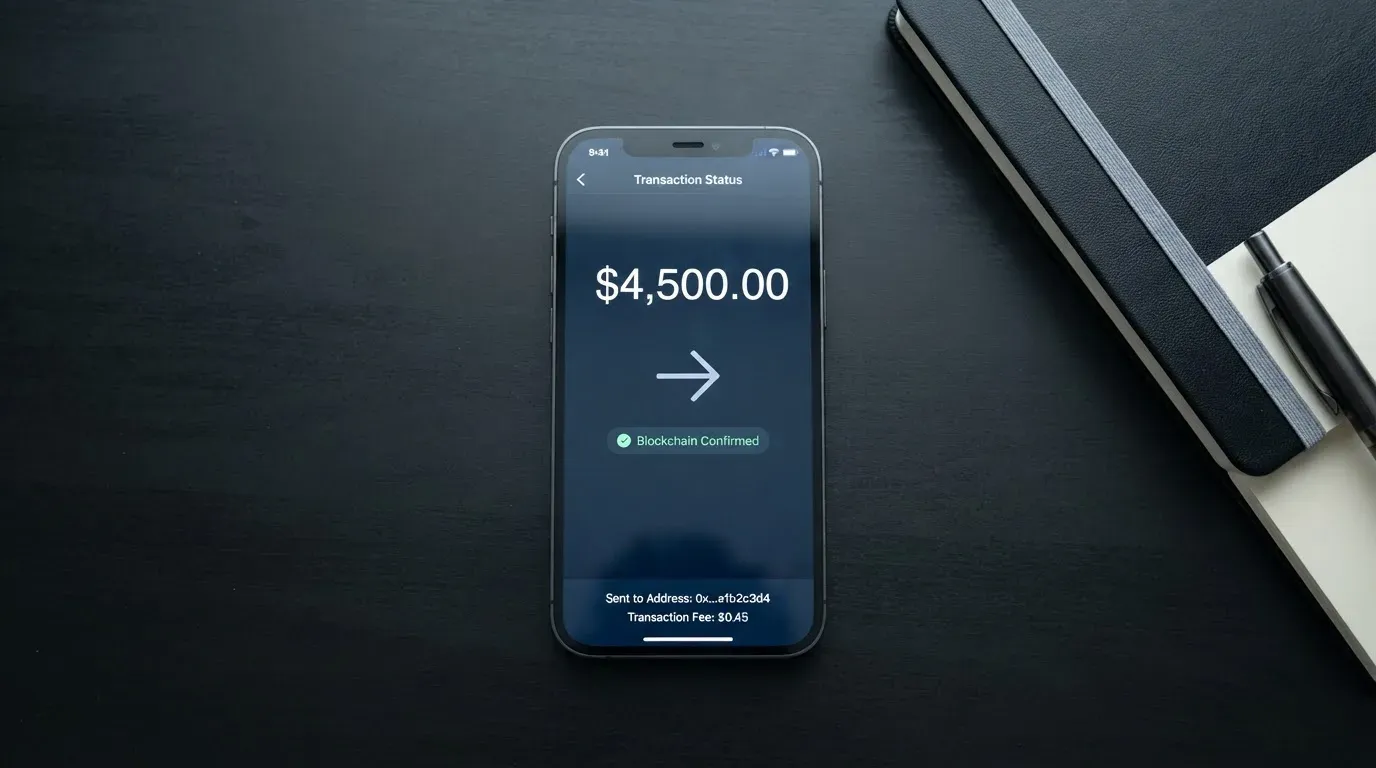
What that means practically: you do not hold a crypto balance on the card. You hold a fiat balance, and crypto is the thing you convert into it at the moment you load. That is the “pre-loaded balance” model, in which the card spends only what you have put on it and cannot overdraw. For someone who does not want their card entangled with volatile assets, that structural property is genuinely attractive — the volatility risk stops at the moment of conversion, not at the moment of purchase.
Three things I cannot tell you, and would want to before relying on this:
- Which networks are supported for each coin. This is not a technicality. Blockchain transfers are irreversible, so a deposit sent on a network the provider does not support, or to an address belonging to another network, can be lost or need manual recovery with no guarantee attached. Circle, for example, lists USDC as natively supported on 38 networks as of 16 September 2026; Tether describes USDT as built on multiple blockchains, and USDT has been issued on networks including Ethereum, Tron, Solana, Polygon and Avalanche. None of that tells you what this card accepts. You must ask, or test with a small amount.
- Whether there are limits on top-up size or frequency. Not stated.
- Whether you can withdraw money back out. Not stated. And this is the question I would ask first, before any other. A card you cannot get money off is not a payment card, it is a one-way valve. I am not suggesting it cannot be done — I am saying that it is not on the public pages, and for a card aimed at holders of significant balances, that absence should be resolved in writing before you load anything.
One more structural note about stablecoins themselves, because it bears on how much you should trust the denomination. Stablecoins aim to hold a stable value against a fiat currency, but as the BIS put it, stablecoins are not necessarily stable. Tether’s USDT and Circle’s USDC are US-dollar-pegged, and the BIS in July 2025 put about 90% of stablecoin market capitalisation in those two. Circle says USDC is redeemable 1:1 for USD and fully backed by cash and cash equivalents, mostly in an SEC-registered government money market fund, with monthly reserve attestations. But pegs have broken before: TerraUSD collapsed in May 2022, and USDC temporarily lost its peg in March 2023 during the US banking crisis.
Paying with it every day
What you would hold in your hand: a Visa Infinite, virtual or physical, with Apple Pay and Google Pay support. Wallet addresses for non-card top-ups are not stated. Rewards or cashback are not stated. Dispute handling is not stated. The app is the dtcpay Wallet app, which is where you apply for the card and where it is funded; the supported platforms and app store ratings I did not read.
The mobile wallet piece is worth a sentence of its own because it is genuinely well handled in the industry. Apple Pay replaces your card number with a device-specific Device Account Number held in the Secure Element, never on Apple’s servers, and each payment uses a one-time dynamic security code. The issuer can also restrict a tokenised number — for example block it on magnetic stripe, phone or website use — which is a useful control to ask about, because it is the difference between a stolen card being merely inconvenient and being genuinely limited.
Where everyday use gets thinner: no published information on merchant category restrictions, no published information on dispute handling, and no published information on customer support. That last one is not a nitpick. When a payment goes wrong, who you call and how long they take is the difference between a bad afternoon and a bad month.
Also worth knowing before you rely on the card in a foreign country: Address Verification Service compares the numeric parts of a billing address a buyer typed with issuer records. It is mainly offered in the US, Canada and the UK, and is generally unavailable for foreign-issued cards — which can cause declines at checkout even when everything about your balance is correct.
What can go wrong
The most serious thing I found is not a bug but a pattern in how other people describe their experiences. No official incident is recorded. But third-party reviews of dtcpay report blocked or inaccessible accounts, delayed or unreturned funds, fraud allegations and slow support — user reports spanning 2024 to 2026.
The detail matters, because a single bad review is noise. On Trustpilot, the dtcpay company page — company-wide, not card-specific — carries a TrustScore of 2.6 out of 5 from four reviews, all one star, dated January 2024, January 2026, May 2026 and July 2026. Read on 2026-10-21. The company has not replied to them.
Four reviews is a tiny sample. I want to be careful not to overstate it. But the themes are the ones that matter most for a card: money that did not come back, and accounts that stopped working. If you hold crypto through a provider, both are ways to lose the entire balance at once.
On the corporate side: dtcpay is a brand of Digital Treasures Center Pte Ltd, Singapore, which describes itself as a Major Payment Institution licensed by the Monetary Authority of Singapore, per its own merchant FAQ. A Visa partnership was announced in September 2024. The card issuing bank is not named.
Why that structure deserves attention. In a card payment there are three parties: the network, which routes messages and sets the rules; the issuer, a bank or e-money institution licensed to issue under that network’s licence, which holds the card programme; and often the crypto brand, which is really a programme manager or front end that markets the card. Neither Visa nor Mastercard issues crypto cards to consumers directly — they license issuers, and they can suspend a programme. Visa said in November 2022 that it had “terminated our global agreements with FTX”, and the FTX US debit card programme was wound down by its issuer. WaveCrest, a Visa card issuer that supplied crypto card brands, was suspended by Visa in Europe in 2018, closing all WaveCrest-issued Visa programmes. Closures typically follow a pattern: a notice period, then spending and loading stop, then users are asked to withdraw remaining balances.
That is the background against which to read a card whose issuing bank is not named. If the issuer changes, the terms you accepted can change with it.
On the regulatory side, one reassurance and one caution. The reassurance is that this is not an unregulated corner of finance. dtcpay describes itself as MAS-licensed, and in the EU the framework is MiCA, Regulation (EU) 2023/1114, which ESMA states took legal effect in June 2023; its rules on asset-referenced tokens and e-money tokens applied from 30 June 2024, with the remaining provisions including crypto-asset service provider rules applying from 30 December 2024. E-money tokens may be issued only by a credit institution or an electronic money institution, and ESMA keeps an interim register of authorised providers, white papers and non-compliant entities, which is a list you can check.
The caution is about what a licence does not mean. A card is a payment service, regulated separately from the crypto side; MiCA covers custody, exchange and transfer, so a crypto card often depends on two separate licences. Electronic money institutions must safeguard customer funds by segregating them in dedicated accounts or insuring them — but such funds are not the same as bank deposits and may not be covered by a deposit guarantee scheme. If you are treating this card’s balance as banked money, that is a category error.
Where you get a fair hearing on a dispute depends on where you are. A chargeback is a refund ordered by the card issuer to settle a dispute, with reason codes such as fraud, duplicate billing, or goods not received. US debit card reversal rights come from Regulation E and credit card rights from Regulation Z, and prepaid-card coverage varies and should not be assumed. Under 3-D Secure, liability for fraudulent online payments can shift from the merchant to the cardholder’s bank — or, per its critics, to the cardholder. And if due diligence cannot be completed, EU rules require an institution to refrain from the transaction or relationship and, where necessary, end the relationship, which is why accounts get closed or frozen pending documents.
Finally, a point about custody that applies to the crypto you load rather than to the card. Control of crypto belongs to whoever holds the private key or seed phrase. A seed phrase — typically 12 to 24 words — is an unencrypted form of the private key, and anyone who obtains it can restore the wallet and spend its funds. Transfers are typically irreversible, and a stolen key has no built-in recovery. Custodial platforms have a real record of failure: Mt. Gox, about US$350 million reported stolen between 2011 and 2014; Coincheck, about US$400 million in 2018; Ronin Network, US$625 million in 2022. Holding funds with a custodian carries counterparty and hack risk; a self-custody-linked card leaves the funds in your own wallet until the moment of payment but makes you solely responsible for key loss, phishing, and clipboard-hijacking malware that swaps copied addresses. What you hold here is a balance at a Singapore company, not keys in your own wallet — which is a deliberate design choice with a predictable risk profile.
What to take instead
If the reason you are looking at crypto cards is that ordinary banking is awkward where you live, it is worth comparing the alternatives on what they actually publish, because the contrast is stark. I have read the following pages; the Digital Treasures figures above come from the same kind of reading.
Cardex — 5.6 / 10, the highest of the three. Its site says “one crypto card, 200+ countries”, with no country list and no stated exclusions, and its App Store listing is Naira-focused. It is a debit crypto card on the networks VERVE, Visa, Mastercard and UnionPay, virtual and physical, with the card currency given as Naira per the listing. On fees it says conversion is real-time at the moment of payment, and claims an “AI-Powered Conversion Rate” that scans global exchange rates and picks the best one when you spend — no fee percentage is stated. Funding is via USDT, USDC and BTC wallets, networks not stated.
CardFlow — 4.9 / 10. Aimed at Nigeria, describing itself as “Nigeria’s smartest fintech card platform” for “Nigerians and global users”, with no country list or exclusions stated. It is a virtual USD Mastercard created in about 3 minutes. Creating a virtual card is free, per its FAQ. Fees are not stated. Funding is by Bitcoin, USDT, ETH or Naira bank transfer, networks not stated.
HyperCard — 4.7 / 10, the same score as Digital Treasures, but with a different reason. Official pages state no country list; the App Store says the card works in “more than 176 countries”, which is a statement about acceptance, not eligibility — a distinction worth keeping in mind as you read any of these pages. Network is not stated on the App Store page, and the card balance is in USD or EUR. No fees are listed. You deposit crypto such as USDT, BTC or ETH in the app and it converts to USD or EUR on the card, networks not stated.
| Digital Treasures | Cardex | CardFlow | HyperCard | |
|---|---|---|---|---|
| Score | 4.7 / 10 | 5.6 / 10 | 4.9 / 10 | 4.7 / 10 |
| Card | Visa Infinite, virtual or physical | Debit card on VERVE, Visa, Mastercard, UnionPay | Virtual USD Mastercard | Prepaid HyperCard |
| Card currency | not stated | Naira | USD | USD or EUR |
| Fee details | “competitive exchange rates”, no figures | Real-time conversion, no percentage stated | Free card creation; fees not stated | No fees listed |
| Coins named | USDT, USDC, BTC, ETH | USDT, USDC, BTC | BTC, USDT, ETH, Naira transfer | USDT, BTC, ETH |
| Networks | not stated | not stated | not stated | not stated |
The honest reading of this table is that none of these four is well documented. Digital Treasures does not win on transparency, and it does not lose on it either. What distinguishes it is the card tier — Visa Infinite rather than an unnamed or Naira-denominated card — and the real-time stablecoin conversion in-app, which is a genuinely nicer mechanism than depositing and waiting. What holds it back is the combination of a client base narrowed to very high net worth and a price list that does not exist in public.
One structural point that applies across the category, and explains why so many of these cards decline at the till. A merchant can look up the BIN and see which institution and country issued the card, then apply extra scrutiny if the issuer country differs from the customer’s billing address. Some merchants decline prepaid or foreign BINs for exactly that reason. Card networks do not change this. If your plan depends on paying in a country that is not the card’s country of issue, expect friction everywhere.
Who I would recommend it to
To someone who already holds a substantial stablecoin or crypto position, already has an established relationship with dtcpay, spends in the card’s currency, and treats the card as one instrument among several rather than as their only access to money. For that person, the real-time conversion in a single app is a real convenience, Visa Infinite acceptance is a real convenience, and the absence of a published fee schedule may simply mean they negotiated one.
To everyone else, I would say: not yet. Not because the card is unsafe — a Singapore company describing itself as MAS-licensed is not a fly-by-night — but because you cannot evaluate what you cannot price, and you cannot plan around a product whose limits, fees, withdrawal route and support response are all unpublished.
If you are still considering it, the questions I would ask, in this order:
- What is the total cost of a conversion, expressed as a number? “Competitive exchange rates” is a phrase, not a price.
- How do I withdraw my balance, to where, how fast, and what does that cost?
- Which issuing bank stands behind the programme, and who authorises refunds?
- Which networks do you accept for each coin, and what happens if I send on the wrong one?
- Which merchant category codes are blocked?
- What are the daily and monthly limits, and are they per card or per account?
- Which countries are eligible, and is my citizenship one of the exclusions?
- What is the process if an account is frozen, who decides, and what is the appeal route?
One more thing, which is not about this card. In the US, the IRS treats digital assets as property, so exchanging them for goods, services, dollars or other digital assets generally produces a taxable gain or loss. For personal holdings the result is a capital gain or loss, short-term if held one year or less, and the gain is measured in local fiat currency at fair market value on the date of the transaction — which means each card payment funded from crypto may be a separate taxable disposal. I am not giving you tax advice; I am flagging that a card which converts and spends continuously can generate a long trail of small disposals, and that is worth thinking about before you start.
Frequently asked questions
What is the Digital Treasures card?
It is a Visa Infinite payment card from dtcpay, a Singapore brand of Digital Treasures Center Pte Ltd. It was launched on 2025-02-24/25 after a Visa partnership announced on 2024-09-20. The card is applied for and funded inside the dtcpay Wallet app, where stablecoins are converted to fiat in real time. Press coverage said it is accepted at over 150 million Visa locations.
Is Digital Treasures a bank?
No — it is not described as a bank. dtcpay is a brand of Digital Treasures Center Pte Ltd, Singapore, which describes itself as a Major Payment Institution licensed by the Monetary Authority of Singapore. The card issuing bank is not named. Note that even a licensed payment institution’s safeguarded customer funds are not bank deposits and may not fall under a deposit guarantee scheme.
Who owns Digital Treasures?
dtcpay is a brand of Digital Treasures Center Pte Ltd, a Singapore company. It describes itself as MAS-licensed, and its Visa partnership was announced in September 2024. The company has not replied to the negative reviews posted against it on Trustpilot. Ownership beyond that corporate parent is not something the public pages explain.
Does the Digital Treasures card require KYC?
The card’s readable public pages do not state the verification requirements, so I cannot answer yes or no from official material. What you should assume is that a MAS-licensed payment business verifies customers: KYC rules require regulated businesses to verify customers, assess risk, monitor transactions and report suspicious activity. In the EU, due diligence covers name, address, date of birth, nationality, identity documents, sanctions screening and PEP status.
Which countries can use the Digital Treasures card?
Not officially disclosed. Unofficially, the card is reported to target ultra-high-net-worth individuals, is issued from Singapore, and the United States is excluded per issuer terms — none of which I could confirm on a readable official source. Do not confuse acceptance with eligibility: the card may work in many countries while only a narrower set can hold one.
What does the Digital Treasures card cost?
The published pricing is one phrase: “competitive exchange rates” for real-time stablecoin-to-fiat conversion, with no numbers attached. Issuance fee, monthly fee, ATM withdrawal charges, and foreign exchange costs are all not stated. Daily and monthly limits are not stated either. This is the core weakness of the card — you cannot build a cost comparison from what has been published.
Can I use the Digital Treasures card in my country?
Probably at the point of sale if the merchant accepts Visa, but you need an eligible account first, and eligibility is not published. Expect friction at some foreign merchants: they can read the issuer country from the BIN, and prepaid or foreign cards are sometimes declined on that basis. Address Verification Service is generally unavailable for foreign-issued cards, which can also cause declines at checkout.
How do I top up the Digital Treasures card?
Through the dtcpay Wallet app, where stablecoins are converted to fiat in real time. Starting data names USDT, USDC, BTC and ETH; networks are not stated, so confirm which network to send on before transferring. Remember that transfers are irreversible, and any blockchain network fee is charged by the blockchain rather than by the card provider.
How do I withdraw money from Digital Treasures?
The public pages do not state a withdrawal method, and this is the question I would resolve before loading any balance. Card networks suspend programmes from time to time — Visa terminated its global agreements with FTX in November 2022, and WaveCrest’s Visa programmes closed in Europe in 2018 — and the usual sequence is a notice period, then spending stops, then you are asked to withdraw. Know your exit before you enter.
Is the Digital Treasures card worth it?
Worth it only if you already hold substantial crypto, spend in the card’s currency, and value in-app real-time conversion more than knowing your costs in advance. For everyone else the answer is not yet, purely because limits, fees, withdrawal route and support response are unpublished. If you do try it, keep it as one instrument among several rather than your only route to spending money.
Choosing a virtual card – cryptocardadvisor
Content created by the «cryptocardadvisor» team