
Payth is a virtual card you spend from a crypto balance — useful if bank cards are hard for you, thin on paperwork
 Available in US

Payth is not a bank card from a bank. It is a virtual payment card that you load with crypto, and it does the work of an everyday spending card: you pay in shops, online and at cash machines. That framing matters more than anything else in this review. If you are reading this because ordinary bank cards have been refused to you, Payth is a genuinely different kind of proposition from a prepaid voucher or a bank rejection — it converts what you hold into spendable money on your own schedule. If you are reading it to compare crypto cards on cashback, rates and app polish, Payth will disappoint you, because most of those things it simply does not publish.
I scored it 6.2 out of 10. The conditions described here are current as of October 28, 2026.
| Criterion | Mark | Why |
|---|---|---|
| Who can get it | 8 / 10 | Issued worldwide except restricted countries, among them Afghanistan, Russia, Ukraine, Iran, Syria |
| Cost | 7 / 10 | “Zero transaction fees”, 2% ATM withdrawal fee; issuance and servicing not disclosed |
| Top-up options | 6 / 10 | BTC, ETH or USDT into the wallet; networks not named |
| Reliability and complaints | 4 / 10 | Operated by POPPO LLC; country, issuer and licences unnamed; no App Store rating; custodial wallet; no complaints found |
| Everyday use | 5 / 10 | Virtual cards and ATM access; Apple Pay and Google Pay not disclosed |
| Total | 6.2 / 10 | A workable tool for a specific person, thin on everything a published card should tell you |
Who it suits, and who it does not
It suits crypto holders who want a virtual card with cash machine access, and — this is the larger group — people for whom a normal bank card is not available. The card is issued globally except restricted countries, which is a genuinely broad map. It does not suit people who want to know exactly what a payment costs before they make it, because the conversion rate is described only as “competitive” and the foreign-exchange fee is not stated at all. It does not suit anyone whose main worry is custody: the wallet is custodial, so the provider holds your keys, and you are trusting it in the way you trust a bank, with none of the protections a regulated bank brings.
The score breakdown above is worth reading twice, because the shape of it is the real verdict. Availability and cost score well. Reliability and complaints score badly, and that is not because I found a scandal — I found the absence of information, which is its own kind of problem. When a card’s public pages do not name the issuing bank, the licensing, the support hours or the dispute answers, you are asked to take the risk on trust.
Will they give you the card?
Mostly yes, and the exclusions are stated rather than hinted at. Payth says it “cannot serve residents of the following countries and regions”, and names among them Afghanistan, Russia, Ukraine, Iran and Syria. The important detail is *how* that list works: it is “updated periodically based on issuer policies”. So your eligibility does not depend only on where you live today — it can change when the issuer changes its mind. Belarus is on the restricted list per an earlier check of this card, and Russia is named on the card’s own public page.
Restriction is stated by residence, not citizenship. That distinction bites. Residence is where you are; citizenship is where your passport came from. Plenty of people live in one country and hold a passport from another. If your address and your document point at different countries, the KYC partner’s rule (below) is what will actually decide your case, not the country list.
There is one further thing that catches people. In the EU, due diligence covers name, address, date of birth, nationality and identity documentation, a sanctions check, the purpose of the relationship, and whether you are a politically exposed person. In the US, the customer identification programme requires name, date of birth, address and an identification number. None of that is Payth’s own invention — it is what anti-money-laundering and counter-terrorism-financing law asks of regulated businesses in those places — but it does mean that a crypto card is not an anonymous purchase. Nationality, separately from residence, gets screened on its own, because sanctions lists are written in terms of countries of birth and citizenship.
How to get it
Four steps, and they are the standard shape for this kind of card: register in the app, verify your identity, deposit crypto into the Payth wallet, and receive a virtual card.
The verification partner is Sumsub. The constraint that catches most applicants is not the procedure but a rule inside it: Sumsub “only accepts IDs or passports issued by the same country as your ID”. Read that carefully, because it is easy to misread. The document must come from the country that issued it — which is what “same country as your ID” means in practice — so an ID issued in one country cannot be used where it does not belong. What the rule does *not* say is whether your document must match your country of residence. That question is not stated, and it is the single most useful thing to resolve in support before you send anything, because a mismatch here is a decline rather than a delay.
The review “typically take 5–10 minutes”. That is a short window for a document check, and short windows sometimes mean automated decisions rather than human ones. Proof of address and age requirements are not stated. There is a single KYC level described, no tiers; declines “may be due to a high-risk flag”. If you are declined, that phrase is all you get — there is no stated appeal route. Delivery timing is not stated either, which is unsurprising for a virtual card: virtual cards appear in the app rather than arriving in an envelope, and the listing mentions “multiple virtual card options”.
What you get is virtual. The network (Visa or Mastercard) is not stated, the card currency is not stated, and physical or metal versions are not mentioned. For most people using this card online or at a cash machine that is enough. For anyone who needs a card that survives a dropped till at a market, it is not enough at all.
Fees: what it really costs
Here is the honest answer: the card states one fee clearly, one more or less clearly, and leaves several gaps. Nothing below is my estimate. Where the card’s pages are silent I say so, because a review that fills those gaps with a plausible number would be worse than useless to you.
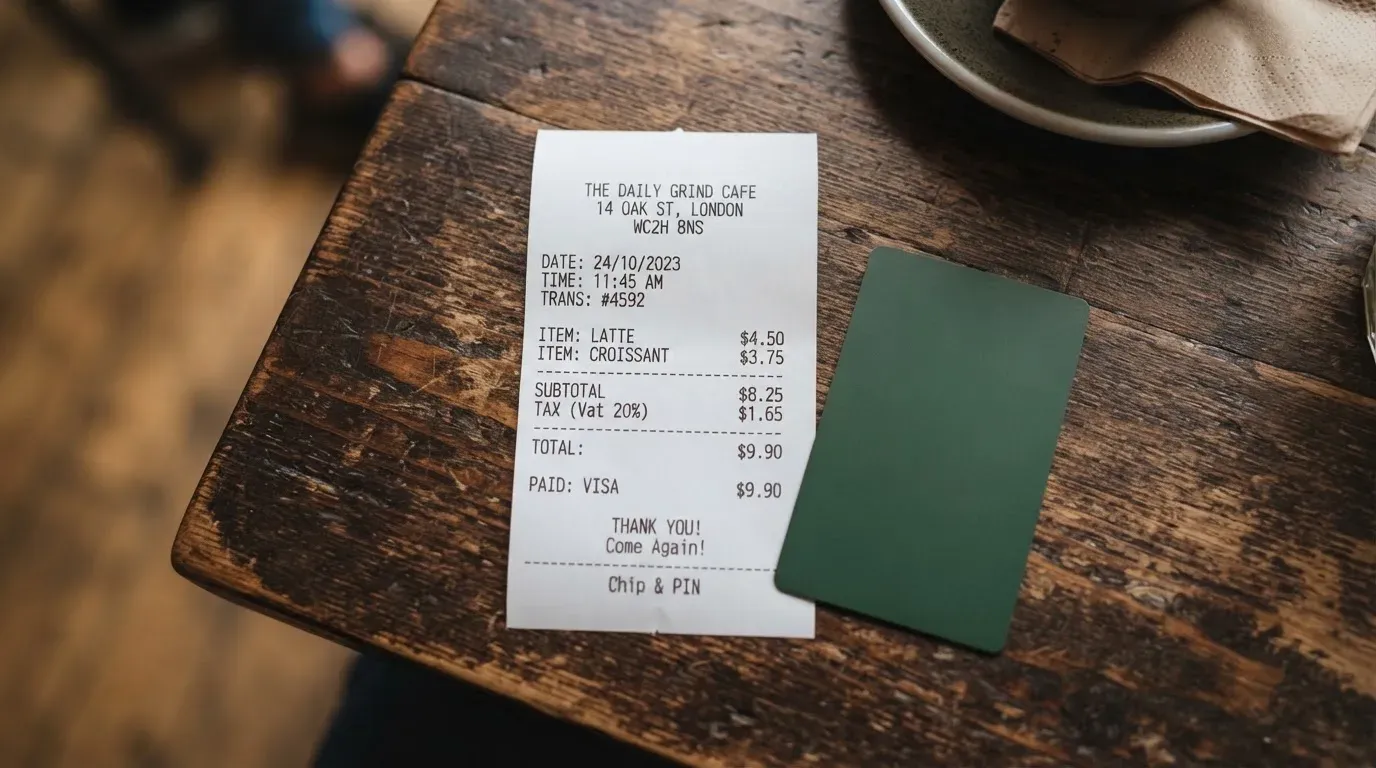
| Fee or limit | What Payth says |
|---|---|
| Issuance fee | not stated |
| Monthly fee | not stated |
| Transaction fee | “zero transaction fees” |
| Crypto conversion rate | “competitive rates”, no percentage given |
| Foreign-exchange fee | not stated |
| ATM withdrawal fee | 2% |
| Free ATM allowance | not stated |
| Daily spending limit | not stated |
| Monthly spending limit | not stated |
| Card currency | not stated |
| Fee tiers | not stated |
So what does a day of spending actually cost? Take an online subscription in dollars. The card says there is no transaction fee, so the “zero transaction fees” line covers the purchase itself. What is not on the table is the conversion: if the balance is denominated in something other than dollars, the crypto-to-fiat conversion happens at a rate the card calls competitive without publishing, and the foreign-exchange fee is not stated. I cannot tell you what that costs, and neither can the card’s public pages.
Take a purchase in a currency that is not your card’s currency — and since the card currency is not stated, you may not know in advance which case you are in. Then you are in the territory of the foreign-exchange fee, which is not stated, plus whatever spread sits inside the conversion rate. This is exactly where crypto cards differ most from bank cards, and exactly where the missing number hurts.
Take cash out of a machine. That one is clean: “only 2% ATM withdrawal fee”. The card is usable “at millions of merchants and ATMs worldwide”. What you do not get is a free allowance — not stated — so 2% is what you pay, every time, with no stated monthly carve-out.
One fee that is not Payth’s at all: the network charge for a blockchain deposit. On-chain network fees (gas, bandwidth) are charged by the blockchain for your deposit, not by the card provider. If you send USDT on Ethereum, the chain takes its cut before Payth ever sees the money.
Top up: moving crypto in
The funding route is short: “Deposit BTC, ETH, or USDT in your wallet”. The App Store listing adds “multiple cryptocurrencies” and mentions USDT and BTC. Payth also promises you can “top up your digital assets and get spending credit instantly”, and the crypto is converted to fiat at the point of sale.
Then the list of what is not stated, which is longer than the list of what is: the networks are not named, the deposit fee is not stated, the minimum is not stated, it is not stated who pays the network fee, and fiat top-up is not stated. That last one is the gap to think hardest about. If your income arrives as fiat — a salary, a transfer from your own account — you have no stated route to get it onto the card. On the evidence of the public pages, this is a card you fund from crypto you already hold.
Why the missing network matters so much: blockchain transfers are irreversible. A deposit sent on a network the card provider does not support, or sent to an address belonging to a different network, can be lost entirely, or need manual support recovery with no guarantee. And choosing a network is not a casual choice. USDT has been issued on Ethereum, Tron, Solana, Polygon, Avalanche and others. Circle stopped supporting USDC on Tron in February 2024, so “USDC over TRC20” is not a native option. If you are holding a token and you pick the wrong chain, the money is not coming back on its own.
There is a second reason the token choice matters. Fees on Ethereum are paid only in ETH — gas exists only in the native asset — so a wallet holding USDT with no ETH cannot send it at all. Tron prices differently, using bandwidth and energy, often burning TRX. And “stablecoin” is a description of intent rather than a guarantee: despite the name, stablecoins are not necessarily stable. TerraUSD collapsed in May 2022; USDC temporarily lost its peg in March 2023 during the US banking crisis. Tether describes USDT as backed 1-to-1 by reserves; Circle says USDC is redeemable 1:1 for USD and fully backed by cash and cash equivalents, mostly in an SEC-registered government money market fund, with monthly reserve attestations by a Big Four firm. The BIS put roughly 90% of stablecoin market capitalisation in USDT and USDC as of July 2025.
Withdrawal from the card back out is not stated. That is worth sitting with: the card’s public pages describe money going in and being spent, and are silent on the reverse.
Paying with it every day
You get a virtual card, a mobile app on both iOS and Android (with an Android APK download), and ATM access. That is the honest inventory.
Two things people expect and Payth does not mention: Apple Pay and Google Pay. Whether you can add the card to a phone wallet is not stated. Blocked merchant categories are also not stated, which cuts both ways — you cannot know in advance whether gambling, adult content or travel are permitted on your card, and those are policy decisions issuers make rather than legal ones.
The app’s store presence is thin. On the App Store, read 21 October 2026, no rating is shown: it “hasn’t received enough ratings or reviews to display an overview”, and the version is 1.0.6. The Google Play rating could not be read. A version number below 2.0 with no visible reviews tells you the app is young. That is not a criticism so much as a fact to weigh — you are testing new software against your own money.
Disputes are where apps usually go quiet, and Payth’s FAQ topics show the same. Questions such as “Why is a card transaction refund not immediate?” and “Why did my payment transaction fail even with balance deduction?” exist as headings, but the answers and the time frames were not readable. It is worth checking the refund timeline with support before opening an account.
One general mechanism to understand, because it explains a lot of crypto card declines: a declined authorisation can leave a hold on your funds for several days, typically up to seven. And address verification — comparing the street number and postal code a buyer types against the issuer’s records — is mainly offered in the US, Canada and the UK, and is generally unavailable for foreign-issued cards. Some merchants decline prepaid or foreign-issued cards outright, because a lookup of the card’s issuing institution and country can look unusual next to the billing address. This is normal for the category, not a fault of yours or of Payth, but it will happen.
What can go wrong
The worst-case scenario for this card is not fraud. It is custody.
Control of crypto belongs to whoever holds the private key. A custodial wallet means Payth holds the credentials, so you must trust the provider completely — and a seed phrase, typically 12 to 24 words, is an unencrypted form of the private key: anyone who obtains it can restore the wallet and spend everything in it. Crypto transfers are typically irreversible, and a stolen key has no built-in recovery, because the network cannot freeze or return funds.
This is not hypothetical for the category. Custodial platforms have failed before: Mt. Gox, with about US$350 million reported stolen between 2011 and 2014; Coincheck, about US$400 million in 2018; Ronin Network, US$625 million in 2022. Holding funds with a custodian means carrying counterparty and hack risk. The alternative — a card linked to a wallet you control yourself — keeps the funds yours until the moment of payment, but then you bear sole responsibility for key loss, phishing, and clipboard-hijacking malware that silently swaps an address you copied. Neither model is free of risk; they are different risks, and you should pick knowingly.
On this card, the wallet is custodial by implication: the listing talks about depositing “in your wallet” and about Payth Wallet. Two-factor authentication is not stated. The app listing does mention “built-in risk controls”, and a “Monitor spend / Freeze card” feature is not stated for Payth specifically. If instant freezing is the control you care most about — and it is the one most people care most about — you need to confirm it exists before you fund the card.
The company behind it: Payth is operated by POPPO LLC, listed as developer “poppo llc” in the App Store. Country of registration, issuing bank and licences are not stated. This is where the score of 4 comes from, and it is worth being precise about what I am and am not saying. I am not alleging anything improper. I am saying that the absence of a named issuer and named licences means you cannot check the register yourself.
And in the EU there is a register to check. ESMA keeps an interim register of authorised crypto-asset service providers, white papers and non-compliant entities. Under MiCA, which took legal effect in June 2023, e-money tokens may be issued only by a credit institution or an electronic money institution (Article 48); rules on asset-referenced tokens and stablecoins applied from 30 June 2024 and the remaining provider rules from 30 December 2024. Transitional arrangements run until 1 July 2026, or until a provider receives or is refused authorisation, whichever comes first. Note the shape of this: a crypto card usually depends on two licences, because the card is a payment service regulated separately under e-money or payment-services law, while MiCA covers the crypto side. A CASP authorised in one member state can serve the whole EU. So the question “is this provider properly authorised?” has answers in two places, and Payth’s pages point you at neither.
Complaints: I found none, and I want to be careful about how I say that. No official incidents were located, and a search of Trustpilot and Reddit for the brand returned only unrelated companies with similar names — PayThem, Payy. No Trustpilot page for Payth exists. No news was found either; the app version history shows 1.0.5 on 15 September and 1.0.6 on 20 September, with the year not shown. An absence of complaints in a product this young with this few reviews is close to uninformative. It is not a clean bill of health, because there has not been enough time and too few users for a reputation to form.
Support is limited to an in-site FAQ. Languages and hours are not stated.
One background fact worth carrying, because it explains why crypto cards shut down: Visa and Mastercard do not issue crypto cards to consumers. They license issuers, and they can suspend a programme. In November 2022 Visa said it had “terminated our global agreements with FTX”, and the FTX US debit card was wound down by its issuer. WaveCrest, a Visa issuer that supplied crypto card brands, was suspended by Visa in Europe in 2018, closing all WaveCrest-issued Visa programmes. Programme closures typically follow a pattern: a notice period, then spending and loading stop, then users are asked to withdraw remaining balances. One 2026 closure, reported by a secondary source and not confirmed, ended new loads on 8 July 2026 and spending on 8 August 2026. That is exactly the scenario that worries me about a card with an unnamed issuer.
Your rights in a dispute depend on where you are and what the card is. A chargeback is a refund the issuer orders, with reason codes such as fraud, duplicate billing, or goods not received. In the US, debit card reversal rights come from Regulation E and credit card rights from Regulation Z; prepaid-card coverage varies and should not be assumed. In the EU, e-money institutions must safeguard customer funds by segregating them in dedicated accounts or insuring them — but those funds are not bank deposits and may not be covered by a deposit guarantee scheme. And on payments, your protection can move: under 3-D Secure, liability for a fraudulent online payment can shift from the merchant to your bank, or, per its critics, to you. Visa’s brand is Visa Secure, Mastercard’s is Identity Check.
And one line that catches people out at tax time, which I am flagging as information rather than advice. The IRS treats digital assets as property, so exchanging them for goods, services or dollars generally produces a taxable gain or loss, measured in your local currency at fair market value on the date of the transaction. For personal holdings that is a capital gain, short-term if held a year or less. Each card payment funded from crypto can therefore be a separate disposal. Check the rules where you live.
What to take instead
None of these are better scored than Payth; Payth is ahead of all three on the overall number, and on availability. I list them because the shape of their disclosure differs, and that is what should decide this for you.
| Payth | Cardex | CardFlow | HyperCard | |
|---|---|---|---|---|
| Score | 6.2 / 10 | 5.6 / 10 | 4.9 / 10 | 4.7 / 10 |
| Who | Global except restricted countries | “One crypto card, 200+ countries”; no exclusions listed | Aimed at Nigeria: “Nigeria’s smartest fintech card platform”, “Nigerians and global users” | No country list on official pages; App Store says works in “more than 176 countries” (acceptance, not eligibility) |
| Card | Virtual (“multiple virtual card options”); network not stated | Debit crypto card on VERVE, VISA, Mastercard and UnionPay; virtual and physical; Naira per listing | Virtual USD Mastercard, created in about 3 minutes | Prepaid “HyperCard”; network not stated; balance in USD or EUR |
| Cost | Issuance and monthly fee not stated | not stated | “Creating a virtual card is completely free”; monthly fee not stated | Not stated; App Store page lists no fees |
| Conversion / fees | “competitive rates”, no percentage; FX fee not stated; 2% ATM fee | Real-time crypto-to-fiat conversion at payment, an “AI-Powered Conversion Rate” that scans exchange rates and picks the best; no fee percentage stated | not stated | not stated on the pages readable |
| Funding | BTC, ETH, USDT; networks not stated | USDT, USDC and BTC wallets; networks not stated | Bitcoin, USDT, ETH or Naira bank transfer; networks not stated | Crypto such as USDT, BTC, ETH in the app, converted to USD or EUR; networks not stated |
| Rewards | not stated | not stated | not stated | not stated |
Three contrasts stand out. Cardex names four networks, including physical cards and UnionPay, and publishes a conversion mechanism even though not a percentage — that is more specificity than Payth offers on a card that is nominally one step behind it. CardFlow says the interesting thing out loud: creating a virtual card is completely free. It is also visibly built for one market, and pays in Naira, which makes it a poor comparison for most readers. HyperCard is the thinnest of the four on disclosure — no fees, no network, no country list — and its “176 countries” line describes where the card is accepted, not who can hold one, which is a distinction worth holding onto throughout this review.
What none of them publish is the same for all four: an issuing bank, a licence number, a support schedule. If you are choosing on transparency, none of these four is far ahead, and you should be sceptical of any of them that starts publishing confident claims about how much you will save.
Who I would recommend it to
I would recommend Payth to someone in this position: you hold BTC, ETH or USDT, you cannot open or use an ordinary bank card, and you want to pay for things online and withdraw cash when needed. For that person the card does a real job, the “zero transaction fees” line means the everyday spending cost is genuinely low, and 2% at a cash machine is a price you can accept for access to your own money.
I would not recommend it to someone choosing between crypto cards for features. There is no cashback mentioned, no rewards, no Apple Pay or Google Pay, no stated spending limits, no stated card currency and no stated network — the things card comparison pages normally rank on. Nor to anyone who wants their crypto under their own control. Nor to anyone who needs to know, before they spend, exactly what a payment will cost in their own currency.
Before you fund it, three questions are worth asking in support, in this order: which networks can I deposit on for each of BTC, ETH and USDT, and what is the minimum deposit; what are the FX and conversion fees when I spend in a currency other than my card currency; and what is the refund timeline on a failed payment where the balance was already deducted. Those are the three gaps that would most change my score, in either direction. If the answers are clear and prompt, this is a 6.2 that has been marked down by thin disclosure rather than by thin substance. If the answers are vague, you have learned the thing you actually needed to know.
Frequently asked questions
What is Payth card?
Payth is a virtual payment card that you load with cryptocurrency and spend like an ordinary card, in shops, online and at cash machines. You deposit BTC, ETH or USDT into a Payth wallet, and the crypto is converted to fiat at the point of sale. It is a card, not a bank account, and it is operated by POPPO LLC. It suits people who hold crypto and want everyday spending without converting through an exchange each time.
How does Payth card work?
You register in the app, verify your identity, deposit crypto into the Payth wallet, and receive a virtual card. When you pay, the balance is converted to fiat at that moment; Payth describes its conversion rates as “competitive” without publishing a percentage. The card is a virtual one only — no physical or metal version is mentioned — and works at merchants and ATMs worldwide, with a 2% ATM withdrawal fee.
Is Payth a bank?
No. Payth is a card programme front-end operated by POPPO LLC, and the card’s country of registration, issuing bank and licences are not stated on its public pages. That is different from a bank deposit account: your balance is not a bank deposit and the protections that come with one should not be assumed. If your balance is held as e-money, an institution in the EU must safeguard it by segregation or insurance, but that is not the same as deposit guarantee cover.
Who owns Payth?
The App Store lists the developer as “poppo llc”, so the operator is POPPO LLC. Where it is registered is not stated, nor is the issuing bank or which licences it holds. I found no complaints and no news about the company, but with no store rating and an app at version 1.0.6 there has been too little time and too little use for a public record to exist.
Is Payth card available in my country?
The card is issued globally except restricted countries and regions — among them Afghanistan, Russia, Ukraine, Iran and Syria. Belarus is on the restricted list per an earlier check. Restriction is stated by residence, and the list “is updated periodically based on issuer policies”, so it can change. Separately, the identity partner only accepts IDs or passports issued by the country they belong to, and it is not stated whether your document must match your country of residence.
How do I get Payth card?
Four steps: register in the app, verify your identity, deposit crypto into the Payth wallet, and get a virtual card. Verification runs through Sumsub and “typically take 5–10 minutes”. You need BTC, ETH or USDT to fund it — no bank transfer route is stated. One level of KYC is described and there are no tiers; declines “may be due to a high-risk flag”, with no appeal route stated.
Does Payth card require KYC?
Yes. Identity verification is part of signup, handled by Sumsub. This is standard for regulated services: EU due diligence covers name, address, date of birth, nationality, ID documentation, a sanctions check and PEP status, while US rules require name, date of birth, address and an identification number. Nationality is screened separately from residence, because sanctions lists are written in terms of country of birth and citizenship. Proof of address and age requirements are not stated for Payth.
How do I top up Payth card?
You deposit BTC, ETH or USDT into your Payth wallet, and Payth says you get spending credit instantly. What is not stated is the important part: which networks, the deposit fee, the minimum, who pays the blockchain network fee, and whether fiat top-up is possible at all. Transfers are irreversible, so a deposit on an unsupported network, or to an address on a different network, can be lost or need manual recovery with no guarantee.
Is Payth card free?
Partly, and the answer is incomplete. Payth states “zero transaction fees” and a 2% ATM withdrawal fee, and it describes conversion rates as “competitive” without a percentage. Issuance, the monthly fee, the foreign-exchange fee, the free ATM allowance and all daily and monthly limits are not stated. So spending is advertised as free; the cost of converting or of spending in a second currency is simply not published.
Is Payth card safe?
It depends on what you mean by safe, and there is one real structural issue. The wallet is custodial, so Payth holds the keys — that means trusting it completely, and transfers are irreversible with no built-in recovery. Custodial platforms have failed before, including Mt. Gox, Coincheck and Ronin Network. The app listing does mention “built-in risk controls”, but an instant freeze and spending limits are not stated, 2FA is not stated, and no card-specific safety features have been confirmed.
Choosing a virtual card – cryptocardadvisor
Content created by the «cryptocardadvisor» team