
PayWide looks free to open, but the 4–5% top-up fee and the missing issuer details decide the verdict
 Available in US
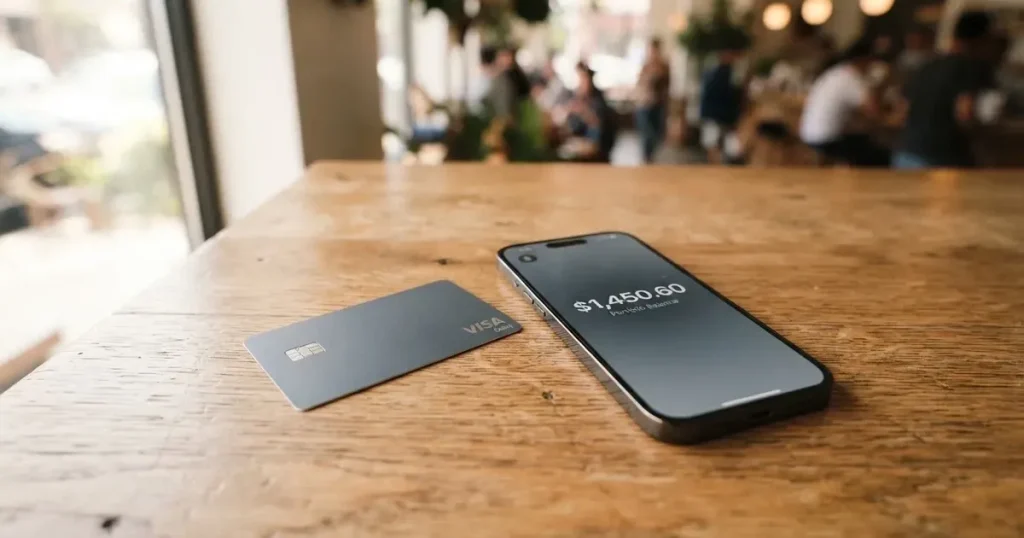
PayWide is one of those crypto cards that look, from the outside, like an ordinary piece of plastic you could use anywhere: a virtual Visa or Mastercard, funded with crypto, spent like a normal card. It is also a product where almost nothing important is published by the people who run it. The operator is not named. The bank that stands behind the card is not named. The regulator is not named. You cannot find the fee schedule on their own pages, because their own pages are, in several places, simply empty.
That gap is not a detail. When you hand over money to an unnamed structure, the first question is not “what does it cost?” but “who is legally holding my money, and in which country are they answerable?” Here, nobody will tell you. So everything below is written with that in mind: I have separated what PayWide itself states (very little) from what third-party trackers report (a fair bit, none of it confirmed by the company), and I have kept the two apart throughout.
The short version: PayWide scores 4.6 out of 10. Its best feature is genuinely good and hard to fake — you can load the card from a self-custody Web3 wallet with more than 40 cryptocurrencies across six major networks, and most of that loading is not held by PayWide. Its worst feature is that topping up costs 4% to 5% of whatever you put in, depending on which network’s card you use, and everything else you would want to know is either unstated or unofficial.
The conditions described here are current as of October 28, 2026.
Verdict: 4.6 out of 10, and the shape of the problem
Let me put the score up front, because in this case the score is not the interesting part — the shape of it is. PayWide is not a bad card that costs too much. It is a decently built card wrapped around a company that publishes almost nothing, sold through an invitation code on Telegram, with a 4–5% tax on every dollar you load. Those are three separate problems, and you should weigh them separately.
Who it suits. If you already live inside the crypto world — you hold tokens in a self-custody wallet, you are comfortable choosing a network and reading a contract address, and you want a virtual card number that spends from that balance without you having to touch a bank — the mechanics of PayWide are the part I like most. The top-up path is broad and it is real. MetaMask works. The six networks named are the six that matter. And 0.10%–1.00% cashback on the top-up itself (unofficial) is a small, real, if unremarkable, sweetener.
Who it does not suit. If you need a card that works at a shop without surprises, if you are sensitive to 4% being taken off every deposit, if you are in the United States, the United Kingdom, Germany, France or most of the EU, or if you are the kind of person who reads a provider’s legal page before sending money — this is not for you. The restricted-country list is long. The unnamed operator is not a detail you can look past. And if you want to withdraw money back out, the answer, as far as anyone can tell, is that you cannot.
Here is the score broken down.
| Criterion | Mark | Why |
|---|---|---|
| Who can get it | 6 / 10 | Unofficial sources say 150 countries open, 35 closed, with the United States, United Kingdom, Germany, France and most of the EU on the closed list; you need an invitation code. Decent reach, but the rules are not published by the company itself |
| Cost | 2 / 10 | Unofficial: topping up a Visa costs 5%, Mastercard 4% plus $0.35 per authorisation attempt and 1.25% per purchase; issuance is free. The lowest mark on the card |
| Top-up options | 8 / 10 | More than 40 cryptocurrencies across Ethereum, Polygon, Arbitrum One, OP Mainnet, BNB Smart Chain and Avalanche, straight from a Web3 wallet. The strongest feature |
| Reliability and complaints | 3 / 10 | Unofficial: no operator, bank or regulator named; Trustpilot 3.4 out of 5 on two reviews (card not received, 2023); an aggregator scores it 2.3 out of 5 |
| Everyday use | 5 / 10 | Unofficial: virtual Visa and Mastercard; Apple Pay and Google Pay only on Mastercard 5258 and 5395; no ATMs |
| Total | 4.6 / 10 | Good plumbing, no published accountability |
A word on the two marks at each end. The 8 for top-up options is real, and it is the reason I kept looking after the empty official pages turned up. The 2 for cost is not a rounding error; it is the number that should govern your decision. If you load $500 into this card four times a year, that is $20–$25 gone before you have bought anything. That is not a rounding error in your life, it is a subscription fee you did not know you were paying.
Who will they give you the card to
The honest answer is that PayWide’s own pages do not say, because when I checked the site page that should describe eligibility, it was empty. That is not me being unable to find it — the page itself had nothing on it. So what follows is what third-party trackers report, and it is unofficial, and PayWide has not confirmed any of it.
According to that reporting (CryptoCardHub, August 2026), a country map lists 150 countries as “Available” and 35 as “Restricted”. The restricted list includes the United States, the United Kingdom, Germany, France and most EU member states. The exact list of countries where an applicant is actually eligible is not published, and — importantly — the maps do not establish residence eligibility on their own. A country appearing green on a map is not the same as a country whose residents can open the card. And you need an invitation code, which is obtained through PayWide’s Telegram channel; one code is tied to one wallet.
That is the eligibility picture in one paragraph. It is thinner than you would like, and for a card aimed at “anyone who cannot get a normal bank card”, thin eligibility information is a strange choice.
Before I move on: this section is the first place where the pattern repeats, so I will name it once here and use it afterwards. Almost everything you would want to know about PayWide comes from a single third-party tracker, and the company itself confirms none of it. Where the card’s own public pages are silent, I will say “not stated by PayWide”. Where a third party says something, I will say “unofficial, not confirmed by PayWide”. I will not blur those two into a single voice, because the difference between them is the whole review.
How to get it
Again, mostly unofficial. PayWide’s own site does not state what identity checks you go through, and it does not state what card you end up with.
What third parties report: the public application flow does not ask for identity documents or proof of address. You may enter an alias, and you may enter an address you already have, on the card. Your age is not stated anywhere. That last point matters more than it sounds — prepaid and debit cards are generally available to adults aged 18 and over in most countries, and some issuers set higher limits for their own reasons, so if you are under 18 the answer here is “not stated”, not “yes”.
The card you reportedly get is virtual: a Visa with BINs 4931 and 4383, and a Mastercard with 5258 and 5395. Both are prepaid, and both are denominated in US dollars. There is no physical card — the delivery question does not arise, because there is nothing to deliver.
No identity tiers are published. Nobody has told you what level of verification, if any, sits behind the invitation code.
You may be reading this and thinking: no KYC, no documents, an alias allowed. That is genuinely unusual, and it is also the thing I would think about hardest before sending anything. It is not a mark in the company’s favour and I will not present it as one. An application that does not identify you is an application that cannot protect you either — because a provider who does not know who you are cannot reimburse you, cannot resolve a dispute in your favour, and has no legal obligation to hold your balance to any particular standard. It also means that the moment the arrangement ends, there may be no mechanism at all to recover the funds. I am not going to tell you how to get around anything; I am telling you what a no-KYC structure is, structurally.
Fees: what it really costs
This is the section that decides the card, and it is also the section where PayWide’s own pages are blank. Nothing below is confirmed by the company. All of it is from the third-party reporting, dated August 2026.

Here is the full picture as reported.
| Fee or limit | What is reported |
|---|---|
| Card issuance | Free with an invitation code |
| Monthly or annual fee | None listed |
| Top-up fee, Visa | 5% |
| Top-up fee, Mastercard | 4% |
| Authorisation fee, Visa | Free |
| Authorisation fee, Mastercard | $0.35 per attempt, whether approved or declined |
| Purchase fee, Mastercard | 1.25% per purchase |
| Purchase fee, Visa | Free |
| FX markup | A fixed markup is not published |
| ATM | No pricing shown; the cards are marketed as virtual |
| Programme limits | Classic up to $3,000 (unofficial); Business up to $10,000 (unofficial) with one-year validity; no top-up amount limit advertised |
| Card currency | USD |
Now let me make that table do some work, because “4% top-up fee” means different things to different people.
Paying for coffee, $4. On a Mastercard, you pay 4% to load the money — about $0.16 — and then 1.25% to spend it — about $0.05. Plus, if the authorisation is declined, $0.35 and nothing back. So a $4 coffee costs roughly 21 cents in fees, and if the coffee shop’s terminal happens to decline the first tap, another 35 cents. On a Visa, the 5% loading fee is $0.20 and the purchase is free. Either way, the cost of a small purchase is dominated by the cost of funding the card, not by the purchase.
A $60 grocery shop. Mastercard: $2.40 to load, $0.75 to spend — $3.15. Visa: $3.00 (unofficial) to load, nothing to spend. The gap between the two cards is $0.15 here and $1.25 per purchase in general, which is small next to the loading fee.
A $300 online purchase, or a subscription. Mastercard: $12 to load, $3.75 to spend — $15.75. And this is where the $0.35-per-declined-authorisation detail starts to bite. Online payments fail. A payment page that times out, a shop that retries, a merchant that runs an authorisation and then reverses it — each attempt on a Mastercard is 35 cents. Nobody tells you how many attempts you will make in a year.
The exchange-rate cost, which nobody has quantified. The cards are US-dollar-denominated, and the fixed foreign-exchange markup is not published. So when you spend euros, pounds, or naira, there is a conversion happening somewhere and the card operator has not told you what it takes. This is the single largest unknown in the cost table, and it is the one that would matter most to a European reader — except that most of Europe is on the restricted list anyway. For anyone in a dollarised economy, it may not bite at all.
The tiers, for completeness, are reported as Classic (up to $3,000, unofficial), Business (up to $10,000, unofficial, valid one year) and an NFT programme marketed as unlimited limits whose terms are not itemised. “Unlimited” with no itemised terms is not a benefit I would bank on.
What is genuinely good in this table: issuance is free, and there is no monthly fee. If you open this card and never fund it, it costs nothing. The expense is entirely in the using.
Top up: how the money actually gets in
This is the part I like best, and it is the part that comes from PayWide itself rather than from a tracker.
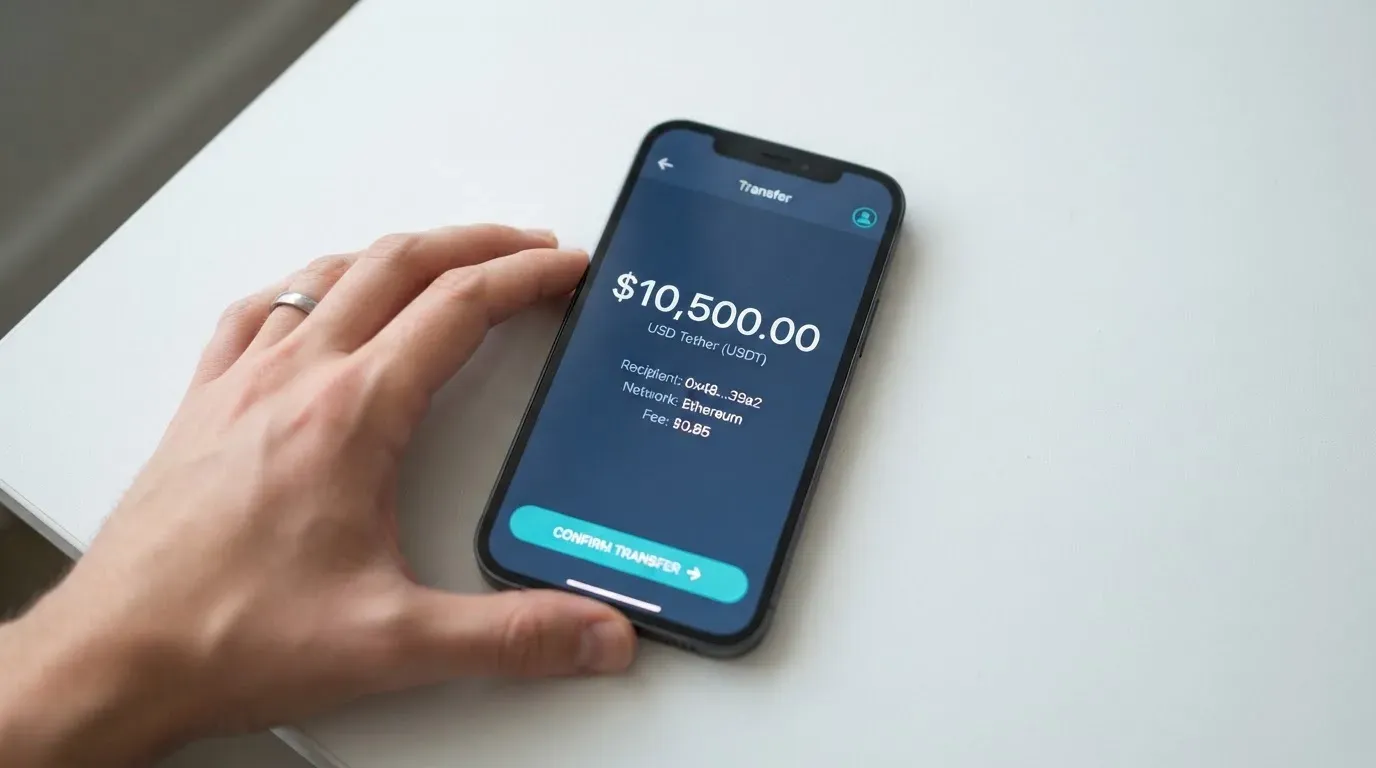
You top up from a connected Web3 wallet — your own wallet, the one holding your keys — with more than 40 different cryptocurrencies, across six networks: Ethereum, Polygon, Arbitrum One, OP Mainnet, BNB Smart Chain and Avalanche. The crypto is converted to dollars at Uniswap rates. That is the official description, and it is a better description than most cards in this category manage.
Unofficially, the reporting adds that most Web3 wallets work, with MetaMask the one recommended; that the 40-plus tokens come from Uniswap’s default list; and that funding usually takes one to three business days after the payment is confirmed. One to three business days. Remember that number. It is not a tap-and-go experience, and it is not a complaint — a review I found describes exactly this, as a normal delay rather than a fault, with the card deposit arriving one to three days after the blockchain confirms.
There is also a reward on the top-up, not on the purchase — which distinction matters, because a cashback on loading is a rebate on a fee you are already paying, whereas a cashback on spending is money back. As reported, it runs from 0.10% to 1.00% (unofficial) depending on your top-up volume over the previous three months, from $6,000 (Level 1) up to $100,000 and above (Level 5). And a referrer gets one extra card slot and $3 after a new user’s first top-up.
And then there is the withdrawal question, which is the one I would want answered before I loaded anything. PayWide does not state whether you can withdraw. The unofficial line is blunt: once the crypto has been converted, the funded balance cannot be recovered with your wallet’s private key. So the private key controls the crypto, and the crypto controls the card — until the moment of conversion, after which the card balance is simply the card balance, and your key is no longer the thing that holds it. I am not going to dress that up as a technicality. For anyone whose reason for using a crypto card is self-custody, this is the moment the property ends.
One more thing about top-ups that is not PayWide’s fault but will still cost you money. The on-chain network fee — gas on Ethereum, resources on Tron — is charged by the blockchain, not by the card provider. If you are sending from a network where fees are high, that comes out of your deposit on top of everything else. And blockchain transfers are irreversible: a deposit sent on a network PayWide does not support, or to an address belonging to a different network, can be lost outright or need manual recovery with no guarantee attached.
Paying with it every day
PayWide’s own pages say nothing about daily use, wallets, rewards, apps or disputes. What follows is unofficial.
Apple Pay and Google Pay work — but only on two specific cards. They are supported on Mastercard 5258 and 5395 only. If you hold the Visa, or a Mastercard with a different BIN, adding it to your phone’s wallet is not on the table as reported. That is an odd, specific restriction, and it is the kind of detail you only find out after you have already picked a card.
There is no app. None was found; the flow is web-based. For a card aimed at people who live in their phone, that is a downgrade from the category norm, and it is also where freezing a card quickly, the single most useful safety feature on any payment card, gets awkward.
There are no ATMs, because the cards are virtual. If you need cash, this card cannot give it to you.
Rewards, as covered above, are paid on the top-up rather than the purchase.
Disputes — what happens when a shop takes the money and does not deliver — are not stated. And this matters more than it sounds for this particular card, for a reason from outside the company. A 3-D Secure check shifts liability for a fraudulent online payment away from the merchant, in some readings toward the cardholder’s bank, or in others toward the cardholder. An address verification service, which compares the numbers in the billing address you type against the issuer’s records, is mainly offered in the United States, Canada and the UK and is generally unavailable for foreign-issued cards — which can cause declines. Neither of those is PayWide’s doing. But a virtual card with an alias on it, issued by an unnamed bank in an unnamed country, is exactly the shape of card that gets declined at unfamiliar merchants and hard to dispute afterwards.
What can go wrong
Let me put the worst things first, because the shape of this section is unusual: the biggest risks here are not card-payment risks, they are structural.
Nobody will tell you who they are. PayWide does not publicly name its legal operator, its issuing bank, its BIN sponsor, its regulator, or the jurisdiction whose rules safeguard your balance. An earlier check turned up a name — “PayWide (Wage3)” — which is unconfirmed and which I would not repeat to anyone as fact. A card runs on four or five separate regulated parties: the network routes the messages, the issuer holds the programme under the network’s licence, the BIN sponsor is the entity the network actually recognises, the regulator is the body that licenses it, and the brand you are looking at is often just the front end. PayWide appears to publish none of them. When a provider will not name the institution holding your money, that is not a documentation gap; it is the answer.
The reviews are thin and old. On Trustpilot the card sits at 3.4 out of 5 from two reviews, none in the last twelve months, read on 21 October 2026. One is a one-star report from April 2023 saying the card was not received and calling it a scam. The other is a five-star note describing a one-to-three day delay before the card deposit arrives. Two reviews cannot tell you much in either direction — but note what they are: a card not received, and a slow deposit. An aggregator independently scores it 2.3 out of 5. I found no official incidents, and I am not going to manufacture a scandal out of two reviews. I am going to tell you that the sample is too small to trust and the rating is below average.
Security, as described. Card details are shown once. EMV 3-D Secure is advertised. Top-ups are said to be “secured and insured in encrypted MPC wallets” — with no insurer named, which turns that sentence into a claim rather than a protection. And after conversion, PayWide and undisclosed partners control the dollar balance. “Undisclosed” is doing a lot of work in that sentence.
Support runs through Telegram. Access and contact are via the Telegram channel where you get the invitation code. That is a chat app, not a regulated complaints procedure. There is no published escalation path, no named contact, no stated response time.
Programme shutdown is a real category risk. Card programmes do close. Visa terminated its global agreements with FTX on 13 November 2022 and the FTX US debit card was wound down. WaveCrest, a Visa issuer that supplied crypto card brands, was suspended by Visa in Europe in 2018, closing every WaveCrest-issued Visa programme it ran. When one closes, the pattern is usually a notice period, then loading stops, then spending stops, then you are asked to withdraw whatever is left — and “withdraw” here depends entirely on a withdrawal process that PayWide does not publish. I am not forecasting that PayWide will close. I am telling you what closing looks like, because you cannot assess that risk against an unnamed structure.
A declined payment can leave a hold. Declined authorisations may leave a hold on your funds that stays for several days, typically up to seven. On a $0.35-per-attempt Mastercard, that is a small cost compounding into an annoying one.
No news, announcements or incidents surfaced in my checks — which, given that I could not identify the operator, is not the reassurance it might sound like. You cannot follow news about a company you cannot name.
What to take instead
I want to be careful here. All three alternatives below score higher than PayWide’s 4.6, but none of them scores well, and none of them fixes everything PayWide gets wrong. I am comparing them because a review that never mentions what else exists is not a review.
Cardex — 5.6 out of 10. The strongest of the three, and the one I would look at first. It markets itself as one crypto card for 200-plus countries, with no published country list or exclusions, and it runs on the VERVE, Visa, Mastercard and UnionPay networks, offering both virtual and physical cards. It converts crypto to fiat at the moment of payment, and its site describes an “AI-Powered Conversion Rate” that scans global exchange rates and picks the best one when you spend — a phrase I would treat as marketing until I saw the number. What it does not state: the fee percentage, the card currency (its App Store listing is Naira-focused), and the networks for its USDT, USDC and BTC funding. Costs are not stated either. So Cardex is better on reach and better on the score, and still opaque on the thing that matters — what it charges.
CardFlow — 4.9 out of 10. Aimed squarely at Nigeria (“Nigeria’s smartest fintech card platform”, also pitched at “Nigerians and global users”), with no country list or exclusions published. A virtual US-dollar Mastercard, created in about 3 minutes, and creating one is free per their own FAQ — the only card in this comparison with a clearly stated free issuance. You can fund it with Bitcoin, USDT, ETH or a naira bank transfer; networks not stated; fees not stated.
HyperCard — 4.7 out of 10. Almost identical to PayWide on score, and almost identical in what it does not tell you: no country list, no network named on the App Store page, no fees published, no rewards published. Its App Store says the card works in “more than 176 countries” — that is where it is accepted, not who can get one, and the difference matters. You deposit USDT, BTC or ETH in the app and it converts to dollars or euros. Balance in USD or EUR. That currency choice is a genuine advantage over PayWide’s dollar-only.
| PayWide | Cardex | CardFlow | HyperCard | |
|---|---|---|---|---|
| Score | 4.6 / 10 | 5.6 / 10 | 4.9 / 10 | 4.7 / 10 |
| Card | Virtual Visa and Mastercard | Virtual and physical, four networks | Virtual Mastercard, about 3 minutes | Prepaid, network not stated |
| Card currency | USD | Naira per listing | USD | USD or EUR |
| Cost | Free to issue; 4–5% to top up | Not stated | Free to create | Not stated |
| Who it is for | Reported reach of 150 countries, invitation code | 200+ countries claimed, no list | Nigeria and global users | 176+ countries accepted |
| Largest gap | No named operator or bank | Fee percentage not stated | Fees not stated | Almost nothing stated |
Two things stand out from that table. First, nobody in it publishes a fee percentage. This is a category problem, not a PayWide problem, and it is worth internalising before you pick any of them: the absence of a published price is itself a cost, because you cannot budget around it. Second, PayWide is the only one of the four with a stated top-up fee, and that fee is high. In a strange way, that makes PayWide the most honest of the four and the most expensive. I would rather know I am paying 5% than worry about other costs.
Who I would recommend it to
Not to you, unless several of these are true at once.
I would recommend PayWide to someone who holds crypto in a self-custody wallet, who is comfortable choosing between six networks and checking an address, who is in one of the 150 countries reported as available, who has an invitation code, and who is using it for a defined and modest purpose — spending a slice of crypto balance through a virtual card number without opening a bank account. For that person, the 8 out of 10 on top-up options is the whole value proposition, and the 4% or 5% loading fee is the price of convenience, which they can judge for themselves.
I would not recommend it to someone spending their salary on it, to anyone in the United States, the United Kingdom, Germany, France or most of the EU, to anyone who needs cash, to anyone who needs Apple Pay or Google Pay without knowing in advance which of the two card numbers supports it, or to anyone who would want their money back. That last one is not a preference. It is the structural finding: after conversion, the private key no longer holds the balance, and no withdrawal process is published.
If you take one practical thing from this review, make it this. Every fact about eligibility, identity checks, fees, limits, wallets, rewards and security on this card comes from a single third-party tracker, dated August 2026, and none of it is confirmed by PayWide, whose own pages are empty on most of these points. I have told you which claims are unofficial because I do not want you acting on them as though they were a contract. They are a map of what has been reported, not a promise of what you will get. Given that the operator, bank and regulator are all unnamed, that gap is not something a review can fill — only the company can, and so far it has not.
Frequently asked questions
What is the PayWide card?
PayWide is a virtual crypto payment card, reported as both Visa (BINs 4931, 4383) and Mastercard (5258, 5395), funded from your own Web3 wallet and spent as prepaid US dollars. PayWide itself publishes very little about it. The details above come from a third-party tracker, not from the company, which is why they are unofficial throughout this review.
How does the PayWide card work?
You connect a self-custody Web3 wallet, send crypto to the card from one of six networks, it converts to dollars at Uniswap rates, and the card spends that balance. Funding is reported to take one to three business days after the blockchain confirms. It is a prepaid model, so the balance cannot be overdrawn. After conversion, your private key no longer holds the money — the balance belongs to PayWide and undisclosed partners.
Is PayWide a bank?
Not on the evidence available. PayWide does not publicly name its legal operator, issuing bank, BIN sponsor, or regulator. An earlier check surfaced the name “PayWide (Wage3)”, but that is unconfirmed. A crypto card normally runs on a licensed bank or e-money institution holding the programme, with the brand as a front end. Here, none of those parties are identified, which is the single most important fact on this page.
Who owns PayWide?
I cannot tell you, and that is the finding rather than a gap in my checking. PayWide’s public pages do not name a legal entity, an issuing bank, a BIN sponsor, a regulator, or a safeguarding jurisdiction. Without those, you cannot tell which country’s rules apply to your balance, where to complain, or which court would have jurisdiction. That is why the reliability score is 3 out of 10.
Which countries can use PayWide?
Unofficial reporting lists 150 countries as available and 35 as restricted, with the United States, United Kingdom, Germany, France and most EU members restricted. The exact applicant-eligible countries are not published, and the maps explicitly do not establish residence eligibility. Access also requires an invitation code through PayWide’s Telegram, with one wallet per code. Check your own country, because the distinction between accepted and eligible is exactly the one these maps blur.
Does the PayWide card require KYC?
PayWide does not state its identity requirements. Unofficial reporting says the public application flow does not request identity or address documents, and that you may enter an alias and an existing address. Your age is not stated. Read that carefully: a provider that cannot identify you cannot easily reimburse you or defend a dispute for you either, so light onboarding is a trade-off, not a perk.
How much does it cost to use the PayWide card?
Issuance is free and no monthly fee is listed. Unofficial fees: 5% to top up a Visa, 4% for a Mastercard plus $0.35 per authorisation attempt and 1.25% per purchase. No fixed FX markup is published. So a $60 Mastercard purchase involves a 4% top-up fee, a 1.25% purchase fee, and the $0.35 fee per authorisation attempt (approved or declined).
How do I top up the PayWide card?
From a connected Web3 wallet, with more than 40 cryptocurrencies across Ethereum, Polygon, Arbitrum One, OP Mainnet, BNB Smart Chain and Avalanche, converted at Uniswap rates. MetaMask is the recommended wallet, and tokens come from Uniswap’s default list. Reported top-up cashback runs 0.10% to 1.00% (unofficial) by volume tier, from $6,000 to $100,000-plus. Network gas is charged by the blockchain, not PayWide.
Can I add the PayWide card to Apple Wallet?
Reportedly yes, but only on Mastercard 5258 and 5395. Apple Pay and Google Pay support is not reported for the Visa cards or for other Mastercard BINs. There is no app — the flow is web-based — and no ATMs, since both cards are virtual. So confirm which card number you are getting before you plan around tapping your phone.
Is the PayWide card safe?
I would not call it safe, and I would not call it fraudulent — two reviews and an unnamed operator support neither verdict. There is no app, no published withdrawal process, support only via Telegram, and no named regulator. Security is described as “secured and insured in encrypted MPC wallets” with no insurer named. Treat the balance as money you may not get back, and size it accordingly.
Choosing a virtual card – cryptocardadvisor
Content created by the «cryptocardadvisor» team