
MetaMask card review
 Available in US

The MetaMask card is unusual in the crypto card market. Instead of loading a prepaid balance from an exchange, it draws directly from the wallet you already control, converting your tokens at the moment you pay. That self-custody angle is the headline; everything else, including the costs, the country list, the everyday experience and the support you can expect when something goes wrong, has to be weighed against that core idea. I went through the card’s published terms and the support pages, read what users say about the rollout, and pulled the alternatives for context. This is what I found and what it means for you if you are weighing it up.
The conditions below are current as of October 28, 2026.
Verdict
The MetaMask card lands at 7.1 out of 10. It is not the cheapest or the most rewarding card on the market, and the company is candid that the sign-up list is limited and that support complaints have piled up. What it offers, and what most other cards do not, is a clean self-custody model: your private keys never leave your wallet, the card spends tokens that are delegated to it on the fly, and you can freeze or replace the card from the app in seconds. For people in the 45 supported countries who already use MetaMask as their main wallet, that tradeoff is appealing. For everyone else, especially in the US and the UK where sign-ups are paused, the calculus looks different.
| Criterion | Mark | Why |
|---|---|---|
| Who can get it | 7 / 10 | Open in 45 listed countries across Europe, Latin America, Canada and others; everyone else joins a waitlist. The US and the UK are temporarily closed to new sign-ups. |
| Cost | 8 / 10 | The virtual card is free, with no annual or monthly fee. The Metal tier costs $199 a year. The card charges a “minimal fee” per transaction but no foreign-transaction fee, and the card currency is whatever the merchant uses, converted at the Mastercard rate. |
| Top-up options | 8 / 10 | The card spends directly from the connected wallet on Linea, Base, Monad and Solana, against mUSD, wETH, EURe, GBPe, USDC, USDT and a couple of other named tokens. Wallets that only hold Solana cannot withdraw credit. |
| Reliability and complaints | 4 / 10 | Issued by Monavate and run by Crypto Life, with a long list of user complaints about refunds stuck in a “Credits” balance, tickets that loop through automated replies, and cards frozen at lifetime limits. The official pages contain conflicting answers on ATM access and on US sign-ups. |
| Everyday use | 9 / 10 | Virtual card is instant, the Metal card can be pre-ordered in the app, Apple Pay and Google Pay are supported, and the ATM allowance goes up to $1,000 a day on Virtual and $5,000 on Metal. |
The audience this card fits best is self-custody wallet users in Europe and Latin America who already keep their tokens in MetaMask and want a card that does not ask them to deposit crypto onto a third-party platform first. If you are outside the supported countries, want aggressive cashback, or rely on phone support to fix problems, you will likely be happier with a different card.
Who they will give you the card
Sign-up is open in 45 listed countries and territories, with everyone else routed to a waitlist. Examples on the official list include Andorra, Argentina, Brazil, Canada, Mexico, Germany, France, Spain and Uruguay. The full list of 45 stretches across most of the European Union and EEA, plus the United Kingdom’s Crown Dependencies (Guernsey, Isle of Man, Jersey), Gibraltar, Switzerland, Norway and Iceland, and a sizeable block in Latin America: Argentina, Brazil, Chile, Colombia, Costa Rica, the Dominican Republic, El Salvador, Guatemala, Mexico, Panama and Uruguay. Russia, Belarus and Turkey are not on the list.
Two things stand out. First, the US and the UK are temporarily closed to new sign-ups according to the FAQ, even though the Metal product page mentions US availability, a contradiction the card’s own pages have not resolved. Second, the rule the company quotes is “ineligible regions limit sign-ups, not spending”, which is an important nuance: if you already hold the card and travel, you can keep using it. The citizenship rule, by contrast, is not stated in the pages I read; only the residency rule is.
You will need a proof of residency. Other KYC documents are not specified in the official material, although community reviewers and third-party trackers report that an email, a phone number and a government-issued ID are also asked for. There is no credit check. The minimum age is not stated. For the Metal card a verified address is needed because it is shipped to you, but the cost of shipping, the delivery time and the replacement cost are not stated in the public pages.
How to get it
The signup is unusual because the card is not a free-standing product you apply for, it is a feature inside the MetaMask app. The flow, in broad strokes, runs as follows. You open the MetaMask mobile app and look for the card section. If your country is on the list and sign-ups are open, you start the application inside the app, hand over the documents the issuer asks for, and wait for approval. The official page says the issuer is Monavate, with Crypto Life acting as card provider; KYC is handled by Crypto Life. Approval speed is not stated, and the conditions for rejection are not stated either, but third-party reviewers describe approval as fast or near-instant once documents are uploaded.
Once you are approved, the virtual card is issued immediately and shows up in the app; you do not wait for any plastic in the post. The card network is Mastercard. The card currency is not stated on the pages I read, which is itself worth noting; in practice the card settles in whatever currency the merchant requests, and conversion happens at the rate Mastercard provides. After the virtual card is in your hand, the Metal variant can be pre-ordered in the app and is shipped to a verified address; one user, on a third-party review site, reports the physical card was promised in two weeks and took more than a month, which is the only delivery time reference I found and should be treated as unofficial.
The card runs on one card per user, not multiple. The MetaMask Card Support line is described as 24/7 and is the route for assisted replacement in your region if the card is lost or stolen.
What it really costs
The headline cost structure is friendly, with most of the friction in small per-transaction fees and the Metal annual fee.
| Fee or limit | Virtual | Metal |
|---|---|---|
| Issuance | Free | Free to order; $199/year membership |
| Annual or monthly maintenance | None | $199/year (billed annually) |
| Conversion / “per-transaction” fee | A “minimal fee” per transaction (amount not stated) | Same |
| Foreign-transaction fee | None (Mastercard rate used) | None |
| ATM access | Up to $1,000/day; “up to $1,200/month” free (tier unclear) | Up to $5,000/day |
| Card spend limit | $15,000/day | $30,000/day |
| Cashback | 1% in mUSD | 3% in mUSD on the first $10,000 spent, then 1% |
A few everyday examples will make this concrete. Imagine you buy a €40 lunch in Paris: there is no foreign-transaction fee, the conversion goes through at the Mastercard wholesale rate, and the only MetaMask fee is the “minimal” per-transaction charge, whose amount the public pages do not state. The page promises “no additional MetaMask fees” beyond that. If you pull €200 out of a local ATM, that is within both the daily and the monthly free allowance and is processed at the same Mastercard rate; the “minimal fee” still applies. If you top up by moving USDC from a Base wallet, you pay only the on-chain network fee, not a MetaMask fee, although the exact top-up and minimum figures are not stated in the support pages I read.
A handful of contradictions in the public material are worth flagging. One FAQ version says the ATM allowance is only for Metal and US Virtual users, while the card page gives separate daily figures for Virtual and Metal. A community tracker says the card is free of monthly, issuance, ATM, FX, top-up and decline fees, which directly contradicts the official “minimal fee per transaction” and the $199 Metal fee. I have stuck with the official language where the two disagree, because the card’s own pages are what bind you.
Top up
The MetaMask card is unusual in that you do not “top it up” in the usual sense. There is no prepaid balance to load and no bank transfer step; instead, the card spends tokens that you have delegated to it from your connected wallet. The moment a transaction clears, the right amount is drawn from your wallet, converted, and paid out. The card balance shown in the app is the highest-priority token in the “Manage” set, which is how you choose which token gets spent.
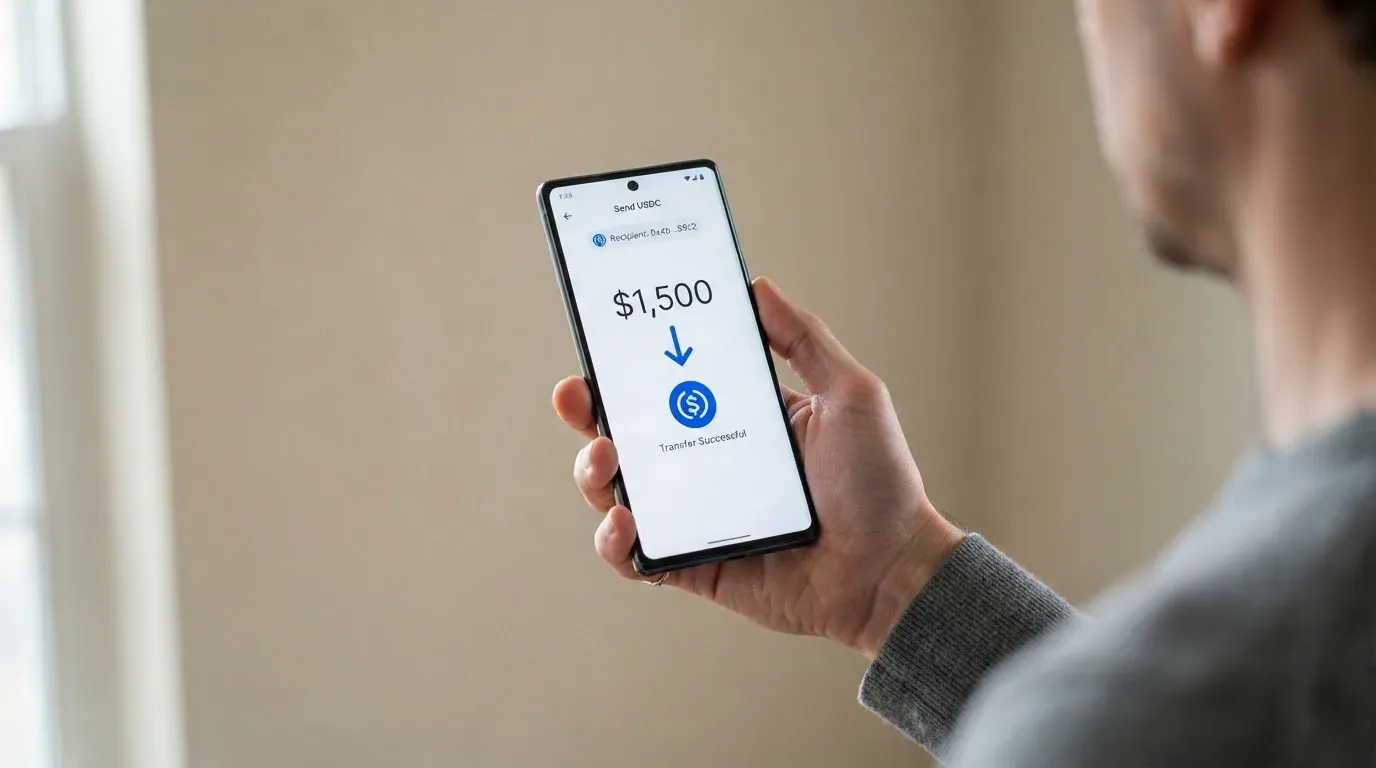
The wallet you connect has to be on one of the supported networks: Linea, Base, Monad or Solana. The named spendable tokens on the public page are mUSD, wETH, EURe, GBPe, USDC and USDT, and the page hints that there are nine in total, although the others are not listed in the materials I read. Withdrawals go out as mUSD: Money Account holders receive them into their Monad mUSD vault, while everyone else receives them on a priority EVM address as Linea mUSD, and Monad withdrawals have sponsored gas. If your wallet holds only Solana-based assets, you cannot withdraw credit, which is a real limitation for Solana-only users.
There is no separate fiat top-up. Network fees for the underlying token transfer are charged by the blockchain, not by MetaMask; the “deposit fee” and the “minimum top-up” are not stated in the support pages I read. The fee table at the support URL linked from the card page did not return figures when I checked. If you want to close the card entirely, the procedure is to contact Crypto Life support; freezing or deactivating the card keeps the funds in your own wallet.
Paying with it every day
Day-to-day use is the strongest part of the picture. The virtual card appears in the app the moment you are approved, so you can add it to Apple Pay or Google Pay right away, type the number into a website, or use it at a contactless terminal. The Metal card is the physical twin, with a higher spend cap and a higher cashback rate, and is shipped once a verified address is on file.
Cashback is paid in mUSD into the MetaMask Money Account, at 1% on Virtual and 3% on Metal, with the Metal 3% rate capped at the first $10,000 of spend in a year and reverting to 1% above that. There is also a $FLY bonus paid through the Blackbird dining app: 5X for Virtual and 7X for Metal, which is on top of the cashback and only relevant if you actually use Blackbird.
You can set your own daily, weekly and monthly spend limits inside the app, which is a useful safety valve and means the headline limits are ceilings, not defaults. The card spend caps are $15,000 a day on Virtual and $30,000 a day on Metal. ATM withdrawals are capped at $1,000 a day on Virtual and $5,000 a day on Metal, and the public material talks about “up to $1,200 a month” of free ATM use, although the tier to which that free allowance applies is not clear. Blocked merchant categories, like gambling or adult content, are not stated in the pages I read; the issuer’s policy, not the law, is what governs them. The MetaMask app’s store ratings are not stated on the card page or the FAQ, so I have no number to give you there.
What can go wrong
The risks sit in three places: the operational experience, the company setup, and the safety of the model itself.
On operations, the public material is honest that there have been issues. Sign-ups in the US and the UK are temporarily closed, Metal availability is limited, and the FAQ versions for limits and ATM access contradict each other. The card provider is Crypto Life, the issuer is Monavate (spelled “Monovate” in one part of the FAQ), and the site footer carries a 2026 Consensys, Inc. copyright, although the FAQ does not actually say that Consensys provides the card. The issuer’s registered country and the licences it relies on are not stated.
The user-feedback picture is the part that dragged the score down. Trustpilot ratings for MetaMask the wallet overall sit at 1.4 out of 5 from 647 reviews, with the recurring themes of poor support and slow resolution, although those reviews cover the wallet in general, not the card specifically. Card-specific complaints gathered on third-party sites describe refunds trapped in a Crypto Life “Credits” balance that users struggle to get out, support tickets that loop through automated replies, and bridging to Linea or Base that quietly eats into cashback. There are community reports of cards frozen when they hit a lifetime-transaction limit, accounts closed for inactivity, and physical cards promised in two weeks taking more than a month to arrive. One community post cited by a third-party tracker names Monavate Limited as the FCA-regulated entity handling UK complaints, which is unofficial but is consistent with Monavate being the issuer.
On the safety side, the model is genuinely better than most alternatives. The card is non-custodial: your private keys stay in your wallet, and the funds only leave at the moment of payment. You can freeze or replace the card instantly in the app, the funds stay in your wallet if the card is frozen or deactivated, and the virtual card can stay active for subscriptions while the physical card is replaced. The app offers transaction alerts, activity monitoring and user-set daily, weekly and monthly limits. There is no published insurance.
If you do need to chase a problem, the route is to ask the merchant for a refund first, and only if that fails to request a chargeback from Crypto Life support. Time frames for either are not stated. Refunds, when they happen, go to the “Credits” balance, which is the source of most of the user complaints I read, and getting them out to your wallet is where the friction tends to show up.
What to take instead
The honest answer is that the right alternative depends on what you are optimising for. If you want a card that converts at the moment of payment but with stronger support, Gnosis Pay and its Zeal wallet app spend stablecoin balances in EUR, USD and GBP on Gnosis Chain and Celo, convert at the Visa wholesale rate with no added FX fee, and pay up to 4% cashback in GNO. Zeal’s card programme is live in the EU, the UK, Brazil, Colombia, Mexico, Japan, Singapore, the Philippines, Indonesia and Thailand, with Zeal’s own update notes flagging Mexico, Colombia and Bolivia, so the residency rules are tighter than MetaMask’s, but the everyday mechanics are similar. Zeal’s overall score in my notes sits at 6.1 out of 10, and the lack of a published fee schedule is the main thing that holds it back.
If you want a Visa card with aggressive cashback and a published fee schedule, KAST is the obvious comparison. It supports stablecoin top-ups in USDT, USDC, PYUSD and RLUSD on Ethereum, Solana, Polygon, Arbitrum and TRON, charges 0% on stablecoin top-ups, USD card spend, Apple Pay and Google Pay, and pays USD cashback starting at 1.5% on the Standard tier and going up to 3% on Private, with a 0.5% to 1.75% non-USD FX fee depending on the residence country and the card programme. The trade-off is the annual membership: Standard is $0, Premium is $1,000 a year and Private is $10,000 a year, all billed annually upfront. Country support is residence-based and not published, dual citizens with restricted-region IDs can still be blocked, and VPN does not bypass KYC. KAST’s score in my notes is 6.1 out of 10.
If you want a low-fee European card on the Arbitrum network, TokenPocket’s TP Card is a Mastercard or Visa debit card, depending on region, with balances in EUR24 and USD24. It charges a 1% fee on crypto deposits, which the company says is later refunded through rewards or reduced transaction fees, and otherwise promises no additional fees. The Virtual card is free, no physical card is mentioned, and country support runs through a list of European territories for Visa, plus Australia, Canada, Hong Kong, Japan, Taiwan, New Zealand, Singapore, South Korea and the UK for Mastercard, with the Americas “planned for Q2 2025”. No cashback is stated. TokenPocket scores 5.8 out of 10 in my notes.
A few of these alternatives are not strictly comparable to MetaMask, because MetaMask’s self-custody model genuinely is the differentiator. If holding your own keys matters to you, Gnosis Pay’s Zeal app is the closest match. If the bigger consideration is high cashback and a clear fee schedule, KAST is the stronger pick. If you are a heavy Arbitrum user and want a low-fee European option, TokenPocket is worth a look.
Who I would recommend it to
The MetaMask card is built for a specific reader, and it is worth being honest about who that is. If you already use MetaMask as your main wallet, hold tokens on Linea, Base, Monad or Solana, live in one of the 45 supported countries, and want to spend your crypto without depositing it on a centralised platform first, this is one of the cleanest ways to do it. The conversion is at the Mastercard rate, there is no foreign-transaction fee, the virtual card is instant, the mobile wallet support is there, and the freeze-from-the-app safety net is genuinely useful. At 1% on Virtual or 3% on Metal (capped at the first $10,000), the cashback is decent rather than outstanding, but it is paid in mUSD into the Money Account, so it stays inside the same ecosystem.
If you live in the US or the UK, you cannot currently sign up, so the question is moot until MetaMask reopens. If you need a card that you can lean on for live customer support when something goes wrong, look elsewhere; the “Credits” balance complaints and the tickets that loop through automated replies are the loudest signal in the user feedback I read. If you are a Solana-only wallet, you cannot withdraw credit at all, so the card will not work for you. And if your main interest is maximum cashback, KAST’s higher rates and published fee schedule, or Gnosis Pay’s up to 4% in GNO through the Zeal app, are more attractive.
For the self-custody reader in a supported country who wants a card that respects the wallet model, the MetaMask card is a sensible option. For everyone else, it is at best a waitlist entry, and at worst a reminder that the gap between a good idea and a smooth product is still being closed.
Frequently asked questions
What is the MetaMask card?
The MetaMask card is a Mastercard debit card that spends directly from the MetaMask wallet you control, converting tokens on the fly at the moment of payment instead of drawing on a prepaid balance.
Is MetaMask a bank?
No. MetaMask is a self-custody wallet software, and the card is issued by Monavate with Crypto Life as the card provider; MetaMask itself is not a bank and does not take deposits.
Who owns MetaMask?
The card page footer carries a 2026 Consensys, Inc. copyright, but the FAQ does not say that Consensys provides the card, so for the card itself the responsible parties are the issuer (Monavate) and the card provider (Crypto Life).
Is the MetaMask card available in my country?
Sign-up is open in 45 listed countries, including most of the EU and EEA, Switzerland, Norway, Iceland, Canada, Mexico, Brazil, Argentina, Chile, Colombia, Costa Rica, the Dominican Republic, El Salvador, Guatemala, Panama and Uruguay; everyone else joins a waitlist. The US and the UK are temporarily closed to new sign-ups.
Does the MetaMask card require KYC?
Yes. Proof of residency is required and KYC is handled by Crypto Life; there is no credit check. Third-party reviewers report that an email, a phone number and a government-issued ID are also asked for, although this is not in the official pages.
How do I top up the MetaMask card?
You do not top it up in the usual sense; the card draws on tokens you have delegated to it from the connected wallet on Linea, Base, Monad or Solana, against tokens like mUSD, wETH, EURe, GBPe, USDC and USDT.
Can I add the MetaMask card to Apple Pay or Google Pay?
Yes. The virtual card is issued instantly after approval and can be added to Apple Pay or Google Pay straight away; the Metal card is the physical version, shipped to a verified address.
Is the MetaMask card free?
The Virtual card is free, with no annual or monthly fee. The Metal card costs $199 a year, and the card charges a “minimal fee” per transaction whose exact amount is not stated on the public pages.
How do refunds and disputes work on the MetaMask card?
You ask the merchant for a refund first; if that fails you request a chargeback from Crypto Life support. When refunds come through, they land in a “Credits” balance, and getting them out to your wallet is where many users report friction, although time frames are not stated in the official material.
Is the MetaMask card worth it?
For a self-custody user in a supported country who already holds tokens on Linea, Base, Monad or Solana, yes: the card respects the wallet model and adds 1% to 3% cashback in mUSD. For users outside the supported countries, or anyone who needs dependable live support or higher cashback, a different card is likely a better fit.
Choosing a wallet card – cryptocardadvisor
Content created by the «cryptocardadvisor» team