
The card that publishes almost nothing about its own fees
 Available in US

If you are here, it is probably because an ordinary bank card is not straightforward for you. Maybe you live somewhere without a local account you can easily open, maybe you move money across borders, maybe you would rather hold crypto than hold a bank balance. In that situation a crypto card is a reasonable thing to want. The problem is that a card you cannot fully see is a card you cannot fully price.
I read the whole of what Unido publishes about itself and checked the details. My honest summary: this is a thin public presentation. The card is real enough to describe, and the mechanics are ordinary, but the pages leave out almost everything you would need to decide whether to use it day to day. I scored it 4.9 out of 10, and I will explain where that number comes from rather than hide behind it.
The conditions described here are current as of October 28, 2026.
A note before we start: where the card’s own pages are silent, I say so. I do not fill the gaps with figures from other websites and present them as fact, and where something comes from a third-party site I flag it as unofficial. Some things that look like small omissions actually matter a great deal to your money, and I point them out where they occur.
The verdict
Unido scores 4.9 out of 10. It is a virtual Mastercard you create online, paid for from a balance you load with cryptocurrency, and the pages describe it in about the same number of words. The score is not a condemnation of the product — it is a measure of how much you can responsibly promise yourself after reading what is published.
Who it suits, as far as I can tell: a holder of UDO token who wants cashback on what they already spend, and a user who genuinely does not want to hand over identity documents and would rather work inside the Lite tier than go through verification. That is a real niche, and it is the niche this card addresses.
Who it does not suit: anyone who needs to know what a payment costs before they make it, anyone who needs a physical card in the post, anyone who plans to rely on Apple Pay or Google Pay, and anyone who expects a support desk to answer in their own language. If any of those describe you, the absence of information here is not a small irritation. It is the whole of the decision.
| Criterion | Mark | Why |
|---|---|---|
| Who can get it | 6 / 10 | No country list is published; Russia and Belarus are not mentioned; the terms set only 18+ |
| Cost | 5 / 10 | Both cards are paid for, but the amounts are not given; the fees page is unavailable |
| Top-up options | 5 / 10 | Bitcoin, Ethereum and “other cryptocurrencies”, balance in USD; networks not disclosed |
| Reliability and complaints | 4 / 10 | Terms are between WorldWeb Group Pty Ltd and the user under South Australian law, version 1.6 of 28 Oct 2022; issuer not named; no reviews found |
| Everyday use | 4 / 10 | Virtual Mastercard only, up to 5 cards, limit up to $10,000 a month; Apple Pay, Google Pay and ATM not disclosed |
| Total | 4.9 / 10 | A workable product described far below the standard a payment card should meet |
The audience note deserves saying out loud, because the reward changes the arithmetic for exactly one group of people. If you already hold UDO tokens and are already a Unido user, you can get up to 1.75% cashback on eligible purchases, paid in UDO. For that person the card is doing something no other card here does. For everyone else the reward is not on offer at all.
Will they give you the card
There is no country list on the card page. That is the plain answer, and it is worth sitting with. The only eligibility rule I could find stated anywhere in the terms is an age of 18 or the age of majority.
I have written many of these reviews and the country question always turns up in the same two forms: can I get one where I live, and can I use one where I live. Both are unanswered here. Nothing on the page lists serving countries, and nothing lists exclusions either. Russia and Belarus are not mentioned anywhere in what I read — so the card is not excluding them on paper, but neither is it saying they are included, which is not the same thing as permission.
This matters more than it looks. Behind a card like this sits an issuer and a licence, and those are attached to countries, not to the internet. A card issued under one country’s rules can be restricted, wind down, or simply stop working for customers elsewhere without anyone telling you in advance, because the announcement does not have to reach you.
So how do I answer the question you actually have? I cannot, from what is published. What I can tell you is that the correct move is to open the site yourself, from your own country and connection, and see whether the application flow offers you an application at all. That is a check you can do in five minutes and no one can do for you. If the flow stops at a country list you are not on, that is your answer.
How to get it
The card is created online. There is nothing to post, nothing to wait for — the whole process happens in front of you in a browser and in the app.
The structure is simple and, at first, appealing. There are two levels:
- Lite — no ID required. No verification documents.
- Standard — requires KYC verification.
You can hold up to 5 cards, the card is virtual, and it is described as “powered by MasterCard”. The balance is “issued in $USD”, which means your spending is in dollars before any conversion into the currency the shop wants.
What I could not find: which documents the Standard tier actually wants, how long verification takes, and what happens if you are refused. The card’s own page says normal virtual cards require KYC verification and stops there. The distinction matters — the difference between “here are the documents” and “we will decide later” is the difference between a process you can plan around and one you cannot.
So the sequence is: pick a level, create the card online, and if you chose Standard, expect to be verified with no published timeline and no published reason code for a refusal. What you should check first, before you go further, is whether the Standard tier’s verification actually completes for someone in your situation. If a document requirement turns out to be a passport only, and you do not have one, you will find that out at the last moment.
Fees and what a payment actually costs
The card page says both card types have fees, and does not give the amounts. Information about the fees is currently unavailable. That is not a formatting quibble. It is the single largest gap on this card, and it is why the cost mark is a 5 rather than something better.
What that unavailability means practically: the page where you would look up what you pay does not exist on the site. I am not going to guess at a number for you, and I would be misleading you if I did. A fee you cannot see is a fee you cannot plan for.
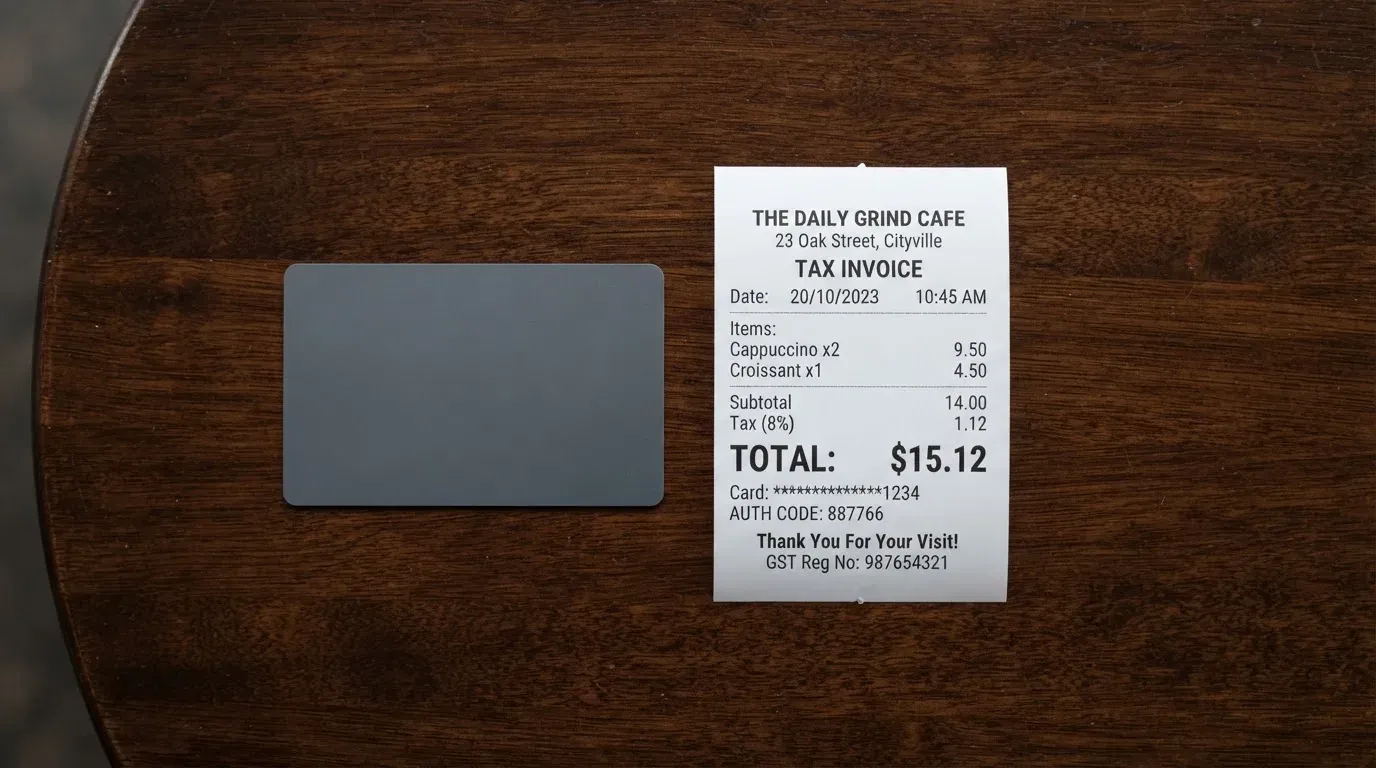
Here is everything that *is* stated, in one place:
| Fee or limit | What the card publishes |
|---|---|
| Issuance | Both Lite and Standard are described as paid; the amounts are not stated |
| Monthly fee | Not stated |
| Conversion | Not stated |
| FX | Not stated |
| ATM | Not stated, and the card is virtual |
| Daily limit | Not stated |
| Monthly limit | “custom limits up to $10,000 USD per month” |
| Monthly load limit | “Up to $10,000 per month load limit” |
Now let me take three everyday payments and walk you through which fees actually bite. This is the exercise I do myself, because abstract fee tables do not tell you what a payment will cost.
A coffee, roughly $5. The amount clears the balance in USD. What you do not know is whether a conversion fee applies on top, and on what basis it is calculated — a percentage, a fixed sum, a spread on the rate. On a large purchase a fee you did not know about is a rounding error; on a small one it can be a noticeable share of what you spent. The card does not tell me which it is.
An online subscription, say $15 a month. This is where recurring small payments hurt, because the fee repeats with every charge. Twelve of them in a year is twelve applications of a rule you have never read. I also cannot tell you whether recurring payments and online merchants need additional authentication, which is a separate setting from the fee.
A holiday abroad, spending in a currency that is not dollars. Your balance is in USD. Paying in euros or pounds means the merchant’s network or issuer converts, and whatever rate and markup applies to that conversion is not published on this site. This is the case where an undisclosed FX cost is most likely to be material, because it applies to the whole amount rather than a slice of it. If you spend abroad regularly, this single unknown should decide the question for you.
Two further limits deserve a note. The monthly limit of up to $10,000 is stated as a ceiling, and it is stated twice — once as a spending limit and once as a load limit. The card does not break the ceiling down by tier, so I cannot tell you whether the Lite tier carries a lower figure. Ask before you rely on spending anything large.
And one thing to keep in view while you weigh the rest: on-chain network fees for a deposit are charged by the blockchain, not by the card provider. Even a free top-up is not cost-free.
Top up
Top-ups are available 24/7, in Bitcoin, Ethereum and “other cryptocurrencies”, and are described as “instantly available for spending”. The balance lands in USD.
That is the useful half of the story, and it is a genuinely good half. Funding a card from crypto you already hold, at any hour, without waiting for a bank, is the reason this category exists. If your income is in crypto, that is worth more than any cashback rate.
The problem is the half that is missing. The card does not state:
- which networks it accepts — not for Bitcoin, not for Ethereum
- what the top-up fee is
- what the minimum top-up is
- how withdrawal works, or whether it is possible at all
Networks are the part that bites. A blockchain transfer is irreversible. If you send on a network the provider does not support, or to an address belonging to a different network, the funds can be gone — or at best need manual support recovery with no guarantee attached. Many wallets in this category will happily let you pick a network at the point of sending. “Many wallets will let you” is not a promise, but it is a real and common pattern.
There is a second trap that catches people in the stablecoins rather than the majors. ERC-20 tokens on Ethereum are sent with a gas fee paid in ETH, so a wallet holding USDT with no ETH cannot send at all. Tron prices its fees through bandwidth and energy and often burns TRX. Circle stopped supporting USDC on Tron in February 2024, so “USDC over TRC20” is not a native option anywhere. If your plan is to fund the card with a stablecoin rather than with bitcoin or ether, the absence of a published network list is not a documentation gap. It is the one thing you cannot guess.
What I would do is this, before your first transfer: open the app, look for the deposit screen, and read the network and fee information *there*, not on the website. If the app does not tell you which network to use, do not send on a guess. Contact the support desk first. A ten-minute delay beats an irreversible transfer.
Paying with it every day
It is a virtual Mastercard you spend from a crypto-funded balance, and the card page does not mention Apple Pay, Google Pay or cash machines. Those three absences together define how this behaves in real life.
A virtual card is a card number that lives in your app. You can type it into a checkout form, and that is genuinely it. There is no physical card, nothing in the post — the card page describes no physical option. On a card that people often picture in a wallet, that is a large gap between expectation and product. And with Apple Pay and Google Pay unmentioned, you should assume you are typing numbers into websites, which means you are exposed at every checkout page you visit, and you cannot tap to pay in a shop.
Which brings up something specific to crypto cards. A payment card number starts with a six or eight digit issuer identification number that a merchant can look up, and the lookup reveals the issuing institution and the country. Merchants may apply extra scrutiny when the issuer country differs from the customer’s billing address — that is precisely why a card issued in one country can look foreign to a shop in another. Some merchants decline prepaid or foreign-issued cards for exactly this reason. Address verification, which compares the numeric parts of the billing address a buyer types against issuer records, is mainly offered in the US, Canada and the UK and is generally unavailable for foreign-issued cards, which can cause declines. None of that is anyone’s fault, and none of it is something you can argue with at the till.
Two more everyday realities. Merchants classify businesses with a four-digit merchant category code, and gambling sits in MCC 7995; many issuers block it on specific cards by policy rather than by law, and the blocked list varies by issuer — this card publishes no such list. And a declined authorisation may leave a hold on your funds that can stay for several days, typically up to seven. A few declined payments can mean money you have spent is unavailable to you while you work out why.
The rewards, once more, because they are the strongest thing here: up to 1.75% cashback on eligible purchases, paid in UDO tokens, and it requires holding UDO and being a Unido user. Two conditions, both mandatory, and the payment is in a token rather than in cash — so the value of your reward depends on that token’s price when you spend it.
The app is on the App Store, on Google Play, and as an Android APK. I did not read the ratings, so I will not characterise them.
What can go wrong
I searched for reviews. I found none — not on Trustpilot, not on Reddit, not in the places people actually write when a card goes wrong. That is not a clean bill of health. In my experience a card with no public reviews at all is more often an absence of users than an absence of complaints, and it means you will not find anyone to ask what happened to them.
The company behind it is where I would start. The terms are between WorldWeb Group Pty Ltd, trading as Unido, and you as the user, governed by the laws of South Australia, Australia. The terms version is 1.6, dated 28 Oct 2022. The site footer reads “© 2023”. The card issuer is not named anywhere I could find.
Two things follow from that. First, the terms I read are four years old and the footer is three. That is not proof of anything, but for a payment card it is not a good sign, and I would want to see something more recent before I funded it. Second — and this is the practical point — a card programme has to be held by someone licensed to issue it under a card network’s licence. The network routes messages and sets rules; a separate issuer holds the programme; the crypto brand is often only the front end that markets it. When the issuer is not named, you cannot check its licence, you cannot find its own terms, and you cannot know which regulator to complain to.
That matters more than usual here, because of one clause. The terms release Unido from third-party dispute claims and cap liability at direct damages, measured as the amount earned in the prior six months. No dispute or chargeback process is described. For a prepaid card you may expect the protections that come with regulated e-money — safeguarded customer funds, held separately or insured, and payment services regulated in their own right. That is a different world from a card whose terms say its liability ends at what you earned in half a year. I am not telling you what the law requires here; I am telling you this card does not describe the machinery that would get your money back.
Security details are equally thin. The pages mention PCI DSS data privacy compliance, which is a real standard for handling card data. The custody model is not stated, and neither is two-factor authentication. That last omission matters, because app-based 2FA, instant card freeze and spending limits are the everyday safeguards that stop the common attacks. Whether your crypto sits in a wallet the provider controls or in one you control is not something I can answer from what is published — and that single answer changes how you should think about every other risk on this list.
Support exists as a service desk, a user help page and an FAQ. Hours and languages are not stated.
And the wider category has a history worth knowing, because it tells you what a card programme closure looks like. Visa terminated its global agreements with FTX on 13 November 2022 and the FTX US debit card was wound down by its issuer. WaveCrest, a Visa issuer that supplied crypto card brands, was suspended by Visa in Europe in 2018, closing all its programmes. The usual pattern is a notice period, then spending and loading stop, then you are asked to withdraw whatever is left. So when you hold a balance here, you are holding a balance in a programme that could be wound down, and the question to ask is not whether that could happen but what your exit looks like. Withdrawal is not stated on this card. That is the first thing to resolve.
What to take instead
Nothing here is a recommendation, and I am not going to pretend these cards are more transparent than they are. They are the closest available comparison set, and two of them publish more than Unido does.
| Unido | Cardex | CardFlow | HyperCard | |
|---|---|---|---|---|
| Score | 4.9 / 10 | 5.6 / 10 | 4.9 / 10 | 4.7 / 10 |
| Card | Virtual Mastercard | Debit card on VERVE, VISA, Mastercard, UnionPay | Virtual USD Mastercard | Prepaid “HyperCard” |
| Physical card | Not stated | Yes | Not stated | Not stated |
| Who it serves | No country list published | “200+ countries”; no exclusions stated | Nigeria-focused, “Nigerians and global users” | No list; acceptance in “more than 176 countries” |
| Card creation | Online | — | About 3 minutes | — |
| Fees | Amounts not stated | Conversion at the moment of payment, percentage not stated | Virtual card “completely free”; monthly fee not stated | None listed on pages read |
| Top-up | BTC, ETH, other crypto | USDT, USDC, BTC | BTC, USDT, ETH or Naira transfer | USDT, BTC, ETH in the app |
| Networks | Not stated | Not stated | Not stated | Not stated |
| Balance currency | USD | Naira per listing | USD | USD or EUR |
| Rewards | Up to 1.75% cashback in UDO | Not stated | Not stated | Not stated |
Reading across that table, three things stand out.
Cardex has the higher score, and the reason is specifics rather than polish. It publishes a network list — VERVE, VISA, Mastercard, UnionPay — and offers physical as well as virtual cards. On conversion it at least tells you the mechanism: real-time crypto-to-fiat conversion at the moment of payment, with an “AI-Powered Conversion Rate” that scans global exchange rates and picks one when you spend. That is a marketing claim and I am scoring it as one, and no fee percentage is published. Its App Store listing is Naira-focused, and Cardex describes itself as “one crypto card, 200+ countries” without a country or exclusion list — unofficial detail, from listings rather than the card’s own terms.
CardFlow is the one that beats Unido on a number people care about: creating a virtual card is described as completely free. It is aimed at Nigeria and describes itself as Nigeria’s smartest fintech card platform, and it takes naira bank transfers alongside BTC, USDT and ETH. If your money is in naira, that is a real answer. If it is not, the positioning is narrow.
HyperCard offers a USD or EUR balance rather than only dollars, which matters if you are outside the dollar zone. Its App Store page says the card works in more than 176 countries — that is a statement about acceptance, not eligibility, and I would not read it as a green light. Networks and fees are not stated on the pages I could read.
What all four share is the hole in the middle of the table: networks not stated. That is the category’s transparency problem, not this card’s alone.
Who I would recommend it to
Two groups, and only two.
If you hold UDO tokens. The 1.75% cashback paid in UDO has no equivalent in this comparison set, and it is the one concrete reason to pick this card. You understand what you hold, you accept payment in it, and the reward is meaningful to you in a way it never is to someone else. Check the fee situation for yourself first, because the reward does not compensate for an undisclosed conversion cost.
If identity verification is the thing you cannot do. Lite requires no ID. That is a genuine feature for people for whom KYC is not merely annoying but impossible, and it is the reason the card exists in the shape it does. If you are in that position, nothing in the rest of this review changes my view.
For everyone else, I would hold off. Not because the card is dishonest — I found nothing suggesting that — but because it asks you to accept an unknown cost on a recurring payment, an unknown network on an irreversible transfer, an unknown issuer behind the card, and an unknown way to get your money back if something goes wrong. Those four unknowns are not pedantry. They are the four things you would need to price this card properly, and none of them is published.
If you are in that last group and want to proceed anyway, my advice is narrow and practical: confirm the top-up network and fee inside the app before your first transfer, check the terms for anything dated later than 28 October 2022, and find out how a withdrawal works — before you load anything worth missing.
Frequently asked questions
What is the Unido card?
Unido is a virtual Mastercard that you create online and pay for from a balance you load with cryptocurrency. You can hold up to 5 cards, and the balance is issued in USD. There are two levels: Lite, which needs no ID, and Standard, which requires KYC verification. The card page does not mention a physical card, Apple Pay or Google Play.
How does the Unido card actually work?
You send cryptocurrency to the card, it is converted into a USD balance, and your Mastercard number spends that balance. Top-ups are available 24/7 and described as instantly available for spending. After that it behaves like a prepaid card, which means a merchant can see the issuing country in the card number and may treat it differently.
Is Unido a bank?
The published terms do not say so, and they do not name a card issuer either. The terms are between WorldWeb Group Pty Ltd, trading as Unido, and the user, governed by South Australian law, version 1.6 of 28 Oct 2022. That is a company agreement, not a description of a banking licence, so I would not treat it as a bank relationship.
Does the card require KYC?
Two of them, and the split is clear. Lite cards need no ID. Standard virtual cards require KYC verification. The documents required, how long verification takes, and the grounds for refusal are all not stated, so if you need Standard, plan for that to be the least predictable part of the process.
How much does the card cost?
Both Lite and Standard are described as paid, and no amounts are given on the card page. Information about the fees is unavailable. Monthly fees, conversion charges, FX costs and ATM charges are all not stated, and because the card is virtual there is no ATM withdrawal to consider anyway.
What are the limits?
The card states custom limits up to $10,000 USD per month on spending, and up to $10,000 per month on loading. It does not give a daily limit, and it does not break the monthly ceiling down by tier, so I cannot tell you whether Lite carries a lower figure.
How do I top it up, and which network do I use?
Top-ups are in Bitcoin, Ethereum and other cryptocurrencies, 24/7, into a USD balance. The network is not stated for any of them, and neither is the fee or the minimum. Blockchain transfers are irreversible, so send only on a network the app confirms, or ask support first.
Can I add it to Apple Pay or Google Pay?
Not stated anywhere on the card’s pages, and because it is a virtual card with no physical option published, I would assume you are typing the card number into checkouts. That also means no tap to pay in shops, and more exposure at every checkout page where you enter it.
Is the card safe, and what about cashback?
The pages mention PCI DSS data privacy compliance but do not state the custody model or whether two-factor authentication is offered, so I cannot give you a straight answer on either. On rewards: up to 1.75% cashback on eligible purchases, paid in UDO tokens, available only if you hold UDO and are a Unido user.
Is it worth it, and how do I close my account?
Worth it mainly if you already hold UDO, or if you need a card that requires no ID — otherwise the undisclosed fees, networks and issuer make it hard to justify. The card’s own pages do not describe how to delete an account, so treat that as another thing to ask the support desk about before you load funds you might want back.
Choosing a virtual card – cryptocardadvisor
Content created by the «cryptocardadvisor» team