
XCARDS reviewed: cheap to open, expensive to use, and very little is explained
 Available in US
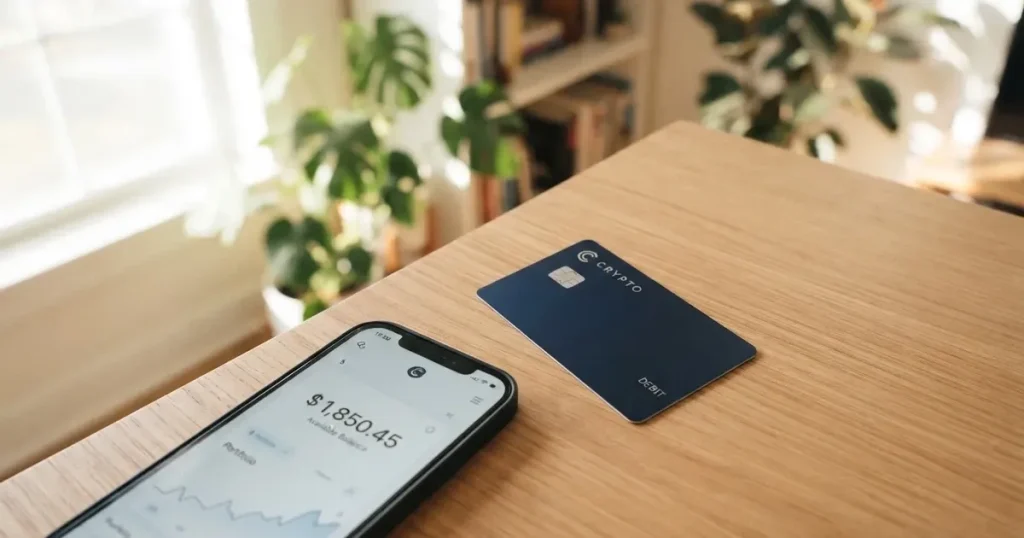
If you have stumbled on XCARDS while looking for a crypto-linked payment card, you are probably weighing the same things I was: does it even accept people in my country, what will a payment actually cost me, and — the big one — what happens to my money if something goes wrong. This review is my own walk through the card’s public pages and terms, written for the person holding the decision. I have not opened an account, and I make no claim to have used the card. What follows is what the documentation says, what it leaves out, and where those two facts meet.
The short version: XCARDS scores 3.6 out of 10 in my assessment. It is a thin, opaque product — a virtual-only, prepaid-style card that converts BTC or USDT into spendable balance. On paper it is cheap to open and quick to issue, but the fee structure is steep, the provider openly tells you not to leave money on the card, and an alarming number of the details you would need to actually trust it are simply not stated anywhere.
The conditions described below are current as of October 28, 2026.
Verdict: 3.6 / 10 — good for one narrow job, poor as an everyday card
Let me be direct about the score, because 3.6 is not a rounding error away from passing. This is a card that does a small number of things quickly and cheaply to set up, and does almost everything else poorly or invisibly. The single audience it appears designed for is a user who has already cleared verification and wants to issue unlimited virtual cards funded by BTC or USDT — essentially someone treating it as a card-generation tool for online payments, not as a wallet to keep money in. If that is you, the setup is instant and free, and it may earn its place. If you are looking for something you will physically carry, top up regularly, and rely on for a month of ordinary spending, the omissions in its documentation will cost you more than the low entry fee saves.
My criteria, and how each one came out:
| Criterion | Mark | Why |
|---|---|---|
| Who can get it | 6 / 10 | No list of issuing countries at all; use is banned across sanctioned jurisdictions, and the rules follow where you are, not what passport you hold |
| Cost | 1 / 10 | 2–4 USD a month to maintain, plus a flat 4–8% service fee, and a 10% fee (min 100 USD) to withdraw back out |
| Top-up options | 4 / 10 | Only BTC or USDT, minimum 100 USD, networks not disclosed, and an unfed card is simply blocked |
| Reliability and complaints | 4 / 10 | Runs through 4P SOLUTIONS LTD in Malta as an “intermediary”, names no banks or licences, and tells you not to keep money on it; I found no user reviews |
| Everyday use | 3 / 10 | Virtual cards only, issued instantly, with no app — and Apple Pay, Google Pay and ATM access are all unaddressed |
Add those up and you get the 3.6. The one saving grace is the audience note baked into the design: for a verified user issuing unlimited virtual cards with BTC or USDT, the product does one thing. Everything else — everyday usability, real-world reliability, transparent cost — is where the marks collapse. I would not build a monthly routine on top of it, and I would not keep money in it overnight.
Will they give you the card?
The honest answer is: almost certainly yes to your application, unless where you live disqualifies you — because almost nobody is disqualified by nationality. What I could not find is any list of issuing countries. There is no published roster of who qualifies. That absence is itself informative: the card is not marketing itself as country-specific, so you cannot pre-check your eligibility from the public pages.
What the terms do is draw a line, and it is a wide one. The Terms’ Annex 1 prohibits use “in, from, or to” comprehensively sanctioned jurisdictions. The named examples include Belarus, Russia, Ukraine (but only the Crimea, Donetsk and Luhansk regions), Iran, Syria, Cuba and North Korea, “and others”. Note the phrasing carefully, because it is the single most misread fact about this card: the restriction is written around location, not citizenship. Where your body, your business or your money sit when you use the card is what the rule tests; your passport is not what it tests. So a citizen of one of those countries living and operating elsewhere is not, on the face of the terms, excluded on the passport alone — though how any given bank behind the intermediary applies that is beyond what the card publishes.
One more restriction catches people out. The FAQ says transfers to legal entities registered in Ukraine and the Russian Federation are prohibited. Note the subtlety: that is about the *recipient*, not you. If the merchant is physically located somewhere else entirely, the card itself is not blocked. But if you are trying to pay a Ukrainian or Russian company, that payment is out.
Practically, then: age 18 or over (per the Terms), a location that is not one of the prohibited jurisdictions, and a completed verification. Citizenship is not the gate; where you are, is.
How to get it
Getting the card is, on paper, one of the easiest parts of the process — and it is also the part with the most open questions. Let me walk you through the sequence the documentation describes, then flag what it leaves unclear.
The flow is: register with an email address, verify your identity, top the account up with BTC or USDT, then issue the card. Full KYC is required for all clients. The AML/KYC policy asks for proof of identity — a passport, driver’s licence or national ID card — proof of address such as a tenancy agreement, utility or phone bills, or bank statements, and a phone number verified by an SMS code. A video call is possible. The Terms also formally allow an “Unverified Account” with limitations.
The card itself is described as a “Virtual Payment Solution” — virtual cards, issued immediately, with no physical delivery described at all. The FAQ does not state the payment network or the card currency, which is a strange pair of omissions for a payment product. If being able to say “this is a Visa” or “this denominates in euros” matters to you, you will not find it here.
Two account levels exist. “Unverified” carries limits per the Terms, though the Terms do not quantify those limits anywhere I could find. “Verified” users can issue an unlimited number of cards. Processing time for verification is not stated, and the Terms warn that higher-risk customers may face longer checks — so “issued immediately” applies to the card, not necessarily to getting past the door.
Refusal and closure are not hypotheticals. The Terms list grounds including an AML suspicion and missing documents. In other words, an incomplete file is itself a reason the account can be closed.
Fees: what it really costs to use this card
This is where the card’s low entry price stops meaning much. The maintenance fee is genuinely modest, but it sits on top of a service fee that takes a real slice of every payment, and an exit fee that is punishing. I want to give you the whole picture, because a 4–8% service fee only reads as “cheap” or “expensive” relative to what you are spending it on.
Here is every cost and limit the pages state:
| Fee or limit | Amount |
|---|---|
| Maintenance | 2–4 USD per month |
| Minimum deposit at issuance | None |
| Service fee | Flat 4–8% depending on the amount |
| Exchange rate | Shown on the website; FX fee not stated |
| ATM | Not stated |
| Minimum top-up | 100.00 USD |
| Minimum withdrawal | 100 USD |
| Maximum limits | Not stated |
| Card currency | Not stated (fees “generally expressed in US dollars”) |
Now let me make that concrete with a few ordinary payments, so you can see where the 4–8% lands.
A 20 USD coffee. The maintenance fee does not apply to a single purchase, but the service fee does: 4–8% of 20 USD is roughly 0.80–1.60 USD. On a small everyday purchase, a percentage fee of this size is the dominant cost — you are paying more in fee than many cafés add for milk. This is the category where the percentage hurts most, because the fee does not scale down.
A 200 USD monthly utility bill. At 4–8%, the service fee is 8–16 USD. Whether that is acceptable depends entirely on what you were going to use the card for. As a percentage it is high; as a flat monthly cost on a large recurring bill, it is the sort of thing you might accept for the convenience of not converting funds by hand.
Withdrawing your own money back out. This is the sharpest edge in the table. A withdrawal costs a commission of 10% of the amount, with a 100 USD minimum. If you want to move 50 USD back to your balance you cannot; if you move 150 USD you lose 15 USD. The design is clearly built for you to spend what you load, not to cycle funds in and out — which is consistent with the fact that the card is a payment front-end, not a place to hold value.
Two things the table cannot tell you: the exchange rate is only “shown on the website” with no stated FX markup, and ATM access is not addressed at all. If either cash withdrawal or multi-currency spending is central to your plan, these are the numbers to confirm directly before you rely on the card. The “no minimum deposit at issuance” is genuinely welcome — you are not forced to pre-fund to open.
Top up: how the money gets in, and the one hard rule
Topping up is the part of this card that has the most specific restrictions and the fewest details — a combination that deserves a second look before you commit.
The only accepted assets are BTC and USDT, and they go in through the “Accounts” section of the site. Auto-top-up can be switched on at the moment the card is issued, or later under Cards > Auto-top-up. The minimum top-up is 100.00 USD. Critically, the card does not disclose which blockchain networks it supports, and the top-up fee is not broken out separately from the 4–8% service fee — so you cannot be sure the service fee is not also applied to loads.
Here is the rule that catches most new users out, and it is absolute: cards that are not topped up are blocked, and a blocked card cannot be unlocked. This is not a soft warning or a grace period. If your balance falls to zero, your card is dead until you fund it again — and if you had no way to fund it at that moment (see the network ambiguity below), you are stuck.
On the network point: because the supported networks are not published, the safest assumption is that sending on a network the provider does not support is a mistake you pay for. Blockchain transfers are irreversible by nature, so a deposit sent on the wrong network, or to an address belonging to a different network, can be lost outright or require manual support recovery with no guarantee of success. Before your first transfer, confirm the network with support directly rather than inferring it.
Withdrawal back to your account balance takes no more than 1 day and carries the 10% commission with its 100 USD minimum. One more term worth knowing: funds left unclaimed after an account is suspended or terminated are held for one year, after which your rights to them are lost. That one-year window is the entire buffer you have if something goes wrong at the wrong time.
Paying with it every day
Day-to-day use is where this card is thinnest, and it is worth being blunt: this is a virtual, online card and little more. Cards are issued immediately and there is no physical delivery described, so if you were expecting something in the post, there is nothing coming.
There is no app. The product runs through the website only — no app store listing is named. That single fact ripples through everything else in this review: freezing a card “in the app” is something the documentation never describes, because there is no app. Spending controls, notifications and the usual mobile conveniences that a person relies on daily are simply not part of what is published.
Apple Pay, Google Pay and ATM access are all unaddressed. Their absence is not the same as a refusal, but until the provider confirms otherwise, treat all three as unavailable. If your routine involves tapping a phone or pulling cash, this is the wrong card.
There are also use restrictions you need to know before you need them, because the penalty is severe. Prohibited uses are blocked with no refund: gambling and betting, dating services, crypto purchases, and top-ups of payment systems or brokers. The Terms’ Annex goes further, banning adult content and escort services among others. This is a long list, and it is enforced by simply killing the payment. The gambling entry is not a technicality — the merchant category code for gambling (7995) is one that issuers commonly block, and this provider has pre-emptively included it. If any part of your spending touches those categories, expect the transaction to fail and the money to be gone.
What the card does not offer is as important as what it blocks. There is no rewards or cashback described. There is no wallet feature described. And for disputes, there is a complaints window — the provider answers complaints within 15 working days — and a statute of limitations of one calendar year, but no chargeback process is described. That matters: a chargeback is the mechanism that normally gets your money back when a merchant fails to deliver. Without one, your recourse is a complaint to the provider within the stated window, not a formal reversal. AVS address checks, which help prevent fraud but also cause declines, are generally unavailable on foreign-issued cards — another reason a virtual card issued in one market may be declined by a merchant in another.
What can go wrong
This section is the heart of why my score is low. The documentation is unusually candid in one place and unusually silent in the others, and the candour is worth reading closely.
The provider tells you not to keep money here. The Terms, in capitals, say customers should not store funds on accounts or cards, and that XCARDS does not guarantee their safety. They go further: banks may block funds. So the operator itself is saying two things — your balance is not guaranteed, and the banks behind it can freeze it without the operator being able to stop them. That is not a small print clause; it is a statement that the card is a pass-through, not a vault.
The intermediary structure. The operator is 4P SOLUTIONS LTD, registered under Maltese law at Aurora House, Level 3, 184 Triq-il-Kappillan Mifsud, Birkirkara BKR 1904, Malta. The Terms describe XCARDS as acting as “an intermediary between the customer and the banks” — and they do not name those banks. No licences are stated anywhere. The Terms also give a postal address in Mahé, Seychelles, and the AML policy references Seychelles sanctions. You are therefore being asked to trust a Maltese company that describes itself as a middleman between you and unnamed banks, with an Seychelles address on file. I am not alleging anything improper; I am telling you the structure is disclosed as incomplete.
Custodial risk, in plain terms. Control of crypto belongs to whoever holds the private key. With a custodial setup the provider holds it, which means your trust in them is total. And crypto transactions are irreversible — a stolen key has no recovery path, because the network cannot freeze or return funds. This is not theoretical for the industry: Mt. Gox (roughly 350 million USD reported stolen, 2011–2014), Coincheck (roughly 400 million, 2018) and Ronin Network (625 million, 2022) are the standing examples of custodial platforms failing. Against that backdrop, a provider whose own terms tell you not to leave money on the card is telling you something coherent — it just happens to be unflattering to the product.
Nobody has written about this card. I found no official incident reports, and — this is the striking part — no user reviews at all. A search for reviews of xcards.net turned up only other card sites, not a single piece of first-hand commentary about this card from a real user. That cuts both ways: there is no trail of complaints to worry about, but equally no community track record, no screenshots of the working interface, and no “this has worked fine for me” from anyone. You would be an early user without anyone to compare notes with.
Complaints and recourse. If something goes wrong, the stated process is a complaint answered within 15 working days, with a one-year statute of limitations, and no described chargeback route. Support itself is decently pitched: 24/7 personal support, a Telegram online chat, and email at [email protected] — though the languages supported are not stated, which matters if English is not your first.
The document trail is thin. The Terms of Service and the AML/KYC policy were last amended on 21.04.2025 (the files are dated 11 July 2025). No other dated events — no enforcement actions, no shutdowns, no restructures — turned up. I want to be precise here: I found no Trustpilot page for xcards.net. The absence of a complaints record is not evidence of safety; with a product this new and this small, it may simply mean there is not yet enough history either way.
What to take instead
If the idea of a crypto-backed card appeals to you but XCARDS’s opacity is the sticking point, there are alternatives with more transparent profiles. I want to be fair: I scored each of these on the same basis, and none of them is perfect either. They simply disclose more about who they are and what they charge.
| XCARDS | Cardex | CardFlow | HyperCard | |
|---|---|---|---|---|
| My score | 3.6 / 10 | 5.6 / 10 | 4.9 / 10 | 4.7 / 10 |
| Card type | Virtual only | Virtual and physical, on VERVE, VISA, Mastercard, UnionPay | Virtual USD Mastercard | Prepaid, virtual; network not stated |
| Cost stated | 2–4 USD/month + 4–8% service fee | Not stated | Free to create a virtual card | Not stated; app lists no fees |
| Funding | BTC, USDT | USDT, USDC, BTC wallets | BTC, USDT, ETH, or Naira transfer | Crypto such as USDT, BTC, ETH |
| Notable | Withdraw 10%, min 100 USD | Real-time conversion at payment, “AI-Powered Conversion Rate” picks the best rate | Created in about 3 minutes | Balance in USD or EUR; app says works in 176+ countries |
| Key gap | No banks, licences, networks, FX fee or limits stated | No country list or exclusions; fees not stated as a percentage | Aimed at Nigeria; fees not stated | Fees and networks not stated on readable pages |
A few notes on reading that table. Cardex markets itself as “one crypto card, 200+ countries” with no exclusions listed, and converts crypto to fiat at the moment of payment — but its app store listing is Naira-focused, and no fee percentage is published. CardFlow is aimed squarely at Nigeria and “Nigerians and global users”, creates a virtual USD Mastercard in about 3 minutes, and is free to create, though its fees are not stated. HyperCard’s app page says the card works in more than 176 countries — but note that is where the card is *accepted*, not who can *get* it — with a balance in USD or EUR, while its fees and networks go unstated on the pages I could read.
The pattern across all four is the same lesson: “not stated” is doing a lot of work. If a fee, a network or an eligibility rule matters to your decision, treat it as unknown until the provider tells you in writing, and use the alternatives’ higher disclosure as a proxy for how seriously they take you as a customer.
Who I would recommend it to
I would recommend XCARDS to a narrow kind of person. If you have already cleared verification, you work primarily in online payments, and what you actually want is a tool that issues unlimited virtual cards funded by BTC or USDT on demand — this card does that, immediately and without a monthly charge to open. Treat it as disposable payment front-end software rather than as a place to keep money, because that is exactly how its own terms describe it.
I would not recommend it to you if any of the following are true. You want a physical card to carry. You need Apple Pay or Google Pay. You plan to hold a balance between days — the provider tells you not to. You intend to move money back out, because the 10% withdrawal fee with a 100 USD minimum punishes exactly that. You care about knowing which bank stands behind the card and under which licence, because the card does not say. Or you simply want a card you can read about and find other users discussing — because there is no such record to find.
If you are in one of the prohibited jurisdictions, or you need to pay a Ukrainian or Russian legal entity, this is not an option at all, and no workaround changes that.
My overall advice: the setup is free and fast, so if you want to experiment, treat it as a small, reversible test — fund the 100 USD minimum, use it for something disposable, and get it back out only if you accept the 10% cost. But do not move this card into the centre of your financial life on the strength of a low entry price and a fast card number. The information the provider chose not to publish is the information that should decide it for you.
Frequently asked questions
What is the XCARDS card?
XCARDS is a virtual, prepaid-style payment card that you fund with BTC or USDT and spend as a card balance. There is no physical card — cards are issued immediately through the website with no app. The provider describes XCARDS as an intermediary between customers and banks, but names no banks or licences. It is best understood as an online payment front-end, not a place to store money.
How does the XCARDS card work?
You register by email, complete identity and address verification, top the account up with BTC or USDT through the Accounts section, then issue a virtual card. Payments draw on that stored balance, so the card cannot overdraw. Note that the blockchain networks supported for top-ups are not disclosed, and a card whose balance runs out is blocked and cannot be unlocked without funding it again.
Is XCARDS a bank?
No — and the distinction matters for your protection. XCARDS is run by 4P SOLUTIONS LTD, a company registered under Maltese law, and its Terms call it an “intermediary between the customer and the banks.” The banks themselves are never named and no licences are stated. Because it holds funds as an intermediary rather than a bank, your balance is not a bank deposit and is not covered by deposit guarantee schemes.
Who owns XCARDS?
The operating company is 4P SOLUTIONS LTD, registered at Aurora House, Level 3, 184 Triq-il-Kappillan Mifsud, Birkirkara BKR 1904, Malta. The Terms also provide a mailing address in Mahé, Seychelles, and the AML policy references Seychelles sanctions. Ownership beyond this corporate structure is not disclosed on the public pages.
Does XCARDS require KYC, and who can apply?
Yes. Full KYC is required for all clients: proof of identity (passport, driver’s licence or national ID), proof of address (tenancy agreement, utility or phone bills, bank statements) and an SMS-verified phone, with a video call possible. You must be 18 or over. Citizenship is not the gate — the Terms restrict use by location, so where you live matters more than your passport.
Is the XCARDS card available in my country?
There is no list of issuing countries, so you cannot pre-check eligibility. What is clear is where use is prohibited: Annex 1 bans use “in, from, or to” sanctioned jurisdictions including Belarus, Russia, Ukraine (Crimea, Donetsk and Luhansk regions), Iran, Syria, Cuba and North Korea. Separately, transfers to legal entities registered in Ukraine and the Russian Federation are prohibited, though a merchant located elsewhere is not blocked.
What does XCARDS cost to use?
Maintenance is 2–4 USD per month with no minimum deposit at issuance, but a flat service fee of 4–8% applies depending on the amount. Exchange rates are shown on the website and the FX fee is not stated. Withdrawing funds back out costs a 10% commission with a 100 USD minimum. On small everyday purchases, that percentage fee dominates the cost of the purchase itself.
How do I top up the XCARDS card, and what are the limits?
You top up with BTC or USDT only, through the Accounts section, and you can enable auto-top-up at issuance or under Cards > Auto-top-up. The minimum top-up is 100.00 USD; maximum limits are not stated. Critically, the supported blockchain networks are not disclosed, so confirm the correct network before transferring — irreversible on-chain sends to an unsupported network can be lost. Never let the balance hit zero: unfunded cards are blocked.
Is XCARDS safe, and are the funds?
Safety here has two layers, and the provider is unusually open about one of them. Because XCARDS holds your crypto, your trust in them is total — and crypto transfers are irreversible with no recovery if a key is stolen, as the Mt. Gox, Coincheck and Ronin losses showed. More directly, the Terms in capitals tell you not to store funds on the card and state that XCARDS does not guarantee their safety, and that banks may block funds. So the honest answer is: the card is built to be spent from, not held in.
Is the XCARDS card worth it?
Worth it for a specific person: someone already verified who wants unlimited virtual cards funded by BTC or USDT for online payments, and who treats the balance as disposable. Not worth it if you want a physical card, mobile wallets, to hold a balance overnight, or to move money in and out without paying 10%. I found no independent user reviews of xcards.net, so there is no community track record to lean on either way — which is itself part of the risk.
Choosing a virtual card – cryptocardadvisor
Content created by the «cryptocardadvisor» team