
French residents only, and the bitcoin plan is the point
 Available in US
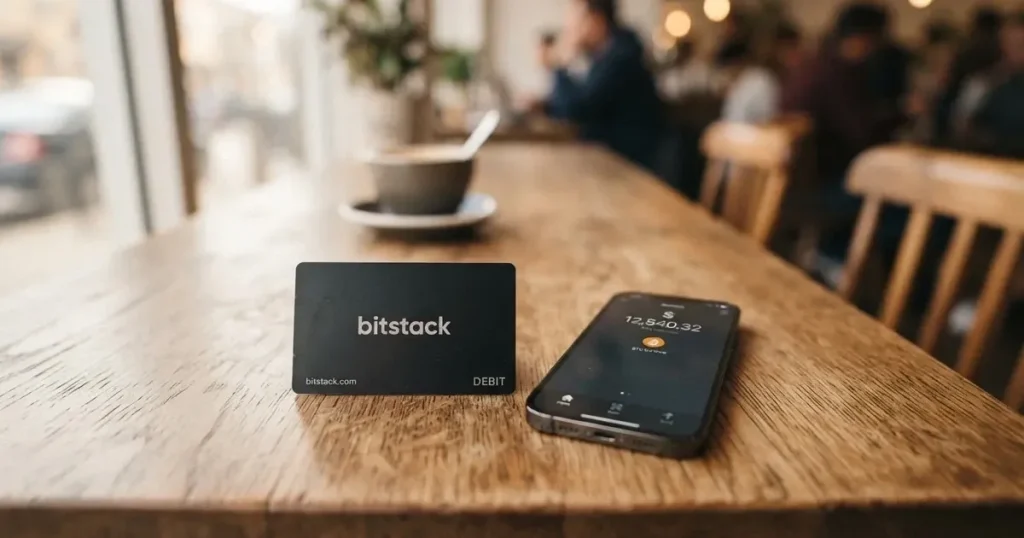
If you have been looking at crypto payment cards, Bitstack probably caught your eye for a simple reason: it pays you bitcoin back. But strip the rewards out and the picture is much narrower than the marketing suggests. This is a card for French residents only, it spends euros from an account you fund by selling bitcoin, and the reason to hold it is that it converts spending back into bitcoin automatically. It is not a general-purpose crypto card for anyone anywhere. I have gone through the card’s own terms, its help pages, its app listings and the complaints people post about it, and I want to save you the time I spent finding out which questions the public pages simply do not answer.
The conditions described here are current as of October 28, 2026.
Verdict: 5.5 out of 10
Bitstack scores 5.5 / 10 overall. That is a middling number, and it is not down to anything being wrong with the card. It is down to the card being narrow and specific: strong on the things it does, silent on the things you would need if you are not exactly the person it was built for. On cost and reliability it is genuinely good. On who can get it, and on how you can fund it, it is thin.
Who it suits: you live in France, including the overseas territories, you already hold bitcoin and you want your everyday spending to quietly buy you more bitcoin instead of leaving you with euros and a bank statement. The card is essentially a spending machine that converts back into bitcoin on autopilot. If that is your situation, a 5.5 feels low, and the per-criterion marks below explain why.
Who it does not suit: anyone outside France, anyone without bitcoin to sell, and anyone who needs a card that works abroad without thinking, accepts every merchant, or tops up from a stablecoin on any network of their choice. There are alternatives further down for people in that group.
Here is the score broken into its parts. The marks are out of 10; the reasons are mine.
| Criterion | Mark | Why |
|---|---|---|
| Who can get it | 2 / 10 | France only, including overseas territories; rollout is gradual and other EU countries sit on a waitlist |
| Cost | 8 / 10 | Card is EUR 9.99 plus delivery, no monthly subscription, first EUR 1,000 a month of FX is free, ATMs free to a limit, top-ups by card cheap |
| Top-up options | 3 / 10 | Spends euros from a cash account funded by selling bitcoin; other coins and networks are not named |
| Reliability and complaints | 9 / 10 | Regulated French company, AMF-registered, card issued by BPCE; Trustpilot 4.3/5 from 1,417 reviews, complaints are about timing not collapse |
| Everyday use | 5 / 10 | Physical Visa Classic and ATMs work; Apple Pay since 30 June 2026, Google Pay still in development, virtual card only planned |
Two things stand out. Cost and reliability are the card’s strongest suits, and both deserve to be said plainly: there is no monthly subscription, foreign-currency spending up to EUR 1,000 a month carries no extra fee, ATM withdrawals are free within a set allowance, and the company sits inside the French regulatory frame with a named issuing bank. That is more substance than plenty of cards in this category. But the two weakest marks are the ones a new applicant feels first: you can only get the card if you are in France, and the ways of loading it are narrow. A high score on the back half cannot rescue a low score at the door.
Let me take each of these in turn, in the order you would run into them.
Who will they actually give the card to
Bitstack’s own pages are unambiguous on this point: the card is available exclusively to residents of France, and that includes the overseas territories. The rule is based on residence, not citizenship. You do not have to be French to qualify, but you do have to live there. That distinction matters if you are reading this from Lisbon or Warsaw planning a trip: a French passport does not help you, and neither does a French address you do not live at.
The rollout is gradual. This is not a page where you sign up and a card is dispatched the same afternoon. The order option appears in the Cash tab of the app once your account qualifies. The starting data indicates that other EU countries are on a waitlist. So if you are in Belgium or Portugal, the honest answer is that today the card is not available to you, and the waitlist is where your interest has to live for now. I would not build a financial plan around a waitlist, but it does mean the French-only rule is not necessarily permanent.
One more piece of context on who this is for, because it explains the whole product. Bitstack is a bitcoin platform first. The card exists to let bitcoin holders spend. That is not a criticism; it is the design. It explains why funding runs through selling bitcoin rather than through a wide range of deposit options, and it explains the automatic bitcoin-back rewards. If you came to a crypto card expecting to hold stablecoins across many networks and pay with them, Bitstack is the wrong shape of product, however good its fees are.
How to get it
The process runs through the app. In the Cash tab you choose to order the card, pick a PIN, enter a delivery address, check the total, and pay. You can pay for the card from your cash account, from a bank card, or with Apple Pay or Google Pay. The total at that last step is EUR 9.99 plus delivery, and delivery cost varies by address. That is the whole flow, and it is short.
What the card is: a physical Visa Classic debit card. It spends the euro balance sitting in your Bitstack cash account. It is a debit card, not a credit card, so there is no borrowing and no overdraft; the balance has to be there first. The card currency is euros, with fees quoted in EUR. A virtual card is planned but not yet available, and there is no mention of a metal version.
One honest gap: identity verification. The official pages do not state what documents are needed, what proof of address is required, or what age threshold applies. That is not stated publicly. It is not that the checks do not happen; it is that the public pages do not describe them. And people who have gone through it have reported friction — in July 2026 there are Trustpilot reports of slow identity verification that ended in rejection. Bitstack replied that decisions follow regulatory requirements and that specifics are not shared publicly. So if you are wondering whether an unexplained rejection is something you can argue with, the answer from the record so far is not encouraging. Expect it to be possible, and expect it to be hard to get a specific reason.
That combination, unclear documentation plus reported friction, is worth weighing if verification has gone badly for you elsewhere.
Delivery is France-only too, including the overseas territories. In practice, production of the card usually starts the day after you confirm. In metropolitan France it can then take up to 10 business days once production has started; overseas, up to 3 weeks. The delivery fee varies by address and the amount is not stated. If you need a replacement card, the cost of that is not stated either. Plan for a wait measured in weeks if you are on an island, and do not count on replacing a lost card at a known price.
Fees and what a payment really costs
This is where Bitstack is strongest, and it is worth walking through properly because the headline numbers hide a few things that matter.
The card itself is EUR 9.99 plus a variable delivery fee, and there is no monthly subscription. There is one wrinkle I want to flag rather than smooth over: the pricing page and the help article disagree. The help article says EUR 9.99 for the card plus delivery. The pricing page lists a Standard card at EUR 14.97 or 14.98 with delivery included, a Plus monthly plan at EUR 9.99 with free shipping, and a Plus annual plan that includes the card and delivery at no extra cost. The page is internally inconsistent. Check the figure in the app when you order, because that is what you will be charged.
There are two plans: Standard and Plus. Plus costs EUR 9.99 a month according to the pricing page, and it raises the international payment cap from EUR 1,000 a month to EUR 3,000 a month, lowers the bitcoin purchase fee to a flat 0.75%, and can lift the Stackback rate to 1.5% against 1%.
Here is the full fee picture as the card states it:
| Fee or limit | What it says |
|---|---|
| Card | EUR 9.99 plus delivery; no monthly subscription (help article) |
| Standard card, pricing page | EUR 14.97 or 14.98 with delivery included |
| Plus plan | EUR 9.99 per month; annual Plus includes card and delivery at no extra cost |
| Foreign-currency fee | First EUR 1,000 per month of FX spending has no extra fee; above that about 1% on the excess, at the Visa rate at the time of the transaction |
| Deposit by Apple Pay or Google Pay | 0.70% on all plans |
| Bitcoin purchase, Standard | 1.5% under EUR 250, 1.25% from EUR 250 to 1,000, 1% over EUR 1,000 |
| Bitcoin purchase, Plus | 0.75% flat |
| Purchase not funded by cash account | Extra 0.70% (Plus treatment inconsistent on the page) |
| ATM withdrawal | Free up to EUR 200 per month or 5 withdrawals, whichever comes first; then the higher of EUR 1 or 1% per withdrawal, in France and abroad |
| ATM third-party operator fee | May apply, shown before you confirm |
| Card payments cap | EUR 5,000 per month |
| ATM cap | EUR 200 per week, EUR 1,000 monthly total |
| International payments cap | Up to EUR 1,000 per month (Standard), EUR 3,000 per month (Plus) |
| Limits changeable | No, limits cannot be changed |
| Daily limits, per-KYC-level limits | Not listed |
Now let me run three ordinary payments through that table, because a fee list does not tell you what a Tuesday costs.
A EUR 30 grocery shop in Paris, paid by card. This is a euro payment, so there is no conversion and no FX fee. You are spending euros that are already in your cash account. If you funded that balance by selling bitcoin, the bitcoin purchase fee is what you pay, which on Standard is 1.5% if the purchase was under EUR 250. So the real cost of the shop is 30 euros plus whatever bitcoin purchase fee applied when you loaded. Nothing extra at the till.
A EUR 60 dinner paid while you are on holiday in Italy. This is foreign-currency spending. If your monthly foreign-currency total is still under EUR 1,000, there is no extra FX fee; the amount converts at the Visa rate. So the dinner costs 60 euros equivalent at the Visa rate. You only start paying the roughly 1% FX fee on the part of your monthly foreign spending that exceeds EUR 1,000. Note that a holiday month can push you over that threshold faster than you expect, and once you are over it the excess is charged, not the whole amount.
A EUR 40 cash withdrawal from a bank ATM in Spain. Withdrawals are free up to EUR 200 per month or five withdrawals, whichever comes first, in France and abroad. So the first few withdrawals cost nothing. After that it is the higher of EUR 1 or 1%, and if you use a bank ATM run by a third-party operator they may add their own fee, which the app shows before you confirm. Also keep the caps in view: ATM withdrawals are capped at EUR 200 per week and EUR 1,000 in total per month.
One thing people miss: a purchase you do not fund from your cash account carries an extra 0.70%. If you are topping up with a bank card or a mobile wallet and spending that money straight away, you are paying that on top of the 0.70% deposit fee. The Plus treatment of this is inconsistent on the page, so check before you rely on it.
Top up: how the money gets in
The honest answer here is short, and it is the weakest part of the product. The card spends euros from your Bitstack cash account. It is a debit card, no overdraft, so the balance has to exist first. The way to create that balance is to sell bitcoin you already hold, inside the app. That is the funding route the card pages describe.
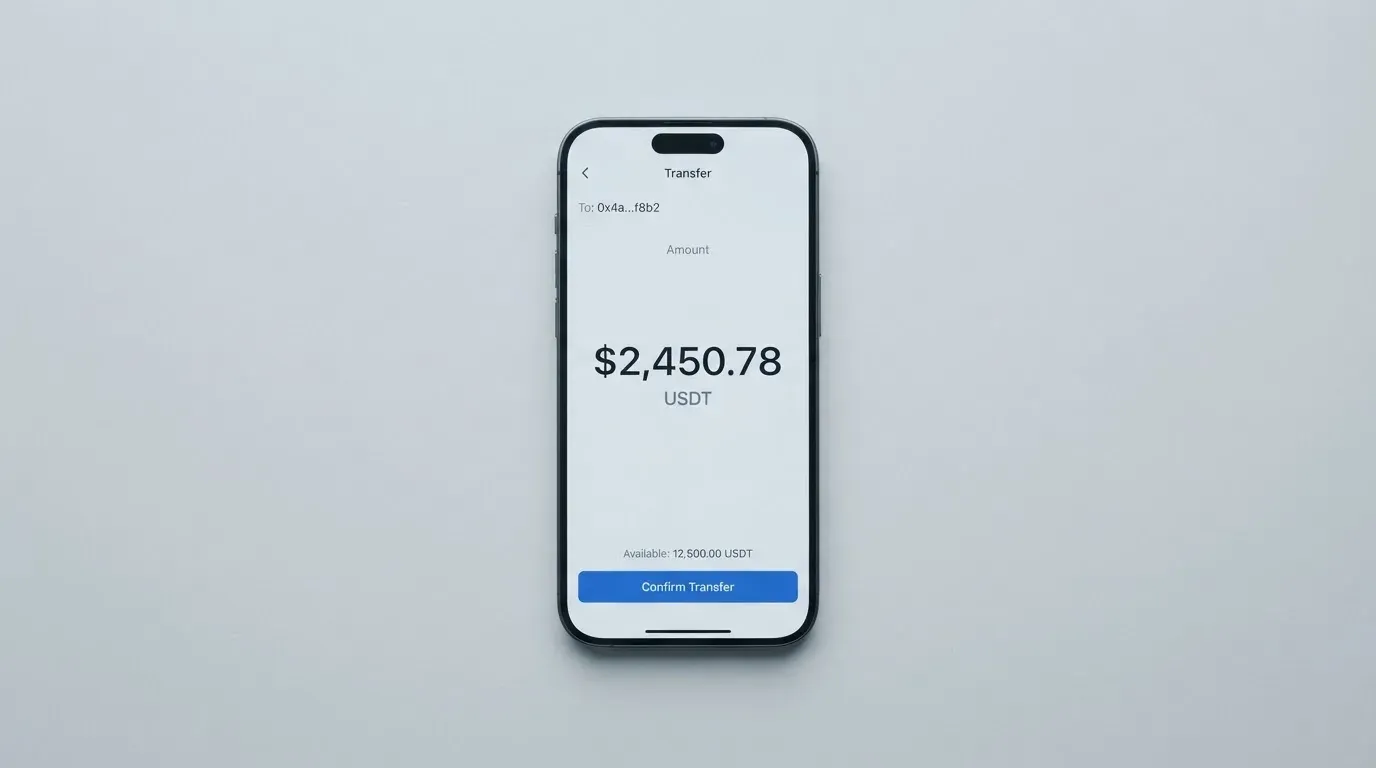
What is not stated: which coins and networks you can deposit for topping up, the minimum top-up amount, and who pays the network fee on a deposit. If you were hoping to send USDT over Tron or USDC over Base straight into a Bitstack balance, the card’s public pages do not promise that. Do not assume it. The card tells you to fund through bitcoin sales, and that is the documented path.
The cost of the obvious top-up, funding with a bank card or a mobile wallet, is 0.70% on all plans. If you buy bitcoin with that money, you also pay the purchase fee on top, which is where the 1.5% and 1.25% and 1% tiers for Standard come in. So the cheapest sequence is: sell bitcoin you already own into the cash account, then spend the euros from there, with no extra 0.70% attached because the money was not funded from a bank card.
Getting money back out is not something the card pages describe. There is no withdrawal fee or rule about a minimum closing balance stated on the card pages. Users mention bank-transfer withdrawals handled through support on Trustpilot, and the July 2026 complaints are largely about that taking time. So treat withdrawal as something arranged with support rather than an instant button, and do not park money on this card that you need on a particular day.
Paying with it every day
In the shops it behaves like an ordinary Visa Classic debit card. Physical card, ATMs, and it works wherever Visa is accepted. That is the easy part.
The wallet situation is lopsided. Apple Pay has been available since 30 June 2026, from app version 3.10.0. Google Pay is in development and not yet available. If your phone is Android and your life runs on your wallet, that is a real limitation today, not a footnote. A virtual card is planned but not there yet, so if the idea of a physical card in your pocket is not appealing, there is no digital-only version to order.
Then there is Stackback, which is the actual reason to hold the card. Stackback pays you bitcoin once a purchase has fully settled, so the reward follows the payment rather than the order. The base rate, with nothing switched on, is 0.1% on Standard and 0.15% on Plus, with a minimum of one satoshi. Turn on automatic savings, which is the recurring buys and round-ups feature, and the rate can rise to up to 1% on Standard and up to 1.5% on Plus. It is capped by how much you saved the previous month, and once you stop, it drops back to the base rate.
Some spending does not earn. Excluded are peer-to-peer and top-ups, ATM withdrawals, gambling and cash equivalents, loan repayments, government payments, and some securities purchases. Since 10 August 2026 the round-ups count toward the Stackback tier, so the automatic-savings route to a higher rate is more useful than it was a few months ago.
The app itself is well rated on the iOS French store: 4.79 out of 5 from 11,152 ratings when I looked. The Google Play listing is something I did not read, so I am not going to pretend to have a number for Android.
A few practical realities of paying abroad are worth knowing before you need them. The card is issued in France, and some merchants look at where a card was issued and treat foreign-issued cards more carefully, which can show up as a decline. Address verification, which compares the billing address you type with the issuer’s records, is mostly a US, Canada and UK thing and is generally not available for a foreign-issued card. And a declined payment can leave a hold on your money for several days, sometimes up to seven. None of this is Bitstack-specific; it is how card payments work, but it is what makes a euro card used abroad feel less seamless than the marketing implies.
If a payment goes wrong, there is an order to it. You can freeze the card instantly in the app, which you should do first. Then there is a mandatory phone opposition on +33 9 69 32 00 61, where you state the card was issued by BPCE. After that you call +33 9 69 39 03 49 to open a contestation case, and BPCE handles it. The window is 13 months from the date the payment settled.
What can go wrong
Nobody has reported a collapse or a fraud scandal on this card that I could find. What people complain about is timing and explanation.
The four themes, all from user reports on Trustpilot in 2026:
- Withdrawals to a bank and support delays, reported July 2026.
- Identity verification rejected without explanation, July 2026.
- Card delivery delays, June 2026.
- Low limits, and Apple Pay not accepted at some merchants, June 2026.
Read together, that is a young product still sorting out its logistics. Delivery and verification are the two phases where things slow down, and the limits are low by design and fixed. The Trustpilot score itself is 4.3 out of 5 from 1,417 reviews, which is a good score for a company this size.
Underneath all of it sits a structural risk that is worth naming plainly, because it is not the card’s fault but it is your money. Bitstack is custodial. Your balance sits on a Bitstack account, not in a wallet only you control. The card does have real safeguards: every payment needs strong authentication, you can freeze the card instantly in the app, the limits are fixed, and funds are held through regulated payment infrastructure with Bitstack’s e-money partner Xpollens. There is no built-in insurance. And holding funds with a custodian carries counterparty and hack risk, as the history of the industry shows.
The company itself checks out on paper. Bitstack Digital Assets SAS is registered in France, in the Aix-en-Provence trade register under number 899 125 090, with an office in Meyreuil. It is licensed as an agent of Xpollens, an electronic money institution authorised by ACPR, and it is registered as a crypto-asset service provider with the AMF under number A2025-003. The card itself was issued by BPCE, Banque Populaire Caisse d’Epargne. That chain, an AMF-registered crypto provider behind an ACPR-authorised e-money institution behind a named French bank issuing the card, is more solid than many things in this category.
Support runs through a FAQ and help centre, a Telegram community, and a contact page. The hours are not stated. If you are in a different timezone from France and something is frozen, that is worth factoring in.
One more thing the industry has taught, and it applies here: card programmes can be wound down. Visa terminated its global agreements with FTX on 13 November 2022 and the FTX US debit card was wound down by its issuer. WaveCrest, a Visa issuer that supplied crypto card brands, was suspended by Visa in Europe in 2018 and all its Visa programmes closed. Closures typically mean a notice period, then spending and loading stop, then you are asked to withdraw what is left. Bitstack sits inside a normal regulated structure, and I am not predicting anything. I am saying that a bitcoin-backed card is not a place to leave money you cannot afford to move.
What to take instead
If the reason you are reading about Bitstack is that you cannot get an ordinary bank card, or you want a card that travels better than a French one, compare it against these before you commit. Each is rated on the same ten-point scale.
| Alternative | Score | Card | Cost | Foreign-exchange and top-up notes |
|---|---|---|---|---|
| International Visa Card | 6.7 / 10 | U.S.-issued Platinum Visa, virtual, pays in USD; physical card coming soon | $5 one-time issuance, no maintenance; plans Classic free, Pro $9.00/month, Max $19.00/month | Free in USD; foreign currency at Visa exchange rate plus a 2% FX fee; deposits of any kind free |
| UNi Card | 6.1 / 10 | Multicurrency card on Mastercard, spends from the UNi.Global balance | No annual fee | No foreign transaction fee; assets converted at live OTC rates, no hidden exchange fees |
| Whop Cards | 5.2 / 10 | Visa, works wherever Visa is accepted online and in stores | Page says no extra fees, no amounts listed | Fees not stated; spends from a Whop balance |
The International Visa Card scores highest of the three at 6.7, and it is worth being precise about what that means and does not mean. It is not available to residents or legal registrants of a long list of countries including Belarus, mainland China, North Korea, Cuba, India, Iraq, Iran, Israel, Myanmar, Nepal, Nicaragua, Russia, Syria, Turkey, Ukraine, Venezuela and Vietnam, and FATF grey-list countries are reviewed case by case. Purchases are blocked in North Korea, Cuba, Iran, Russia, Syria, Ukraine and Venezuela. The rule is by residence or registration. It pays in USD, you deposit USDC or USDT free at 1:1, and the trade-off is a 2% foreign-exchange fee and a card that does not physically exist yet. If you spend in more than one currency and want a virtual card, that 2% is the number to weigh against Bitstack’s free first EUR 1,000.
The UNi Card is the quiet one: no annual fee, no foreign transaction fee, multicurrency, conversion at live OTC rates, and spend-to-earn rewards up to 3%. Its card network is Mastercard rather than Visa, and who can get one is not stated on the material I saw. If foreign-exchange fees are what frighten you, this is the one whose headline is exactly the sentence you want to read.
Whop Cards is aimed at a specific market, mostly United States: 31 states for consumers and 41 for businesses. It offers 5% cashback at select merchants, currently Uber. Its fees are not stated, and how you fund the balance, and in which currencies and networks, is not stated either. The rewards are the draw; the transparency is not.
What none of these is better than Bitstack on: bitcoin-back spending. Bitstack is the only one of the four that pays you bitcoin on settled purchases. That is the trade you are making, in both directions. Bitstack gives up reach, funding options and an open Android wallet in exchange for a system that quietly accumulates bitcoin for you.
Who I would recommend it to
I would recommend Bitstack to someone specific, and it is not a hypothetical person. You live in France. You hold bitcoin and you are not planning to sell it all. You would rather your groceries quietly added to your bitcoin position than sat in euros. You mostly spend in euros, at home or in euro countries, and you do not mind that Google Pay is still coming and your limits are modest. You can wait a couple of weeks for delivery, and you know that withdrawals go through support rather than a button.
If that is you, the card earns its place. The economics are good, the company is properly regulated, the card is issued by a real bank, and Stackback is a genuine mechanism rather than a slogan. It is a well-built product for its actual purpose.
I would not recommend it if you are outside France, because you cannot have it yet, and waiting is not a strategy. I would not recommend it if you have no bitcoin and plan to buy your way in gradually from a bank account, because you would be paying the deposit fee and then the purchase fee to end up with a euro balance you could have got more simply. And I would not recommend it as your only card if you travel often, spend in several currencies, or need a phone wallet on Android today.
The honest one-line version: Bitstack is the best card here if your money is already bitcoin and you live in France, and it is the wrong card for almost everyone else, no matter how good the fee table looks.
Frequently asked questions
What is the Bitstack card?
The Bitstack card is a physical Visa Classic debit card that spends euros from your Bitstack cash account, and it pays part of your spending back in bitcoin. It is designed for people who already hold bitcoin: you sell bitcoin in the app to fund the card, and purchases are credited back as bitcoin once fully settled through the Stackback scheme. It is not a general crypto card holding stablecoins, and it is not a credit card.
Who can get the Bitstack card?
Only residents of France, including the overseas territories, based on residence rather than citizenship. The rollout is gradual, and the order option appears in the Cash tab once your account qualifies. Other EU countries are on a waitlist according to the starting data. So a French passport is not enough on its own, and neither is a French address you do not live at. If you are outside France, the card is not available to you today.
How much does the Bitstack card cost?
The help article quotes EUR 9.99 for the card plus a variable delivery fee, and there is no monthly subscription. The pricing page is less consistent, showing Standard at EUR 14.97 or 14.98 with delivery included and a Plus monthly plan at EUR 9.99. Check the total in the app when you order, because that is the figure that will actually be charged to you.
How do I top up the Bitstack card?
The card spends euros from your cash account, so you top up by selling bitcoin you already hold, inside the app. Depositing other coins or networks is not stated on the card pages, nor is a minimum top-up amount or who pays network fees. Funding with a bank card, Apple Pay or Google Pay costs 0.70% on all plans, and spending money that was not funded from the cash account carries that extra 0.70% again.
What are the fees for spending abroad?
The first EUR 1,000 of foreign-currency spending per month carries no extra fee. Above that, an FX fee of about 1% applies to the excess, converted at the Visa rate at the time of the transaction. The pricing page caps international payments at EUR 1,000 a month on Standard and EUR 3,000 on Plus. A declined payment abroad can also leave a hold on your funds for up to seven days, which is worth knowing before a large purchase.
Is the Bitstack card safe, and is Bitstack a bank?
Bitstack is not a bank. It is Bitstack Digital Assets SAS, registered in France, licensed as an agent of Xpollens, an ACPR-authorised electronic money institution, and registered with the AMF as a crypto-asset service provider, number A2025-003. The card itself was issued by BPCE. Funds are custodial, held on a Bitstack account, with strong authentication and instant freeze available. There is no built-in insurance.
Does Bitstack require KYC, and why was I rejected?
The official pages do not state what documents, proof of address or age threshold apply, so that is genuinely not public. Verification does happen, and Trustpilot users in July 2026 reported slow verification ending in rejection without explanation. Bitstack replied that decisions follow regulatory requirements and that specifics are not shared publicly. If you are refused, the record suggests you may not get a detailed reason.
Can I use the Bitstack card with Apple Pay and Google Pay?
Apple Pay works, and has been available since 30 June 2026 from app version 3.10.0. Google Pay is in development and not yet available. The card is a physical Visa Classic; a virtual card is planned but not yet offered. Some users in June 2026 also reported Apple Pay not being accepted at certain merchants, so treat mobile-wallet acceptance as broad rather than universal.
How do I withdraw money or close my Bitstack account?
The card pages do not state a withdrawal fee, a minimum closing balance, or a self-service withdrawal process. Trustpilot users describe bank-transfer withdrawals arranged through support, and the July 2026 complaints were largely about how long that takes. There is a Telegram community and a contact page, but support hours are not stated. If you need money on a particular day, do not keep it on the card.
Is the Bitstack card worth it?
For French residents who already hold bitcoin and want spending to accumulate more, yes: no monthly subscription, free FX up to EUR 1,000 a month, free ATM withdrawals within an allowance, a proper regulated structure and bitcoin paid back on settled purchases. For anyone else, no: it is France-only, has no stablecoin or multi-network funding, limited Google Pay support, fixed low limits and long delivery times. Its score is 5.5 out of 10 for that reason.
Choosing an app or neobank card – cryptocardadvisor
Content created by the «cryptocardadvisor» team