
A virtual USD Visa for Latin America, drawn against a USDT balance
 Available in US

El Dorado is a virtual Visa prepaid card in US dollars, and the way you pay for everyday things is by holding USDT in an El Dorado wallet. When you tap or pay online, the card spends from that balance; the system converts in the background and the merchant sees a normal Visa transaction. The pitch is straightforward: keep stablecoins, spend dollars. The catch is geography, because the card is not on offer everywhere, and a few practical details the marketing pages leave quiet.
I went through the card’s terms, the app’s help center, the company’s registration records and what little public reporting there is. This review walks through who can actually get one, what it really costs, how the top-up works, and where I’d hesitate before relying on it. If you came here wondering whether this is a real card or just a stablecoin balance with a Visa logo on top, the short answer is that it is a real card, issued by an actual US bank, but it is a small product with a narrow footprint, and the everyday-fee picture is not fully spelled out.
The conditions and figures below are current as of October 28, 2026.
Verdict
El Dorado’s card is a USD Visa prepaid, virtual, drawn against a USDT balance, and issued by Lead Bank under a Visa U.S.A. licence. It earns a 6.6 out of 10 in this review, mostly because it is genuinely cheap to set up and run, but it is also a small, regionally constrained product with a fee table the company doesn’t fully publish.
The card suits a specific reader: someone in Latin America or the Caribbean who already holds USDT, wants a clean way to spend those dollars in shops and online, and is comfortable with a virtual-only product. It also suits anyone in those countries who can’t easily get a traditional US-dollar card and who is fine converting stablecoins to pay. If that is you, the card does the job and the price of entry is low.
The card does not suit several other readers. If you are in the United States, you cannot get one. If you want a physical card to insert at a terminal or to use at an ATM, you cannot — the card is virtual only, and ATM withdrawals are not allowed. If you need a card with a published conversion fee, a published FX margin and a published cash-advance policy, the public documents do not give you that, and you’ll be agreeing to fees the marketing pages don’t quote. If you want a card with a long public track record, the card is new enough that the only Trustpilot reviews out there are for the broader El Dorado P2P platform, not the card.
The breakdown below shows where those marks come from.
| Criterion | Mark | Why |
|---|---|---|
| Who can get it | 4 / 10 | Available in 11 countries across Latin America and the Caribbean; US residents excluded; the rest of the world is not in scope. |
| Cost | 8 / 10 | One-time issuance 3.99 USDT, monthly maintenance free, USDT top-up free; the card’s own conversion and FX fees are not stated publicly. |
| Top-up options | 8 / 10 | USDT on Arbitrum and Tron, US dollars via ACH or wire, plus 80+ local methods through El Dorado’s P2P. |
| Reliability and complaints | 8 / 10 | Issued by Lead Bank under a Visa U.S.A. licence; El Dorado is a registered VASP in Argentina; backers include Multicoin, Coinbase Ventures and Paradigm. The Trustpilot page is for the wider company, not the card. |
| Everyday use | 5 / 10 | Virtual Visa with Apple Pay and Google Pay, but no plastic card and no ATM access. |
| Total | 6.6 / 10 |
The audience this card is built for, in plain words, is a Latin American who wants to fund a US-dollar card with USDT. If that is the situation you are in, the rest of the review is for you. If it is not, the alternatives section gives a few other routes to compare.
Who will they give you the card
The first thing to check is whether you are even in the right country. The card is offered to residents of eleven places: Bolivia, Brazil, Argentina, Colombia, Costa Rica, Ecuador, Guatemala, Honduras, Paraguay, Peru, and Trinidad and Tobago. El Dorado’s terms are written around residence, not citizenship, so the test is where you actually live, not the passport you hold. The list is fixed in the company’s own documents; it is not a “more countries coming soon” page, and the United States is explicitly out.
That geography is the single most important fact about the card. If you live in Chile, Mexico, Uruguay, Panama or the Dominican Republic, the card is not on offer to you today, even though each of those countries has a sizeable crypto user base. If you live in Spain, in the rest of the European Union, in the United Kingdom, in Canada, or anywhere in Asia, the card is also not on offer. There is no waitlist mentioned in the public terms, and the only way to find out whether your country has been added is to open the app and try.
The application itself has a few simple gates. The cardholder has to be at least 18, which is the standard age for prepaid cards across most jurisdictions. The card sits behind a Level 2 verification inside the El Dorado app, plus an extra in-app check before the card is actually issued; El Dorado can ask for more information at any time and can cancel the card if you refuse to provide it. The exact documents, processing time and reasons a verification might be rejected are not stated, so you should expect to send what is asked and wait. The terms give the company wide discretion here, and that’s worth keeping in mind before you move a large balance in.
What the company does make plain is that the rule is residence-based, and the country list is short. If you are not in those eleven places, you are not getting the card under the current rules. If you are in one of them and you are over 18, you can open the app and start the Level 2 process.
How to get it
Getting the card is a small handful of steps, and most of the work happens in the El Dorado app. You start by hitting a “Get your card” button that takes you to the El Dorado site or app. You then complete the Level 2 identity check, which means uploading the documents the app asks for and waiting for them to be approved. On top of that, the card itself has a short additional verification step in the app — a separate confirmation that the company says is needed before the card is actually issued.
Once that is done, the card is generated inside the app. There is no plastic to wait for, no courier to track: the virtual card number, the CVV and the expiry date appear in the app, ready to be used online or added to a wallet. The terms describe these as “physical-style” details, because they look and behave like the numbers on a normal Visa, even though no physical piece of plastic exists.
There is no public statement on how long the Level 2 review takes, what specific documents are accepted, or what would cause a rejection. In practice that means you should expect a delay and you should not be surprised if the app asks for an extra document after you think you are done. The company reserves the right to ask for more information at any time, and refusal is a stated ground for cancelling the card.
The app is the same one El Dorado uses for its P2P product. The iOS listing, read on the Colombia storefront on 20 October 2026, shows a 4.9 rating from 777 ratings, requires iOS 15 or later, and is available in Spanish, English and Portuguese. The Google Play listing exists for io.eldorado.app; the rating was not retrievable because the page was truncated on that date. The company claims one million or more users and more than a million Google Play downloads. That is the company-wide number, not the card.
What the marketing pages do not spell out is the practical path to a working card. There is no estimated “you will have a card in X days”, no list of which documents get a faster approval, and no public service-level commitment. The reasonable expectation is that the process takes a few days of waiting and that you may be asked to send more than one document. If you need a working card by a specific date, plan ahead.
What it really costs: fees, limits, and the gaps the page leaves
The cost story is mostly good news, with one gap that the company should close. The headline numbers, in plain language, are these: you pay 3.99 USDT once to issue the card, you pay nothing per month to keep it, you pay nothing to deposit USDT into your El Dorado balance, and you can replace a lost virtual card without another issuance fee (a notice dated September 2026 says new replacement virtual cards are issued free of charge). The account itself is free to open, and the USD account has no separate maintenance fee.
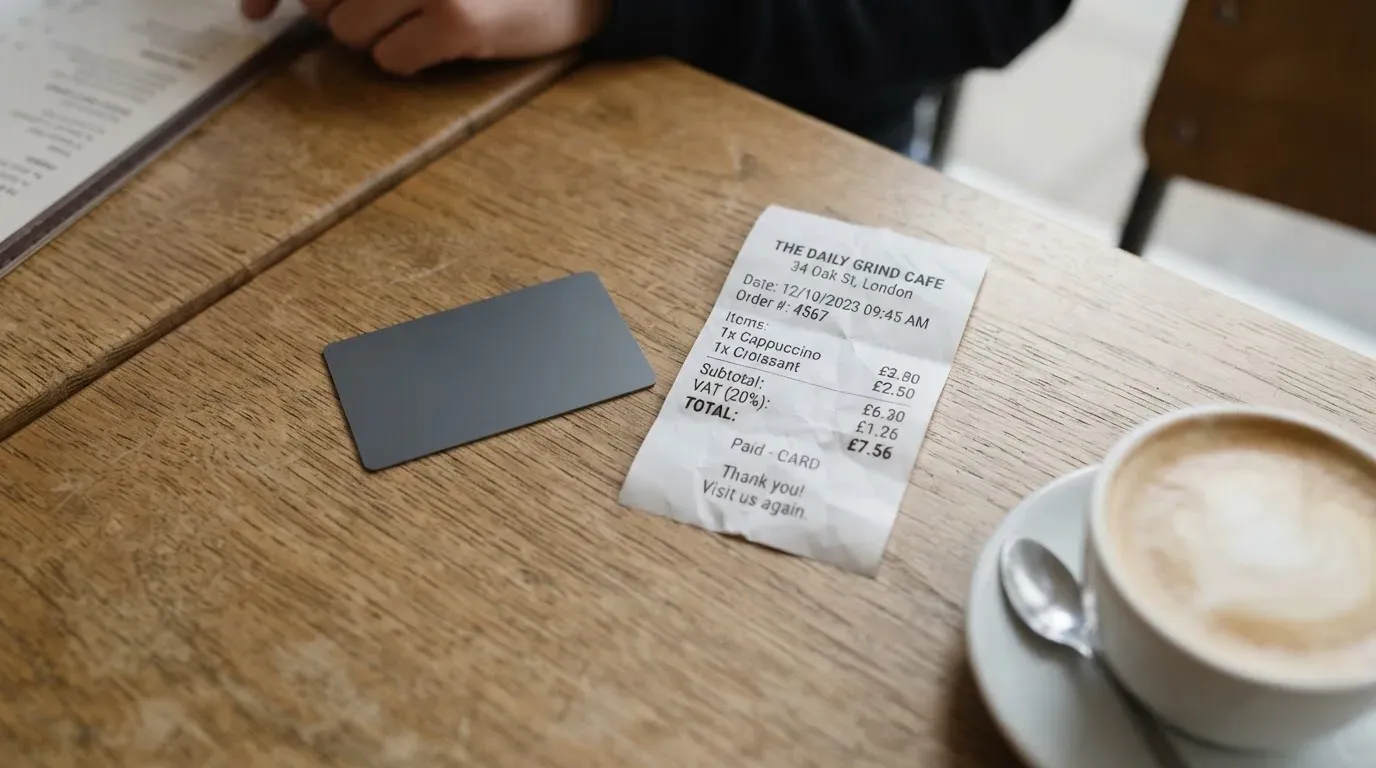
The card’s own conversion fee, its foreign-exchange margin, its cash-advance fee and any other transaction-level fees are not stated in the public documents I could find. The terms say the company may set other costs, including promotions at zero dollars, and the marketing page says there are “no extra charges” on subscriptions or international purchases while warning that “fees may apply”. That is a wide range — from zero to anything — and it is the gap in the cost picture. If you are moving a large balance onto the card, the fee you are really agreeing to is the one that shows up on a transaction the first time you make one.
A second gap is the ATM fee. The terms say the cardholder cannot use the card to withdraw cash, and that is the end of the question. There is no cash-advance fee because there is no cash advance; the card cannot be used at an ATM at all.
The third gap is daily and monthly limits. The terms set a daily limit of USD 2,000 across all transactions that day. There is no monthly limit. The daily limit can be raised, in principle, by contacting support, but the company does not say by how much, in what circumstances, or how long a review takes.
| Item | Amount | Notes |
|---|---|---|
| Card issuance | 3.99 USDT, one-time | Taken from the El Dorado balance; promotions to zero dollars are possible. |
| Monthly maintenance | Free | No recurring fee for holding the card. |
| Replacement virtual card | Free | Per the September 2026 notice. |
| USDT top-up | Free | Network fee on the underlying blockchain may still apply. |
| ACH / wire deposit | 1.49% | On dollar deposits through those rails. |
| USDT withdrawal under 200 | 0.99 USDT + network fee | For moving USDT out of El Dorado. |
| USDT withdrawal 200+ | 0.5% + network fee | Same, larger amount. |
| P2P taker fees | 0.49 USD flat to 0.24% by size | P2P minimum 1 USDT. |
| Card conversion / FX | Not stated | Public documents do not publish a percentage. |
| ATM withdrawal | Not allowed | Cash access is blocked. |
| Daily spending limit | USD 2,000 | Can be raised via support. |
| Monthly spending limit | None |
To put a price on three everyday payments with the numbers we have, picture this. You buy a USD 50 subscription online: the marketing says no extra charge for international or subscription purchases, but the terms reserve the right to charge a fee, so the actual cost is whatever the company decides to apply — that detail isn’t on the website. You buy a coffee in a currency other than USD on a trip abroad: same gap, no published FX margin. You split a USD 300 dinner with friends in your home country: under the daily limit, no fee named, but again, the company reserves the right to charge one. Until the company publishes a fee schedule, you have to assume the worst case is “some small percentage per transaction” and check the receipts on the first few.
The cheapest ways to use the card, based purely on what is published, are USD-denominated online purchases within the daily limit, paid from a USDT balance you already hold. The most expensive way would be to fund with a wire transfer (1.49% on the way in) and then pay in a non-USD currency, because the inbound fee is visible and the outbound fee is hidden.
Top up: funding the card
The card spends from your El Dorado balance, and the balance is loaded in three main ways. The first is dollar rails: you can fund a USD account with ACH or wire, both at a 1.49% deposit fee, and that USD can then be moved onto the card. The second is stablecoin: you send USDT on the Arbitrum network or on the Tron network, and there is no El Dorado fee on that deposit, although the underlying blockchain still charges its own network fee. The third is local: through El Dorado’s P2P marketplace, you can buy balance with one of more than 80 local payment methods — bank transfers, cash, and similar — at taker fees that range from a flat 0.49 USD on small amounts down to 0.24% on larger ones, with a 1 USDT minimum.
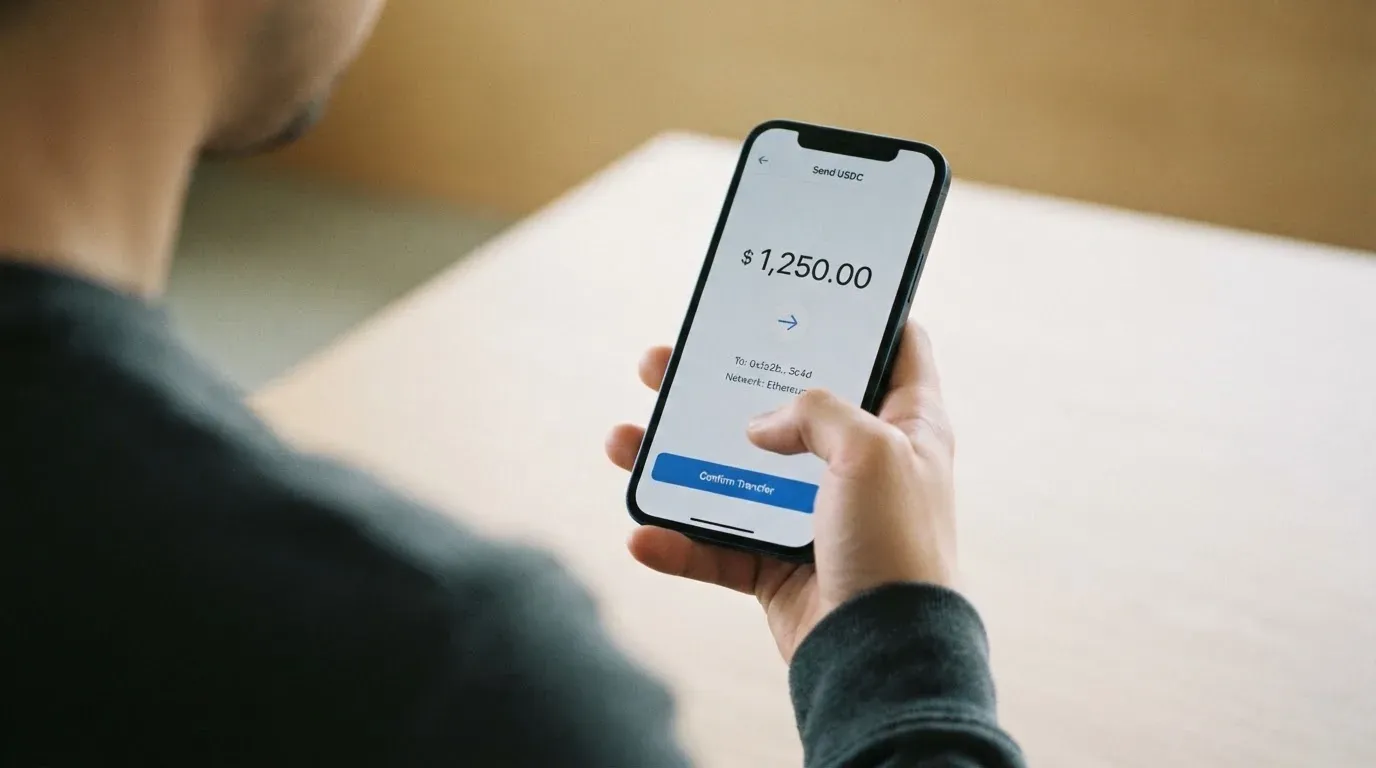
In the app, topping up the card itself is a single button: open the Card section, hit “Depositar”, confirm with your PIN or your biometrics, and the card balance updates. The card’s help text says the transfer is instant, with a tip that it can take “up to a couple of minutes” in practice. There is no published limit on how many top-ups you can do in a day.
A few practical points are worth keeping in mind. First, the supported stablecoin networks are Arbitrum and Tron. That is a narrower list than the networks USDT actually exists on, and it is the single most common reason a deposit is delayed or lost. If you send USDT on Ethereum, on Solana, on Polygon or on any other network, the funds do not arrive where you expect them to, and blockchain transfers are irreversible, so the recovery path is at best a slow conversation with support. Second, USDT on Ethereum requires ETH to pay gas, so a wallet holding only USDT and no ETH cannot send. Third, Tron has its own resource pricing — bandwidth and energy — which means a small amount of TRX is typically required to move USDT there. The El Dorado app does not pay those network fees for you; they are the cost of the underlying blockchain, not the cost of the card.
The funding picture is solid for someone who already has USDT on Arbitrum or Tron. It is workable for someone who can pay a 1.49% fee to wire dollars in, and it is convenient for someone whose country is in the 80-method P2P list. It is not workable for someone who only has USDC, only has USDT on Ethereum, or only has cash they can’t route through a local P2P seller.
Paying with it every day
Once the card is loaded, paying with it looks like paying with any other Visa. You can add the virtual card to Apple Pay or Google Pay and tap to pay at any contactless terminal. You can type the card number, expiry and CVV into an online checkout. You can pay subscriptions. The card is a USD card, so a payment in dollars to a US merchant looks like a normal domestic transaction, with no currency conversion involved. The card is not a physical piece of plastic, so it cannot be inserted or swiped; if a terminal demands a physical dip, the card is not the right tool for that checkout.
The app sits behind a PIN or biometric check, and you have to confirm each top-up from the main balance to the card the same way. The transactions flow through the Visa network, the issuing bank is Lead Bank, and any merchant can look up the BIN to see who issued the card. In a region where most of the other cards a shop sees are domestic, a card issued by a US bank can look “foreign” to a checkout system, and that is one of the reasons online checkouts occasionally decline a card the customer knows is good. The technical term for that is BIN-based scrutiny, and it is a feature of the wider card ecosystem, not a quirk of El Dorado.
There is no cash access. The terms forbid withdrawing cash at an ATM, and they forbid using the card for person-to-person transfers. There is no published rewards or cashback programme. There is no published list of blocked merchant categories; gambling, for instance, is not specifically called out, so the practical answer is “the issuer may block or allow specific categories at its discretion”. The same goes for any spending cap on specific merchant types.
When something goes wrong with a payment, the terms point you at Visa’s standard rules for transactions, refunds and chargebacks. If you spot a charge you do not recognise, you report it to Customer Service, which may recommend a temporary freeze. If a formal dispute is opened, a USD 30 charge may apply, and the company has up to 15 business days to answer the claim. The direct settlement period — the time the issuer has to clear a transaction — is 30 calendar days. El Dorado may auto-deduct funds to cover chargebacks, so an unresolved dispute can be settled against your balance without your further approval.
One operational point worth knowing: a declined authorisation can leave a hold on funds that lingers for several days, even though the charge itself never went through. If a hotel or a car rental puts a pre-authorisation on the card and you do not use the service, the hold still has to expire on its own.
What can go wrong
The risks on this card come from three places: the company behind it, the limits of the product, and the wider market for crypto cards.
The company side is mixed but reasonable. El Dorado Labs PY Inc is the platform provider; Bridge Ventures LLC is the program manager and is not a bank; Lead Bank issues the card under a Visa U.S.A. licence. El Dorado Labs S.R.L. is a registered VASP in Argentina, registered as PSAV No. 63 on 5 August 2024 with the Argentine CNV. A separate entity, EL DORADO MT LLC, is registered in Florida. The named backers include Multicoin, Coinbase Ventures and Paradigm, and a Paradigm-led USD 9 million round was reported by The Block in June 2026 according to El Dorado’s own press list. None of that is a guarantee, but it is a real corporate structure with a real bank behind the card and not just a logo.
What the company does not do, as far as I could see, is publish an insurance or reserve fund for customer balances. The card sits in a custodial model: your USDT sits in an El Dorado account until it is converted and spent, and if the platform fails, you are an unsecured creditor of the platform. The crypto industry has a long history of custodial failures of that shape, and the terms give the company wide discretion to block, suspend or cancel the card.
The product side is where the small print matters. The conversion fee is not published. The FX margin is not published. ATM access is forbidden. The card is virtual, so it cannot be used at every terminal. The daily limit is USD 2,000 and the company does not say how easily it can be raised. Replacement of the virtual card is free under the September 2026 notice, but the help article announcing the change leaves the date the old card stops working as an unfilled placeholder, which is a small but real ambiguity.
The wider market is the part you cannot control. Crypto card programmes have been shut down before — Visa terminated its global agreements with FTX on 13 November 2022, and the FTX US debit card was wound down by its issuer; in 2018, WaveCrest was suspended by Visa in Europe and every WaveCrest-issued Visa programme closed. The pattern, when programmes close, is a notice period, then a stop to new loads, then a stop to spending, then a window to withdraw the remaining balance. A 2026 closure reported by a single secondary source set new-load and spending dates 30 days apart. None of this is a prediction about El Dorado specifically, but it is the shape of the risk you are signing up for when you keep a balance on a custodial platform behind a card programme.
The complaints picture is, in a way, a non-finding. I searched for card-specific complaints on Trustpilot, on Reddit and in news searches, and the results that came back were about the wider El Dorado P2P product, not the card. The Trustpilot page for eldorado.io shows 2.7 out of 5 from 62 reviews as of 20 October 2026, with 61% five-star and 28% one-star. The recent one-star themes are about P2P seller scams and missing refunds, slow delivery and unhelpful support, and seller verification rejected without reason; a small number of reviews also mention a domain change from .io to .gg, which the company denies. None of those are card complaints. The site footer does link to an official complaints form.
The card’s own security features, as far as they are published, are the standard set: PIN or biometrics on top-ups, transaction monitoring by El Dorado and its partners, the option to block, suspend or cancel a card, and a published warning that El Dorado will never ask for a card number, CVV, password or code. A security PIN for the card itself is announced as “coming soon”, and there is no public insurance for the balance.
What to take instead
If the geography, the missing fee table, or the virtual-only design rules the card out for you, three other products are worth a look.
The first is the International Visa Card from a US-licensed programme, scored at 6.7 out of 10. It is a US-issued Platinum Visa, currently virtual, with a physical card listed as “coming soon”. Account and card are not available to residents or legal registrants of Belarus, mainland China, North Korea, Cuba, India, Iraq, Iran, Israel, Myanmar, Nepal, Nicaragua, Russia, Syria, Turkey, Ukraine, Venezuela and Vietnam, with FATF grey-list countries reviewed case by case; purchases are blocked in North Korea, Cuba, Iran, Russia, Syria, Ukraine and Venezuela. Card use in USD is free on all plans, foreign-currency payments use the Visa exchange rate plus a 2% FX fee, and deposits of any kind are free. Card issuance is USD 5 one-time, with a free Classic plan, a Pro plan at USD 9 a month, and a Max plan at USD 19 a month. Funding is by USDC or USDT at 1:1 into the USD account, or by USD, EUR, SEPA, SWIFT or FedNow deposits. No cashback is published. It is a cleaner fit for someone who needs a published FX margin and is happy to pick a paid plan.
The second is UNi Card, scored at 6.1 out of 10. It is a multicurrency Mastercard that spends from a UNi.Global account balance; the exact countries of availability and the funding rails are not stated in the public documents. It has no annual fee and no foreign transaction fee, converts assets at live OTC rates with no hidden exchange fees, and offers a “Spend-to-Earn” reward of up to 3%. The headline is the absence of recurring fees, the catch is that almost everything else about the product is not published.
The third is Whop Cards, scored at 5.2 out of 10. It is a Visa that works anywhere Visa is accepted, with consumers supported in 31 US states and businesses in 41, and a long list of unsupported countries including Belarus, mainland China, Cuba, Hong Kong, India, Iran, Iraq, Israel, Myanmar, Nepal, Nicaragua, North Korea, Russia, Syria, Turkey, Ukraine, Venezuela and Vietnam. The page advertises “no extra fees” without giving numbers, and a 5% cashback at selected merchants (currently Uber) is the main reward. The card spends from a Whop balance backed by stablecoin collateral from a linked wallet, and the specific coins and networks are not stated. It is the most US-centric of the three.
The pattern across the three is that the more information a card publishes about fees, the easier it is to plan around, and that none of them currently solves the “Latin American funding a USD card with USDT” job as directly as El Dorado does. If that is your job, the El Dorado card is still the most direct match. If it is not, one of the three above will probably fit better.
Who I would recommend it to
I would recommend the El Dorado card to a fairly specific reader: an adult resident of one of the eleven listed countries who already holds USDT on Arbitrum or Tron, wants a USD-denominated Visa for online and contactless spending, does not need cash access, is comfortable with a virtual-only card, and is willing to accept a published fee table that does not actually publish the card’s own conversion or FX fees. If that is you, the card is cheap to set up, cheap to run, issued by a real US bank, and tied to a real stablecoin balance you already control in shape, if not in custody.
I would not recommend it to a US resident (the card is not available), to anyone who needs a physical card or ATM access (the card is virtual and ATM is forbidden), to anyone moving more than USD 2,000 a day on a regular basis (the daily limit, even if raisable, is the published cap), or to anyone who is unwilling to send USDT on Arbitrum or Tron specifically (other networks are not supported for card funding). I would also be careful if a large portion of your spending is in non-USD currencies, because the FX margin is not published, and if your balance is large, because the platform is custodial and the published safeguards are the standard set rather than an explicit insurance fund.
If you are somewhere in the middle — interested, but unsure — the practical next step is to open the El Dorado app, start the Level 2 verification, and watch for the moment the app asks for the additional in-app check before the card is issued. The time that takes, and the documents it asks for, is the most concrete information you will get about how the product behaves in your country, with your documents, in your language.
Frequently asked questions
What is the El Dorado card?
It is a virtual Visa prepaid card in US dollars, issued by Lead Bank under a Visa U.S.A. licence, that spends from a USDT balance held inside an El Dorado account. The system converts USDT in the background so that merchants see a normal USD Visa transaction.
How does the El Dorado card work?
You open an El Dorado account, complete Level 2 verification and an extra in-app check, receive a virtual card with a number, CVV and expiry, fund your El Dorado balance with USDT on Arbitrum or Tron, dollars via ACH or wire, or a local payment through P2P, and then top up the card from that balance. The card can be used online or added to Apple Pay or Google Pay for in-store payments.
Is El Dorado a bank?
No. El Dorado Labs PY Inc is the platform provider, Bridge Ventures LLC is the program manager, and the card itself is issued by Lead Bank, a US bank, under a Visa U.S.A. licence. El Dorado Labs S.R.L. is separately registered as a VASP in Argentina.
Who owns El Dorado?
El Dorado’s press materials name Multicoin, Coinbase Ventures and Paradigm as backers, and a Paradigm-led USD 9 million round was reported by The Block in June 2026. Day-to-day ownership and cap-table details are not in the public documents I could find.
Is the El Dorado card available in my country?
The card is offered to residents of Bolivia, Brazil, Argentina, Colombia, Costa Rica, Ecuador, Guatemala, Honduras, Paraguay, Peru, and Trinidad and Tobago. US residents are excluded. Availability in any other country is not stated, and the rule is by residence, not citizenship.
How do I get the El Dorado card?
You tap “Get your card” on the El Dorado site or app, complete Level 2 verification, complete the additional in-app check the company requires, and then the virtual card details appear in the app. There is no physical card to wait for.
Does the El Dorado card require KYC?
Yes. The card needs Level 2 verification plus an extra in-app check, and El Dorado can ask for more documents at any time. The exact documents, processing time and rejection reasons are not stated.
How do I top up the El Dorado card?
Open the Card section, tap “Depositar”, confirm with your PIN or biometrics, and the card balance updates. The card spends from your El Dorado main balance, which itself is funded by USDT on Arbitrum or Tron, by ACH or wire, or by 80+ local methods through El Dorado P2P.
How do I add the El Dorado card to Apple Pay or Google Pay?
The same way as any other Visa: open Wallet on iOS or Google Pay on Android, choose to add a card, and type or scan the virtual card number, expiry and CVV from the El Dorado app. The card is virtual, so there is no plastic to hold up to a phone.
Is the El Dorado card safe?
The card is issued by a regulated US bank under a Visa licence, the platform is a registered VASP in Argentina, and the standard safeguards are in place: PIN or biometrics on top-ups, transaction monitoring, the option to freeze the card, and a published warning that El Dorado will never ask for your card number, CVV, password or codes. There is no public insurance for the balance, and the platform is custodial, so counterparty risk is the residual exposure.
Choosing an app or neobank card – cryptocardadvisor
Content created by the «cryptocardadvisor» team