
A payroll-backed virtual Visa, useful only if you are paid through Thera
 Available in US
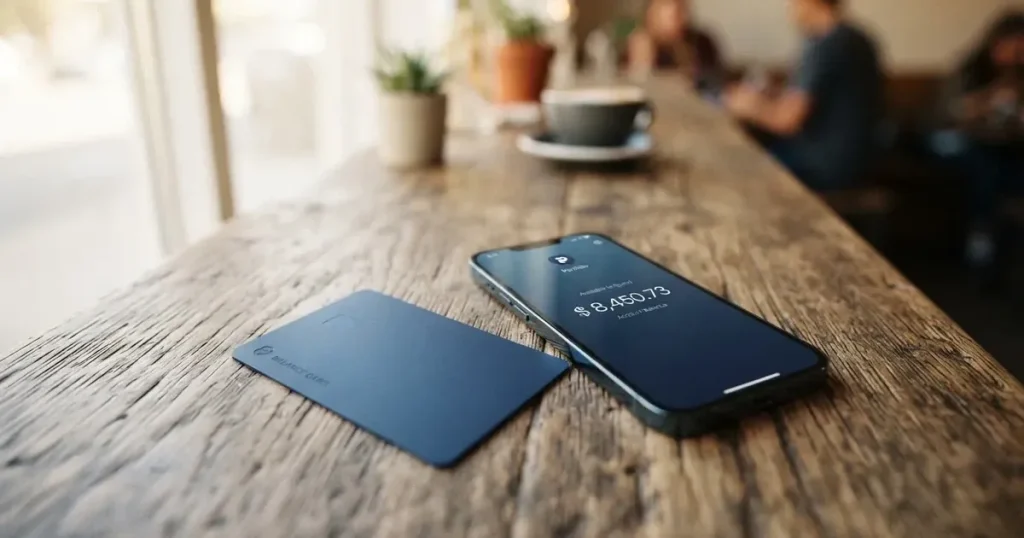
Thera Wallet is a virtual Visa card that you do not apply for in the ordinary way. It is not sold to the general public, and it is not a bank account in the sense most people mean that phrase. The card is aimed at employees and contractors whose salary or invoice arrives through the Thera payroll platform, and it spends what sits in the wallet that payroll feeds. That single fact explains almost everything else about it: the country list, the fee silence, the online-only nature of the card, and the way you have to move money before you can spend it.
My score for the card is 4.9 out of 10. That is not a rounding error in the other direction — it is a card that does a narrow job competently and leaves the questions you would need answered before committing your salary to it unanswered on its public pages. If you are a freelancer in Latin America paid through Thera payroll and you buy things online, there is a real product here. If you are outside that description, you are not looking at a general-purpose crypto card and the rest of this review will mostly tell you why.
The conditions described here are current as of October 28, 2026.
Who the Thera Wallet card is actually for
You can get the card if you are paid through Thera. Thera describes it as being for people paid through Thera payroll — employees and contractors — rather than a general retail product, and that is the eligibility test in practice: no payroll relationship through Thera means no card, however attractive the fee structure might look.
Beyond that test, the card’s own support list names ten countries. Let me put them out plainly, because the list is unusual and worth reading twice:
- Argentina
- Bolivia
- Brazil
- Colombia
- Dominican Republic
- Ecuador
- Guatemala
- Mexico
- Peru
- United States
Thera says availability is based on local banking and regulatory availability, so the list is not a promise that everyone inside those borders will be approved — it is the set of places the platform says it can support. If you are reading this from outside Latin America, that is the single most useful fact on the page: the United States is the only country in the list that is not in Latin America, and even there the payroll requirement still applies.
One clarification worth having early, because people mix it up: this is a card tied to a payroll channel, not a card tied to your citizenship. Your nationality does not appear anywhere in the eligibility description. What matters is where you are paid from and where you are working from.
How to get the card
The route runs through payroll rather than an application form. Wallet creation sits under Payroll > Wallet in the platform, and approval typically takes a few business days — so this is not an afternoon project if your employer needs to set it up.
Before any of that, identity verification. The card’s KYC is handled through a partner, AiPrise, and it happens on mobile only, via a QR code. You go through it in this order:
- Your document type and issuing country
- A photo of the front and the back of the document
- A selfie
Accepted documents are a driver’s licence, a resident ID, a voter ID, a national ID, or a passport. The outcome is binary: you see either “Verified” or “Declined”. Two checks are involved — the document verification and the selfie — and a standard review takes a few minutes, with 24 to 48 hours if extra verification is needed. Thera does not list the reasons a check might be declined, which is worth weighing if you have any doubt about your documents before you start.
There is also a tax form step, and it depends on where you are tax resident rather than where you are paid from: non-US residents complete W-8BEN or W-8BEN-E, US tax residents complete W-9. This is a form, not tax advice, and if you are unsure which one applies to you, ask someone qualified — but note that the form is required *before withdrawals*, not before the card exists. If your employer requires it, withdrawals stay blocked until your KYC is approved.
Two things the public pages do not state: whether proof of address is required, and whether there is an age requirement stated. I would want both confirmed before starting.
The card itself arrives as a virtual Visa, usable for online purchases where Visa is accepted, and nowhere else. There is no in-store use, and a physical card is planned rather than available. The card’s currency is not stated anywhere I could find.
Fees: what it costs and what is simply not published
This is the weakest part of the card’s public presentation, and I want to be plain about it rather than dress it up. The issuance cost is not stated. The monthly fee is not stated. The crypto conversion fee is not stated. ATM fees are not stated, which is somewhat beside the point given that the card cannot be used in-store and cash is not addressed at all. The only fee sentence I could find is a warning: foreign transactions “may incur foreign exchange (FX) fees” — with no number attached.
So here is the honest picture. Where Thera publishes a figure, I give it; where it does not, I say so rather than filling the gap with a guess.
| Fee or limit | Details |
|---|---|
| Card issuance | Not stated |
| Monthly fee | Not stated |
| Crypto conversion fee | Not stated |
| Foreign exchange | “Foreign transactions may incur foreign exchange (FX) fees”, no figure given |
| ATM | Not stated; the card cannot be used in-store and cash is not addressed |
| Card spending limits | Not stated |
| Withdrawal limit | Maximum 10 withdrawals in any rolling 30-day period |
| Tiers | A single virtual card; no tiers are stated |
| Card currency | Not stated; the wallet holds USDC and USDT, and the payroll balance is in USD |
| Top-up and payout fees | Not stated, including minimums and fiat options |
Let me put that table in plain terms for three ordinary situations, because a table of “not stated” tells you nothing on its own.
Paying a subscription in dollars. You would convert or load the balance first, then spend it. The conversion fee is not published, so the only thing I can tell you is that there is one that may apply, and that you should find out what it is before it becomes part of your monthly outgoings.
Paying a foreign website billed in another currency. Here Thera does at least warn you: foreign transactions may incur FX fees, no figure given. Add to that the ordinary risk that a card issued in one country can be declined or scrutinised by a merchant in another, which is standard for any card where the issuer country differs from your billing address — not a quirk of this card, but a fact of how card lookups work.
Taking money out. The one hard number in the whole section is the withdrawal cap: a maximum of 10 withdrawals in any rolling 30-day period. That is a tight ceiling if you were planning to use the wallet as a general-purpose spending and cash-out account. Fees on payouts are not stated.
My advice, if the card otherwise fits your situation: ask support directly for the conversion fee, the FX fee, and the payout fee before you move meaningful money. Those three numbers decide whether this is cheap or expensive for you, and there is no way to infer them.
How to top it up
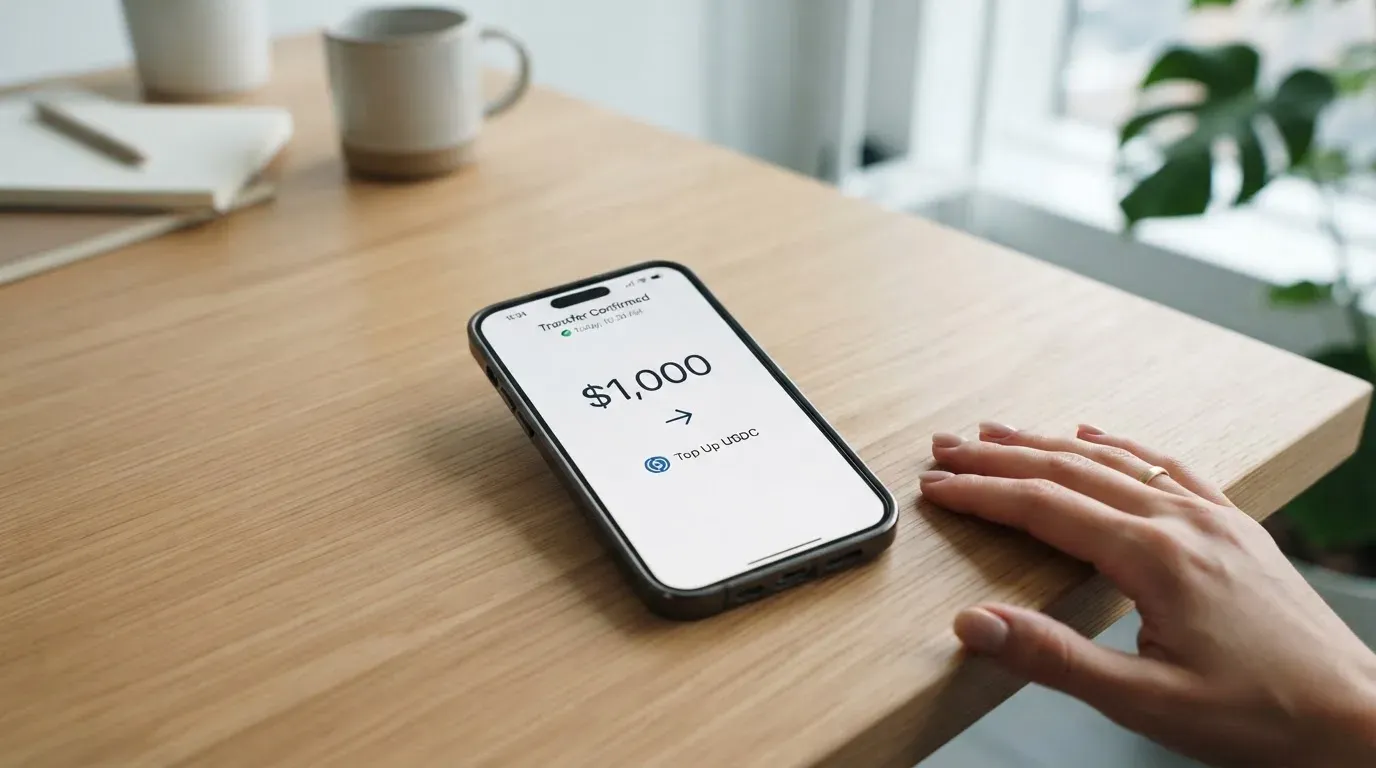
Topping up is a two-step path, and both steps happen inside Thera. You transfer from your Thera account to the Thera Wallet using “Transfer to Wallet”, then move from the wallet to the card with “Add Funds”. The card’s funds reflect in 5 to 10 minutes. Fees, minimums and any fiat top-up options are not stated on the pages I read.
There is a second direction too, which matters if you are a contractor receiving stablecoins. Wallet payouts support USDC and USDT, and — this is the detail that catches people — only on the Ethereum and Tron networks. Anything else is not an option as described.
For payouts to an external address you add the address as a method. Two warnings here that I would not skip past. The fees are not stated. And a wrong address can mean permanent loss, because blockchain transfers are irreversible by design; no network can freeze or return funds once they are sent to a wallet you do not control. Copy-paste carefully, or better, check twice. The balance left on closure is also not stated.
One more thing about the stablecoins themselves, because it is background rather than card-specific and it bears on what you are holding: stablecoins aim to hold a stable value, but as the BIS put it in July 2025, about 90% of stablecoin market capitalisation sits in Tether’s USDT and Circle’s USDC, and despite the name, stablecoins are not necessarily stable. TerraUSD collapsed in May 2022 and USDC temporarily lost its peg in March 2023 during the US banking crisis. And Circle stopped supporting USDC on Tron in February 2024, which is worth knowing even though Thera names Tron as a supported payout network — check what your chosen stablecoin and network combination actually is before you send.
Paying with it every day
The everyday use is narrow, and the narrowness is the whole story. You have a virtual Visa that works online where Visa is accepted. You can add it to Apple Pay and Google Pay through the card settings. You cannot use it in stores. You cannot use it at a cash machine. A physical card is planned, not shipped. There are no tiers; you get one virtual card.
Whether that is enough depends entirely on your spending profile. If you pay for hosting, software, subscriptions and online services, the card does its job. If you need to hand a card to a waiter, buy groceries, or pay for fuel, it simply cannot do that today.
A few everyday mechanics are unstated, and they are the ones that bite:
- Blocked categories. Not stated. You cannot tell from the public pages whether gambling, adult content or similar categories are blocked — and those blocks are a matter of issuer policy rather than law, varying from one issuer to the next, so they can exist without being announced.
- Rewards. Not stated. No cashback or earn rate is published, so plan on none.
- Peer-to-peer payments. The card cannot be used for peer-to-peer transfers via payment links.
- Disputes and chargebacks. Not stated. No procedure is published for what happens when something goes wrong with a payment.
- The app and support ratings. There is a web dashboard; the card pages do not describe an app or publish ratings.
On security specifics that are published: your card number, expiry and CVV are shown in the Wallet section and auto-hide when you leave the page. Identity verification is required. Who holds the funds in custody is not stated, which is a bigger gap than it sounds — it determines who is liable if something goes wrong.
If you are outside the US, Canada or the UK, one more thing bites with any card like this. Address verification compares the numeric parts of the billing address you type with the issuer’s records, and it is generally unavailable for foreign-issued cards, which can cause declines. A hold from a declined authorisation can also sit on your funds for several days, typically up to 7.
What can go wrong
The complaint record. Thera’s Trustpilot score is 4.7 from 100 reviews, all within the last twelve months, as I read it on 2026-10-21. The only complaint visible to me was a user report dated 6 August 2026: a withdrawal marked completed that never arrived, with slow, repetitive support. The company has not replied to negative reviews. One complaint is not a pattern, and I am not treating it as one — but a completed-but-undelivered withdrawal is precisely the failure mode that matters to someone living on payroll, so it belongs at the front of your mind. I found no official incidents to report.
Nobody will tell you who is behind it. Thera is a payroll and payments platform at getthera.com. On the pages I read, the legal entity, the card issuer and the licences are not named. The KYC partner is AiPrise. That is not a scandal — plenty of programme managers structure things that way — but it means you cannot read a licence register entry for this card before you use it, and it makes the payout-failure complaint above harder to weigh, because there is no named issuer whose record you could check.
Network and address mistakes. Deposits on a network the provider does not support, or to an address belonging to another network, can be lost or need manual support recovery with no guarantee. This is not a Thera problem specifically; it is how blockchain transfers work.
Programmes close. Card programmes do shut, and the pattern is usually a notice period, then spending and loading stop, then users are asked to withdraw remaining balances. One 2026 closure reported by a secondary source had new loads ending 8 July 2026 and spending stopping 8 August 2026 — I have that from a single unconfirmed source, so I flag it as an example of the pattern rather than evidence about Thera. History in the category is instructive: Visa terminated its global agreements with FTX on 13 November 2022 and the FTX US debit card was wound down, and Visa suspended WaveCrest in Europe in 2018, closing all WaveCrest-issued Visa programmes. Visa and Mastercard do not issue crypto cards to consumers themselves; they license issuers and can suspend a programme.
Stability and sanctions. Transfers can be frozen. Tether says it disables tokens in wallets on the OFAC sanctions list and has frozen funds tied to illicit activity — stablecoins are not censorship-proof.
Compliance friction is real, not a formality. KYC rules require regulated businesses to verify customers and assess risk as part of anti-money-laundering and counter-terrorism-financing law, including ongoing monitoring and suspicious-activity reporting. In the EU, customer due diligence covers name, address, date of birth, nationality, identity documentation, a sanctions check, the purpose of the relationship and whether you are a politically exposed person. If due diligence cannot be completed, the institution must refrain from the transaction or relationship. That is why accounts get closed or frozen pending documents — it is the rule working, not a punishment. Nationality is screened separately from residence, because sanctions screening and issuer risk policy are often applied to citizenship and country of birth, not just to where you live.
On money movement generally. Card payments run through several parties: the network routes messages and sets rules, the issuer holds the programme under the network’s licence, and the crypto brand is often only a programme manager or front end. An electronic money institution in the EU can issue e-money and payment cards but cannot lend. In the US, FinCEN guidance treats administrators and exchangers of convertible virtual currency as money transmitters, while people merely buying goods or services are not. And a card is a payment service regulated separately from the crypto side, so a crypto card often depends on two licences — which is exactly the licence you cannot find named on Thera’s pages.
Tax treatment is yours to check, not mine. I am not giving tax advice. What I can tell you is the shape of the issue: the IRS treats digital assets as property, so exchanging them for goods, services or dollars generally produces a taxable gain or loss, measured in local fiat currency at fair market value on the date of the transaction. Each card payment funded from crypto may therefore be a separate disposal. Speak to a professional about your own situation.
What to take instead
I am comparing these on the same criteria I used for Thera. Where an alternative publishes a fee and Thera does not, that difference alone does not make the alternative better — but it does tell you where you can get an answer.
| Alternative | Score | Who can get it | Card | Stated costs |
|---|---|---|---|---|
| International Visa Card | 6.7 / 10 | Not available to residents or legal registrants of Belarus, mainland China, North Korea, Cuba, India, Iraq, Iran, Israel, Myanmar, Nepal, Nicaragua, Russia, Syria, Turkey, Ukraine, Venezuela, Vietnam; FATF grey-list countries reviewed case by case | U.S.-issued Platinum Visa card, virtual, pays in USD; physical card “Coming soon” | Virtual issuance $5 one-time, no maintenance fee; plans Classic free, Pro $9.00/month, Max $19.00/month; card use in USD free; foreign currency “Visa exchange rate + 2% FX fee”; deposits free |
| UNi Card | 6.1 / 10 | Not stated | Multicurrency card on the Mastercard network, spending from the UNi.Global account balance; physical or virtual not stated | “No annual fee” and “no foreign transaction fee”; assets converted at live OTC rates; “No hidden exchange fees”; spend-to-earn rewards up to 3% |
| Whop Cards | 5.2 / 10 | Consumers in 31 US states; businesses in 41 states; unsupported consumer countries include Belarus, mainland China, Cuba, Hong Kong, India, Iran, Iraq, Israel, Myanmar, Nepal, Nicaragua, North Korea, Russia, Syria, Turkey, Ukraine, Venezuela, Vietnam | Visa, works anywhere Visa is accepted online and in stores; virtual or physical not stated; card currency not stated | “No extra fees”, with no issuance or monthly amounts listed; fees otherwise not stated; spends from a Whop balance, backed by stablecoin collateral from a linked wallet; 5% cashback at select merchants, currently Uber |
A few things stand out when I lay them side by side.
The International Visa Card publishes everything. That is the striking thing. It names an issuance fee, monthly tiers, an FX percentage, and says deposits are free. It also has the longest and most explicit exclusion list in the comparison, and it says the rule is by residence or legal registration rather than citizenship. Its physical card is “Coming soon” — the same limitation as Thera, which tells you this is a category-wide pattern for virtual crypto cards right now, not a mark against Thera specifically.
UNi is the one that is quiet on eligibility and loud on the rest. Who can get it is not stated, but it has no annual fee, no foreign transaction fee, conversion at live OTC rates, and rewards of up to 3%. It is on the Mastercard network, which is a genuine difference if you spend where Visa is fussy.
Whop is the most geographically specific. Thirty-one states for consumers, forty-one for businesses, and an explicit unsupported-country list. Its 5% cashback at select merchants is currently Uber. It also has the largest honesty gap: “no extra fees” with no amounts behind it.
Against all of them, Thera’s trade-off is clear: it is the only one in this comparison whose defining feature is a payroll relationship rather than a payment account. That is a genuine niche, and if you are in it, the comparison may not matter. If you are not in it, an alternative with published numbers may suit you better simply because you can predict what it costs.
Who I would recommend it to
I would recommend this card to a freelancer in Latin America — in one of the listed countries — whose invoices or salary arrive through Thera payroll, who buys things and services online, and who wants a card without opening a second relationship with a traditional bank. For that person, the card removes a real obstacle, the setup runs through payroll rather than a credit application, and the online-only limitation costs them little because that is how they already spend.
I would not recommend it if any of these are true of you:
- You are not paid through Thera. There is no application route for you at all.
- You need a physical card, in-store purchases, or cash. Today the card cannot do any of the three.
- You live outside the ten listed countries, or you need certainty about limits, conversion costs or FX costs before you commit money.
- You are paid in fiat and want to spend it immediately, because the path from Thera account to wallet to card takes 5 to 10 minutes and the cards on offer assume you are working with USDC or USDT on Ethereum or Tron.
- You are nervous about custody or about a provider whose issuer and licence are not named on the pages you can read.
If you fall in the second list and still want a crypto card, the three alternatives above are worth reading on their own terms, with their own exclusions and their own gaps. My score of 4.9 out of 10 is not a verdict on whether the card works — it is a verdict on how much the card’s own public pages leave you to guess.
Frequently asked questions
What is the Thera Wallet card?
It is a virtual Visa card that spends from a crypto wallet funded through a payroll relationship. Thera is a payroll and payments platform, and the card is meant for people paid through it — employees and contractors — rather than for general retail customers. It works online where Visa is accepted, can be added to Apple Pay and Google Pay, and has no in-store or cash-machine use today.
How does the Thera Wallet card work?
You transfer from your Thera account to the Thera Wallet with “Transfer to Wallet”, then move funds to the card with “Add Funds”, which takes 5 to 10 minutes to reflect. The card then spends that balance online. The wallet holds USDC and USDT, and payouts work in those two assets on the Ethereum and Tron networks only. There is no physical card yet — one is planned.
Is Thera Wallet a bank?
Not on the evidence of its public pages. Thera presents itself as a payroll and payments platform, and the legal entity, card issuer and licences are not named in the pages I read. The card runs on Visa’s network, but Visa licenses issuers rather than issuing crypto cards itself. Before you rely on it, ask which institution actually holds your balance and under what licence.
Who can get the Thera Wallet card?
Only people paid through Thera payroll — employees and contractors. Support is listed in Argentina, Bolivia, Brazil, Colombia, the Dominican Republic, Ecuador, Guatemala, Mexico, Peru and the United States, with availability said to depend on local banking and regulatory availability. It is not a general retail product, and there is no separate application route for someone outside the payroll relationship.
Does the Thera Wallet card require KYC?
Yes. Identity verification runs through a partner, AiPrise, on mobile only via a QR code: document type and issuing country, photos of the front and back, then a selfie. Accepted documents include a driver’s licence, resident ID, voter ID, national ID and passport. A standard review takes a few minutes, or 24 to 48 hours with extra verification. Non-US tax residents file W-8BEN or W-8BEN-E, US residents W-9, before withdrawals.
How do I top up the Thera Wallet card?
You move money in two internal steps: Thera account to Thera Wallet, then wallet to card via “Add Funds”, with 5 to 10 minutes to reflect. Fees, minimums and fiat top-up options are not stated on the pages I read, which is the first thing I would ask support about. Payouts to an external address work in USDC or USDT on Ethereum or Tron, and a wrong address can mean permanent loss.
What does the Thera Wallet card cost?
The public pages do not state the issuance cost, the monthly fee, the crypto conversion fee or any figure at all for foreign exchange fees — only that foreign transactions “may incur foreign exchange (FX) fees”. A single virtual card is offered with no tiers. Card spending limits are not published. The one hard number I found is a cap of 10 withdrawals in any rolling 30-day period. Get the three fee figures in writing before you move meaningful money.
Is the Thera Wallet card free and safe?
I would not answer either way. Free is not established, since no cost figures are published at all. On safety, your card details are shown in the wallet section and auto-hide when you leave the page, identity verification is required, and the Trustpilot score is 4.7 from 100 reviews read on 2026-10-21 — with one visible complaint, dated 6 August 2026, about a completed withdrawal that never arrived and slow support. Custody arrangements are not stated.
Can I use the card in stores or at an ATM?
No, not today. The card is virtual and works for online purchases where Visa is accepted, with no in-store use and no cash-machine functionality; cash is not addressed at all. A physical card is planned. If you need to pay a restaurant, a supermarket or a taxi, this is not the card for you yet — and note that a declined online authorisation can leave a hold on your funds for several days, typically up to 7.
What should I check before I start using it?
Ask support for the crypto conversion fee, the FX fee and the payout fee. Ask which legal entity and which card issuer stand behind the card and under which licence. Ask which merchant categories are blocked, since the list is not published. And check the withdrawal limit against how often you actually need cash, because 10 withdrawals in any rolling 30-day period is a hard ceiling.
Choosing an app or neobank card – cryptocardadvisor
Content created by the «cryptocardadvisor» team