
A virtual dollar card for four African markets, published without the numbers
 Available in US
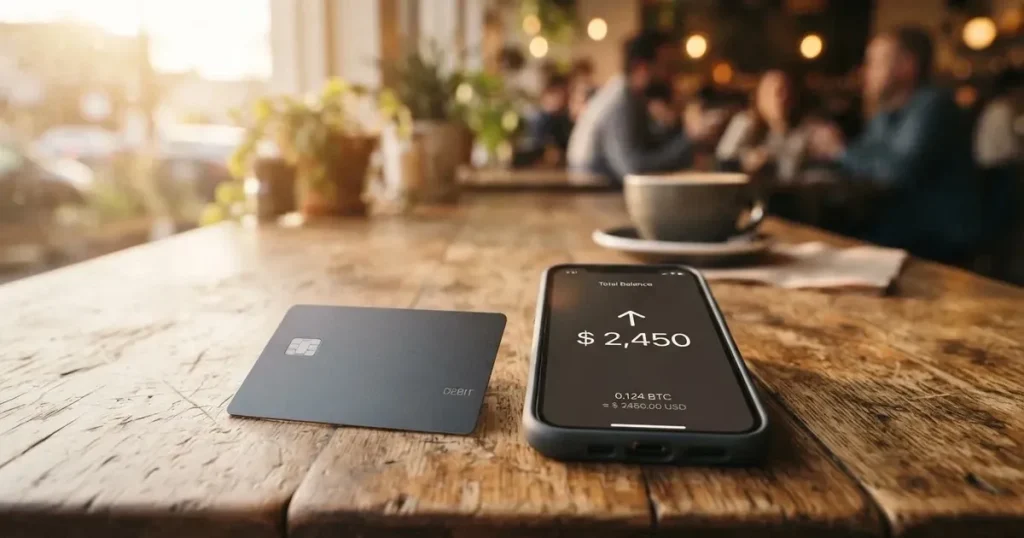
If you have been searching for a way to spend a crypto balance on ordinary things — a subscription, a hotel, an online order that will not take your local currency — then Javex is a name you will have met. It advertises a virtual dollar card, a wallet that converts what you send it, and an app that hands you reward points. On paper that is a complete answer to the problem. My job here is the other half of that sentence: what is actually written down, what is promised in adjectives rather than numbers, and where you would be the one carrying the risk.
I went through the card’s public pages and compared them against what the category normally publishes. I did not use the card, and nothing here comes from opening an account. Short version: Javex scores 3.8 out of 10. That is a low mark, and most of the reason for it is not that the product sounds bad. It is that the things a person needs in order to decide — the fees, the issuer, the networks, the limits — are not on the pages, and the card’s own material leans on words like “lowest” and “transparent” where numbers would belong.
The conditions described here are current as of October 28, 2026.
Verdict: 3.8 out of 10, and the number is mostly about silence
Javex suits one person quite specifically: someone in Nigeria, Kenya, Ghana or South Africa who needs a dollar card more than they need a feature list, and who is comfortable reading terms rather than comparing products. For that person, the card is a live option with a real wallet behind it and a real company behind the wallet. The score reflects what I could verify, not a claim that the service is bad.
It does not suit anyone who intends to run their spending through it at volume, anyone who needs to know what a payment costs before making it, or anyone whose main worry is whether their money is recoverable if something goes wrong. For those people the missing information is not a technicality. It is the whole decision.
| Criterion | Mark | Why |
|---|---|---|
| Who can get it | 2 / 10 | The site names users in Nigeria, Kenya, Ghana and South Africa; verification requires a BVN and deposits from an account in your own name |
| Cost | 5 / 10 | Card fees are not published — “lowest fees”, “transparent pricing” — and withdrawal is charged, with no figure given |
| Top-up options | 4 / 10 | Crypto deposits convert automatically into a wallet balance that funds the card; the coins and networks are not named |
| Reliability and complaints | 5 / 10 | Javex Technologies Ltd, registration RC8795706, described as “licensed” without naming the licence; the issuer is not named; the app sits at 5.0 from 2 ratings; no complaints found |
| Everyday use | 3 / 10 | Virtual dollar card only; Apple Pay, Google Pay and ATM withdrawals are not described; 2FA, PIN and biometrics are offered |
| Total | 3.8 / 10 |
Read those six rows together and a pattern appears: the two marks that are not near the floor are cost and reliability, and both are propped up by the absence of bad news rather than by positive evidence. No complaints is not the same as a good track record when the company is young enough to have a small footprint. No published fees is not the same as low fees.
Will they give you the card?
The honest answer is: probably, if you are in one of four countries and your documents line up — but the card’s own pages narrow that down less clearly than you would like, because they also leave a door open that is not explained.
The site names users in Nigeria, Kenya, Ghana and South Africa as its market. The Terms go wider in a way that is hard to read past: they bar nationals or residents of any “Sanctioned Country or Restricted Jurisdiction”, and the list of those jurisdictions is not given. So the practical shape of the rule is — inside the four named countries, you are in scope; outside them, you are in scope unless you are a national or resident of somewhere on a list you cannot see. That is the part to check before you spend an evening on an application. The app’s App Store listing sits on the Nigerian storefront, which fits a Nigeria-centred operation with regional reach.
One thing the page gets right for anyone comparing this to other financial products: identity verification is not optional, and the standard is not unusual. The Terms describe verification including BVN validation and anti-money-laundering checks, deposits must arrive from a bank account in your own name, the minimum age is 18, and one account per person is allowed. If you have held an account with a Nigerian bank you will recognise the BVN part; if you have not, it is the number that links your bank records to your identity, and the verification step will ask for it.
What is missing here is just as relevant. The card is described as the “Javex Virtual Dollar Card”, virtual, intended for international transactions — and the network it runs on is not stated. That single omission ripples outward. A card’s network decides which terminals and online gateways accept it, which country it appears to come from, and how much of a foreign-looking transaction it is to the merchant. I will come back to this in the section on what can go wrong, because it is the kind of detail that is cheap for a provider to publish and expensive for you to discover later.
There is also no stated delivery process, because there is no physical card — this is virtual only, so the physical-delivery question simply does not apply. And the verification levels the card might offer, if it has more than one, are not stated.
How to get it
The card-specific steps are not stated. That is the plain fact, and I want to be careful with it, because it is the kind of omission that reads as either a secret or a non-issue, and here it is closer to the second.
What is documented is the shape of the account rather than the card: an app, a wallet, an identity check including BVN validation and AML checks, an age floor of 18, one account per person, and the requirement that money arrives from a bank account in your own name. The app is listed on iOS as “Javex: Crypto & Gift Cards”, version 1.0.9, rated 5.0 — but from only 2 ratings. That is worth pausing on: a 5.0 from two people is not a quality signal, it is a rounding of nothing. On Android, the listing under com.javex.javex_app had no retrievable rating when I looked.
So the honest picture is a service that is live and usable, whose sign-up journey I can describe only in outline. If you need to know the exact screens or how long review takes, you will have to find out by going through it. Two questions are worth asking support directly before you commit, and they are specific: which card network does the virtual card run on, and which bank or licensed institution is the actual issuer named on the card? Both are facts a functioning card has an answer to.
Fees: what a payment actually costs you
Here is the sharpest problem with Javex, and it is the section I would read twice.
The card’s site promises “best exchange rates and lowest fees” with “transparent pricing”. No figures accompany those words. The Terms do add one real piece of information: instant buy and sell fees are built into the quoted rate — so the conversion cost is inside the rate you see rather than a line item after it. That is a legitimate design, and it has one honest advantage: you are not surprised by a separate charge at checkout. It also has the effect that the number you want is the rate itself, and the rate is not published anywhere I could find.
Everything else in the fee picture is not stated: the issuance cost, the monthly fee, the FX fee, ATM fees, the daily limit, the monthly limit, and whether any tiers exist. The currency is given — USD, in the name of the product, and the wallet also holds local currency — so you are spending dollars, and where your local currency is involved, something has to convert. Which fee applies on which day is the question the card does not answer.
| Fee or limit | What Javex publishes |
|---|---|
| Issuance | Not stated |
| Monthly fee | Not stated |
| Conversion | Instant buy/sell fees are built into the quoted rate; no figure published |
| FX fee | Not stated |
| ATM | Not stated |
| Daily limit | Not stated |
| Monthly limit | Not stated |
Three everyday payments, and what I can say about each:
- A $30 online subscription in dollars. If your wallet already holds dollars, the amount that leaves your balance is the amount the merchant charges, plus whatever the network adds and minus any reward credit the app applies. The card says there is no cashback, but the app awards reward points on eligible transactions — and points are not cash until the card tells you the conversion, which it does not publish.
- A local purchase priced in your own currency. Here a conversion happens somewhere: either your dollars convert into local currency at the point of sale, or your local balance converts into dollars. The Terms’ built-in-fee note covers conversion inside the app; it says nothing about a foreign-exchange layer at the terminal. I would not assume the rate you get is the rate you see.
- A withdrawal to your own Nigerian bank account. This one is stated, and it is the clearest line in the whole fee section: all withdrawals incur a fee, and the amount is not stated. Since your money arrives in Nigeria, a Nigerian bank account is where a withdrawal goes.
The pattern I would watch for is the third one. A fee you cannot see is a fee you cannot budget for, and a withdrawal fee is the one you meet at the moment you need your money rather than at the moment you spend it.
Top up: crypto in, spendable balance out
This is the part of the design that makes sense, and it is worth saying so plainly before the caveats.
Crypto deposits are automatically converted into your wallet balance, and that balance is what funds the card. You do not pick a coin, set a rate, or place an order yourself; the system does it. Deposits must come from a bank account in your own name, and there is a crypto top-up fee that is not stated. Withdrawals go to approved Nigerian bank accounts, and every withdrawal carries a fee of unstated size.
So the daily loop is: crypto arrives, becomes balance, balance pays for things, and anything you take out is taxed by an unknown amount at the point of exit. The convenience is real. The missing number is not.
And here is the detail I would not skip: the coins and networks are not listed. That is not a small gap. Blockchain transfers are irreversible, and a deposit sent on a network the provider does not support, or sent to an address belonging to a different network, can be lost or need manual recovery with no guarantee of success. The same applies to paying the network’s own fee: on-chain gas or bandwidth is charged by the blockchain, not by the card provider, and you need the right token in the right place to send at all. If you hold US dollar-pegged tokens — USDT or USDC, which between them account for about 90% of stablecoin market capitalisation — know that they exist on many chains and that support differs per chain. Confirm the network in the app before you send, every time.
Paying with it every day
Daily use is where this card is thinnest, and the reason is structural: it is virtual and dollar-denominated, and everything else about ordinary spending is unstated.
What the card is: a virtual dollar card for international transactions. What it is not: a physical card in your hand, so there is nothing to show at a till in a country that wants a plastic card. The card does not say whether you can add it to Apple Pay or Google Pay — two questions I would consider decisive, because tap-to-pay is now how a lot of everyday spending happens, and being locked out of it makes a card feel unfinished. Whether you can take money out at an ATM is also not stated. Which wallets it works with is not stated. None of these are unusual gaps; together they describe a product whose everyday mechanics have not been published.
The security features are the better news and worth naming: two-factor authentication, a transaction PIN, and biometric login. That is a sensible baseline. It is also, notably, not the same as knowing who holds your funds — the custody model is not stated, so I cannot tell you whether this is a custodial arrangement or something else, and that question matters more than the feature list.
On rewards, the picture is thin but specific: no cashback is stated, while the app gives reward points on eligible transactions and referral bonuses. Points on eligible transactions is a phrase that defers the definition of eligible to the provider. Referral bonuses you can evaluate for yourself.
If a payment goes wrong, the Terms say arbitration in Lagos under the Arbitration and Mediation Act 2023. What they do not say is any refund or chargeback policy. That absence is significant, because a chargeback is a refund ordered by your issuer, with reason codes for fraud, duplicate billing or goods not received — the mechanism ordinary cardholders rely on. Prepaid and virtual dollar cards are not automatically covered by the same protections as a bank debit card, and you should not assume the mechanism exists because the card works at a shop.
What can go wrong
I found nothing bad. I want to be precise about that, because “no complaints found” is a very different statement from “no problems.”
On official incidents, I found none. On user reports, none either — no Trustpilot page surfaced in search on 2026-10-21 and no recurring themes turned up anywhere I looked. For a young service, that is expected rather than reassuring; it mostly tells you the user base is small enough that nobody has written about it yet.
What I could verify about the company is this. It is Javex Technologies Ltd. The site cites a Corporate Affairs Commission registration, RC8795706, and describes itself as a “Licensed and regulated digital exchange platform” — without naming the licence. Governing law is Nigeria. The card issuer is not named. That last point is the one to sit with. In this category the issuer is the institution that actually holds the card programme and owes you the money; the crypto brand is often only the front end. When the front end is not naming the institution behind the card, you cannot check that institution’s own regulator, its protections, or whether it has any.
Then the risks that come from the gaps rather than from events:
- Network unknown. Which rail the card runs on decides acceptance at terminals and online gateways, and how foreign it looks to a merchant. Unresolved.
- Issuer unnamed. You cannot verify the institution that would be responsible for a dispute, a reversal or your balance if the operator fails.
- Licence unnamed. “Licensed and regulated” without a licence number or a regulator’s name is a phrase, not a check you can perform.
- Fees and limits unpublished. Cost control is impossible to plan around, and a withdrawal fee of unknown size bites at the wrong moment.
- Deposit network mismatch. Irreversible transfers to the wrong network or an unsupported chain are the classic way to lose money in this category, and the card does not name its supported networks.
- No stated refund or chargeback policy. If a payment goes wrong, the Terms point you at arbitration in Lagos, which is not a routine refund route.
- Points, not cash. Reward points are only worth what the app converts them to, and that rate is not published.
Two background points belong here rather than being buried. First, programme closures in this industry are real and have a pattern: notice, spending and loading stop, then you are asked to withdraw what remains. Visa terminated its global agreements with FTX on 13 November 2022 and the US debit card programme was wound down; WaveCrest, a Visa issuer that supplied crypto card brands, was suspended in Europe in 2018 and all its Visa programmes closed. Second, if you are holding crypto on a custodial platform, you carry counterparty and hack risk — Mt. Gox, Coincheck and Ronin are the standard examples — and blockchain transfers themselves cannot be reversed by anyone.
There is no stated news or incident history beyond the above, and the support offering is a contact page, a claimed 24/7 team, and social channels on Facebook, TikTok, Instagram and X. A claimed 24/7 team is not the same as a tested one; judge it on a real question sent at an awkward hour.
What to take instead
None of these are endorsements, and none of them are perfect fits for everyone. They are the alternatives you would be weighing against Javex on the same grounds, and the comparison is what makes Javex’s gaps legible.
| Alternative | Score | What is published |
|---|---|---|
| Javex | 3.8 / 10 | Virtual dollar card, four African markets, BVN verification |
| Young Card | 5.7 / 10 | Cashback paid in YNG tokens by Club tier: Essential 0.1%, Gold 1.8%, Platinum 3.6%; Bronze and Silver not stated |
| MSX | 6.4 / 10 | Nothing on eligibility, card format or fees was readable on an official page |
| Bybit Card | 6.0 / 10 | The most fully published of the four, and the one worth reading in detail |
Bybit is worth a paragraph because it shows what “transparent pricing” can mean in practice. Its card has no balance of its own: it draws on a funding account, spending fiat first, and selling crypto if fiat runs short. Supported coins are named — BTC, ETH, XRP, USDT, USDC and GRAM — with a default priority order of USDT, then USDC, GRAM, BTC, ETH, XRP, and that order can be rearranged in the card dashboard. Then the numbers arrive: no virtual card issuance fee in any region “until further notice”, no annual fees, a crypto conversion fee of 0.9% over the one-click sell rate in most regions, 0.5% in Argentina, and FX fees ranging from 1% in Brazil and Peru to 7% in Argentina.
Its rewards are published with the same precision: from 2026-10-05 only crypto-funded transactions earn, with tiers from Base at 2.00% to Infinite at 10%, each with a monthly cashback cap and a spend threshold to unlock. And it publishes the things people actually ask about — regions including Argentina, AIFC, Georgia, Kazakhstan, Australia, Mexico, Brazil, Peru and Asia Pacific, card currencies from ARS to USD to BRL, and card validity of three to six years by region. It also states its exclusions plainly, including that the product is not meant for European Economic Area customers and that participation there is strictly prohibited.
The comparison is not flattering to Javex by accident; it is unflattering by contrast. Young Card’s advantage is specific and interesting — cashback in YNG tokens rather than a card company’s points — though its eligibility, card format and fees are not stated. MSX scores highest of the four here on the strength of what could be assessed, while its official pages were not readable on the essentials. Against all of them, Javex’s distinguishing features are a dollar card aimed at four African markets and a wallet that converts crypto automatically.
One background point helps you read any of these: the card and the crypto side are usually regulated separately. In the EU, MiCA has applied to crypto-asset service providers since 30 December 2024, with e-money token rules from 30 June 2024, and ESMA maintains an interim register where you can look up a provider. A card, meanwhile, is a payment service under its own rules — and in the EU only an EMI or a credit institution may issue e-money tokens. So a crypto card often rests on two licences, and asking how many you are being offered is a reasonable question.
Who I would recommend it to
I would recommend Javex to a person in Nigeria, Kenya, Ghana or South Africa who needs a dollar card this month, who has a BVN and a bank account in their own name, and who treats the wallet balance as money they are willing to lose in the worst case. Someone paying a subscription in dollars, testing an international payment, or bridging from crypto to a shop that will not take their local currency would get real use out of it. The automatic conversion is a genuine convenience and it is well suited to someone who does not want to think about networks and rates.
I would not recommend it to someone whose spending depends on knowing the cost in advance, who needs a physical card or confirmed tap-to-pay, who needs ATM access, or who is planning to hold a meaningful balance for a while. The reasons are the same three: no published fees, no named issuer or licence, no named networks or card rail.
Before you commit, ask support four questions and judge the answers. Which card network does the card run on? Which institution is the issuer? Which crypto networks can I deposit on, and which coins? And what are the conversion fee, the withdrawal fee, and the limits? If you get straight answers to all four, this review’s low score applies to the published information rather than to the service, and that is a materially different situation. If you do not, you are not choosing between cards — you are choosing between unknowns.
Frequently asked questions
What is Javex card?
Javex’s card product is the “Javex Virtual Dollar Card” — a virtual card intended for international transactions, with no physical version mentioned. It is backed by a crypto wallet in the same app: crypto deposits convert automatically into a wallet balance, and that balance is what pays for purchases. The currency is US dollars, though the wallet also holds local currency. The card network it runs on is not stated publicly.
Is Javex a bank?
Not on the published evidence. The operator is Javex Technologies Ltd, citing a Corporate Affairs Commission registration numbered RC8795706 and describing itself as a “Licensed and regulated digital exchange platform” without naming the licence or the regulator. The card issuer is not named either. Governing law is Nigeria, and the Terms provide for arbitration in Lagos under the Arbitration and Mediation Act 2023.
Who can apply for a Javex card?
The site names users in Nigeria, Kenya, Ghana and South Africa. The Terms bar nationals or residents of any “Sanctioned Country or Restricted Jurisdiction”, though that list is not published. Applicants must be 18 or older, complete identity verification including BVN validation and AML checks, hold one account per person, and fund the account from a bank account in their own name.
Does the Javex card require KYC?
Yes. Verification is described as including BVN validation and anti-money-laundering checks, and deposits must come from a bank account in your own name. This is standard for regulated financial services rather than a Javex-specific hurdle. What the card does not publish is whether it offers more than one verification tier, or what higher limits such a tier would carry.
How do I top up a Javex card?
You send crypto to the app and it is automatically converted into a wallet balance, which funds the card. You do not choose a coin or place an order yourself. The catch is that the supported coins and networks are not listed, so confirm the network in the app before sending — blockchain transfers are irreversible, and a transfer on an unsupported network can be lost.
What does it cost to use the Javex card?
The published detail is thin. The site promises “best exchange rates and lowest fees” with “transparent pricing”, but no figures appear, and the Terms only say that instant buy/sell fees are built into the quoted rate. Issuance, monthly, FX and ATM fees are not stated, nor are the daily or monthly limits. All withdrawals to approved Nigerian bank accounts incur a fee of unstated size.
Can I add the Javex card to Apple Pay or Google Pay?
The card’s public pages do not say whether either mobile wallet is supported, and they do not mention ATM withdrawals. That is a significant gap, since tap-to-pay is now a normal part of everyday spending. It is one of the first things I would confirm with the support team before relying on the card for daily payments, along with the card network and the issuer.
Is the Javex card safe?
The account security features are reasonable: two-factor authentication, a transaction PIN and biometric login. The wider questions are not answered — the custody model is not stated, the card issuer is not named, and no licence is named despite the “licensed and regulated” description. I also found no complaints on Trustpilot or Reddit and no official incidents, though for a young service that reflects a small footprint rather than a proven record.
How do I get money back out of a Javex account?
Withdrawals go to approved Nigerian bank accounts, and the Terms state that all withdrawals incur a fee — without naming the amount. That fee matters, because it is charged at the moment you need your money rather than when you spend it. If you plan to hold a balance, ask for the withdrawal figure first and treat it as part of the cost of using the card.
Is the Javex card worth it?
Worth it if you are in Nigeria, Kenya, Ghana or South Africa, you need a dollar card for international payments now, and you are comfortable that the issuer, licence, fees and networks are all unpublished. Not worth it if you need to know a payment’s cost in advance, require a physical card, confirmed Apple Pay or Google Pay, or ATM access. In the alternatives comparison, Bybit Card publishes its fees, limits and regions in far more detail, at the cost of serving a different set of countries.
Where can I use the Javex card?
The card is described as a virtual card for international transactions, and it appears on the Nigerian App Store storefront. The public pages do not name the card network, which makes it impossible to say reliably which terminals and online gateways will accept it. Merchants can also apply extra scrutiny when the issuing country differs from the billing address, so expect a virtual, foreign-issued card to look unusual at some checkouts.
Choosing an exchange card – cryptocardadvisor
Content created by the «cryptocardadvisor» team