
The Visa card that spends straight from your own wallet — and the pages it leaves blank
 Available in US

The NAKA card is a virtual Visa Platinum that pays out of USDT sitting in a self-custodial wallet on the chain. No custodian holds your money between purchases; every payment is signed by your own private key, and the key never leaves your device. That is the whole idea, and it is genuinely different from most cards in this category.
Conditions are current as of October 28, 2026.
I score it 5.1 out of 10 — a middle-of-the-road mark, and the middle is not because the product is bad. It is because of what the public pages do not say. Fees are not published. The card issuer is not named. The identity check is described in three words. Meanwhile the parts that are unusual and useful are described clearly and well. So you get a card whose mechanism I can explain confidently and whose price I cannot.
Who this suits: you already hold USDT, you keep your own keys, you are comfortable signing transactions from a phone and understanding which network your token sits on, and you want a Visa number that spends directly from that balance without a conversion account in between. Who it does not suit: anyone who needs a physical card in the post, anyone who wants published fee numbers before committing, anyone in the United States, and anyone who expects a normal bank relationship with chargebacks and deposit protection.
What NAKA is doing is spending USDT from a self-custody wallet with a Visa card. Everything below follows from that one design choice.
| Criterion | Mark | Why |
|---|---|---|
| Who can get it | 5 / 10 | Aimed at Latin America, while the app is listed worldwide with no country list; US citizens need a refusal |
| Cost | 5 / 10 | Pricing and fees are not disclosed — the site says “per user” without figures |
| Top-up options | 3 / 10 | USDT in a self-custody wallet; the store caption says only USDT on Avalanche C-Chain is accepted |
| Reliability and complaints | 6 / 10 | NAKA GLOBAL d.o.o. (Ljubljana) with three ISO certificates; issuer and licences unnamed; no complaints found; App Store 5.0 from 11 ratings |
| Everyday use | 6 / 10 | Virtual Visa Platinum with Apple Pay and Google Pay; ATMs mentioned without conditions |
| Total | 5.1 / 10 | A solid mechanism with a thin public file |
Will they give you the card?
Yes for most of the world, and no for one large country. The product targets Latin America, the app is listed as worldwide without a country list, and the one hard rule stated is that you must not be a United States citizen. So if you are American, this is closed to you regardless of where you live. If you are somewhere else, the pages do not draw a line — which is not the same as saying every other nationality is accepted, because the decision is still made during verification.
The legal paperwork is split across three companies: NAKA Slovenia, NAKA Switzerland and NAKA El Salvador, and the site itself says the specific provider depends on your jurisdiction and/or the product suite. A US-specific card agreement also exists as a separate document. That structure is not a red flag by itself — plenty of legitimate firms operate this way — but it does mean you should read the terms belonging to the entity that issues your card, not the ones that look closest to your home country.
One thing to know about how this whole category is checked: nationality is recorded and screened separately from residence, because sanctions screening and issuer risk policy are usually applied to citizenship and country of birth as well as your address. “I live in a supported country” is not the same question as “I hold a passport from one.”
How to get it
The route is short and the verification is described as a quick KYC check after you set up your wallet in the NAKA Pay+ app. No bank account is required, which matters a lot if you are here because a bank turned you down. But the pages do not state which documents they ask for, whether they want proof of address, or what age they require. KYC levels are not stated either. In practice that means you will find out what is needed by going through it.
The card itself is virtual and tokenized — Visa Platinum, marketed as accepted in over 150 million locations. Because it is virtual, delivery is not a factor: there is nothing to wait for. The card currency is not stated.
The one app rating I could find is thin: App Store 5.0 from eleven ratings, version 2.2, according to a third-party report read on October 21, 2026. A Google Play listing exists but I could not obtain a rating for it. Eleven ratings is not a track record; it is a handful of people. Support is reachable through a “Talk to our team” contact page.
What it really costs: Fees
Here is the honest answer: the card’s own pages do not publish the numbers. Pricing is framed as per user rather than per transaction, and no figures accompany it. Fees are not stated. So I cannot tell you what a NAKA payment costs, because NAKA does not say — and I will not invent a figure to fill the gap. Any review that gives you a specific NAKA fee is quoting something the card does not itself publish.
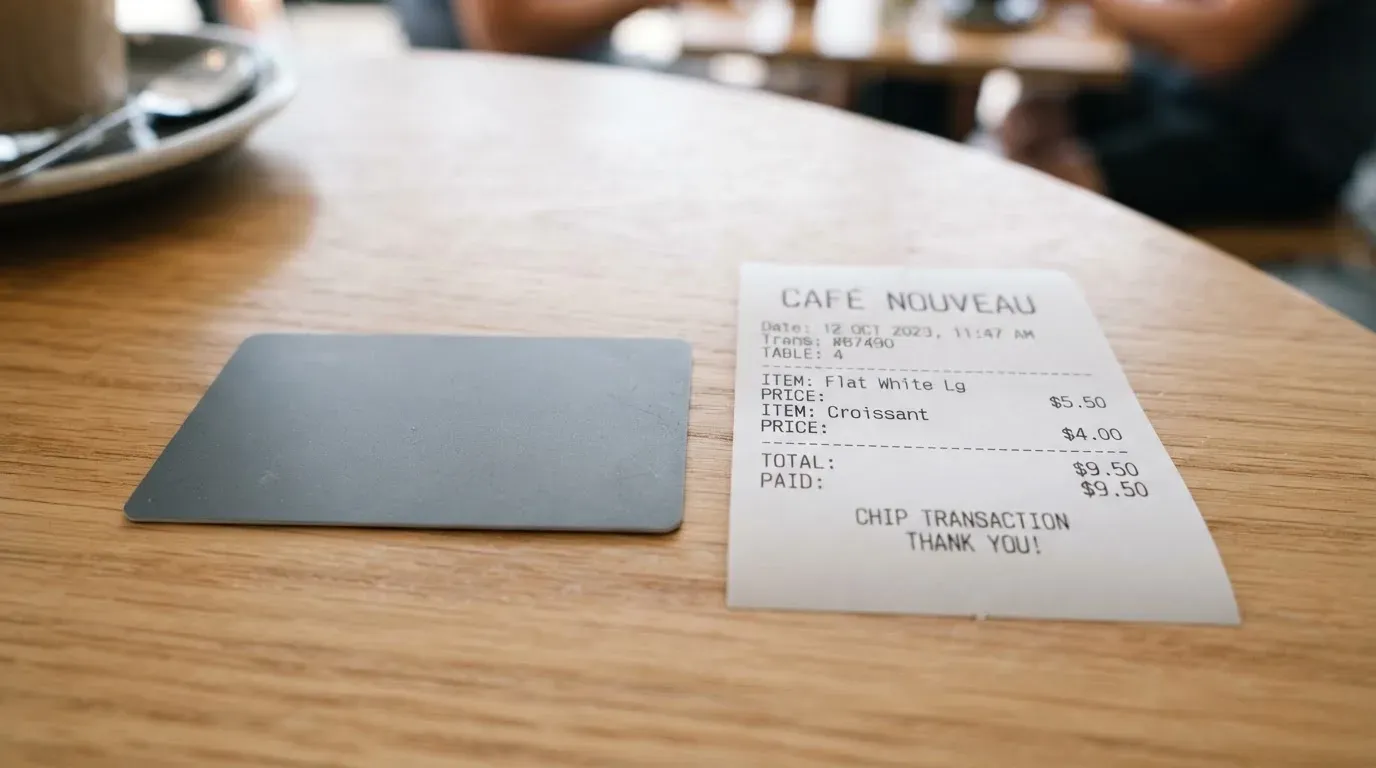
What is documented is the shape of the model. Settlement happens in USDT. The card works online, in-store and at ATMs on the major card networks, with no fee or allowance stated for the ATM. Spending limits are adjustable by you in the app, but the amounts are not published. There is a single product, and partner-branded virtual cards are possible.
| Item | What the card states |
|---|---|
| Issuance fee | Not stated |
| Monthly fee | Not stated |
| Conversion fee | Not stated |
| Foreign-exchange fee | Not stated |
| ATM fee and allowance | Not stated |
| Daily spending limit | Not stated; adjustable by you in the app |
| Monthly spending limit | Not stated; adjustable by you in the app |
| Card currency | Not stated; settlement in USDT |
Now, the everyday payments. A coffee bought in a local currency, a subscription paid online in US dollars, and a withdrawal from a cash machine — these are the three I would put on any card in this category, and here is what applies to each.
- The coffee: you are spending a non-dollar amount, so a conversion happens somewhere between USDT and your local currency. NAKA does not state the FX rate or the fee.
- The subscription: often billed in US dollars on a card that settles in USDT. Same silence on the conversion charge.
- The ATM: the card’s own self-custody page says cards work at ATMs on the major networks, but no fee and no allowance are given, and the app describes a virtual card.
There are costs outside NAKA’s control too. On-chain network fees for your deposit are charged by the blockchain, not by the card provider. And on Ethereum, gas is paid only in ETH — a wallet holding USDT but no ETH cannot send at all.
This is not a reason to walk away on its own. It is a reason to decide with open eyes: if you are moving money regularly and you care about basis points, ask for the fee schedule in writing before you rely on this.
How to Top up
Top up here means adding USDT to the wallet the card spends from, and the mechanism is not a top-up button. NAKA settles via a smart-contract signature at each payment, so there is no pre-loaded balance sitting with the provider — the funds live in your own self-custodial on-chain wallet and stay there until you sign a payment. That is the point of the design, and it also means the card cannot overdraw, because there is nothing to overdraw from.
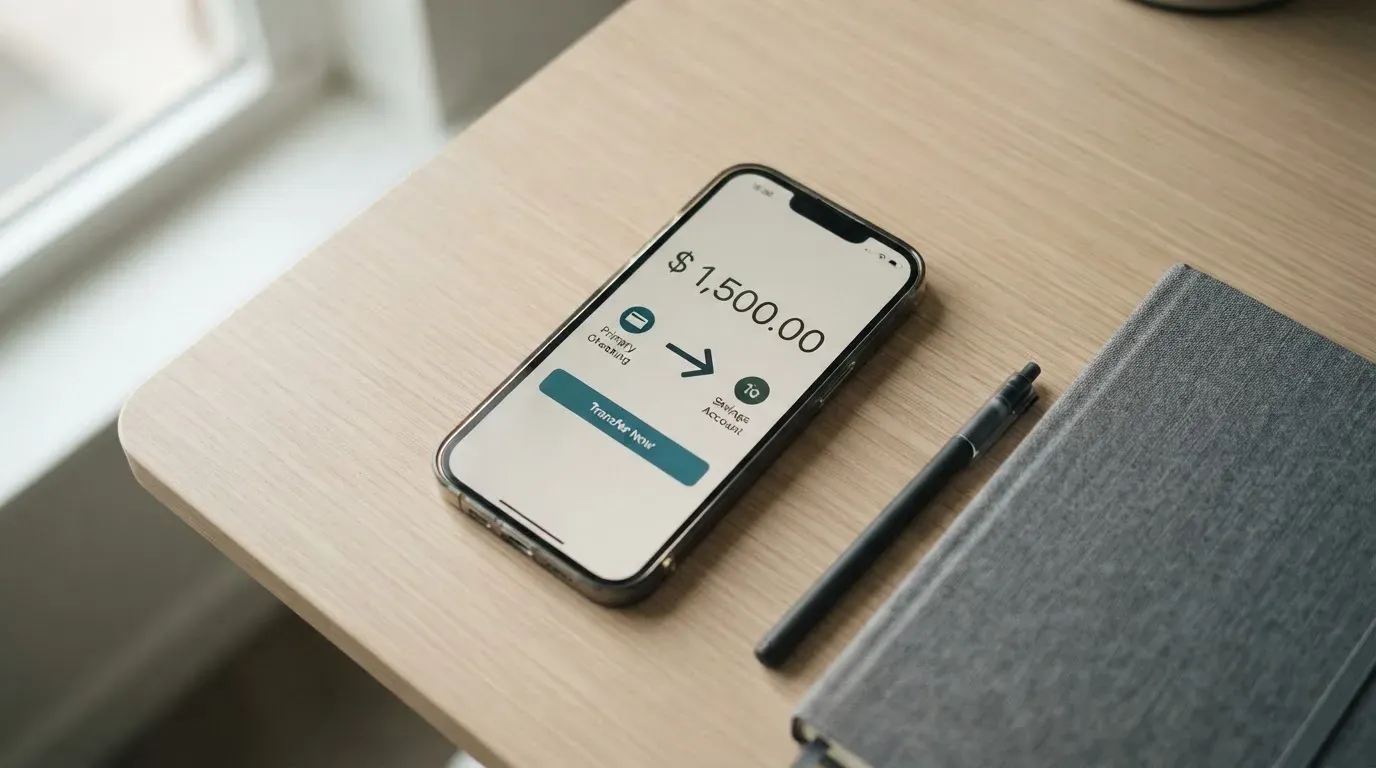
The network matters more here than with most cards. The store listing caption states that only USDT on Avalanche C-Chain is accepted. If your USDT sits on another chain, the card will not see it. This is a hard constraint I would weigh heavily.
Blockchain transfers are irreversible. A deposit sent on a network the provider does not support, or to an address belonging to a different network, can be lost or need manual support recovery with no guarantee of success. Double-check the chain and the address before you sign anything. Withdrawal mechanics are not stated, and funds remain on-chain in your wallet until a payment is signed.
Paying with it every day
The daily experience looks reasonable on paper. The card integrates with Apple Pay and Google Pay, and the store listing mentions Apple Wallet tap-and-go. Apple Pay replaces your card number with a device-specific number stored in the Secure Element, never on Apple servers, and each payment uses a one-time dynamic code — so tokenised mobile wallets are the safer way to use any card of this kind, including this one.
In your own hands, the app lets you freeze or block the card and set spending limits, which are the everyday safeguards worth having. The issuer can also restrict a tokenised number, for example blocking it on magnetic-stripe use.
Two things I could not find. The blocked merchant categories are not stated — worth asking about, since many issuers block gambling (MCC 7995) by policy rather than by law, and the list varies by issuer. And rewards are not stated for the card; a blog post mentions “programmable rewards” only as a partner feature, which is not the same as cashback you can count on. Disputes are not stated either. Terms called “NAKA Spend Card Terms” exist but the public pages do not set out the dispute process.
One practical warning that applies broadly: a declined authorisation can leave a hold on your funds for several days, sometimes up to seven. And address verification, which compares the numeric parts of the billing address a buyer types against issuer records, is mainly offered in the US, Canada and the UK and is generally unavailable for foreign-issued cards — which can cause declines. Some merchants decline prepaid or foreign-issued cards outright, because the six- or eight-digit issuer number at the start of the card tells them what it is and where it came from.
What can go wrong
No official incidents came up in my checks, and a search for reviews of this card found no Trustpilot or Reddit page for it. I want to be careful how you read that: it is not evidence of a clean track record. It is mostly evidence that the card is young and small. The app’s first release was October 9, 2025 by a third-party report, and the launch post is dated October 24, 2025, though its page metadata shows a conflicting October 6, 2026 — first shown publicly in Lugano.
The company is real and named: NAKA GLOBAL, finančne tehnologije, d.o.o., Letališka cesta 33F, 1000 Ljubljana, Slovenia, registration number 8106452000, with related entities NAKA CH SAGL in Switzerland and NAKA SLV, S.A. de C.V. in El Salvador. It holds ISO/IEC 27001:2022, ISO 9001:2015 and ISO 22301:2019. What the pages I read do not name is the card issuer or any licences. For a crypto card that often matters twice over: the card is a payment service regulated separately from the crypto side, so a card like this can depend on two licences. ESMA keeps an interim register of authorised crypto-asset service providers where you can check a provider’s status.
The security design is the strongest thing here. Self-custodial, every single transaction requires a cryptographic signature from your private key, the key never leaves the device, and there is no shared custodial pool. That removes an entire category of risk — the custodian holding your balance and being breached. The history justifies the caution it replaces: custodial platforms have failed badly, with Mt. Gox reporting about US$350 million stolen between 2011 and 2014, Coincheck about US$400 million in 2018, and Ronin Network US$625 million in 2022.
But self-custody is not safety. It transfers responsibility to you. Control of crypto belongs to whoever holds the private key; a seed phrase, typically 12 to 24 words, is an unencrypted form of the key, and anyone who obtains it can restore the wallet and spend the funds. Transfers are typically irreversible, and a stolen key has no built-in recovery — the network cannot freeze or return anything. You also carry the phishing and clipboard-hijacking risk, where malware swaps a copied address. And stablecoins are not censorship-proof: Tether says it disables tokens in wallets on the OFAC sanctions list and has frozen funds tied to illicit activity.
One more category risk to know about, because it has nothing to do with this card specifically: card programmes do get closed. Visa itself does not issue these cards; it licenses issuers and can suspend a programme. Visa terminated its global agreements with FTX in November 2022, and WaveCrest, a Visa issuer that supplied several crypto card brands, was suspended by Visa in Europe in 2018, closing all its Visa programmes. Closures follow a pattern — notice, then spending stops, then users are asked to withdraw remaining balances. And funds held by an e-money institution must be safeguarded, by segregation or insurance, but they are not bank deposits and may not be covered by a deposit guarantee scheme.
What to take instead
Three cards came up repeatedly enough to compare directly. Here is what each one tells you that NAKA does not.
| Card | Score | What it publishes |
|---|---|---|
| MetaMask | 7.1 / 10 | Virtual card free, Metal $199/year, minimal per-transaction fee, no additional MetaMask fees, no foreign-exchange fee |
| KAST | 6.1 / 10 | Membership 0 / $1,000 / $10,000 per year by tier; top-up 0%; USD spend 0%; non-USD fee 0.5%–1.75% |
| TokenPocket | 5.8 / 10 | 1% fee on crypto deposits, partly refundable through rewards; no other additional fees |
| NAKA | 5.1 / 10 | Costs and fees not stated |
MetaMask scores highest here mainly because its costs are published and its reach is explicit: sign-up open in 45 listed countries and territories, with proof of residency required, and ineligible regions limiting sign-ups but not spending. US and UK sign-ups are temporarily closed per its FAQ. It is a Mastercard, virtual first and issued instantly, with a metal option at $199/year and one card per user; the issuer is Monovate and the card provider is Crypto Life. It spends directly from a connected wallet on Linea, Base, Monad and Solana, and cashback is paid in mUSD into the Money Account at 1% on Virtual, with Metal’s headline 3% limited by a footnote to the first $10,000 spent and 1% after that.
KAST publishes the most complete price list of the three, which is why it scores 6.1 despite its steep tiers: Standard at 0 USD, Premium at 1,000 USD a year, Private at 10,000 USD a year, billed annually upfront with no monthly option. Fees run 0% on stablecoin top-up, USD card spend, transaction and Apple/Google Pay, with a non-USD fee of 0.5%–1.75% depending on your residence country, the transaction country and the card programme, plus 0.10 USD on non-USD transactions under 25 USD and 0.50 USD for a declined transaction. Availability is residence-based and shown only at KYC, with citizenship and ID also mattering.
TokenPocket scores 5.8 and offers a Visa debit card for a list of European countries and territories, Mastercard debit for a group including Australia, Canada, Hong Kong, Japan, Taiwan, New Zealand, Singapore, South Korea and the UK, with the Americas planned for Q2 2025. Cards are virtual and run on Arbitrum, balances in EUR24 and USD24. It charges 1% on crypto deposits, to be refunded later through rewards or reduced transaction fees, and states that apart from that it charges no additional fees.
The trade-off across all four is the same shape: where a card publishes its numbers, you can plan around them; where it doesn’t, you are guessing. MetaMask and KAST publish more than NAKA does.
Who I would recommend it to
I would recommend NAKA to someone in this specific situation: you already hold USDT, you keep your own keys and are confident handling them, you are outside the United States, and you want a virtual Visa that spends straight from your on-chain balance with no custodian in the middle. Add to that a willingness to accept that you will not find a published fee schedule or a named issuer on the public pages, and that support will be your route if anything goes wrong.
I would steer you away if any of these apply: you need a physical card; you want to know the exact cost of a transaction before you make it; you are a US citizen; you are not confident signing transactions from your phone; or you want the dispute and chargeback protections that come with a regulated bank relationship. And if your USDT is not on Avalanche C-Chain, look elsewhere — the store listing is explicit that only USDT on that network is accepted.
What NAKA has built is the right architecture with a thin public file. The architecture matters and it works as described. The file is what keeps the score at 5.1 instead of higher — and it is the part most likely to improve first, since none of it requires a product change, only published terms.
Frequently asked questions
What is the NAKA card?
NAKA is a virtual Visa Platinum card that spends USDT held in your own self-custodial wallet on the blockchain. Each payment is settled through a smart-contract signature from your private key, and the key never leaves your device. The card works online, in-store and at ATMs on the major card networks. It is run by NAKA GLOBAL, finančne tehnologije, d.o.o. in Ljubljana, with related entities in Switzerland and El Salvador.
How does the NAKA card work?
There is no pre-loaded balance. Your USDT stays on-chain in your own wallet until you sign a payment, at which point the card settles through a smart-contract signature. Because the funds never sit with a provider, the card cannot overdraw. Spending limits are adjustable by you inside the NAKA Pay+ app, and you can freeze or block the card from the same place.
Is NAKA a bank?
No — NAKA describes itself as a financial technology company, and the public pages I read do not name the card issuer or any banking or e-money licences. That is the single most important gap in this review. The card itself is a payment service, regulated separately from the crypto side, so a card like this often depends on two separate licences.
Who owns NAKA?
The operator is NAKA GLOBAL, finančne tehnologije, d.o.o., at Letališka cesta 33F, 1000 Ljubljana, Slovenia, with registration number 8106452000. Two related entities appear in the paperwork: NAKA CH SAGL in Switzerland and NAKA SLV, S.A. de C.V. in El Salvador. Which entity serves you depends on your jurisdiction and the product suite. The company holds three ISO certificates.
Is NAKA card available in my country?
The product targets Latin America, while the app is listed as worldwide without a country list. The one firm rule is that you must not be a United States citizen — if you are American, you are excluded regardless of where you live. Otherwise eligibility is decided during verification rather than published in advance, so check the terms belonging to the entity that would issue your card.
Can I use the NAKA card in my country?
You can use the virtual card wherever Visa is accepted, which NAKA markets as over 150 million locations, and you can add it to Apple Pay and Google Pay. Two general cautions apply to any foreign-issued or virtual card: some merchants decline them because the issuer number reveals the card type and country, and address verification is generally unavailable for foreign-issued cards, which can cause declines.
Does the NAKA card require KYC?
Yes — the site describes a quick KYC verification after you set up your wallet in NAKA Pay+. No bank account is required. The public pages do not state which documents are needed, whether proof of address is required, or the minimum age, and KYC levels are not stated. You will discover the requirements by going through the check.
How do I top up the NAKA card?
You do not top it up in the usual sense, because your USDT never leaves your wallet. You add USDT to your own self-custodial on-chain wallet, and the card spends from there once you sign. The critical detail is the network: the store listing states that only USDT on Avalanche C-Chain is accepted. Transfers are irreversible, so sending on the wrong chain or to a wrong-chain address can lose the funds.
Is NAKA card safe?
The security design is genuinely strong. Every transaction requires a cryptographic signature from your private key, the key never leaves your device, and there is no shared custodial pool. The trade-off is that responsibility is entirely yours: a seed phrase of 12 to 24 words is an unencrypted key, transfers are irreversible, and phishing or clipboard-hijacking malware can steal funds with no recovery.
Is the NAKA card worth it?
Worth it if you already hold USDT, keep your own keys, live outside the United States, and want a virtual Visa spending straight from your on-chain balance with no custodian in between. Not worth it if you need a physical card, want published fee numbers before committing, or want bank-grade dispute protection. On cost, the card’s public pages state no figures, so decide with that open rather than assuming.
How do I add the NAKA card to Apple Wallet?
The store listing mentions Apple Wallet tap-and-go, and NAKA integrates with Apple Pay and Google Pay. Apple Pay replaces your card number with a device-specific number kept in the Secure Element, never on Apple servers, and each payment uses a one-time code. Using the card through a mobile wallet is the safer option, since the issuer can restrict a tokenised number separately.
Can I withdraw money from NAKA?
Your funds remain on-chain in your own wallet until a payment is signed, and withdrawal mechanics are not stated on the public pages. Since the balance never leaves your control, your own wallet is where any movement of funds happens rather than a NAKA withdrawal desk. Card terms called “NAKA Spend Card Terms” exist, though the dispute process itself is not set out publicly.
Choosing a wallet card – cryptocardadvisor
Content created by the «cryptocardadvisor» team