
Ruvo in plain English — a dollar card for people moving money between Brazil and the US
 Available in US
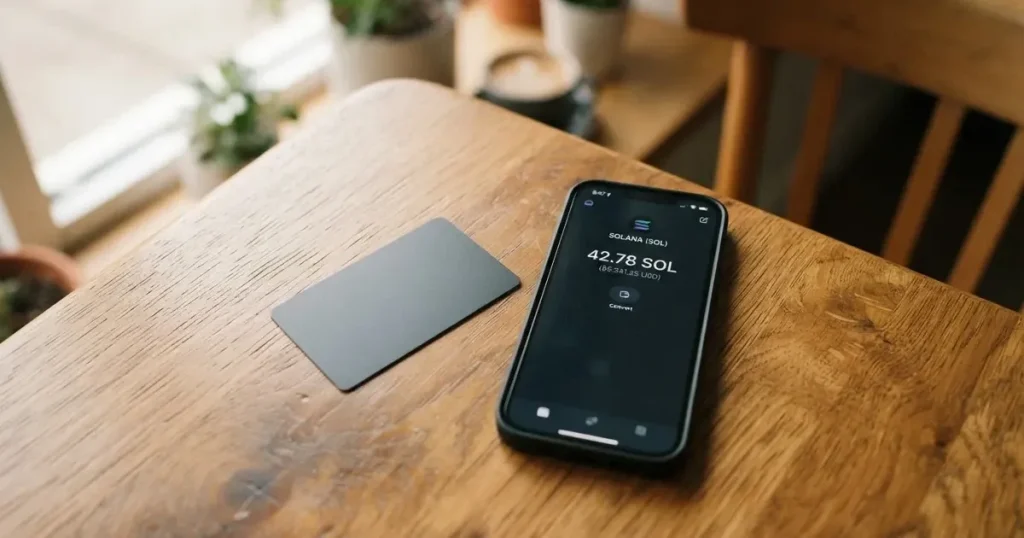
Ruvo is a crypto-linked payment card that turns your balance into dollars you can spend in shops, online or through your phone’s wallet. It is not a bank account in the ordinary sense, and the card’s own terms make that explicit: the company describes itself as “NOT A BANK” and works with regulated partners instead. That single line shapes almost everything else in this review — who can hold it, what happens to your money, and how much you are told up front.
So who is it for? My short answer: Ruvo makes most sense for people who already hold dollars or stablecoins and want a plain US-dollar card to spend them with, especially if you move money between Brazil and the United States. If you want a normal everyday bank card with a branch, a chequebook and a savings account, this is the wrong product and no amount of good marketing will change that. If you are outside the two countries the card highlights, read the eligibility section carefully before you get excited — availability is genuinely narrow.
The overall score I give Ruvo is 6.1 out of 10. That is neither a kiss nor a rejection. It is a card with some genuinely good economics in US dollars, wrapped in an offer that is still quite opaque about who can get it, what the plastics and limits are, and how it behaves when something goes wrong. Read on before you decide.
The conditions described here are current as of October 28, 2026.
The verdict: 6.1 / 10
Let me break the score down by the things that actually decide whether a card works for you, so you can see exactly where the mark comes from and disagree with me if you want.
| Criterion | Mark | Why |
|---|---|---|
| Who can get it | 5 / 10 | Marketed as “accepted worldwide”, but Brazil (Pix) and the US (USD balance) are the highlighted markets; availability “varies by jurisdiction, user type, provider, and product” |
| Cost | 8 / 10 | US-dollar purchases carry no fee; other currencies add 1% foreign transaction fee plus the exchange rate; IOF 0%; Pix example shows 0.5%; issuance fee not disclosed |
| Top-up options | 5 / 10 | Add money in reais (Pix) or dollars, arriving in under a minute; earlier it was USDT from a self-custody wallet and ACH/wire for USD; specific coins and networks not named |
| Reliability and complaints | 6 / 10 | Ruvo Financial Inc., “NOT A BANK”, issuer unnamed; partners in the US and Brazil are licensed; no complaints found; App Store rating 4.9 from 31 ratings |
| Everyday use | 6 / 10 | Virtual card in US dollars with Apple Pay and Google Pay; physical card and ATM situation not disclosed |
That is the whole picture, and the two columns on either side tell the story. Cost is the strong suit — spending in dollars is genuinely clean. Everything around it, from eligibility to top-up mechanics to the missing plastic, is still under-disclosed. For the specific person the card seems built for — a Brazil-US user moving dollars out of a self-custody wallet — that combination is workable. For anyone else, the gaps are hard to ignore.
Will they give you the card?
This is where you need to read carefully, because “accepted worldwide” is a phrase about where the card *works*, not about who can *get* one. Those are two different things and people constantly mix them up.
The card page says the card is “accepted worldwide” and highlights two markets: Brazil, where you fund with Pix, and the United States, where the balance is held in dollars. But the terms are more cautious than the marketing. Availability “varies by jurisdiction, user type, provider, and product”. That is a broad, deliberately open-ended phrase. It means the answer to “can I get a Ruvo card in my country” genuinely depends on where you are, who you are in the eyes of the provider, and which product you are being offered. Ruvo also reserves the right to restrict access by jurisdiction and under sanctions rules.
There is one line in the terms worth reading twice. In declaring your eligibility, you represent that you are not subject to US, UN, EU, UK or Brazilian sanctions. So the card checks not only where you live but also that you are not someone under a sanctions list in any of those regimes. If you have, say, dual citizenship or a history that touches a sanctioned region, that representation matters.
The practical takeaway: the card highlights Brazil and the US for a reason. Those are the corridors it is built around. The door is not obviously open everywhere else, and the terms give the provider wide latitude to decide. Before you plan around a Ruvo card in a third country, the only reliable answer is to ask them directly.
How to get it
If you fall inside the eligibility window above, the actual mechanics are sensible, if not fully spelled out.
The card runs through partners who may require a standard set of identity checks: your legal name, date of birth, address, a government ID, a taxpayer ID and biometric verification. That is the normal KYC set you would expect from a regulated payment provider, and it is required by anti-money-laundering law rather than by Ruvo’s preference. You must be 18 or older. If the checks are not completed satisfactorily, the stated consequence is that your account may face limits, be suspended or be terminated — so treat the documents as mandatory, not optional paperwork.
What you get, according to the page, is a card denominated in US dollars. It is a virtual card, managed in the app: you can view its details, freeze it, set a PIN, order a replacement, adjust limits, and add it to Apple Wallet. One thing the page does not clearly state is the card network it runs on — I could not confirm that from official material. There is a third-party report, unofficial and not confirmed by Ruvo, that it is a Visa Platinum card for dollar spending; take that as a hint, not a fact.
Two honest gaps to keep in mind: the exact signup steps are not stated on the public pages, and neither is what happens physically — the page shows only the digital card and wallet setup, so assume for now this is a virtual-first product. If you need a plastic card in the post, that is a question to ask before you commit.
Fees: what it really costs to spend
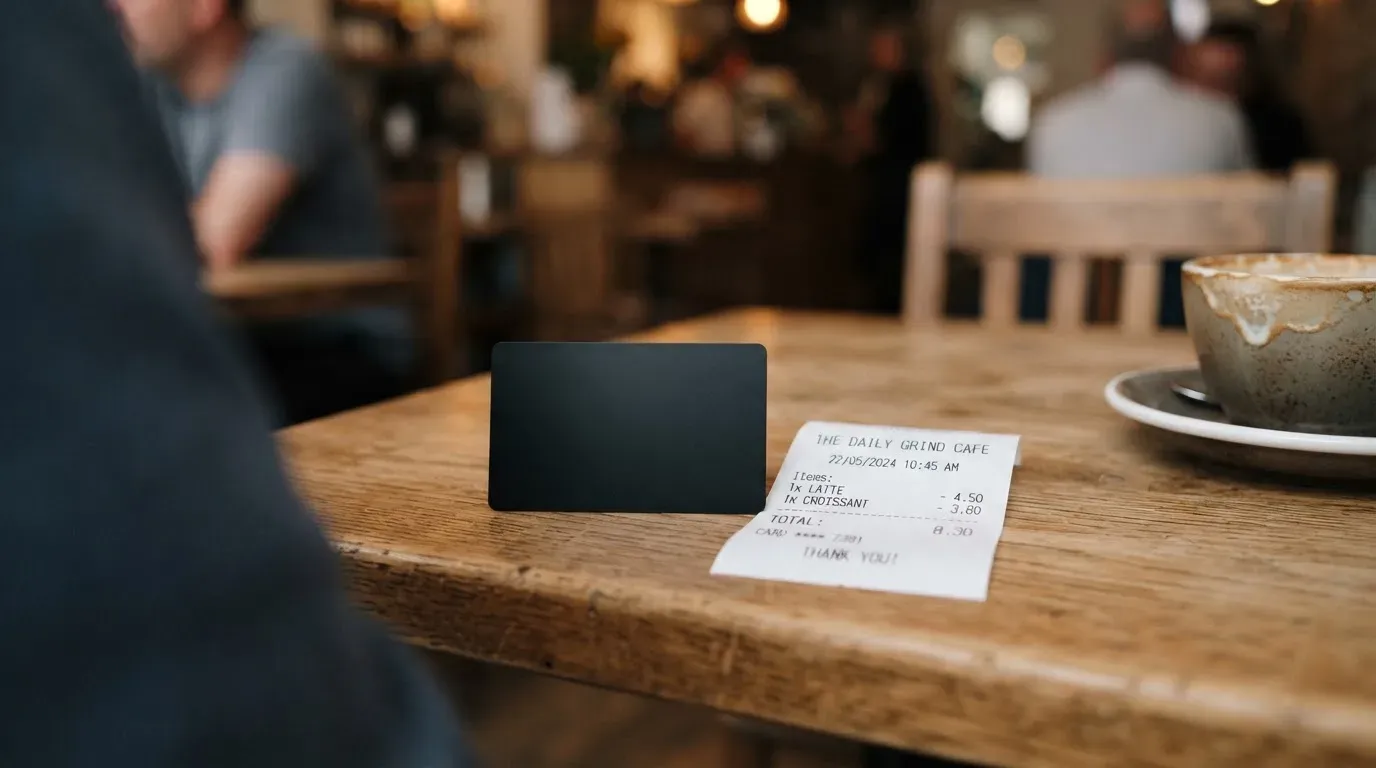
Cost is where Ruvo scores best, and it is worth understanding why before you decide it is good for you. The short version: paying in US dollars is clean, and paying in anything else is not free.
| Fee or limit | What Ruvo publishes |
|---|---|
| Issuance fee | Not stated (no issuance figure published) |
| Monthly fee | Not stated (no monthly figure published) |
| USD purchases | No fee |
| Non-USD purchases | 1% foreign transaction fee, plus the applicable exchange rate |
| IOF | 0% |
| Example Pix conversion | R$1,000 converts to about 196.41 USDC at 5.0915 BRL per USDC, “after a 0.5% fee” |
| ATM withdrawal | Not stated |
| Spending cap | Limited to your own Ruvo balance; you choose how much is available on the card |
| Tiers | Not stated (a single card appears on the page) |
Two everyday examples, so the table is not abstract:
- A coffee in a dollar-denominated online store. You pay in US dollars and there is no fee. This is the case Ruvo is genuinely good at.
- Anything priced in reais while your balance sits in dollars. You eat the 1% foreign transaction fee on top of whatever exchange rate applies on the day. The card is not hiding this, but it is not free either, and in a high-inflation currency like the real the rate itself can move a lot in a short window.
The Pix example is instructive because it shows a fee hiding in plain sight: converting R$1,000 yields about 196.41 USDC at 5.0915 BRL per USDC, and the card states this is “after a 0.5% fee”. So the headline “0% IOF” is true, but the conversion still costs you half a percent. Read the small line, not just the large one.
There is also an unofficial breakdown, from a third-party source and not confirmed by the card, suggesting individuals pay 0.9% converting USDT to dollars or reais, 1.8% converting dollars to reais, with cheaper rates for businesses (0.2% and 0.4%) and crypto-to-crypto conversion free. I would treat these figures as a starting point for questions, not as the terms you will be held to.
Two more unknowns to keep in your head as you weigh this: the ATM situation is not disclosed, and the card is not divided into tiers — it is one card on the page, so there is no “premium” version to upgrade into if you spend heavily.
How to Top up the card
Topping up is where Ruvo is quickest and also where the picture is least complete. Here is what you actually know.
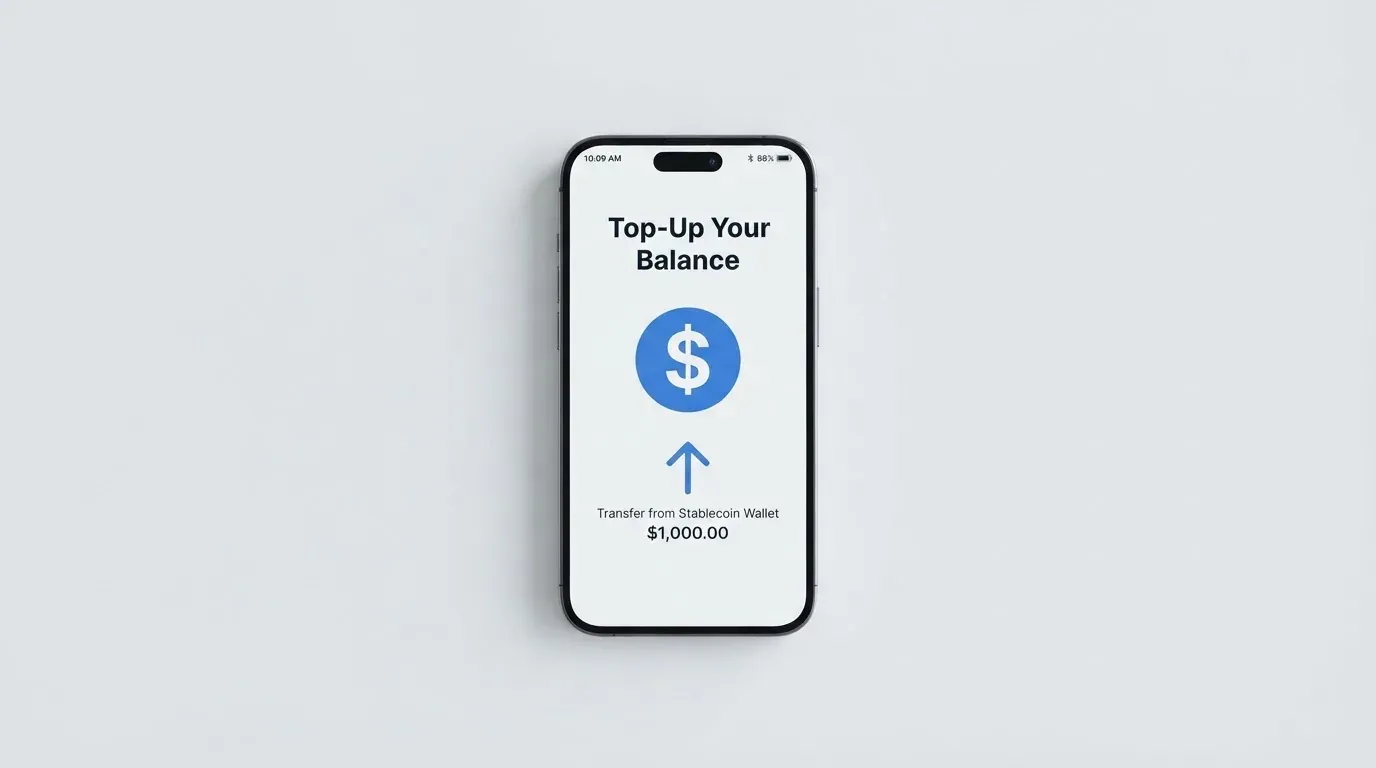
You add money in Brazilian reais, through Pix, or in US dollars. The card says the funds arrive in under a minute. An earlier version of the product was funded with USDT from a self-custodial wallet, or with ACH/wire transfers for the dollar side. Today the emphasis is on the two conventional rails. The IOF is 0%, and the Pix conversion example I showed above still carries that 0.5% fee.
Two things the card does not tell you. First, the specific coins and networks: if you are coming from crypto, the page does not list which tokens or which chains it accepts, so you cannot map your existing holdings onto it from the official page alone. Second, the minimum top-up is not stated. If you plan to move small amounts, that floor is worth confirming.
There is one fee to keep separate in your head when topping up from a wallet: blockchain network fees. The terms are explicit that these fluctuate and are charged by the blockchain on your deposit, not by Ruvo, so they are outside anything the card controls. The minimum you send should comfortably clear both the card’s requirement and the network’s cost, or the deposit can arrive short.
One more piece of the funding picture, since people ask: withdrawing back out. The card’s own withdrawal terms are not stated for the card itself. What the terms do cover is closing your account — you do it by emailing [email protected] or [email protected], it is processed within a reasonable time, and your self-custodial wallet is unaffected by the closure.
Paying with it every day
Day-to-day, Ruvo behaves like a straightforward virtual dollar card with modern wallet support.
Apple Pay and Google Pay are both supported, for contactless payments in shops and for online purchases. This is the part of the offer that most directly affects daily convenience — tap your phone and the balance is spent. The blocked merchant categories, if any, are not stated, so I cannot tell you whether things like gambling or certain online services are restricted.
The app is listed in the iOS App Store as “Ruvo – Global Dollar Account”, version 2.1.9, with a rating of 4.9 from 31 ratings as I read it. The Google Play listing is on their site but I did not read its rating. A 4.9 sounds excellent, but read it with the sample size in mind — 31 ratings is a small pool, and a young app can post high scores before it meets the friction that a larger one would. It is a good sign, not a verdict.
Rewards and cashback are not mentioned anywhere on the card’s material. If a cashback scheme is the reason you are considering Ruvo, I found nothing to support that expectation.
Spending is capped by your own balance, and you choose in the app how much of that balance is available on the card. This is the safer model: the card cannot overdraw because it only ever draws on money you have already loaded. It also means a large balance is not a credit line.
What can go wrong
Nothing I found suggests Ruvo has a problem with complaints. That is genuinely reassuring, and it is worth saying so plainly before the caveats. I found no official incidents and no user complaints — there is not even a Trustpilot page for the service, and no recurring complaint themes surfaced. Again, absence of complaints is weaker evidence than a long clean track record, but for a young product it is a fair point in Ruvo’s favour.
The risks that do exist are structural rather than reputational.
It is not a bank, and your money is not bank-insured. Ruvo describes itself as “NOT A BANK”. It works with regulated partners in the US and Brazil, but the actual card issuer is not named on the material I read, and Ruvo’s own licences are not listed — the partners hold the payment and virtual-asset licences. The company is Ruvo Financial Inc., headquartered in Brazil with CEO Alec Howard, and Delaware law governs. If you are in Brazil, note that Ruvo does not custody funds or perform regulated activities there; the regulated work sits with its partners. The practical upshot: if the partner holding your balance fails, you are making a claim against a payment institution, not a bank deposit.
No FDIC or SIPC protection. Unlike a bank balance, funds here are not covered by US deposit or securities insurance. This is normal for cards of this type, but it is a real difference from a normal checking account and it should inform how much you keep loaded at once.
Your crypto side is self-custody, which cuts both ways. For a self-custodial wallet, Ruvo does not hold your private keys and does not custody your fiat. That is a genuine strength — a provider cannot lose your keys. But the flip side is that a lost seed phrase is unrecoverable, and blockchain transfers are essentially irreversible. Funds sent to the wrong network or a wrong address can be gone. This is the trade-off the self-custody model always carries.
Disputes and reversals. Card and fiat transactions can be returned, reversed or charged back, and the terms are clear that you remain liable. For disputes on the fiat rails, the provider’s own rules apply. The intended path is informal resolution first, after which Ruvo has up to 30 days to respond. Card-specific dispute instructions are not shown in the help FAQ, so in a real dispute you would be learning the process as you go.
Support has limits you should know. There is a help centre, a WhatsApp channel and the [email protected] email, in Portuguese and English. Opening hours are not stated, so do not assume 24/7.
Identity checks can bite. Because KYC is central to how the card works, a failed or incomplete check leads to limits, suspension or termination. Nothing sneaky, but if you travel or your documents lapse, access can change.
The unknown issuer. Visa and Mastercard do not issue crypto cards themselves — they license issuers and can suspend a programme. The fact that Ruvo does not name its issuer on the page you can read means the single party most relevant to your spending privileges is the one you know least about.
Company background, for context. Ruvo raised a seed round of about US$4.6 million led by 1confirmation, per industry coverage from 2026, and YC lists the company under its former name, Cacao. A funded, named-team startup is a better signal than an anonymous project, but it is still early.
What to take instead
Ruvo is not the only card trying to be your dollar-spending card, and the alternatives differ in ways that matter depending on where you live and what you hold. All three below scored higher or comparable on our overall scale, and each solves a slightly different problem.
MetaMask Card — 7.1 / 10, the strongest of the three. Open to sign-ups in 45 listed countries and territories (Andorra, Argentina, Brazil, Canada, Mexico, Germany, France, Spain, Uruguay among them); other regions join a waitlist. US and UK sign-ups are temporarily closed. Proof of residency is required, though the company notes ineligible regions limit sign-ups, not spending. It is a Mastercard — virtual card instantly, with a metal version you can pre-order after approval, one card per user, issued by Monovate. The virtual card is free with no annual or maintenance fee; metal is $199 a year. Fees are described only as “minimal” with no added MetaMask fees and no foreign transaction fee, though the exact amount is not stated on the pages I read. It spends directly from your connected self-custody wallet across Linea, Base, Monad and Solana, holding tokens like mUSD, wETH, EURe, GBPe, USDC and USDT. Cashback is the standout: 1% on virtual, 3% on metal (footnote-capped at the first $10,000 spent) paid in mUSD, plus a dining-app bonus. If you want spending straight from self-custody with real cashback and a clear fee story, this is the one to look at first.
KAST — 6.1 / 10, tied with Ruvo but built differently. Availability is residence-based and checked at KYC; the country list is not published, only referenced, and eligibility turns on both residence and which ID you hold — a Restricted Location ID can disqualify you even in a supported country, though dual citizens with a supported ID may pass. VPN does not bypass this, and an account can be created in an unsupported country while KYC stays locked. It offers virtual and physical cards, up to 10 per user, across Visa tiers (Standard Platinum, and Infinite metal or gold for Premium and Private) in themes like Pengu, Solana and Bitcoin. The fee structure is the most fully published of the group: stablecoin top-up 0%, US-dollar spend 0%, transaction fee 0%, Apple/Google Pay 0%, and a non-USD FX fee of 0.5%–1.75% depending on your country and card programme, with small fixed fees on tiny non-USD transactions and declines. Membership is tiered (free, $1,000/year, $10,000/year). You fund with USDT, USDC, PYUSD or RLUSD across several chains and spend from your own balance, and it pays cashback of 1.5% to 3% depending on tier, capped by monthly spend. More cards, clearer fees, more hoops.
TokenPocket — 5.8 / 10, the most region-limited. A Visa debit for a list of European countries and territories (Germany, France, Spain, Switzerland among them) and a Mastercard debit for Australia, Canada, Hong Kong, Japan, Taiwan, New Zealand, Singapore, South Korea and the UK, with the Americas “planned for Q2 2025”. The cards are virtual, running on Arbitrum, with balances in EUR24 and USD24. There is an NFT creation fee partly covered by TokenPocket where you pay “a small portion”, and “apart from these, TP Card does not charge any additional fees”. A 1% fee applies when depositing cryptocurrency into the card, refunded later through rewards or reduced transaction fees. No cashback is stated, though that 1% is promised back in some form. Narrowest reach of the three, but the simplest fee story.
The pattern across all four cards is the same: the costs that sting are never the card network’s — they are the currency conversion, the on-chain network fee, and the odds of a declined foreign-issued card at the till. Pick the one whose funding rail matches the money you actually hold.
Who I would recommend it to
So, who should actually get a Ruvo card, and who should not bother? Let me be direct.
I would recommend Ruvo if you are moving money between Brazil and the United States, you already hold dollars or stablecoins, and what you want is a clean US-dollar card to spend that balance with — ideally with Apple Pay or Google Pay. You are comfortable with a provider that is explicitly not a bank, you understand your funds sit with a regulated partner rather than an insured deposit, and you are the kind of person who reads the terms rather than skims them. The fast Pix and dollar top-ups, the sub-minute arrival, and the fee-free dollar spending are real advantages in exactly that corridor.
I would steer you elsewhere if any of these sound like you. If you are in a country other than Brazil or the US and cannot confirm eligibility, the door may simply not be open. If you need a physical card in the post, that is not what this page describes. If you want cashback or rewards, I found no scheme to speak of. If you want to be able to read the issuance fee, the monthly fee, or the ATM terms and see actual numbers, this card has not published them. If a bank-insured balance matters to you, look at a bank, because this is explicitly not one. And if you spend heavily outside the dollar zone, the 1% foreign transaction fee plus the exchange rate adds up.
My honest overall read: this is a competent, well-priced card for a specific corridor, wrapped in more opacity than a serious competitor would use. If that corridor is yours, it is worth a look. If you are still deciding which crypto card to get, spend your time on the alternatives — and above all, check the fee and eligibility numbers against your own country and holdings before you commit to anything.
Frequently asked questions
What is the Ruvo card?
Ruvo is a crypto-linked payment card that lets you spend a balance held in US dollars as an ordinary payment card, in shops, online and through Apple Pay or Google Pay. It is offered by Ruvo Financial Inc., a Brazil-based company that describes itself as “NOT A BANK” and works with regulated partners in the US and Brazil. The balance is funded with dollars or Brazilian reais through Pix, and earlier versions were funded with USDT from a self-custodial wallet.
Is Ruvo a bank?
No. Ruvo explicitly describes itself as “NOT A BANK”. It is a financial technology company that partners with regulated institutions to deliver the card and hold balances, rather than a bank holding your deposit itself. That matters practically: your balance is not a bank deposit, it is not FDIC- or SIPC-insured, and the actual card issuer is not named on Ruvo’s public pages. Delaware law governs, and the company is headquartered in Brazil with CEO Alec Howard.
Who can get a Ruvo card?
The card highlights Brazil, where you fund with Pix, and the United States, where the balance is in dollars. But availability “varies by jurisdiction, user type, provider, and product”, so it is not open to everyone everywhere despite the “accepted worldwide” marketing. You must be 18 or older, pass identity checks, and represent that you are not subject to US, UN, EU, UK or Brazilian sanctions. If you are outside the Brazil-US corridor, ask them directly before planning around it.
How do I get a Ruvo card?
The public pages do not spell out the exact signup steps, but the process is a standard one: create an account, complete the identity checks, and set up your virtual card and wallet. The partners may require your legal name, date of birth, address, government ID, taxpayer ID and biometric verification. The card is virtual and managed in the app, where you can view details, freeze it, set a PIN, order a replacement and adjust limits. Only the digital card and wallet setup are shown; a physical card is not described.
What does it cost to use the Ruvo card?
Spending in US dollars carries no fee, which is the card’s strongest point. A purchase in another currency adds a 1% foreign transaction fee plus the applicable exchange rate. IOF is 0%. The Pix example shows R$1,000 converting to about 196.41 USDC at 5.0915 BRL per USDC “after a 0.5% fee”. Neither the issuance fee nor the monthly fee is published, and ATM terms are not stated, so the true all-in cost depends on how and where you spend.
How do I top up the Ruvo card?
You add money in Brazilian reais through Pix, or in US dollars, and the funds arrive in under a minute. Earlier versions were funded with USDT from a self-custodial wallet, or via ACH/wire transfer for the dollar side. The specific coins and networks are not listed on the card page, and the minimum top-up is not stated, so check both before sending. Blockchain network fees are charged by the network itself and are separate from anything Ruvo controls, so send enough to cover them.
Is the Ruvo card safe?
There is no evidence of a problem: I found no official incidents and no user complaints, and there is not even a Trustpilot page for the service. Structurally, the card is not a bank and funds are not deposit-insured, so you are trusting a regulated partner rather than a bank. Your crypto stays in a self-custodial wallet, which protects your keys but makes any lost seed phrase unrecoverable and blockchain transfers irreversible. You can freeze the card and set a PIN in the app; two-factor authentication is not stated.
Does the Ruvo card work with Apple Pay and Google Pay?
Yes. Both Apple Pay and Google Pay are supported, for contactless payments in shops and for online purchases. You add the virtual card to your phone’s wallet through the app, where you can also freeze the card, set a PIN, manage limits and request a replacement. Whether any merchant categories are blocked is not stated, so I cannot confirm what, if anything, the card refuses to pay for.
Is the Ruvo card free?
Not entirely clear. The card’s material publishes no issuance fee and no monthly fee, which suggests no routine charge, but neither figure is actually stated, so I cannot confirm the card is free to hold. Spending in US dollars is free, while other currencies cost 1% plus the exchange rate and Pix conversion carries a 0.5% fee. An unofficial third-party breakdown suggests further conversion fees, but those are not confirmed by the card provider.
What should I use instead of the Ruvo card?
It depends on where you are and what you hold. MetaMask Card (7.1/10) is the strongest all-rounder — Mastercard, free virtual tier, real cashback, spending from your own wallet across several chains. KAST (6.1/10) publishes its fees most fully and offers virtual and physical Visa cards with tiered cashback, but has a strict residence-and-ID eligibility check. TokenPocket (5.8/10) has the simplest fee story but the narrowest regional reach. Compare each against your own country, currency and holdings before choosing.
Choosing a wallet card – cryptocardadvisor
Content created by the «cryptocardadvisor» team