
MothCard promises online payments from a USDT balance. Here is what I could and could not confirm before you rely on it.
 Available in US
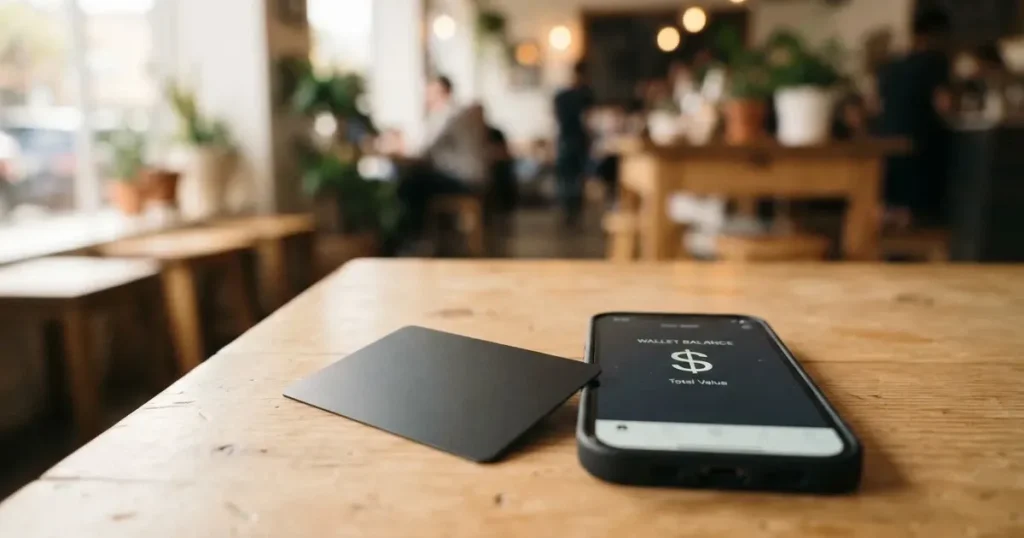
MothCard is a virtual payment card you fund with crypto and spend online, and on paper it looks like a simple answer for anyone who cannot get an ordinary bank card. I went through the card’s own terms and app listings carefully, and my honest summary is this: the product idea is sound and the basics are there, but the card publishes almost none of the numbers you need to plan around. Fees, limits, networks and the identity of the issuing bank are all pushed into the app. That is not a disqualifying flaw, but it is the fact that should shape your decision.
The conditions described below are current as of October 28, 2026.
Verdict: 5.4 out of 10, and the gap is disclosure rather than concept
MothCard scores 5.4 out of 10 in my reading. The card is aimed at people who want online payments from a virtual card funded in USDT — in practice, someone who holds stablecoins and needs a card number that behaves at checkout. If that is you, and you are comfortable checking fees inside the app before you commit money, there is a workable card here. If you want a published fee schedule, a named European issuer, or a card you can reason about from public terms alone, this is not the card for you.
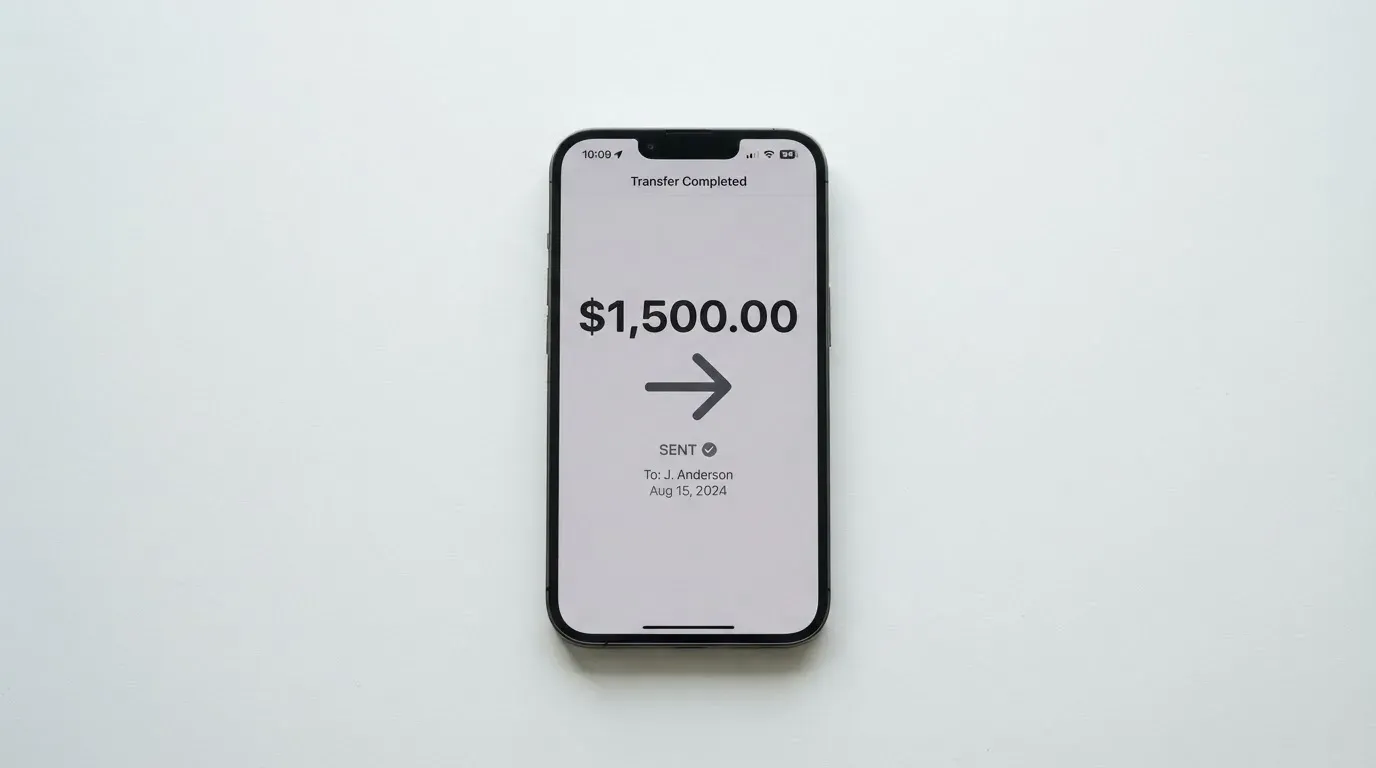
The reason the score sits in the middle rather than higher is fairly simple. MothCard does the basic job a crypto card is supposed to do — it issues a Visa or Mastercard virtual card, converts your balance, and lets you pay online — but almost every quantity a shopper would compare cards on is unpublished. The strengths and weaknesses below are what drove the number.
| Criterion | Mark | Why |
|---|---|---|
| Who can get it | 6 / 10 | “Accepted worldwide,” with some country or region restrictions; issuing region varies by card and is shown in the app; company based in Hong Kong |
| Cost | 5 / 10 | Issuing and maintaining the card are both fee-bearing; amounts appear only in the app; transaction fees not disclosed |
| Top-up options | 5 / 10 | Wallet top-up in USDT per the App Store listing; other coins and networks are shown in the app, not published |
| Reliability and complaints | 5 / 10 | Hong Kong Yunmo Technology Co., Limited; issuing bank and licences not named; App Store rating 5.0 from 1 rating; no complaints found |
| Everyday use | 6 / 10 | Virtual card plus Apple Pay and Google Pay are available; ATM support not disclosed |
| Total | 5.4 / 10 | A workable idea carried by a card that keeps its numbers to itself |
Two things stood out as genuinely in MothCard’s favour. First, the card is genuinely virtual-first, which sidesteps delivery problems entirely — you get a card number to put in a checkout form and into a mobile wallet, and that is the use case most people in this category actually have. Second, the company behind it is at least named: Hong Kong Yunmo Technology Co., Limited, based in Tsim Sha Tsui, Hong Kong. Many cards in this category are anonymous fronts; this one at least tells you who is operating the app.
Against that, the omissions are the story. There are fees for issuing and maintaining the card, and the amounts are not published anywhere except the app. Per-transaction, daily and monthly spending limits exist but the amounts are app-only. You top the wallet up in USDT, but the other supported coins and networks live only in the app. The issuing bank and any licences are not named. And I could not find a single Trustpilot or Reddit page describing real experience, which cuts both ways — no complaints is good, but no reviews at all means no independent account of how the card behaves when something goes wrong.
So: a card I would consider if my priority is getting a spendable virtual number from crypto today, and one I would hesitate to load heavily if I care about knowing exactly what I am paying or who is standing behind it.
Who will they give you the card
MothCard will give the card to applicants whose country is not among its restrictions — and that is where the useful detail ends. The starting data on the company’s own Terms of Service (section 3.1) is Hong Kong, and the site says the card is “Accepted worldwide” while also warning that “some countries or regions may have restrictions.” Which region issues your specific card varies, and you only see it in the app.
That is the honest shape of the answer. “Accepted worldwide” describes where the card can be *spent*, not who is eligible to hold it, and those are different questions that often get conflated. Acceptance is about merchants recognising the card network; eligibility is about the issuer’s onboarding and sanctions policy. You could be in a country where the card works fine at a checkout and still fail verification, or the reverse.
There is a second, more practical filter that applies to everyone: a one-time identity check for anti-money-laundering and sanctions screening. The card says “Just one valid personal ID,” with document types shown in-app per country, and a face scan in some cases. Proof of address is not stated on the public pages. The App Store listing carries an 18+ age rating, though the card does not spell out an age requirement of its own. Whether there are different verification tiers is not stated either.
If you are weighing this card, the country question is not something you can answer from a review — it depends on where you live, and the app is the only place that will confirm. What I can tell you is that MothCard does not publish an exclusion list, so if your country is unusual for crypto services, the only reliable answer is to attempt verification and see.
How to get it
Getting MothCard is a short, app-first sequence: sign in, choose a card and verify your identity, top up the wallet, then move funds onto the card. There is no delivery step at all, because the product is virtual — the card exists as a number in your Apple Pay or Google Pay, or as details you type into a checkout form.
On the card itself: it is described as a crypto virtual card for global payments, issued on Visa or Mastercard, with settlement in USD. Which of the two networks you get, and which issuing region it carries, is decided per card and shown in the app — several cards are selectable, with differing issuing regions. There is no physical card to wait for, so the usual delivery caveats simply do not apply.
The identity step is the one part of the process with any friction. It is a single check, framed as compliance rather than a full banking onboarding, and the document list varies by country. If you have been turned away by banks or have been living outside one country for a while, this is the step where your experience will show — not because MothCard asks for more, but because every regulated provider in this space runs the same sanctions and anti-money-laundering screening, and nationality is screened separately from residence, precisely because issuer risk policy is often applied to citizenship and country of birth as well as address.
There is also no activation ritual to describe. Once identity is confirmed and the wallet holds funds, the card is usable. That simplicity is a genuine convenience; the cost is that several of the settings you would want to check before first use — your limits, which wallets are supported, the exact issuing region — exist only inside the app.
Fees and what a payment actually costs you
This is the weakest part of the card’s public face, and the part where you are most likely to be caught out. MothCard states plainly that there are fees for issuing and maintaining the card, but the amounts are shown only in the app and are not published. Sending money carries a service fee and a minimum, both visible on the in-app confirmation page. ATM use is not stated, and the card is described around online payments rather than cash withdrawals. Per-transaction, daily and monthly spending limits apply, and the app is where the exact amounts live. Whether there are different fee tiers across the selectable cards is not stated.
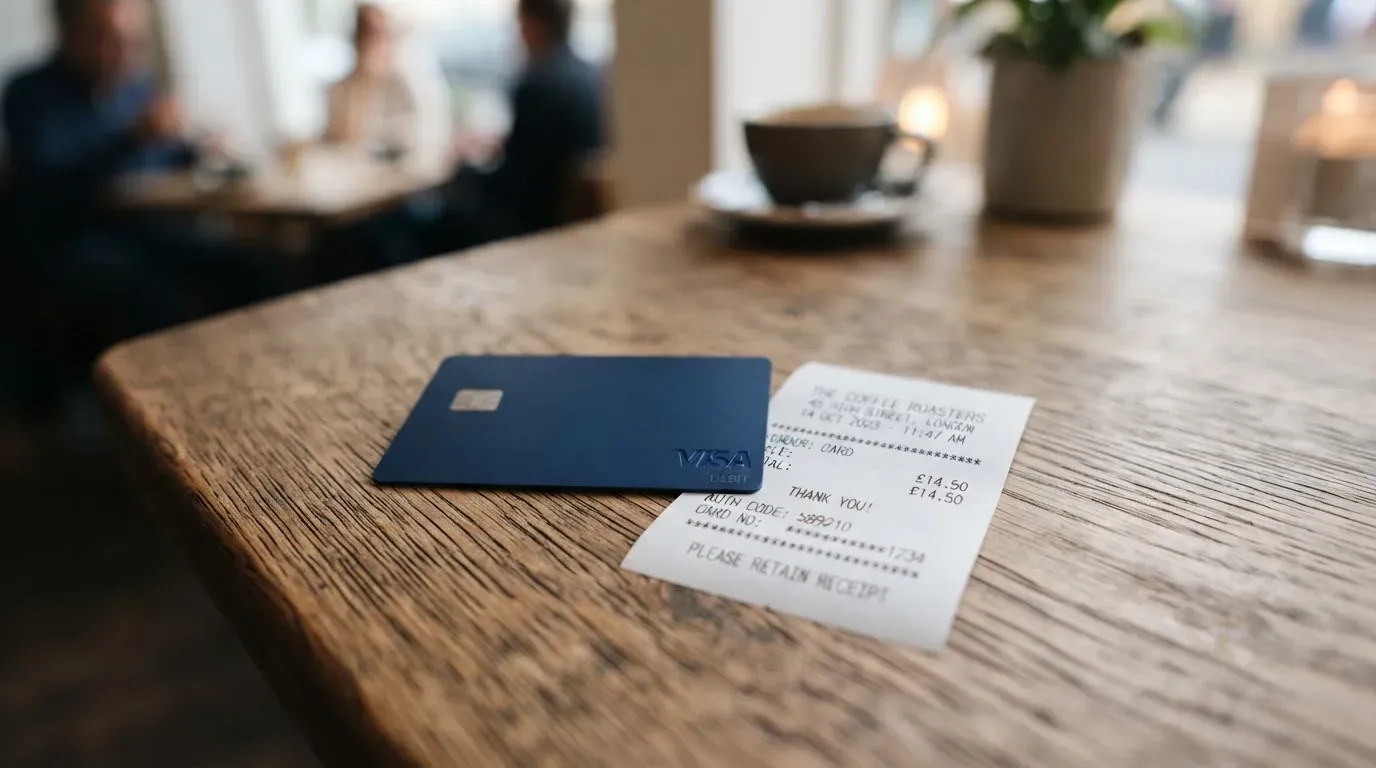
Everything that would let you calculate “this purchase will cost me X” is therefore behind the app login. That is not unusual for this category, but it means you should treat the app as the fee schedule and check it before you load money, not after.
| Fee or limit | What the card says |
|---|---|
| Card issuance | A fee exists; amount shown in the app only, not published |
| Monthly fee | A fee exists for maintaining the card; amount shown in the app only |
| Sending money | Service fee and minimum, shown on the in-app confirmation page |
| Conversion | Not stated |
| Foreign exchange (FX) | Not stated (settlement currency is USD) |
| ATM withdrawal | Not stated (card is described for online payments) |
| Per-transaction limit | Applies; exact amount in the app, not published |
| Daily limit | Applies; exact amount in the app, not published |
| Monthly limit | Applies; exact amount in the app, not published |
| Fee tiers across cards | Not stated; several cards selectable with differing issuing regions |
Three everyday payments, and what you can actually say about the fees on each:
- A monthly subscription in USD, the clearest case for the card. The payment is in the settlement currency, so no conversion or FX layer is involved on the card’s side. What you pay is your card’s share of the merchant price, plus whatever maintenance or per-transaction fee the app lists.
- A purchase priced in euros or pounds, messier because settlement is USD. The card’s pages do not state a conversion fee or an FX markup, so I cannot tell you whether the exchange rate is the market rate, a rate with a spread, or something in between. This is the payment to model carefully in-app before you rely on it.
- A cash withdrawal, the case with the least information. ATM use is not stated at all, and the card is framed around online spending. I would not assume you can take money out, or at what cost.
On-chain network fees are a separate matter and not MothCard’s to charge: when you send crypto to fund the card, the blockchain itself levies gas or bandwidth for that transfer. Any deposit fee or minimum MothCard applies on top is not stated publicly.
One structural detail that shapes expectations: settlement is USD, and the wallet balance and the card balance are shown separately in the app. So your crypto and your spendable card money are two distinct pots, and a purchase draws on the second one.
How to top it up
Topping up MothCard is a two-step move: you top up the wallet in the app, then move funds from the wallet onto the card. The App Store listing describes topping up the wallet with USDT, and for other coins and networks the instruction is simply to use “the network shown in the App” — a list that is not published. Whether there is a deposit fee or a minimum deposit is not stated.
That network instruction is the detail to take seriously rather than skim past. Crypto transfers are irreversible, so a deposit sent on a network the provider does not support, or sent to an address belonging to a different network, can be lost outright or require a manual support recovery with no guarantee of success. This is why the app shows you the network for your specific card and why you should copy the address from the app rather than from memory or an old message. The same caution applies to the coins themselves: USDT, for instance, has been issued on several networks including Ethereum, Tron, Solana, Polygon and Avalanche, so “USDT” alone does not tell you which one you must pick.
Getting money back off the card is less clearly covered. The card’s pages do not explicitly set out withdrawal terms. What the FAQ does advise is practical: move any remaining balance off a card before cancelling it, and move funds out of both the card and the wallet before deleting the account. Fees on withdrawal are not stated.
Two further funding notes from the wider category that bear on this card. First, a stablecoin is a token that aims to hold a stable value against a fiat currency, but “despite the name, stablecoins are not necessarily stable” — USDC temporarily lost its peg in March 2023, so a stablecoin-denominated balance is not the same as dollars held at a bank. Second, because these are blockchain transfers, funding the card is a crypto transaction as well as a card transaction, and the two risk profiles sit side by side.
Paying with it every day
Day-to-day use is where MothCard’s design is at its most sensible. Apple Pay and Google Pay are both supported, with which wallets work for your specific card shown in the app. Because the card is virtual and settled in USD, it fits naturally into the one payment flow most people actually use: a phone wallet at a contactless terminal or inside an app checkout.
The app is available on iOS (iOS 15.6 and later), on Google Play, and as a direct Android APK for people outside the store ecosystem. The App Store rating is 5.0 from a single rating, read on 21 October 2026; I was not able to obtain a Google Play rating. The version history on the App Store shows a first release of 1.0.0 on 3 February (the year is not shown in the listing) and a recent version 2.1.0, so the app is being maintained and has moved well past its first build.
For tracking money, the app history lists your payments, fees and merchant refunds — useful, and it is the closest thing to a record you will get. Two things you will not find on the public pages: which merchant categories are blocked (some issuers block gambling, for example, at policy level rather than by law, and the list varies by issuer), and whether there is any cashback or rewards scheme — the FAQ does not mention one, so I would not plan around earning anything back.
There are also category-level realities worth knowing even when a card works perfectly. A merchant category code is a four-digit number classifying what a business sells, assigned under the ISO 18245 standard when it starts accepting cards, and some issuers restrict whole categories. Address verification, which compares the numeric parts of a billing address with the issuer’s records, is mainly offered in the US, Canada and the UK and is generally unavailable for foreign-issued cards, which can cause declines at checkout. And a card issued in one country can simply look “foreign” to a shop in another, because the first six or eight digits of the card number identify the institution and country of issue and merchants can look it up. None of that is MothCard’s fault, but it shapes what “works everywhere” means in practice.
What can go wrong
The honest risk picture here is a mixture of one reassuring point and several open questions.
The reassuring point: I found no official incidents involving MothCard. A search for reviews across the major complaint and discussion sites returned nothing at all about the card — no Trustpilot page, no Reddit thread. In a young category that is worth something. It is also worth very little, because it may simply mean almost nobody has written publicly about the card yet, which is what a 5.0 rating from a single App Store rater suggests.
The open questions are where the risk actually sits:
- Who stands behind the card. The operating company is named — Hong Kong Yunmo Technology Co., Limited in Tsim Sha Tsui, Hong Kong — but the issuing bank or institution is not named, and no licences are named. In this category that matters more than it looks. Visa and Mastercard do not issue crypto cards to consumers themselves; they license issuers, and those issuers are typically regulated banks or e-money institutions. When the issuer is unnamed, you cannot tell which regulatory regime protects your balance, or whether the funds are safeguarded as client money at all.
- What a licence would mean even if named. A card is a payment service regulated separately from the crypto side, so a crypto card often depends on two licences: one for custody and exchange under crypto rules, one for issuing payment instruments. In the EU, an electronic money institution must safeguard customer funds in dedicated accounts or insure them, and such funds are not the same as bank deposits and may not sit under a deposit guarantee scheme. If MothCard operates under a comparable framework, the balance is protected asset, not a deposit; if it sits under a lighter regime, the protection is thinner still.
- Custody. How MothCard holds the crypto is not stated. With a custodial wallet the provider holds the credentials, so you trust them completely — and the category has a record of how that goes: Mt. Gox (about US$350 million reported stolen between 2011 and 2014), Coincheck (about US$400 million in 2018), Ronin Network (US$625 million in 2022). With a self-custody-linked card your funds stay in your own wallet until payment, but then key loss, phishing and clipboard-hijacking malware become your problem alone. Which side of this line MothCard sits on, the pages do not say.
- Programme shutdown. Card programmes do close. Visa terminated its global agreements with FTX on 13 November 2022 and the FTX US debit card was wound down by its issuer; WaveCrest, a Visa issuer that supplied crypto card brands, was suspended by Visa in Europe in 2018, closing all its Visa programmes. When that happens the pattern is usually a notice period, then loading and spending stop, then you are asked to withdraw what is left. MothCard’s own FAQ anticipates this for your own account closure, which is a small sign of realism — but it is not the same as knowing what happens if the programme itself ends.
- Payments that fail or stick. A declined authorisation can leave a hold on your funds for several days. And the dispute position is not stated on the card’s pages: how a chargeback works, what evidence you need, whether the usual US protections (Regulation E for debit, Regulation Z for credit, with prepaid coverage varying and not something to assume) apply here — I could not confirm any of it from MothCard’s own material.
- Counterparty risk on the stablecoin itself. If you hold USDT, Tether says it disables tokens in wallets on the OFAC sanctions list and has frozen funds tied to illicit activity. Stablecoin balances are not censorship-proof and not beyond a provider’s reach.
Two smaller things. Support is reachable through the app, a Telegram bot and [email protected], but working hours are not stated. The site offers a 12-language menu, and the App Store listing is in English, Indonesian, Portuguese, Russian, Simplified Chinese, Spanish and Traditional Chinese.
And one final risk that is easy to overlook because it feels like housekeeping rather than risk: before you delete the account, move your money out. The card’s FAQ says it directly — move funds out of the card and the wallet before closing, and off a card before you cancel it. If you leave a balance behind on a closed account, you have a support problem, not a withdrawal.
Alternatives worth comparing
If the thing holding you back is MothCard’s quiet disclosure — unnamed issuer, unpublished fees, app-only networks — then a card that publishes those things even partially is worth a look. Here is how the three alternatives I examined compare, and how each scores.
| Card | Score | Card type | Fees | Funding | Who it serves |
|---|---|---|---|---|---|
| Cardex | 5.6 / 10 | Debit crypto card on VERVE, VISA, Mastercard and UnionPay; virtual and physical | Not stated; real-time crypto-to-fiat conversion with an “AI-Powered Conversion Rate”; no percentage published | USDT, USDC and BTC wallets; networks not stated | “One crypto card, 200+ countries”; no exclusion list published; App Store listing is Naira-focused |
| CardFlow | 4.9 / 10 | Virtual USD Mastercard, created in about 3 minutes | “Creating a virtual card is completely free” (site FAQ); monthly fee not stated | Bitcoin, USDT, ETH or Naira bank transfer; networks not stated | Aimed at Nigeria (“Nigeria’s smartest fintech card platform”) and “Nigerians and global users” |
| HyperCard | 4.7 / 10 | Prepaid “HyperCard”; network not stated on the App Store page; balance in USD or EUR | Not stated; App Store page lists no fees | Deposit crypto such as USDT, BTC or ETH in the app, converted to USD or EUR on the card; networks not stated | No country list on official pages; App Store says it works in “more than 176 countries” (acceptance, not eligibility) |
A few honest observations on that table.
Cardex scores marginally higher and is the only one of the four that names its card networks across the board, including UnionPay, which matters in a number of markets where Visa and Mastercard acceptance is uneven. Its distinguishing feature is the conversion engine: the site describes scanning global exchange rates at the moment of payment and picking the best one. That is a real design difference if you spend across currencies. The catch is that the conversion fee percentage is not published, so the mechanism is described more clearly than its cost.
CardFlow is the one with the clearest headline cost — creating a virtual card is free — and a virtual USD Mastercard in 3 minutes, which is a genuinely fast onboarding. But it is explicitly built for a Nigerian market, with Naira bank transfer as a funding rail, so it makes sense mainly if that is where you are.
HyperCard is the vaguest of the three. Its App Store page does not name the network, publishes no fees at all, and does not state networks for the crypto deposits — but its USD or EUR balance is a small practical advantage if you would rather not hold everything in dollars. Its “more than 176 countries” line is an acceptance claim, not an eligibility list, and it is worth keeping that distinction in mind when you read the same words on a card you are considering.
The pattern across all four is the same one that shapes MothCard’s score: every card in this category hides at least one of the three numbers that matter — fees, limits, or networks. MothCard hides all three. That does not make it worse than its peers; it makes it the one where you will have to do the most work in-app before committing.
Who I would recommend it to
I would recommend MothCard to someone who has USDT, needs a virtual card number for online payments today, is comfortable with Hong Kong as the stated home of the operator, and is willing to open the app and read the actual fee and limit numbers before loading funds. Under those conditions it is a sensible tool: virtual-first, Visa or Mastercard, Apple Pay and Google Pay, USD settlement, and a company you can name.
I would recommend it with more caution — or not at all — to anyone whose main question is “who is regulated behind this?” You cannot answer that from the public pages, because the issuing institution and any licences are not named. If the answer matters to you, ask the company directly before you load money, and treat the answer you get as the deciding factor.
I would steer away from it for three specific profiles. If you need cash from ATMs, the card does not disclose ATM support and is built around online payments. If you plan to hold a large balance on it, the custodial model is unstated and the issuing institution is unnamed, so you are taking counterparty risk you cannot price. And if you need to predict the true cost of a foreign-currency purchase, the conversion and FX terms are not published, so any figure I gave you would be a guess.
And if you are in a hurry to spend this week: read the fee and limit screens in the app first, top up with a small amount, make one test payment, and only then decide whether the card earns a larger balance. That sequence costs you a few minutes and answers most of what this review could not.
Frequently asked questions
What is MothCard?
MothCard is a virtual crypto payment card: a card number, issued on Visa or Mastercard, that you fund with crypto and spend online, with settlement in USD. It is operated by Hong Kong Yunmo Technology Co., Limited in Tsim Sha Tsui, Hong Kong. The card is virtual-first, so there is no physical card to wait for — you use the number in a checkout or add it to Apple Pay or Google Pay.
How does MothCard work in practice?
You top up the app wallet with crypto, then move funds from the wallet onto the card, and the card balance is what pays for purchases. Wallet balance and card balance are shown separately. The App Store listing describes top-ups in USDT; for other coins the app tells you which network to use. Because settlement is USD, a purchase in another currency involves a conversion step whose cost the card does not publish.
Is MothCard a bank?
Not on the evidence its public pages give. The operating company is named — Hong Kong Yunmo Technology Co., Limited — but the issuing bank or institution is not named, and no licences are named either. In this category the issuer is normally a regulated bank or e-money institution that holds the card programme, while the app operator is often just the front end, so the missing issuer is a real gap rather than a detail.
Who owns MothCard?
The company behind it is Hong Kong Yunmo Technology Co., Limited, with an address in Tsim Sha Tsui, Hong Kong. Ownership beyond that legal entity is not stated on the pages I could read. The card also does not name a separate issuer, so there is no second company to identify from the public material.
Does MothCard require KYC, and what do I need?
Yes — a one-time identity check is required for anti-money-laundering and sanctions screening. The card says “Just one valid personal ID,” with document types shown in the app per country, and a face scan in some cases. Proof of address is not stated on the public pages, and the App Store listing carries an 18+ age rating. Whether different verification tiers exist is not stated.
Is MothCard card free, and what are the fees?
No, it is not free. MothCard states that there are fees both for issuing a card and for maintaining one, but the amounts are shown only in the app and are not published. Sending money carries a service fee and a minimum, visible on the in-app confirmation page. Conversion fees, foreign-exchange treatment, ATM fees and the exact per-transaction, daily and monthly limits are all not stated publicly.
How do I top up the card, and which network do I use?
You top up the wallet in the app first, then move funds onto the card. The App Store listing describes USDT top-ups; for other coins the instruction is to use “the network shown in the App,” and that list is not published. Take the network from the app for your specific card — transfers are irreversible, and sending on an unsupported network or to another network’s address can lose the funds or require manual recovery with no guarantee.
Is MothCard safe to use?
There is no published incident I could find, and searches for reviews and complaints returned nothing at all about the card — which is reassuring but also means there is no independent account of how it behaves. What the pages do not tell you is just as important: the issuing bank, any licences, and whether your crypto is held custodially. Support is in-app, via Telegram and at [email protected], with no stated hours.
Can I add MothCard to Apple Wallet or Google Pay?
Yes, both Apple Pay and Google Pay are supported, and the app tells you which wallets work for your particular card. Because the card is virtual and virtual numbers are tokenised by the wallet, you add it directly rather than scanning a physical card. The issuer can still restrict a tokenised number for certain channels, and blocked merchant categories are not stated on the card’s pages.
How do I withdraw or close a MothCard account?
Withdrawal terms are not explicitly set out on the card’s pages, and no fees are stated. What the FAQ does say is practical: move any remaining balance off a card before cancelling it, and move funds out of both the card and the wallet before deleting the account. Leaving a balance on a closed account turns a simple withdrawal into a support problem, so clear both balances first.
Choosing a virtual card – cryptocardadvisor
Content created by the «cryptocardadvisor» team