
A fast, anonymous crypto card with no named issuer — read this before you fund it
 Available in US

If you have ever tried to get an ordinary bank card and given up — no fixed address, no local documents, a country the big issuers do not serve — then a card like this is not a hobby. It is a tool, and the only question is whether this particular one will still be standing when you need it. I went through the terms, the card types, the fee schedule and the public complaints so that you can decide that without putting money in first.
My short answer is uncomfortable. The card does what it says on the surface: virtual Visa and Mastercard, an Apple Pay Mastercard, a metal card for cash machines, funding straight from a crypto wallet, and no identity documents for standard limits. That is genuinely convenient. But the company behind it does not name a legal entity, a jurisdiction, a licence or an issuing bank, and the people who have used it longest report funds disappearing and accounts closed. That combination is not a rounding error in my score; it is most of it.
The conditions described below are current as of October 28, 2026.
Verdict: 5.5 out of 10, and the score is not evenly spread
IZIPAY scores 5.5 out of 10. Read the individual marks rather than the total, because the total hides the shape: top-up options are excellent, everyday use is strong, cost sits in the middle, access is generous on paper, and reliability is close to zero. A card can be pleasant to use every day and still be the wrong thing to depend on.
| Criterion | Mark | Why, in short |
|---|---|---|
| Who can get it | 6 / 10 | Site says the whole world with no eligibility list; a third-party catalogue says the US, UK and EU are prohibited |
| Cost | 5 / 10 | Virtual Visa and Virtual Mastercard 49.99 USD, Apple Pay Mastercard 59.99 USD, Metal 459.99 USD; monthly fee 0 USD, top-up 3 %; unofficially FX is free and the ATM fee is 1 % |
| Top-up options | 9 / 10 | USDT, BTC, ETH, SOL, BNB and also USDC; networks TRC20, ERC20, BEP20, Solana |
| Reliability and complaints | 1 / 10 | Operator not disclosed, no legal entity, licence or issuer named; Trustpilot 4.1 out of 59 reviews about lost funds and deleted accounts, March to July 2026, and support blocking people on Telegram; unofficially the domain was registered on 8 January 2025 |
| Everyday use | 8 / 10 | Virtual Visa, Virtual Mastercard, an Apple Pay Mastercard with Apple Pay and Google Pay, and a Metal card for cash machines; the plain virtual Mastercard has no mobile wallets |
| Total | 5.5 / 10 | A good card surface over an unaccountable operator |
Who this suits: someone who already understands that crypto transfers are irreversible, who can afford to lose the amount they load, and who values not handing over identity documents more than they value consumer-protection rights. In practice that is an experienced user who can accept high risk for an anonymous card, and who treats the balance as spending money rather than savings.
Who it does not suit: anyone whose income depends on this card being there next month; anyone with money to protect rather than to spend; anyone in the US, UK or EU who has read a third-party source saying the card is prohibited for them; and anyone who wants to file a complaint against a named company in a named court. That last point is not a small one. It is the difference between a lost balance and a recoverable one.
Will they give you the card
On its own site, IZIPAY says the card works anywhere Mastercard and Visa are accepted, and it publishes no eligibility list at all. Read that carefully: it is a statement about where the card is accepted, not a promise about who can hold one. Those are different things, and conflating them is the single most common misreading of pages like this.
A third-party catalogue states the card is “explicitly prohibited for users in the US, UK, and EU”. I could not find that restriction on IZIPAY’s own public pages, so treat it as unofficial and unconfirmed by the card — but treat it seriously anyway. If you are in one of those three regions, that is a signal to check directly with the operator before you commit anything, not a detail to shrug at.
Beyond geography, the access criteria are thin in a way that is either a feature or a warning depending on why you want the card. There is no stated list of documents, no stated minimum balance, and no stated tiers of account at all — the four card types are the only variants that exist. Nothing on the public pages describes what happens if your country changes, if your device moves, or if you want to close the account and withdraw. I would treat every one of those as unknown rather than easy.
So the honest answer to “will they give me the card” is: almost certainly, quickly, and without questions — which is precisely why you should slow down before you send anything.
How to get it
The advertised flow is short. You pick a card type, you pay the card price in crypto, and the card is ready in under two minutes after blockchain confirmation. That “under two minutes” is worth pausing on: it measures from the moment the blockchain confirms, not from the moment you click. The waiting is on the network, and a congested network is a slow network for reasons that have nothing to do with the operator.
There is no application form in the traditional sense. The card markets itself as “No KYC, No ID, Anonymous”, and the FAQ says that for standard usage limits you do not upload any document — only an email is needed. No document means no identity check, and no identity check means no name attached to the card in any record you control.
The four card types, with their one-time prices as stated by the card:
- Virtual Visa — 49.99 USD
- Virtual Mastercard — 49.99 USD (online only, no Apple Pay or Google Pay)
- Apple Pay Mastercard — 59.99 USD
- Physical Metal Card — 459.99 USD
The balance can be held in USD, EUR or GBP, which is the one genuinely useful thing here for anyone who does not want to pay a conversion on every purchase.
Physical cards ship globally in seven to fourteen business days. The card does not state the shipping cost, and it does not state the cost of a replacement, so I cannot tell you what a lost metal card will cost you. Nor does it state what level of verification applies above the standard limits — “no KYC” is clearly attached to standard usage, and the public pages are silent about everything above that.
If you want to know how to apply, the honest summary is that you buy a card type. That simplicity is the product, and it is also why the details people normally rely on — a named issuer, a support SLA, a documented replacement policy — are missing.
Fees: what it really costs
The headline numbers are the price of the card and a 3 % top-up fee, and the absence of a monthly fee is real: 0 USD per month. The card also says there is “no hidden spread padding” on crypto top-ups, which is a specific and checkable claim about not quietly marking up the exchange rate.
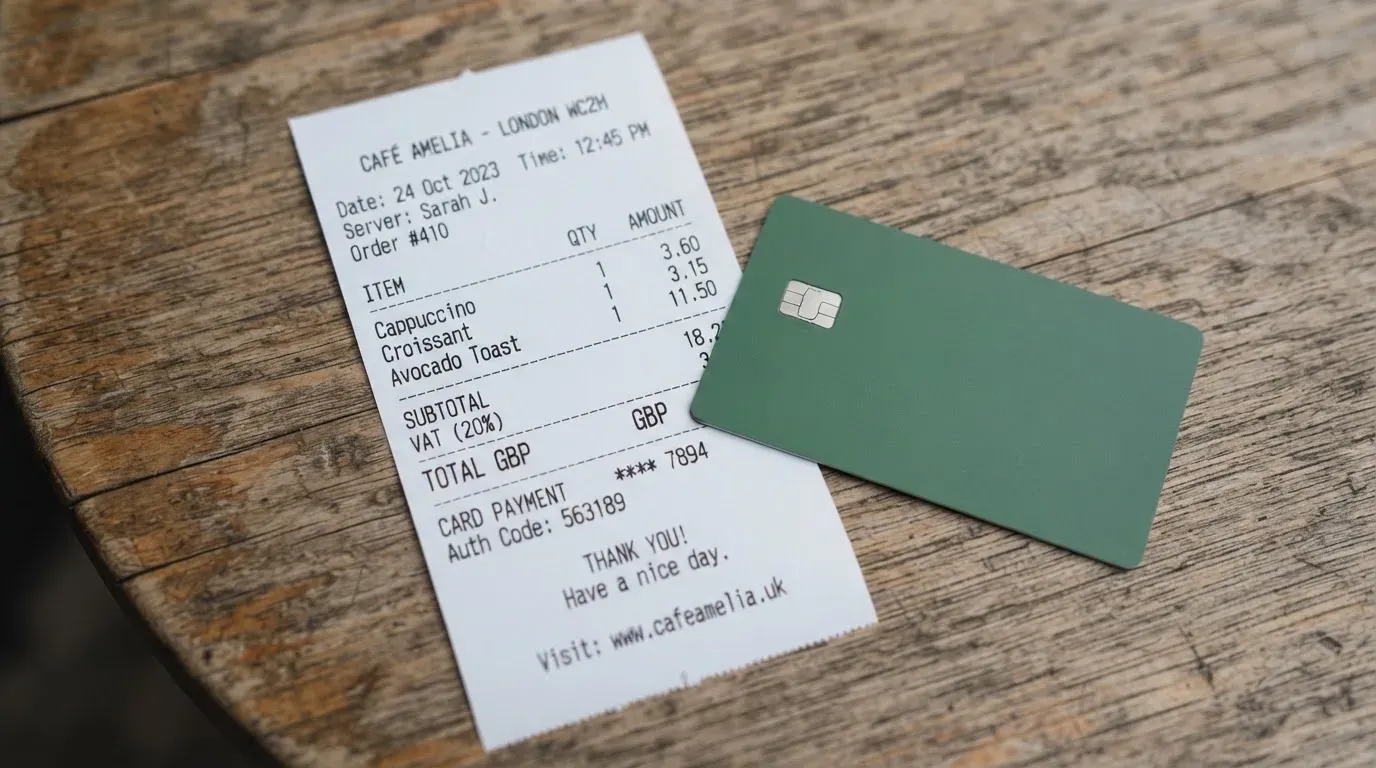
Below is everything the card and the third-party catalogue put on the table. Where the card’s own pages are silent, I have said so rather than guessing.
| Fee or limit | Value as stated |
|---|---|
| Virtual Visa, one-time | 49.99 USD |
| Virtual Mastercard, one-time | 49.99 USD |
| Apple Pay Mastercard, one-time | 59.99 USD |
| Physical Metal Card, one-time | 459.99 USD |
| Monthly fee | 0 USD |
| Top-up fee | Flat 3 % |
| Currency conversion (FX) fee | Not stated by the card; a third-party catalogue says free |
| Decline fee | Not stated by the card; a third-party catalogue says free |
| ATM fee | Not stated by the card; a third-party catalogue says 1 % on the physical card |
| ATM allowance | Not stated officially; a third-party catalogue says unlimited |
| Deposit limits | Listed as “Zero” |
| Daily spend limit | Not stated officially; a third-party catalogue says 50,000 USD |
| Monthly spend limit | Not stated officially; a third-party catalogue says 200,000 USD |
| Minimum top-up | Not stated |
| Fiat top-up | Not stated |
| Who pays the network fee | Not stated |
| Shipping cost | Not stated |
| Replacement cost | Not stated |
| Withdrawals | Not stated |
Three everyday payments, and what applies to each:
A coffee costing about 5 USD. You load 100 USD of crypto, the 3 % top-up fee takes 3 USD, and 97 USD of balance sits behind the card. Paying 5 USD spends 5 USD of balance. No conversion fee is listed officially, so on the card’s own account the only cost is the top-up you already paid. If the third-party claim that FX is free is right, that is the whole cost of the coffee.
A 300 USD online subscription. Same structure — the balance is spent down by 300 USD. But watch for the things that bite prepaid cards specifically. A declined authorisation can leave a hold on your funds that stays for several days, typically up to seven. And an address check, which compares the numeric parts of the billing address you type against issuer records, is mainly offered in the US, Canada and the UK and is generally unavailable for foreign-issued cards — which is exactly what this card is. A decline from that is easy to misread as “the card is broken” when it is the merchant’s system meeting an unfamiliar issuer country.
A 200 USD cash withdrawal on the metal card. Here you are outside the card’s comfort zone in every sense. The card states that the Metal Card works for ATM withdrawals worldwide but does not state the fee or the allowance; a third-party catalogue says the fee is 1 % and withdrawals are unlimited. Nobody has yet told me which of those is true on a live account, and “unlimited” is the sort of word that tends to be revised. Also worth knowing: some merchants and cash machines decline prepaid or foreign-issued cards because the issuer country shows up in the lookup, and a card issued in one country can look “foreign” to a shop in another.
One more cost that never appears on a fee page, because it is charged by the blockchain rather than the card: the on-chain network fee for your deposit. On Ethereum that gas must be paid in ETH, so a wallet holding USDT and nothing else cannot send at all. On Tron, fees are paid through bandwidth and energy, often by burning TRX. If you pick the wrong network or the wrong coin for the gas, the money simply does not move — and blockchain transfers are irreversible, so a deposit sent to an address of a network the provider does not support can be lost, or need manual support recovery with no guarantee.
Top up: how the money gets in
This is the strongest part of the card, and it deserves to be said plainly before the caveats. The deposit selector lists USDT, BTC, ETH, SOL and BNB; the FAQ also lists USDC, and an earlier check also showed TON. The networks are TRC20, ERC20, BEP20 and Solana.
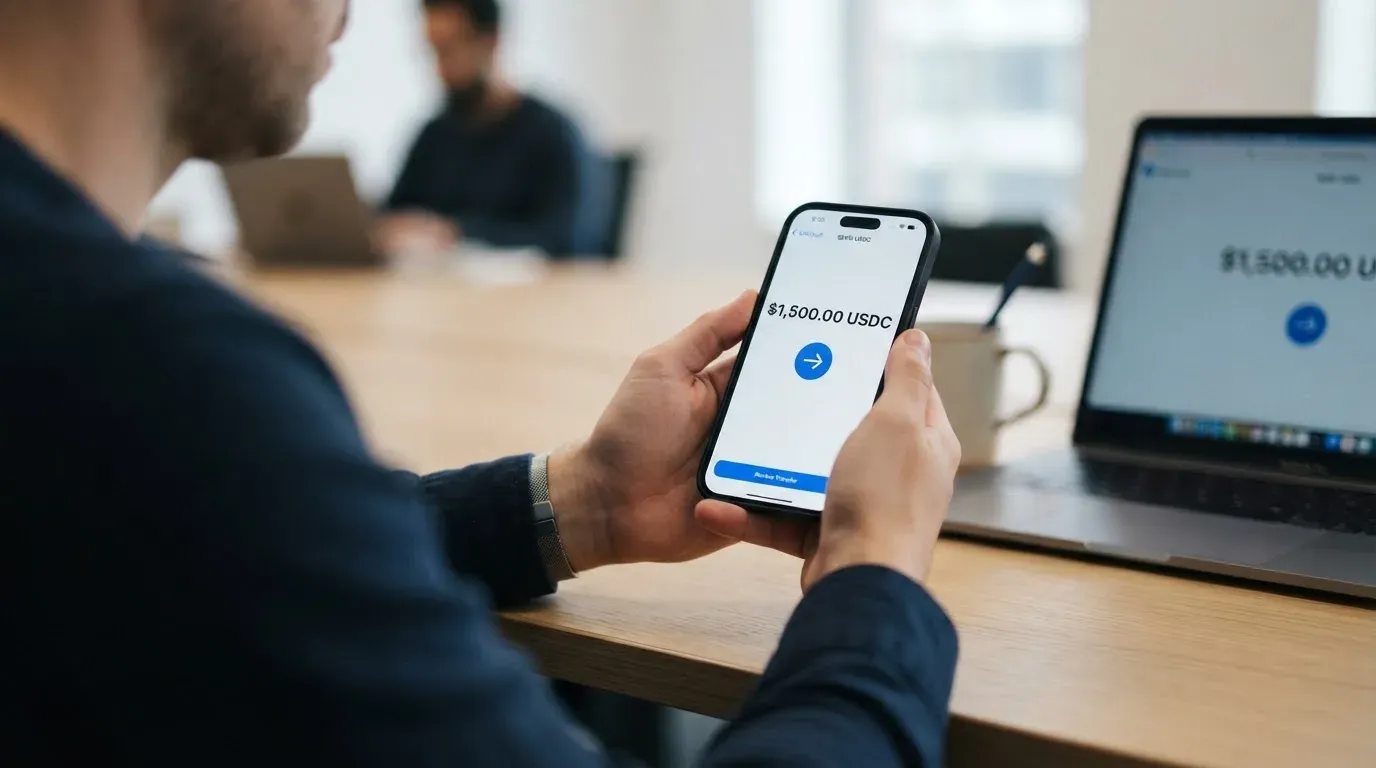
That is a wide table by any standard in this category, and it is the reason the top-up mark is 9 out of 10 rather than 6. If you already hold several assets across several chains, you are not going to be forced into one coin to spend money.
The mechanics are simple: you choose an asset, you choose a network, you send, and the card converts what arrives into a balance in USD, EUR or GBP. The cost is the flat 3 % on top-ups, which the card pairs with its claim of no hidden spread padding. What is not stated is the minimum top-up, whether a fiat top-up route exists at all, and who pays the network fee for the transfer — you or the operator.
Two things about stablecoins deserve attention, because “stable” is doing more work in this sentence than it usually does. A stablecoin aims to hold a stable value against a fiat currency, and despite the name it is not necessarily stable: TerraUSD collapsed in May 2022 and USDC temporarily lost its peg in March 2023 during the US banking crisis. Tether’s USDT and Circle’s USDC are the two that matter most — the BIS put about 90 % of stablecoin market capitalisation in these two as of July 2025 — but they are not interchangeable in practice.
One concrete trap to avoid: Circle stopped supporting USDC on Tron in February 2024, so “USDC over TRC20” is not a native option. If your deposit selector shows TRC20 and you send USDC over it because the asset matched but you ignored the network, that is a problem. Circle lists USDC as natively supported on 38 networks as of 16 September 2026, including Ethereum, Solana, Base, Polygon PoS, Avalanche, Arbitrum and Stellar. Pick the asset and the network as a pair, and check them twice.
And a last one that sits oddly with everything above: stablecoins are not censorship-proof. Tether says it disables tokens in wallets on the OFAC sanctions list and has frozen funds tied to illicit activity.
Paying with it every day
Day to day, this is a card that does its job. The Virtual Mastercard is online only and has no Apple Pay or Google Pay; the Apple Pay Mastercard, at 59.99 USD, adds to both mobile wallets and works in stores. The Virtual Visa covers the other online case. The Metal Card is for cash machines. Between them you have the four ways people actually pay: online with a card number, in a store by tapping a phone, at a contactless terminal, and in cash.
Two things that would make life easier and are simply not there. There is no cashback and no rewards of any kind on the card’s own pages — a referral bonus of 10 USD is mentioned by a third-party catalogue, not confirmed by the card. And there is no app: this is a web service. For a card that most people would use as a privacy tool rather than a daily driver, a browser interface is defensible; for anything larger, it is friction.
What about the categories you can spend on? Not stated. This matters more than it sounds. A merchant category code is the four-digit number that classifies a business by goods or services, and MCC 7995 covers gambling. Many issuers block that category on specific cards by policy rather than by law, and the blocked list varies by issuer. With no published list here, you will find out by trying.
For online payments, expect the identity step to be inconsistent. 3-D Secure adds an identity check to online card payments where the issuer assesses risk and either approves frictionlessly or challenges you, for example with a one-time code. Visa’s brand is Visa Secure, Mastercard’s is Identity Check. On a card with no KYC, either it declines these steps or it accepts them without anything behind them — and an issuer can also restrict a tokenised number, for example blocking it on magnetic-stripe, phone or website use.
What can go wrong
This is the section that decides my score, so I am giving it the most space.
Start with the thing that is simply absent: an accountable counterparty. Only “IZIPAY” is named as the operator — the provider was given as IZIPAY Solutions Group in an earlier check — and no legal entity, jurisdiction, licence or issuing bank is disclosed on the public pages. An earlier check also noted the provider name IZIPAY Solutions Group. That means there is no obvious defendant if something goes wrong, and no regulator whose register you can look the provider up in.
It helps to know what you would be looking for. A card payment involves several parties: the card network routes messages and sets rules, the issuer holds the card programme under the network’s licence, and the crypto brand is often only a programme manager or front-end. Visa and Mastercard do not issue crypto cards to consumers themselves; they license issuers and can suspend a programme. So “the card works in stores” tells you the network is cooperating; it tells you nothing about who holds your money. A single-source report also notes brand-name confusion with the unrelated Peruvian payment network Izipay, which is worth keeping in mind if you are searching and reading reviews — you may end up in the wrong place entirely.
Then the complaints, which I read rather than paraphrased. On Trustpilot the card shows 4.1 out of 5 from 59 reviews, read 21 October 2026, with 76 % five-star and 19 % one-star, and the profile is flagged as “associated with high-risk investments”. The one-star share is where the substance sits: user reports from March to July 2026 describe funds lost or vanished, and accounts closed or deleted. Support blocking people on Telegram and going unresponsive appears in the same window, May to July 2026. The company’s replies call the complaints false. Trustindex shows 4.9 from 27 reviews for August to October 2026, but the comments there are short and generic. Read both: a high average built on thin praise is not an answer to specific allegations.
The specific allegation I find most disturbing comes from the third-party catalogue, and I am labelling it as unverified because one undated source is not proof: it alleges that small transactions succeed before larger deposits are withheld. If that pattern is real, a low-value test tells you nothing about whether the large transfer will arrive. Treat a successful small top-up as a smoke alarm, not as a guarantee.
Beyond complaints, these are the structural risks:
- Age and anonymity. Unofficially, the domain was registered on 8 January 2025, per a WHOIS record cited by the third-party catalogue. A young domain with no disclosed licence is the profile of a business that could vanish without much warning. Programme closures tend to follow a pattern: a notice period, then spending and loading stop, then users are asked to withdraw remaining balances. One 2026 closure reported by a single secondary source had new loads ending 8 July 2026 and spending stopping 8 August 2026 — unconfirmed, but the shape of it is what you are pricing.
- Custody. A third-party catalogue describes the model as custodial, and the card’s own security features are not stated. If the provider holds the credentials, you are trusting it completely. Custodial platforms have a real record: Mt. Gox (about 350 million USD reported stolen, 2011–2014), Coincheck (about 400 million USD, 2018), and Ronin Network (625 million USD, 2022). Blockchain transfers are irreversible, and a stolen private key has no recovery path — the network cannot freeze or return anything.
- No dispute process. The card’s public pages say nothing about disputes or chargebacks. A chargeback is a refund ordered by the issuer, with reason codes such as fraud, duplicate billing or goods not received; US debit card reversal rights come from Regulation E and credit card rights from Regulation Z, and prepaid-card coverage varies and should not be assumed. With no disclosed issuer and no stated policy, assume you have less protection here, not more.
- Being blocked. Unofficially, three consecutive declines result in a permanent block. If that is accurate, it is a real hazard for anyone whose balance is denominated in a different currency from the merchant’s — because a declined authorisation can leave a hold on funds for days, and a hold plus a decline pattern is exactly the sequence that ends an account.
- Support and account deletion. Support is an AI live chat that “replies in seconds” and a Telegram channel, and there is no stated answer for how to delete your account or what happens to any remaining balance when you do. With reports of blocking on Telegram, an AI chat that answers instantly is a fast way to get an answer and a slow way to get a person.
One clarification on the legal side that is not about this card specifically: nobody has asked you for your identity, so nobody has a KYC file on you either. That is a privacy benefit. It is not a legal shield — in most jurisdictions a regulator can still reach a card programme through its issuer and network — but you should not expect the anonymity to survive an investigation.
What to take instead
None of these alternatives is a recommendation, and two of them score lower. They are here because you asked what else exists, and because comparing a weak answer against the field is the fastest way to see whether IZIPAY’s weaknesses are normal or exceptional.
| IZIPAY | Cardex | CardFlow | HyperCard | |
|---|---|---|---|---|
| Score | 5.5 / 10 | 5.6 / 10 | 4.9 / 10 | 4.7 / 10 |
| Who it says it serves | Worldwide, no list; a third party says US, UK and EU prohibited | “One crypto card, 200+ countries”; no exclusions listed | Aimed at Nigeria and “Nigerians and global users” | No country list; App Store says it works in “more than 176 countries” |
| Card type | Virtual Visa, Virtual Mastercard, Apple Pay Mastercard, Metal card | Debit card on VERVE, VISA, Mastercard and UnionPay; virtual and physical | Virtual USD Mastercard, created in about 3 minutes | Prepaid “HyperCard”; network not stated on the App Store page |
| Card price | 49.99 / 49.99 / 59.99 / 459.99 USD | Not stated | Virtual card free; monthly fee not stated | Not stated; App Store page lists no fees |
| Funding | USDT, BTC, ETH, SOL, BNB, USDC; TRC20, ERC20, BEP20, Solana | USDT, USDC, BTC; networks not stated | Bitcoin, USDT, ETH or Naira bank transfer | USDT, BTC, ETH in the app; converted to USD or EUR |
| Conversion cost | Flat 3 % on top-up; “no hidden spread padding” | Real-time conversion at payment; no fee percentage stated | Not stated | Not stated |
| Currency | USD, EUR, GBP | Naira per the App Store listing | USD | USD or EUR |
| Rewards | No cashback; 10 USD referral mentioned only by a third party | Not stated | Not stated | Not stated |
What the comparison actually shows is mostly what these cards have in common: a long list of what is not stated. Only IZIPAY publishes prices and a top-up fee; only IZIPAY publishes a broad multi-coin, multi-network funding table. The others are vaguer, and Cardex and CardFlow are visibly Nigeria-focused products whose App Store listings are built around the naira. If you are outside West Africa, those listings are not a good description of what you would get.
If your real problem is a card and not a crypto product, the more useful comparison is with a regulated electronic money institution in your own country. Under the EU’s e-money regime, an EMI can issue e-money and payment cards, must safeguard customer funds by segregating them in dedicated accounts or insuring them, and can offer services across the EU from a licence granted in one member state. The catch is real and worth stating plainly: safeguarded e-money funds are not the same as bank deposits and may not be covered by deposit guarantee schemes. It is a different trade-off — a named, regulated, insured-but-not-guaranteed entity instead of an anonymous, fast, uninsured one. For a reader who is not in the EU, the equivalent is the local e-money or prepaid institution in your jurisdiction; IZIPAY names none.
Who I would recommend it to
I would recommend this card to one person: someone who already knows how to move USDT across TRC20 and ERC20, who is spending money they can afford to lose, who has no access to an ordinary card for reasons that will not change, and who treats the balance as cash in a wallet rather than money in an account. If that is you, the card does what it promises — four card types, broad asset support, a 3 % flat top-up, no monthly fee, and speed that a KYC’d bank could not match.
I would not recommend it to anyone who is trying to hold money. The reason is not the fees and not the anonymous sign-up; it is that nobody will tell you who you are trusting. An undisclosed issuer is not a paperwork quirk. It is the reason that when reports say funds vanished and accounts were deleted in the same months, there is no one clearly accountable to chase. The Trustpilot picture is 4.1 from 59 reviews with 19 % one-star, and the negative half of that is specific and clustered in time.
My own rules, if I were loading it: one month’s spending money and nothing more; test with a small amount and accept that the test proves nothing about a large one; keep the metal card and the 3 % top-up in mind as the price of the cash-machine option; and take your balance off the platform well before you need it, because the card tells you nothing about how withdrawal works. If your country is the US, the UK or the EU, check with the operator first — the restriction is not on their published pages, but it is not nowhere.
None of this is tax or legal advice, and one thing deserves saying once because it applies to every card here rather than to IZIPAY specifically: converting crypto into goods and services is generally a taxable disposal in the US, where digital assets are property, and in most other jurisdictions the same logic applies. Measure the gain in local currency at the fair market value on the date of each payment, which means every card purchase funded from crypto may be its own small disposal. Keep records.
Frequently asked questions
What is the IZIPAY card?
IZIPAY is a prepaid-style payment card funded from a crypto balance rather than from a bank account. You buy a card type with crypto, transfer assets in, and the card spends a fiat balance held in USD, EUR or GBP. Four variants exist: Virtual Visa, Virtual Mastercard, Apple Pay Mastercard and a physical Metal Card. The operator names no legal entity, licence or issuing bank.
Does the IZIPAY card require KYC?
Not for standard usage. The card markets itself as “No KYC, No ID, Anonymous”, and its FAQ says no document upload is needed at standard limits, only an email. What verification applies above standard limits is not stated on the public pages, and the standard limits themselves are not stated either.
Is IZIPAY a bank, and who owns it?
No bank is identified. Only the name “IZIPAY” is published; an earlier check gave the provider as IZIPAY Solutions Group. No legal entity, jurisdiction, regulatory licence or issuing bank is disclosed. ESMA maintains an interim register of authorised crypto-asset service providers that anyone can check — and this provider is not something I could find there.
Is the IZIPAY card free?
No. The Virtual Visa and Virtual Mastercard cost 49.99 USD each, the Apple Pay Mastercard 59.99 USD, and the Metal Card 459.99 USD, all one-time. The monthly fee is 0 USD. Top-ups carry a flat 3 %, and the card states there is no hidden spread padding on that conversion.
How do I top up the card?
You send crypto from your own wallet and the card converts it into balance. The deposit selector lists USDT, BTC, ETH, SOL and BNB, the FAQ also lists USDC, and an earlier check also showed TON, across TRC20, ERC20, BEP20 and Solana networks. Match the network to the asset carefully — USDC over TRC20 is not a native option since February 2024 — and expect a flat 3 % fee.
Can I add the IZIPAY card to Apple Wallet?
Yes, but only with the Apple Pay Mastercard variant, which costs 59.99 USD and adds to both Apple Pay and Google Pay for use in stores. The plain Virtual Mastercard is online only and has no Apple Pay or Google Pay support. There is no IZIPAY app — the service runs in a web browser — so setup happens there rather than in a mobile app.
Where can I use the card, and is it available in my country?
On acceptance, the card says anywhere Mastercard and Visa are accepted, and physical cards ship globally in seven to fourteen business days, though shipping cost is not stated. On eligibility, the site publishes no list at all. A third-party catalogue says the card is explicitly prohibited for US, UK and EU users — unofficial and unconfirmed by the card, but worth checking directly if you are in those regions.
Is the IZIPAY card safe?
That depends entirely on which risks you mean. Nobody has stolen an identity from an anonymous card, and blockchain transfers are irreversible by design. But the operator discloses no issuer or licence, and Trustpilot reviews from March to July 2026 report lost funds and deleted accounts, with support blocking people on Telegram. Treat it as a wallet you spend from, not a bank you save with.
How do I withdraw money from the card?
The public pages do not say. Withdrawals are not described at all — not the method, not the fee, not the timing. Only the Metal Card is stated to work for ATM withdrawals worldwide, with the fee and allowance unstated officially and reported by a third party as 1 % and unlimited. Do not assume anything about cashing out; ask before you load.
Is the IZIPAY card worth it?
For spending money you can lose, yes: 9 out of 10 on funding options, 8 out of 10 on everyday use, and a 3 % flat top-up with no monthly fee. As a place to hold a balance, no: reliability scores 1 out of 10 because the operator is unaccountable and the complaint record is specific. The card is cheap to use and expensive to depend on.
Choosing a virtual card – cryptocardadvisor
Content created by the «cryptocardadvisor» team