
A prepaid Visa out of Argentina that spends your crypto balance, with Bitcoin cashback and a waitlist somewhere else
 Available in US

Lemon is a crypto app that hands out a Visa payment card you spend from a crypto balance, and it also runs a separate Bitcoin-backed credit card. It is best understood as a prepaid card wearing a crypto app’s interface: the app converts or holds your money, the card spends it, and the reward on every purchase comes back to you in Bitcoin. That much is straightforward. The awkward part is where the card actually exists. Lemon’s own pages name Argentina and nothing else, and Argentina is where the product was built. So if you are reading this hoping for a card that will arrive in your country next month, the honest answer is that the card’s public information does not go there yet — with one informal exception I will come to.
Conditions described below are current as of October 28, 2026.
I scored Lemon 4.7 out of 10. That is not a verdict on the crypto-card category, which has genuinely useful members; it is a verdict on this card’s thin disclosure and narrow geography. The costs side of the score is genuinely good — there is no shipping fee and no maintenance fee, and nothing in that line is charged by Lemon. The access side is where it falls apart: one country officially, and even there the card’s public pages leave large blanks, including the currency of the card itself, the exact fees, and how the money actually gets in.
Let me take you through it in the order you would ask: whether you can get one at all, how, what it costs, how you load it, how you use it, what can go wrong, and what the alternatives are.
Score
| Criterion | Mark | Why |
|---|---|---|
| Who can get it | 2 / 10 | Official pages name Argentina only, plus QR payments in Argentina and Brazil; unofficial: a waitlist in Colombia |
| Cost | 8 / 10 | No shipping fee and no maintenance fee; unofficial: 0.5% commission when crypto auto-sells at the till, not re-verified |
| Top-up options | 3 / 10 | Only Bitcoin is named, cashback is paid in Bitcoin, the credit card is Bitcoin-backed; other coins and networks are not named |
| Reliability and complaints | 5 / 10 | Bay Treasure Caramel S.A., VASP No. 162 in Argentina’s CNV registry, issuing bank not named; Trustpilot 2.5 out of 5 — weak support, refusal on place of birth |
| Everyday use | 5 / 10 | Virtual and delivered Visa, cash-out at participating merchants, limits and a card pause; Apple Pay and Google Pay not disclosed |
The total is 4.7 out of 10. Read the columns together rather than separately: the two strong-ish numbers (cost, everyday use) are strong mostly because there is little to charge you and little to describe. The two weak ones — who can get it, and how you top up — are the ones that decide whether the card is usable for you at all, and both come back to the same root cause, which is that very little of this product is written down anywhere.
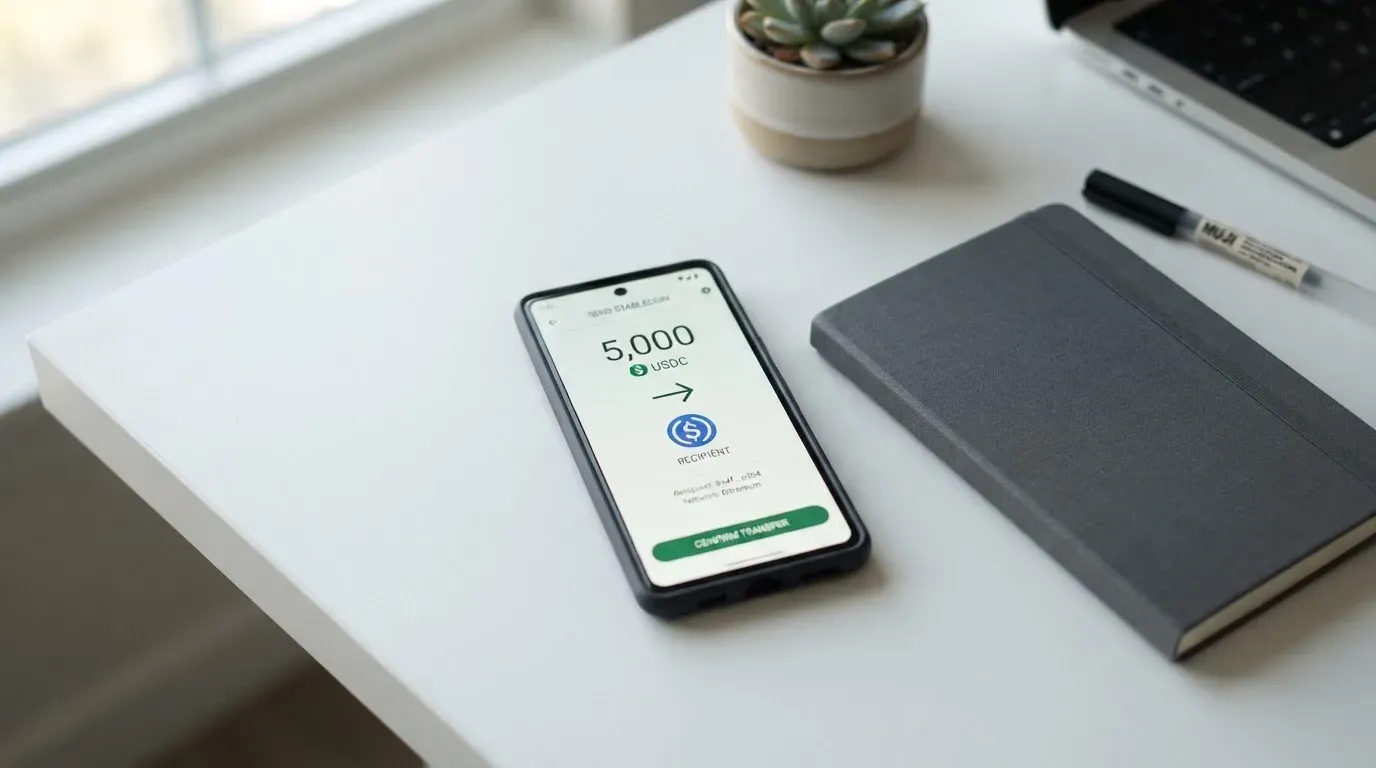
Will they give you the card?
Here is the first thing to check, before anything else: Lemon’s official pages mention Argentina only. The site’s own line reads “Buy and sell cryptocurrencies in Argentina”, and QR payments are described for Argentina and Brazil. That is the whole of the official eligibility picture. The pages say nothing about citizenship versus residence — that is not stated — so if you live outside Argentina and hold an Argentine passport, or live inside it with a foreign passport, the public material does not tell you which side of the line you fall on. You will have to find that out yourself.
Colombia is the one place with movement beyond those two, and it deserves a label. Unofficial: Lemon opened a waitlist for the card in Colombia, per Noticias RCN, with no date attached to the report. A waitlist is not a launch. Treat it as a signal of intent, not as a route to a card.
The pattern to hold in mind is that eligibility rules for anything crypto-related are usually stricter than the marketing suggests. In the EU, customer due diligence covers name, address, date of birth, nationality and identity documentation, a sanctions check, the purpose of the relationship, and whether you are a politically exposed person. In the US, the customer identification programme requires name, date of birth, address and an identification number, with electronic systems also validating proof-of-address documents. And the reason a page can say “Argentina” and still turn someone down: nationality and country of birth are screened separately from your address, because sanctions screening and issuer risk policy get applied to citizenship as well as to where you live. That is the backdrop to one of the stranger user complaints below, and it is why “where do I live” is not always the only question that decides your application.
So: residents of Argentina, this is a card you can probably look at properly. Residents of Brazil, you may at least be able to use QR payments. Everyone else is looking at a waitlist or a maybe.
How to get it
The card itself is a VISA Lemon Card with a virtual option — the site invites you to create your virtual card “para empezar a usarla en segundos”, which is the fast path, since you can be paying in seconds without waiting for anything to arrive. Alongside it sits a different product, the VISA Lemon Credit Card, backed by Bitcoin; the card is also described as an international prepaid VISA card. One thing the site never says: the currency of the card is not stated. You will be spending in some denomination and I could not tell you from the public pages which.
Two separate Visa products means two separate things to evaluate, and the second one is worth pausing on. Lemon presented a Visa credit card backed by Bitcoin, with 0.01 Bitcoin as collateral and a credit line of $1.000.000 per the announcement, which is undated. A credit line a million dollars long, secured by roughly one hundredth of a Bitcoin, is a striking structure, and undated announcements tend to age badly. Do not treat that number as a live offer.
Delivery is free of charge — cards ship “sin costo de envío”. How long they take, and what a replacement costs if you lose one, are not stated. Both of those are ordinary operational questions with ordinary answers, and their absence is a fair signal about how much of this operation is published.
On the checks themselves: whether the card requires KYC is not stated on the card page. That is an unusual thing for a regulated-facing product to leave unsaid, and it is the single most useful thing you could go and ask them. The site does claim “4M validated users”, which tells you a validation step exists somewhere in the product, but a user count is not a description of what documents you will be asked for, how long it takes, or what happens if you cannot complete it. Identity tiers are also not stated. When due diligence cannot be completed, EU rules require the institution to refrain from the transaction or the relationship, and where necessary to end existing ones — which is why accounts close or freeze pending papers. If you are somewhere Lemon does not recognise, or your documents do not match your address, that is the mechanic you would run into.
Fees
The headline is good and the details are missing. Lemon states “sin costo de envío ni mantenimiento” — no shipping cost, no maintenance. The card’s fees are otherwise not stated on official pages. That sentence is worth having; it is genuinely more than most cards in this category volunteer. It is also not the same as a free card, because the interesting charges in a crypto card are not maintenance charges. They are conversion and FX charges, and Lemon does not publish them.
So here is what the card tells you, and what it does not:
| Fee or limit | What Lemon states |
|---|---|
| Issuance | Not stated |
| Monthly fee | None — “sin costo de envío ni mantenimiento” |
| Shipping | None — “sin costo de envío” |
| Conversion fee | Not stated |
| FX / foreign currency fee | Not stated for the card; marketing points instead to a tax benefit abroad |
| Cash withdrawal | Cash out at “comercios adheridos” — participating merchants on a map, not ATMs; fee not stated |
| Daily purchase limits | Configurable — “Configurá límites de compras diarias”; amounts not stated |
| Monthly limits | Not stated |
| Credit line | $1.000.000 per the undated Bitcoin-backed card announcement |
One unofficial line circulates: a 0.5% commission when the card auto-sells crypto at the point of sale. I could not re-verify that, and it is not on Lemon’s pages, so treat it as a rumour with a plausible shape rather than a published tariff.
The FX row is subtler than it looks. Lemon markets the card for paying abroad in foreign currency without the 30% RG5617 tax — the Argentine tax on foreign-currency purchases, which is not a small number and which plenty of Argentines care about a great deal. That is a real advantage if you are an Argentine resident paying abroad, and it is not a fee, so it does not appear as one. But the card currency is still not stated, so I cannot tell you what you are converting from or how the conversion is priced. Ask.
Three ordinary payments, to make it concrete. Take a cardholder in Argentina who has topped up their balance and is spending it:
- *A coffee, about $5.* Small ticket. If this is the card auto-selling crypto at the till, the unofficial 0.5% would be the number that matters, and no Lemon fee applies on top as far as the pages say. This is the payment most exposed to a conversion charge and the one where a small percentage hurts proportionally most.
- *An online subscription or a monthly service.* The big question here is not Lemon’s fee but 3-D Secure, the identity step that Visa calls Visa Secure. It can approve frictionlessly or challenge you with a one-time code; that is the issuer assessing risk. Address verification is the other quiet cause of declines — AVS compares the numeric parts of the billing address you typed against issuer records, and it is generally unavailable for foreign-issued cards. Argentina is not a foreign-issued card at home, but it is at any merchant in another country.
- *A shop abroad, in dollars or euros.* Here you would want the RG5617 point, which is Lemon’s actual pitch, against a conversion price the site does not publish. You are buying tax relief with visibility you don’t have on the exchange rate. Note also that gambling is a category merchants and issuers treat specially: MCC 7995 covers casinos, betting and lotteries, and many issuers block it on specific cards by policy rather than by law, with the blocked list varying by issuer.
One category of cost is outside Lemon entirely and will still hit you: on-chain network fees for your deposit are charged by the blockchain, not by the card provider. Whatever network you send on, it takes its own cut.
How to top it up
This is where Lemon is thinnest, and it is the section that most decides whether you can use the card at all. Bitcoin is named. Cashback is paid in Bitcoin. The credit card is backed by Bitcoin. Other coins and networks are not stated — so whether you hold USDT on Tron, USDC on Base, or anything else, Lemon has not told you whether you can send it, and I will not guess on its behalf.
The mechanics of the top-up itself are not stated either. Which network does an incoming transfer need to use? Is it an address you generate in the app, or a deposit address from an exchange? What is the minimum, what is the confirmation count, and how long before the balance shows? Not stated.
I want to be careful here, because this is exactly where a crypto card can hurt you badly and it is not Lemon-specific. Blockchain transfers are irreversible. A deposit sent on a network the card provider does not support, or sent to an address belonging to a different network, can be lost entirely, or need manual support recovery with no guarantee of success. There is no version of this where the money comes back by itself.
So if you are holding something other than Bitcoin, the question to ask Lemon before you touch the card is not “does it support X” but “which network, and what is my deposit address.” Getting that wrong is not a customer service ticket; it is a written-off balance. And note the standard wrinkle even with Bitcoin: Ethereum’s ERC-20 gas is paid only in ETH, so a wallet holding a token with no ETH in it cannot send that token. Other networks price differently — Ton’s fees run through bandwidth and energy resources, often burning TRX. If Lemon supports Bitcoin only, then Bitcoin only is what you send, and the chain’s own rules govern the rest.
Stablecoins would be the natural top-up for a card meant for everyday spending, and there is a good reason people reach for them. Tether’s USDT and Circle’s USDC are dollar-pegged, and the BIS put about 90% of stablecoin market capitalisation in those two as of July 2025. Circle says USDC is redeemable 1:1 for USD, backed by cash and cash equivalents mostly in an SEC-registered government money market fund, with monthly reserve attestations by a Big Four firm, and lists it as natively supported on 38 networks as of 16 September 2026, including Ethereum, Solana, Base, Polygon PoS, Avalanche, Arbitrum and Stellar. Tether describes USDT as a token on multiple blockchains with reserves intended to back it one-to-one, issued on networks including Ethereum, Tron, Solana, Polygon and Avalanche. Two caveats that matter for anyone planning around this. Stablecoins can depeg — TerraUSD collapsed in May 2022, and USDC temporarily lost its peg in March 2023 during the US banking crisis; “stable” is an aim, not a guarantee. And they are not censorship-proof: Tether says it disables tokens in wallets on the OFAC sanctions list and has frozen funds tied to illicit activity. Since USDC on Tron is not a native option — Circle stopped supporting it in February 2024 — “USDC over TRC20” is not something you can count on.
None of which Lemon tells you, because Lemon tells you only Bitcoin. If your money is already in Bitcoin and you are comfortable holding it, that is workable. If your plan was to spend dollars, or to keep your stablecoins in a self-custody wallet and spend from it, Lemon is not currently a card that describes how to do that.
Cash-out is equally undescribed: how to withdraw money from Lemon is not stated.
Paying with it every day
The everyday shape of the card is a prepaid Visa, and prepaid is the honest word. A prepaid card draws on a stored balance; a standard debit card asks your bank to withdraw from a linked account at the moment of purchase. Many crypto cards behave like the first, which means the balance is converted and loaded as fiat and the card spends only that balance — the card cannot overdraw. That is a real convenience: you cannot be surprised by a declined payment because you ran out, only because you ran out.
The parts that are published work as advertised. You get a virtual card you can start using in seconds, and a physical one shipped free. You can set daily purchase limits yourself, and you can pause the card at any time — “pause the card whenever you like” — which is the single most useful feature on the list, because it is instant and it costs nothing. You can get cash at participating merchants, shown on a map, rather than at ATMs; the wording is “comercios adheridos”, and the fee is not stated, so I would not assume cash-out is free. And the reward is the sharpest thing on offer: “earn up to 2% cashback in Bitcoin with every purchase”, with payments over $10.000 also earning raffle tickets.
Cashback in Bitcoin is the feature that actually distinguishes this card, and it cuts both ways. Two percent back in a volatile asset is two percent of your purchase paid in something whose value can fall before you spend it. If Bitcoin doubles next month, the reward is wonderful. If it halves, a real discount has turned into a smaller one. Nobody is cheating you; it is just a different currency than the discount looks like. The “$10.000” in that sentence is, incidentally, another peso-denominated threshold — worth checking whether it means ten thousand pesos or ten thousand units of something else before you plan around the raffle.
Wallets and apps are where the disclosure stops: which wallets Lemon supports is not stated, and the app itself is not described on the pages I read — no store ratings are published there, and the store pages themselves were not read. Whether Lemon card can be added to Apple Wallet is not answered anywhere in Lemon’s own material, and I am not going to fill that silence with a guess. In general, tokenised mobile wallets work this way: Apple Pay replaces the card number with a device-specific Device Account Number held in the Secure Element, never on Apple’s servers, and each payment uses a one-time dynamic security code. But whether Lemon participates is Lemon’s to say and it does not. Merchants can also restrict a tokenised number — blocking it on magnetic stripe, phone or website use — so a card that works in a shop may not work online.
Where can you use the Lemon card? As a prepaid card, essentially wherever that particular Visa is accepted, with the usual soft spots. Some merchants decline prepaid or foreign BINs because the BIN lookup reveals the card type and the issuing country. The BIN is the first 6 or 8 digits of the card number and identifies the issuing institution; the rest is an account identifier and a check digit. Merchants can look it up and apply extra scrutiny when the issuer country differs from the billing address — which is precisely how a card issued in one country ends up looking foreign to a shop in another. And a declined authorisation is not always a refusal: it may leave a hold on your funds for several days, typically up to seven.
Disputes are not stated. If something goes wrong with a purchase, I could not find anything on Lemon’s pages about chargebacks — a refund ordered by the issuer to settle a dispute, with reason codes such as fraud, duplicate billing or goods not received. Your rights also depend on which kind of card this is. In the US, debit card reversal rights come from Regulation E and credit card rights from Regulation Z; prepaid-card coverage varies and should not be assumed. Lemon is described as a prepaid card, so I would not build a plan on strong protection. There is a note on 3-D Secure worth having in mind: under it, liability for fraudulent online payments can shift from merchant to your bank — or, per critics, to you.
What can go wrong
Four things, roughly in order of how much they should worry you.
The entity behind it is not a bank, and it says so. Lemon is operated by Bay Treasure Caramel S.A., Tax ID 30-71753495-2, registered as virtual asset service provider No. 162 in Argentina’s CNV VASP registry. The site states plainly that “Digifin S.A. is not a financial institution” and that Lemon is not a bank. The issuing bank is not stated — a gap you will notice, because a card programme needs a bank under the network’s licence. In the standard structure, the card network (Visa or Mastercard) routes messages and sets the rules, the issuer holds the card programme, and the crypto brand is often only a programme manager or a front end. When the brand is not the issuer and the issuer is not named, you are trusting a party you cannot name.
Your money is in someone else’s hands. Lemon is a VASP with a custodial wallet: it holds the credentials, which means you must trust it completely. Control of crypto belongs to whoever holds the private key or seed phrase, and a seed phrase — typically 12 to 24 words — is an unencrypted form of the private key, so anyone who obtains it can restore the wallet and spend its funds. Transfers are typically irreversible and a stolen key has no built-in recovery: the network cannot freeze or return the funds. Custodial platforms have a real record of this going wrong — Mt. Gox, about US$350 million reported stolen between 2011 and 2014; Coincheck, about US$400 million in 2018; Ronin Network, US$625 million in 2022. Safeguarding of your balance is not stated.
That is the honest version of the familiar reassurance. It is worth separating two things people mean by “is it safe”: is the company regulated and monitored, and are my funds protected if something goes wrong at the company? The answer to the second is not stated, and “not stated” is not “no”, but it is also not yes.
The complaints. Trustpilot shows 2.5 out of 5 from 5 reviews as I read them, and I will not pretend a sample of five reviews is a measurement — but the themes are worth reading, because they cluster on the things I could not verify. Users report poor customer support (“El peor soporte del mundo”). A user reports that Lemon Cash stopped accepting SEPA IBAN transfers from online betting sites because the banking partner rejects them. And one claim that people from certain birthplaces were told they could not become customers. That last one lands on top of the eligibility gap from earlier: if the official pages say nothing about citizenship versus residence, and a user reports being refused on place of birth, then the undocumented rule is the rule you will meet. Confirm it in writing before you send money.
The whole programme could end. Card programmes close. In November 2022 Visa said it had “terminated our global agreements with FTX” and the FTX US debit card was being wound down by its issuer. WaveCrest, a Visa issuer that supplied crypto card brands, was suspended by Visa in Europe in 2018, closing all WaveCrest-issued Visa programmes. Closures tend to follow a shape: a notice period, then spending and loading stop, then users are asked to withdraw remaining balances. A 2026 closure reported by a secondary source ended new loads on 8 July 2026 and spending on 8 August 2026 — single source, unconfirmed, but the pattern is the pattern.
And then, the tax question. Lemon will not raise it, so I will, plainly and without advising you on it: in the US the IRS treats digital assets as property, so exchanging them for goods, services, dollars or other digital assets generally produces a taxable gain or loss. For personal or investment holdings the result is a capital gain or loss, short-term if held one year or less, measured in local fiat currency at fair market value on the date of the transaction — which means each card payment funded from crypto may be a separate disposal. Read that as an obligation to check, not as advice about what to do.
On the positive side, the security controls that do exist are the right ones: instant card pause, configurable daily spending limits, a theft and loss report page at report.lemon.me, and an email at [email protected] with a Spanish help centre at help.lemon.me/es and a status page at status.lemon.me. Support hours are not stated. The help centre being Spanish-only is worth weighing if you are not comfortable in Spanish — and given the support complaints, a language barrier and a weak support desk compound each other.
What to take instead
The honest first point is that the comparison below is awkward: only one of these is a card you can clearly obtain from a country it names. That is itself the finding.
| Lemon | Gemini | Lava | GoMining Card | |
|---|---|---|---|---|
| Score | 4.7 / 10 | 4.9 / 10 | 7.1 / 10 | 6.6 / 10 |
| Card type | Prepaid Visa, virtual and physical | Mastercard World Elite credit card | “Lava Card” | Virtual now, physical “coming soon” |
| Geography stated | Argentina only; QR in Argentina and Brazil | Not stated | Not stated | Not a list; “may not be available in your jurisdiction” |
| Annual fee | None, no maintenance | None | “no annual fees” | Not stated |
| Issuance fee | Not stated | Not stated | Not stated | Not stated |
| Conversion / FX | Not stated | No foreign transaction fees; crypto conversion not applicable (credit card) | “no FX fees, and no FX spread”; no exchange fees or spread on Bitcoin buy/sell | Not stated |
| How you fund it | Bitcoin named; other coins and networks not stated | Not prepaid — credit card paid off in fiat | Local currency or stablecoins; networks not stated | BTC, USDT, GOMINING and other coins |
| Rewards | Up to 2% cashback in Bitcoin | Gas/EV/transit 4% on first $300/month, dining 3%, groceries 2%, other 1%, paid in Bitcoin or 50+ cryptos; 10% Vault Rewards at some merchants; referrals | Up to 5% back in bitcoin; conditions not stated | Up to 5% cashback paid in mining power, rising with VIP level |
| Extras | Free shipping; cash-out at participating merchants | — | Spend at 150 million merchants in 150+ countries | Opening a card grants a free 1 TH miner |
Gemini, at 4.9, is not really the same product: a Mastercard World Elite credit card paid off in fiat, with crypto as the reward rather than the funding. Its reward rates are the best on this list where they apply — 4% on gas, EV and transit for the first $300 a month, 3% dining, 2% groceries, 1% elsewhere, paid instantly in Bitcoin or 50-plus cryptos and changeable at any time — plus 10% Vault Rewards at some merchants and referral payments of $50 per referral and $250 per five, up to 50 a year. No annual fee, no foreign transaction fees. Form and currency not stated, eligibility not stated.
Lava, at 7.1, is the one whose fee structure is actually published: no annual fees, no FX fees, no FX spread, and no exchange fees or spread on buying or selling Bitcoin according to its page. It claims spending at 150 million merchants in 150+ countries and up to 5% back in bitcoin on every purchase, with conditions not stated. Deposits in local currency or stablecoins; network and card form not stated. Two marks are earned for transparency rather than for generosity — but transparency is what Lemon does not offer, and I have found it more useful than a headline rate.
GoMining Card, at 6.6, is the one to read for a specific reason: its cashback is paid in mining power and rises with VIP level, so the reward is not spendable money at all. It is virtual now with physical “coming soon”, network and currency not stated, fees not stated, top-ups in BTC, USDT, GOMINING and other coins — and its opening a card grants a free 1 TH miner, which tells you what the business model is. It also carries the clearest eligibility hedge of the three: products may not be available in your jurisdiction, subject to eligibility and regional availability.
What none of these fix: Gemini, Lava and GoMining all leave eligibility unstated too. On geography, Lemon is actually the most transparent of the four, which is an odd kind of merit.
Who I would recommend it to
Argentine residents who want up to 2% cashback in Bitcoin and have already decided their holding is Bitcoin. That is the audience Lemon is built for, and for them the pieces line up: no shipping fee, no maintenance fee, a virtual card usable in seconds, a card you can pause instantly, daily spending limits you set yourself, cash-out at participating merchants rather than ATM fees, and a reward that pays in the asset you were going to hold anyway. Add the RG5617 point and paying abroad becomes cheaper than the usual 30% route, which is a real, quantified advantage for an Argentine resident — not a marketing line.
I would not recommend it to anyone who needs the card in a country Lemon does not name. The official pages say Argentina; Brazil is described for QR payments; Colombia is a waitlist according to an undated report. If your plan depends on the card arriving somewhere else, you are depending on an unannounced expansion.
Nor to anyone who wants to spend stablecoins, or who holds something other than Bitcoin. Only Bitcoin is named, other coins and networks are not stated, and the top-up mechanics are not stated either — which in this category means an irreversible transfer with real downside. If your money is in USDT or USDC, you have no published route onto this card.
Nor to anyone who needs strong consumer protection. Disputes are not described, prepaid-card coverage varies and should not be assumed, and the issuer behind the programme is not named.
And a word on the timing. Lemon has “4M validated users” and a Bitcoin-backed credit card announcement with a million-dollar credit line against 0.01 Bitcoin of collateral that is undated. Numbers like that are marketing until you can see the terms attached to them. The card itself is the product; judge it on that.
How I would check it, if I were you. Before sending anything: which network does Lemon accept, and what is my deposit address. Before your first large purchase: what is the conversion price and who charges it. Before you depend on it: where is the dispute process, and what are the support hours in the language you read. Those four questions are not on the website, which is the most useful thing I learned reviewing it.
Frequently asked questions
What is Lemon?
Lemon is a crypto app that issues a prepaid Visa payment card you spend from a stored balance, and it also offers a separate Bitcoin-backed Visa credit card. It is operated by Bay Treasure Caramel S.A., listed as virtual asset service provider No. 162 in Argentina’s CNV registry. The site states that Lemon is not a bank. Cashback on purchases is paid in Bitcoin, up to 2% per purchase.
Is Lemon a bank?
No, and Lemon says so itself. The site states that “Digifin S.A. is not a financial institution” and that Lemon is not a bank. Lemon is registered as a virtual asset service provider in Argentina. The issuing bank behind the Visa card programme is not named on the public pages, which is the detail you would want before trusting it with anything.
Who can get a Lemon card?
Lemon’s official pages name Argentina only, with QR payments described in Argentina and Brazil. There is no statement on the card’s pages about whether citizenship or residence is what counts. Unofficial: a waitlist for Colombia, per Noticias RCN, undated. Nationality and country of birth are screened separately from your address, so residence alone may not settle it.
Does the Lemon card require KYC?
Not stated on Lemon’s card page, which is unusual for a product in this space. The site claims “4M validated users”, so a validation step clearly exists, but the documents, timing and identity tiers are not described. If you are outside Lemon’s stated markets, ask them directly what they need before sending anything.
How do I top up the Lemon card?
Bitcoin is the only coin named, cashback is paid in Bitcoin, and the credit card is Bitcoin-backed. Other coins and networks are not stated, and the top-up mechanics — which network, which address, minimums, confirmation times — are also not stated. Blockchain transfers are irreversible, so a deposit on the wrong network can be lost with no guarantee of recovery.
What does a Lemon card cost?
Lemon states “sin costo de envío ni mantenimiento” — no shipping cost and no maintenance. Everything else is not stated on official pages: no conversion fee, no FX figure, no issuance fee, no cash-out fee. Unofficial and unverified: a 0.5% commission when the card auto-sells crypto at the point of sale. Card currency is not stated either.
Can I use the Lemon card in Apple Wallet or Google Pay?
Neither is disclosed on Lemon’s public pages, so I cannot tell you whether the card can be added to either. In general, tokenised wallets replace the card number with a device-specific number stored in the Secure Element and use a one-time code per payment — but whether a provider supports it is theirs to state, and Lemon does not. Ask before you rely on it.
Is the Lemon card safe?
It is a custodial product: Lemon holds the credentials, so you trust it completely, and the pages do not describe safeguarding. Trustpilot shows 2.5 out of 5 from five reviews, with reports of poor support and a refusal based on place of birth — a tiny sample, but worth asking about. Useful controls that do exist: instant card pause, configurable daily limits, and a theft and loss report page.
Where can I use the Lemon card?
As a prepaid Visa, wherever that card is accepted, with the usual soft spots. Some merchants decline prepaid or foreign-issued cards after looking up the issuing institution in the first six or eight digits of the card number. Declined payments can also leave a hold on your balance for several days. Cash-out is through participating merchants shown on a map, not ATMs, and that fee is not stated.
Is the Lemon card worth it?
For Argentine residents already holding Bitcoin, the argument is no shipping fee, no maintenance fee, an instant virtual card, a pause button you control, and up to 2% cashback in Bitcoin plus the 30% RG5617 tax point on spending abroad. For everyone else, the arithmetic fails earlier: eligibility is limited to one named country, only Bitcoin is named as funding, and the fees, currency, dispute process and issuing bank are all unstated. Ask those questions first.
Choosing a credit or cashback card – cryptocardadvisor
Content created by the «cryptocardadvisor» team