
A cheap Mastercard for digital dollars, in four countries only
 Available in US
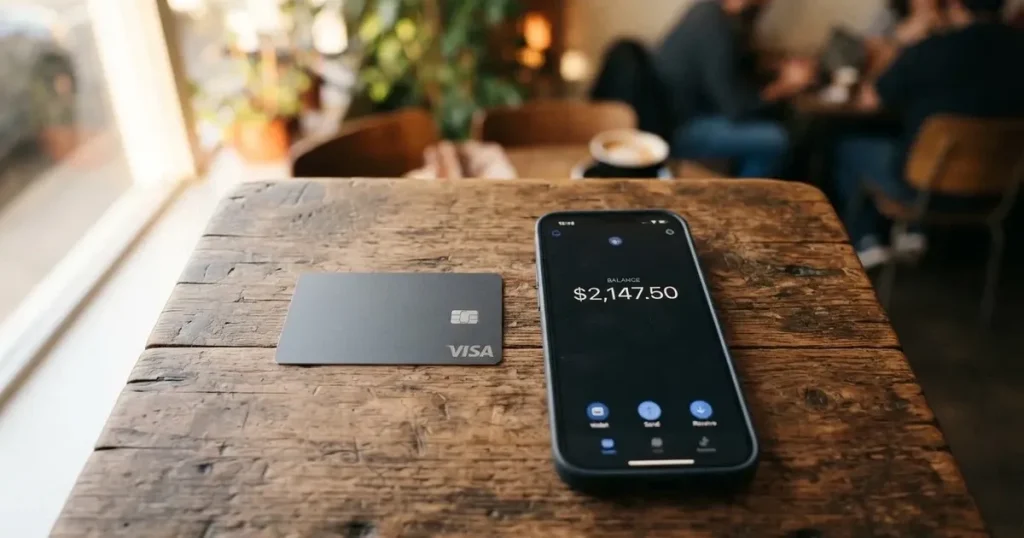
If you have been searching for a card that spends from a crypto balance without a traditional bank saying no, ARQ will look like a genuine find at first glance. It is a Mastercard, the virtual version is free, the physical one costs $4.99 to ship, and the company describes itself as a secured credit card backed by the balance in your account. There is no annual fee and no maintenance fee. On paper, this is a clean offer.
The catch is not in the fees. It is in the geography. ARQ issues cards to residents of Mexico, Argentina, Colombia and Brazil. If you live anywhere else, everything below is academic. Inside those four countries, the picture is mixed in a specific way: the everyday spending side is genuinely good, and the parts around it — who issues it, how you fund it, what happens when something goes wrong — are thin, undisclosed, or contested by people who have used it.
I gave it 5.4 out of 10.
Everything below is written for someone who is holding two or three options open and trying to work out whether ARQ deserves the effort of opening the app. I have split the price out from the risk, because in my experience these cards fail on one axis or the other, rarely on both.
The conditions described on this page are current as of October 28, 2026.
Verdict: 5.4 out of 10
ARQ is a good card for a narrow group and a poor choice for everyone else. If you are a resident of Mexico, Argentina, Colombia or Brazil who already holds digital dollars and wants them on a Mastercard that works in Apple Pay, this is worth an afternoon. If you are anywhere else, or if the money has to come from a crypto exchange you control, the structure of how you fund the card will probably stop you before you get that far.
Here is how the score breaks down.
| Criterion | Mark | Why |
|---|---|---|
| Who can get it | 3 / 10 | Issued only in Mexico, Argentina, Colombia and Brazil; the physical card ships only to an address in those countries |
| Cost | 8 / 10 | Virtual card free; physical card $4.99 for delivery; no maintenance fee and no annual fee; ATM 1% of the amount; no separate FX fee disclosed; the card states there are no hidden fees |
| Top-up options | 3 / 10 | The card cannot be topped up directly: money goes to the ARQ account through bank details, and the USDc/EURc balance backs the card; coins and networks are not stated |
| Reliability and complaints | 4 / 10 | Formerly DolarApp, services run through DolarApp México S.A. de C.V. and DAPP Colombia S.A.S., with no licences named; Trustpilot shows ARQ Finance at 3.9 out of 5 from 6 reviews and DolarApp at 2.0 out of 5 from 128 reviews; frozen accounts and slow support recur in user reports |
| Everyday use | 9 / 10 | Virtual and physical Mastercard, Apple Pay and Google Pay, ATMs worldwide except on cards issued in Argentina |
| Total | 5.4 / 10 | Strong spending mechanics, narrow eligibility, thin disclosure |
Three things shaped that average more than the arithmetic suggests.
First, the audience is genuinely narrow and the offer is genuinely good to them. Residents of those four countries holding digital dollars are the people this card was built for. For them, the marks of 8 and 9 are real and hard to argue with.
Second, the top-up model is the weak joint. ARQ is not a card you load with crypto. It is a bank-transfer account that issues a Mastercard against its balance. That is a different product from the one most people imagine when they hear “crypto card”, and it changes who it works for.
Third, the disclosure is incomplete. Custody model, safeguarding, licences, verification tiers, rejection reasons, ATM limits, deposit fees, minimums, withdrawal fees, the Premium price — none of these are stated on the public pages. That is normal for a small provider. It is also the reason the reliability mark sits at 4.
Will they give you the card
Short answer: only if you live in one of four countries.
The country selector in the app lists Mexico, Argentina, Colombia and Brazil. The physical card can be sent “anywhere within Argentina, Colombia, Mexico or Brazil” to a valid address in that country. So it is the country of residence and delivery address that decide, not citizenship as far as the public pages go. If you are a citizen of one of these four countries living in, say, Spain or the United States, the card’s own description of its delivery area does not include you.
There is one more geographical wrinkle that trips people up. The ATM section later in this review explains that physical cards issued in Argentina cannot be used at international ATMs. That is a separate restriction from the issuing countries, and it is worth knowing before you plan a trip.
If your country is not on that list, the honest answer is that the rest of this review tells you what the card would have been. It does not describe an option available to you.
How to get it
The route is short, which is one of the better things about this card.
- Download the app and log in.
- On the Home screen, tap the card banner.
- Request either the free virtual card or the physical card.
Before any of that, identity verification has to be completed inside the app. The card cannot be created while verification is pending or incomplete — that is stated plainly on the card’s pages. What is not stated: which documents you need, whether proof of address is required, and what age threshold applies. If you are wondering whether you will need a utility bill or a passport, I cannot tell you from what the card publishes.
On the types of card you can end up with:
- Virtual card — free, Mastercard.
- Physical card — Mastercard, $4.99 shipping fee.
- The funding model — described as a “secured credit card backed by the balance in your ARQ account”, with the card balance held in USDc, the digital dollar.
Delivery, where the physical card is available, is 2 to 15 business days; another article on the card’s site says 7 to 10 business days, so treat the range as indicative rather than a promise. Shipping is $4.99. What you pay for a replacement card is not stated.
One thing to expect: account review can temporarily block card creation. The card does not say why a review would trigger or what happens if verification is refused, and rejection reasons are not stated either. That combination — a pause you cannot predict, and no published criteria — is worth weighing before you reorganise your money around this card.
Fees and what a payment actually costs
This is where ARQ scores best, and I want to be precise about why, because “no hidden fees” is a phrase that gets repeated a lot in this category and is not always true.
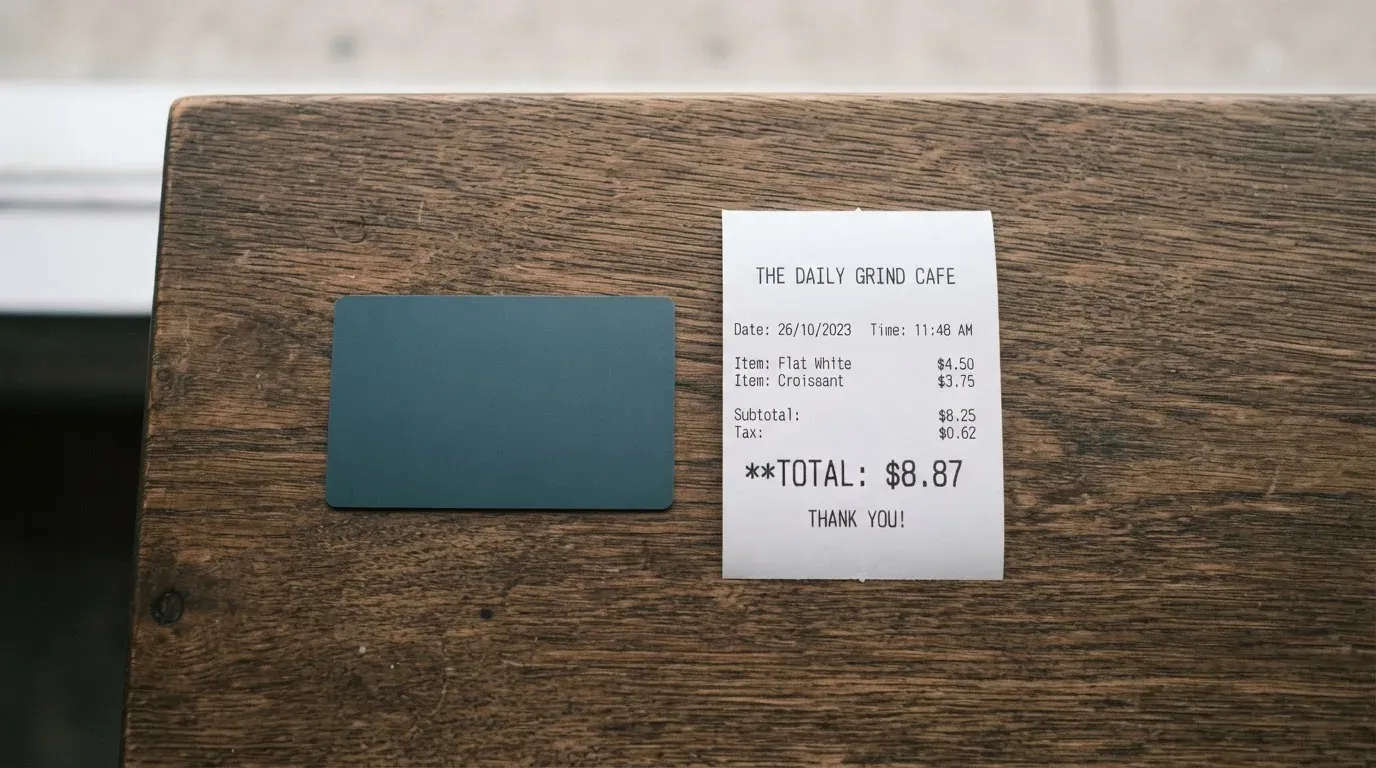
The virtual card costs nothing. The physical card costs $4.99 for delivery. There is no maintenance fee and no annual fee. The first physical card is free if you have over $100 USD in your Main Balance, or if you are a Premium user.
Here is the full picture of the fees and limits the card publishes.
| Fee or limit | Value |
|---|---|
| Virtual card issuance | Free |
| Physical card shipping | $4.99 USD |
| Maintenance fee | None |
| Annual fee | None |
| First physical card | Free over $100 USD Main Balance, or for Premium users |
| Currency conversion | No separate FX fee or spread disclosed; buy rate when adding money, sell rate when paying by card, both shown in the app before you confirm |
| ATM withdrawal | ARQ fee 1% of the amount withdrawn; Premium users get up to 500 USDc per month free of the ARQ commission; the ATM owner may charge extra |
| Spending limit | Equal to the USDc balance in the account — a 100 USDc balance means a 100 USDc limit |
| Card count | Up to 10 virtual cards per month, 3 active at once, 30 in total |
| ATM limits | A separate article exists for Colombia accounts; figures not read |
The conversion rate is the part to actually understand, and here is how I would think about it. There is no separately disclosed FX fee or spread — what the card publishes is that a buy rate applies when you add money and a sell rate applies when you pay by card, and that both are shown in the app before you confirm. The card’s pages also state it has “no hidden fees”. The gap in my assessment is not that a fee is being hidden; it is that the width of the buy/sell spread is not published, so I cannot tell you what a conversion costs you in practice. Check both rates in the app before you confirm a large transaction, and treat them as the cost of the card.
Your spending limit equals the USDc balance in the account. A 100 USDc balance means a 100 USDc limit. The card cannot overdraw; you can only spend what is already there.
Two or three everyday payments
Paying for a purchase of groceries in Mexico. No card fee applies; the amount comes off the USDc balance. If you paid for the balance in pesos, the conversion happens at the sell rate, which the app shows before you confirm. There is no separate FX line to look for.
Paying a 300 USD subscription from a Colombian account. Same mechanics: spend is capped at your USDc balance, no maintenance fee, no annual fee. What you should watch is the merchant’s own reaction — a card issued in Colombia can look foreign to some merchants abroad because they can read the issuing country from the card number. More on that below.
Taking 200 USDc out of an ATM in Mexico. The ARQ fee is 1% of the amount withdrawn, and the ATM operator may add their own charge on top. That is the one line in this table that will visibly reduce what lands in your hand. Premium users get up to 500 USDc per month free of the ARQ commission.
How to top up the card
Here is the part that surprises most people, and it is worth internalising before you download anything.
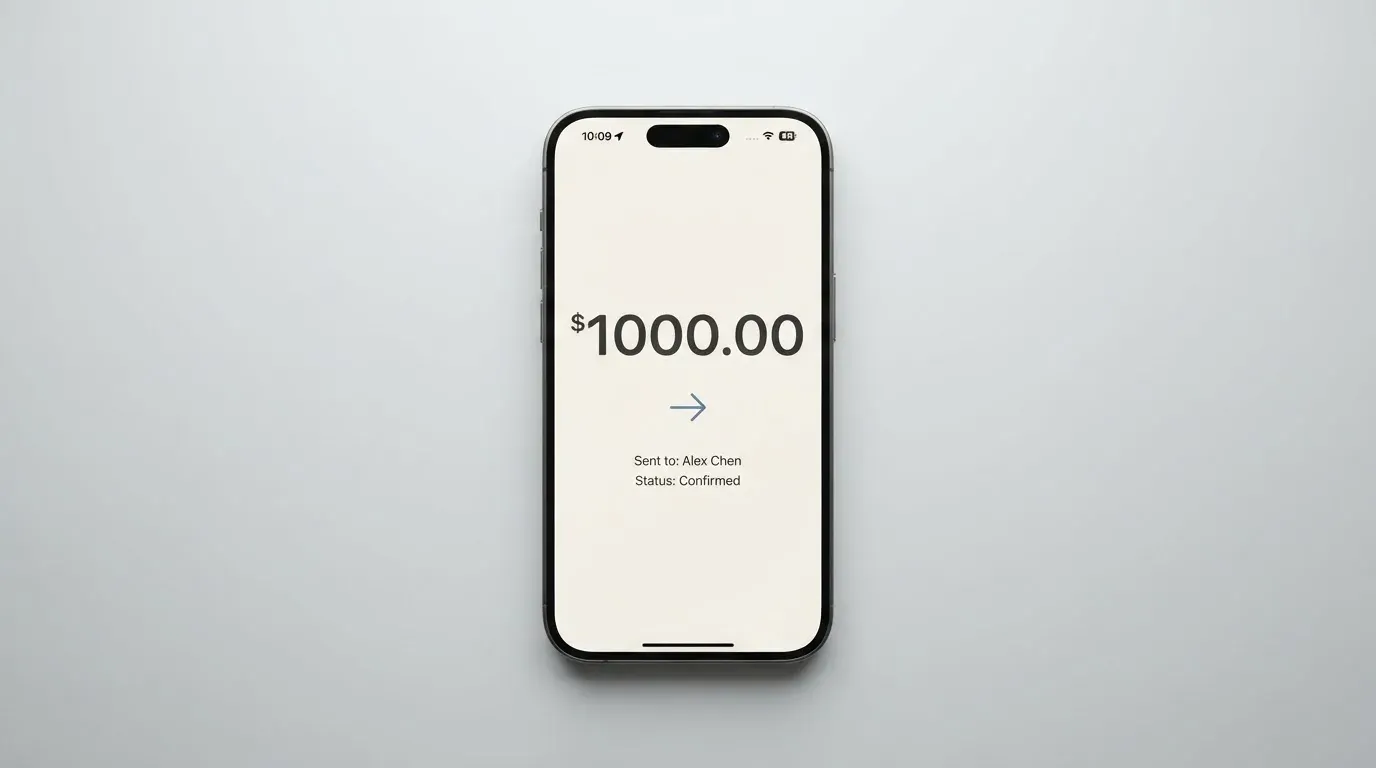
The card cannot be loaded directly. Money is added to the ARQ account through the banking details shown in the app’s “Add” section, and the account balance in USDc or EURc is what backs the card. Which coins and networks are involved is not stated.
So the flow is: bank transfer in, using details in the app; then your account holds a balance in USDc or EURc; then the card spends that balance. If you were hoping to send USDC from your own wallet straight onto the card, this is not the product you are looking at. Fees and minimums for the deposit are not stated either.
Two related details that matter if you plan to move money in and out:
- Incoming payments are converted to USDc or EURc.
- Payments in any currency are converted at the sell rate.
- You cannot send funds to other cards. Money has to go to a bank account. What that costs, and what happens to a remaining balance if you close the account, is not stated.
For a reader in Mexico, Argentina, Colombia or Brazil who already has bank access and USDc, none of this is a problem — a bank transfer is a normal thing to be able to do. For someone whose whole reason for wanting a crypto card is that they are outside the banking system, this is a hard stop, and no amount of persistence gets past it.
Paying with it every day
This is the strongest part of the card, and the mark of 9 out of 10 is deserved.
- Apple Pay — supported, via Home > Add to Apple Wallet.
- Google Pay — supported according to the card overview; the virtual card can be added to Apple Pay or Google Pay.
- Virtual and physical Mastercard — both available.
- ATMs worldwide with the physical card, except cards issued in Argentina, which are not allowed at international ATMs.
- Blocked merchant categories — not stated. This is worth noting, because many issuers block gambling (MCC 7995) on specific cards by policy rather than by law, and the blocked list varies by issuer. You cannot know from the public pages whether ARQ declines a betting site.
Rewards: none described. The official card pages describe no reward programme. The sign-up form says reward details are sent by email, which I would read as “there may be something”, not “there is something”. Do not build a rewards calculation into your decision.
The app. On the App Store, “ARQ: Global Finance” shows 4.5 out of 5 from 992 ratings as I read it, for iPhone, requiring iOS 17.0 or later. I could not obtain the Google Play rating; the official page cites 4.7 and 4.5 app ratings, undated. An app rating is a small comfort, but it is not the same as a support response time, and we will get to that.
Disputes. Mastercard chargeback investigation can take up to 120 days. Opening a chargeback does not guarantee a refund. Status is in the Help Center and app, with notification and email. Plan for a long wait and an uncertain outcome.
One more category-level thing worth knowing, since it explains the “can I use my card in country X” question people search. Merchants can look up the issuing institution and country from the card number, and some apply extra scrutiny when the issuing country differs from the billing address. Address verification on payment forms is mainly offered in the US, Canada and the UK and is generally unavailable for foreign-issued cards, which can cause declines. And a declined authorisation can leave a hold on your money for several days, typically up to 7. So: a card that works everywhere can still fail at a specific checkout, for reasons that have nothing to do with your balance.
What can go wrong
This is the section where ARQ’s marks fall, so I will spend the most words here.
The company behind the card is not fully named. ARQ is the former DolarApp, with copyright DolarApp Inc. In Colombia, virtual asset services are described as provided by DolarApp México S.A. de C.V., and credit card services by DAPP Colombia S.A.S. (NIT 901644165-9). The Mexico help page describes credit card services as provided by Pier 5 S.A. de C.V. No licences are named on the pages. There is no way from the public material to confirm which entity you are contracting with for a given country.
Custody and safeguarding are not stated. The account balance in USDc/EURc acts as collateral for the card, and the security features listed are real and sensible — 2FA for the app, instant freeze in the app, 3D Secure, PIN viewing, block and unblock. But how the funds are held, and whether they are safeguarded, is not stated. In this category that matters: an electronic money institution must safeguard customer funds by segregating them in dedicated accounts or insuring them, and such funds are not the same as bank deposits. If ARQ’s balance is not a deposit, you should not treat it as one.
User reports are mixed, and they cluster on three themes. Trustpilot shows ARQ Finance at 3.9 out of 5 from 6 reviews, and the older DolarApp page at 2.0 out of 5 from 128 reviews. One ARQ review, dated 14 September 2026, is a 1-star report about an unrecognised charge on a virtual card and no support solution. Across app-store and Trustpilot reviews from 2025 to 2026, users repeatedly describe accounts frozen or blocked with funds held, unauthorised charges, and slow support. These are user reports, not official incidents — the card’s official pages show none — but a pattern that repeats across two years and two platforms is a pattern, not noise.
Rebrand, not a clean sheet. ARQ is a rebrand from DolarApp, reported by Brazilian press across 2025 to 2026. Rebrands are normal and often a sign of a company growing up. They also mean the older, larger body of user history belongs to a name you will not find in the app. I found no licence or fine events. Support is 24/7 in-app chat, complaints and claims go to [email protected], and the Help Center exists in Spanish, English and Portuguese.
Support quality, not support availability, is the complaint. 24/7 chat and three languages are genuinely good on paper. If your experience matches the reports, the channel exists and the answer does not arrive. In a card where a frozen account means your money is stuck, support responsiveness is not a comfort feature — it is the product.
The systemic risk nobody prices in. Crypto card programmes do close. Visa terminated its global agreements with FTX on 13 November 2022 and the FTX US debit card was wound down. WaveCrest, a Visa issuer that supplied crypto card brands, was suspended by Visa in Europe in 2018, closing all WaveCrest-issued Visa programmes. Closures typically follow a pattern: a notice period, then spending and loading stop, then you are asked to withdraw remaining balances. If ARQ is not a licensed institution in your jurisdiction, part of what you are holding is exposure to that outcome. Nothing here predicts it for ARQ specifically — I found no such event. It is simply the shape of this category, and it is why the custody and safeguarding disclosure matters so much.
Irreversibility. If you somehow do send funds by crypto transfer, blockchain transfers are irreversible. A deposit on a network the provider does not support, or to an address of another network, can be lost or need manual support recovery with no guarantee. Stablecoins are not censorship-proof either: Tether says it disables tokens in wallets on the OFAC sanctions list and has frozen funds tied to illicit activity. And the premise is weaker than the name suggests — despite the name, stablecoins are not necessarily stable; USDC temporarily lost its peg in March 2023.
Pros and cons, side by side
| Pros | Cons |
|---|---|
| Virtual card free, physical card $4.99, no annual or maintenance fee | Issued in only four countries, physical card shipped only there |
| Mastercard, with Apple Pay and Google Pay | The card cannot be topped up directly; funding goes through bank details |
| No separate FX fee disclosed; buy and sell rates shown before confirming | Coins, networks, deposit fees and minimums not stated |
| Spending limit tied to balance, so no overdraft | Custody model, safeguarding and licences not stated |
| 2FA, instant freeze, 3D Secure, PIN viewing | Reports of frozen accounts, held funds and slow support |
| 24/7 in-app chat, Help Center in three languages | Under six Trustpilot reviews for ARQ; older DolarApp page much lower |
| ATMs worldwide, except on Argentina-issued cards | Argentina-issued cards barred from international ATMs |
| Premium tier waives ATM commission up to 500 USDc a month | Premium price not stated |
What to take instead
I want to be fair: the alternatives below are not universally better. Some are restricted to countries you do not live in, and one of them is a lower score than ARQ. But you should be choosing from a set, not from a single card.
| Alternative | Score | Card and cost | Funding | Who it is for |
|---|---|---|---|---|
| International Visa Card | 6.7 / 10 | U.S.-issued Platinum Visa, virtual, pays in USD; physical “coming soon”; $5 one-time issuance, no maintenance fee; Classic free, Pro $9.00/month, Max $19.00/month | USDC or USDT into the USD account, free at 1:1; also USD, EUR, SEPA, SWIFT, FedNow | Users in countries outside the restricted list who want a USD Visa with no annual fee |
| UNi Card | 6.1 / 10 | Multicurrency Mastercard network, spends from the UNi.Global balance; no annual fee, no foreign transaction fee; issuance fee not stated | Not stated | Users who want multi-currency spending without a foreign transaction fee |
| Whop Cards | 5.2 / 10 | Visa, works anywhere Visa is accepted; “no extra fees”, but no amounts listed | Spends from a Whop balance; pending balance usable as soon as a payment arrives; backed by stablecoin collateral from a linked wallet, coins and networks not stated | US consumers in 31 states and businesses in 41 states |
Where the International Visa Card is the better fit. It scores higher than ARQ and it is not geographically confined in the way ARQ is — though it is confined in a different way. Accounts and cards are not available to residents or legal registrants of Belarus, mainland China, North Korea, Cuba, India, Iraq, Iran, Israel, Myanmar, Nepal, Nicaragua, Russia, Syria, Turkey, Ukraine, Venezuela and Vietnam, with FATF grey-list countries reviewed case by case with compliance approval. Purchases are blocked in North Korea, Cuba, Iran, Russia, Syria, Ukraine and Venezuela. The rule is by residence or registration, not citizenship. If you are in Mexico, Argentina, Colombia or Brazil and outside those lists, this is a credible alternative: $5 once, no maintenance fee, and card use in USD is free on all plans. The catch is foreign currency — “Visa exchange rate + 2% FX fee” — so it is only free if you spend in dollars. The physical card is not available.
Where the UNi Card is the better fit. If your spending is across several currencies and a foreign transaction fee is the thing you most want to avoid, this is the card to look at: no annual fee, no foreign transaction fee, assets converted at “live OTC (Over-the-Counter) rates”, and it states “no hidden exchange fees”. It also offers spend-to-earn rewards up to 3%. The catch: who can get one is not stated, funding is not stated, and I would want to see the eligibility page before recommending it to anyone.
Where the Whop Cards are the better fit. For a US consumer in the 31 supported states, it offers 5% cashback at select merchants, currently Uber, with more planned — the most generous rewards in this comparison. It works anywhere Visa is accepted. The catch: it is a narrower map than ARQ, the specific fees and limits are not stated, and the payout currency and conditions are not stated either. Also note that at 5.2 out of 10, it scores slightly below ARQ.
What all three have in common that ARQ does not. Each names an issuing structure and a card network more explicitly. That is not a reason to prefer them — but it is a reason to ask ARQ the same questions, and I could not find the answers on its public pages.
Who I would recommend it to
I would recommend ARQ to you if all four of these are true:
- You are a resident of Mexico, Argentina, Colombia or Brazil, with an address where the card can be delivered.
- You already hold or can easily obtain USDc, and topping up a bank account is not a problem for you.
- You mostly want a clean Mastercard for Apple Pay and Google Pay, at no annual cost.
- You can tolerate funding your balance, and freezing it, in a way that depends on one small company’s support desk.
I would not recommend it if any of these apply:
- You live outside those four countries.
- Your money comes from a crypto exchange or wallet you control and you want to spend it directly.
- You need a card you can take to international ATMs — if yours is issued in Argentina, you cannot.
- You plan to hold a large balance and want clear, published answers about safeguarding, custody or licensing. You will not find them.
- You have been burned by a frozen account before and do not want to repeat the experience.
If you are in the first group, here is my order of operations. Get the free virtual card first, not the physical one. Use it for a fortnight of ordinary spending and see how the sell rate feels in practice, since that is the number the card does not publish. Add it to Apple Pay and check that your usual merchants accept it before you rely on it. Only then pay $4.99 for the plastic.
Frequently asked questions
What is the ARQ card?
ARQ is a Mastercard that spends from a balance held in your ARQ account, which the card describes as a secured credit card backed by that balance. The balance is held in USDc, a digital dollar, and you can hold EURc as well. It comes in virtual and physical versions, the virtual one is free, and the physical card costs $4.99 to ship. ARQ is the former DolarApp, and it issues cards in Mexico, Argentina, Colombia and Brazil only.
Is ARQ a bank?
Not one that says so. The card’s pages describe services running through DolarApp México S.A. de C.V. for virtual assets, DAPP Colombia S.A.S. for credit card services in Colombia, and Pier 5 S.A. de C.V. for credit card services on the Mexico help page. No licences are named, and whether the balance is safeguarded is not stated. So treat it as a card programme from a fintech, not as a bank deposit.
How do I get an ARQ card?
Download the app, log in, tap the card banner on the Home screen, and request either the free virtual card or the physical one. Identity verification must be completed in the app first — the card cannot be created while it is pending or incomplete. Which documents you need, proof of address and the age threshold are not stated. Account review can temporarily delay card creation.
Does the ARQ card require KYC?
Yes, identity verification in the app, and the card cannot be created until it is complete. What the card publishes does not go further: the specific documents, any proof-of-address requirement and the age threshold are all not stated, as are verification tiers and rejection reasons. Expect to be asked for identity documents; expect the detail to be less clear than with a bank.
How do I top up the ARQ card?
You cannot top up the card directly. You add money to the ARQ account using the banking details in the app’s “Add” section, and your USDc or EURc account balance backs the card. Which coins and networks are involved is not stated, and neither are deposit fees or minimums. You also cannot send funds to other cards — withdrawals have to go to a bank account.
Is the ARQ card free?
The virtual card is free. The physical card has a $4.99 USD shipping fee, with no maintenance fee and no annual fee. The first physical card is free if you hold over $100 USD in your Main Balance or you are a Premium user, though the Premium price is not stated. Withdrawals cost 1% of the amount taken out, and the ATM operator may charge extra on top.
Is ARQ card safe?
It has the standard safeguards for a card like this: 2FA in the app, instant freeze, 3D Secure, PIN viewing, and the ability to block and unblock. What it does not publish is the custody model or whether funds are safeguarded, and no licences are named. User reports from 2025 to 2026 describe frozen accounts, held funds, unauthorised charges and slow support. Trustpilot shows ARQ Finance at 3.9 out of 5 from 6 reviews.
Can I use the ARQ card in another country?
You can spend with the card abroad wherever Mastercard is accepted, and use ATMs worldwide with the physical card — except that cards issued in Argentina are not allowed at international ATMs. Some merchants apply extra scrutiny when the issuing country differs from the billing address, and address verification is generally unavailable on foreign-issued cards, which can cause declines at checkout.
Is the ARQ card worth it?
For a resident of Mexico, Argentina, Colombia or Brazil who holds digital dollars and wants a free Mastercard in their phone wallet, the spending side is excellent: no annual fee, no maintenance fee, Apple Pay and Google Pay. The case gets weaker when you weigh that you cannot fund the card directly from a crypto wallet, that the companies and licences are not clearly named, and that the balance depends on one small provider’s support desk. I scored it 5.4 out of 10.
How do I withdraw money from ARQ?
Money cannot be sent to another card — it has to go to a bank account, using details in the app. Fees for that withdrawal and what happens to any remaining balance if you close the account are both not stated. If you want cash instead, the physical card works at ATMs worldwide, at an ARQ fee of 1% of the amount plus any charge the ATM owner sets.
Choosing an app or neobank card – cryptocardadvisor
Content created by the «cryptocardadvisor» team