
KYC.RIP — a no-KYC virtual Visa, priced for a small audience
 Available in US

KYC.RIP is a virtual Visa you can open with just a name and a PIN — no documents, no selfie, no verification step. The trade-off is significant: opening the card costs 50 USDT, everyday spending carries a 1.5% purchase fee, topping up takes another 3.5%, and pulling cash from an ATM will set you back 4% with a 25 HKD minimum. The platform’s public materials name neither the issuing bank nor the company behind the programme, and there are no public user reviews to corroborate the experience. For privacy-minded users who already hold crypto and can absorb those fees, KYC.RIP is a niche tool. For most people reading this, the alternatives later in the review will be a better fit.
The conditions in this review are current as of October 28, 2026.
Verdict
KYC.RIP earns 5.2 out of 10 in this review. That is a middling score, and reading it without context can mislead, so the table below breaks it down criterion by criterion. The card’s strongest points are its accessibility — anyone can apply with a chosen name and a PIN, and personal data is auto-deleted after 30 days — and its wide top-up range, accepting more than 200 cryptocurrencies including XMR, BTC, ETH, USDT, SOL and LTC. On the other hand, the cost structure is heavy: 50 USDT just to open the card, 3.5% to top up, 1.5% on every purchase, 4% at the ATM, and 50 HKD a year after the first free year. The company does not name its issuer or its own legal entity, no user reviews surfaced, and the only card available today is virtual — physical and reloadable variants are listed as “soon” or “under maintenance.”

| Criterion | Score | Reason |
|---|---|---|
| Who can get it | 8 / 10 | Card is “global” with no published country list; sign-up with any name and a PIN, no documents. |
| Cost | 2 / 10 | 50 USDT to open, 3.5% to top up, 1.5% on purchases, 4% at the ATM (min 25 HKD), 50 HKD annual fee after year one. |
| Top-up options | 8 / 10 | 200+ cryptocurrencies including XMR, BTC, ETH, USDT, SOL and LTC via non-custodial exchanges; minimum 20 USDT. |
| Reliability and complaints | 5 / 10 | Issuer and legal entity not named; no public reviews; card data is RSA-2048 encrypted. |
| Everyday use | 3 / 10 | Virtual Visa only; freeze in dashboard; Apple Pay and Google Pay not stated; ATM costs 4%. |
This card is for the privacy-minded user who already holds crypto, is comfortable with non-custodial exchange flows, and wants a no-document virtual Visa for online spending. It is not a card to lean on for daily point-of-sale use, it is not a substitute for a bank account, and it is not a product to take on the strength of brand recognition alone — there is no brand recognition to lean on, since the public materials name neither the issuer nor the company running the programme.
Will they give you the card
KYC.RIP is described as a “global” card with no published country list and no stated exclusions. That phrase does the heavy lifting in the marketing, but it also means there is no way to confirm your country of residence is accepted before you attempt the application. For a reader outside the usual banking system — someone whose documents are hard to verify, who holds a passport from a high-friction country, or who simply does not want their name in a third-party database — the lack of geographic restrictions is the headline feature. For a reader who needs certainty that the card will work in their specific jurisdiction, it is a gap, because the card’s pages do not enumerate the countries they refuse.
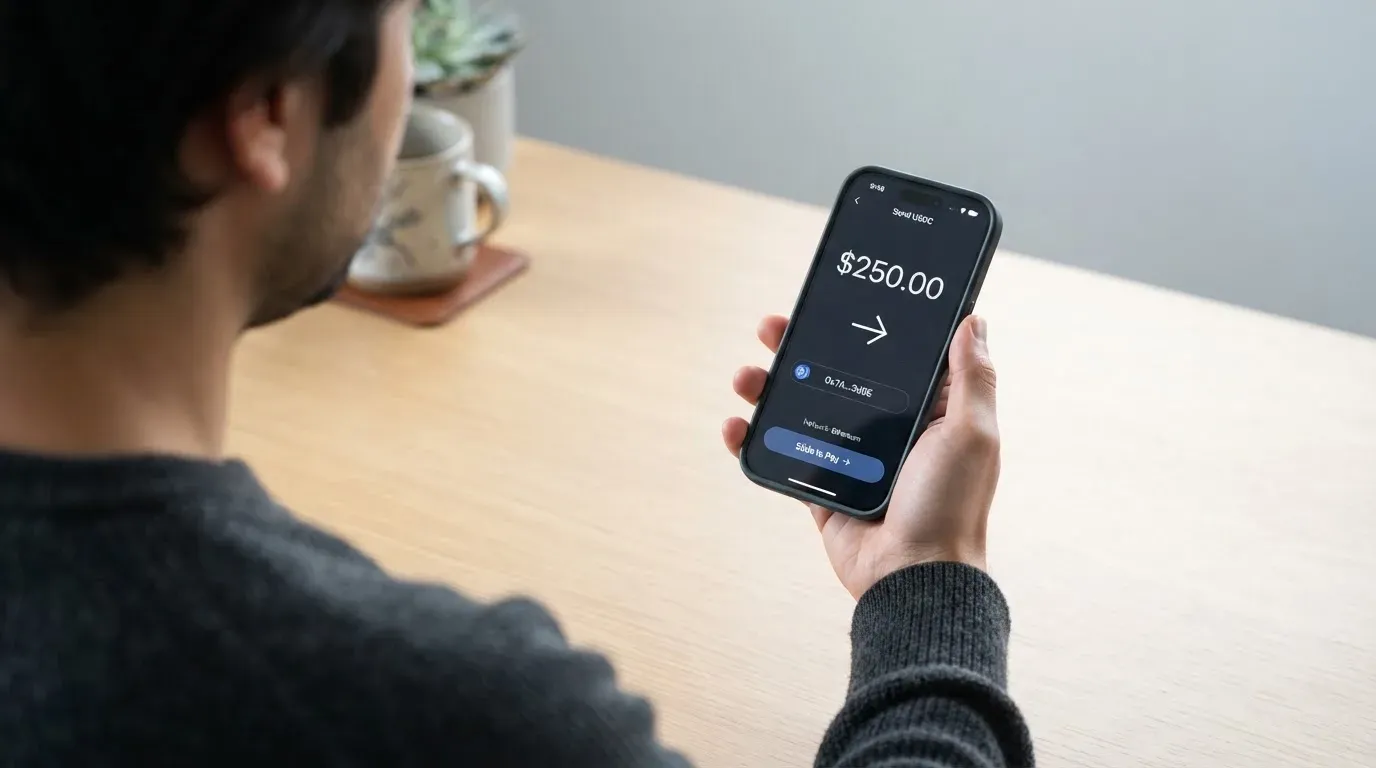
Eligibility is decided in the opposite direction from a normal bank card: instead of asking what you need to qualify, KYC.RIP tells you what you do not need. There is no KYC — no identity document, no selfie, no proof of address. The application takes a name (any name) and a PIN, and your personal data is auto-deleted after 30 days. The card is a virtual Visa, reloadable, valid for three years, and is issued through an unnamed partner network. The public materials do not state who that partner is.
In practical terms, that means:
- Anyone who can reach the website and create an account can apply, regardless of citizenship or residence.
- The card is not delivered — it is virtual, so there is no shipping address to verify.
- Higher-tier products on the platform include a “USD Prepaid” card in the $25–$1,500 range, currently listed as “under maintenance,” and a reloadable card listed as “soon.” Today, only the no-KYC virtual Visa is open for new sign-ups.
- The public pages do not state any age requirement, any KYC tier beyond the one they offer, or any minimum income or balance.
For most readers this is the most important section to read first. If you live in a country where a no-document card puts you on the wrong side of local law, that is your problem to resolve, not the card issuer’s. If you are an adult in a permissive jurisdiction and you want a virtual Visa without paperwork, the eligibility test is essentially: you can type a name and a PIN.
How to get it
The sign-up flow is built around a single principle: minimum friction. You arrive at the platform, choose a name, set a PIN, and the card is issued through the unnamed partner network. There is no document upload, no biometric step, no waiting period for manual review. Because the card is virtual, there is no delivery step either — once the application is accepted, the card details appear in the dashboard and you can use them immediately for online payments.
Two practical details matter here. First, the card is valid for three years from issuance, after which it would presumably need replacement — the public materials do not state how renewal works. Second, the dashboard is where most of the card’s life happens: it is where the 3D Secure codes for online purchases are delivered, where you can freeze and unfreeze the card, and where you see the live balance. The platform does not state whether a dedicated mobile app exists, and the materials do not list support channels.
Two product variants on the platform are not the one this review covers. The “USD Prepaid” card, in the $25–$1,500 range, is listed as “under maintenance” and is not currently open. A “reloadable” card is listed as “soon.” If you are reading this and the platform has since opened either, the no-KYC virtual Visa is the one with sign-up open today.
What the materials do not say is also worth noting. They do not state a delivery option because the card is virtual. They do not describe KYC tiers because there is only one. They do not state which partner network actually issues the Visa BIN.
What it really costs
The cost structure is where this card loses most of its points, and the table below tells the story before the prose does. Every line of the table comes from the card’s public materials; nothing here is estimated or rounded.
| Fee or limit | Amount |
|---|---|
| Card opening | 50 USDT |
| Monthly fee | Free |
| Annual fee | 50 HKD (first year free) |
| Top-up fee | 3.5% |
| Purchase fee | 1.5% |
| Cross-border refund | 2% (issuer) |
| ATM fee | 4% (min 25 HKD) |
| ATM allowance | Not stated |
| Minimum top-up | 20 USDT |
| Daily and monthly spending limits | Not stated |
The 50 USDT card-opening fee is unusual among Visa programmes. Most cards in this category charge nothing to issue the card and recover their costs through conversion spread and ATM fees; KYC.RIP charges upfront and then charges again every time you use the card. To make the impact concrete, three everyday scenarios from the platform’s published fees:
- Buying a $100 item online with USDT in the balance: 1.5% purchase fee = $1.50. The card will only accept a charge against its stored balance, so the crypto has already been converted to fiat at top-up (subject to the 3.5% top-up fee above).
- Topping up the card with $200 of USDT: 3.5% top-up fee = $7.00. You arrive at the merchant with $193 of balance before any purchase fee.
- Withdrawing the equivalent of $50 from an ATM: 4% with a 25 HKD minimum. At a 7.8 HKD/USD rate, 25 HKD is roughly $3.20, and 4% of $50 is $2.00, so the minimum kicks in and the fee is $3.20 — not 4%, but the floor. For smaller withdrawals, the floor matters more than the percentage.
A few additional facts about how the money moves. The top-up is converted via non-custodial exchanges; the spread on that conversion is not stated. Cross-border refunds (when a foreign merchant refunds a purchase) carry a 2% issuer fee on top. The first year has no annual fee; from year two onwards, 50 HKD — roughly $6.40 at typical rates — comes off the balance. The platform’s USD Prepaid product sits in a $25–$1,500 range, suggesting the intended use is small online purchases rather than large recurring spend.
Two things the public materials do not state: the platform does not publish a daily or monthly spending limit, and it does not publish the spread you will actually receive when a non-custodial exchange converts your crypto into the card’s balance. For a card whose whole appeal is its openness about what it does and does not require, the cost of using it is described less completely than the eligibility for it.
How to top it up
Funding the card is where KYC.RIP’s design philosophy becomes concrete. You start with crypto — any of more than 200 supported assets, including XMR, BTC, ETH, USDT, SOL and LTC — and the conversion to the card’s balance happens through non-custodial exchanges. That word matters. A non-custodial exchange does not hold your funds; it routes the swap between your wallet and the card, so at no point does a third-party platform take custody of the balance between you and the merchant.
The published facts on funding:
- Supported coins: more than 200, with XMR, BTC, ETH, USDT, SOL and LTC named explicitly.
- Minimum top-up: 20 USDT.
- Top-up fee: 3.5% on the platform side.
- Networks: not stated. This is a meaningful gap — sending USDT on the wrong network to a deposit address that expects a different one can mean the funds are lost, and the materials do not tell you which network to use.
In practice, the flow is: you pick a supported coin, you send it to the address the platform provides, the platform’s exchange converts the crypto to the card’s balance (in HKD for the live virtual Visa, USD for the prepaid product), and the card is ready to spend. The conversion spread on the exchange side is not stated, so the all-in cost of a top-up is 3.5% plus whatever the exchange’s market rate takes off.
There is no published information on how to withdraw money from the card back to a bank account, no information on supported networks for any specific coin, and no published minimum for any currency other than USDT.
Paying with it every day
The card is virtual, so everyday use means online payments and the occasional ATM visit, not contactless coffee runs. The dashboard is the operational centre: it shows the live balance, lets you freeze and unfreeze the card, and is where 3D Secure codes are delivered for online purchases. There is no public mention of a dedicated mobile app, no mention of Apple Pay or Google Pay, and no public information about rewards or cashback.
The ATM experience is the one area where the everyday numbers bite. The fee is 4% with a 25 HKD minimum, and the monthly or per-withdrawal allowance is not stated. Combined with no public information about where the card is most reliably accepted, this means ATM use is best treated as an emergency option rather than a routine one.
What the platform does not say: it does not list supported wallet integrations for the card, it does not publish a rewards or cashback structure, it does not name a mobile app, and it does not describe a dispute process. For a reader who has used a regulated Visa debit card before, several of these omissions are noteworthy — particularly the absence of a stated dispute and chargeback path.
What can go wrong
Three categories of risk stand out for a no-KYC virtual Visa, and the KYC.RIP materials leave more questions open than they answer in each.
The first is the issuer question. The platform’s public pages do not name the legal entity running the programme, do not name the issuing bank, and describe the issuer only as an “unnamed partner network.” A Visa card is, at the network level, a licence relationship between Visa and an issuing bank. If you cannot identify the issuer, you cannot easily verify that the bank is regulated, that it holds segregated customer funds, or that it is supervised by a financial regulator in any given jurisdiction. For comparison, a regulated card programme in the EU would name its e-money licence, and in the US would name its issuing bank and its FinCEN MSB registration; KYC.RIP names neither.
The second is the dispute and protection question. The materials do not state a chargeback process, do not state a dispute path, and do not state whether the card participates in the card network’s standard protection mechanisms. If something goes wrong — a merchant does not deliver, a transaction is duplicated, the card details are used without your consent — the platform’s published guidance does not tell you what to do or who to contact.
The third is the operational and exit question. There is no published information about how to withdraw remaining balance if the programme closes, no published information about support channels, and no public user reviews on Trustpilot or comparable review platforms to corroborate the day-to-day experience. The materials do state that the card data is encrypted with RSA-2048 and that personal data is auto-deleted after 30 days, which are genuine privacy positives. They also state that 3D Secure codes go to the dashboard, which is the standard way a no-app card would handle authentication.
For the category in general, the risks worth keeping in mind are familiar to anyone who follows crypto: programme closures (Visa terminated its global agreements with FTX in November 2022; WaveCrest was suspended in Europe in 2018), and stablecoin depegs (TerraUSD in May 2022, USDC briefly in March 2023). Because the card is funded from crypto and converted to fiat at top-up, both the funding-side and the spending-side carry the kind of operational risk that does not exist for a card linked to a salary account. The platform’s own 3.5% top-up fee, 1.5% purchase fee, 4% ATM fee and 50 USDT opening fee also mean a meaningful fraction of every euro you put through the card goes to fees before it reaches a merchant.
What to take instead
If the cost of KYC.RIP makes it the wrong tool for the job, three other cards in roughly the same category are worth a look. None of them is a perfect substitute — each is built around a different audience — but together they cover most of the ground a reader weighing KYC.RIP would actually want to walk.
Cardex is the closest in shape. It markets itself as “one crypto card, 200+ countries” and supports virtual and physical cards across Verve, Visa, Mastercard and UnionPay. The cost side is the differentiator: the site describes an “AI-Powered Conversion Rate” that scans global exchanges and selects the best rate at the moment of payment, and does not state a flat fee percentage. The trade-off is that an App Store listing positions the product as Naira-focused, so a reader outside that market should verify the experience in their own currency before committing. Cardex scores 5.6 out of 10 in this review’s framework.
CardFlow is aimed explicitly at Nigeria (“Nigeria’s smartest fintech card platform”) and at Nigerians and global users. It offers a virtual USD Mastercard created in about 3 minutes, with creation free and funding from Bitcoin, USDT, ETH or Naira bank transfer. The cost side is not stated beyond creation. If you are a Nigerian reader, CardFlow is closer to your local context than KYC.RIP; if you are not, the audience fit drops sharply. CardFlow scores 4.9 out of 10.
HyperCard is the most international of the three. The official pages do not list a country list for eligibility, while the App Store says the card works in “more than 176 countries” (a statement of acceptance, not eligibility). The card is a prepaid product with USD or EUR balance, funded from USDT, BTC or ETH in the app, with no fees listed on the App Store page. Networks and cost structure are not stated in detail. HyperCard scores 4.7 out of 10.
For the reader at home weighing these against KYC.RIP, the choice comes down to a small set of trade-offs: country availability, fee transparency, and how much you need the no-KYC posture. The cards above each have at least one of those answered more clearly than KYC.RIP does.
Who I would recommend it to
KYC.RIP is a niche tool, and the small audience it serves well is easy to describe. It is the right card for a privacy-minded user who already holds crypto in a self-custody wallet, who is comfortable with non-custodial exchange flows, who wants a no-document virtual Visa for online spending, and who is willing to pay a 50 USDT opening fee plus 3.5% to top up plus 1.5% per purchase in exchange for that posture. It is also the right card for a user in a country where mainstream issuers are not an option, and where the alternative is no card at all rather than a different no-KYC card with a published issuer.
It is the wrong card for almost everyone else. If you want a card for daily contactless spending, this is not it — there is no physical card on offer today. If you want Apple Pay or Google Pay, this is not it. If you want cashback, this is not it. If you want a regulated bank behind the card, this is not it. If you want a clear dispute and chargeback path, this is not it. If you want to know who is regulated to issue the card, this is not it.
The honest summary is that the card’s privacy story is genuinely attractive, and the cost story is genuinely heavy. The platform’s strongest argument — that you can open a Visa with a name and a PIN and have your data deleted in 30 days — comes with the platform’s weakest disclosure: an unnamed issuer, an unnamed partner network, and no public user reviews to corroborate any of it. For a reader who can absorb that uncertainty, the card does what it says. For a reader who cannot, the alternatives in the previous section are a more honest place to start.
Frequently asked questions
What is KYC.RIP card?
KYC.RIP is a virtual Visa you can open with a name and a PIN, without identity documents or a selfie. Personal data is auto-deleted after 30 days. The platform’s public materials do not name the issuing bank or the legal entity behind the programme.
How does KYC.RIP card work?
You apply with a name and a PIN, the card is issued through an unnamed partner network, and you top it up by sending one of more than 200 supported cryptocurrencies (including BTC, ETH, USDT, SOL, LTC and XMR) for conversion via non-custodial exchanges. The dashboard shows your balance, delivers 3D Secure codes, and lets you freeze and unfreeze the card.
Is KYC.RIP a bank?
The platform’s public materials do not name a bank, an e-money institution, or any other regulated entity behind the programme. They describe only an “unnamed partner network” through which the Visa is issued. Without a named issuer, the card is not equivalent to a bank-issued product and does not come with the protections of a regulated bank account.
Who owns KYC.RIP?
The public pages do not name the company behind KYC.RIP. There is no published corporate entity, no published jurisdiction of incorporation, and no published regulatory registration that a reader can independently verify.
How to get KYC.RIP card?
You sign up on the platform with a name and a PIN, the virtual Visa is issued through the partner network, and the card details appear in the dashboard. There is no document upload, no biometric step, and no manual review. The card is virtual, so there is no delivery step.
Does KYC.RIP card require KYC?
No. The platform’s sign-up flow takes a name and a PIN, with no identity document, no selfie, and no proof of address. Personal data submitted at sign-up is auto-deleted after 30 days. The card is positioned as a no-KYC product.
How to top up KYC.RIP card?
You send one of more than 200 supported cryptocurrencies to a deposit address the platform provides, and the platform’s non-custodial exchange converts the funds into the card’s balance. The minimum top-up is 20 USDT, the top-up fee is 3.5%, and the supported networks are not stated in the public materials.
Is KYC.RIP card free?
No. Opening the card costs 50 USDT, topping up costs 3.5%, every purchase costs 1.5%, ATM withdrawals cost 4% with a 25 HKD minimum, and from the second year onwards the annual fee is 50 HKD. The first year has no annual fee, and the monthly fee is free.
Is KYC.RIP card safe?
The platform states that card data is encrypted with RSA-2048, that 3D Secure codes are delivered to the dashboard, and that personal data is auto-deleted after 30 days. It does not name the issuing bank or the legal entity behind the programme, does not publish a dispute or chargeback process, and has no public user reviews on Trustpilot or comparable platforms. Whether that profile is “safe enough” depends on your tolerance for an unnamed issuer.
How to add KYC.RIP card to Apple Wallet?
The platform’s public materials do not mention Apple Pay or Google Pay. Because the card is currently offered as a virtual Visa only, mobile-wallet tokenisation is not part of the published feature set. If mobile-wallet support is added in the future, the platform’s own documentation would be the source to check.
Choosing a virtual card – cryptocardadvisor
Content created by the «cryptocardadvisor» team