
Krak card review — the Kraken-linked card that charges nothing, but only if you live in the right place
 Available in US
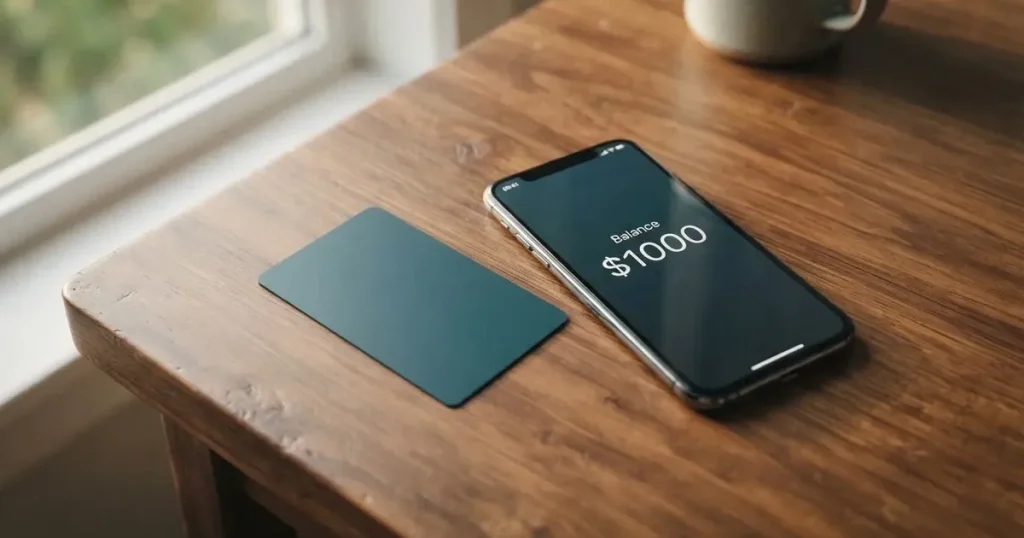
Krak is a payment card that spends directly from a crypto balance held in the Krak app, which is Kraken’s consumer-facing product. You put crypto (or fiat) in, the card pays in fiat at the till, and Krak handles the conversion. The pitch is simple: no monthly fee, no transaction fee, no foreign-exchange fee, and cashback on top. Whether that pitch survives contact with reality — residency rules, KYC, the spread on crypto sales, and the limits you only find out about in the app — is what this review is about.
The conditions described below are current as of October 28, 2026.
Verdict
Krak lands at 7.1 out of 10 in my scoring, and the headline is that the everyday mechanics are excellent while the eligibility and reliability questions drag the average down. The card itself is well-designed: virtual issuance in minutes, a free plastic card, an optional metal card, support for Apple Pay and Google Pay, and acceptance on the Mastercard network in 190-plus countries. For someone who already keeps funds in a Krak Everyday account and lives in the UK or EU, it is hard to beat on cost.
The two things I keep coming back to are geography and trust. On geography, the card is currently available to residents of the UK and the EU, with “more countries coming soon” — and a Krak help article also lists the US alongside the UK and EEA for personal accounts, so the official wording is not fully consistent. On trust, Krak is issued by Monavate, a UK e-money institution authorised by the FCA, with Monavate UAB covering the EEA under a Lithuanian licence. That is a regulated stack. The third-party picture is murkier: Trustpilot scores for krak.app are reported at either 3.8 from 34 reviews or 1.9 from 126 reviews, depending on the source, and the recurring complaint theme is account restrictions after a bank transfer or deposit with funds that become hard to access.
I would recommend this card to UK and EU residents who already use the Krak or Kraken ecosystem, want a no-fee way to spend a crypto balance, and can absorb the small spread that applies when paying in non-fiat assets. I would not recommend it to anyone outside the current residency footprint, to anyone whose main concern is a deep, well-reviewed public reputation, or to anyone who needs a card today and cannot afford a delayed application review.
| Criterion | Mark | Why it matters |
|---|---|---|
| Who can get it | 5 / 10 | UK and EU residents today, “more countries coming soon”; US appears in some help articles, creating ambiguity |
| Cost | 9 / 10 | No ordering, monthly, annual, transaction, FX or Krak-side ATM fee; a variable spread applies when spending crypto, and a $4.99 replacement fee |
| Top-up options | 7 / 10 | 600+ assets are offered in-app, the user picks the spending order, but networks and per-asset availability are not all spelled out |
| Reliability and complaints | 5 / 10 | FCA-authorised issuer (Monavate, FRN 901097) and Lithuanian EMI; Trustpilot numbers diverge, recurring complaints about account restrictions after a transfer |
| Everyday use | 10 / 10 | Virtual card in minutes, Mastercard, Apple Pay and Google Pay, ATM in 190+ countries, up to 2% cashback, 4% on Krak Concierge travel |
Will they give you the card
Krak’s card page says the product is “currently available to residents of the UK and the EU, with more countries coming soon”, and adds a footnote that geographic restrictions apply. A separate Krak help article on personal accounts lists UK, EEA and US residents, so the official wording is not perfectly aligned. The safest reading for a prospective applicant is: UK and EU residence is confirmed; the US is mentioned in a help article but is not what the card page says; everywhere else is a wait for the rollout to expand.
The issuer side is split between two Monavate entities. For UK cards, the issuer is Monavate, a UK company (company number 12472532) with FCA registration FRN 901097. For EEA cards, the issuer is Monavate UAB, authorised in Lithuania under licence number 92. That means the card is an e-money product, not a bank account, and the funds held in the underlying Everyday account are not deposit-protected. The card programme is operated by Krak, which is Kraken’s consumer app brand.
Age and identity rules are short. The application asks for a verified Krak account with completed KYC, and the help material states that the applicant must be at least 18. Beyond that, the card pages do not lay out which documents are requested, what counts as proof of address, or how long the typical review takes — those details live in the verification flow and the help article on getting verified, which was not part of what I read.
What this means in practice is that the residency check is the gate that matters most. If you are a UK or EU resident with a clean, verifiable identity and an address you can prove, the path is open. If you are somewhere else, the application will not proceed today; if you are a UK or EU resident but your documents are thin, expect the standard back-and-forth that any regulated e-money issuer runs.
How to get it
The flow is three steps: open a Krak account, complete KYC, then order the card. Krak says the virtual card is available in minutes after verification; the physical card is shipped for free, and a metal card in stainless steel (16 g) is available to applicants who hold an average of GBP/EUR 50,000 in combined assets across Krak, Kraken and Kraken Pro.
You choose colour for the plastic card (orange or black), and you can hold a virtual and a physical card at the same time — they are managed and cancelled separately. The card is a Mastercard debit card, and it spends in 600-plus currencies; the card currency is GBP for UK cards and EUR for EEA cards, and card payments settle in the primary currency.
Delivery details for the physical card are sparse on the official pages: free shipping to UK and EEA addresses, delivery time not stated. A third-party source (CryptoCardHub, 11 August 2026) says plastic cards normally arrive within 14 business days, which I would treat as unofficial. Replacement costs are clearer: $4.99 (or the equivalent in the card currency), charged by Monavate. The same third-party source puts the metal card replacement at GBP/EUR 60, again unofficial.
The metal tier is the only “tier” in the traditional sense. There is no Bronze/Silver/Gold ladder; there is the standard card and the metal upgrade, and the metal upgrade is gated by the 50,000 combined-assets average. The 2% cashback rate is also tied to this assets average, so the metal tier and the headline cashback are two expressions of the same underlying relationship with Krak.
Fees: what it really costs
Krak is unusually direct about the headline numbers. The card is “free to order”, and there are no monthly or annual fees. Krak states there are “zero transaction fees, FX fees, ATM withdrawal fees or monthly fees on your spend”, and that “a variable spread applies when spending across assets”. The size of that spread is not stated on the card pages — it is the conversion margin Krak takes when it sells your crypto at the point of payment.
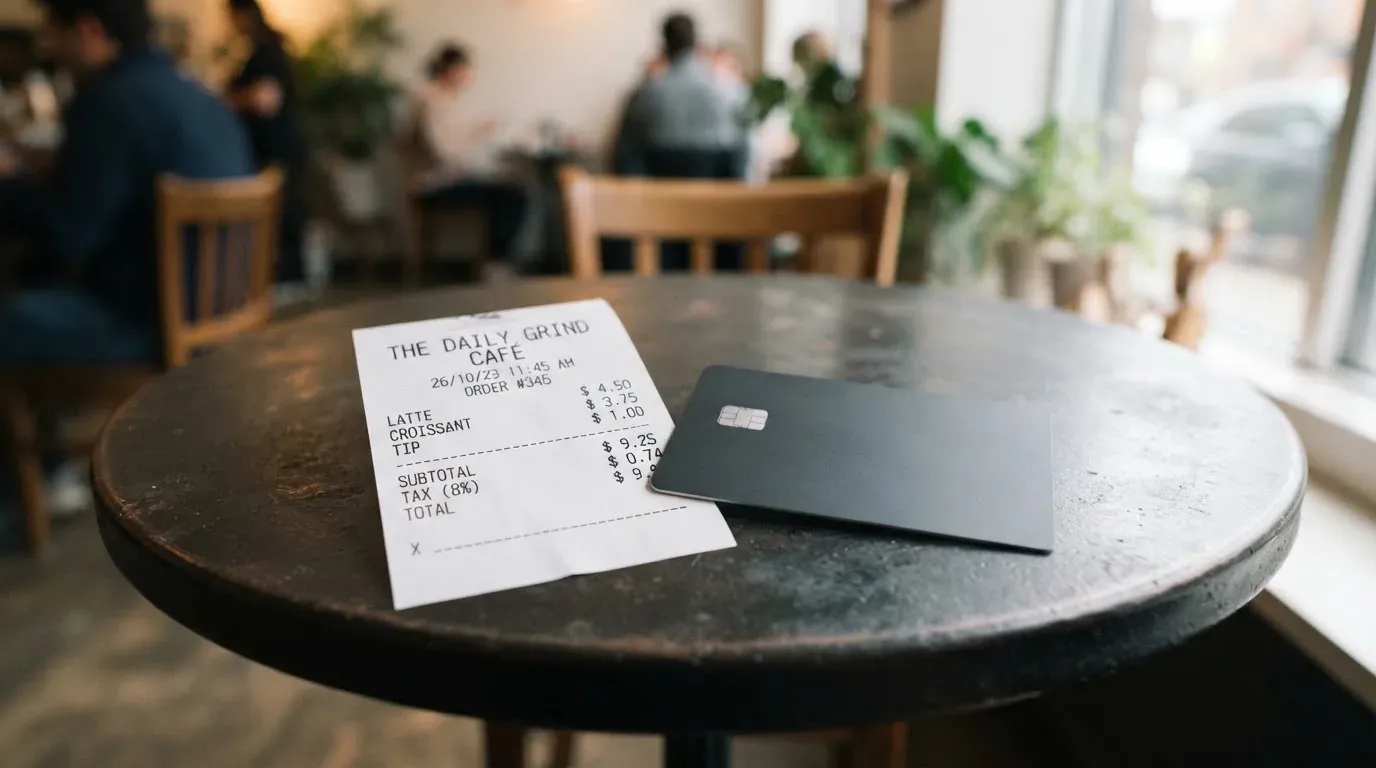
Replacement is the one fixed cost: $4.99 (or the equivalent in the card currency) charged by Monavate. ATM withdrawals themselves do not carry a Krak fee in 190-plus countries, but third-party ATM operators may charge their own fee, which is typically shown on the ATM screen before you confirm.
Limits are a different story. The card pages do not publish a limit table. Krak’s own help material says daily, weekly and monthly limits apply to both card spending and ATM withdrawals, that limits vary by region and are shown inside the app. Unofficial reporting (CryptoCardHub, 11 August 2026) suggests contactless thresholds before a PIN prompt of GBP 300 in the UK and a cumulative EUR 150 in the EEA, a cap of two virtual and two physical active cards, and a limit of three virtual card creations per rolling 30 days — none of which is confirmed on Krak’s own pages.
| Fee or limit | What Krak says |
|---|---|
| Card order | Free |
| Monthly or annual fee | None |
| Transaction fee on spend | None |
| Foreign-exchange fee | None at the card level; FX passed through at the Mastercard rate with no markup |
| ATM fee (Krak side) | None in 190+ countries; third-party ATM fees may apply |
| Card replacement | $4.99 or equivalent in card currency |
| Crypto-to-fiat spread | Variable, size not stated on the card pages |
| Spending and ATM limits | Apply; vary by region; shown in the app |
To make that less abstract, here is what a typical week of spending looks like in fees. A EUR 50 grocery shop in Spain paid from a EUR balance in your Everyday account costs nothing on top of the purchase price. The same EUR 50 paid from a USDC balance costs nothing as a fee, but Krak takes its variable spread when it sells the USDC for euros at the till, so the effective cost is whatever the spread is at that moment. An ATM withdrawal in Germany paid from your EUR balance has no Krak fee, and the ATM operator either charges nothing or charges its own fee (shown before you confirm). The recurring cost on this card, when there is one, is the spread on crypto sales, not a published percentage.
The cashback softens that. Krak pays “up to 2% cashback in cash or crypto” depending on your average assets held with Krak, Kraken and Kraken Pro, and up to 4% on travel booked through Krak Concierge. The 2% number is a ceiling, not a default, and the rate you actually receive depends on your tier within that assets-based structure.
Top up: how to fund the card
Krak does not separate “top up” from “deposit” the way some prepaid products do. The card spends from the balance in your Krak Everyday account, and the Everyday account is funded in the app at any time. You can hold fiat balances (GBP for UK cards, EUR for EEA cards) and spend those directly, or you can hold crypto and let the card convert at the till.
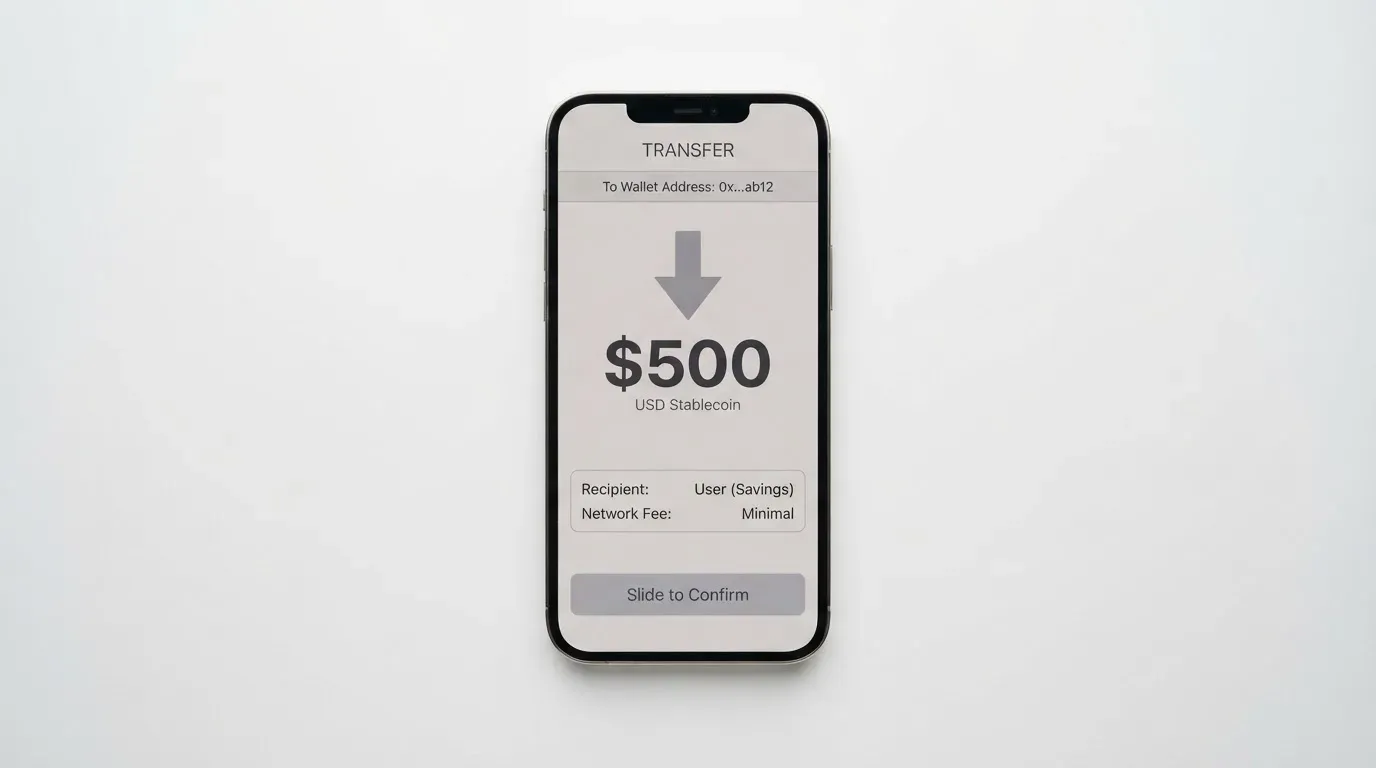
The order in which assets are drawn is yours to set. Krak offers more than 600 assets in the app, and the Spend Order you configure decides which asset is used first, which is used second, and so on. Not every asset offered in the app is available for card spending — unsupported assets show as “Unavailable” in the Spend Order, and you can also block specific currencies from being spent through that screen. Fiat balances can be spent directly without conversion.
Funding methods that exist in the wider Krak app include Plaid (for EUR and GBP bank transfers) and PayPal, with help articles describing each. Some deposit methods carry a three-day withdrawal hold. The card FAQ does not describe a “card balance” you withdraw to a bank or back into crypto, and there is no in-card balance to “cash out” — closing the card is a matter of contacting Krak Support, and ending the Kraken E-Wallet agreement also terminates the Monavate agreement that sits behind the card.
For the cost of a card deposit specifically, the official pages do not give a number. Unofficial reporting (CryptoCardHub, 11 August 2026) puts near-instant card deposits at GBP/EUR 0.25 plus 3.75%, which I would not rely on. What I would rely on is this: bank transfers via Plaid are the cheapest route, deposits may be held for three days on some methods, and the underlying blockchain fee for any on-chain crypto deposit is paid to the network, not to Krak.
Paying with it every day
The day-to-day experience is where Krak is strongest, which is why the “everyday use” criterion scores a full 10 out of 10. The virtual card is available in minutes, so online subscriptions and one-off digital purchases can be set up the same day you finish KYC. The physical Mastercard is accepted anywhere Mastercard is taken, and Krak supports Apple Pay and Google Pay, so the card can be added to a phone wallet for tap-to-pay.
The cashback structure rewards spending rather than holding. Up to 2% in cash or crypto, scaled to your average assets across Krak, Kraken and Kraken Pro; up to 4% on travel booked through Krak Concierge. There are no published blocked merchant categories, but you can block individual currencies in the Spend Order if you want to keep, say, a volatile altcoin from being spent by accident.
The app is the control panel. The Krak app is on iOS (App Store) and Android (Google Play); ratings on those stores were not stated on the pages I read. Inside the app you can freeze, unfreeze or replace the physical card instantly, set the Spend Order, and open a transaction to dispute it. Disputes are raised in-app by tapping “Get help with this transaction”; refunds return to the Everyday account in the card’s primary currency, and crypto is not automatically converted back, so if you paid in a token and want the refund in that token, the conversion path is a separate step.
Complaints and refunds are governed by clear timelines. For UK cardholders, Krak acknowledges a complaint within 24 hours and issues a final response within 15 business days, extendable by 20. For EEA cardholders, the target is 15 business days, or 35 if the case is genuinely delayed. A 14-day cooling-off refund of fees is available after sign-up. A Kraken help article elsewhere suggests disputes may take 45 to 60 days, which is longer than the 15-business-day acknowledgement window — worth knowing if you are weighing how quickly an issue is likely to resolve.
What can go wrong
The realistic risks on a Krak card sit in three places: the spread on crypto conversion, the regulatory and operational track record of the issuer, and the day-to-day experience of using a card on the Mastercard network with limits that only show up in the app.
The spread is the structural one. Krak does not publish it, and it applies every time you pay in something other than the card’s primary fiat. If you are spending a volatile token, that is the cost of converting into a stable payment currency at the till, and it is the difference between “no fees” and “fees, just hidden in the price”. This is not unique to Krak — it is how most crypto cards make their money — but it is the single most important number to understand on this product, and Krak is not volunteering it.
The regulatory picture is reassuring on paper and less so in practice. The issuer is a regulated e-money institution on both sides of the Channel (FCA FRN 901097 in the UK, licence number 92 in Lithuania for Monavate UAB), and the underlying E-Wallet is an e-money account issued by Kraken, not by Monavate. A third-party report (penchan.co, undated, unverified) describes a Bank of Lithuania action against Monavate UAB in connection with AML and safeguarding, and mentions card payments failing for ~6.5h and ~8h in the UK and EEA on separate occasions, alongside an auto-freeze triggered by small transfers from sanctioned addresses. A Reddit thread from July 2026 describes an 11-day security review during which deposits, withdrawals and card use were suspended, with Kraken support later acknowledging that the company “dropped the ball” on that case. The official Krak pages do not list these incidents, so they remain third-party reports rather than confirmed events.
The third-party reputation picture is mixed. Trustpilot scores for krak.app are reported at 3.8 out of 5 from 34 reviews on one aggregator and 1.9 out of 5 from 126 reviews on another, and the two cannot both be the live score at the same time — one is almost certainly stale. The themes in the negative reviews are consistent: accounts restricted after a bank transfer or deposit, funds that become hard to access, generic replies without timelines, and at least one case of a UK cardholder being asked for a signature instead of a PIN at a terminal, with a delayed refund afterwards. None of that is a reason to write the card off, but it is a reason to keep meaningful funds in a place you can reach while a Krak issue is open, rather than loading the Everyday balance and hoping.
Two other things to keep in mind. First, the limits are not published on the website; the only way to know your daily, weekly and monthly caps is to check the app after your account is set up. Second, the card is e-money, not a bank deposit, so the funds in the Everyday account are not protected by the FSCS in the UK and do not have deposit-guarantee coverage in the EEA. That is normal for this category, but it is the kind of detail that matters when something goes wrong.
What to take instead
The honest case for an alternative is one of three: you live outside the UK and EU and need a card today, you need a deeper public reputation than Krak currently shows, or you want a different reward structure than Krak’s assets-based cashback. Three cards I would consider alongside Krak are Young Card, MSX and Bybit Card.
Young Card is the token-reward play. It pays cashback in YNG tokens, with rates that scale by Club tier: Essential 0.1%, Gold 1.8%, Platinum 3.6%. Bronze and Silver are not stated. The card’s own residency rules, fees and funding mechanics were not available on the official page I could read, which is itself a data point — if you cannot find the cost of a card on the card’s own website, that is worth treating as a risk. Young Card scores 5.7 out of 10 in my framework, mostly on the strength of the headline cashback rate at the top tier and the weakness of the public information around it.
MSX is a middle-of-the-pack option at 6.4 out of 10. The official page I could read did not state residency, fees or funding mechanics, so the comparison is thinner than I would like. If MSX is on your shortlist, I would treat it as a card to research further rather than one to commit to on the basis of the headline alone.
Bybit Card is the most documented alternative here, and the most geographically flexible. It is available in Argentina, the AIFC in Kazakhstan, Georgia, Kazakhstan, Australia, Mexico, Brazil, Peru and an Asia Pacific region, and it is explicitly “not meant for European Economic Area customers”. The card currencies vary by region — USD for AIFC, Georgia, Kazakhstan, Australia and Asia Pacific; ARS in Argentina; MXN in Mexico; BRL in Brazil; PEN or USD in Peru — and the network is Mastercard in some regions and Visa in others. Bybit’s fiat-service restricted list includes Belarus, Russia, Serbia, China and the United States, and there is no card-specific statement on Russian or Belarusian citizens. The fees are richer than Krak’s: a 0.9% crypto conversion fee over the One-Click Sell rate in most regions, 0.5% in Argentina, an FX fee of 2% on top of the network rate in most regions, 7% in Argentina and 1.5% in Brazil, plus VAT and provincial taxes in Argentina. Rewards from 5 October 2026 are only paid on crypto-funded transactions, and run from 2% at Base to 10% at Infinite, with a welcome offer of 10% cashback up to 110 USDT in the first 30 days. Bybit Card scores 6.0 out of 10.
If you are in the UK or EU, Krak is the cheapest of these to run. If you are somewhere else, Bybit Card is the realistic alternative, with the trade-off that fees are higher and the regulatory footprint is more complicated. MSX and Young Card are cards I would only move to once I had read the latest fee schedule and residency rules on their own pages, because the public information is too thin to rank them confidently today.
Who I would recommend it to
Krak is a strong fit for three reader profiles, and a poor fit for two.
The first fit is a UK or EU resident who already keeps funds in a Krak or Kraken account and wants a clean, low-friction way to spend that balance at a Mastercard terminal. For this reader, the card is essentially free to run, the cashback up to 2% is a real upside, and the lack of FX and transaction fees is a tangible saving over a typical bank card.
The second fit is a traveller in the 190-plus countries where Krak says the card is accepted. With no FX markup at the card level and the FX passed through at the Mastercard rate, the card behaves like a competitive travel card, with the caveat that you still pay the spread when spending from crypto rather than from the card’s primary fiat.
The third fit is someone who values the metal tier and already runs a meaningful Krak/Kraken/Kraken Pro balance. Hitting the GBP/EUR 50,000 average unlocks the stainless steel card and the top of the cashback range, and for that reader the card is a presentable object as well as a functional one.
The first profile I would steer away is anyone outside the current UK/EU footprint. “More countries coming soon” is real, but it is not a product you can use today, and the help article’s mention of the US is not the same as confirmed US availability on the card page.
The second is anyone whose primary concern is a deep, well-reviewed public reputation. The Trustpilot numbers are inconsistent, the negative-review themes are real, and the third-party reports of operational incidents are not the kind of record that reassures a cautious reader. Krak is regulated, the issuer is regulated, and that counts for a lot — but a reader who needs the social proof before they commit may want to wait for the public record to mature.
Frequently asked questions
What is the Krak card?
Krak is a Mastercard debit card that spends from a balance held in the Krak Everyday account, which is Kraken’s consumer app. You can fund the account with fiat and spend it directly, or hold crypto and let the card convert at the point of payment. The card is issued by Monavate in the UK and by Monavate UAB in the EEA.
How does the Krak card work?
When you tap or insert the card, Krak sells the asset at the top of your Spend Order for the card’s primary currency at the current rate, then settles the payment on Mastercard. The Spend Order is yours to configure in the app, fiat balances are spent first if you put them at the top, and a variable spread applies whenever a non-fiat asset is sold.
Is Krak a bank?
No. Krak is the consumer brand of Kraken, a crypto exchange. The card itself is an e-money product issued by Monavate, a UK e-money institution authorised by the FCA, and the Everyday account is an e-money account issued by Kraken, not a bank account. Funds in the Everyday account are not deposit-protected.
Who owns Krak?
Krak is the consumer-facing app of Kraken, the cryptocurrency exchange. The card programme is run by Krak and issued by Monavate and Monavate UAB, which are separate regulated e-money institutions.
Is the Krak card available in my country?
Today, the card is available to residents of the UK and the EU, with “more countries coming soon”. A Krak help article also lists the US for personal accounts, but the card page itself does not. If you are outside the UK and EU, the safe assumption is that you cannot apply yet, and you should check the card page for the latest residency list.
How do I apply for a Krak card?
You open a Krak account, complete KYC, and then order a card in the app. The virtual card is available in minutes after verification, the physical card is shipped free to UK and EEA addresses, and the metal card is available to applicants with an average of GBP/EUR 50,000 in combined assets across Krak, Kraken and Kraken Pro.
Does the Krak card require KYC?
Yes. A verified Krak account with completed KYC is required before the card can be ordered, and the applicant must be at least 18. Monavate must verify your identity before it issues the card, and the help article on getting verified covers the document list in detail.
How do I top up the Krak card?
You top up the Everyday account in the app, and the card spends from that balance. Funding options in the wider Krak app include Plaid bank transfers in EUR and GBP and PayPal; some deposit methods carry a three-day withdrawal hold, and the deposit fee and minimum are not stated on the card pages.
How do I add the Krak card to Apple Pay or Google Pay?
You add the card through the Krak app, in the same way you would add any other card to a phone wallet. The card number is replaced with a tokenised device number, and Apple Pay and Google Pay both work with Krak cards.
Is the Krak card safe?
The card is issued by a regulated e-money institution in the UK and EEA, and the app supports instant card freeze and real-time transaction monitoring. The structural risks are the same as for any custodial crypto card: the spread on conversion, the fact that the Everyday account is not a bank deposit, and the operational and reputation record of the issuer, which is mixed in third-party reviews. The card pages do not mention two-factor authentication, and funds are held with Kraken, not with Monavate.
Choosing an exchange card – cryptocardadvisor
Content created by the «cryptocardadvisor» team