
KlienCard card, reviewed: the cost of staying anonymous
 Available in US

KlienCard is a virtual Mastercard that you pay for with crypto and use to spend online without an identity check. The pitch is simple: register with an email, send USDC on the Polygon network, and a card number lands in your dashboard in a few minutes. After that you can top it up with USDT or BTC and pay at any merchant that takes Mastercard. If you are reading this, you are probably weighing that offer against the things it does not say on the page. I have gone through the public material and the few reviews that exist, and I want to walk you through what KlienCard actually does, what it costs, and where the edges are.
The conditions described below are current as of October 28, 2026.
Verdict
KlienCard is a real, working product, but it is not a serious everyday card. My overall score is 4.2 out of 10, and most of that number comes from how easy it is to sign up rather than from the card itself. The thing that drags it down is cost: a non-refundable $11.5 to issue a card, of which only $5 is loaded as balance, and user reports of fees around 10% to 22% on deposits, depending on the gateway. Nothing is published about the company behind it, the issuer, or any licence, and the only outside review platform with comments, Trustpilot, has just four reviews, the most recent from 2022. If you specifically want an anonymous virtual card paid for with USDC, the product does what it says. If you want a card you can rely on for normal spending, there are clearer options.
| Criterion | Score | Why it lands there |
|---|---|---|
| Who can get it | 9 / 10 | The site says “valid in 190+ countries” with no published list of exclusions, and there is no KYC. |
| Cost | 1 / 10 | $11.5 to issue a card, of which $5 is balance; users report deposit fees of roughly 10% to 22%, and the company itself has not published a clean fee schedule. |
| Top-up options | 5 / 10 | First issue paid in USDC on Polygon; later top-ups in USDT and BTC; bank transfer reloads are mentioned in the FAQ. |
| Reliability and complaints | 3 / 10 | No legal entity, no issuer, no licence on the site; only four Trustpilot reviews, all from 2021 to 2022, the most recent complaints about high fees. |
| Everyday use | 2 / 10 | Virtual only, no physical card, no Apple Pay or Google Pay mentioned, no ATM, and the company has not said what the card currency is. |
The audience KlienCard is built for is narrow. If you are someone who specifically wants a virtual card you can buy with stablecoins, without uploading an ID, and you understand the trade-offs that come with that, KlienCard does deliver on the basics. If you are looking for a card to use for groceries, subscriptions and travel, this is not the one.
Who will they give you the card
KlienCard’s own page says the card is “valid in 190+ countries.” That is a wider reach than most regulated cards offer, and it is also the only eligibility line on the site: there is no list of countries, no list of blocked regions, and no mention of what happens if your country is the one that is not in the 190. The FAQ describes the card as being “intended solely for lawful online purchases and digital advertising campaigns,” which tells you two things at once. First, this is a card for paying merchants on the internet, not a card you take into a shop or use at an ATM. Second, the word “lawful” is doing a lot of work in that sentence, because there is no compliance team to enforce it: the product is sold on the basis that no one checks who you are.
That point is reinforced by the privacy policy, which says the company does not collect names, addresses or government-issued ID, and that an email address is all you need to register. This is the “no KYC, fully anonymous” pitch, and it is the main reason a reader would even consider KlienCard over the dozens of regulated crypto cards on the market. It is also the main reason the card is hard to assess in the usual way. A regulated card gives you a licence number, a regulator to complain to, and a paper trail if something goes wrong. KlienCard offers none of those, because the whole model is built around not having them.
What the public information does not say is just as important as what it does. There is no published list of accepted and rejected countries; there is no information about minimum or maximum age; there is no list of restricted merchant categories beyond the very general phrase about “lawful online purchases.” If your country of citizenship, your country of residence, or the country your IP appears to come from matters to you, the only honest answer is that the company has not told us.
How to get it
The sign-up flow, as described on the site, has three steps. First, you register on the KlienCard dashboard, which is reached through the domain debitcard.pw. Second, you pay for the first issue of the card in USDC, sent on the Polygon network. Third, the card number appears in your dashboard, normally within one to three minutes, and the FAQ says sometimes in less than three.
That is the entire flow. There is no identity check, no proof of address, no selfie, no source-of-funds questionnaire. The privacy policy is explicit that only your email is required. The site describes the product as a “Virtual Credit Card (VCC)” in its terms, while the FAQ at one point also calls it a “Virtual Visa and Mastercards” — a small but telling inconsistency, since the public material only ever shows a Mastercard. The card currency is not stated on any of the public pages I could read.
Because the card is virtual, there is no shipping, no delivery address, and no waiting for the post. The card simply exists in your dashboard once payment is confirmed. The terms also advertise “unlimited virtual cards” after the first activation, which is worth keeping in mind if your use case is rotating card numbers for advertising spend or one-off online purchases. There is no app: a web dashboard is all you get, with 3-D Secure one-time passcodes delivered to that dashboard, to your email, or by SMS — the exact channel is not specified.
What it really costs — Fees
This is the section where the picture gets uncomfortable. The headline cost is the issue fee: KlienCard charges $11.5 to create a card, of which $5 is loaded as the card’s starting balance, and the rest is a non-refundable base fee. The site is clear that the $5 balance is your spending money, and the rest is the cost of making the card exist at all. There is no published monthly fee, no published conversion or FX fee, no published ATM fee, and no published daily or monthly limit. The fact that the card is virtual means there is no ATM in the picture, but the absence of any other published numbers is the real story.

| Fee or limit | Amount |
|---|---|
| Card issuance | $11.5 total ($5 loaded as balance, the rest is a non-refundable base fee) |
| Monthly fee | Not stated |
| Conversion / FX fee | Not stated on the site |
| ATM fee | Not stated (virtual card only) |
| Daily limit | Not stated |
| Monthly limit | Not stated |
| Refund of base fee | Not available after delivery |
The cleanest way to think about it is that the cost of owning a KlienCard has three layers. The first is the $6.50 you pay for the privilege of having a card number, which you cannot get back even if the card never gets used. The second is the cost of putting money on the card, and this is where the real damage happens. Independent user reports on Trustpilot put deposit and load fees at around 22%, with the company replying that the rate depends on the payment gateway. Unofficial information from the same platform suggests the more typical range is 10% to 15%, but that is a third-party figure and not confirmed by KlienCard. The third is the cost of actually using the card, which the company has not published.
To make this concrete, three everyday payments are worth thinking through. A $30 streaming subscription paid on a card loaded with $100 of USDC: the load cost alone, at 15%, would have already taken $15 off the top, so the $100 only bought you about $85 of spending power before you even touched the card. A $200 flight booked on the same balance: the $30 to $50 lost on loading is the same in dollar terms but a smaller percentage of what you put in, but you are still paying a premium for the convenience of paying in USDC. A $5 in-app purchase on a freshly issued card: the $11.5 issue fee is now more than double the purchase itself, so unless you plan to use the card heavily, the fixed cost dominates the per-transaction cost entirely.
The honest version of this is that KlienCard is expensive in the places where most crypto cards are cheap, and silent in the places where it matters. If you only knew about the $5 starting balance, you might think the card was free. Once you account for the issue fee and the load fee, the effective cost of spending through KlienCard is well above what a regulated card with a published FX mark-up would charge.
How to top up — Top up
Topping up KlienCard happens in two stages, and they are not the same. To get your first card, you have to pay in USDC, and you have to send it on the Polygon network. That is the only network the first issue accepts. After the card is activated, you can reload with USDT or BTC, and the FAQ also mentions bank transfer reloads through the portal, although the fees and minimums for that route are not stated.
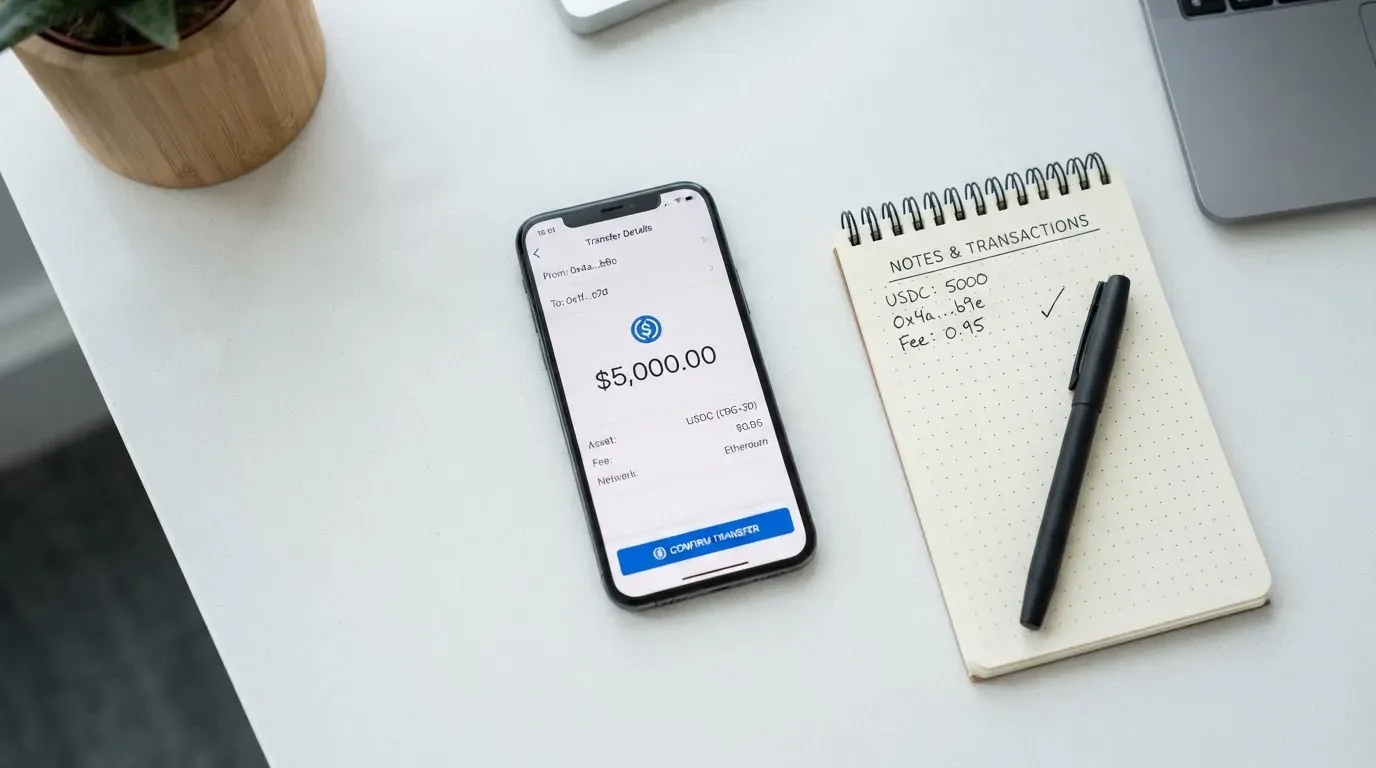
A few things follow from this. The first issue is rigid by design: Polygon is a low-fee network and USDC is a stablecoin, so the company can settle your payment cheaply and quickly without a banking partner. After that, you have more flexibility, but the price of that flexibility is the load fee I described in the previous section, and the fact that the company has not published what it is. Sending USDT or BTC to a KlienCard top-up address is also the kind of action that is easy to get wrong, and the consequences of getting it wrong on a public blockchain are different from getting a bank transfer wrong.
There are a few practical points worth raising as you decide whether to top up. Polygon USDC is the only payment for the first card, so you need that asset and that network available before you start. After activation, USDT and BTC reloads are advertised, but the networks for those tokens are not specified, which means you need to read the deposit screen carefully before each transfer. Bank transfer reloads are mentioned in the FAQ but not in the main product description, and there is no published fee or minimum for that route. Withdrawal of funds is not described, and the issue fee is non-refundable, so the first $11.5 you put in is, in practice, partly a sunk cost.
If you are topping up with the intention of using KlienCard for a single online purchase, the way the fees stack up matters. A $100 top-up, after a 15% load fee, leaves you with about $85 of usable balance. A $50 top-up leaves you with about $42.50. The break-even point between paying the $11.5 issue fee plus a 15% load fee, and simply buying a regulated crypto card with a 1% FX mark-up, is not far away, and it gets closer the smaller your top-up is.
Paying with it every day
Day to day, KlienCard is a virtual Mastercard, and the experience is the one that description implies. You log into the dashboard, copy the card details, and type them into the merchant’s checkout. 3-D Secure is supported, with one-time passcodes delivered to the dashboard, your email, or by SMS. There is no app, no physical card, and no mobile wallet integration is mentioned anywhere on the public pages. That means Apple Pay and Google Pay are not in the picture, even though those are the ways most people now actually pay online without typing card numbers into a form.
There is no rewards programme, no cashback, and no published merchant category restrictions beyond the very general line about “lawful online purchases.” There is also no published dispute or chargeback process: the site has a refund policy page, but it is summarised rather than explained, and the company has not said how it handles merchants who do not deliver, double-charge, or run a fraudulent subscription. For a card where the whole pitch is “no KYC,” the absence of a clear dispute process is not a surprise, but it is a real limitation for everyday use.
Two practical consequences follow. First, the card is not great for subscriptions, because there is no app-based control panel to freeze a recurring charge, and the dispute route is not clear. Second, foreign-issued cards tend to face extra scrutiny from merchants, and KlienCard has not told us what the card’s BIN is, which network country the issuer is in, or how its cards appear in the BIN lookup databases that merchants and fraud systems use. If you have ever had a card silently declined by a merchant for “security reasons,” this is the kind of card that tends to trigger that experience.
What can go wrong
The honest answer to “what can go wrong” depends on whether you are asking about the card as a payment product or about the company behind it, and on KlienCard both questions matter.
On the company side, the public material gives you very little. The brand is KlienCard, the login domain is debitcard.pw, and the company has not published a legal entity name, a registered address, an issuing bank, an e-money licence, or any other regulatory reference. That is not unusual for anonymous prepaid products, but it is a meaningful gap: there is no regulator to escalate a complaint to, and there is no insolvency regime that automatically protects customer balances if the company stops operating. The product is custodial — your balance sits with KlienCard, not in your own wallet — and there is no published segregation or insurance of those funds.
On the card side, the main reported risk is cost. Trustpilot shows a 4.0 rating from four reviews, with no reviews in the last twelve months; the most recent complaints, from September 2021 and March 2022, are about fees being expensive, with one user reporting deposit and load fees of about 22% and the company replying that the rate depends on the payment gateway. Unofficial information on the same platform puts the more typical deposit fee at 10% to 15%, but that figure is not confirmed by KlienCard and should be treated as a third-party estimate. There are no published security incidents, no public reports of a hack, and no public insolvency filing, but the small number of independent reviews and the silence of the company on basic corporate details mean you are relying on a thin paper trail.
There are also some general risks that apply to any card in this category. Custodial platforms have a record of failing, sometimes dramatically, and the value of a stored balance is only as good as the solvency of the entity holding it. Blockchain transfers are irreversible, so a deposit sent to the wrong network or address is generally lost. Support is offered through Telegram (@kliencard) and email ([email protected]), with no published hours, languages, or service-level commitment, so if something goes wrong the resolution path is informal. And the “no KYC” pitch cuts both ways: the company cannot help you recover a compromised account the way a regulated bank can, because the company does not know who you are in the first place.
What to take instead
KlienCard is not the only virtual crypto card in this corner of the market, and a quick comparison helps put it in context. None of the alternatives are direct substitutes — they all make different trade-offs — but together they show the range of what is on offer.
Cardex is a crypto debit card on the Verve, Visa, Mastercard and UnionPay networks, available in 200+ countries according to the company, with virtual and physical cards and a Naira-denominated account. Its score in my notes is 5.6 out of 10. The interesting feature is an “AI-powered conversion rate” that scans exchanges at the moment of payment and picks the best rate, although the company has not published a fee percentage for that conversion. Top-ups are accepted in USDT, USDC and BTC, with the networks not stated.
CardFlow is positioned for Nigeria and Nigerians abroad, with the site calling itself “Nigeria’s smartest fintech card platform.” Its score is 4.9 out of 10. The card is a virtual USD Mastercard, and the FAQ says creating a virtual card is free, with no monthly fee mentioned. Funding is in BTC, USDT, ETH or Naira bank transfer, and the networks for the crypto options are not stated.
HyperCard is a prepaid card with a balance in USD or EUR, and its score is 4.7 out of 10. The App Store listing says it works in more than 176 countries, although that figure describes where the card is accepted, not who is eligible. Funding is by depositing USDT, BTC or ETH in the app, which the company converts to USD or EUR on the card; fees are not stated on the pages I could read.
| Card | Score | KYC | Card type | Funding | Notable trade-off |
|---|---|---|---|---|---|
| KlienCard | 4.2 / 10 | None | Virtual Mastercard | USDC (Polygon), USDT, BTC, bank transfer | High load fees, no published corporate details |
| Cardex | 5.6 / 10 | Not stated | Virtual and physical, multiple networks | USDT, USDC, BTC | Conversion rate claim is not backed by a published fee |
| CardFlow | 4.9 / 10 | Not stated | Virtual USD Mastercard | BTC, USDT, ETH, Naira | Heavily Nigeria-focused, networks not stated |
| HyperCard | 4.7 / 10 | Not stated | Prepaid, USD or EUR balance | USDT, BTC, ETH | “176 countries” is acceptance, not eligibility |
The honest read is that KlienCard wins on the single dimension of “no KYC” and loses on almost everything else. If anonymity is your primary requirement and you are willing to pay for it, KlienCard is the cleanest fit of the four. If you can accept a light identity check and want a card with a published fee schedule, an issuer, and a regulator behind it, you will find better value elsewhere.
Who I would recommend it to
I would recommend KlienCard to a fairly specific reader. If you need a virtual Mastercard number, you have USDC on Polygon ready to send, you are happy with an email-only account, and the purchase you are making is a one-off or short-term online spend that you would rather not tie to a personal card, KlienCard does what it says. It is also a reasonable fit if you run digital advertising campaigns and want to be able to generate fresh card numbers quickly without going through a bank.
I would not recommend KlienCard if you want a card for everyday spending, if you want cashback or rewards, if you want to add the card to a mobile wallet, if you want a clear dispute process, or if you want a regulated institution behind your balance. I would also not recommend it as your only card, or as a place to park a meaningful amount of money for a long period. The $11.5 issue fee and the load fees are too high for casual use, and the absence of a published company, issuer and licence makes it a poor candidate for anything beyond a small, time-limited need.
If you are weighing KlienCard against a regulated crypto card from a known issuer, the rough question to ask yourself is: how much is anonymity worth to me, in dollars, on a $100 top-up? If the answer is “less than about $15,” the regulated card is probably the better deal. If the answer is “more than $15” and the purchase genuinely cannot be made with an identified card, KlienCard has a niche where it makes sense.
Frequently asked questions
What is KlienCard?
KlienCard is a virtual Mastercard that you buy with crypto and use to spend online. The company behind it does not publish its legal entity, its issuer, or any licence, and the product is sold on a “no KYC” basis, meaning an email address is all you need to register. The card is virtual only, so there is no physical card, no app, and no mobile wallet integration.
How does KlienCard work?
You register on the KlienCard dashboard, pay the first issue fee in USDC on the Polygon network, and a card number is generated in your dashboard within about one to three minutes. After activation, you can top up with USDT or BTC, and the FAQ also mentions bank transfer reloads. Spending works like any other Mastercard online checkout, with 3-D Secure passcodes delivered to the dashboard, your email, or by SMS.
Is KlienCard a bank?
No. KlienCard describes itself as a virtual card provider, and the public material does not name a bank, an e-money institution, or any other regulated entity behind the product. The brand KlienCard operates from the domain debitcard.pw, and the company has not published a registered address or a licence number. It should not be treated as a bank, and stored balances are not protected by any deposit guarantee scheme.
Who owns KlienCard?
The public material does not say. The brand name is KlienCard, the login domain is debitcard.pw, and the support channels are a Telegram account (@kliencard) and the email [email protected], but no parent company, legal entity, or beneficial owner is named. The lack of disclosed ownership is a real gap if you are trusting the product with a non-trivial balance.
Is KlienCard available in my country?
KlienCard says its card is “valid in 190+ countries,” but it has not published a list of those countries, a list of excluded countries, or any country-specific terms. In practice this means the company has not told us who can or cannot sign up, and you only find out by trying. If your country of citizenship or residence matters to you for legal or tax reasons, the absence of a published list is something to weigh carefully.
Does KlienCard require KYC?
No. The site advertises “no KYC — fully anonymous,” and the privacy policy says the company does not collect names, addresses, or government-issued ID. An email address is the only requirement. The flip side is that the company cannot help you recover a compromised account the way a regulated bank can, because it does not know who you are.
How do I top up KlienCard?
The first card has to be paid for in USDC on the Polygon network, and that is the only option at sign-up. After activation, the site says you can top up with USDT or BTC, and the FAQ also mentions bank transfer reloads through the portal, although no fee or minimum is published for that route. Always check the network and address on the deposit screen before sending crypto, because a transfer to the wrong network is generally irreversible.
Can I add KlienCard to Apple Wallet or Google Pay?
The public material does not mention Apple Pay, Google Pay, or any other mobile wallet integration. Because the product is a virtual card with no app and no published tokenisation support, adding it to a mobile wallet is unlikely to be supported. If mobile wallet payments matter to you, this is one of the clearer gaps in the product.
Is KlienCard safe?
The site claims “100% secure” without detail, and the card uses 3-D Secure for online payments, but the product is custodial and the company has not published how customer balances are safeguarded, whether they are segregated, or whether they are insured. There is no regulator to escalate a complaint to, no published dispute or chargeback process, and the only third-party review platform with comments, Trustpilot, has four reviews, the most recent from 2022. The card is not unsafe in any specific documented way, but the safety case rests on the company’s word, not on external verification.
Is KlienCard worth it?
It depends on what “worth it” means to you. If you specifically need an anonymous virtual Mastercard paid for with USDC, the product does what it says, and the convenience is real. If you compare it on cost alone — a $11.5 issue fee, of which only $5 is balance, plus reported deposit fees of 10% to 22% — KlienCard is one of the more expensive ways to spend crypto online. For most readers, a regulated card with a published FX mark-up will be cheaper, easier to dispute, and backed by a real institution.
Choosing a virtual card – cryptocardadvisor
Content created by the «cryptocardadvisor» team