
Gpayvcc review — a prepaid virtual card paid in crypto, with real questions about its issuer and refund policy
 Available in US

Gpayvcc is a service that sells prepaid virtual Visa and Mastercard cards paid for in cryptocurrency. You sign up with an email, a name and a phone number, choose a card, pay in crypto, and the card number, expiry, CVV and billing address arrive by email within five minutes of payment confirming. The cards are virtual only: there is no plastic, no ATM access, and no bank behind Gpayvcc itself, because the company explicitly states it is not a bank and does not issue cards. Instead, third-party issuing partners do the issuance, and the card network (Visa or Mastercard) routes the payment.
If you are weighing Gpayvcc against other prepaid virtual cards, the things that matter are whether you can use it where you live, what the all-in price really is, and what happens if something goes wrong. This review goes through those in order.
The conditions described here are current as of October 28, 2026.
Verdict
Gpayvcc scores 6.9 out of 10 in our assessment, which puts it in the “worth a look, with reservations” band rather than at the top of the prepaid virtual card market. The score reflects genuine strengths — a low entry price, support for many cryptocurrencies and a quick virtual delivery — alongside structural risks that you should not ignore.
Who the card suits: people who want a prepaid virtual card paid in crypto, who do not need a physical card, who already keep funds in USDT, BTC, ETH, BNB, SOL, TON, TRX, LTC or BCH, and who do not expect ATM withdrawals, cashback or a banking relationship.
Who the card does not suit: anyone who needs a physical card, anyone who plans to draw cash from an ATM, anyone who needs a regulated bank behind the card, and anyone who expects a clear refund or chargeback path if a merchant fails to deliver.
| Criterion | Score | Why it matters |
|---|---|---|
| Who can get it | 8 / 10 | Country list and exclusions are not stated; signup is by email, name and phone |
| Cost | 7 / 10 | $5–$15 issue fee; no monthly or inactivity fee; unofficial reports of a high crypto-to-fiat spread |
| Top-up options | 8 / 10 | USDT, BTC, TON and others; supported networks are not disclosed |
| Reliability and complaints | 6 / 10 | Not a bank, third-party issuers, licences unstated; Trustpilot 4.7/5 from 56 reviews, 92% five-star |
| Everyday use | 5 / 10 | Virtual only, Apple Pay and Google Pay supported, but no plastic and no ATM |
| Total | 6.9 / 10 |
The rest of the review goes through each of these in detail.
Who can get the card
Gpayvcc does not publish a country list, and there is no public list of excluded countries. That silence is itself a piece of information: a card issuer that names its supported countries gives you a quick way to check whether you are eligible, and a card issuer that does not leaves that work to you.
To sign up, Gpayvcc requires an email, a name and a phone number. The site adds that “more information may be required for legal and issuer reasons” — a standard hedge used by fintechs whose issuing partners can pull KYC at any point — and that no bank account is needed. Unofficial sources suggest that the basic tier is email-only, with no phone verification, no ID upload and no selfie, but the official pages do not confirm this.
Because Gpayvcc says it is not a bank and does not issue cards, the actual eligibility decision sits with the third-party issuing partners whose names are not disclosed. In practice that means the sign-up form is the easy part; the harder part is what happens after you have paid and the issuer decides, for any reason, to freeze or close the card.
If your situation depends on being able to use a card in a specific country, the most reliable check before paying the issue fee is to message support — live chat, WhatsApp or Telegram, with a stated target response of within 24 hours — and ask directly whether the card you want will work for residents of your country.
How to get it
The signup flow is short and entirely online:
- Sign up with an email, name and phone number.
- Choose a card. Gpayvcc lists around 28 card types across four networks, with cards denominated in specific currencies — for example, an Argentine Peso Card. The mix changes, so the catalogue on the day you sign up is the one that counts.
- Pay in crypto. The cards are priced in US dollars at issuance: Virtual Visa Reloadable at $200/$5 issue fee, Visa Gold at $200/$5, Visa Platinum at $300/$15, Visa Virtual Universal at $100/$5, and Mastercard Reloadable Classic at $100/$5. The starting price is $100.
- Receive the card details — number, expiry, CVV and billing address — by email, five minutes after the crypto payment confirms.
There is no app and no desktop client mentioned on the official site. Everything runs through the website and email. The card itself is virtual only, so there is no shipping address to enter and no courier to wait for.
The minimum KYC level is not stated in Gpayvcc’s own pages; unofficial descriptions of the sign-up flow suggest that an email alone is enough to start, but the card-issuing partner can always require more documents at activation or before a top-up is processed.
A practical point: because the card details are sent to your email, the security of that email account becomes the security of the card. If your email is compromised, anyone with inbox access can read the PAN, expiry and CVV and use them for online purchases until the card is blocked.
Fees and what it really costs
Gpayvcc’s pricing is unusually simple, which is one of the main reasons people choose it. There is an upfront issue fee, and that is the bulk of what you pay. There is no monthly fee and no inactivity fee.

| Item | Amount |
|---|---|
| Virtual Visa Reloadable — issue fee | $5 (on a $200 card) |
| Visa Gold — issue fee | $5 (on a $200 card) |
| Visa Platinum — issue fee | $15 (on a $300 card) |
| Visa Virtual Universal — issue fee | $5 (on a $100 card) |
| Mastercard Reloadable Classic — issue fee | $5 (on a $100 card) |
| Monthly fee | None |
| Inactivity fee | None |
| FX and crypto-to-fiat conversion fees | Not stated by Gpayvcc |
| ATM withdrawal fees | Not applicable (no ATM access) |
| Daily and monthly spending limits | Not stated by Gpayvcc |
Gpayvcc’s own pages do not list an FX fee or a crypto-to-fiat conversion fee, which is the most important number missing from the table. Unofficial reviews describe the conversion spread as “high”, and one aggregator lists the issue fee as $200 rather than $5, in direct conflict with Gpayvcc’s own published price.
What this means in three everyday situations:
- Paying for an online subscription in US dollars with a US-dollar card. You pay the issue fee once. At the moment of payment, the card is funded and denominated in US dollars, so the merchant sees no foreign-currency conversion. The hidden cost is whatever spread Gpayvcc built into the original crypto-to-USD conversion when you bought the card. You will not see it as a line item.
- Paying a merchant in a currency other than the card’s currency. This is the most expensive path. Gpayvcc does not publish a markup, so you do not know the exact cost on top of the network rate. The only honest way to find out is to make a small test payment and compare the local-currency value you gave up against an independent mid-market rate.
- Buying the card with a volatile cryptocurrency such as BTC or ETH. The price is fixed in dollars, but the amount of crypto you send is calculated at the moment the blockchain transaction confirms. If the price moves between the quote and the confirmation, you may send a little more or a little less than the displayed amount, and any shortfall is taken from your balance or rejected. Gpayvcc does not state how it handles this gap.
Unofficial sources also report “no refunds on card balances”, which is a meaningful gap: if a card is declined repeatedly or a merchant fails to deliver, you may have no way to recover the unused balance. Treat any balance you load as money you are prepared to lose.
Top up
The funding model has two stages: first you deposit crypto into your Gpayvcc account balance, and then you use that balance to buy a card. Reloadable cards — Virtual Visa Reloadable, Mastercard Reloadable Classic and the Visa Gold/Platinum tiers — can be topped up after the initial purchase.
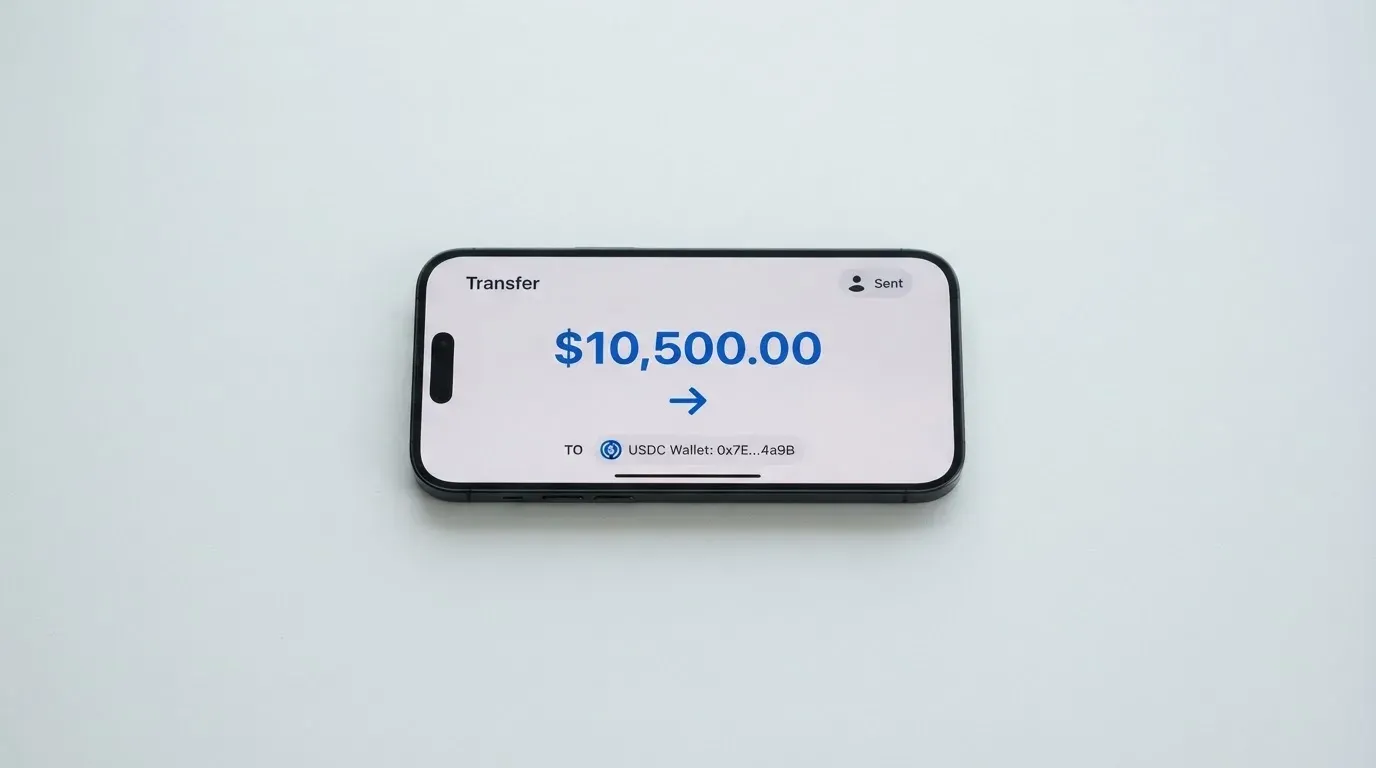
Gpayvcc lists the accepted cryptocurrencies as USDT, BTC and TON, with an earlier check recording a wider list: USDT, BTC, ETH, BNB, SOL, TON, TRX, LTC and BCH. Gpayvcc does not disclose which blockchain networks those tokens are accepted on, what the minimum top-up is, who pays the on-chain network fee, or how long a top-up takes to confirm. That is a meaningful gap, because sending USDT on the wrong network is one of the most common ways people lose crypto when funding a card.
A few practical implications:
- The token is not the network. USDT on Tron, USDT on Ethereum and USDT on Arbitrum are technically different tokens. If Gpayvcc expects one network and you send on another, the transfer either fails, sits in limbo, or — in the worst case — is lost. Always confirm the network with support before sending anything of value.
- On-chain fees are paid by the sender. The blockchain charges a network fee (gas on Ethereum, bandwidth and energy on Tron, and so on). Gpayvcc’s table of “no monthly fee” refers to its own charges, not to the network fee for the deposit. Make sure you hold a small amount of the native token (for example, a few dollars of TRX for a USDT-TRC20 top-up) so the transfer does not fail for lack of gas.
- Crypto transfers are irreversible. If you mistype the destination address or pick the wrong network, no one can press “undo”. Recovery, if it happens at all, depends on Gpayvcc’s support team agreeing to a manual trace, with no guarantee of outcome.
Withdrawal from a card balance back to crypto is not stated by Gpayvcc, and an ATM cash withdrawal is not available because the cards are virtual only. If you load a card and change your mind, your practical exit is to spend the balance, not to cash it out.
Paying with it every day
Once the card details arrive by email, you can use them for online payments, and you can add them to Apple Pay or Google Pay, which Gpayvcc confirms in its FAQ. Tokenised mobile wallets are the most common way people use these virtual cards in practice, because they let a “cardless” virtual number work in physical stores via NFC.
There are some things to keep in mind:
- No physical card. A shop that needs to swipe, dip or print a receipt with the card present will not work.
- No cash access. There is no ATM and no cashback at the till.
- Blocked merchant categories are not stated. Gpayvcc does not publish a list of blocked categories. Many prepaid cards block gambling (MCC 7995) by issuer policy, and some block crypto purchases, adult content or money-transfer services. Treat the published list of what works as silent, and assume any specific category you care about needs a direct question to support.
- 3-D Secure may appear. Online checkout may redirect to a 3-D Secure step (Visa Secure on Visa, Identity Check on Mastercard). With a virtual card, the challenge can land in your email or on the phone number you used to sign up. If the verification code is sent to a channel you do not check, a payment can fail for reasons that have nothing to do with your balance.
- Address Verification Service gaps. AVS works mainly for cards issued in the US, Canada and the UK. If the card is issued in a country different from the billing address you enter, some merchants — particularly US ones — will decline the payment regardless of the balance on the card.
- Foreign-BIN risk. Some merchants decline prepaid cards or cards whose BIN points to a country different from the buyer’s address. Gpayvcc does not disclose the issuing country of its partners, so a “foreign” rejection is always a possibility.
- Authorisation holds. A declined authorisation can leave a hold on the card for several days (typically up to seven), which can make the balance look lower than it really is.
Gpayvcc’s official site does not mention a cashback or rewards programme, so the everyday economics are simply: issue fee on the way in, an unknown conversion spread on the funding, and no cashback on the way out.
What can go wrong
The structural risks fall into four groups, and you should weigh them honestly before paying the issue fee.
Gpayvcc is not a bank and does not issue the cards. The company says so itself, and it does not name the third-party issuing partners or any licences it holds. A card programme of this shape depends on the issuing partner’s licence and the card network’s (Visa or Mastercard) willingness to keep the programme live. If either changes — and card networks have shut programmes down in the past — your card can stop working with limited notice.
Refunds are uncertain. Gpayvcc’s own pages do not describe a refund process for card balances, and unofficial sources say “no refunds on card balances”. In practice, a chargeback right exists under card-network rules, but on a prepaid virtual card with an undisclosed issuer the path is harder to walk than on a regulated bank card.
The crypto side is not protected. A crypto transfer to fund the card is irreversible. If you send on the wrong network, to the wrong address, or with too little gas to cover the network fee, the funds are at risk. Gpayvcc’s pages do not spell out a recovery flow for misdirected deposits.
Customer support is the front line, not the courts. Gpayvcc offers live chat, WhatsApp, Telegram and an email address ([email protected]), with a stated target response of within 24 hours. There is no regulator to escalate to on Gpayvcc’s own page, because no regulator is named. The only visible user complaint in the public reviews we could read is a slow detail page on mobile (a user report from 23 August 2026). On Trustpilot, Gpayvcc holds a 4.7 out of 5 from 56 reviews, with 92% of reviewers giving five stars — a strong but small sample — and the page itself notes that several positive reviews use similar wording and that the brand has not replied to the negative reviews. One detailed complaint surfaced in third-party aggregators describes a card failing repeatedly at checkout and a refund that required repeated follow-up.
A more general risk sits in the category rather than the brand: card programmes have been wound down before. Visa terminated its global agreements with FTX in November 2022 and the FTX US debit card was wound down by its issuer; WaveCrest, a Visa card issuer that supplied crypto card brands, was suspended by Visa in Europe in 2018 and all its programmes closed. The lesson is that even a working card can stop working on short notice if the network or issuer pulls out.
What to take instead
The three alternatives below are all prepaid virtual cards in the same general space, but they are not interchangeable with Gpayvcc. Read the row that matches your situation, not the highest score.
| Card | Score | Country reach | Card type | Funding | What stands out |
|---|---|---|---|---|---|
| Gpayvcc | 6.9 / 10 | Not stated | Virtual prepaid Visa and Mastercard, multi-currency | USDT, BTC, TON and more; networks not disclosed | Low issue fee, many coins, no plastic |
| Cardex | 5.6 / 10 | 200+ countries, no exclusions stated | Debit crypto card on VERVE, Visa, Mastercard, UnionPay; virtual and physical; Naira denomination | USDT, USDC, BTC; networks not stated | Claims an “AI-Powered Conversion Rate” that picks the best rate at the moment of payment |
| CardFlow | 4.9 / 10 | Aimed at Nigeria; “Nigerians and global users”; no country list | Virtual USD Mastercard, created in about 3 minutes | Bitcoin, USDT, ETH or Naira bank transfer; networks not stated | Free to create; very fast |
| HyperCard | 4.7 / 10 | Acceptance in 176+ countries, eligibility not stated | Prepaid HyperCard; balance in USD or EUR; network not stated | USDT, BTC, ETH in the app; networks not stated | Balance in fiat, conversion happens in-app |
A few plain-English notes on the comparison:
- Cardex is the only one of the three that explicitly describes how it handles the crypto-to-fiat conversion (a “real-time” rate scan at the moment of payment). The site does not publish the markup, so the claim is one to verify with a small test rather than a guarantee.
- CardFlow is the cheapest to try, because creating the card is free. The cost shows up wherever it shows up — most likely in the funding step or the conversion — because no fees are published.
- HyperCard keeps the balance in fiat (USD or EUR) after you deposit crypto, which removes the per-payment spread but concentrates the conversion cost at the moment you fund the card.
If Gpayvcc’s lack of a published country list is the deal-breaker, Cardex is the most explicit on reach (“200+ countries”) but does not name exclusions either. If you need a physical card, Cardex is also the only one of the three that lists a physical option.
Who I would recommend it to
I would recommend Gpayvcc to a fairly narrow reader: someone who already holds crypto in USDT, BTC, ETH, BNB, SOL, TON, TRX, LTC or BCH, who wants a low-cost prepaid virtual card for online and mobile-wallet spending, who does not need a physical card, and who is comfortable with the fact that the issuer is not named and the refund path is unclear. If that is you, the $5–$15 issue fee and the five-minute delivery are a real convenience, and the no-monthly-fee structure means a card you use occasionally is cheap to keep.
I would steer you away from Gpayvcc if any of the following are true: you need a physical card, you need to draw cash from an ATM, you need a regulated bank or a named regulator behind the card, you are funding the card with a volatile coin and you cannot tolerate the price moving between quote and confirmation, or you are storing a balance on the card for any length of time. The risk in all of those cases is not that the card will obviously fail — Trustpilot is positive on the whole — but that the cost of a failure is paid by you, not by Gpayvcc.
If you are choosing between the four cards in this review, the honest summary is: Gpayvcc is the most flexible on the coins it accepts, Cardex is the most explicit on conversion, CardFlow is the cheapest to try, and HyperCard is the cleanest on the fiat-balance side. None of them is a substitute for a regulated bank card, and none of them changes the basic fact that crypto-funded prepaid cards are prepaid — you can only spend what you have loaded.
Frequently asked questions
What is the Gpayvcc card?
Gpayvcc is a service that sells prepaid virtual Visa and Mastercard cards paid for in cryptocurrency. The cards are virtual only — there is no plastic — and the card number, expiry, CVV and billing address are sent to your email five minutes after the crypto payment confirms.
How does the Gpayvcc card work?
You sign up with an email, a name and a phone number, choose a card from a list of about 28 types across four networks, pay the issue fee in crypto, and use the card details for online payments or add them to Apple Pay or Google Pay for in-store spending via NFC. The cards are prepaid, so each purchase draws on the balance loaded at issue.
Is Gpayvcc a bank?
No. Gpayvcc states on its own pages that it is not a bank and does not issue cards. The actual cards are issued by unnamed third-party partners, and Gpayvcc does not publish any licences it holds or any regulator it answers to. That is one of the main reasons the score sits below the top of the table.
Who owns Gpayvcc?
Gpayvcc does not name its owners, parent company or the third-party card-issuing partners on its public pages. If ownership and the issuing partner matter for your decision — and they often do, because they determine who is responsible if a card fails — that is a question to put to support before paying the issue fee.
Is the Gpayvcc card available in my country?
Gpayvcc does not publish a country list and does not list excluded countries. The only reliable way to find out is to contact support (live chat, WhatsApp, Telegram or [email protected], target response within 24 hours) and ask directly whether the specific card you want is available to a resident of your country.
Does the Gpayvcc card require KYC?
The official sign-up form asks for an email, a name and a phone number, and the site adds that “more information may be required for legal and issuer reasons”. The minimum KYC level and the KYC tiers are not described in Gpayvcc’s own pages, so the level of verification can change depending on what the issuing partner requires.
How do I add the Gpayvcc card to Apple Wallet or Google Pay?
Gpayvcc confirms in its FAQ that Apple Pay and Google Pay are supported. Once the card details arrive in your email, add them through the wallet app on your phone the same way you would add any other card, and follow the issuer’s verification step (often a one-time code sent by email or SMS).
How do I top up a Gpayvcc card?
Reloadable card types (Virtual Visa Reloadable, Mastercard Reloadable Classic, Visa Gold and Visa Platinum) can be topped up after the initial purchase. Send one of the accepted cryptocurrencies — USDT, BTC, TON and others — to the address Gpayvcc provides. Gpayvcc does not publish the supported networks, the minimum top-up, the network-fee policy or the confirmation time, so confirm those details in your account or with support before sending.
Is the Gpayvcc card safe?
There is no published information on the security features of the card (for example, app-based 2FA, instant freeze or tokenisation beyond Apple Pay and Google Pay). The main safety considerations are that the issuer is not a named bank, that balances are not stated to be refundable, and that crypto deposits are irreversible. Treat any balance you load as money you can afford to lose.
Is the Gpayvcc card worth it?
It depends on what you need. If you want a low-cost prepaid virtual card, paid in crypto, for online and mobile-wallet spending, and you do not need a physical card, an ATM, cashback or a regulated bank behind the card, then the $5–$15 issue fee and the absence of a monthly fee make it competitive. If any of those four features are non-negotiable, the cheaper headline price does not make up for what the card does not offer.
Choosing a virtual card – cryptocardadvisor
Content created by the «cryptocardadvisor» team