
A crypto card that pays your cashback in mining power
 Available in US
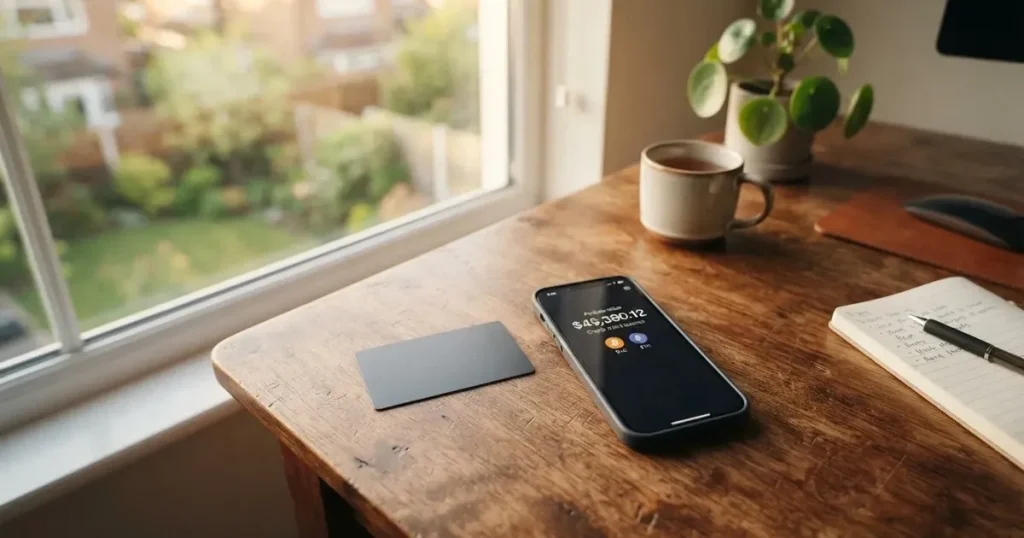
The GoMining card is not a bank account, and it does not try to be one. It is a payment card issued by Unlimit under an e-money licence from the Central Bank of Cyprus, tied to a mining platform, and it spends a balance you load yourself with BTC, USDT, GOMINING or other coins. What makes it unusual is not the card mechanics — plenty of crypto cards work that way — but the reward: cashback paid in mining power, at rates the company says go up to 5% as your VIP level rises. That is a genuinely different bargain from the usual “get back 1% in the same coin you just spent,” and it is also the thing you have to understand before you hold this card, because mining power is not money. It is a claim on future mining output, and its value moves with mining difficulty, hash price and the platform’s own economics.
If that appeals to you and you are already comfortable holding crypto on a custodial platform, this card is coherent and the offer is real. If you want a card that behaves like an ordinary debit card with a predictable statement, a debit card from your own bank, or a mainstream crypto card with fees printed on the page, this is the wrong product and I would say so plainly. My score for it is 6.6 / 10, which sits where it sits mostly because the card’s own public pages leave the numbers a buyer actually needs — issuance cost, conversion fee, foreign exchange rate, spending limits, ATM allowance, card currency — unstated.
The conditions described here are current as of October 28, 2026.
Verdict: 6.6 out of 10
Here is where each part of the score comes from, with the reasoning behind each mark.
| Criterion | Mark | Why |
|---|---|---|
| Who can get it | 8 / 10 | No country list published; products “may not be available in your jurisdiction”; an earlier check described it as worldwide except prohibited jurisdictions |
| Cost | 5 / 10 | Issuance and fees not disclosed; opening a card grants a free 1 TH miner; cashback up to 5% is paid in mining power |
| Top-up options | 7 / 10 | Top up with BTC, USDT, GOMINING and other coins; an earlier check noted funding from the GoMining wallet; networks not named |
| Reliability and complaints | 6 / 10 | Issued by Unlimit, e-money institution licence No. 115.1.3.7 of the Central Bank of Cyprus; funds on a segregated account, deposits not insured; ScamMinder has called the wider GoMining model a possible Ponzi scheme (an opinion about the company, not about the card) |
| Everyday use | 7 / 10 | Virtual now, physical “coming soon”; Apple Pay and Google Pay; cash withdrawal on the virtual card; no plastic yet |
Total: 6.6 / 10
Who this suits: someone who already has money or crypto on the GoMining platform, who is comfortable leaving funds with a custodial provider, who wants a virtual card for online spending today, and who is genuinely interested in mining economics rather than merely in a spending perk. The audience this card is really built for is the one whose cashback comes back as mining power — if that is not interesting to you, you are paying for a feature you will not use.
Who it does not suit: anyone whose main worry is getting an ordinary bank card and wants predictability above all; anyone who cannot or will not complete identity checks; anyone who needs physical plastic in hand this week; anyone who plans to hold a large idle balance and wants deposit-insurance protection; and anyone who needs to know what a purchase costs before they make it.
There is one further thing worth being honest about. In February 2026 a review from ScamMinder questioned GoMining’s transparency and sustainability and described the business model as a possible Ponzi scheme. That is a single outside opinion, it concerns the wider GoMining mining and investment model rather than the card product specifically, and no official card incidents have come to my attention. You should hold it at that weight: a serious flag worth reading, not a settled verdict, and not something to ignore either.
Will they give you the card?
Short answer: there is no list to check against. GoMining does not publish a country list for its card, and its pages say only that products “may not be available in your jurisdiction,” and that the card is subject to eligibility and regional availability. An earlier check described availability as worldwide except prohibited jurisdictions. Neither version is the kind of thing you can act on in your own country — “may not be available” is a refusal in advance, written politely.
That said, the issuer behind the card is not anonymous. Unlimit issues the card under electronic money institution licence No. 115.1.3.7 of the Central Bank of Cyprus, and the services are tied to GoMining (Cyprus) Limited. An EU e-money institution of this kind can offer its services across the EU and EEA from a licence granted in one member state, which is why a Cyprus licence is not on its own a reason for a card to be refused elsewhere — but it is also not a guarantee that any particular person will be accepted.
The identity question deserves a blunt answer. The card’s public pages do not state the KYC requirements in detail. An earlier check recorded KYC Basic and Advanced as the tiers, but that is not stated on the pages themselves, so treat it as unofficial rather than confirmed. This is normal for the category and not a red flag in itself: EU anti-money-laundering law requires regulated businesses to verify identity, run a sanctions check, establish the purpose of the relationship and determine whether you are a politically exposed person. If that process cannot be completed, EU rules require the institution to decline the transaction or the relationship and, where it already exists, end it. That is why accounts get closed or frozen pending documents, and it happens to card applicants too.
One more point that catches people out. Nationality and residence are treated separately. Sanctions screening and issuer risk policy are often applied to citizenship and country of birth, not just to your address. So a resident of one country holding a passport from another may be screened twice over. If your situation is unusual in that way, expect more questions and a longer wait rather than a faster answer.
How to get it
The route is straightforward: you apply through the GoMining site at app.gomining.com/banking-cards. There is no branch to visit and no paperwork to post.
What you get today is a virtual card. The physical card is described as “coming soon,” and the card pages do not give a date. Delivery terms for the plastic, when it arrives, are not stated. The card network — Visa or Mastercard — and the currency the card is issued in are also not stated, which is more than a curiosity: as I come to below, the network and the issuing country shape how merchants treat the card, and the currency shape what you pay at the till.
Because the physical version does not exist yet, sections of this review that describe card-network behaviour apply to a product you may not be able to hold. That is worth keeping in mind throughout: you are reviewing a virtual card from a programme that intends to grow into a physical one.
Fees: what it really costs
Here is the honest position: the card does not publish the numbers. Issuance cost is not stated, fees are not stated, the ATM fee and allowance are not stated, spending limits are not stated, and the card currency is not stated. That is not a small gap. It is the entire gap.

| Fee or limit | What the card states |
|---|---|
| Issuance | Not stated |
| Monthly fee | Not stated |
| Conversion fee (crypto to card balance) | Not stated |
| Foreign exchange / FX | Not stated |
| ATM cash withdrawal | Available on the virtual card; on the physical card, “coming soon,” worldwide. Fee and allowance not stated |
| Daily spending limit | Not stated |
| Monthly spending limit | Not stated |
| Card currency | Not stated |
Two things are known and both cut in your favour. Opening a card grants a free 1 TH miner — you do not have to buy one, and that is a real, tangible benefit. And cashback reaches up to 5%, paid in mining power rather than in cash, with the rate rising as your VIP level climbs; the thresholds for those levels are not stated. So the honest way to describe this card’s economics is: the reward is attractive and the cost is unpublished.
What does that mean in practice? It means the only way to find out what a purchase costs is to make a small purchase and compare what left your balance against what the receipt says. That is the test I would run before you commit real money to it, and I would run it more than once, because a conversion spread and an FX mark-up can both be invisible on the page and both compound on every transaction.
Let me walk three ordinary payments through what is known and what is not, because this is where a card like this usually surprises people.
A coffee costing 4. You pay 4 from the card balance. What you do not know is whether the balance was funded by a crypto conversion that charged a fee or spread, and whether the card currency is the same currency as the café’s. If both are unknown, the 4 is the only number you can rely on.
An online subscription in a currency other than the card’s. Here the FX layer sits on top of whatever the conversion cost you. The rate used, and any markup on it, are not stated. Also relevant: online payments may be challenged with 3-D Secure, which adds an identity check the issuer controls, and a declined authorisation can leave a hold on your funds for several days, typically up to seven.
A cash withdrawal at an ATM. The virtual card supports cash withdrawals; the fee and the allowance are not stated. Note also that an ATM is the one place where the “which card is this, which country is it from” question surfaces in the worst way, because the machine reads the card’s issuer identification number before it reads anything else.
There is one category worth checking before you need it. Merchant category 7995 covers gambling — casinos, betting, lotteries — and many issuers block it by policy rather than by law, with a different list for each issuer. The card’s blocked categories are not stated, so do not assume anything is allowed until a purchase goes through or fails.
Top up: how the balance gets filled
Top up with BTC, USDT, GOMINING or other coins. An earlier check recorded that funding comes from the GoMining wallet. The specific networks are not named on the pages, and neither is the minimum or the arrival time.
The unnamed-network part is the single most consequential thing on this page, so let me be concrete about why. A stablecoin like USDT exists on several chains — Tether describes it as a token built on multiple blockchains, and it has been issued on Ethereum, Tron, Solana, Polygon, Avalanche and others. USDC is natively supported on 38 networks as of 16 September 2026 according to Circle, including Ethereum, Solana, Base, Polygon PoS, Avalanche, Arbitrum and Stellar, though Circle stopped supporting USDC on Tron in February 2024. If you send a deposit on a network the card provider does not support, or to an address belonging to a different network, blockchain transfers are irreversible: the funds can be lost, or need manual support recovery with no guarantee. Before your first transfer, find out in writing which network to use and which address to send to.
Two more traps in the same area. On Ethereum, fees are paid only in ETH, so a wallet holding USDT with no ETH cannot send it at all — you will need a small amount of the network’s own token. And on Tron, fees are paid through bandwidth and energy resources, often by burning TRX, so a Tron transfer can behave differently from an Ethereum one in ways that are not obvious. Separately, the on-chain network fee for your deposit is charged by the blockchain, not by the card provider, so it comes out of your deposit on top of the card’s own charges.
Paying with it every day
The virtual card works in Apple Pay and Google Pay, and it supports cash withdrawals at ATMs. It does not yet exist as plastic, so “everyday use” today means a virtual card in a phone wallet plus ATM access. That is enough for a lot of people’s ordinary spending, and not enough for everyone.
On the wallet side, it is worth knowing what tokenisation actually does, because it is often presented as magic. Apple Pay replaces your card number with a device-specific Device Account Number stored in the Secure Element, never on Apple’s servers, and each payment carries a one-time dynamic security code. Separately, the issuer can restrict a tokenised number — blocking it on magnetic stripe, on phone, or on website purchases. So a card that works in your wallet can still be declined in one of those contexts. The card pages do not say which restrictions apply here.
Then there is the merchant-facing problem, which is about the card’s identity rather than your behaviour. A card number starts with a 6- or 8-digit issuer identification number that identifies the issuing institution, and merchants can look that up to see which institution and country issued it — and may apply extra scrutiny when the issuer country differs from the billing address. Some merchants decline prepaid or foreign-issued cards for exactly this reason. A Cyprus-issued card will read as foreign almost everywhere. That is a fact about how card acceptance works, not a defect in this card, but it is the kind of thing that decides whether your card works for you.
Address verification is a related and less obvious risk. AVS compares the numeric parts of the billing address the buyer typed — street number, postcode — with the issuer’s records; it is mainly offered in the US, Canada and the UK, and is generally unavailable for foreign-issued cards, which can cause declines. If you ever buy a digital good or a subscription where the postcode matters, expect some failures.
On disputes and reversals, the card pages say nothing. That is worth flagging plainly. US debit card reversal rights come from Regulation E and credit card rights from Regulation Z; prepaid-card coverage varies and should not be assumed. If a purchase goes wrong, you are working with whatever the issuer’s policy turns out to be, and you do not currently know what it is.
Where to get help: the site has an FAQ at /faq and a contact page at /contact-us. Languages and opening hours are not stated. The iOS app is listed on the App Store; I did not read its ratings.
What can go wrong
Beyond the missing numbers, four things deserve your attention.
You are trusting a custodian, not holding keys. Control of crypto belongs to whoever holds the private key or seed phrase. With a custodial wallet the provider holds the credentials, so you have to trust them completely. A seed phrase — typically 12 to 24 words — is an unencrypted form of the private key, and anyone who obtains it can restore the wallet and spend the funds. Transfers are typically irreversible, and a stolen private key has no built-in recovery: the network cannot freeze or return anything. This is not theoretical. Custodial platforms have failed before — Mt. Gox (about US$350 million reported stolen, 2011–2014), Coincheck (about US$400 million, 2018), and Ronin Network (US$625 million, 2022). Holding funds with a custodian carries counterparty and hack risk, and GoMining is a custodian.
Your funds are safeguarded, not insured. The card says funds are held in a segregated account protected from Unlimit’s creditors in insolvency, and describes “advanced security measures.” That is a real protection and it is not the same thing as a deposit guarantee. Deposits are not covered by the Cyprus Deposit Insurance System. Under EU rules, e-money institutions must safeguard customer funds by segregating them in dedicated accounts or insuring them, and those funds are not bank deposits. Whether two-factor authentication, an instant card freeze or spending limits exist for this card is not stated.
The mining-power cashback is not cash. This is the risk specific to this card and the one I would think about longest. The reward is denominated in mining power, so what you receive is an exposure to future mining output rather than a spendable balance. Its worth depends on the platform, on mining difficulty, on hash price, and on whether the business converts it at a rate you would choose yourself. A past promotion advertised 5% cashback on purchases made with GOMINING on TON — that was a 2025-era offer and it tells you the shape of the deal, not today’s terms.
Regulatory ground is shifting under all of this. MiCA, the EU’s markets-in-crypto-assets regulation, took legal effect in June 2023; its rules on asset-referenced tokens and e-money tokens applied from 30 June 2024, and the remaining provisions, including crypto-asset service provider rules, applied from 30 December 2024. Two consequences for you. E-money tokens may be issued only by a credit institution or an electronic money institution. And the transitional period lets providers already operating under national law continue only until 1 July 2026, or until they are authorised or refused under MiCA, whichever comes first. A provider inside that window can change shape. ESMA keeps an interim register of authorised crypto-asset service providers, white papers and non-compliant entities, and it is worth checking there. A card itself is a payment service regulated separately from the crypto side, which is why a product like this often rests on two licences rather than one.
On complaints specifically: I found no Trustpilot page for gomining.com. App Store reviews are mixed and undated — a Russian-language reviewer calls returns poor, others praise payouts. That is user report, not adjudicated fact, and thin evidence either way.
Finally, on tax, I will say one thing and stop: in the US the IRS treats digital assets as property, so exchanging them for goods, services, dollars or other digital assets generally produces a taxable gain or loss, with gains on personal holdings measured in local currency at fair market value on the transaction date. Every card payment funded from crypto could therefore be a separate disposal event. That is a general principle, not advice about your situation — take it to someone who knows your jurisdiction.
What to take instead
The honest comparison is against cards that publish their numbers. I scored each of these myself on the same basis, so the marks are directly comparable to the 6.6 above.
| Card | Score | Cost | Fees | Rewards | Main caveat |
|---|---|---|---|---|---|
| GoMining | 6.6 / 10 | Issuance not stated; free 1 TH miner on opening | Not stated | Up to 5%, in mining power, rising with VIP level | Almost no fees or limits published; no physical card yet |
| Lava | 7.1 / 10 | No annual fees | No FX fees and no FX spread; no exchange fees or spread on Bitcoin buy/sell | Up to 5% back in bitcoin on every purchase | Conditions on the cashback not stated |
| Gemini | 4.9 / 10 | No annual fee | No foreign transaction fees; crypto conversion not applicable as a credit card | 4% on gas/EV/transit up to the first $300 a month, 3% dining, 2% groceries, 1% other, paid instantly in bitcoin or 50+ cryptos | A credit card, not a crypto balance |
| Kinesis Virtual | 4.8 / 10 | Not stated | Not stated | 2% cashback in gold | Buying gold with your cashback is its own argument |
Lava is the closest thing here to a card that tells you what it charges: no annual fees, no FX fees and no FX spread, and no exchange fees or spread on Bitcoin buys and sells per its page. You can spend at 150 million merchants in 150+ countries, and deposit in local currency or stablecoins. It scores highest of the four at 7.1. Its “up to 5% back in bitcoin” is closer to a straightforward cashback than GoMining’s mining power, though the conditions on it are also not stated. Network and physical/virtual form are not stated either.
Gemini is a different animal and worth understanding as one. It is a Mastercard World Elite credit card, so there is no prepaid balance to top up — you pay it off in fiat, and the rewards are paid in crypto rather than the card converting your crypto. That inverts the whole model: no foreign transaction fees, no conversion fee, and a category structure that is at least legible — 4% on gas, electric vehicle and transit spending up to your first $300 a month, 3% dining, 2% groceries, 1% everything else, paid instantly in bitcoin or in 50-plus other cryptos on Gemini and changeable at any time, plus 10% Vault Rewards at some merchants where the caps vary. Form and currency are not stated. Referral terms are $50 in crypto each, $250 per five referrals, up to $50 a year. Its lower 4.9 reflects its own gaps, not its quality of rewards.
Kinesis Virtual converts gold, silver, crypto and C1USD from the Kinesis account at the point of sale and pays 2% cashback in gold, with access to the cashback plan six months free from launch. The costs and fees are not stated on the page I read. Starting data puts it in the United States, Latin America and the Caribbean; the page itself does not state that.
If your problem is that ordinary bank cards are hard for you to get, the Gemini option is the one on this list that does not depend on holding crypto at all — you are borrowing in fiat and being paid back in crypto. If your problem is that you want to spend crypto without surprises, Lava’s published fee position is worth more than any cashback headline.
Who I would recommend it to
I would recommend this card to someone who is already inside the GoMining ecosystem, has funds there, and wants a spendable balance backed by mining output. The free 1 TH miner on opening and cashback paid in mining power make sense to exactly one kind of person: someone who thinks mining economics are part of their return. If you are that person, the card is coherent with the platform and the reward is a real differentiator.
I would not recommend it as a general-purpose payment card, and I would not recommend it as your primary way of handling money anywhere. The reason is not the crypto — plenty of crypto cards are fine. The reason is that the page does not tell you what a purchase costs, what you may spend in a day, what a withdrawal charges, or what currency the card holds. A card you have to measure by experiment is a card you should keep small.
Three questions I would answer before applying. First: do you already hold GOMINING or mine on the platform, or would you be opening a fresh custodial relationship to get a card? Second: can you live with cashback that is not cash? Third: if this programme were shut down next year, what would you do with your balance — and have you checked how long you would have to withdraw? Programme closures are not hypothetical. Visa terminated its global agreements with FTX on 13 November 2022 and the FTX US debit card was wound down by its issuer; WaveCrest, a Visa issuer that supplied several crypto card brands, was suspended by Visa in Europe in 2018, closing all WaveCrest-issued Visa programmes. The usual pattern is a notice period, then spending and loading stop, then you are asked to withdraw what remains. One 2026 closure reported by a secondary source ended new loads on 8 July 2026 and spending on 8 August 2026 — that is a single unconfirmed source, but it shows the pattern is short. Your funds being segregated is a genuine protection in that scenario; not being insured is the part to plan around.
If the honest answer to those three questions is mostly “I’m not sure,” take the Lava card or an ordinary card instead and keep this one in mind for when it publishes its numbers.
Frequently asked questions
What is the GoMining card?
The GoMining card is a payment card issued by Unlimit under an e-money licence from the Central Bank of Cyprus, attached to the GoMining mining platform. It spends a balance you load yourself with BTC, USDT, GOMINING or other coins, rather than drawing on a bank account. Today it exists as a virtual card, with the physical version described as “coming soon.” Its distinguishing feature is cashback paid in mining power rather than in cash or coin.
Is GoMining a bank?
No. GoMining is a mining and financial platform, and the card is issued by Unlimit, a licensed electronic money institution in Cyprus under licence No. 115.1.3.7 of the Central Bank of Cyprus. An electronic money institution can issue e-money, payment cards and wallets, but it cannot lend. Your balance is safeguarded in a segregated account, not a bank deposit, and it is not covered by the Cyprus Deposit Insurance System.
Does the GoMining card require KYC?
Almost certainly yes, because it is issued by a regulated EU e-money institution, and EU anti-money-laundering rules require identity verification, a sanctions check, the purpose of the relationship, and a politically-exposed-person determination. The card’s own pages do not state the requirements in detail; an earlier check recorded KYC Basic and Advanced tiers, which is not confirmed by the card. Identity documents and a selfie are the normal shape of this, and nationality is screened separately from residence.
What countries can I use the GoMining card in?
The card does not publish a country list. Its pages say only that products “may not be available in your jurisdiction,” and that the card is subject to eligibility and regional availability; an earlier check described availability as worldwide except prohibited jurisdictions. You will find out by applying. The one thing that does not help is a Cyprus licence: it lets an EU e-money institution serve customers across the EU and EEA, but it does not make acceptance universal.
Can I use the virtual card right away?
Yes, the virtual card is available now, and it works in Apple Pay and Google Pay, plus cash withdrawals at ATMs. What it cannot yet do is arrive as plastic — the physical card is “coming soon” with no date given, and delivery terms are not stated. A related limit: the issuer can restrict a tokenised number to specific contexts such as magnetic stripe, phone or website, so working in a wallet does not guarantee working everywhere.
What does it cost to spend or withdraw?
That is the card’s largest gap, and you should read this before you commit money. Issuance cost, monthly fee, conversion fee, FX rate and markup, ATM fee and allowance, daily and monthly spending limits, and the card’s currency are all not stated on the card’s public pages. What is known in your favour: opening a card grants a free 1 TH miner, and cashback reaches up to 5% paid in mining power. Run one small test purchase and compare the balance movement with the receipt before relying on it.
Is the GoMining card safe?
Safer than it looks in one respect, riskier in another. In its favour: the issuer is a licensed EU e-money institution, funds are said to sit in a segregated account protected from its creditors in insolvency, and there are Apple Pay and Google Pay with tokenised numbers. Against it: your crypto is custodial, so you trust the provider with the keys; transfers are irreversible; deposits are not insured; and a February 2026 ScamMinder review called the wider GoMining model a possible Ponzi scheme — one outside opinion about the company, not the card, and not a settled finding.
Is the cashback worth it?
Only if mining power means something to you. Up to 5% is genuinely competitive with mainstream cards, but it arrives as a claim on future mining output rather than spendable money, and its value depends on mining difficulty, hash price and the platform’s economics. A 2025-era promotion advertised 5% cashback on purchases with GOMINING on TON. If you want cashback you can spend anywhere, Lava’s up to 5% in bitcoin is the more direct version of the same promise.
How do I top up, and which network do I use?
You top up with BTC, USDT, GOMINING or other coins, and an earlier check recorded funding from the GoMining wallet. The networks are not named on the pages, and that matters more than it sounds: sending on a network the provider does not support is irreversible and can lose the deposit. On Ethereum you also need a little ETH to pay the fee, since gas is only paid in ETH; Tron fees work through bandwidth and energy, often burning TRX. Confirm the network and address before your first transfer.
What if I have a problem with a payment or want to close my account?
The card’s dispute process is not stated, which is the thing you least want to discover mid-dispute. Prepaid-card coverage varies by scheme and should not be assumed; in the US, debit reversal rights come from Regulation E and credit card rights from Regulation Z. Support runs through the FAQ at /faq and the contact page at /contact-us, with languages and hours not stated. To delete an account, use those channels and ask directly, and withdraw your balance rather than leaving it.
Choosing a credit or cashback card – cryptocardadvisor
Content created by the «cryptocardadvisor» team