
Freedomia, read closely: a no-KYC-style virtual Visa with Lightning funding and real gaps in the small print
 Available in US
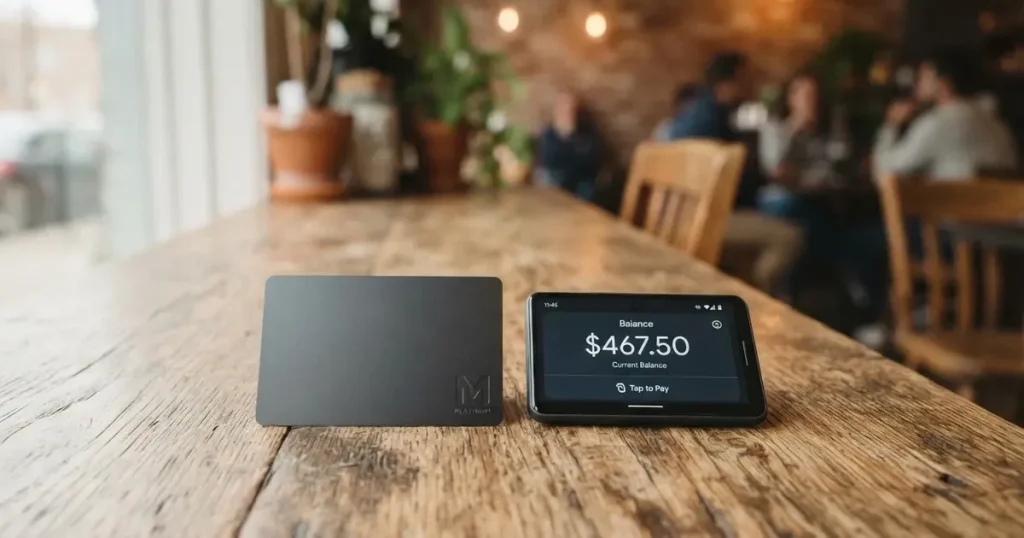
If you have tried to open a normal bank account and hit a wall — no address proof, no legal local presence, a country your bank will not look at twice — then the pitch here is obvious, and it is worth saying plainly at the start: Freedomia is built for exactly that situation. It markets itself with the line “No verification. No approval.”, signs you up with an email, hands you a virtual Visa in seconds, and lets you load it from a Lightning Address or a handful of crypto networks. On paper that is close to a perfect answer to the problem most people in this position are actually asking about.
Read closely, though, and the picture is more mixed. The card is described only as “Global” with no country list on the home page, and the FAQ question about which countries are restricted exists but could not be read. The company behind it is Freedomia Digital Group LLC in Delaware, and neither the issuing bank nor any licence is named on the pages I could see. There is no Trustpilot page and no Reddit discussion I could find — which means there is no independent track record either, and no complaints library either. The plan to pay with Apple Pay is “coming soon”. The card is digital only: no plastic, no ATM. And the fees are real: 1.3% on every top-up, 2.5% for standard currency conversion, with USD spending free.
The conditions described here are current as of October 28, 2026.
My score for Freedomia is 6.1 out of 10. That is not a condemnation. It is a card that does one thing well — turning crypto into spendable card money with minimal friction — inside a wrapper that leaves several questions you would want answered open.
| Criterion | Mark | Why |
|---|---|---|
| Who can get it | 8 / 10 | Described as “Global”; no country list or restrictions on the home page, and the FAQ answer on restricted countries could not be read |
| Cost | 4 / 10 | Founder $5/month or $60/year; 1.3% top-up fee, 2.5% standard conversion, 0% on USD spending; issuance fee not stated |
| Top-up options | 9 / 10 | Lightning, BTC, XMR, ETH, LTC, SOL, TRX, BNB, USDT (Polygon), USDC (Polygon) “and more”, plus exchange in USD |
| Reliability and complaints | 5 / 10 | Freedomia Digital Group LLC, Delaware; issuer and licences not named; unofficial sources describe a custodial, closed-source service; no Trustpilot reviews found |
| Everyday use | 5 / 10 | Digital Visa only, instant issuance, 3DS; Google Wallet works, Apple Pay “coming soon”; no plastic card and no ATM |
| Total | 6.1 / 10 | Strong funding rails, thin transparency |
Who this suits: you already hold BTC or stablecoins, you cannot open a bank card, and you are comfortable with a custodial wallet and a provider whose licence you cannot verify. Who it does not suit: anyone who needs a physical card, an ATM, Apple Pay today, a written answer to “which countries are you actually available in?”, or a fee structure they can predict to the cent.
Will they give you the card
The honest answer is: probably yes, because the signup says you will not be checked. Freedomia markets itself as “No verification. No approval.”, and registration is by email. That is the entire appeal for the person who has been declined elsewhere.

But two things sit underneath that headline, and you should hold both in mind.
First, the card is described only as “Global”. There is no country list and no stated restrictions on the home page. The FAQ does contain a question titled “Which countries are restricted?” — the answer existed but was not readable to me. So I cannot tell you whether your country is on it, and neither can you without asking them. If your situation is precisely the sensitive one — a sanctioned country, a high-risk jurisdiction, a place where banks are especially nervous — then the absence of a published list is itself the risk. I am not going to help anyone route around that; the right move is to write to [email protected] and get a yes or no in writing before you send anything.
Second, on identity checks: the “no verification” line is the marketing position. Unofficial reporting (via CriptoNoticias, September 2026) describes Freedomia as a pseudonymous card with no KYC at or below USD 5,000 in monthly spend, while section 4.3 of the terms allows KYC/AML checks above that monthly threshold. That is third-party reporting, not something the card confirms, so treat it as unofficial — but notice the shape of it. The threshold is not an exemption from the regime; it is a line above which checks can start. The card’s own public pages do not state the verification levels officially.
One more thing about the card itself: it is digital, a virtual Visa, with instant issuance, re-issue whenever you want, and 3-D Secure. The card currency is USD. There is no physical card mentioned anywhere, and delivery of a physical card is not stated. If “virtual” made you think of a card number you can type into a shop’s website, that is right — but it also means there is no plastic for a shop that insists on it.
How to get it
Getting a Freedomia card is about as short a process as this category gets: an email address, and that is the stated requirement. There is no document upload described, no branch, no waiting period. The card is issued instantly in digital form, and if it gets stuck you can re-issue it.
So the practical steps are simple. Register with your email, complete whatever the flow asks you at that moment, and the card appears in your web account. From there the account interface gives you Freeze Card, Card Data and Card Limits — note that this is all in the browser-based account; there is no standalone app described, so this is a web product, not a phone-first one.
Two honest warnings before you start. The first is that a smooth signup tells you nothing about whether the account will be there in two years. Programme closures in this category are not rare, and when they happen the sequence is always the same: a notice period, then spending and loading stop, then you are asked to withdraw what is left. Second, the “activate the card” question that most people search for has no separate documented ritual here — the card arrives already usable, and the controls you have over it are freeze, data and limits.
What it really costs
This is where Freedomia’s score drops, and I want to walk through it with real numbers rather than adjectives, because the fees are the part you will feel every month.
| Item | Fee or limit as stated |
|---|---|
| Plans | Founder $5/month or $60/year (available); HODL $9.99/month or $119.88/year (coming soon); MOON $17.99/month or $215.88/year (coming soon) |
| Issuance fee | not stated |
| Top-up fee | 1.3% (all tiers) |
| Standard FX fee | 2.5% |
| Spending in USD | 0% FX |
| ATM withdrawal | not stated (virtual card) |
| Limits — Founder | monthly $5,000 / annual $60,000 |
| Limits — HODL | monthly $5,000 / annual $60,000 |
| Limits — MOON | monthly $10,000 / annual $120,000 |
| Card limits | settable in the card interface |
Three everyday payments, and what each one actually costs:
- Coffee in your own country, priced in dollars. If the local price is quoted in USD, the FX fee does not apply — USD spending is 0%. The 1.3% top-up fee is already paid, since the balance was loaded from crypto. What you may still meet is the merchant’s own foreign-card handling, which the card does not control.
- A subscription billed in euros. This is the 2.5% standard conversion case. Funds are swapped to USD and then the purchase carries the standard FX fee. Two percentage points on a small recurring charge is the kind of number that decides whether you keep a card for it.
- Anything bought in a local currency right after a top-up. You pay 1.3% to load, then 2.5% to convert if you spend outside dollars. That adds up quickly — a fair question to ask yourself before you top up $500 and forget about it.
There are also two fees the card does not charge but that you will still meet. The 1.3% is Freedomia’s; the on-chain network fee for getting your crypto there is charged by the blockchain, not by the card. And who pays that network fee — you or the service — is not stated. Keep a little of each asset in reserve for the network’s own cost.
What is genuinely missing from this picture: the issuance fee (not stated), ATM fees (not stated, and there is no physical card to withdraw with anyway), and whether a card currency other than USD exists (USD is the one stated). The plan differences are about support and limits, not price-per-transaction: Founder and MOON carry priority support, HODL is standard support; MOON is the only tier with a $10,000 monthly ceiling.
How to top it up
This is the strongest part of the card, and if there is one reason to pick Freedomia over something more cautious, it is this. The funding list is unusually wide for a small provider.
You can send to a personal Lightning Address over the Lightning Network. You can send BTC, XMR, ETH, LTC, SOL, TRX, BNB, USDT on Polygon, or USDC on Polygon, and the page says “and more”. You can also exchange into USD directly. Whatever arrives is auto-swapped to USD and sits as a balance the card spends from.
The technical shape of this matters. USDT and USDC on Polygon are the pragmatic choices: dollar-pegged, widely supported, and — Circle’s own figures — USDC is natively supported on 38 networks as of 16 September 2026, including Polygon PoS. The BIS put roughly 90% of stablecoin market capitalisation in USDT and USDC as of July 2025, so the liquidity is there. But note the two things that bite people on Polygon transfers specifically: gas on Ethereum-standard tokens is paid only in ETH, so a wallet holding USDT with no ETH cannot send, and any transfer sent on a network the provider does not support — or to an address belonging to another network — can be lost or need manual support recovery with no guarantee. Blockchain transfers are irreversible; there is no undo.
What is not stated on the funding side: the minimum deposit, and who pays the network fee. There is also no fiat top-up listed — the stated routes are Lightning and crypto, plus exchanging to USD — so if you are trying to move money from a bank account, that step belongs elsewhere.
Paying with it every day
Day to day, Freedomia is a card you spend from a pre-loaded balance. That is how most crypto cards work: crypto is converted and loaded as fiat, and the card cannot overdraw because there is nothing to overdraw. If you have seen a standard debit card withdraw from a linked account at the moment of purchase, this is a different mechanism, and it shows up in the failure modes — if the balance is short, the payment simply declines.
What works today: Google Wallet is enabled for tap-to-pay. 3-D Secure is there for online payments. The card interface lets you freeze the card, view card data, and set card limits — the limits being your main everyday lever, and the reason the plan tiers differ mostly in ceiling size.
What is missing: Apple Pay is “coming soon”. There is no plastic card, so a restaurant that insists on a physical card is out. There is no ATM. Whether any merchant categories are blocked is not stated, which matters if you spend on anything unusual — gambling typically runs under MCC 7995, and many issuers block it by policy rather than by law, but Freedomia’s own blocked list, if it has one, is not published.
The friction you should expect from any card like this, regardless of brand: a merchant can look up your BIN and see which institution and country issued it, and apply extra scrutiny when that differs from the billing address — which is precisely what happens with a foreign-issued card, and is why some shops decline prepaid or foreign BINs outright. Address Verification Service is mainly offered in the US, Canada and the UK and is generally unavailable for foreign-issued cards, which causes declines on US sites that ask for a ZIP. And a declined authorisation can leave a hold on your funds for several days, typically up to seven.
What can go wrong
The honest risk section is the one I would read twice if I were you.
The company is Freedomia Digital Group LLC, registered at Newark, New Castle, Delaware 19713. The issuing bank is not named. No licences are named. That is not in itself damning — thousands of legitimate card programmes work exactly this way, with the crypto brand as a programme manager in front — but it means you cannot answer the two questions that matter most in a crisis: who is legally responsible for my balance, and under whose regulator.
On that, unofficial reporting (CriptoNoticias, September 2026) describes the service as custodial and closed-source. That matters more than it might sound. Custodial means the provider holds the credentials, so your trust requirement is absolute. And the category has a long record of custodial failure: Mt. Gox, with about US$350 million reported stolen between 2011 and 2014; Coincheck, about US$400 million in 2018; Ronin Network, US$625 million in 2022. Irreversible transfers plus a provider who holds the keys plus no published licence is the combination I would want a lawyer’s opinion on if the balance ever got large.
For day-to-day security, the card does the sensible things: 3-D Secure, freeze the card any time, and Tor/Onion support. Support is email at [email protected] and Telegram at @Freedomiaio, with priority support on the Founder and MOON tiers. The terms have a section titled “Returns, disputes and chargebacks” — section 19 — but the text was not readable to me, so I cannot tell you how strong your recourse is if a payment goes wrong. Worth asking about before your balance grows.
On complaints and track record: no official incidents found, and no Trustpilot or Reddit reviews found for Freedomia at all. Read that twice. It is not a clean bill of health; it is an absence of public history. I would rather you hold that absence lightly.
What to take instead
If any of the above gives you pause, the honest comparison is with other options in the same space — all of which I also scored below Freedomia, which tells you something about how thin this category’s verified information is at this moment.
| Freedomia | Cardex | CardFlow | HyperCard | |
|---|---|---|---|---|
| Score | 6.1 / 10 | 5.6 / 10 | 4.9 / 10 | 4.7 / 10 |
| Reach | “Global”, no country list published | “One crypto card, 200+ countries”; no exclusions published | Aimed at Nigeria and “Nigerians and global users” | No country list on official pages; App Store says works in “more than 176 countries” (acceptance, not eligibility) |
| Card | Digital Visa, instant, 3DS | Debit crypto card on VERVE, VISA, Mastercard, UnionPay; virtual and physical; currency Naira per listing | Virtual USD Mastercard, created in about 3 minutes | Prepaid; network not stated on the App Store page; balance in USD or EUR |
| Fees | 1.3% top-up; 2.5% standard FX; 0% USD spend; plans from $5/month | Conversion at payment via an “AI-Powered Conversion Rate”; no percentage stated | Not stated | Not stated on pages I could read |
| Funding | Lightning, BTC, XMR, ETH, LTC, SOL, TRX, BNB, USDT and USDC (Polygon) | USDT, USDC, BTC; networks not stated | BTC, USDT, ETH or Naira bank transfer | Crypto such as USDT, BTC, ETH; converted to USD or EUR |
| Card cost | Founder $5/month or $60/year | Not stated | “Creating a virtual card is completely free” | Not stated; App Store lists no fees |
| Rewards | not stated | not stated | not stated | not stated |
Reading that table: Cardex is the one with a physical card in the mix, on four networks including Visa and Mastercard, and an explicit 200-plus-country claim — but its App Store listing is Naira-focused, and it will not tell you its conversion fee percentage. CardFlow is free to create and fast, and reads as a Nigeria-first product, so if you are elsewhere it is not obviously aimed at you. HyperCard is the vaguest: I could not establish which network its card runs on or what it charges.
None of these clears the bar Freedomia clears on funding breadth. If you want a physical card, Cardex is the more concrete of the alternatives. If you want to pay nothing to create a card, CardFlow. If you want a published licence and a physical card and Apple Pay working today, this category is not yet delivering that, and the answer is a regulated exchange’s own card rather than any of these four.
One background point worth holding while you read the table: Visa and Mastercard do not issue crypto cards to consumers themselves. They license issuers, and they can suspend a programme — Visa said in November 2022 that it had “terminated our global agreements with FTX”, and the FTX US debit card was wound down by its issuer; WaveCrest, a Visa issuer that supplied crypto card brands, was suspended by Visa in Europe in 2018, closing all its Visa programmes. The brand on the front of the card is not the entity standing behind it. Always look for the issuer.
Who I would recommend it to
I would recommend Freedomia to one specific person: someone who already holds bitcoin or stablecoins, cannot open an ordinary card for reasons of geography or documentation, and has done the arithmetic on the 1.3% top-up plus 2.5% conversion and decided it is cheaper than the alternative. For that person, it does something few alternatives do — instant virtual Visa, Lightning funding, Google Wallet tap-to-pay, and no document upload — and it is a legitimate answer to a real problem.
I would not recommend it as your only card, and I would not recommend loading it with money you cannot afford to lose sight of for a year.
Before you do anything, three checks, in this order:
- Write to [email protected] and ask who the issuing bank is, under which licence they operate, and whether your country is on the restricted list. Get the answer in writing. If it is vague, that is your answer.
- Read section 19 of the terms, “Returns, disputes and chargebacks.” I could not read it; you may be able to. That section is your recourse when a payment goes wrong, and it is the part most worth knowing before you need it.
- Set your card limits in the interface before your first real payment, and keep the balance small until you have seen how it behaves.
One last thing, offered as information rather than advice: if your balance is funded from crypto, each payment may be a separate taxable disposal in your local jurisdiction, because digital assets are generally treated as property and the gain or loss is measured in local fiat currency at the fair market value on the date of the transaction. That is a description of how the rules generally work, not a view of your position — take it to a professional in your own country if it matters to you.
Frequently asked questions
What is the Freedomia card?
Freedomia is a digital, virtual Visa card that lets you spend crypto through an ordinary card number, with instant issuance, re-issue on demand and 3-D Secure. You load the card from a Lightning Address or supported crypto networks, and the balance is auto-swapped to USD. There is no physical card, no ATM, and Apple Pay is listed as “coming soon” rather than available.
How does the Freedomia card work?
It works like a prepaid card rather than a debit card: you top up first, crypto is converted to USD, and the card spends only that stored balance, so it cannot overdraw. Google Wallet tap-to-pay is enabled today, and you can freeze the card, view card data and set spending limits in the web account interface. There is no standalone app described.
Is Freedomia a bank?
Not on the evidence I could find. The operator is Freedomia Digital Group LLC, registered in Newark, New Castle, Delaware 19713, but the issuing bank is not named and no licences are named on the pages I could read. Card programmes in this category are usually run by a licensed bank or e-money institution with the crypto brand as programme manager, so ask who the issuer is.
Does the Freedomia card require KYC?
Freedomia markets itself as “No verification. No approval.” with signup by email. Unofficial reporting from September 2026 describes it as pseudonymous with no KYC at or below USD 5,000 monthly spend, while section 4.3 of the terms allows KYC/AML checks above that threshold. That threshold is unofficial reporting, not a confirmation by the card.
Is the Freedomia card available in my country?
The card is described only as “Global”, with no country list or restrictions on the home page. A FAQ question titled “Which countries are restricted?” exists but the answer was not readable. So eligibility is not published — write to [email protected] and ask directly, and treat the absence of a list as a reason to check rather than a reason to assume yes.
How much does the Freedomia card cost?
Plans are Founder at $5/month or $60/year, available now, with HODL at $9.99/month or $119.88/year and MOON at $17.99/month or $215.88/year both coming soon. On top of that, the top-up fee is 1.3% on all tiers, the standard FX fee is 2.5%, and spending in USD carries 0% FX. The issuance fee is not stated.
How do I top up the Freedomia card?
Send to a personal Lightning Address, or deposit BTC, XMR, ETH, LTC, SOL, TRX, BNB, USDT on Polygon or USDC on Polygon — the site says “and more”. Deposits are auto-swapped to USD, and the deposit fee is 1.3%. Minimum deposit and who pays the on-chain network fee are both not stated, and there is no fiat top-up route listed.
Is the Freedomia card safe?
Judge it on two separate questions. Technically it has the standard safeguards: 3-D Secure, instant freeze, card limits, 3DS and Tor/Onion support. But unofficial September 2026 reporting describes it as custodial and closed-source, meaning the provider holds your credentials — the same custodial risk that produced Mt. Gox, Coincheck and Ronin. No Trustpilot or Reddit reviews were found, so there is no independent track record either way.
Can I add the Freedomia card to Apple Wallet?
Not yet. Google Wallet is enabled for tap-to-pay today, while Apple Pay is listed as “coming soon” on the pages I could read, alongside the HODL and MOON tiers. Since that status can change, it is worth checking the site yourself before you plan a purchase around it — and treat any third-party page promising Apple Pay support for this card with suspicion.
Is the Freedomia card worth it?
For someone who already holds crypto and cannot get an ordinary bank card, the Lightning and multi-chain funding is the best in its class here, and the $5 Founder tier is not expensive. Against that sit 1.3% top-up and 2.5% FX fees, an undisclosed issuer and licence, a custodial closed-source model, no physical card, no ATM, and no Apple Pay. Ask support for the issuer and licence before you load anything significant.
Choosing a virtual card – cryptocardadvisor
Content created by the «cryptocardadvisor» team