
The card suits USDT holders who need spending power now
 Available in US
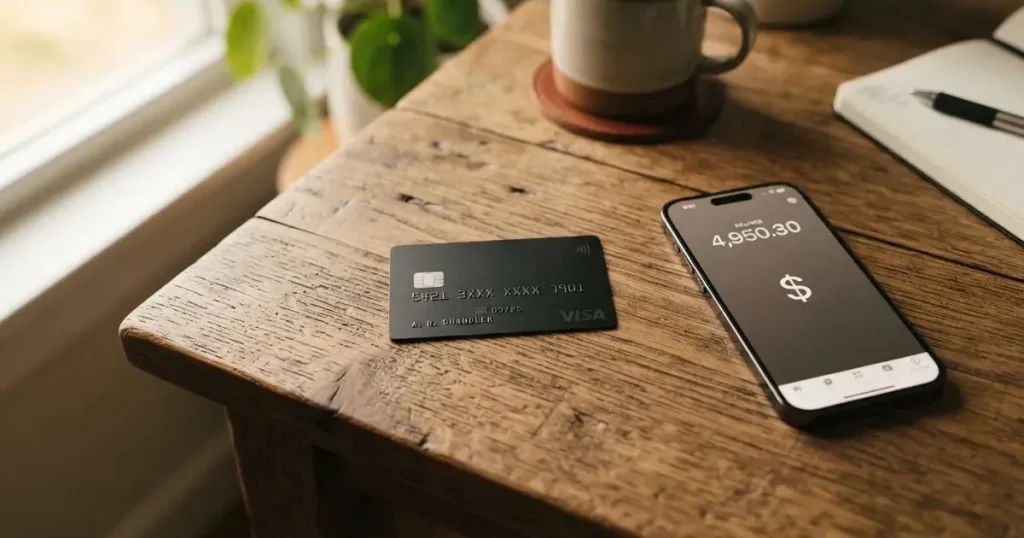
If you cannot get an ordinary bank card — no local account, no branch that will open one for you, a salary that arrives in crypto rather than in a bank — then a prepaid card running off a crypto balance is one of the few routes left to spend money online and in shops. Fizen is one of them. It gives you a USD Visa card number, you load it with USDT, and the balance behaves like any other prepaid balance: you spend what is in it, and it cannot go negative.
That is the whole idea, and it is a narrow one. The card does not fix the reason you are reading this page. It routes around it, for as long as the operator keeps operating and as long as your own country and circumstances are not excluded. My score for it is 6.4 out of 10.
The conditions described here are current as of October 28, 2026.
Verdict: 6.4 out of 10, and it is aimed at one specific person
Let me say who this is for and who it is not, before any of the detail.
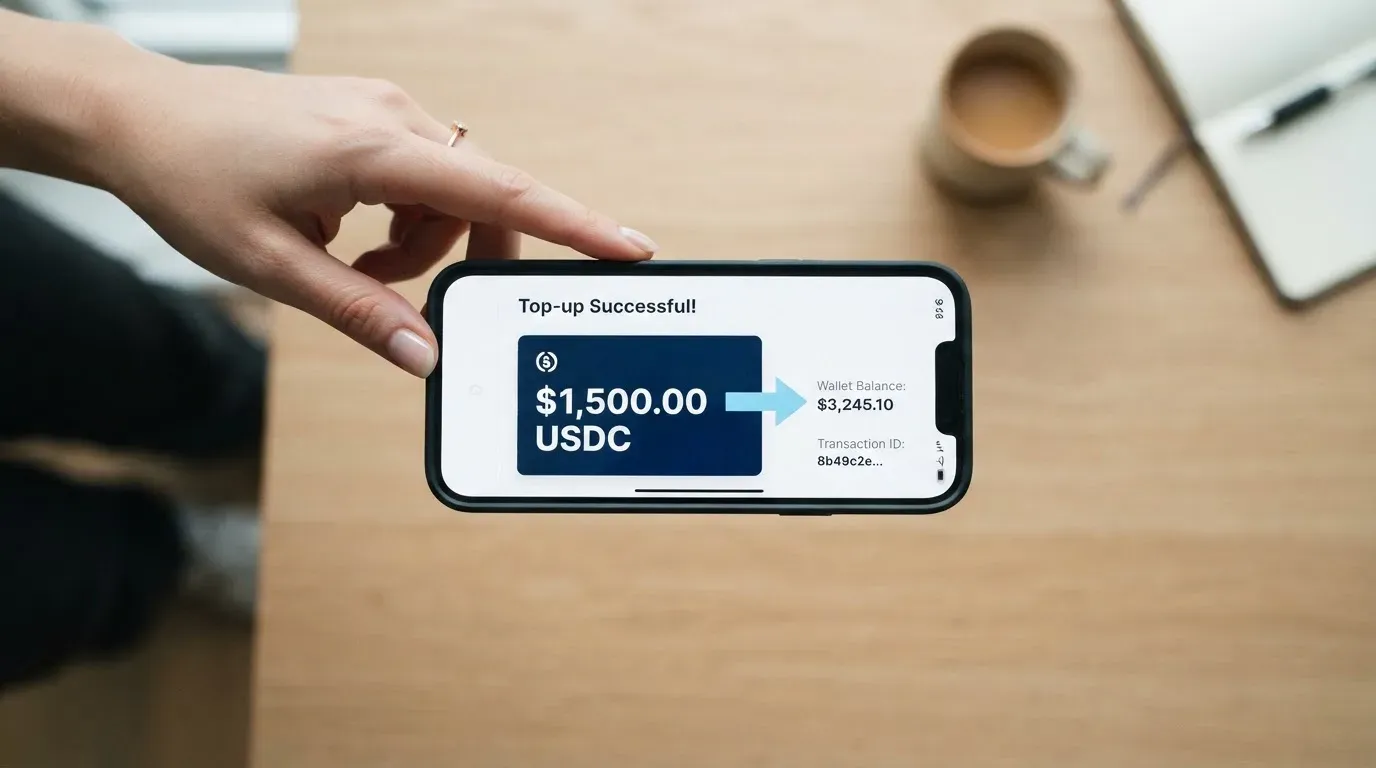
The Fizen card suits you if you already hold or can obtain USDT, you mostly spend in US dollars or accept a 1% conversion cost when you do not, and what you need from a card is the number and the payment rails rather than a credit facility, a bank account in your own name, or a banking relationship. If you are in that group — someone funding a USD virtual card with USDT — the value proposition is clear and, unusually for this category, the arithmetic mostly holds together.
It does not suit you if you need to borrow, if you want a card that draws on a salary account, if you want to be paid into it, or if you are in a country the card refuses. It is also a weak fit if you plan to travel a lot and spend mostly in local currency: the 1% FX fee applies to every payment billed in something other than USD, and it applies on top of whatever rate your merchant’s own acquiring bank uses. On a €40 lunch that is a small, invisible cost. Across a year of daily spending abroad it is not.
Here is how the score breaks down.
| Criterion | Mark | Why |
|---|---|---|
| Who can get it | 8 / 10 | Not available in 43 countries including Russia, Belarus, Serbia, India, China (Mainland), Iran and Ukraine, yet use is claimed in 160+ countries. Generous on paper, restrictive in practice. |
| Cost | 6 / 10 | Issuance $9.99, maintenance $0 with $500 of spending or $1.50 without, FX 1%, crypto-to-fiat conversion 0.5%, card closure $2.00, ATM $2 + 1.5%. Fair, not cheap. |
| Top-up options | 6 / 10 | USDT to a Fizen-controlled wallet; QR Pay accepts USDT only on Solana or BNB Chain; fiat through Transak. Workable if you are already in USDT. |
| Reliability and complaints | 6 / 10 | Fizen Limited in Hong Kong, not a bank and not a licensed payment institution, issuer unnamed in the text, Tether investment announced from 30 July 2026, Trustpilot 4.1 out of 5. |
| Everyday use | 5 / 10 | Virtual Visa immediately, Apple Pay and Google Pay, metal card still “coming soon”; on the physical card the first ATM withdrawal up to $200 a month is free. |
| Total | 6.4 / 10 | A workable instrument for one narrow job, with a custody arrangement you have to think about before you fund it. |
The weakest mark is everyday use, and that surprises people who assume a payment card’s main job is paying. The reason is that what exists today is a virtual card with a set of mobile wallets attached, in a product line where two of three tiers — and both physical metal cards — are not released yet. The daily experience is fine until you need cash, need a card that survives a dropped phone, or need a product that you can hand to someone else.
Will they give you the card?
Two separate questions hide inside “can I get it”: is your country excluded, and are you personally excluded once you are in the app.
On countries, the card’s own page says it is not available in 43 countries, and the official list includes the Russian Federation, Belarus, Serbia, India, China (Mainland), Croatia, Slovenia, Montenegro, North Macedonia, Bosnia and Herzegovina, Iran, Ukraine and Venezuela, among others. Notably absent from that list are Georgia, Turkey, Kazakhstan, Armenia and the UAE — but the card publishes no list of countries it does support, so the absence of a country from the exclusion list is not the same as a guarantee that you can sign up. The page does say the card is used in “160+ countries”, which is a claim about use, not about eligibility.
The terms draw a second, broader line. You cannot be a citizen, resident, or located in a jurisdiction where the service is prohibited or under comprehensive sanctions. That covers three separate tests rather than one: your passport, where you live, and where your connection appears to be. A person who satisfies one and fails another still fails. There is one documented exception — the exceptions page states that a citizen of a restricted country who currently lives in a supported country may still be eligible — but that page is not something the card lays out for you in detail, so treat it as a possibility to ask about rather than a rule to rely on.
The company list of supported countries is not stated in the card’s public pages. If your country is not in the 43, the practical test is simply whether onboarding completes.
How to get it
The path is short. The card page presents it as three steps: install the app, open the wallet, get the card, with a sign-up link on the page itself. Application takes five minutes and the virtual card is issued instantly.
What happens during those five minutes is the part the public pages are vague about. The terms say some services require identification “at the level each Service requires”, that eligibility is checked at onboarding and then again on an ongoing basis, and that verification happens once at setup — described as what any regulated payment app would do. Ongoing checks are listed as KYC, IP, device and location. The documents required, the age minimum, the tier of checks per service, how long review takes, and the reasons a review could fail are all not stated on the public pages. If a rejection is something you would want to appeal, you are relying on support rather than on a published policy.
On the card itself: it is a Visa, and the terms are titled “USD Visa Prepaid Card”. Three tiers exist. Adventure is virtual and available now. Pioneer and Frontier are physical metal cards and are not released — the pages say “coming soon”, and Frontier’s own button says “Get info”. The issuing network is not named on the card page; the terms say the issuer is a regulated institution operating under a licence from Visa. For the metal cards, countries of issue, delivery time, delivery cost and replacement cost are not stated. Their absence is the point: the $999.99 and $9999 tiers are, right now, descriptions of a future product.
Fees: what the card really costs
Here is where a prepaid card stops being simple, because there is no single “fee” — there is a fee for each thing you do, and they stack.

| Fee or limit | Value |
|---|---|
| Virtual card issuance | $9.99, free for pre-registered users |
| Monthly maintenance | $0 if spending is $500 or more; $1.50 if under (free first month) |
| Payments in USD | 0% FX fee |
| Payments billed in another currency | 1% FX fee |
| Crypto-to-fiat conversion | 0.5% standard rate |
| Small transaction, under $50 | $0.50 |
| ATM withdrawal (physical card) | $2 + 1.5% |
| First ATM withdrawal each month | Free up to $200 |
| ATM limits | $100,000 per day, $200,000 per month, 3 per day, 30 per month |
| Per transaction | $150,000 |
| Daily spending | $1,000,000 |
| Monthly spending | $1,000,000 |
| Closing the card | $2.00 |
There is a discrepancy worth knowing about rather than glossing over. The Adventure card page advertises “0 crypto-to-fiat conversion fees” and “0 top-up fees within plan limits”, while the official documentation table lists a 0.5% standard conversion rate. The fairest reading is that the headline figure describes the benefit attached to the Adventure tier within its plan limits, and the 0.5% is what applies otherwise — and the documentation says some fees are waived by card benefits. Either way, plan for 0.5% as the number that appears in your statement, and check the current terms before you plan a large conversion around the zero.
Now three ordinary days, with the fees as they actually land.
A $30 subscription paid in USD. FX fee 0%, the $0.50 small-transaction charge does not apply because the payment is $50 or more, no maintenance fee triggered on its own. This is the case the card is good at. If you also cleared $500 of spending this month, the whole thing cost nothing beyond whatever the merchant charges.
A €14 coffee billed in euros. Here you pay the 1% FX fee on the converted amount — roughly €0.14 — plus whatever rate your local acquirer applies between the euro amount and the dollar balance. The card’s own documentation lists no fixed euro-to-dollar rate, so the second part is not a number anyone can quote you in advance; that is a property of card payments generally, not of this card. The point is that the 1% sits on top of a rate you did not choose. Under $50, add $0.50. Total cost: about $0.64 on a €14 coffee.
A $200 ATM withdrawal on the physical card, once a month. The first withdrawal of up to $200 per month is free, so this costs nothing beyond the ATM operator’s own charge. A second withdrawal the same month costs $2 plus 1.5% — on $200 that is $2.00 + $3.00 = $5.00. The physical card is not released, so treat this row as a description of what the terms say the product will do.
The pattern to take away: the card is cheap for USD spending, moderately priced for foreign-currency spending, and expensive at an ATM. Nobody’s card is good at all three.
How to top it up
Topping up is not a bank transfer, and understanding why tells you what the product is. The card is funded by transferring USDT to a wallet controlled by Fizen. The terms put it at clause 3.2, and it is the central mechanical fact of the whole product: your USDT arrives at an address the company controls, and the card then draws on an internal balance.
There are three ways money gets in, and they are not equally open to you.
USDT to the Fizen wallet. This is the direct route and the one the product is built around. The fee schedule shows no separate top-up fee line, and the card page advertises no top-up fees within plan limits. What you cannot avoid is the network fee for the transfer itself — that is charged by the blockchain and paid to validators, not to Fizen. There is no minimum top-up stated on the public pages. Which networks the wallet address accepts is not stated, which is worth confirming before your first transfer rather than after it: sending on a network the provider does not support is exactly how funds end up needing a support ticket to recover, and recovery is never guaranteed.
Fiat through Transak. The terms describe fiat on-ramp and off-ramp via third parties such as Transak at clauses 2.2 and 3.1. This is how you would fund the card without ever touching crypto, and it introduces a third party’s onboarding, its own limits, and its own pricing into the path.
QR Pay. This one has a rule that catches people out. QR Pay is funded only with USDT on the Solana or BNB Chain networks. The wording around it is blunt: other networks or tokens may be permanently lost. If you hold USDT on Tron, as a great many people do, QR Pay is not for you unless you move the asset across first.
One more cost to carry in your head: converting crypto to fiat to load the card runs at the 0.5% standard rate noted above. That is separate from any network fee and separate from a top-up fee, and it is the number that decides whether topping up monthly is cheaper than topping up twice.
Getting money back out is the part the terms are most careful about, and the care is informative. Closing the card costs $2.00. A QR Pay balance can be discharged through withdrawal where available, and Fizen says it will provide a reasonable method for it — which may require identity verification, proof of source of funds, or a verified destination address (clauses 3.3 and 16). The terms also promise that a QR Pay balance will not be forfeited solely because access is suspended or terminated, and that wallet assets stay on-chain after you stop using the platform. For card balance withdrawal the terms sit in the Card Terms and the Issuer Cardholder Agreement, which are separate documents.
Paying with it every day
The daily mechanics are the easy part. Apple Pay and Google Pay are supported — the logos are on the card page — which is how most people will actually use a virtual card, because typing a card number into a phone is nobody’s idea of a good afternoon. The Fizen Super App is on iOS and Android, downloadable through the card site; App Store and Google Play ratings were not found.
There is also QR Scan-to-Pay, described as working in countries including Brazil, Argentina, Peru, Vietnam and the Philippines. That is a genuine convenience in markets where card acceptance is thin, and it is one of the few features here that goes beyond “a card number plus a wallet”.
The rewards are modest but not imaginary. Adventure includes discounts and cashback on eSIMs, hotels and flights, a FiPoint cashback scheme whose rate is not stated, a 5% APR bonus on the USDT Vault, zero trading fee on US stocks and ETFs for the first $5,000, a free ATM quota, and priority support. Pioneer adds a physical metal card, a 10% APR bonus, higher FiPoint cashback and VIP support. Frontier adds a 20% APR bonus, still higher cashback, VIP support, and 100+ card skins that are themselves “coming soon”. A blog promotion advertised up to 10% cashback plus FiPoints on every spend, with terms and conditions applying, and there was a $10 eSIM credit offer on 19 August 2026.
Two things about the daily experience are worth flagging honestly. First, the metal cards do not exist yet, so the tier that looks most premium is the one you cannot buy. Second, the terms prohibit use for illegal gambling and other illegal activity, and merchant-category blocks are not stated — the public pages do not tell you which merchant categories are switched off for you, which means a decline at a given shop is something you may only learn about at the till.
If something goes wrong with a payment, the route is written down: a Notice of Dispute goes to [email protected], with a 60-day good-faith resolution period, then SIAC arbitration in Singapore, with class actions waived and claims to be brought within one year. Blockchain transactions are generally irreversible, though Fizen says it may reverse them “where technically possible”. Refunds on QR Pay purchases follow the separate QR Pay Terms. The Master Terms do not address chargebacks; the Card Terms and the FAQ pages cover that and I have not read them. What that means for you is that the dispute path for an ordinary card purchase is described in documents you have not been given a summary of — another reason to keep small balances in the card rather than large ones.
What can go wrong
I want to split this into what I can read in the terms and what I am inferring, because the two deserve different amounts of your worry.
Fizen is not a bank, and says so. Fizen Limited is a Hong Kong company (company number 77059696, Unit 1411, 14/F, Cosco Tower, Queen’s Road Central). Its terms state that it is not a bank, an e-money institution, or a licensed payment institution. That is a plain statement of fact about its regulatory status, and it is the single most important line on this page. The card’s issuing institution is named only in the Issuer Cardholder Agreement, which I have not read; the terms say the issuer is a regulated institution under licence from Visa. So there is a licensed entity somewhere behind the card and a Hong Kong company in front of it, and the public pages do not tell you how much of your money sits with which.
Your USDT sits with Fizen, not with you. The terms are explicit and this is the structural point of the product. Fizen Wallet and Swap are non-custodial — the private key is generated on your device, encrypted locally, and Fizen cannot recover it. The Fizen Card is the opposite: a custodial balance, with assets pooled on Fizen’s internal ledger. QR Pay is different again: ownership of accepted assets passes to Fizen, and the assets are not segregated. So the moment your money is on the card, the seed-phrase model that gives you control in the wallet no longer applies. What you are relying on is a company’s internal records and its solvency.
For context on why that matters: custodial platforms have a real history of failure — Mt. Gox at roughly $350 million reported stolen between 2011 and 2014, Coincheck at about $400 million in 2018, Ronin Network at $625 million in 2022. Those are not Fizen, and I am not suggesting a comparison. The point is only that “the provider holds the key” is a position with a track record attached.
Stablecoins are not what their name says. A stablecoin aims to hold a stable value against a fiat currency, and the BIS put roughly 90% of stablecoin market capitalisation in USDT and USDC as of July 2025. They can still move: TerraUSD collapsed in May 2022, and USDC temporarily lost its peg in March 2023 during the US banking crisis. A balance denominated in USDT is not a dollar balance in the sense that a bank deposit is.
Transfers do not come back by themselves. Blockchain transfers are typically irreversible, and a deposit sent on a network the provider does not support, or to an address belonging to a different network, can be lost or need manual recovery with no guarantee. A wrong-network USDT transfer is the most likely way a new user loses a meaningful sum, and it is entirely avoidable by checking the network before sending.
Card programmes do get closed. Visa terminated its agreements with FTX on 13 November 2022 and the FTX US debit card was wound down. WaveCrest, a Visa issuer that supplied crypto card brands, was suspended by Visa in Europe in 2018, closing all WaveCrest-issued Visa programmes. Closures typically follow a shape: a notice period, then loading and spending stop, then users are asked to withdraw remaining balances. If you read one line in this review as urgent, make it that one — do not leave a large balance sitting on a card.
Reputations are thin but not bad. Trustpilot shows 4.1 out of 5; the visible reviews are positive, all five-star, dated between 21 April and 3 June 2026, and the company replied to each. One reviewer describes the app as “a bit buggy” sometimes. There were no recurring complaints and no Reddit threads or card-specific complaints found in the search. Trustpilot itself flags that the company “may be associated with high-risk investments”, which is a platform label rather than an adjudication. A 4.1 from a small number of reviews on a young product is encouraging and not yet evidence.
Support and security. There is in-app live chat under clause 21, a support address, Discord, and a legal address for formal notices; the card page claims 24/7 support, and priority or VIP support on higher tiers. Two-factor authentication must be enabled where offered, and unauthorised access should be reported to the legal address within 72 hours. A card management page with freeze and controls exists; insurance is not stated.
Recent history. The Master Terms took effect on 5 June 2026, with material changes taking effect 30 days after notice. On 30 July 2026 Tether announced a strategic investment in Fizen — the amount was not disclosed, and the issuer of the Visa card was still not named. A Fizen collaboration with Ondo Finance on tokenised US stocks has been mentioned, and a $FIZEN token had not launched as of June 2026. A Tether investment is a meaningful vote of confidence on a company’s solvency and a meaningful concentration of counterparty risk in one shareholder; both readings are true at once.
One category-wide trap: taxes. The IRS treats digital assets as property, so exchanging them for goods, services or dollars generally produces a taxable gain or loss, measured in local currency at fair market value on the transaction date. Which means each card payment funded from crypto can be a separate disposal. I am not giving you tax advice and I am not your accountant — I am flagging that a card which spends smoothly is also generating a long list of small disposals, and that this deserves a conversation with a professional in your own jurisdiction before the volume gets large.
What to take instead
Three alternatives came up in my reading, and all three score differently against the same job. None of them is a like-for-like replacement for Fizen; they solve slightly different problems, which is why I am showing them rather than declaring a winner.
| Alternative | Score | Card and cost | Fees | Who it is not for |
|---|---|---|---|---|
| International Visa Card | 6.7 / 10 | U.S.-issued Platinum Visa, virtual, pays in USD; physical “coming soon”. Issuance $5 one-time, no maintenance fee. Plans: Classic free, Pro $9.00/month, Max $19.00/month. | USD use free on all plans; foreign currency at Visa exchange rate + 2% FX fee; deposits of any kind free. No cashback stated. | Residents or legal registrants of Belarus, mainland China, North Korea, Cuba, India, Iraq, Iran, Israel, Myanmar, Nepal, Nicaragua, Russia, Syria, Turkey, Ukraine, Venezuela, Vietnam. Grey-list countries reviewed case by case. |
| Fizen | 6.4 / 10 | USD Visa prepaid, virtual now, metal later. Issuance $9.99, maintenance $0 or $1.50. | 1% FX, 0.5% conversion, $0.50 under $50, ATM $2 + 1.5%, $2 to close. Cashback, FiPoints, 5% APR bonus on Adventure. | Anyone in the 43 excluded countries, or who needs credit, a salary account, or large non-USD spending. |
| UNi Card | 6.1 / 10 | Multicurrency UNi Card on Mastercard, spending from the UNi.Global balance. No annual fee; issuance fee not stated. | No annual fee and no foreign transaction fee; converted at live OTC rates, no hidden exchange fees. Spend-to-Earn up to 3%. | Eligibility not stated; physical versus virtual not stated. |
| Whop Cards | 5.2 / 10 | Visa, works anywhere Visa is accepted online and in stores. No extra fees listed. | Not stated. 5% cashback at select merchants, currently Uber. | Consumers only in 31 US states; business in 41. Not for consumers in Belarus, China (Mainland), Cuba, Hong Kong, India, Iran, Iraq, Israel, Myanmar, Nepal, Nicaragua, North Korea, Russia, Syria, Turkey, Ukraine, Venezuela, Vietnam. |
Reading across the row: the International Visa Card scores highest and has the cheapest entry point and the cleanest funding story — deposit USDC or USDT into the USD account at 1:1, with deposits of any kind fee-free, plus USD, EUR, SEPA, SWIFT and FedNow. But its 2% foreign currency fee is double Fizen’s 1%, and its country exclusion list is longer and stricter, applying by residence or registration rather than citizenship.
UNi Card’s zero foreign transaction fee is the most attractive number on this page if you spend in more than one currency, and “live OTC rates” with “no hidden exchange fees” is a cleaner promise than most. What I cannot tell you is who gets one — eligibility, card type, issuance fee and funding routes are all not stated in what I reviewed.
Whop Cards is built for a different customer: 5% cashback at selected merchants, spending from a Whop balance backed by stablecoin collateral from a linked wallet. US-state coverage and no disclosed fees make it hard to compare directly, and the coins and networks behind the collateral are not stated.
The pattern across all four: everyone is competing on two axes, cost of getting in and cost of foreign currency, and nobody is competing on credit, salary accounts, or interest rates on card balances. If any of those three matter to you, this entire category is the wrong shelf.
Who I would recommend it to
I would recommend the Fizen card to someone in this position specifically: you already hold USDT, you want to spend dollars rather than manage dollars, your country is not among the 43, and you are treating the card balance as money in transit rather than money in store. Fund it in modest amounts, top it up when you need it, and move it out before it grows.
I would not recommend it as your only card, and I would think twice if your spending is mostly in a currency other than the dollar — at 1% per payment, plus a rate you did not choose, that is a tax on a habit rather than a rounding error.
Before you fund anything, three checks in this order. First, confirm your country is not excluded and that your residence, citizenship and location all pass. Second, confirm the correct network and address before your first USDT transfer, because that is the one irreversible mistake available to you. Third, read the Card Terms and the Issuer Cardholder Agreement — the two documents I could not read — because that is where the issuer’s identity, withdrawal terms and dispute handling actually live.
Frequently asked questions
What is the Fizen card?
The Fizen card is a USD Visa prepaid card funded from a crypto balance rather than a bank account. You transfer USDT to a wallet controlled by Fizen, and the card spends from a balance the company keeps on its internal ledger. The card page presents three steps: install the app, open the wallet, get the card. Application takes five minutes and the virtual card is issued instantly.
Is Fizen a bank?
No, and its own terms say so. Fizen Limited is a Hong Kong company, company number 77059696, and its terms state explicitly that it is not a bank, an e-money institution, or a licensed payment institution. A regulated issuer operates behind the card under licence from Visa, but that issuer is named only in the Issuer Cardholder Agreement. So there is a licensed entity behind the card and the crypto brand in front of it.
How do I get the Fizen card?
Download the Fizen Super App on iOS or Android, sign up, and complete onboarding; the card page walks through app, wallet, card. Expect an identification check at the level required for the service, plus ongoing checks of KYC, IP, device and location. The Adventure virtual card is available now at $9.99. The Pioneer and Frontier metal cards are “coming soon”, and delivery details are not stated.
Does the Fizen card require KYC?
Yes. The terms require identification at the level each service requires, verified once at setup, and state that eligibility is checked at onboarding and on an ongoing basis. The public pages do not state which documents are needed, the age minimum, how long review takes, or the reasons a review could fail. Those specifics sit in the verification flow itself rather than in published policy.
How much does the Fizen card cost?
Issuance is $9.99, free for pre-registered users. Monthly maintenance is $0 if you spend $500 or more and $1.50 if you spend less, with the first month free. The FX fee is 1% on payments billed in a non-USD currency and 0% on USD payments. Crypto-to-fiat conversion is listed at 0.5% standard, transactions under $50 cost $0.50, ATM withdrawals are $2 plus 1.5%, and closing the card costs $2.00.
How do I top up the Fizen card?
The main route is transferring USDT to a wallet controlled by Fizen; the network fee is charged by the blockchain and paid to validators, not to Fizen. Fiat can go in and out through third parties such as Transak. QR Pay is funded only with USDT on the Solana or BNB Chain networks — the card’s own wording warns that other networks or tokens may be permanently lost. No minimum top-up is stated on the public pages.
Can I use the Fizen card in my country?
That depends on where you are. The card is not available in 43 countries, including the Russian Federation, Belarus, Serbia, India, China (Mainland), Iran, Ukraine and Venezuela. The page also says use is claimed in 160+ countries, but it publishes no list of supported countries. The terms additionally bar citizens, residents and located persons of prohibited or comprehensively sanctioned jurisdictions, and the card states it is used in 160+ countries.
Is the Fizen card safe to use?
The card itself behaves like a normal prepaid Visa and supports Apple Pay, Google Pay and 3-D Secure flows. What you are trusting is custody: Fizen Wallet and Swap are non-custodial, but the card balance is custodial, pooled on Fizen’s internal ledger, and QR Pay assets pass to Fizen without segregation. Insurance is not stated. Tether announced a strategic investment in Fizen on 30 July 2026, and Trustpilot shows 4.1 out of 5, with the visible reviews all five-star.
Can I add the Fizen card to Apple Wallet?
Apple Pay and Google Pay logos appear on the card page, which means both mobile wallets are supported. As with any card, the tokenised number stored on your phone is device-specific and each payment uses a one-time dynamic code. The issuer can still restrict the token, for example blocking it on website or magnetic-stripe use. The card’s own freeze and controls page exists but was not available to me to review.
Is the Fizen card worth it?
Worth it if you hold USDT, need to spend dollars, and your country is not excluded — the entry cost is $9.99 and USD spending carries no FX fee. Not worth it if you spend mostly in local currency and the 1% adds up, if you need credit or a salary account, or if you are tempted to park a large balance on it. Keep the balance small, since card programmes have been closed before and closure means you withdraw what remains.
Choosing an app or neobank card – cryptocardadvisor
Content created by the «cryptocardadvisor» team