
A self-custody Visa for stablecoin holders, weighed against its real limits
 Available in US
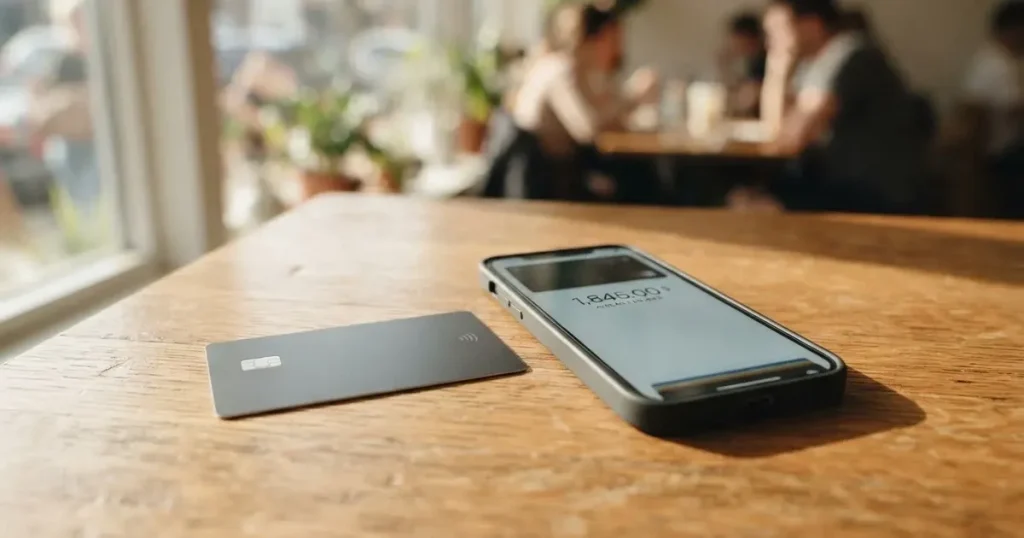
ELLIPAL Pay is a Visa card that spends directly from a self-custody crypto wallet. Instead of first converting your coins into a fiat balance held by a card provider, the card pulls a stablecoin payment from your own wallet at the moment of purchase, settles it through Gnosis Pay’s smart contract on Gnosis Chain, and presents the merchant with a normal Visa transaction. For a reader who already keeps crypto in a hardware wallet and wants to spend stablecoins without giving a third party custody of the funds, that is a genuinely different shape of card. The question is how well the rest of the package holds up: where you can get one, what it costs, what the limits are, and what the fine print does not yet say.
The conditions in this review are current as of October 28, 2026.
Verdict
ELLIPAL Pay scores 5.8 out of 10 in my assessment. The product does one thing well — letting you tap a Visa terminal while your own keys still control the funds — but the supporting material is thin. The card is officially free and has no transaction fees, no FX markup from ELLIPAL, and no gas fees on card payments, which is unusually generous on paper. The catch is geography: legal residents of a defined list of European and Latin American countries can apply, everyone else joins a waitlist. The card partner is Gnosis Pay, KYC runs through SumSub, and the issuing bank is not named on ELLIPAL’s pages, which a careful reader will want to know before handing over ID. A 24-hour rolling daily cap of 8,000 in EURe, GBPe or USDCe and a 5,000 per-transaction ceiling also set the size of what this card can do. It works best for an existing ELLIPAL hardware wallet owner who already holds stablecoins and wants a low-friction way to spend them; it is less useful if you want cashback, a metal card, Apple or Google Pay, or a clear name on the issuer behind the Visa.
| Criterion | Mark | Reason in short |
|---|---|---|
| Who can get it | 6 / 10 | Limited to legal residents of a published list of European and Latin American countries; waitlist elsewhere |
| Cost | 7 / 10 | No transaction or conversion fees on ELLIPAL’s side; physical card and ATM rules come from partner’s pages and are not fully consistent |
| Top-up options | 5 / 10 | Stablecoins from your own wallet only, settled on Gnosis Chain, with balances in EURe, GBPe and USDCe |
| Reliability and complaints | 6 / 10 | Partner is Gnosis Pay, KYC by SumSub; issuer not named officially; product page still describes rollout as gradual |
| Everyday use | 4 / 10 | Virtual card at activation; physical card, Apple Pay and Google Pay not stated on ELLIPAL’s pages |
| Total | 5.8 / 10 |
Who will they give you the card
The card is open to legal residents of a specific list of countries. ELLIPAL’s own materials name Austria, Belgium, Bulgaria, Croatia, Cyprus, the Czech Republic, Denmark, Estonia, Finland, France, Germany, Greece, Hungary, Iceland, Ireland, Italy, Latvia, Liechtenstein, Lithuania, Luxembourg, Argentina, Brazil and Colombia. The first thing to check, then, is whether your country of legal residence is on that list. If it is not, you can create an account and reach the application step, but you will be routed to a waitlist rather than verified. The card’s own product page redirected to a help-centre landing when I fetched it, which is itself a useful signal: the rollout is gradual and the list of supported countries is best read on the live help-centre page before you commit any time.
A few points are worth flagging because they are not stated and a reader tends to assume them by default. The minimum age is not stated on the pages I read, so if you are under 18 you should not assume you will be approved. Citizenship is not the same as residence for this card — the rule is about where you legally live, with proof of address — but every crypto card on the market today also screens your nationality and country of birth against sanctions lists during KYC, so a citizenship that differs from your country of residence can complicate or block an application even where residence alone would qualify. Travelling, dual citizens and people who have recently moved all need to think about this in advance, because the address proof and the ID have to match the same person in the same place.
For anyone outside the published list, the honest answer at the moment is that the card is not yet available to you. The waitlist is a real waitlist, not a sign-up form that quietly lets you in. If your country is not on the list and you have no plan to relocate, you should look at one of the alternatives in the comparison below.
How to get it
The application runs inside the ELLIPAL app, not on a web form. The flow is: open the ELLIPAL app, go to Assets, then Pay, then ELLIPAL Pay, then Apply. From there you complete identity verification, which collects an email address, a government-issued ID, a proof of address, and a source-of-funds confirmation, and then you wait for Gnosis Pay to verify the file. The KYC is done by Gnosis Pay through SumSub, which is a standard identity-verification provider in the crypto industry, so the steps and the document types will look familiar to anyone who has used another regulated crypto service.
The proof of address has to be a utility bill from the last three months. That detail matters: a bank statement or a mobile phone PDF is sometimes accepted by other issuers and sometimes not, but ELLIPAL’s own order guide says a utility bill, so start there and avoid back-and-forth. The source-of-funds question is the moment where you state how you came by the crypto you intend to spend, and a clear, plain answer speeds things up.
Once KYC is approved, you activate a virtual card by entering a phone number and confirming the source of funds again. The card is a Visa and is accepted anywhere Visa is taken. Balances settle in EURe, GBPe or USDCe, depending on the currency you choose. The order guide calls the card itself free, with no monthly fee. A physical card, a metal version, and Apple Pay or Google Pay support are not stated on the ELLIPAL pages I read, so you should not assume any of them will arrive. The length of the KYC review is not stated either, which is a small but real source of friction if you are timing the card to a trip.
Fees and what it really costs
ELLIPAL’s own order guide is unusually simple: the card is free, there are no transaction fees, no added ELLIPAL fee for currency conversion, and no gas fees on card payments. The same guide says there is no ELLIPAL markup when the card settles in a currency other than the merchant’s local one. The published spending limits are a 24-hour rolling daily cap of 8,000 across EURe, GBPe and USDCe, and a 5,000 ceiling on a single transaction. There are no tiers, no monthly fees, and no stated renewal fee. ATM withdrawal rules are not stated on the ELLIPAL pages I read, which is the single biggest gap in the official cost picture and the one a reader should not paper over.
The unofficial part of the picture comes from Gnosis Pay’s own help centre, which runs the partner programme. That help-centre page lists a card price of 30.23 EURe paid from a Gnosis Chain wallet, with a small amount of xDai to cover gas. It also lists an ATM rule of 250 per withdrawal and 500 per day, with five free withdrawals or 200 worth of free withdrawals per month, and a 2 percent fee on withdrawals after that. These numbers conflict directly with ELLIPAL’s “free” line, and ELLIPAL’s pages do not address the conflict, so the safest reading is that the card may or may not be free depending on the path you are funnelled into and the region you are in. If the price matters to you, ask in-app before you tap Apply.
The everyday fees that do apply are the ones that come from the rails the card sits on, not from ELLIPAL. Blockchain gas on Gnosis Chain is paid in xDai and is small, and any movement of stablecoins into or out of your self-custody wallet before a payment will attract the gas fee of whatever network you use to send. FX risk sits with you: when you pay a merchant in a currency other than your balance currency, Gnosis Pay handles the conversion at the network rate without an ELLIPAL markup, but you still bear the spread between the network rate and the mid-market rate, and that is not zero. ATM rules, if the partner programme’s terms apply, are the most likely place an everyday user pays a fee.
Three everyday payments, with the fees that show up in each:
- A coffee, balance in EURe, merchant in the euro area. The amount is pulled from your EURe balance at the network rate, with no ELLIPAL fee, no gas, and no FX conversion. This is the cleanest case the card has.
- An online subscription in the UK, balance in EURe. Gnosis Pay converts euros to pounds at the network rate, with no stated ELLIPAL markup, but you accept the spread between the network and mid-market rate. There is no gas fee on the card side because the conversion happens inside the settlement layer.
- A 200-euro cash withdrawal from an ATM, balance in EURe, in a country that follows the partner programme’s ATM rules. The first five withdrawals in a month are free up to 200 of total value, and a sixth withdrawal within the month is charged at 2 percent. The blockchain fee to move the funds on Gnosis Chain is small and is not what most people mean by “ATM fee”.
A short costs table with standard limits and fee rules:
| Item | Value |
|---|---|
| Card issuance | Free per ELLIPAL’s order guide; 30.23 EURe plus xDai gas per Gnosis Pay’s help-centre page (unofficial, partner programme) |
| Monthly fee | None stated |
| Transaction fee | None stated |
| ELLIPAL conversion markup | None |
| Gas on card payment | None |
| ATM withdrawal | 250 per withdrawal, 500 per day; 5 free withdrawals or 200 per month, then 2 percent (unofficial, partner programme) |
| Daily cap | 8,000 in EURe, GBPe or USDCe (24-hour rolling) |
| Per-transaction cap | 5,000 |
Top up
Top-up is the part of ELLIPAL Pay that is genuinely different from most crypto cards. The funds do not move to ELLIPAL, do not move to Gnosis Pay, and do not sit in a custodial balance waiting to be spent. The money stays in your own self-custody wallet until the moment you pay, at which point the card triggers a settlement on Gnosis Pay’s smart contract on Gnosis Chain, and the merchant’s bank receives a normal Visa payment in fiat. The user’s stablecoin balance, denominated in EURe, GBPe or USDCe, is what the card actually draws on. This is the core idea of the product and the reason an ELLIPAL hardware wallet owner would consider it over a custodial prepaid card.
For a reader who has never used a self-custody card before, the practical effect is that there is no “deposit” step. You do not send your stablecoins to a card address. You make sure the right stablecoin is in the wallet you have connected to ELLIPAL Pay, and the card pulls from it at payment time. If a payment is bigger than your balance, the authorisation fails in the same way a prepaid card fails when the stored value is too low. There is no overdraft, no credit line, and no recourse to a third party for the difference. Blockchain fees apply only where the flow actually moves value on-chain, and for a card payment the settlement is on Gnosis Chain, where fees are denominated in xDai and are small in normal conditions.
Two points are worth checking before your first real payment. First, the network has to be Gnosis Chain for the card to draw on the balance; stablecoins held on Ethereum, Solana, Arbitrum or any other network will need to be bridged to Gnosis Chain before the card can spend them, and that bridge will charge a network fee. Second, the balance currency has to be the one the merchant’s bank will accept in fiat. If you only hold USDCe and the merchant settles in euros, the conversion happens inside the card flow, but a euro balance is the cheaper path if you can fund it. Sending stablecoins to a wallet address from a network the card does not support, or to an address on the wrong network, can lose the funds, because blockchain transfers are irreversible and there is no support team that can recall a transaction.
Paying with it every day
Once the virtual card is active, you get a Visa number that works anywhere Visa is accepted, online and in person. The card behaves like a prepaid card from the merchant’s point of view, because the balance is pre-funded by your self-custody stablecoins. The everyday mechanics are familiar to anyone who has used a virtual card: you read the number out at a shop or paste it into a checkout, and the authorisation either succeeds or it does not, in real time. The reason it succeeds is that the card has access to a balance in the right currency at the moment of the swipe, and the reason it fails is usually that the balance is too low, the daily cap has been reached, or the merchant’s fraud rules have decided to decline the transaction.
ELLIPAL’s pages do not list blocked merchant categories. That is important context for a reader who plans to use the card in places other crypto cards quietly block, such as gambling, adult content, or certain financial services. Without a published block list, the policy is “find out at the till”, which is not ideal. Cashback is not stated for ELLIPAL Pay. A third-party review of the Gnosis Pay product line mentions 1 percent to 5 percent cashback paid in GNO depending on how much GNO is staked, but that is not confirmed for ELLIPAL Pay and should not be presented as a feature of this card. If a rewards rate matters to you, treat it as zero until ELLIPAL says otherwise.
Two things the card does not have, which a reader should know in advance, are Apple Pay and Google Pay. ELLIPAL’s pages do not state support for either, and the virtual-card activation flow does not mention a tokenised wallet. If mobile wallet support matters, you are in the same position as the unstated physical card: do not assume it. The card also has no published dispute or chargeback process, which is a quieter but real gap. Standard Visa chargeback rights are a property of the issuing bank’s contract, not of the brand on the front of the card, and the issuer is not named on ELLIPAL’s pages, so a careful reader should treat the dispute story as “ask before you rely on it” rather than as a guarantee.
What can go wrong
The product page still describes the rollout as gradual and still contains “coming soon” copy in places, which is the first risk to name. The card works for residents of the published country list, and it does not yet work for everyone else, and there is no published timeline for the next batch of supported countries. The first thing to check before you put any time into the application is whether your country is on the list as it stands today.
The second risk is the unnamed issuer. ELLIPAL’s own pages say the card is issued through Gnosis Pay and that KYC runs through SumSub, but they do not name the bank or e-money institution that actually issues the Visa. Gnosis Pay’s own third-party listings name Monavate, and that is the closest thing to a public statement, but it is not on ELLIPAL’s pages and it is not confirmed for this specific product. For a reader, the practical effect is that the dispute and chargeback story, the regulator in the issuer’s home country, the safeguarding regime for any fiat balance that briefly exists during settlement, and the country whose deposit guarantee or e-money safeguarding rules apply are all uncertain. A card programme that has a named, regulated issuer in a well-known jurisdiction is easier to reason about than a card programme that does not.
The third risk is the inconsistency in the cost story. ELLIPAL says the card is free; Gnosis Pay’s partner-programme help page says it costs 30.23 EURe plus xDai. The same partner page lists ATM limits and fees that ELLIPAL’s pages do not mention at all. The most likely explanation is that the order guide on ELLIPAL’s side and the order guide on the partner’s side are tracking different products or different regions, but the public material does not say so, and a reader should not have to choose between two contradictory order pages to find out the price of a card.
The fourth risk is the support channel. ELLIPAL says it does not offer phone support, and the only contact path is the help centre at support.ellipal.com. For a card product this is a thinner support footprint than most bank-backed cards offer, and it matters most in two situations: when a transaction is wrongly authorised and you need a chargeback, and when a stablecoin transfer goes to the wrong address and you need help. The first is a card-network function that lives with the issuer, not ELLIPAL; the second is irreversible at the protocol level and is the kind of problem where a 24/7 hotline is the difference between a recoverable loss and a permanent one.
The fifth risk is the self-custody model itself, which is a feature and a risk at the same time. The funds stay in your own wallet, which means no third party can freeze them, and no third party’s failure can take them away from you. It also means that if you lose your seed phrase, fall for a phishing email, or have clipboard malware rewrite a copied address, the loss is yours, and the card network cannot reverse the on-chain movement. If you are comfortable with that trade-off, the card is a good fit; if you are not, a custodial card with a named custodian and deposit-style safeguards is the safer shape.
A short list, to keep the risks easy to scan:
- Limited and uneven country coverage, with a waitlist rather than a sign-up outside the published list
- Issuer of the Visa is not named on ELLIPAL’s own pages
- Card price and ATM rules differ between ELLIPAL’s order guide and Gnosis Pay’s partner-programme help page
- No published support phone line; help-centre-only contact
- Self-custody means key loss, phishing and clipboard malware are entirely on the user
- Product page still uses “coming soon” language in places
What to take instead
If the country list, the unnamed issuer, the missing physical card and the missing mobile wallet support are deal-breakers, three alternatives cover similar ground with different trade-offs. None of them is a self-custody card, so the on-chain “your keys, your coins” property of ELLIPAL Pay is unique to ELLIPAL Pay; the comparison is about the rest of the package.
| Card | Where you can get it | Cost | Rewards | Card shape |
|---|---|---|---|---|
| ELLIPAL Pay | Residents of a defined list of European and Latin American countries; waitlist elsewhere | Free on ELLIPAL’s side, 30.23 EURe plus gas per Gnosis Pay’s help page (unofficial) | None stated | Visa, virtual on activation; physical and wallets not stated |
| MetaMask Card | Sign-up open in 45 listed countries and territories, including several in Europe and the Americas; other regions on a waitlist; US and UK sign-ups temporarily closed | Virtual free; Metal $199 a year | 1 percent in mUSD on Virtual, headline 3 percent on Metal (footnote 3 percent up to $10,000 then 1 percent), plus $FLY dining bonuses | Mastercard, virtual issued instantly; Metal can be pre-ordered after virtual approval |
| KAST | Residence-based list at KYC; list not published; restricted locations named separately | Standard 0 USD a year, Premium 1,000 USD, Private 10,000 USD | 1.5 to 3 percent in USD, plus KAST Points on Premium and Private | Visa Platinum (Standard), Visa Infinite metal (Premium), Visa Infinite gold (Private); up to 10 cards per user; Apple Pay and Google Pay |
| TokenPocket (TP Card) | Visa debit for several European countries and territories; Mastercard debit for Australia, Canada, Hong Kong, Japan, Taiwan, New Zealand, Singapore, South Korea, the UK and others; Americas planned for a later date | A 1 percent fee on crypto deposit, refundable later through rewards; no other stated fees | None stated; 1 percent deposit fee intended to come back as rewards | Mastercard or Visa debit card, virtual; balances in EUR24 and USD24; runs on Arbitrum |
A reader who wants self-custody and is happy to live with a virtual-only card on Gnosis Chain will not find a like-for-like replacement in this list. A reader who is willing to give up self-custody for a richer rewards package and a known issuer should look closely at MetaMask Card, where the Metal tier has a real cashback headline and a published $199 annual price, and at KAST, where the Standard tier is free and the cashback is paid in USD. A reader who wants the cheapest possible card and a low-friction onboarding in Asia-Pacific should look at TokenPocket, which runs on Arbitrum and has a published, refundable 1 percent deposit fee in place of the typical crypto-card spread.
The honest summary is that ELLIPAL Pay is the only card in this set whose defining property is self-custody, and the rest of its profile — country list, missing physical card, no mobile wallet, no cashback, an unnamed issuer — follows from being a young product on a partner’s rails. The alternatives are stronger on the package but weaker on the principle.
Who I would recommend it to
ELLIPAL Pay is the right card for a specific reader, and not the right card for almost everyone else. The reader it suits is someone who already owns an ELLIPAL hardware wallet, already holds EURe, GBPe or USDCe, and wants to spend those stablecoins at a Visa terminal without first moving them to a custodial balance. For that reader, the no-transaction-fee, no-FX-markup, no-gas-on-payment design and the self-custody settlement flow are exactly what a custodial prepaid card cannot do. The 8,000 daily cap and the 5,000 per-transaction cap are large enough for ordinary spending and small enough to be a useful spending control, and the fact that the card fails cleanly when the balance is too low is a feature, not a bug, for someone who treats the card as a thin layer over a wallet they already understand.
ELLIPAL Pay is the wrong card for a reader who needs a physical card or a metal card, who relies on Apple Pay or Google Pay at the till, who wants cashback, who is not on the published country list and is not willing to wait, who needs a 24/7 support phone line, or who needs a named, regulated issuer to feel comfortable handing over ID and a utility bill. For all of those readers, one of the alternatives above is a more honest answer.
A short list, for the reader who wants the bottom line:
- Best for: ELLIPAL hardware wallet owners spending EURe, GBPe or USDCe from their own keys, on the published country list, who are happy with a virtual card
- Not for: anyone who needs a physical card, mobile wallet support, cashback, phone support, or a named issuer
- Open question: who actually issues the Visa, and what fee structure applies to which country — worth asking in-app before applying
Frequently asked questions
What is the ELLIPAL Pay card?
ELLIPAL Pay is a Visa card that spends directly from a self-custody crypto wallet. The card is issued through Gnosis Pay and the KYC runs through SumSub. Balances are in EURe, GBPe and USDCe, and payments settle on Gnosis Chain at the moment of purchase, with no ELLIPAL fee, no FX markup from ELLIPAL and no gas on the card payment.
How does the ELLIPAL Pay card work?
When you pay, Gnosis Pay’s smart contract pulls the right stablecoin from your own wallet, settles it on Gnosis Chain, and the merchant’s bank receives a normal Visa payment in fiat. The money never leaves your wallet until the moment of payment, and there is no third-party balance that can be frozen.
Is ELLIPAL Pay a bank?
No. ELLIPAL is the brand that markets the card and runs the app, Gnosis Pay runs the partner programme and the KYC through SumSub, and the bank or e-money institution that actually issues the Visa is not named on ELLIPAL’s own pages. A third-party listing names Monavate as the issuer, but that is unofficial and not confirmed for ELLIPAL Pay.
Who owns ELLIPAL Pay?
The card is a partnership between ELLIPAL and Gnosis Pay, with KYC by SumSub. ELLIPAL is the company behind the ELLIPAL hardware wallet line; Gnosis Pay is the payments product of the Gnosis ecosystem. The legal entity that holds the issuing licence is not stated on ELLIPAL’s pages I read.
Is the ELLIPAL Pay card available in my country?
It is available to legal residents of a published list that includes Austria, Belgium, Bulgaria, Croatia, Cyprus, the Czech Republic, Denmark, Estonia, Finland, France, Germany, Greece, Hungary, Iceland, Ireland, Italy, Latvia, Liechtenstein, Lithuania, Luxembourg, Argentina, Brazil and Colombia. Outside that list, the application routes to a waitlist. The list is best read on the live help-centre page before you apply, because it changes as the rollout continues.
How do I get the ELLIPAL Pay card?
Open the ELLIPAL app, go to Assets, then Pay, then ELLIPAL Pay, then Apply, and complete the KYC. You will need a government-issued ID, a utility bill from the last three months as proof of address, and a source-of-funds confirmation. Once Gnosis Pay has verified the file, you activate a virtual card with a phone number.
Does the ELLIPAL Pay card require KYC?
Yes. The KYC is run by Gnosis Pay through SumSub, and it collects an email address, a government ID, a proof of address, and a source-of-funds confirmation. The age requirement is not stated on the pages I read, so the safe default is the standard 18+ rule used across the prepaid-card industry.
Is the ELLIPAL Pay card free?
ELLIPAL’s order guide calls the card free with no monthly fee, no transaction fees and no FX markup. Gnosis Pay’s own partner-programme help page lists a price of 30.23 EURe plus a small xDai gas fee, and a separate ATM rule of 2 percent after five free withdrawals. The two pages conflict, so it is worth asking in-app before you tap Apply.
How do I add the ELLIPAL Pay card to Apple Wallet or Google Pay?
ELLIPAL’s pages do not state support for Apple Pay or Google Pay, and the virtual-card activation flow does not mention a tokenised wallet. If mobile wallet support is important to you, treat it as not available until ELLIPAL confirms it in-app.
Is the ELLIPAL Pay card safe?
The card has the safety property of self-custody: the funds stay in your own wallet until payment, so no third party holds or can freeze the balance. The trade-off is that key loss, phishing and clipboard-hijacking malware are entirely on the user, and blockchain transfers are irreversible. The card also has an unnamed issuer on ELLIPAL’s pages, no published phone support, and a help-centre-only contact path, which a careful reader should weigh against the self-custody benefit.
Choosing a wallet card – cryptocardadvisor
Content created by the «cryptocardadvisor» team