
Decard charges US$388 a year for a metal Visa credit line you repay in stablecoins — worth it only for a very specific person
 Available in US
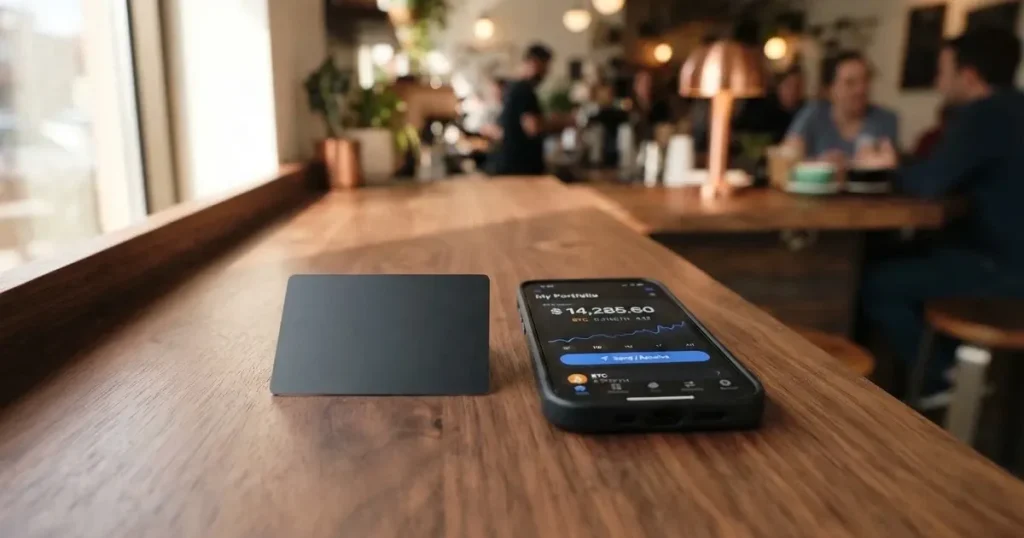
If you have been trying to get an ordinary bank card and cannot, or you would rather not hand a bank your documents, the Decard card will appear on your radar for a reason: it is pitched at exactly that gap. It is a premium Visa credit card with a laser-engraved metal body, sold on the strength of a membership fee rather than on a local banking relationship. That is a real niche, and for someone inside it the card is unusually well made. It is also one of the most expensive crypto-adjacent cards on the market, and the price is fixed: US$388 a year, and the card issuer says it cannot be waived. That single number decides most of the conversation that follows.
My score for Decard is 4.8 out of 10. It is not a bad card. It is an expensive card with a narrow audience, and the fee structure, not the plastic, is what holds the score down.
Who suits it: someone who wants a premium metal credit card, pays their bill with USDT or USDC, values the lounge access and travel cover attached to the membership, and can genuinely absorb a US$388 annual charge without thinking about it. Who it does not suit: anyone who wants a cheap everyday spending card, anyone who needs a card in a specific country with predictable approval, anyone whose priority is the lowest possible cost per transaction, and anyone who is uneasy about an issuer whose banking partner is not named on the pages I read.
The conditions described on this page are current as of October 28, 2026.
| Criterion | Mark | Why |
|---|---|---|
| Who can get it | 5 / 10 | Countries not named; ages 21 to 65; access by invitation or application; Singapore citizens and PRs go through Singpass |
| Cost | 2 / 10 | US$388 a year and cannot be waived; FX shown as 0% on the site, while the terms mention a Foreign Exchange Conversion Charge |
| Top-up options | 4 / 10 | It is a credit line, so crypto only repays the debt; USDT and USDC through D-Vault, networks not named |
| Reliability and complaints | 7 / 10 | DCS Card Centre Pte. Ltd. in Singapore, terms written to MAS recommendations; issuer and licences not named; no complaints found |
| Everyday use | 7 / 10 | Physical metal and virtual Visa; bank ATMs treated as cash advance outside Singapore; Apple Pay and Google Pay not disclosed |
| Total | 4.8 / 10 | Strong object, thin transparency, and a fee most people will not earn back |
Who gets you the card
The card is not open to everyone, and the people it filters out are as interesting as those it lets in. The age band is 21 to 65, and there is no minimum income requirement — which sounds generous until you notice that eligibility is also gated on a credit review, so the absence of an income floor is not the same as the absence of a financial test. Access is by invitation or by application, and every application is reviewed before approval. So there is no instant sign-up, and no published list of what gets rejected.
The country question is the one the card’s own pages do not answer. No list of eligible countries is stated on the card’s official website. That is not a small gap when you are trying to work out whether you can apply at all: Singapore citizens and permanent residents verify through Singpass, and everyone else uploads identity and proof-of-address documents, with a passport given as the example. That structure implies an international applicant base, but it is an implication, not a confirmation. There is a help centre and a chatbot, and they are the right place to get a straight answer before you send documents anywhere.
So the honest position is this: the process itself is unremarkable and fairly standard, and the eligibility rules are published except for the one that matters most to a reader outside Singapore. If you are under 21 or over 65, you are out. If you are in Singapore, the route is clean and fast. If you are elsewhere, you are applying into a review process with no published country list.
How to get it
The path runs through verification, then a review, then payment. Singapore citizens and PRs verify through Singpass. Other applicants upload an identity document and proof of address, a passport being the example given. Applications are then reviewed, and the decision comes before anything is issued.
The card’s official documentation does not describe verification tiers, a processing time, or the reasons an application might be refused. That absence is worth internalising rather than glossing over: you are not being told how long the wait is, and you are not being told what you could fix if the answer is no.
After approval comes the money. The virtual card is issued once the annual fee is paid, and the physical metal card is sent after that same payment. So the sequence is approval, payment, then the card in your hand. The metal is described as a 22-gram alloy with laser engraving — worth mentioning because it is the tangible thing you are paying for.
What I cannot tell you is where the physical card ships to, how long delivery takes, or what it costs, because none of that is stated. Replacement is a separate matter: the terms say a replacement card comes “on terms we stipulate”, and the fee for it is not stated either. That is a small but real gap. A card you may need to replace, at a price nobody has published, on terms somebody else decides.
What it really costs: the Fees
US$388 a year, charged in Singapore dollars, which the card says cannot be waived. There is no separate issuance fee stated. The metal card is included in the membership rather than sold as an add-on, and it is valued at US$100. Read that as a statement about what the card is worth, not as a discount you can bank.

Now the fees that decide whether the membership makes sense in your particular life. This is the table I would want before applying anywhere, so it is worth reading slowly.
| Fee or limit | What the card states |
|---|---|
| Annual fee | US$388, charged in SGD, cannot be waived |
| Metal card | 22-gram alloy, laser engraving, included, valued at US$100 |
| Issuance fee | Not stated |
| Foreign exchange | 0% on the product page — “No foreign transaction fees on any overseas spending” |
| Conversion charge | A “Foreign Exchange Conversion Charge” applies under terms clause 1.5.3, alongside the “DCS retail rate of exchange” |
| Crypto conversion fee | Not stated |
| ATM / cash advance | Available “at any automated teller machine outside Singapore”, up to a limit set by DCS, with a service fee per advance — rate not stated |
| Credit limit | Set by DCS “at our sole and absolute discretion”, may be revised without notice, no figure published |
| Spend limit | Not stated |
| Late payment | Charges apply if the full Outstanding Balance is not paid by the Due Date; rates not in the terms |
| Inactivity fee | Applies after 90 days without transactions |
| Early termination fee | Possible within 180 days of approval |
| Cash advance service fee | Charged per advance, rate not stated |
The FX line is the one I keep coming back to, because it is the clearest case of the card telling you two different things. The product page promises no foreign transaction fees on any overseas spending. The terms document, dated 2 October 2026 and running to 56 pages, describes other-currency transactions being converted at the “DCS retail rate of exchange” plus a Foreign Exchange Conversion Charge. Both statements are official. One of them is a simplification. When a marketing line and a legal document disagree, the document is what you are bound by, so plan on there being a charge and ask what it is before you commit.
Two everyday payments, to make this concrete about the fee that will actually hit you. A coffee abroad, on your holiday. If the card is truly 0% on FX, you pay the local price and nothing more. If the terms clause applies, you pay the DCS retail rate plus a conversion charge, and you have no way to price that before the transaction goes through. A laptop bought online in another currency. Same question, larger sum, and here the Address Verification Service matters too: it compares the numeric parts of your billing address against issuer records, it is mainly offered in the US, Canada and the UK, and it is generally unavailable for foreign-issued cards. A Singapore-issued card buying from a US merchant is exactly the case where a decline becomes possible for a reason that has nothing to do with you.
Add the ATM picture to the same picture. Cash from any automated teller machine outside Singapore is structured as a cash advance, subject to a limit DCS sets and a service fee per advance whose rate is not published. ATM disbursements do not earn rewards either. So the card is excellent for spending in shops and awkward for taking cash out of a foreign machine.
There is also a bundle attached to the membership, and it is the reason the fee might be defensible. Cashback up to US$200 per month, two DragonPass lounge visits, and travel accident cover up to US$1,000,000. There is a single tier — DeCard Luminaries is described as a premium evolution of the card rather than a ladder of tiers — so you are not choosing between levels; you are choosing whether to buy in or stay out.
How to Top up the card
This is where people who arrive from search engines get a surprise, and it is important to state it plainly rather than let it emerge later. Decard is not a top-up card. It is a credit line. Crypto does not sit on the card and does not get spent from the card. Crypto is what you use to pay the debt off.
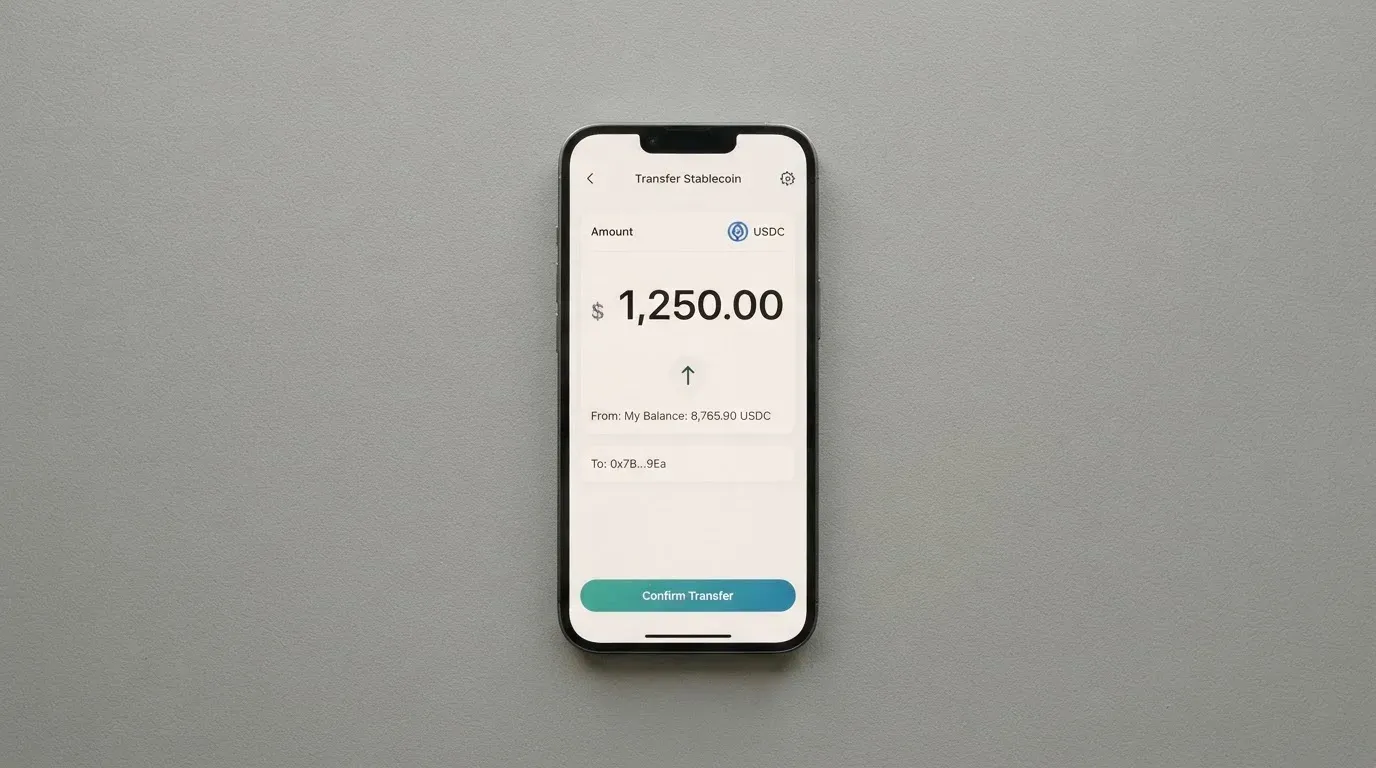
The mechanism is USDT and USDC repayment and prepayment through the D-Vault page, under a “Pay to card” heading. The networks are not stated. A third-party aggregator mentions Polygon, and I am flagging that as unofficial and not confirmed by the card — do not treat it as an instruction. What matters is that you do not go looking for a chain name in the card’s own material, because it is not there.
The repayment fee and the minimum repayment are not stated either. Late payment charges and interest apply if the full Outstanding Balance is not paid by the Due Date, and the rates are not in the terms — they are published in the website FAQ instead. That split matters: the document you are contractually bound by is the one that does not contain the numbers.
There is also no balance to withdraw, which several people search for and few cards can honestly deliver. A credit card does not hold funds to cash out. If what you want is to convert crypto into spendable money and then take it away as cash, this is the wrong instrument.
Closing the account is worth reading about before you open it, because the terms are unusually specific. Termination runs through DeCard Live Chat or the app. You cannot close within 90 days of issuance unless the card agrees to it. An early-termination fee is possible within 180 days of approval. On termination, fees including the annual fee are not refunded, and outstanding liabilities must be repaid immediately. An inactivity fee can appear after 90 days without transactions, which catches people who stop using the card for a quarter and forget.
None of this is unusual for a credit agreement. All of it is money leaving in the wrong direction, so it belongs in the decision rather than in the small print you skim.
Paying with it every day
The mechanics are good. You get a physical metal card and a virtual one, both Visa, on a Singapore-dollar credit account. The apps are “DCS DeCard” on iOS and com.dcs.decard.android on Android. Ratings in the stores I did not read, so I have nothing useful to say about how users rate them.
What is missing is as informative as what is there. Apple Pay and Google Pay are not disclosed — neither confirmed nor ruled out. Blocked merchant categories are not stated. For a card sold to people who travel and buy online, those two omissions are the ones I would push hardest on, because a metal card you have to physically swipe is a very different product from a tokenised one.
The rewards structure is unusually generous on paper. Cashback up to 10%, capped at up to US$200 per month, plus 1 DePoints per US$1 spent. The payout currency is not stated. To that you add the two DragonPass lounge visits and the travel accident cover of up to US$1,000,000. Whether “up to” survives contact with the terms is the question to ask before you count it as income.
If a payment goes wrong, the terms are clear and the clear thing is not comforting. You raise the dispute with the merchant directly, and you do not withhold payment. Charges still unresolved by the statement date do not qualify for promotions. No chargeback time frames are stated. The contract is governed by Singapore law and the Singapore courts, so a dispute is a Singapore dispute — which for a buyer in another country means expense and distance before anyone has argued about the facts.
Then there is the category-level reality. A merchant category code is a four-digit number classifying a business, and MCC 7995 covers gambling. Many issuers block it by policy rather than by law, and the list varies by issuer — Decard does not state its own. Some merchants decline prepaid or foreign BINs because the BIN lookup reveals the card type and issuer country. Declined authorisations may also leave a hold on your funds that can stay for several days, typically up to seven. None of this makes the card unusable; it makes it Singapore-issued in a world that sometimes looks sideways at that.
What can go wrong
Start with the absence of complaints, because it cuts both ways. I searched for complaints about Decard and DCS Card Centre and found no Trustpilot material, no Reddit material and no news coverage — the results that came back were about unrelated sellers. A second search returned only press releases and app-store pages. No complaint themes could be drawn. That is genuinely good news about sentiment and genuinely weak news about evidence: a small footprint can mean a clean record, and it can also mean a small footprint.
The company picture is where I would want the most clarity. The copyright is held by DCS Card Centre Pte. Ltd., the homepage says “Powered by DCS Group”, and DCS SERV PTE. LTD. is also listed. The homepage states the operation is “Backed by regulated issuing infrastructure”, but the issuing bank and the licences are not named on the official pages I read. For a credit product, that is the single most important gap on this page. You are extending credit — the name on the copyright is not the name of the institution that carries your debt. The terms follow the Monetary Authority of Singapore E-Payments User Protection Guidelines, which is a real and meaningful signal, but guidelines are not a licence.
Then the custody question, which is different here from most cards. With a custodial wallet the provider holds the credentials, and with a self-custody-linked card the funds stay in your own wallet until payment. Decard sits in neither camp exactly: the crypto is used only to repay a credit line, so there is no crypto balance riding on the card. That reduces one familiar risk and introduces another — the debt sits with the issuer, and the issuer’s standing is what the page leaves unnamed.
Losing the card is where the terms are strict. Liability for a lost or stolen card is limited only if you notify the cardholder immediately and file a police report or a statutory declaration. There are transaction alerts with a notification threshold, which is useful only if you act on them. An in-app freeze and insurance of funds are not stated. If the card is in someone else’s hands and you have not yet made a report, the protection you assumed is not there.
Support exists and is reachable: a help centre, a chatbot behind a robot icon on the homepage, DeCard Live Chat in the app and on the website, an email address at [email protected], and X at @DCS_DeCard. The language shown is English, hours are not stated, and Telegram is not on the product page.
For the record on the timeline, so you can weigh it: the terms document governing Luminaries is dated 2 October 2026 and runs to 56 pages. DeCard Luminaries launched with Visa in September 2025 per a Visa Singapore press release, and the IDEMIA metal card partnership is dated 15 December 2025. An aggregator puts the Decard Visa card launch at May 2025.
One last thing I will not advise on. Spending crypto is generally a taxable disposal in most jurisdictions, and paying a card bill with stablecoins may be one. That is a question for a qualified adviser in your own country, not for a card review, and not for me.
What to take instead
Three alternatives came up in my research, and each fails or succeeds against a different part of what Decard does. None of them is a like-for-like substitute — that is the point of showing them.
| Card | Score | Card | Yearly cost | What it does differently |
|---|---|---|---|---|
| Sponge | 4.9 / 10 | Virtual card, described as a credit card issued by Rain, a Visa Principal Member | Not stated | USDC collateral moves from the Sponge wallet with card fund; example chain base, SDK mentions base or solana. Age, country list, fees and rewards not stated |
| Nexo | 6.3 / 10 | Virtual (activates in app) and physical, issued by DiPocket UAB | No monthly, annual or inactivity fee | Spends from the account across 100+ digital assets; FX 0.2% on weekdays in the EEA, UK and Switzerland, 0.7% at weekends, higher elsewhere |
| Xplace | 7.7 / 10 | Visa, virtual instantly; physical Silver live, Gold and Platinum coming | Basic free, Silver $99/y, Gold $249/y, Platinum $999/y | Deposits on Solana: cbBTC, wETH, SOL, JitoSOL, USDC, USDT, xStocks; Credit mode cashback by tier up to 2%, paid in USDC |
Read that table in a specific way. Sponge scores almost the same as Decard and tells you even less — country list, cost, fees and rewards all not stated — with a virtual card only and a much younger-looking setup. There is nothing here that makes it a safer choice. Nexo scores higher because the money side is clear: no annual fee at all, a published FX rate that varies by weekday and weekend, and 100+ assets spendable from the account. Its costs are elsewhere. The virtual card needs at least $50 in the account to activate; the physical card is free to ship but requires more than $5,000 in digital assets and at least the Gold tier; cashback on Credit Mode purchases only applies above $5,000 and is paid in NEXO tokens or Bitcoin, and the network is shown as a Mastercard trademark notice without being stated outright.
Xplace is the one that most directly attacks Decard’s weak spot, the fee. A free Basic tier and a $99 Silver tier against $388 is not a close comparison. It has two modes — Cash mode spends a stablecoin balance, Credit mode borrows against holdings — and it states that stablecoin spending carries “no hidden spread”. Its own gaps mirror Decard’s: country list not stated, FX for non-Platinum tiers not stated, card currency not stated, and the physical Gold and Platinum cards are described as coming soon rather than available.
The pattern across all three is worth naming. Every one of them is vague about countries. Not one publishes a clean ATM rate. And two of the three are transparent about fees while Decard is the one holding its cash advance rate, its conversion fee and its interest rates outside the terms document.
Who I would recommend it to
I would recommend Decard to someone with a specific profile. You want the metal object as much as the credit. You intend to pay the bill with USDT or USDC because that is genuinely convenient for you. You travel enough that two lounge visits and travel accident cover of up to US$1,000,000 earn their keep. You can carry US$388 a year without it becoming a question. And you have an answer — from the support team, in writing — on the issuing bank and licence, the cash advance fee, the crypto conversion fee, and whether Apple Pay is supported. Ask those four questions and the decision becomes much easier, because a card that answers them clearly is worth US$388 in a way a card that does not is not.
I would not recommend it to anyone shopping by country, because no country list is published. I would not recommend it to a cost-first buyer, or to someone who needs cash from ATMs abroad. And I would be cautious recommending it to anyone whose plans could change within 180 days, because the early-termination fee and the non-refundable annual fee are aimed squarely at that person.
Frequently asked questions
What is the Decard card?
It is a premium Visa credit card issued by a Singapore entity, sold on a membership model rather than through a bank relationship. You get a laser-engraved metal card in a 22-gram alloy plus a virtual Visa card, on a Singapore-dollar credit account, with a limit assigned by DCS. The annual fee is US$388 and the metal card is included. Crucially, it is a credit line, not a stored balance — crypto is used to repay it, not to fund each purchase directly.
Is Decard a bank?
No, and this matters more than usual here. The copyright is held by DCS Card Centre Pte. Ltd. with DCS SERV PTE. LTD. also listed, and the homepage says “Backed by regulated issuing infrastructure” — but the issuing bank and the licences are not named on the official pages. The terms follow the Monetary Authority of Singapore E-Payments User Protection Guidelines. Treat the entity on the copyright as a programme manager until you are told otherwise in writing.
Which countries can I get the Decard card in?
The card’s own pages do not say, and I will not guess. No eligible country list is stated on the card’s official website. What is stated: ages 21 to 65, no minimum income, access by invitation or application, Singapore citizens and PRs verifying through Singpass, and everyone else uploading identity and proof of address. Ask support directly before sending documents, and treat any chain tip from a third party as unofficial.
Does Decard require KYC?
Yes, in the ordinary way. Singapore citizens and permanent residents verify through Singpass; other applicants upload identity documents and proof of address, a passport being the example given. Applications are reviewed before approval, and the virtual card is issued only after the annual fee is paid. The card does not state verification tiers, processing times, or reasons for refusal — so build in more patience than the signup screen suggests.
How much does the Decard card cost?
US$388 per year, charged in Singapore dollars, and the card says it cannot be waived. That is the number to plan around. Beyond it: FX is shown as 0% on the product page, but the terms describe a DCS retail rate of exchange plus a Foreign Exchange Conversion Charge; cash advance carries a service fee whose rate is not published; and late payment, inactivity after 90 days, and early termination within 180 days can all add charges.
How do I pay the Decard card back with crypto?
You do not top the card up — you repay the credit line. USDT and USDC repayment and prepayment run through the D-Vault page under “Pay to card”. The networks are not stated; a third-party aggregator mentions Polygon, which is unofficial and not confirmed by the card, so verify before sending anything. The repayment fee and minimum are not stated either. Blockchain transfers are irreversible, so a wrong network can mean lost funds with no guaranteed recovery.
Can I add the Decard card to Apple Wallet?
The card’s pages do not disclose it. Apple Pay and Google Pay are neither confirmed nor ruled out, and I would treat that as unknown rather than absent. The same disclosure gap applies to blocked merchant categories. This is one of the four questions I would put to support before applying — especially if you travel, since a metal card that must be physically presented is a very different product from a tokenised one.
Where can I use the Decard card?
Anywhere Visa is accepted, with two structural exceptions worth knowing. Cash from an ATM outside Singapore counts as a cash advance, with a limit DCS sets, a service fee per advance whose rate is not published, and no rewards earned. And at online checkouts, Address Verification Service is generally unavailable for foreign-issued cards, which can cause declines at merchants in the US, Canada and the UK. Some merchants also decline foreign BINs once they look up the issuer.
Is the Decard card safe?
There is no complaint history to worry about — searches for Trustpilot, Reddit and news material about Decard or DCS found nothing, only press releases and app-store pages. That is reassuring and thin at the same time. On safeguards: liability for a lost or stolen card is limited only if you notify immediately and file a police report or statutory declaration; alerts have a notification threshold; in-app freeze and fund insurance are not stated. There is also no insurance of the credit itself if the issuer stops operating.
Is the Decard card worth it?
Only if the bundled benefits are worth about US$388 a year to you: cashback up to US$200 per month plus 1 DePoint per US$1, two DragonPass lounge visits, and travel accident cover of up to US$1,000,000. If your spend is modest, or you take cash out abroad, or you want a low-cost everyday card, no. The comparison in my mind is Xplace at a free Basic tier and $99 for Silver, and Nexo with no annual fee at all.
Choosing a credit or cashback card – cryptocardadvisor
Content created by the «cryptocardadvisor» team