
Airtm card review: the free part is real, the virtual-only part is the catch
 Available in US

Airtm gives you a prepaid Visa card number that draws on dollars converted from crypto in your Airtm balance. There is no charge to issue it and no monthly fee, and the foreign exchange fee on international spending is listed at 0%. That much is genuinely unusual and genuinely attractive. What you give up for it is equally concrete: there is no physical card, there is no ATM, the daily spending ceiling is $2,000, and the card spends dollars only. On a scale of 10 it comes out at 6.3, and most of the reason sits in two places — who can actually get one, and what happens when something goes wrong.
The conditions described here are current as of October 28, 2026.
Verdict: 6.3 out of 10
The score is not a verdict on the company’s honesty. It is a verdict on how well this particular product fits an ordinary person’s week. Airtm does a small number of things very well — the price, mostly — and leaves the biggest everyday gap unfilled, which is the ability to put a physical piece of plastic in your pocket and take money out of an ATM.
| Criterion | Mark | Why, in short |
|---|---|---|
| Who can get it | 5 / 10 | Residence in 15+ countries by verified address, not citizenship; launch began in the United States and Argentina; closed in Belarus, Cuba, Iran, Myanmar, North Korea, Sudan, Syria, Russia, parts of Ukraine, and certain US states including New York |
| Cost | 9 / 10 | Issuance 0 USD, monthly fee 0 USD, top-up 1 % on the first 200 USD a month capped at 2 USDC, 0 % beyond that, FX 0 %; inactivity 1 USD after 30 days without a top-up |
| Top-up options | 7 / 10 | The card is loaded from the Airtm balance in USDC; the wallet itself takes crypto deposits and 500+ payment methods, with networks not disclosed |
| Reliability and complaints | 5 / 10 | Issued by Lead Bank, operated by Bridge Ventures, Airtm Inc. registered with FinCEN as an MSB since 2015; Trustpilot 3 out of 5 across roughly 7,000 reviews, with recurring complaints about account blocks and money held |
| Everyday use | 5 / 10 | Virtual Visa only, Apple Pay and Google Pay supported; no physical card and no ATM |
| Total | 6.3 / 10 | Free and clean on price; thin on access, on physical use, and on what happens when support is needed |
The audience this suits is narrower than the marketing suggests. If you are a resident of the United States or a Latin American country, you hold dollars, and you want a card number that spends them without a monthly charge or a currency-conversion mark-up, it fits. If your problem is that you cannot get an ordinary bank card at all, then the residency requirement is the thing to check first, because it is decided by your address and not by your citizenship. A citizen of an excluded country living in an eligible one is, on the card’s own wording, in a different position from someone with that citizenship living at home.
Will they give you the card
Yes, if your residence is verifiable and your country is on the list. The card is open to users with verified residence in 15+ countries — by residence, not citizenship. That distinction matters more than it sounds. The test is the address you can document, not the passport you carry.
It began life in the United States and Argentina. The card’s own pages name the next wave: coming soon are Bolivia, Venezuela, Colombia, Ecuador and the Dominican Republic; planned further out are Guatemala, Chile, Angola, Brazil and Peru. So the footprint is Latin America first, with the United States as the anchor, and African and larger Latin American markets still ahead rather than open.
Where it is not available at all: Belarus, Cuba, Iran, Myanmar, North Korea, Sudan, Syria, Russia, and Ukraine’s Donetsk, Luhansk and Crimea regions. Certain US states are excluded too, New York among them. That last point surprises people, since the United States is the launch market and the natural assumption is that a US card works everywhere in it. It does not.
What this means practically: if you are reading this from somewhere not on the “coming soon” or “planned” list, the honest answer from the card’s public pages is that eligibility there is not stated. There is no published list of the fifteen-plus countries by name, and no statement about what happens if you apply from one that is not on it. That is the first thing I would ask before anything else, because everything downstream — the fees, the top-up routes, the limits — assumes you already have an account.
One more piece of background that explains the exclusions. Under anti-money-laundering law, regulated businesses must verify customers and keep monitoring transactions, and national origin is recorded and screened separately from residence, because sanctions lists are written against citizenship and country of birth as much as against a country of address. Exclusion lists on cards like this one are rarely about the individual; they are the compliance system working as designed.
How to get it
You need to pass a verification called “Special Features KYC”, and then the card itself is approved inside the app rather than shipped. The steps the card publishes are: complete the Special Features KYC, go to the card page in the app, follow the instructions there, and the card is approved. Activation then takes anywhere from a few minutes to two business days.
The verification requires an official ID, and it checks your name, address, date of birth and government ID number. The age requirement is 18+. There is a small mercy here: if you have already completed Special Features KYC for a US Virtual Account, you do not need to repeat it. Note also that this is a separate tier from standard Airtm account verification — the basic check you did to open the account is not the same thing as the check the card needs.
The card that arrives is a prepaid Visa debit card, virtual, denominated in USD. There is no delivery, because there is no physical card to deliver.
What the card does not publish is as informative as what it does. There is no stated list of reasons a verification might be refused, and no stated service level for how long a pending verification may sit. That is not unusual in this category, but it does mean you should not expect to be told quickly if something has gone wrong.
Fees: what it really costs
The headline is that this card has no standing charges. Issuance is free at 0 USD. There is no monthly fee, provided you keep loading or using the card — that proviso is the one clause in the sentence worth reading twice. The annual fee is 0 USD. There is a single tier; there is no paid version to upgrade to.
What does cost something is topping up, and the structure is unusual in your favour. The top-up fee is 1 % on the first 200 USD you load in a calendar month, with a hard cap of 2 USDC a month. Beyond 200 USD in that month, the fee is 0 %. The cardholder agreement for the programme separately describes the fee for funding from the Airtm wallet as “up to 2 %”, so I would plan around the higher of the two figures the card publishes rather than the lower.
| Fee or limit | Value |
|---|---|
| Issuance | $0 |
| Monthly fee | $0 (no monthly fee if you regularly load/use the card) |
| Annual fee | $0 |
| Tiers | Single tier |
| Top-up fee | 1 % on first $200 loaded per calendar month (max $2 USDC/month), 0 % beyond $200 |
| Cardholder agreement wording | “up to 2 %” for funding from the Airtm wallet |
| FX fee on international transactions | 0 % |
| Card deletion fee | 1 % of balance |
| Per-purchase fee | None |
| Inactivity fee | $1 after 30 days of no loads |
| Cashback | None |
| ATM withdrawals | Not available |
| ATM balance inquiry | Not available |
| Card currency | USD only; no multi-currency balances on the card |
| Daily spending limit | $2,000 USD |
| Per-transaction limit | $2,000 USD |
| Monthly limit | No separate monthly limit stated; loading limits follow the withdrawal limits of your Airtm account |
Now the part most reviews skip: what does a normal day actually cost you? Three ordinary situations.
A $30 subscription in your own country. No top-up is triggered, because the money is already on the card. There is no per-purchase fee. This is the cheapest use of the card and the one it is genuinely good at.
A $45 subscription paid while you are travelling abroad. The FX fee on international transactions is 0 %, so no currency mark-up is added by the card. But the practical cost here is not the fee, it is the acceptance risk. A prepaid Visa issued in one country can look foreign to a shop in another, because merchants can look up the issuing country from the card number itself and apply extra scrutiny when it does not match the billing address. Address verification, which compares the numeric parts of the billing address you typed with the issuer’s records, is offered mainly in the US, Canada and the UK and is generally unavailable for foreign-issued cards — which is a common cause of a decline that has nothing to do with your balance.
The monthly top-up. Here the fee is real and calculable. Load 200 USD and you pay 1 %, capped at 2 USDC — so you pay the 2 USD cap, not the full 1 % on 200. Load 100 USD and you pay 1 %, which is 1 USD. Load 600 USD across two top-ups in the same calendar month and the first 200 carries the fee while the remaining 400 is loaded free. That shape rewards topping up in a lump once a month rather than dribbling money in weekly, and it is the single most useful thing to know about the pricing.
Two limits are worth internalising. The daily spending limit and the per-transaction limit are both 2,000 USD, which makes the card unsuitable for any large purchase — furniture, a vehicle deposit, a hospital bill. And a 1 % fee on the first 200 USD a month is not free if your monthly spend is genuinely small; if you load 20 USD and pay 0.20 USD, that is a slice of the money rather than a rounding error.
Top up: how the money gets in
The card is not topped up directly. It is funded from your Airtm balance, which holds USDC. When you start a purchase, stablecoins are sold from the platform provider account and fiat USD is loaded onto the card in real time. In practice you are spending a dollar balance that has been converted a moment earlier, which is why the card can never overdraw and why there is no credit involved anywhere.
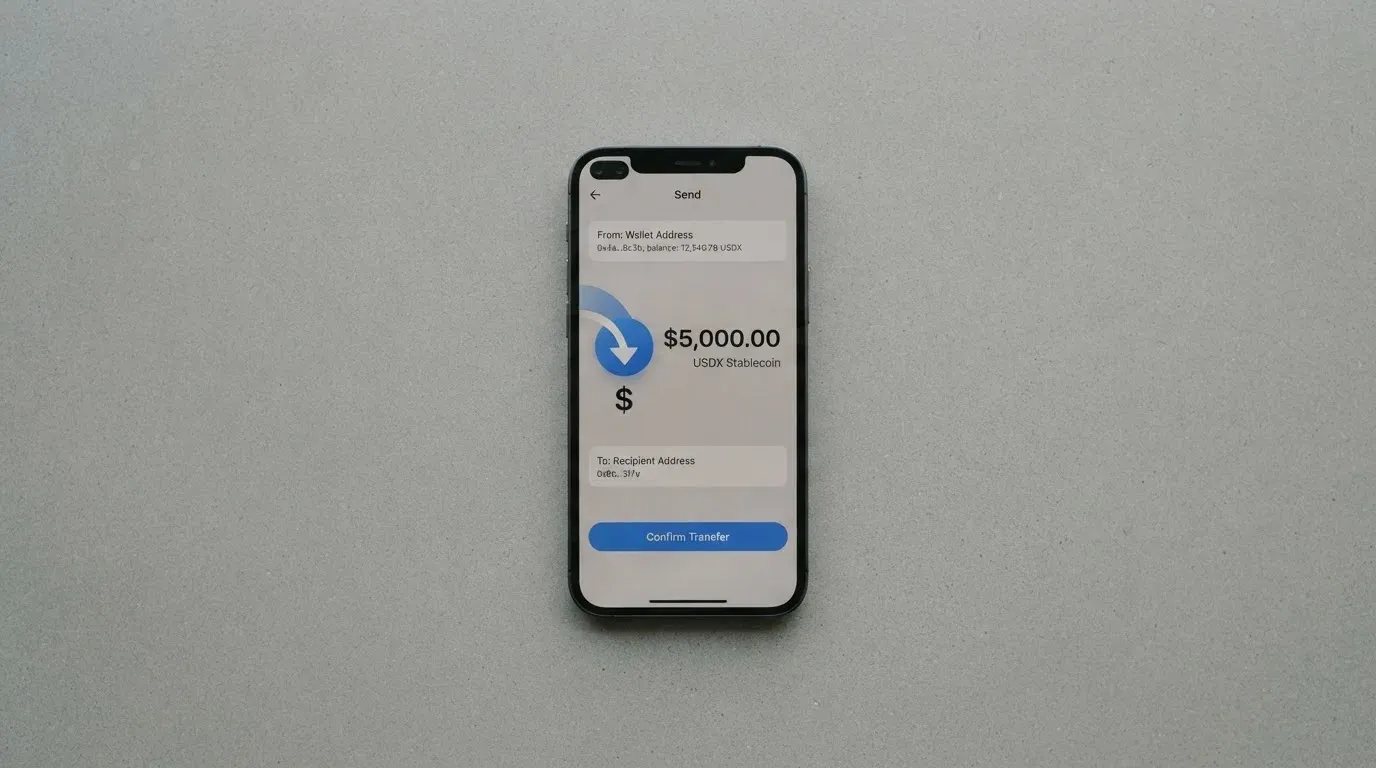
The wallet underneath it is the more interesting part, because that is where the choice lives. Airtm says the wallet can be funded by 500+ payment methods: bank transfers, crypto deposits, mobile wallets, its P2P network, and debit or credit cards through MoonPay. Crypto deposits are where the volume comes from for most people.
Two things the card does not tell you, and both matter. The first is which networks those crypto deposits run on. A transfer sent on a network the provider does not support, or to an address belonging to a different network, can be lost or may need manual support recovery with no guarantee — blockchain transfers are essentially irreversible by design. So find out the supported networks before you send anything, not after. Second, there is no stated minimum top-up amount, which is inconveniently vague in the direction that could hurt you.
For US users there is a further restriction: the card can only be loaded via payouts, which means setting the card as your default payout method rather than loading it as a top-up. That is a different mechanism from the one other users rely on, and it is worth knowing before you set anything up.
Getting money back out is where the design turns against you, so read this twice. To move funds from the card to your Airtm balance, you have to delete the card. The remaining balance, minus a deletion fee of 1 %, is transferred to your Airtm account. On card closure, the remaining balance is returned to the platform provider wallet as stablecoins, with no fee charged by Lead Bank for the closure itself. And note this: merchant refunds are credited to the platform provider wallet as stablecoins, not back to the card. If you are refunded for something you bought with the card, the money does not reappear on the card — it arrives as crypto in the wallet, at whatever rate applies at that moment. That is a genuinely surprising detail, and it is the kind of thing that turns into a support ticket.
Paying with it every day
Here the card is honest about its own shape: it is a number you add to a phone wallet, not a card you carry. Apple Pay and Google Pay are both supported. There is no physical card, and there is no ATM, so cash is simply not part of this product.
Merchant categories are blocked: gambling, firearms, drugs, adult content and services, and financial services businesses. Those are the card’s own restrictions. It is also worth knowing why some merchants refuse prepaid cards at all, since it is not personal. A merchant category code is a four-digit number classifying what a business sells; the gambling category is 7995, and many issuers block it by policy rather than by law, with the list differing from issuer to issuer. Some shops simply decline prepaid or foreign-issued cards because the lookup reveals the card type and issuing country.
Tokenisation is the quiet advantage of adding this to a phone wallet. In Apple Pay, the real card number is replaced by a device-specific number stored in the phone’s secure hardware, never on Apple’s servers, and each payment carries a one-time dynamic security code. That is a meaningfully better security posture than the same number used in a browser, and it costs you nothing here. The issuer can still restrict that token — blocking it on magnetic stripe, phone or website use — so it is not a guarantee, but it is a real improvement.
The app itself is well regarded. As read on 2026-10-21, the iOS App Store listing shows 4.8 out of 5 across roughly 5K ratings, and Google Play shows 4.5 out of 5 across roughly 82.4K reviews. It runs on iOS, Android and a web dashboard, which matters because the web dashboard is where you can freeze or delete the card.
What you do not get: no cashback at point of sale. And in a dispute, you have no right to stop a payment on the card. Disputes go to the merchant first. Refunds land as stablecoins in the wallet. Error resolution runs on a clock — report within 60 days, investigation within 10 business days, extendable to 45 days as standard and to 90 days for new cards or foreign-initiated cases. Liability for unauthorised transactions is capped at $50 if you report within 2 business days, and at up to $500 if you report later. That gap is a real one, and it is a reason to enable two-factor authentication and to check the dashboard more often than feels necessary.
One last everyday annoyance: a declined authorisation can leave a hold on your funds for up to 7 business days, and pre-authorisation holds can take that long to release. A hotel, a car hire desk or a petrol pump is exactly where that will happen.
What can go wrong
The pattern in the complaints is more informative than the score. Trustpilot shows a TrustScore of 3 out of 5 across roughly 7,000 reviews as of October 2026. The three recurring themes across Trustpilot, the App Store and Google Play through 2025 and 2026 are these: accounts suspended or limited without a clear explanation, with funds held; slow or unresponsive customer support giving generic replies; and fraud in the P2P marketplace, where cashiers scam users and Airtm does not reimburse. Verification delays make a fourth, quieter appearance. It is worth being clear that these are user reports rather than adjudicated findings, and that I found no major publicised hacks or shutdowns.
Read those themes together with the structure of the company and the picture sharpens. The platform provider is Airtm Inc., a Delaware corporation, operating since 2015 and registered with FinCEN as a money services business. The issuing bank is Lead Bank, a Missouri state-chartered bank and FDIC member. The programme manager is Bridge Ventures LLC, Delaware. The network is Visa.
So the card is custodial: your money sits with Lead Bank, and the card’s funds are not FDIC insured. That is not a scandal — it is the standard arrangement for this whole category — but it is the arrangement that decides what happens if something goes wrong at Airtm rather than at your bank. Two-factor authentication is available on the Airtm account, and the card can be frozen or deleted from the dashboard, which are the two things most worth setting up on day one.
The regulatory footprint is real. The licence named on the site is the FinCEN MSB registration. In the US, FinCEN guidance treats administrators and exchangers of convertible virtual currency as money transmitters, while people merely buying goods or services with crypto are not money services businesses — so the obligations here sit with Airtm, not with you as a customer. There is also a wider pattern behind it: Visa and Mastercard do not issue crypto cards to consumers themselves, they license issuers, and they can suspend a programme. Visa terminated its agreements with FTX in November 2022 and the FTX US debit card was wound down by its issuer. A supplier of crypto card programmes, WaveCrest, was suspended by Visa in Europe in 2018, closing all WaveCrest-issued Visa programmes. In other words, the collapse of a crypto card is a normal enough industry event that it is worth asking what would happen to your balance, and this one does answer it: on closure the remaining balance comes back to you as stablecoins.
On stability specifically, the record is unremarkable. IsDown tracked around 36 Airtm incidents since July 2021, with the last tracked outage on 2025-10-02, described as “Transactions error” and lasting about 9 hours. Scheduled maintenance was announced for 2026-06-04 between 6:00 and 9:00 AM UTC. The card launched officially on 2025-05-27 with a USD Virtual Card, initially in the US and Argentina. Nothing here suggests an unstable platform. The complaints are about process, not outages.
Support is reachable: [email protected], and a phone number, 833-237-8104, plus website chat. The site is in English, Spanish and Portuguese. Hours are not explicitly stated, which is worth knowing before you rely on a phone call at a particular time.
The category risk that has nothing to do with Airtm specifically is stablecoin depeg. Despite the name, stablecoins are not necessarily stable: TerraUSD collapsed in May 2022, and USDC temporarily lost its peg in March 2023 during the US banking crisis. Since your balance here is USDC before it becomes dollars, that is the exposure you are carrying. On the other side, Tether and Circle dominate, and the BIS put about 90 % of stablecoin market capitalisation in USDT and USDC as of July 2025. Circle says USDC is redeemable 1:1 for USD and fully backed by cash and cash equivalents, mostly in an SEC-registered government money market fund, with monthly reserve attestations, and it lists USDC as natively supported on 38 networks as of 16 September 2026, including Ethereum, Solana, Base, Polygon PoS, Avalanche, Arbitrum and Stellar. That breadth cuts both ways: more network support means more ways to send on the wrong one.
If you hold crypto personally, one thing to keep in mind is that the IRS treats digital assets as property, so exchanging them for goods, services or dollars generally produces a taxable gain or loss, measured in local fiat currency at fair market value on the date of the transaction. Each card payment funded from crypto may therefore be a separate disposal. I am not qualified to advise on your taxes and this is not tax advice — but if this card will be used repeatedly, it is worth a conversation with someone who is.
What to take instead
None of the alternatives below is dramatically better on the fundamentals; they differ in where they are strong and what they leave out. Scores are from the same scale.
| Alternative | Score | Card | Where it is strong | What is not stated |
|---|---|---|---|---|
| Airtm | 6.3 | Virtual Visa, USD | Free to hold, 0 % FX, 1 % top-up capped at 2 USDC | No physical card, no ATM, networks not disclosed |
| Cardex | 5.6 | Debit card on VERVE, Visa, Mastercard and UnionPay; virtual and physical | “One crypto card, 200+ countries”; conversion at the moment of payment | Costs not stated, no fee percentage published, networks not stated |
| CardFlow | 4.9 | Virtual USD Mastercard, about 3 minutes to create | Free card creation; aimed at Nigeria | Monthly fee, conversion fees and networks not stated |
| HyperCard | 4.7 | Prepaid, balance in USD or EUR | Works in “more than 176 countries” per the App Store — acceptance, not eligibility | Network, fees and networks for crypto deposits not stated |
Two comparisons deserve unpicking rather than leaving in a table.
On reach, Cardex’s “200+ countries” is the most impressive claim here, and the least verifiable from its public pages — there is no country list and no stated exclusions, and its App Store listing is Naira-focused. HyperCard’s “176 countries” is an acceptance claim, not an eligibility claim: the card working in a country is not the same as residents of that country being able to open one. Nobody in this group publishes the kind of residency list Airtm does, which is frustrating if you are trying to work out whether you qualify, but at least Airtm lets you rule yourself in or out.
On fees, the comparison is awkward because the alternatives publish almost nothing. Cardex describes an “AI-Powered Conversion Rate” that scans global exchange rates and picks the best one when you spend, with no percentage attached. CardFlow says creating a virtual card is completely free and says nothing about a monthly or conversion fee. HyperCard’s pages list no fees at all. I would not read that silence as generosity. An unpublished fee is a fee you cannot budget for, and Airtm’s advantage is precisely that you can price it in advance: 1 % on the first 200 USD a month, capped, and zero thereafter.
None of them offers a clear answer on the two things that decide daily usability either. CardFlow is the fastest to set up. Cardex is the only one of the three that offers a physical card. And all three, like Airtm, leave you holding custodial balances with no self-custody option — none of these pages describe a card that keeps your keys.
Who I would recommend it to
I would recommend this card to a resident of the United States or a Latin American country who has dollars or stablecoins, pays mostly online, adds the card to Apple Pay or Google Pay, and wants a clean, cheap way to spend a balance they control the timing of. If you travel and spend in other currencies, the 0 % international transaction fee makes it better than most. If you top up monthly in one lump rather than piecemeal, the fee effectively disappears.
I would not recommend it if any of the following is true of you.
- You need cash. There is no ATM and no physical card, so this is simply not a cash product.
- You have a purchase above 2,000 USD in mind, or a habit of many small weekly top-ups, where the 1 % on the first 200 USD a month starts to matter.
- You cannot show a verifiable residence in an eligible country. Check this first; everything else is academic if you cannot.
- You are uneasy about a custodial balance, especially given the complaints about accounts being limited and funds being held for weeks or months.
- You plan to spend with merchants in gambling, firearms, adult content, drugs, or financial services businesses. Those categories are blocked on the card.
- You need a card for merchant categories that decline prepaid or foreign-issued card numbers. This is a real and recurring cause of declines, not a theoretical one.
My honest summary is that Airtm is a well-priced, narrowly built product with a genuinely awkward service reputation. The cost structure is the best argument for it and is hard to argue with. The trust question is the best argument against it and cannot be argued away by a low fee. What I would do is keep it as a spending card for a defined amount, not as a place to hold money you cannot afford to have delayed, and turn on two-factor authentication the same day you open the account.
Frequently asked questions
What is the Airtm card?
The Airtm card is a prepaid Visa debit card you use through Apple Pay or Google Pay rather than as a plastic card. It draws on dollars that Airtm converts from stablecoins in your account at the moment you spend. It was officially launched as a USD Virtual Card on 2025-05-27, starting in the United States and Argentina. There is no physical version.
Does the Airtm card cost anything?
Issuance is 0 USD, the monthly fee is 0 USD provided you keep loading or using it, and the annual fee is 0 USD. What costs money is the top-up: 1 % on the first 200 USD you load per calendar month, capped at 2 USDC, and 0 % beyond that. A 1 USD inactivity fee applies after 30 days without any loads, and deleting the card costs 1 % of the balance.
Is Airtm a bank?
No. Airtm Inc. is a Delaware corporation operating since 2015 and registered with FinCEN as a money services business. The card itself is issued by Lead Bank, a Missouri state-chartered FDIC member bank, with Bridge Ventures LLC as programme manager and Visa as the network. Your balance is custodial, held by the issuing bank, and card funds are not FDIC insured.
Do I need KYC to get the Airtm card?
Yes, and the card needs a specific level: “Special Features KYC”, separate from the basic check you did to open the account. It requires an official ID and checks your name, address, date of birth and government ID number, and you must be 18 or over. If you have already completed it for a US Virtual Account, it is not repeated. Activation takes a few minutes to two business days.
Which countries can use the Airtm card?
Eligibility follows verified residence, not citizenship, in 15+ countries, though the card does not name all of them. Launch began in the United States and Argentina; Bolivia, Venezuela, Colombia, Ecuador and the Dominican Republic are coming soon, with Guatemala, Chile, Angola, Brazil and Peru planned. Excluded are Belarus, Cuba, Iran, Myanmar, North Korea, Sudan, Syria, Russia, Ukraine’s Donetsk, Luhansk and Crimea regions, and certain US states including New York.
How do I top up the Airtm card?
The card is funded from your Airtm balance in USDC, not topped up directly. Your Airtm wallet can be funded by 500+ methods, including bank transfers, crypto deposits, mobile wallets, the P2P network, and debit or credit cards through MoonPay. The card’s public pages do not disclose which blockchain networks are supported, so confirm that before sending any crypto, since transfers are largely irreversible.
Can I get cash out with the Airtm card?
No. ATM withdrawals are not available, there is no ATM balance inquiry, and there is no physical card, so there is no route to cash through this product at all. To move money back from the card to your Airtm balance you have to delete the card, and the remaining balance minus a 1 % deletion fee is transferred to your account as stablecoins.
Where can I use the Airtm virtual card?
Anywhere Apple Pay or Google Pay is accepted, subject to blocked merchant categories: gambling, firearms, drugs, adult content and services, and financial services businesses. Daily spending and per-transaction limits are both 2,000 USD. Some shops decline prepaid or foreign-issued card numbers outright, and declines can leave a hold on your funds for up to seven business days.
What happens if I need to dispute a charge?
You cannot stop a payment on the card; you must handle the dispute directly with the merchant first. Refunds do not return to the card — they are credited to the Airtm wallet as stablecoins. Report errors within 60 days, with investigation typically within 10 business days. Your liability for unauthorised transactions is capped at $50 if reported within two business days, and up to $500 if reported later.
Is the Airtm card safe?
The security tools are ordinary for the category: two-factor authentication on the Airtm account, and the ability to freeze or delete the card from the dashboard. Adding the card to Apple Pay or Google Pay tokenises the number with a one-time code per payment, which is stronger than using the number in a browser. The real caveats are structural — the balance is custodial and uninsured, and Trustpilot shows 3 out of 5 across roughly 7,000 reviews, with recurring user reports of accounts limited and funds held.
Choosing a virtual card – cryptocardadvisor
Content created by the «cryptocardadvisor» team