
A virtual card from a crypto exchange, priced on paper and quiet on the details that matter
 Available in US
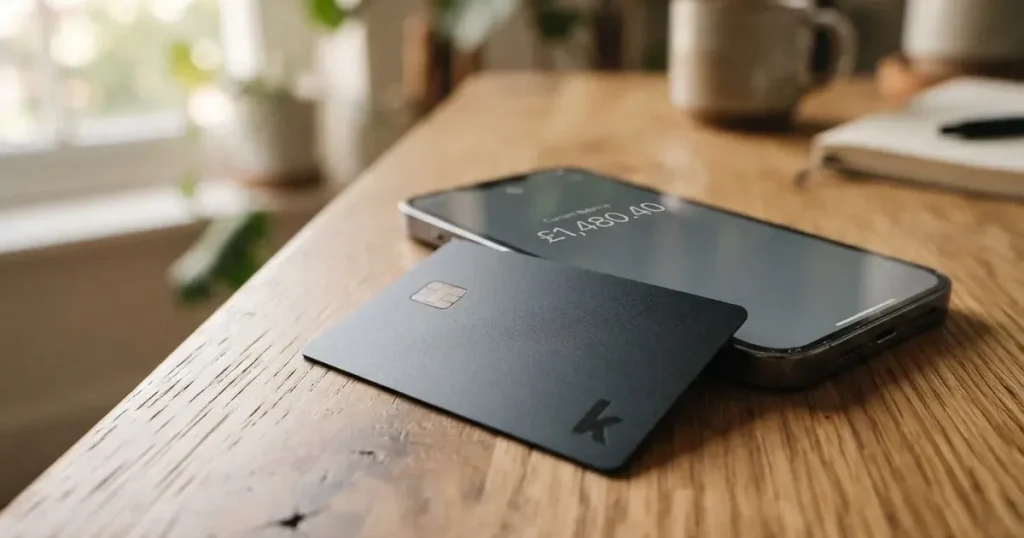
If you hold crypto and want to spend it without wiring money back through a bank, the Cryptomus card is one of the more visible options on the market: a virtual Visa or Mastercard, issued from inside your exchange account, funded by stablecoins, spendable wherever those networks are accepted. That is the pitch, and it is real. What is harder to pin down is everything around the pitch — the issuer, the monthly fee, the exchange-rate markup, the ATM, the country list, the spending limits. On this card, the public pages say less than you would need to decide properly. I went through them and the reported user experience, and what follows is what I could actually verify, with the gaps marked as gaps.
The conditions described here are current as of October 28, 2026.
My score for this card is 4.7 out of 10. That is not a rounding of a marketing promise; it is the sum of six criteria that each came out well below the middle, and the reasoning sits in the table below.
| Criterion | Mark | Why |
|---|---|---|
| Who can get it | 8 / 10 | “Most countries worldwide”, with the card itself flagging local restrictions; no country list is published, and it may change |
| Cost | 3 / 10 | Issuance $4, top-up 3.2%, maintenance or inactivity fees depending on card type; an unofficial listing puts FX at 3.9% |
| Top-up options | 5 / 10 | USDT and USDC, networks unspecified, list may expand |
| Reliability and complaints | 3 / 10 | Issuer and legal entity unnamed; Trustpilot 2.4/5 across 521 reviews; a virtual card deactivated after a $1,200 payment with the refund refused; recurring AML holds |
| Everyday use | 4 / 10 | Virtual-only Visa and Mastercard, phone NFC payment mentioned; unofficial sources add Apple Pay and Google Pay and no ATM |
| Total | 4.7 / 10 |
Who this suits, in one line: someone already inside the Cryptomus ecosystem, paying online with USDT, who treats the card as a convenience rather than as infrastructure. Who it does not suit: anyone whose income, rent or savings depend on this card behaving predictably for months — and anyone who needs a physical card, since none is offered.
Will they give you the card
The official answer is “Most countries worldwide” — and then a caveat that it may be restricted by local regulation. That is the whole eligibility statement. There is no country list on the pages I read, and the card warns the list may change.
That single sentence carries a lot of weight for a reader in a specific place, so it is worth being blunt about what it means and does not mean. It does not tell you which countries are on the list, so you cannot check before you commit. It does not distinguish between where you live and what passport you hold — whether eligibility runs on residence or on citizenship is not stated, and in this corner of the industry that is rarely a casual question. It does not say whether a particular country’s residents need anything beyond the standard identity check. And because the list may change, an answer you get today is not a promise for the month you actually need the card.
If your question is the one people type into search most often — is the Cryptomus card available in my country — the honest answer is that the public pages do not let you answer it alone. The strongest signals will be indirect: whether your exchange account is already verified, whether the card appears in your app at all, and whether support says so in writing before you send anything. Do all three, and keep the answer, before you fund it.
There is one audience the card genuinely fits better than the alternatives I looked at, and it is not a hypothetical one: users who already pay online with USDT and want that same money spendable without a bank transfer in between. For that person, the card is a shortcut, and a shortcut only needs to work most of the time.
How to get it
The stated path is short: register on Cryptomus and pass KYC before getting a card. That is the entire published sequence. What documents you need, whether proof of address is required, what age minimum applies, how long verification takes and what gets a request rejected — none of that is stated, and neither is whether there are different verification tiers.
The card itself: virtual only. Both Visa and Mastercard, spanning what the company calls “10+ BINs”, multi-currency, with the currencies themselves unnamed. Issued in 5 minutes. And there is no physical card at all — the card is “issued instantly and works immediately after activation”.
Take a second with that, because it changes what kind of product this is. There is nothing to post, nothing to activate with a chip and a signature, nothing to hand over if a shop wants to see a card. What you get is a card number in an app. Which merchants accept a number-only payment is the entire practical scope of the thing. That is fine for subscriptions, online shops and invoices. It is not fine for a market stall, a restaurant that wants to tap, or any purchase where you would otherwise swipe.
“NFC phone payment” is mentioned, which suggests tapping from the handset may work, but the published material does not tie that to any specific wallet or say which handsets. Treat it as a possibility rather than a feature you can count on.
Fees and what a payment actually costs
Here is where I have to be most careful, because the fee schedule is the least settled part of this card. Two figures are published and clear. Everything else is either qualified, absent, or coming from outside the company.
| Fee or limit | Value | Source |
|---|---|---|
| Issuance | $4 | Card page |
| Monthly fee | Not stated | — |
| Maintenance or inactivity fee | Optional, depends on card type | Card page |
| Top-up fee | 3.2% | Card page |
| Crypto-to-fiat conversion | At the market rate at the time of top-up | Card page |
| Payment / conversion fee | “May vary”, no figure given | Card page |
| FX fee | Not stated; unofficial listings say 3.9% | Unofficial |
| ATM | Not stated; unofficial sources contradict themselves | Unofficial |
| Daily limit | Not stated; an unofficial listing says $10,000 | Unofficial |
| Monthly limit | Not stated; an unofficial listing says $25,000 | Unofficial |
| Named tiers | None; “choose a card that fits your needs” | Card page |
Where the unofficial rows come from, they come from third-party sites and are not confirmed by the card. The two ATM entries are the clearest example of why I mark them separately: one listing says ATM use is unavailable because the card is virtual-only; another, in Chinese, calls the ATM withdrawal limit unlimited. Both undated, both third-party, and they cannot both be the current state of affairs. I would assume the first is closer to the truth and plan without cash withdrawals entirely.
Three everyday payments, priced as far as the published material allows:
A subscription of $20 a month. You need a balance of $20 in the card. Getting there costs the 3.2% top-up fee on what you send in — so slightly more than $20 of crypto — plus whatever the network fee is for moving it, which the blockchain charges and the card provider does not. On the spend side, the card says conversion happens at the market rate at top-up and that payment fees “may vary”, so I cannot tell you the final landed cost. This is the payment the card fits best.
An online purchase of $150. Same mechanics, one top-up of $150 plus 3.2%. If the amount crosses a currency boundary, the FX treatment is the open question — not stated officially, and the 3.9% figure people quote comes from outside the company. On $150, the difference between a zero-markup conversion and a 3.9% fee is not a rounding error.
Something small and repeated, say $6 fifteen times a month. $90 of spending, and if you top up once, one 3.2% fee. If you top up per purchase, fifteen fees. The card does not say which pattern it penalises, but small frequent purchases are exactly where a percentage top-up fee quietly becomes the largest thing you pay.
What is genuinely absent from all of this: the monthly fee, the exact payment fee, the FX markup, the ATM terms, the daily and monthly limits, and any named tier structure. “Choose a card that fits your needs” is good service copy and no help whatsoever to anyone trying to work out what they will pay in year one.
Top up the card
The funding route is short and, in my view, the best-documented part of the offering. You top up in USDT or USDC; the card itself holds a fiat balance. The list of accepted coins may expand. Networks are not specified, and neither is the minimum top-up or the fiat top-up options.
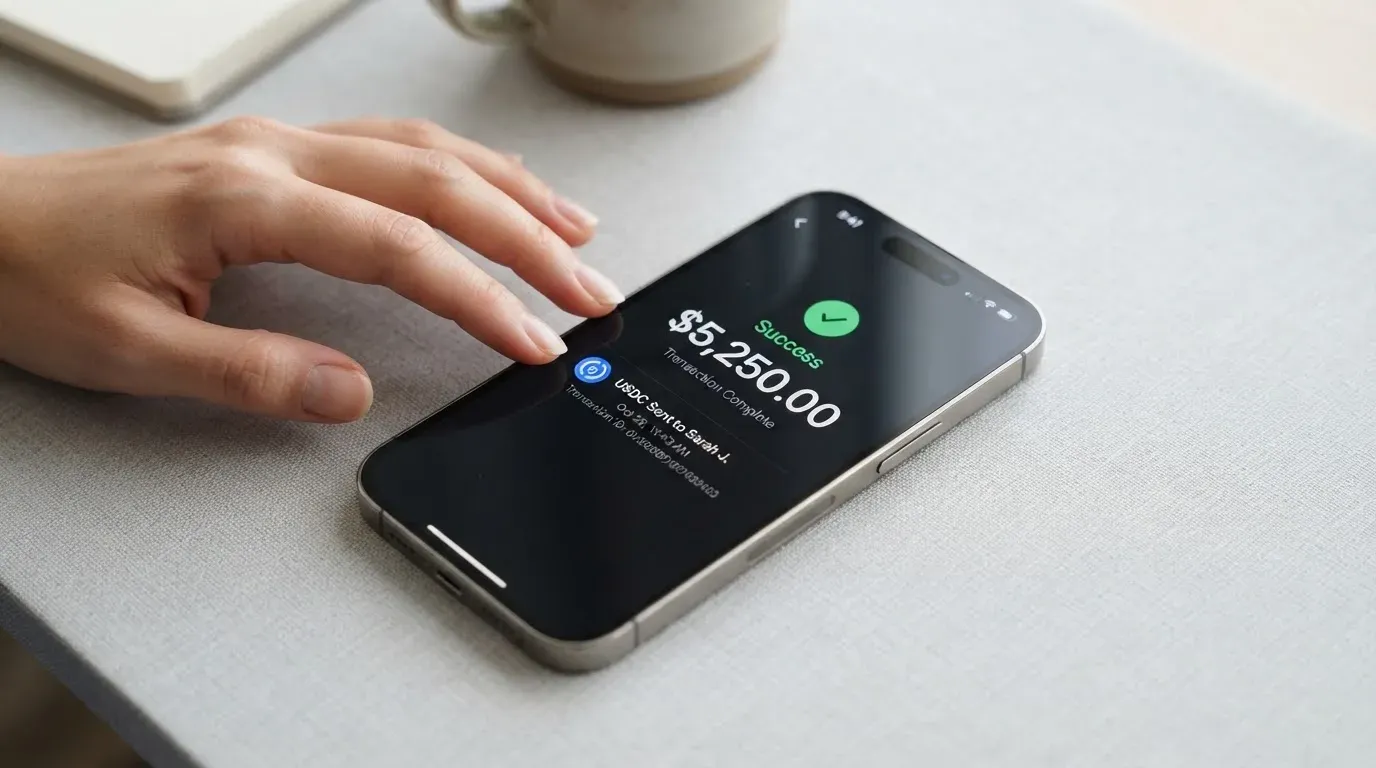
That network silence is the one thing I would fix before you send anything. Getting a stablecoin onto the wrong rail is one of the least recoverable mistakes available in this field: blockchain transfers are irreversible, so a deposit sent on a network the provider does not support, or to an address belonging to a different network, can be lost outright or need manual recovery with no guarantee attached. The two coins on offer also differ in where they live. USDC is natively supported on 38 networks as of 16 September 2026, per Circle, including Ethereum, Solana, Base, Polygon PoS, Avalanche, Arbitrum and Stellar — and notably, Circle stopped supporting USDC on Tron in February 2024, so “USDC over TRC20” is not the same thing as USDC. USDT is issued across multiple chains including Ethereum, Tron, Solana, Polygon and Avalanche. Tether also says it disables tokens in wallets on the OFAC sanctions list and has frozen funds tied to illicit activity, so stablecoins are not censorship-proof either.
One practical note on fees here: on-chain network fees for your deposit are charged by the blockchain, not by the card provider. Sending USDT on Ethereum when USDT would do just as well on a cheaper network is a cost you control, and it is not part of the 3.2%.
The other half of the top-up question is the one nobody answers publicly: what happens when you want it back. How to move the card balance out, whether it can go to a crypto wallet or to a bank, how to close the account — not stated.
Paying with it every day
Everyday use is the weak spot, and the shape of it is already set by the product being virtual-only. You are paying with a card number, plus a card number in a phone wallet if that is supported, and that is the range.
On mobile wallets, the official pages mention NFC phone payment and do not mention Apple Pay or Google Pay by name. An unofficial product listing from CryptoSlate, undated, lists both as supported. If adding the card to Apple Wallet is on your must-have list, ask support directly and treat the answer as provisional until the card’s own page says it.
Blocked merchant categories are not stated. That matters more than it sounds: in this category, gambling is typically blocked on individual card programmes by issuer policy rather than by law, and the blocked list differs from issuer to issuer. Nobody has told you where Cryptomus sits on that list. Assume some categories are closed to you until a payment tells you otherwise.
There are no stated rewards or cashback; the cards page mentions none. On spending controls, what is published is modest but real: expense control and transaction history in the app, and the app is available in the App Store and Google Play. Ratings are not stated.
Two behaviours of the wider payment system are worth knowing before they surprise you. Address verification — the automated comparison of the street number and postcode you type against the issuer’s records — is mostly offered in the US, Canada and the UK, and is generally unavailable on foreign-issued cards, which can cause declines on an otherwise normal purchase. And a declined authorisation can leave a hold on your funds that lingers for days, typically up to seven. A card that refuses a payment can still keep your money for a week.
Disputes are not covered either. There is no published procedure for what to do when goods do not arrive or a charge is wrong. A chargeback is a refund ordered by the issuer, with its own reason codes; on prepaid cards the coverage varies by country and should not be assumed. If you do not know how a dispute works with this particular card, you are relying on support to figure it out with you.
What can go wrong
I found no official incident report. What I found instead is a pattern in user reports, and you should read it as reports rather than as findings.
Trustpilot shows 2.4 out of 5 for Cryptomus across 521 reviews as read on 20 October 2026, with 43% one-star and 49% five-star — a sharply split profile rather than a uniformly bad one. Most of those reviews are about the payment service, not the card, and Trustpilot itself flags the listing as possibly associated with high-risk investments. Read it as sentiment about the platform, not a card score.
The card-specific reports are narrower and harder. On 24 September 2026, one account describes a virtual card being deactivated after a $1,200 transaction, with the refund refused; the company’s answer is that the issuing bank blocked the card after high decline rates and that Cryptomus does not control that card programme. That explanation is consistent with how these programmes actually work, and it is exactly the problem: the entity that froze your money is not the entity you have an account with. Across August to October 2026 there are recurring reports of AML and KYC holds on funds — 30 August, 6 September, 14 September, 17 September, 6 October among them — plus slow support and tickets closed as duplicates.
That last pair of facts has a plain reading. Funds can be held. When they are, the person who can release them is the issuer, and the person who can explain it to you is a Telegram bot and an email address. Support is reachable at cryptomus_support_bot on Telegram and [email protected], with an FAQ; languages and hours are not stated.
Which raises the question you should ask first, and I do not have a good answer: who is the issuer and which legal entity stands behind the card. Not stated. No bank is named. That absence is normal for this category — and it is also the reason the September freeze could not be resolved by the company you opened an account with. In Europe, an electronic money institution may issue e-money, payment cards and wallets but cannot lend, and may operate across the EU from a licence in one member state. A card is regulated as a payment service separately from the crypto side, which is why a crypto card often rests on two licences at once. Whether Cryptomus holds them, and under which entity, is not something its public pages tell you.
There is a documented history here worth reading before you decide. Visa terminated its agreements with FTX on 13 November 2022 and the FTX US debit card was wound down. Visa suspended WaveCrest in Europe in 2018, closing every WaveCrest-issued Visa programme. Programmes do close, and when they do the pattern is: notice, then loading and spending stop, then you are asked to withdraw what is left.
On the security side the published controls are reasonable and worth having: 3-D Secure authentication, freeze and unfreeze, biometric login, and the claim that no one can withdraw or pay without your knowledge. Also stated: three lines of defence — phishing resistance, multi-signature authorisation and dedicated cold storage. Not stated: whether balances are segregated and whether any insurance applies. Under EU rules, e-money funds must be safeguarded, by segregation or insurance, but that is not the same as a bank deposit and may not sit inside a deposit guarantee scheme. Separately, the wider custodial history is not reassuring by itself — Mt. Gox, Coincheck, Ronin — but holding a card balance is not the same as holding your coins on the exchange, and I would not treat those numbers as a direct forecast.
Fees, again, where the real cost lives
Because the fee schedule is the weakest documented part of this card, it deserves a second look rather than a passing one — and it deserves the category context that makes the gaps legible.
A crypto card is usually a prepaid instrument wearing a bank card’s clothes. The number starts with six or eight digits identifying the issuing institution, which any merchant can look up, along with the country. A shop that sees a foreign or prepaid BIN may apply extra scrutiny or decline outright. That is the mechanism behind most of the awkwardness people report with cards like this one, and it is not a fault in your account.
The costs that are published are the two the provider controls: the $4 issuance fee, and the 3.2% charged on topping up. Everything after that depends on terms the provider does not publish. If you are comparing cards on price alone, you are comparing two known numbers against a missing third one.
What to take instead
If none of the three alternatives is clearly better, the comparison below still tells you what to ask.
Cardex — 5.6 out of 10, the highest of the four. Claims “one crypto card, 200+ countries”, but publishes no country list and no exclusions. It runs on the VERVE, Visa, Mastercard and UnionPay networks and offers both virtual and physical cards, though its App Store listing is Naira-centric and the card currency is Naira per that listing. On cost, real-time conversion at the moment of payment, with an “AI-Powered Conversion Rate” that scans global exchange rates and picks the best one when you spend — no percentage published. Funds from USDT, USDC and BTC wallets. Rewards not stated. If you want a physical card and a second opinion on conversion pricing, this is the one to look at.
CardFlow — 4.9 out of 10. Aimed squarely at Nigeria, calling itself Nigeria’s smartest fintech card platform, and open to “Nigerians and global users”, again with no country list. A virtual USD Mastercard created in 3 minutes. Creating a virtual card is free, per its own FAQ; monthly fee not stated. Funded by Bitcoin, USDT, ETH or a Naira bank transfer, networks not stated. Conversion fees not stated.
HyperCard — 4.7 out of 10, level with the Cryptomus card. No country list on the official pages; its App Store description says the card works in “more than 176 countries”, which is a claim about acceptance rather than about your eligibility — a distinction that trips people up constantly. A prepaid card, network not stated on the page I read, balance in USD or EUR. No fees listed at all. Deposit crypto such as USDT, BTC or ETH in the app, converted to USD or EUR on the card.
Two things are true across all of them. Every one is built on the same prepaid model, where crypto is converted and loaded as a fiat balance and the card cannot overdraw. And not one of them, on the pages I read, publishes a full fee schedule. If your objection to Cryptomus is the missing numbers, that objection applies to the field. If your objection is that the balance is unbacked or the service is unregulated, these are the same business, differently branded.
Who I would recommend it to
To the person paying online with USDT who already has a verified Cryptomus account, spends in one currency, and treats a card balance as spending money rather than as money in the bank. To them the card is genuinely good: $4 to open, a 3.2% top-up, a card number in five minutes, and no bank in the middle.
I would not recommend it as your only card, your salary card, or the card your rent runs on. Not because something specific is proven to be wrong, but because the things that would tell you are not published: the issuer is unnamed, so a freeze lands on a stranger’s decision; the monthly fee and FX markup are unpublished, so the annual cost is unknowable from the card’s own pages; the ATM is contested between two sources; and the dispute procedure is not described anywhere I could find.
The asymmetry is the whole review. The upsides are small, certain and immediate. The downsides are large, occasional and undocumented — and undocumented is what makes them hard to plan around.
So: how do you decide with this much missing? Ask [email protected], in writing, for six numbers — the monthly fee, the payment fee, the FX markup, the daily and monthly limits, the ATM terms, and the issuing entity — and keep the reply. If they answer, the card is a reasonable convenience. If they do not, you have your answer anyway.
Frequently asked questions
What is the Cryptomus card?
It is a virtual payment card issued through the Cryptomus crypto exchange account, available on Visa and Mastercard networks. You load it from a stablecoin balance and it behaves like a prepaid card. There is no physical version. The company describes the card as multi-currency across “10+ BINs”, issued in 5 minutes and usable immediately after activation.
Is Cryptomus a bank?
Not on the published pages. Cryptomus presents itself as a crypto exchange, and no bank is named as the issuer of its cards. In this category the exchange is often only the front end: the card network routes the payments, and a licensed issuer holds the programme. Which entity issues the Cryptomus card is not stated, which is a question worth asking support directly.
Is the Cryptomus card safe?
Safer than the sum of its parts suggests, and not safe enough to rely on. Published controls include 3-D Secure authentication, instant freeze and unfreeze, biometric login, three lines of defence (phishing resistance, multi-signature authorisation, cold storage), and a linked CertiK project page. Not stated: whether balances are segregated and whether any insurance applies. Treat the card balance as spendable cash, not savings.
How much does the Cryptomus card cost?
Issuance is $4, and topping up costs 3.2%. An optional maintenance or inactivity fee may apply depending on card type. The monthly fee, the exact payment or conversion fee and the FX markup are not stated on the card’s own pages. Crypto is converted to fiat at the market rate at the time of top-up. Network fees for the transfer itself are paid to the blockchain, not to Cryptomus.
Does the Cryptomus card require KYC?
Yes, in the only sense the company describes: you register on Cryptomus and pass KYC before a card is issued. The documents required, any proof of address, the age minimum, processing times, verification tiers and grounds for rejection are all not stated. Note that funds themselves can be held later for AML or KYC reasons, and there are reported cases of exactly that between August and October 2026.
How do I top up the Cryptomus card?
Send USDT or USDC to the exchange and top up from there; the card itself holds a fiat balance. The list of accepted coins may expand. Networks are not specified, so confirm the correct one before sending — a transfer on an unsupported network can be lost, since blockchain transfers cannot be reversed. Minimum top-up and fiat top-up options are not stated.
Can I add the Cryptomus card to Apple Wallet or Google Pay?
Unclear from the official pages. The card mentions NFC payment from a phone without naming any wallet, while an unofficial third-party listing states Apple Pay and Google Pay are supported. I would treat that as unconfirmed and ask support before relying on it, and note that the card issuer can restrict a tokenised card number for phone, website or magnetic-stripe use.
Is the Cryptomus card available in my country?
The card says “Most countries worldwide” and warns that availability may be restricted by local regulation. No country list is published, and it may change. Whether the test is residence or citizenship is not stated either. The practical route is to check whether the card appears in your verified account and get a written answer from support before sending money.
Where can I use the card, and can I use an ATM?
Anywhere Visa or Mastercard numbers are accepted online, subject to the ordinary foreign- and prepaid-BIN declines that affect this whole category. ATM terms are not stated, and unofficial sources contradict each other: one says ATMs are unavailable because the card is virtual-only, another calls the withdrawal limit unlimited. Both are third-party and undated. Plan as though there is no ATM.
What should I do if a payment is declined or funds are held?
A declined payment can still leave a hold on your funds for several days, typically up to seven, so check your balance before retrying. For AML or KYC holds, contact [email protected] or the Telegram bot cryptomus_support_bot and keep the ticket reference — reports from autumn 2026 describe slow responses and tickets closed as duplicates. Note that the issuing bank controls the card programme, so the company may not be able to unfreeze what an issuer has blocked.
Choosing a virtual card – cryptocardadvisor
Content created by the «cryptocardadvisor» team