
An EEA crypto card with free issuance, a 0.1% + €1 conversion fee, and a public page that leaves too much unsaid
 Available in US

The Confidopay card is a prepaid-style payment card you fund from a crypto balance instead of a bank account. On paper it is unusually cheap to open and unusually straightforward to use: both the physical and the virtual card are issued at €0, converting crypto for card spending costs 0.1% plus €1, both card types work in Apple Pay and Google Pay, and the ATM limits are generous at €3,000 a month and €350 a day. The card comes with a real licensed structure behind it — an Estonian issuer and a separately licensed crypto service provider — and I could not find a single recorded incident or complaint page against it.
The catch is geography and paperwork. Confidopay issues to citizens and residents of the EEA and Switzerland, and the cards themselves only to EEA residents, with onboarding in Hungary suspended. On the eligibility side that is the single biggest limitation in this review, and it is why the card scores 5 out of 10 there even though its total is respectable.
The conditions described on this page are current as of October 28, 2026.
My total score is 7.6 out of 10.
| Criterion | Mark | Why |
|---|---|---|
| Who can get it | 5 / 10 | Citizenship or residence in the EEA or Switzerland; payment cards only for EEA residents; onboarding in Hungary suspended |
| Cost | 8 / 10 | Physical and virtual card issuance €0; crypto exchange 0.1% + €1; monthly fee and FX fee not stated |
| Top-up options | 7 / 10 | BTC, BTC Lightning, ETH, USDC (ERC20), USDC on Polygon, BNB on BNB Smart Chain; USDT not listed |
| Reliability and complaints | 9 / 10 | Issuer Wallester AS (Estonia); crypto services via Lightspark Payments Europe AS with VASP licence FVT000546; no incidents or complaint pages found |
| Everyday use | 10 / 10 | Virtual card straight after verification plus a physical one; Apple Pay and Google Pay for both; ATM €3,000/month and €350/day |
| Total | 7.6 / 10 | A strong everyday card inside the EEA, with eligibility and disclosure gaps holding it back |
So who is this for? The card is built for EEA residents who are already holding crypto and want to spend it — paying for subscriptions, travel, groceries — without routing each purchase through an exchange. It suits someone who has a stablecoin balance, knows which network they are sending on, and does not mind that a small number of headline numbers (the FX fee, the ATM fee, the card currency) are simply not published. It suits you badly if you are outside the EEA without EEA or Swiss citizenship, if you need to travel to a country where card payments are blocked, or if you want to know in advance exactly what every foreign-currency payment will cost you in euros.
Will they give you the card
No, not automatically. The eligibility rule is the first thing to check, and it has three distinct pieces that people routinely mix up.
First, who may hold the account. Confidopay accepts natural persons with citizenship or residency in an EEA state or in Switzerland. That is a two-door rule: your passport can qualify you, or your residence can qualify you, and either one is enough for the account side.
Second, who may hold the card. Payment cards are issued only to EEA residents. Swiss citizenship or Swiss residence opens the account but does not by itself open the card. If you are a Swiss resident without EEA residency, this is exactly the situation to raise with support before you upload anything, because it is the kind of distinction that is easy to miss and awkward to discover late.
Third, where you may spend. Card payments are blocked in a list of jurisdictions that includes Russia, Belarus, Ukraine (partial), the UAE and Türkiye. Citizens of Russia are excluded outright unless they also hold EU/EEA or Swiss citizenship. Hungary is a special case: onboarding there is suspended.
That distinction is important. Eligibility to hold an account or card depends on your citizenship or residency status in an EEA state or Switzerland. However, even if you meet these criteria, card payments may remain blocked in specific jurisdictions. Eligibility to hold the card and permission to spend in a given location are two separate gates, and Confidopay keeps them apart.
| Gate | Rule as the card states it | Practical effect |
|---|---|---|
| Account | Citizenship or residency in an EEA state or Switzerland | The wider of the two doors |
| Card | EEA residents only | Swiss-only residents are outside this |
| Spending | Blocked in listed jurisdictions including Russia, Belarus, Ukraine (partial), UAE, Türkiye | Having the card is not the same as using it everywhere |
| Hungary | Onboarding suspended | Not currently a route in |
| Russian citizens | Excluded unless also holding EU/EEA or Swiss citizenship | Dual qualification changes the answer |
One thing the card does not publish is a full country-by-country table. The blocked list is described as “listed jurisdictions” with examples rather than an exhaustive table, so if your country is somewhere you travel often, you should confirm before you rely on the card abroad.
How to get it
Verification is document-based and comes in two tiers. There is no paid tier — the tiers are verification levels, not subscription levels — which is unusual and, in your favour, if you dislike being upsold.
Tier 1 needs an identity document plus a selfie. EEA and Swiss citizens can use an ID card or a passport. Everyone else uses a passport. Third-country citizens living in the EEA or Switzerland also need a residence permit, and the card may ask you for proof of address.
Tier 2 is triggered automatically when €15,000 of virtual-asset inflow or €25,000 in total comes through. At that point the card asks for proof of address — a utility bill or a bank statement from within the last three months, with mobile bills explicitly not accepted — plus a source of funds. You get 30 days to complete it, and you keep full access in the meantime.
Two practical notes. First, the document list is narrow in a useful way: a recent bank statement works just as well as a utility bill, so if your utility bills are in someone else’s name, the statement route is your escape. Second, the card publishes neither its processing time nor its rejection reasons. That means you cannot budget for how long the wait is, and if it fails you will not be told in advance what to fix. Keep your originals ready and expect some back-and-forth.
There are two card formats, a virtual and a physical one, and I have to flag a real gap: the card’s public pages do not say which network it runs on — Visa or Mastercard — and they do not say what currency the card is denominated in. Both matter to you. The network affects which wallets, which 3-D Secure flow and which merchant acceptance you get, and the currency affects how a foreign purchase behaves before any fee is added.
The good news on timing is the virtual card: it is available immediately after verification, with no waiting. For the physical card, the public pages say nothing about which countries it ships to, how long delivery takes, what it costs, or what happens if it is lost. I would not build a plan that assumes a plastic card in your wallet this week.
What it really costs: Fees
The headline numbers here are good. The gaps are in the fine print that never appears.
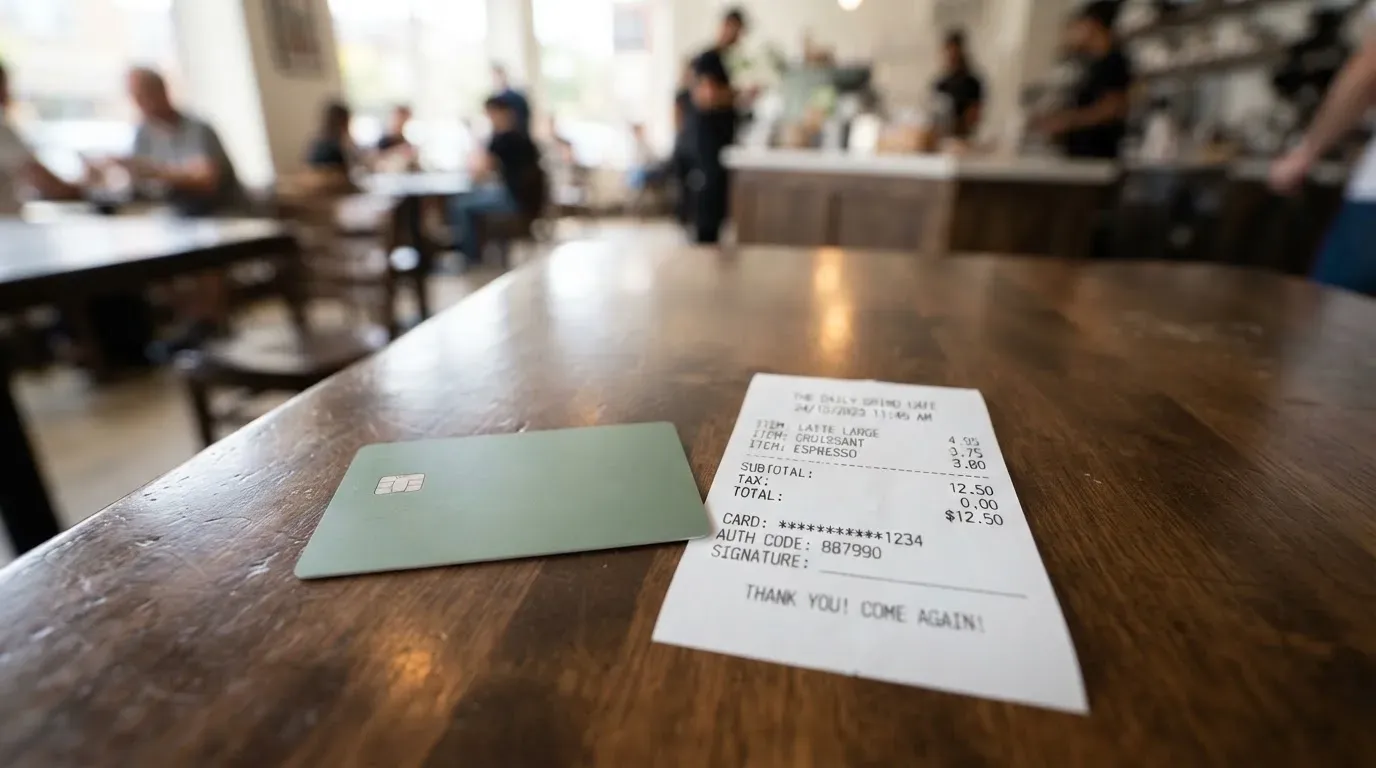
Both cards are free to create — physical €0, virtual €0 — and the conversion fee when you spend crypto is 0.1% plus €1. That is the number the card’s own site states for card-spend conversion, and at ordinary spending it is the entire cost of turning BTC into a coffee. There is no monthly or annual fee listed.
What is not listed is the FX fee, the ATM fee, and the card’s own currency. Those three absences matter more than their size might suggest, because a card that will not name its foreign-exchange markup is a card whose foreign spending you cannot predict. If you plan to spend abroad, that is the first question to put in writing to support, and the answer you get in writing is the only one worth relying on.
| Fee or limit | Value |
|---|---|
| Physical card creation | €0 |
| Virtual card creation | €0 |
| Monthly or annual fee | Not listed |
| Crypto exchange on card spend | 0.1% + €1 |
| FX fee | Not listed |
| ATM availability | With the physical card |
| ATM fee | Not listed |
| ATM limits (both tiers) | €3,000/month; €350/day |
| Card payments, Tier 1 | €10,000/month; €10,000/day |
| Overall outbound, Tier 1 | €10,000/month |
| Card payments, Tier 2 | €15,000/month; €10,000/day |
| Overall outbound, Tier 2 | No overall outbound limit |
| Card currency | Not stated |
| Tiers | Two KYC tiers only; no paid tiers |
All quoted fees are in euro. Let me walk three ordinary payments through that table, because the fee structure rewards a specific habit: convert in bulk, spend small.
The weekly shop. Say you tap the virtual card for a €60 grocery run and your balance is sitting in crypto. The stated cost is 0.1% plus €1 on the conversion. There is no monthly fee to amortise over, and no per-transaction card fee listed, so this payment costs you roughly €1.06 in conversion plus whatever your wallet’s own network fee was. Small payments are dominated by the flat €1, so they are inefficient in percentage terms but cheap in absolute terms.
The monthly subscriptions. Twelve payments of €10 in a month cost you twelve times the €1 flat component. This is the pattern the fee structure actively discourages, and the fix is on your side: convert a month or two of spending money at once rather than converting per transaction. The published charge is per conversion, and the card’s pages do not describe any batching, so the batching is something you do deliberately.
The holiday abroad. This is where I stop being able to tell you the cost. You have the conversion fee of 0.1% plus €1 — that part is known. Beyond it sit an FX fee that is not listed and a card currency that is not stated, and either of those can be the larger half of what you pay. The ATM case is the same: cash withdrawal is available on the physical card up to €3,000 a month and €350 a day, but the fee per withdrawal is not published, and ATM pricing is where the per-transaction flat charge bites hardest. If your plan involves foreign spending or cash, treat this card as a card you will need to test with small amounts first, because the public information does not let you model the cost in advance.
How to Top up
Topping up is the part Confidopay describes most concretely, and it is a transfer-first process rather than a purchase-first one. You deposit crypto, then either convert it to fiat or spend it.

Six assets and networks are listed:
- BTC
- BTC Lightning
- ETH
- USDC (ERC20)
- USDC on Polygon
- BNB on BNB Smart Chain
USDT is not listed. That is worth pausing on if it is your main holding, and it is the single most common gap in crypto card coverage right now — USDT is one of the two largest stablecoins by market capitalisation, so its absence narrows the practical audience of this card considerably.
Both rails cost the same at the counter: a crypto deposit and a bank transfer in are each 0.1% plus €1. No minimum is stated. Outbound, a crypto withdrawal is 0.1% plus €1 on top of a third-party network fee, and a bank transfer out is 0.1% plus €1.
Two things to understand before your first transfer. First, the network choice is not a detail. Blockchain transfers are irreversible, so a deposit sent on a network the card does not support, or to an address belonging to a different network, can be lost outright or need manual recovery from support with no guarantee attached. Match the asset to the exact network in the list above, and if you are moving USDC, be deliberate about ERC20 versus Polygon — they are the same token on different rails, and picking the wrong one is the classic expensive mistake. Second, network fees for your deposit are charged by the blockchain itself, not by Confidopay, so they are outside the 0.1% plus €1 figure and will vary.
What the card does not describe is what happens to your balance at the end. It does not say what you get back if the account is closed, and it reserves the right to close accounts with 30 days’ notice, or immediately in the case of fraud. Combined with the earlier point about funds being reversible, that is the reason to treat the balance as working capital rather than as a place to park money you intend to keep.
Paying with it every day
Day-to-day use is where this card earns its 10 out of 10, and it is the section with the least cause for caution.
Both card types work in Apple Pay and Google Pay. That is not a minor convenience: when you add a card to a mobile wallet, the device stores a device-specific number in its Secure Element rather than your actual card number, and each payment generates a one-time dynamic security code. In practice, adding the card to your phone is the most secure way to use it day to day, because a photo of the card number then leaks nothing usable at a terminal. You can also freeze a card instantly, which is the single most useful control on any card of this type.
What the card does not publish is any blocked merchant category. This is where prepaid cards differ from each other more than most people expect: many issuers refuse gambling merchants, categorised under the four-digit merchant code 7995, as policy rather than law, and the list varies by issuer. Confidopay does not say whether it blocks gambling, adult content, or anything else. If a category matters to you, that is another thing worth asking before you depend on the card.
Three everyday realities to be aware of, none of them specific to this card:
- Foreign-issued cards get scrutinised. Merchants can look up the issuer identification number at the front of a card number and see which institution and country issued it, and some apply extra checks when that country differs from the billing address. A few merchants decline prepaid or foreign-issued cards outright, because the lookup reveals the card type. If a payment is refused abroad, this is often the reason, and it has nothing to do with your balance.
- A declined payment can still cost you. A failed authorisation may leave a hold on your funds that persists for several days, in some cases up to seven. A hotel or car-hire pre-authorisation is the classic case.
- Address verification is mostly a domestic tool. The service that compares the street number and postal code you typed against issuer records is mainly offered in the US, Canada and the UK, and is generally unavailable for foreign-issued cards. Expect declines at some online checkouts for that reason alone.
On rewards, the card is silent — cashback is not mentioned. On apps, the site lists apps on Google Play and the App Store, but I could not resolve the badge links to check the ratings, so treat the store presence as stated rather than verified. On disputes, the one thing you should read carefully: chargebacks are not addressed at all. That is not unusual for a card in this category, but it means a refund for goods not received is not something the card promises to arrange for you.
Support is reasonable and specific. Live chat runs Monday to Friday, 9:00 to 17:00 CET. Email replies come in 24 to 48 business hours. Complaints are acknowledged within 2 business days and resolved in 7 to 10 business days. Those are published commitments rather than vague intentions, which counts for something.
What can go wrong
Nothing in my checks turned up a problem with this card, and I want to be precise about what that means and what it does not.
I found no official incidents, and no Trustpilot or Reddit page for Confidopay in one search. That means the absence of a complaint record is at least as likely to reflect a young or small operation as a clean one — there is no established public track record either way, and no set of recurring complaint themes to warn you about. I would read this as “unproven rather than vindicated”.
The company structure is the strongest part of the risk picture. Confidopay UAB is a Lithuanian company, no. 306414477, at Mėsinių g. 5, Vilnius. The card itself is issued by Wallester AS, registered in Tallinn, Estonia, reg. 11812881. The virtual-asset services and the Virtual IBAN sit with Lightspark Payments Europe AS, which holds an Estonian VASP licence, FVT000546. That is three named regulated parties rather than one brand name standing alone, and the Estonian licence is a verifiable document rather than a marketing claim — you can check a provider on ESMA’s interim register of authorised crypto-asset service providers and their white papers.
What is not stated is as significant as what is. The card does not describe its custody model or how customer funds are safeguarded. In EU terms, an electronic money institution must safeguard customer funds by segregating them in dedicated accounts or insuring them, but those funds are not the same as bank deposits and may not be covered by a deposit guarantee scheme. You should assume you are dealing with e-money, not with a bank, and understand that the difference is real when something goes wrong.
The security features that are published are the standard modern set: encryption, multi-factor authentication, PCI DSS processing, real-time monitoring and instant notifications. None of that is unusual any more, and it protects the plumbing rather than the balance itself.
The category risks around you are worth naming too, because they apply to any card of this type:
- Programme closures are normal. Card programmes get shut down. Visa terminated its global agreements with FTX on 13 November 2022 and the FTX US debit card was wound down. WaveCrest, an issuer that supplied crypto card brands, was suspended by Visa in Europe in 2018, closing all WaveCrest-issued Visa programmes. Closures typically run in stages — notice, then spending and loading stop, then you are asked to withdraw what remains.
- Stablecoins are not actually stable. They aim to hold their value against a currency, and they have failed to: TerraUSD collapsed in May 2022, and USDC briefly lost its peg in March 2023. If your card balance is stablecoin-denominated, that is your exposure, and it is not insured against.
- Custody has a history. Mt. Gox lost roughly US$350 million, Coincheck about US$400 million in 2018, and Ronin Network US$625 million in 2022. Where your keys are held matters more than the interface you look at.
- Regulatory timing is live. Under MiCA, the transitional period lets providers operating under national law continue only until 1 July 2026 or until they receive or are refused an authorisation, whichever comes first. Providers in transition are exactly the ones whose terms can change under you.
- Taxes are yours. Spending crypto through a card is generally a disposal, measured in your local currency at fair market value on the date of the transaction, which means each card payment can be a separate taxable event. I am not giving tax advice here — treat this as a question for a professional in your own country.
Finally, the Hungary suspension is on the record without a date. No date is given for when it started or when it might end, so if Europe was part of your plan, treat Hungary as unavailable rather than as temporarily awkward.
What to take instead
If Confidopay’s eligibility rule does not fit you, the honest question is whether the category has anything better — and on the published numbers, not always. Here is how the three alternatives I looked at compare, and I want to flag that each has its own large gaps.
| Confidopay | International Visa Card | UNi Card | Whop Cards | |
|---|---|---|---|---|
| Score | 7.6 / 10 | 6.7 / 10 | 6.1 / 10 | 5.2 / 10 |
| Who can get it | EEA or Swiss citizenship or residence; cards for EEA residents | Not residents or registrants of a long list including Russia, Türkiye, Ukraine, Belarus, India, China (mainland), Iran, Israel and others; rule is by residence or registration | Not stated | 31 US states for consumers, 41 for businesses; unsupported consumer countries include Russia, Belarus, China (mainland), Hong Kong, India, Iran, Israel, Türkiye and others |
| Card | Virtual and physical; network and currency not stated | U.S.-issued Platinum Visa, virtual; pays in USD; physical “coming soon” | Multicurrency card on the Mastercard network | Visa; virtual or physical not stated |
| Cost | Both cards €0; no monthly fee listed | $5 one-time issuance; Classic free, Pro $9.00/month, Max $19.00/month | No annual fee; issuance fee not stated | “No extra fees”; no amounts listed |
| Fees | 0.1% + €1 conversion; FX not listed | Free in USD on all plans; foreign currency at Visa rate + 2% FX fee | No annual or foreign transaction fee; live OTC rates; “no hidden exchange fees” | Not stated |
| Funding | BTC, BTC Lightning, ETH, USDC (ERC20), USDC on Polygon, BNB on BNB Smart Chain; USDT not listed | USDC or USDT at 1:1 into the USD account, plus USD, EUR, SEPA, SWIFT, FedNow; networks not stated | Not stated | Whop balance; stablecoin collateral from a linked wallet; coins and networks not stated |
| Rewards | Cashback not mentioned | No cashback stated | Spend-to-Earn up to 3% | 5% cashback at select merchants, currently Uber |
Three observations from that table.
The International Visa Card is the honest alternative for a US spender. Its virtual card is $5 once, Classic is free, and spending in USD is free on every plan. Its weakness is precisely the FX line: foreign currency carries the Visa exchange rate plus a 2% FX fee, which is a visible number where Confidopay publishes none. For someone living and spending in the US, a named 2% beats an unknown. Its physical card is listed as coming soon, though.
UNi Card has the most attractive fee language and the least information behind it. It advertises no annual fee, no foreign transaction fee, conversion at live OTC rates and “no hidden exchange fees”, plus rewards up to 3%. But its eligibility is not stated, its funding routes are not stated, and even whether it is physical or virtual is not stated. I would not call it better on that basis; I would call it less checkable.
Whop Cards is built for a different job entirely. Its coverage is 31 US states for consumers and 41 for businesses, it spends from a Whop balance rather than a crypto wallet, and its 5% cashback is confined to select merchants, currently Uber. Its fees and card currency are not stated either. If you are outside the US, or outside the EEA, and searching for a card funded from crypto, this is not the one.
One comparison caveat that applies to all of them: a card that publishes its fees is not necessarily a card that charges only those fees. Confidopay publishes 0.1% plus €1 and hides nothing — it simply does not say what the FX and ATM charges are. Its alternatives publish more of the picture in some places and less in others.
Who I would recommend it to
I would recommend Confidopay to an EEA resident who already holds BTC, ETH or USDC, spends most of the time inside the EEA, and wants a card that costs 0.1% plus €1 to fund with no monthly fee and works in their phone’s wallet the same day they finish verification. For that person the card does what it says, sits on a licensed Estonian structure, and costs less than almost anything else in the category.
I would hold back for you if any of these are true:
- You live outside the EEA and hold no EEA or Swiss citizenship or residence. The card is simply not for you, and no amount of good fee structure changes that.
- You are a Swiss resident without EEA residency. The account may open; the card is issued to EEA residents only. Ask before you upload documents.
- You need to know the exact foreign-exchange cost in advance. It is not published. Test with small amounts and get the answer in writing.
- USDT is your main asset. It is not in the supported list.
- You want a plastic card in hand this week. The virtual card is immediate; physical delivery countries, time and cost are not stated.
- You plan to travel to Russia, Belarus, Ukraine, the UAE or Türkiye. Payments are blocked there.
- You intend to hold a balance long-term rather than spend from it. The custody and safeguarding arrangements are not stated, and balance treatment on closure is not described.
The card’s greatest strength is that it is cheap and legible where it can be. Its greatest weakness is that the parts it does not publish are exactly the parts that require a bank-grade answer: what currency the card is in, what a foreign purchase costs, what happens to your money if the provider closes. Ask those three questions in writing before you deposit. If the answers come back clearly, this is a good card at a good price. If they do not, the 0.1% plus €1 will not compensate you for the uncertainty.
Frequently asked questions
What is the Confidopay card?
Confidopay is a payment card that spends from a crypto balance rather than a bank account. You deposit assets such as BTC, ETH or USDC, and the balance is converted to euro to pay for goods and services. It comes in virtual and physical versions, both issued at €0. The card is issued by Wallester AS in Estonia, while Confidopay UAB in Lithuania runs the service.
Who can get a Confidopay card?
Accounts are for natural persons with citizenship or residency in an EEA state or Switzerland, but the payment cards themselves are issued only to EEA residents. Onboarding in Hungary is currently suspended. Russian citizens are excluded unless they also hold EU/EEA or Swiss citizenship, and card payments are blocked in several jurisdictions including Russia, Belarus, Ukraine (partial), the UAE and Türkiye.
Does the Confidopay card require KYC?
Yes. Tier 1 verification requires an ID card or passport for EEA and Swiss citizens, a passport for others, plus a selfie. Third-country citizens in the EEA or Switzerland also need a residence permit. At €15,000 of virtual-asset inflow or €25,000 total, Tier 2 adds proof of address from the last three months and a source of funds, with 30 days to complete it.
What does it cost to use the Confidopay card?
Both the physical and the virtual card are free to create, at €0 each, and no monthly or annual fee is listed. Converting crypto for card spending costs 0.1% plus €1. Two figures are missing rather than absent: the FX fee and the ATM fee are not listed, and the card currency is not stated, so foreign spending cannot be costed precisely from the public pages.
How do I top up the Confidopay card?
You deposit crypto and then convert to fiat or spend it directly. Supported assets and networks are BTC, BTC Lightning, ETH, USDC (ERC20), USDC on Polygon, and BNB on BNB Smart Chain. USDT is not listed. Crypto deposits and incoming bank transfers each cost 0.1% plus €1, and blockchain network fees are charged separately by the network itself.
Is the Confidopay card safe?
The card publishes encryption, multi-factor authentication, PCI DSS processing, real-time monitoring and instant notifications, and both Apple Pay and Google Pay are supported, which store a device-specific number rather than your card number. However, the custody model and how customer funds are safeguarded are not stated, so you should treat the balance as e-money rather than as a bank deposit.
Who owns Confidopay?
Confidopay UAB is a Lithuanian company, no. 306414477, based at Mėsinių g. 5, Vilnius. The card programme is issued by Wallester AS of Tallinn, Estonia, registration 11812881. Virtual-asset services and the Virtual IBAN are provided by Lightspark Payments Europe AS, which holds an Estonian VASP licence, FVT000546.
Is the Confidopay card available in my country?
Availability depends on whether you are an EEA or Swiss citizen or resident, with cards issued only to EEA residents, and separately on where you want to spend. Card payments are blocked in listed jurisdictions including Russia, Belarus, Ukraine (partial), the UAE and Türkiye. The card’s public pages do not give a complete country-by-country table, so confirm your specific country with support before relying on it.
What are the Confidopay card limits?
At Tier 1, card payments are capped at €10,000 per month and €10,000 per day, with an overall outbound limit of €10,000 per month. At Tier 2, card payments rise to €15,000 per month with €10,000 per day and no overall outbound cap. ATM withdrawals are limited to €3,000 per month and €350 per day at both tiers, using the physical card.
Can I use the Confidopay virtual card straight away?
The virtual card is available immediately after verification, which makes it the practical option if you want to start spending without waiting. The physical card’s delivery countries, delivery time, delivery cost and replacement terms are not stated on the public pages. Adding either card to Apple Pay or Google Pay is supported, and blocked merchant categories are not published.
Choosing an app or neobank card – cryptocardadvisor
Content created by the «cryptocardadvisor» team